

Human Growth Hormone Market Size and Forecast — 2026 - 2033
The Global Human Growth Hormone Market size is estimated to be valued at USD 4.8 billion in 2026 and is expected to reach USD 7.4 billion by 2033, exhibiting a compound annual growth rate (CAGR) of 6.1% from 2026 to 2033.
Overview
The Human Growth Hormone (HGH) Market is driven by the rising prevalence of growth hormone deficiencies, Turner syndrome, chronic kidney disease, and other growth-related disorders. Increasing awareness of early diagnosis and treatment options is boosting demand for recombinant HGH therapies, particularly in pediatric and adult endocrinology. Expanding applications beyond traditional disorders, including growth failure, muscle wasting, and hormone deficiency in aging populations, are further supporting market growth. Technological advancements in recombinant DNA production have improved drug safety, efficacy, and availability. Additionally, rising healthcare expenditure, improved access to specialty care, and growing approvals of biosimilar HGH products are accelerating global market expansion.
Key Takeaways
Injectable HGH dominates the product type segment due to its proven efficacy, established clinical use, and widespread acceptance among healthcare providers, while oral HGH formulations are emerging as the fastest-growing subsegment because of greater patient convenience and improved treatment adherence.
Pediatric growth disorders account for the largest application segment, supported by the continued prevalence of growth hormone deficiencies and increasing emphasis on early diagnosis and intervention.
Hospitals remain the leading end-user segment, reflecting the concentration of HGH administration, monitoring, and specialist care within structured healthcare settings.
North America holds the largest market share, exceeding 40%, driven by advanced healthcare infrastructure, favorable reimbursement policies, and high awareness of growth hormone therapies.
Asia Pacific is the fastest-growing regional market, with a CAGR exceeding 8%, supported by rising healthcare investments, expanding patient populations, and improved access to endocrine treatments.
Europe demonstrates steady market growth, fueled by increasing adoption of biosimilar HGH products, strong clinical research activities, and supportive regulatory frameworks.
Human Growth Hormone Market Segmentation Analysis
Human Growth Hormone Market Insights, By Product Type
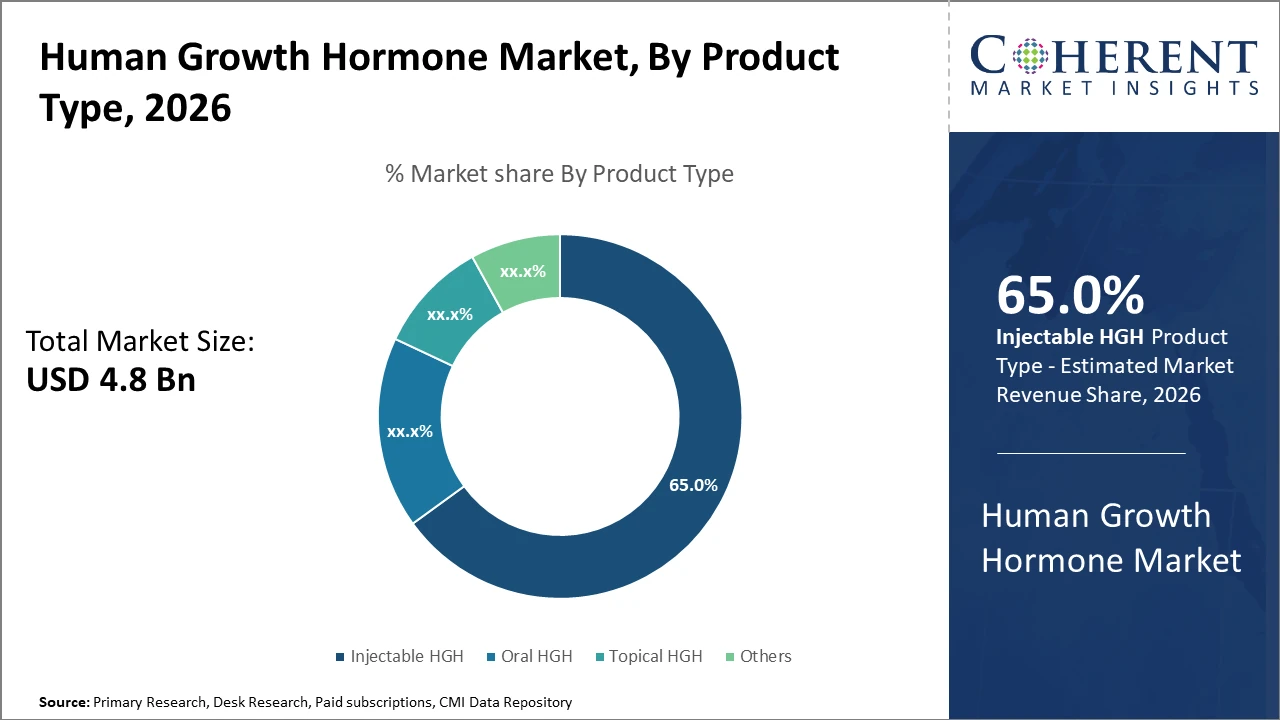
Injectable Human Growth Hormone (HGH) dominates the market, accounting for approximately 65% of total share due to its proven therapeutic efficacy, precise dosing capabilities, and widespread acceptance among clinicians. Its extensive use in treating growth hormone deficiency and related disorders continues to drive strong demand. Oral HGH is the fastest-growing subsegment, supported by advances in drug delivery and absorption technologies that offer a non-invasive alternative to injections. These formulations improve patient convenience and adherence, particularly among children and needle-averse adults. Topical HGH and other delivery forms hold smaller market shares but are gaining interest in niche therapeutic, wellness, and cosmetic applications.
Human Growth Hormone Market Insights, By Application
Pediatric Growth Disorders dominate the Human Growth Hormone (HGH) market, accounting for approximately 60% of total share due to the high prevalence of growth-related conditions and well-established treatment guidelines. Growth hormone therapy remains a cornerstone in managing growth delays and developmental disorders in children, ensuring sustained demand. Adult Growth Hormone Deficiency is the fastest-growing application segment, driven by aging populations, improved diagnostic capabilities, and broader awareness of hormone deficiencies. Turner Syndrome and Chronic Kidney Disease represent smaller but important segments, supported by growing clinical evidence demonstrating the benefits of HGH therapy. This expanding range of applications continues to strengthen overall market growth and revenue generation.
Human Growth Hormone Market Insights, By End User
Hospitals dominate the Human Growth Hormone (HGH) market with approximately 55% market share, as HGH therapy often requires specialized medical supervision, accurate dosage management, and ongoing patient monitoring. Integrated healthcare services and clinical oversight within hospital settings contribute to improved treatment outcomes and patient adherence. Specialty Clinics are the fastest-growing end-user segment, driven by the expansion of endocrinology-focused practices and outpatient treatment options that offer greater convenience and accessibility. Homecare Settings, including self-administration programs, are gradually gaining traction by promoting patient independence and long-term treatment compliance. Together, these end-user segments support broader HGH adoption and sustained market growth across diverse patient populations.
Human Growth Hormone Market Trends
Technological innovation is transforming the Human Growth Hormone (HGH) market, with increasing adoption of non-invasive and sustained-release delivery systems that improve patient convenience and treatment adherence.
Patient adherence has strengthened significantly, particularly in North America, where uptake of advanced HGH delivery solutions increased by approximately 15% in 2025.
Growing acceptance of biosimilar HGH products is reshaping market dynamics, especially in Asia Pacific, where hospital and clinic adoption of biosimilars rose by about 35% in 2026, supporting broader treatment access and market revenue growth.
Human Growth Hormone Market Insights, By Geography
North America Human Growth Hormone Market Analysis and Trends
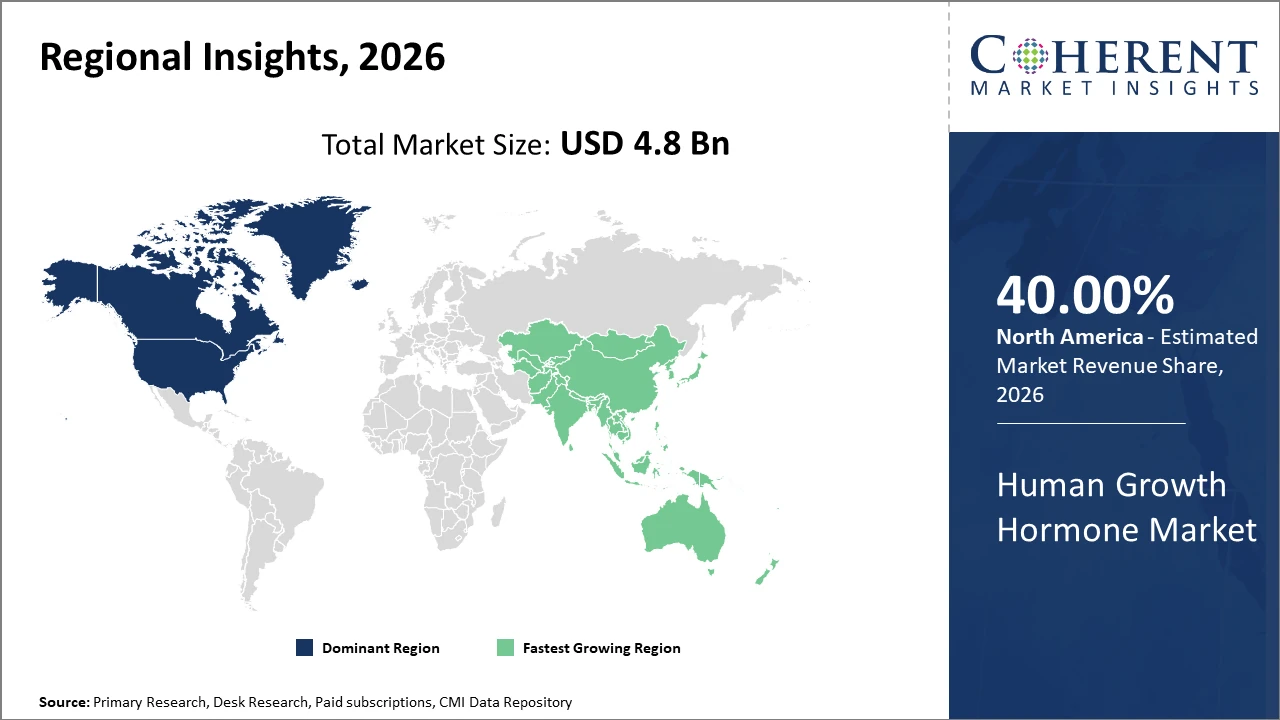
North America dominates the Human Growth Hormone (HGH) market with a share of 40% due to its advanced healthcare infrastructure, high awareness of endocrine disorders, and favorable reimbursement policies that support treatment accessibility. The region benefits from strong diagnostic capabilities and widespread adoption of innovative hormone therapies. The United States accounts for approximately 70% of North America's HGH market revenue, driven by a large patient population and significant healthcare spending. Major pharmaceutical companies such as Pfizer and Eli Lilly and Company play a key role through continuous product innovation, clinical research, and extensive market penetration, reinforcing the region’s leadership in HGH therapy adoption.
Asia Pacific Human Growth Hormone Market Analysis and Trends
Asia Pacific is the fastest-growing region in the Human Growth Hormone (HGH) market, registering a CAGR exceeding 8% during the forecast period. Growth is driven by increasing government support for healthcare development, improving access to endocrine treatments, and rising awareness of growth hormone deficiency disorders. Expanding healthcare infrastructure and growing diagnosis rates are contributing to higher treatment adoption across the region. Additionally, increasing manufacturing capabilities in China and India have strengthened local supply chains and reduced treatment costs. The widespread availability of affordable biosimilar HGH products has further accelerated market penetration, enabling broader patient access and supporting sustained market expansion across emerging economies.
Human Growth Hormone Market Outlook for Key Countries
USA Human Growth Hormone Market Analysis and Trends
The United States remains the largest contributor to the Human Growth Hormone (HGH) market, supported by substantial investments in both pediatric and adult growth hormone therapies. Rising awareness of endocrine disorders, improved screening programs, and increasing diagnosis rates—growing by approximately 4% annually—continue to expand the treatment population. The market also benefits from strong healthcare infrastructure, favorable reimbursement policies, and high adoption of advanced biologic therapies. Leading companies such as Pfizer and Novo Nordisk have introduced patient-centric formulations, long-acting therapies, and innovative delivery technologies, further strengthening the country’s dominant position in the global HGH market.
Germany Human Growth Hormone Market Analysis and Trends
Germany's Human Growth Hormone (HGH) market is driven by a well-established healthcare system, increasing diagnosis rates of growth hormone deficiency, and growing adoption of advanced biologic therapies. Rising awareness among healthcare professionals and patients has contributed to earlier detection and treatment of pediatric and adult growth disorders. The market benefits from strong reimbursement policies and the presence of leading pharmaceutical companies such as Merck KGaA, Pfizer, and Novo Nordisk. Key trends include increasing demand for long-acting growth hormone formulations, greater use of digital injection devices, and ongoing research into improved treatment efficacy and patient adherence.
Analyst Opinion
Biosynthetic HGH production capacity expanded significantly, with production volumes increasing by approximately 12% in 2025, supporting growing clinical demand and market penetration.
Demand for HGH is rising in new therapeutic areas, with off-label applications such as anti-aging and metabolic disorders accounting for nearly 20% of prescriptions in 2026.
Declining HGH prices between 2024 and 2026, driven by recombinant technology advancements and biosimilar launches, have improved affordability and market access.
Increasing diagnosis rates of pediatric growth hormone deficiency, including a 4.5% year-over-year rise in the USA during 2025, continue to drive demand for HGH therapies.
- Current Industry Events of 2026
- Market Size Estimation
- Regional Breakdown
- Competitive Landscape
- Customer Intelligence
- Segmental Analysis
- Pricing Analysis
- Key Market Drivers, Challenges & Future Trends
- Customized Insights Section
Market Scope
| Report Coverage | Details | ||
|---|---|---|---|
| Base Year: | 2025 | Market Size in 2026: | USD 4.8 billion |
| Historical Data for: | 2020 To 2024 | Forecast Period: | 2026 To 2033 |
| Forecast Period 2026 to 2033 CAGR: | 6.1% | 2033 Value Projection: | USD 7.4 billion |
| Geographies covered: |
| ||
| Segments covered: |
| ||
| Companies covered: | Pfizer Inc., Novo Nordisk A/S, Eli Lily and Company, Abbott Laboratories, Mylan NV, Ipsen Pharma, LG Chem Ltd., Serum Institute of India, OPKO Health Inc., Sandoz International GmbH | ||
| Growth Drivers: |
| ||
Human Growth Hormone Market Growth Factors
The Human Growth Hormone (HGH) market is driven by several key factors. Increasing awareness and improved diagnostic capabilities have led to a significant rise in the identification of growth hormone deficiencies, with diagnosed cases growing steadily between 2024 and 2026. Expanding geriatric populations in developed economies are also boosting demand for HGH therapies, particularly for adult hormone deficiency management. Technological advancements, including sustained-release and long-acting formulations, have enhanced treatment convenience and patient adherence. Additionally, favorable reimbursement policies across North America and parts of Asia have improved affordability and access to treatment, encouraging wider adoption and supporting sustained market growth globally.
Human Growth Hormone Market Development
In February 2026, Novo Nordisk announced that the U.S. FDA approved three additional indications for its once-weekly long-acting growth hormone Sogroya (somapacitan-beco). The treatment is now approved for children aged 2.5 years and older with idiopathic short stature, small for gestational age without catch-up growth, and Noonan syndrome–related growth failure, as well as for children and adults with growth hormone deficiency.
Key Players
Leading Companies of the Market
Pfizer
Novo Nordisk A/S
Serum Institute of India
Eli Lily and Company
Abbott Laboratories
Mylan NV
Ipsen Pharma
LG Chem Ltd.
OPKO Health Inc.
Sandoz International GmbH
Several market participants are pursuing growth through biosimilar development and strategic collaborations. For example, Novo Nordisk expanded partnerships with biotechnology firms in Asia to accelerate the availability of affordable HGH therapies, supporting revenue growth in emerging markets. Meanwhile, Pfizer invested in advanced drug delivery technologies, including needle-free injection systems and enhanced patient-support solutions. These initiatives have strengthened product adoption, improved treatment adherence, and helped both companies expand their presence in key regional HGH markets.
Human Growth Hormone Market Future Outlook
The Human Growth Hormone (HGH) market is expected to experience steady growth over the coming years, driven by increasing prevalence of growth hormone deficiency, rising awareness of endocrine disorders, and improved diagnostic capabilities. Demand for long-acting HGH formulations is anticipated to grow as patients and healthcare providers seek more convenient treatment options that enhance adherence. Advances in recombinant DNA technology, biosimilar development, and digital health integration are expected to improve treatment accessibility and outcomes. Leading companies such as Novo Nordisk, Pfizer, and Eli Lilly and Company will continue investing in innovation, supporting market expansion across both developed and emerging healthcare markets.
Human Growth Hormone Market Historical Analysis
The Human Growth Hormone (HGH) market has evolved significantly since the introduction of recombinant human growth hormone therapies in the 1980s, which replaced treatments derived from human pituitary glands and improved safety profiles. During the 2000s and 2010s, increasing awareness of growth hormone deficiency, expanded clinical indications, and advancements in biotechnology fueled market expansion. Major pharmaceutical companies such as Pfizer, Novo Nordisk, Eli Lilly and Company, and Merck KGaA introduced improved formulations and delivery devices. More recently, the development of long-acting growth hormone products and biosimilars has enhanced treatment convenience, accessibility, and market competitiveness worldwide.
Sources
Primary Research Interviews:
Human growth hormone manufacturers, biotechnology companies, recombinant protein producers, specialty pharmaceutical firms, hospital pharmacy managers, endocrinology clinic administrators, and healthcare providers involved in HGH development, production, distribution, and treatment delivery.
Endocrinologists, pediatric endocrinologists, hormone therapy specialists, clinical researchers, biotechnology scientists, regulatory consultants, pharmacovigilance experts, and R&D directors specializing in growth hormone deficiency, endocrine disorders, recombinant hormone therapies, and long-acting HGH formulations.
Magazines:
Pharmaceutical Executive – Coverage of biotechnology innovations, hormone therapies, and pharmaceutical commercialization strategies.
BioPharm International – Insights into biologics manufacturing, recombinant protein development, and regulatory trends.
Drug Discovery & Development – Updates on endocrine therapies, clinical research, and pharmaceutical R&D advancements.
Journals:
Journal of Clinical Endocrinology & Metabolism – Research on growth hormone disorders, hormone replacement therapies, and clinical outcomes.
Hormone Research in Paediatrics – Studies on pediatric growth disorders, HGH treatment efficacy, and endocrine health.
Endocrine Reviews – Comprehensive research on endocrinology, growth hormone biology, and emerging therapeutic approaches.
Newspapers:
Financial Times – Coverage of pharmaceutical investments, biotechnology partnerships, and healthcare market developments.
Bloomberg – Insights into pharmaceutical company performance, biologics markets, and healthcare industry trends.
Reuters – Reporting on drug approvals, clinical trial results, mergers and acquisitions, and regulatory developments affecting HGH therapies.
Associations:
Endocrine Society – Clinical guidelines, research publications, and educational resources related to hormone disorders and HGH therapies.
European Society of Endocrinology – Research collaboration, scientific meetings, and advances in endocrine treatments.
Pediatric Endocrine Society – Clinical standards, research support, and educational initiatives focused on growth disorders and hormone therapies in children.
Get access to 250+ pages report
Every segment, forecast, competitor profile and data table behind the analysis above — available for instant download.
- ESOMAR Member
- ISO 9001:2015 Certified
- D-U-N-S Registered
- GDPR & CCPA Compliant
Missing comfort of reading report in your local language? Find your preferred language:
Transform your Strategy with Exclusive Trending Reports
Frequently Asked Questions
Key market participants include Pfizer, Novo Nordisk, Eli Lilly and Company, and Ipsen Pharma. These companies maintain strong market positions through product innovation, extensive distribution networks, and strategic expansion initiatives.
The Human Growth Hormone market is projected to grow from USD 4.8 billion in 2026 to approximately USD 7.4 billion by 2033, registering a CAGR of 6.1% during the forecast period.
Hospitals represent the largest end-user opportunity due to the requirement for specialized administration, patient monitoring, and comprehensive endocrine care services associated with HGH therapies.
The market is expected to see increased adoption of biosimilar products, expansion of long-acting and non-invasive delivery technologies, and broader use of HGH therapies across emerging therapeutic applications.
The competitive environment is characterized by innovation in biologics and delivery systems, growing biosimilar competition, and challenges related to regulatory approvals, pricing pressures, and market access across different regions.
Companies commonly focus on strategic partnerships, biosimilar product launches, investment in advanced delivery technologies, portfolio diversification, and expansion into high-growth emerging markets to strengthen their competitive position.