

Antibody Cocktails Market Size and Forecast – 2026 to 2033
The Antibody Cocktails Market is estimated to be valued at USD 2.2 Bn in 2026 and is expected to reach USD 7.3 Bn by 2033, exhibiting a compound annual growth rate (CAGR) of 17.7% from 2026 to 2033.
Key Takeaways
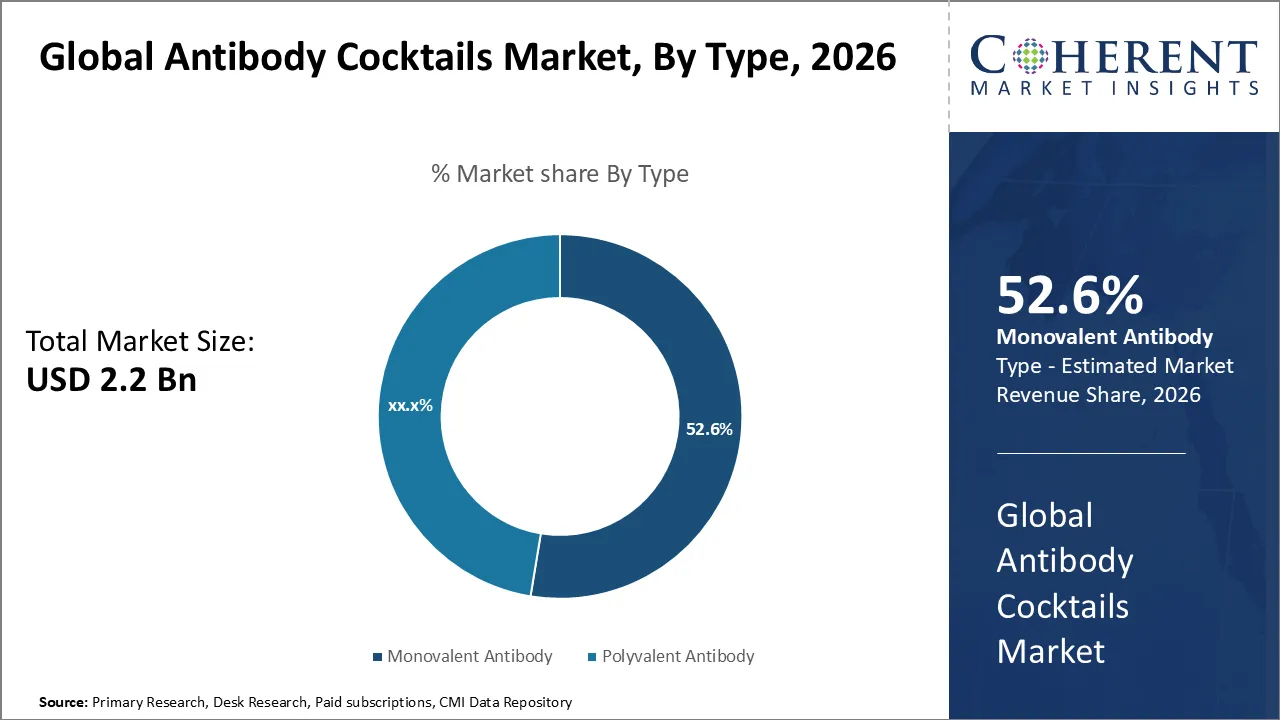
- By Type, Monovalent Antibody hold the largest market share of 52.6% in 2026 owing to the rising burden of target diseases.
- By Indication, HIV expected to hold largest market share of 42.2% in 2026 owing to its high and persistent prevalence of HIV infection.
- By Distribution Channel, Hospital Pharmacies acquired the prominent market share of 45.7% in 2026 owing to the direct access to patients requiring complex therapies.
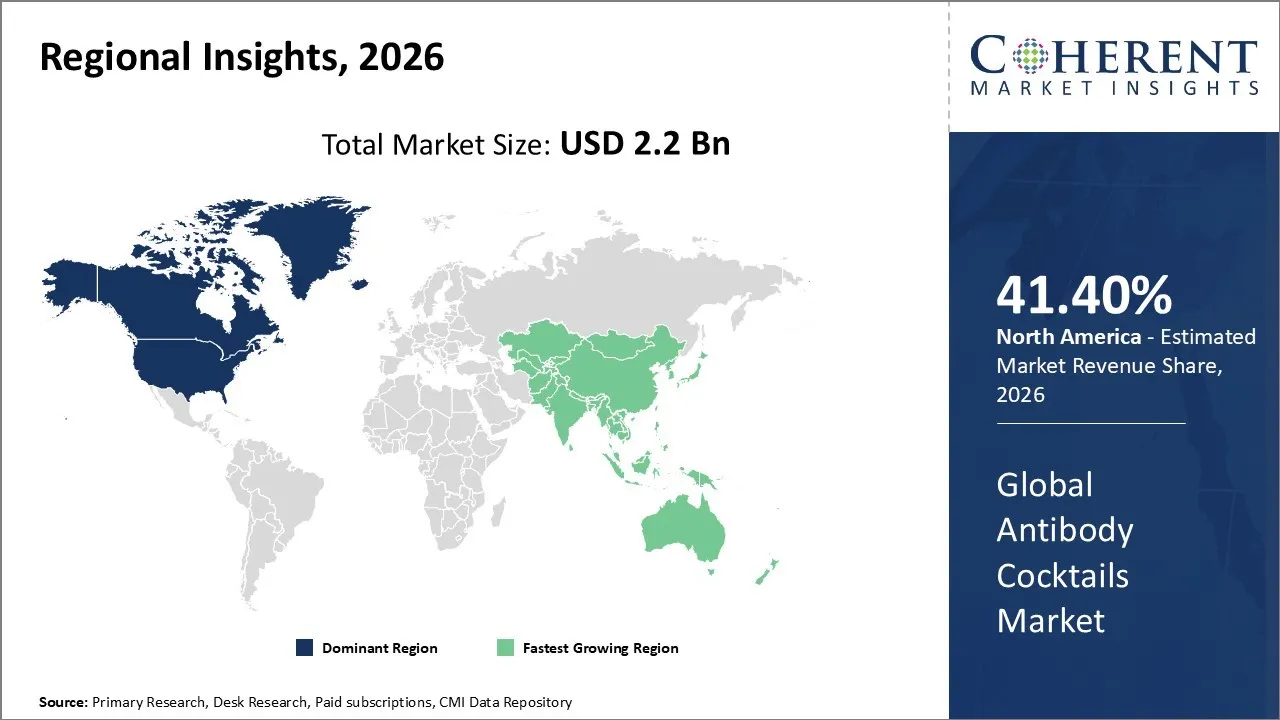
- By Region, North America dominates the overall market with an estimated share of 41.4% in 2026 owing to the advanced healthcare infrastructure.
Market Overview
The Antibody Cocktails Market is witnessing rapid expansion as healthcare providers increasingly demand targeted therapies for infectious diseases, cancer, and autoimmune disorders. By combining multiple antibodies, these cocktails improve treatment efficacy and minimize resistance compared to single-agent therapies. Technological advances in antibody engineering, rising R&D investments, and robust healthcare infrastructure in key regions actively drive this growth. Hospital pharmacies and specialty clinics distribute these therapies, while regulatory support and heightened awareness of biologics further accelerate adoption, opening extensive opportunities for innovation and commercialization.
Current Events and their Impact on the Antibody Cocktails Market
Current Events | Description and its impact |
Geopolitical Developments |
|
Economic and Investment Trends |
|
Disease Epidemiology and Healthcare Demand |
|
Segmental Insights
- Current Industry Events of 2026
- Market Size Estimation
- Regional Breakdown
- Competitive Landscape
- Customer Intelligence
- Segmental Analysis
- Pricing Analysis
- Key Market Drivers, Challenges & Future Trends
- Customized Insights Section
Antibody Cocktails Market Insights, By Type: Monovalent Antibody contribute the highest share of the market owing to its personalized and targeted medicine trends.
Monovalent Antibody hold the largest market share of 52.6% in 2026. The monovalent antibody segment in the Antibody Cocktails Market is expanding as healthcare providers increasingly use these single-target antibodies to precisely attack specific antigens, improving safety and reducing off-target effects. Rising cases of chronic and infectious diseases drive demand for targeted treatments, while advancements in antibody engineering and high-throughput screening speed up development. Growing research investments and efficient regulatory pathways facilitate commercialization, and incorporating monovalent antibodies into personalized medicine and hospital-based care actively boosts adoption, establishing them as essential elements of next-generation antibody cocktail therapies. For instance, in March 2025, Hemab has launched trials of HMB-002, a first-in-class, monovalent human antibody for all types of von Willebrand disease. The therapy boosts von Willebrand factor and factor VIII levels and is designed as a long-acting, subcutaneous prophylactic treatment.
Antibody Cocktails Market Insights, By Indication: HIV contribute the highest share of the market owing to its increased R&D and biotech innovation.
HIV expected to hold largest market share of 42.2% in 2026. The HIV segment in the Antibody Cocktails Market is growing as healthcare providers adopt antibody-based therapies that actively combat viral resistance and improve patient outcomes. Ongoing global HIV prevalence and limitations of conventional antiretroviral treatments drive demand for innovative antibody cocktails. Researchers accelerate development through advances in broadly neutralizing antibodies and combination strategies, while robust R&D investment and supportive regulatory frameworks facilitate faster commercialization. By integrating HIV-targeted antibody cocktails into hospital care and clinical protocols, providers expand accessibility and establish them as essential tools in modern therapy. For instance, in February 2026, OraSure Technologies, Inc. announced that Health Canada has licensed its OraQuick HIV Self-Test for use in Canada. This rapid, point-of-care oral test—the country’s first HIV self-test—detects HIV-1 and HIV-2 antibodies, providing results in about 20 minutes.
Antibody Cocktails Market Insights, By Distribution Channel: Hospital Pharmacies contribute the highest share of the market owing to its integration with hospital treatment protocols.
Hospital Pharmacies acquired the prominent market share of 45.7% in 2026. The hospital pharmacies segment in the Antibody Cocktails Market expands as hospitals actively administer complex biologic therapies. Their advanced storage, handling, and infusion systems ensure safe and effective delivery of sensitive antibody cocktails. Pharmacists work closely with clinical teams to optimize dosing, monitor patients, and maintain safety. Increasing hospital admissions for chronic and infectious diseases, along with centralized procurement and strict regulatory compliance, drive wider adoption, positioning hospital pharmacies as a vital channel for distributing and managing next-generation antibody cocktail treatments.
Regional Insights
North America Antibody Cocktails Market Trends
North America dominates the overall market with an estimated share of 41.40% in 2026. The North America Antibody Cocktails Market grows as healthcare providers increasingly adopt advanced biologic therapies for oncology, infectious diseases, and autoimmune disorders. Strong healthcare infrastructure, extensive clinical trial activity, and the presence of leading pharmaceutical and biotech companies actively drive innovation and product launches. Rising investments in antibody research, supportive regulatory frameworks, and broad patient access through hospitals and specialty clinics further boost adoption. Growing awareness of targeted therapies and personalized medicine trends establishes North America as a central hub for developing and commercializing antibody cocktails. For instance, Celltrion Group announced it has selected the most potent antibodies to neutralize SARS-CoV-2. In partnership with the Korea Centers for Disease Control and Prevention (KCDC), the company initially identified 300 antibodies targeting the virus.
Asia Pacific Antibody Cocktails Market Trends
The Asia Pacific Antibody Cocktails Market is growing as healthcare providers across the region increasingly use advanced biologic therapies to treat infectious diseases, cancer, and autoimmune disorders. Expanding investments in healthcare infrastructure, rising disease prevalence, and larger hospital networks actively enhance access and administration of antibody cocktails. Pharmaceutical and biotech companies are developing region-specific solutions, while greater awareness of targeted therapies and personalized medicine drives adoption. Government initiatives and strengthened regulatory frameworks further accelerate the distribution and use of antibody cocktail treatments throughout Asia Pacific.
United States Antibody Cocktails Market Trends
The United States Antibody Cocktails Market is growing as healthcare providers increasingly deliver biologic therapies to treat cancer, infectious diseases, and autoimmune disorders. Robust hospital networks, advanced healthcare infrastructure, and active clinical research drive the development and launch of new antibody cocktail treatments. Pharmaceutical and biotech companies continually innovate, while raising awareness of targeted therapies and personalized medicine boosts adoption among clinicians and patients. Supportive regulatory policies and efficient distribution channels further expand access, establishing the United States as a major market for antibody cocktail therapies. For instance, Proteintech Genomics, a subsidiary of Proteintech Group, Inc., launched the MultiPro Human Fixed Cell Immune Profiling Antibody Cocktail, featuring 53 antibodies targeting intracellular and cell surface proteins, along with 5 isotype controls.
China Antibody Cocktails Market Trends
The China Antibody Cocktails Market is growing as hospitals and healthcare providers actively administer biologic therapies to treat cancer, infectious diseases, and autoimmune disorders. Expanding investments in healthcare infrastructure, increasing patient awareness, and larger hospital networks strengthen access and delivery of antibody cocktails. Pharmaceutical and biotech companies are developing innovative, locally tailored solutions, while government support and enhanced regulatory frameworks speed up approvals. Together, these factors drive adoption and establish China as a rapidly emerging market for antibody cocktail therapies.
End-user Feedback and Unmet Needs in the Antibody Cocktails Market
- Efficacy and Treatment Outcomes: End-users emphasize the need for antibody cocktails that deliver consistent and superior efficacy across diverse patient populations. Clinicians seek therapies that reduce resistance and improve long-term outcomes, while patients expect faster recovery, fewer relapses, and measurable improvements in quality of life, highlighting the importance of optimized multi-antibody formulations.
- Safety and Side Effect Management: Healthcare providers and patients report concerns about adverse reactions and off-target effects. There is a demand for safer antibody cocktails with minimized immunogenicity and improved tolerability. End-users expect therapies that balance potency with safety, enabling widespread adoption in hospitals and outpatient settings without intensive monitoring requirements.
- Accessibility and Administration Convenience: End-users highlight challenges in accessing antibody cocktails due to complex storage, infusion requirements, and high costs. There is a growing need for formulations that simplify administration, support outpatient delivery, and reduce logistical burdens, ensuring patients can receive treatment conveniently while healthcare facilities manage inventory efficiently.
Antibody Cocktails Market Trend
Rise of Targeted Combination Therapies
The market is shifting toward antibody cocktails that combine multiple antibodies to target different disease pathways simultaneously. This trend enhances therapeutic efficacy, reduces resistance, and improves patient outcomes in conditions like cancer, infectious diseases, and autoimmune disorders. Clinicians increasingly prefer multi-antibody regimens over single-agent therapies, driving research into synergistic combinations and optimized dosing strategies. Pharmaceutical companies are responding with innovative formulations designed to maximize potency while minimizing adverse effects, shaping the future of combination biologic therapies.
Integration with Personalized Medicine
Antibody cocktails are increasingly tailored to individual patient profiles, reflecting a broader trend toward precision medicine. Biomarker-driven treatment strategies enable clinicians to select specific antibody combinations that best suit a patient’s disease subtype and genetic makeup. This approach enhances efficacy, reduces unnecessary exposure to non-target antibodies, and improves patient adherence. Growing collaboration between diagnostic companies and biopharmaceutical developers is accelerating the creation of customized antibody cocktails, ensuring therapies align with patient-specific needs and clinical outcomes.
Antibody Cocktails Market Opportunity
Integration with Personalized and Precision Medicine
There is an opportunity to develop antibody cocktails tailored to individual patient profiles using biomarkers and genetic data. By aligning therapies with disease subtypes, clinicians can optimize efficacy, reduce adverse effects, and enhance patient adherence. Collaborations between diagnostics and biopharmaceutical firms enable co-development of companion diagnostics and customized antibody regimens. This approach opens avenues for more effective treatments, higher clinical success rates, and differentiation in a competitive biologics market.
Market Report Scope
Antibody Cocktails Market Report Coverage
| Report Coverage | Details | ||
|---|---|---|---|
| Base Year: | 2025 | Market Size in 2026: | USD 2.2 Bn |
| Historical Data for: | 2020 To 2024 | Forecast Period: | 2026 To 2033 |
| Forecast Period 2026 to 2033 CAGR: | 17.7% | 2033 Value Projection: | USD 7.3 Bn |
| Geographies covered: |
| ||
| Segments covered: |
| ||
| Companies covered: | Cipla Inc., F. Hoffmann-La Roche Ltd, Regeneron Pharmaceuticals Inc., Zydus Cadila, AstraZeneca, Aridis Pharmaceuticals Inc., Immunome Inc., Celltrion Healthcare Co.,Ltd., and Eli Lilly and Company. | ||
| Growth Drivers: |
| ||
| Restraints & Challenges: |
| ||
Antibody Cocktails Market News
- In June 2025, Biotium launched ExoBrite CD9/CD63/CD81 Antibody Cocktails for rapid, reliable flow cytometry of extracellular vesicles. Available in single- or 3-color options, they deliver high brightness and signal-to-noise for efficient multi-marker EV analysis without extensive optimization.
Analyst Opinion (Expert Opinion)
- In expert assessment, the Antibody Cocktails Market is transitioning from niche response tools to foundational biologic platforms across therapeutic areas, reflecting both scientific maturation and strategic industry commitment.
- Major biopharmaceutical firms are increasingly prioritizing next‑generation formats — from fixed‑dose combinations of co‑formulated monoclonal antibodies to bispecific constructs — because synergistic targeting demonstrably improves neutralization breadth and durability, as seen in multiple SARS‑CoV‑2 studies where cocktails maintained activity against diverse variants. This scientific strategy aligns with broader clinical imperatives: single antibodies frequently fail against rapidly mutating pathogens, whereas rationally designed cocktails restrict escape pathways.
- However, the market’s strategic upside is tempered by persistent manufacturing and regulatory complexity. Fixed‑dose antibody combinations demand advanced analytical characterization and integrated production workflows that significantly raise development costs, challenging comparability with single‑agent biologics and limiting scalability outside well‑capitalized firms. Regulatory agencies continue to apply rigorous, multi‑phase evaluation frameworks for combination biologics, often requiring bespoke trial designs that extend timelines and elevate risk.
Speak to the analyst
Want personalized insights?
Take the findings above to one of our principal consultants, or have the report rebuilt around the segments, geographies and competitors you actually track.
Market Segmentation
- By Type
- Monovalent Antibody
- Polyvalent Antibody
- By Indication
- COVID-19
- Cancer
- HIV
- Others
- By Distribution Channel
- Hospital Pharmacies
- Retail Pharmacies
- Online Pharmacies
- By Regional Insights
- North America
- U.S.
- Canada
- Latin America
- Brazil
- Argentina
- Mexico
- Rest of Latin America
- Europe
- Germany
- U.K.
- Spain
- France
- Italy
- Russia
- Rest of Europe
- Asia Pacific
- China
- India
- Japan
- Australia
- South Korea
- ASEAN
- Rest of Asia Pacific
- Middle East
- GCC Countries
- Israel
- Rest of Middle East
- Africa
- South Africa
- North Africa
- Central Africa
- North America
- Key Players Insights
- Cipla Inc.
- Hoffmann-La Roche Ltd
- Regeneron Pharmaceuticals Inc.
- Zydus Cadila
- AstraZeneca
- Aridis Pharmaceuticals Inc.
- Immunome Inc.
- Celltrion Healthcare Co.,Ltd.
- Eli Lilly and Company.
Sources
Primary Research interviews
- Interviews with immunologists, virologists, and antibody researchers
- Discussions with R&D heads of biotech and pharmaceutical companies
- Interviews with clinical trial coordinators and laboratory managers
- Insights from hospital and diagnostic lab professionals
Databases
- PubChem
- ClinicalTrials.gov
- NCBI Gene
- WHO Global Health Observatory
Magazines
- Nature Biotechnology Magazine
- The Scientist
- BioCentury
- Genetic Engineering & Biotechnology News (GEN)
Journals
- Nature Immunology
- Journal of Clinical Investigation
- mAbs
- Frontiers in Immunology
Newspapers
- The New York Times – Health Section
- The Guardian – Science Section
- The Washington Post – Health & Science
- Financial Times – Healthcare & Biotech Coverage
Associations
- American Association of Immunologists (AAI)
- International Society for Antiviral Research (ISAR)
- Biotechnology Innovation Organization (BIO)
- European Federation of Pharmaceutical Industries and Associations (EFPIA)
Public Domain sources
- US FDA – Biologics License Applications (BLA) database
- CDC – Antibody-related guidelines and reports
- WHO – Reports on antibody therapies and pandemics
- NIH – Open-access publications and clinical trial results
Proprietary Elements
- CMI Data Analytics Tool
- Proprietary CMI Existing Repository of information for last 8 years
Get access to 250+ pages report
Every segment, forecast, competitor profile and data table behind the analysis above — available for instant download.
- ESOMAR Member
- ISO 9001:2015 Certified
- D-U-N-S Registered
- GDPR & CCPA Compliant
Missing comfort of reading report in your local language? Find your preferred language:
Transform your Strategy with Exclusive Trending Reports
Frequently Asked Questions
The Antibody Cocktails Market is estimated to be valued at USD 2.2 Bn in 2026 and is expected to reach USD 7.3 Bn by 2033.
Factors such as high prevalence of infectious diseases, increasing product approvals, and increasing research and development activities, are expected to drive the growth of the market during the forecast period.
Monovalent Antibody is the leading type segment in the market.
The major factors hampering growth of the market include high cost of the drugs and stringent government regulations for product approval.
Major players operating in the market include Cipla Inc., F. Hoffmann-La Roche Ltd, Regeneron Pharmaceuticals Inc., Zydus Cadila, AstraZeneca, Aridis Pharmaceuticals Inc., Immunome Inc., Celltrion Healthcare Co.,Ltd., and Eli Lilly and Company.