

In Vitro Fertilization Devices Market Size and Share Analysis - 2026 To 2033
The In Vitro Fertilization Devices Market size is anticipated to grow at a CAGR of 9.0%, with USD 1,456.1 Mn in 2026 and is expected to reach USD 2,661.7 Mn in 2033. The primary drivers are largely defined by the rising prevalence of late parenthood, increasing incidence of infertility, growing adoption of assisted reproductive technologies, and increasing availability of advanced IVF devices and laboratory systems. According to the World Health Organization estimates that about 17.5% of the world's adult population, equivalent to one out of every six people, suffer from infertility, thus the underlying need for fertility treatment.
Key Takeaways
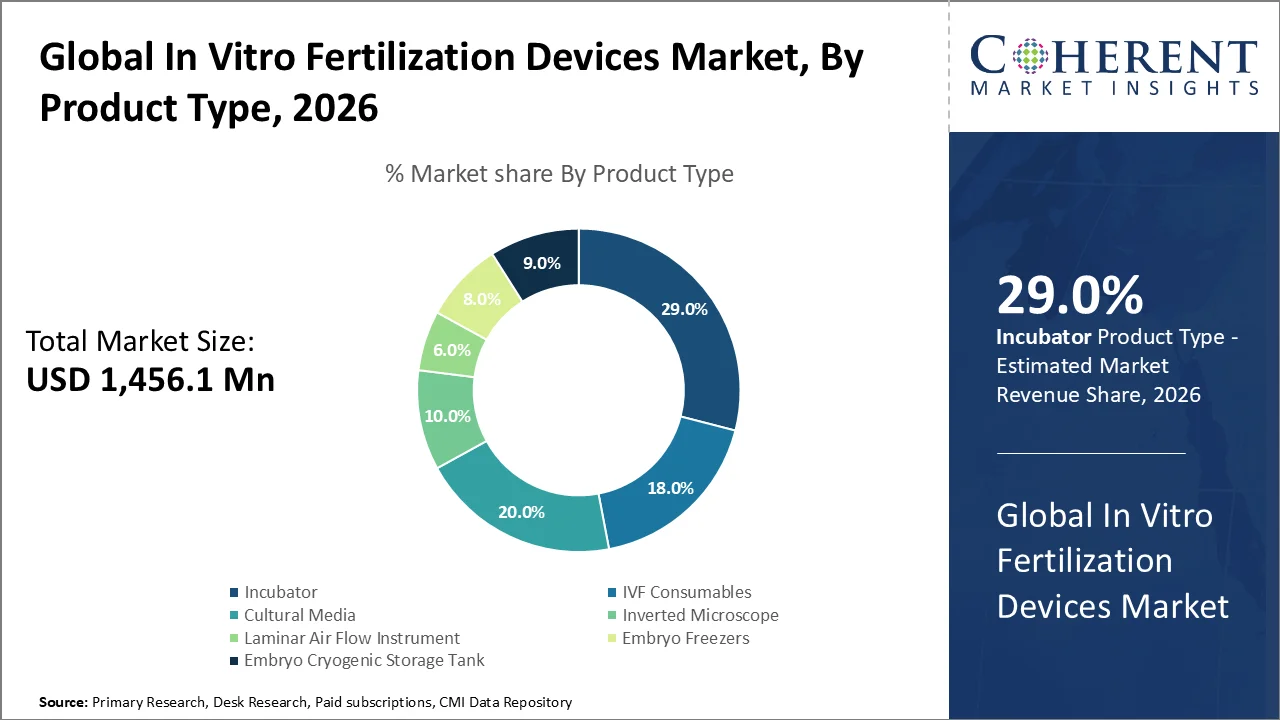
- The incubator segment is estimated to dominate the product type segment with approximately 29.0% in 2026. The segment’s growth is owing to the essential requirement for controlled embryo-culture conditions during IVF/ICSI procedures and the increasing volume of embryos undergoing laboratory culture. According to the Human Fertilisation and Embryology Authority (HFEA), around 64,000 patients underwent more than 100,000 fertility treatment and freezing cycles at HFEA-licensed clinics in 2024, with IVF accounting for 76% of the activity.
- The Intra Cytoplasmic Sperm Injection (ICSI) segment is estimated to lead the procedure segment with approximately 55.0% in 2026. The dominance of the segment is ensured due to the wide implementation of ICSI into the IVF laboratory routine, especially when male factor infertility or fertilization failure are present. According to ASRM (2026), a randomized study performed among 415 couples showed that complete fertilization failure was reported in 2% of patients receiving ICSI treatment versus 5% with conventional insemination.
- The IVF center segment is predicted to hold the dominance position in the end-user segment with around 65.0% share in 2026 due to the presence of embryo culture, ICSI, cryopreservation, embryo transfer, and gamete/embryo storage processes in specialized fertility clinics. As per the report of the HFEA, around 100,000 fertility treatments were conducted annually in their licensed clinic database.
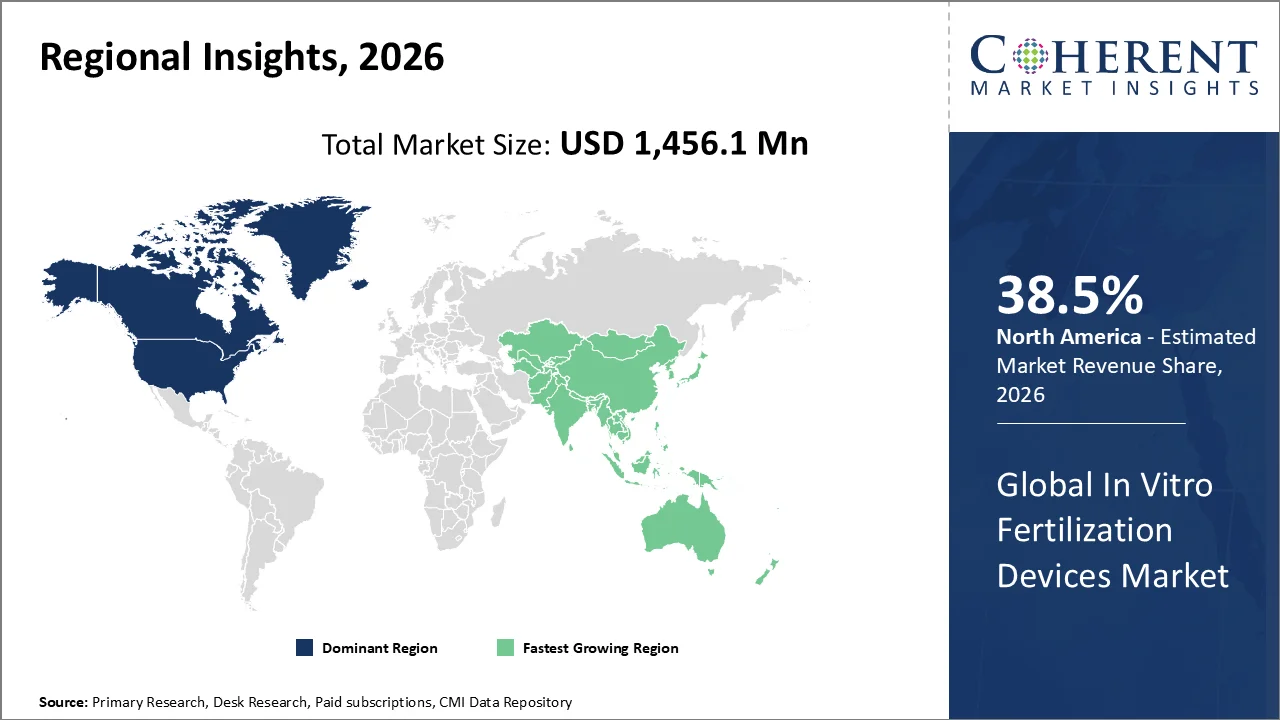
- North America is estimated to dominate the In Vitro Fertilization Devices Market with a share of about 38.5% in 2026. This has been attributed to the many ART procedures carried out, infrastructure in fertility centers, increased activity in embryo freezing, and increase in insurance coverage for infertility procedures. In ASRM, 95,000 babies were born using the procedure of IVF in 2023, which translates to more than 2.6% of total births in the United States, representing a growth of more than 4%.
Market Drivers
Rising ART Treatment Volumes and Expansion of Fertility Clinics are Driving Demand for IVF Devices
The growing trend in the use of assisted reproductive technology (ART) has led to a rise in the number of requirements for various instruments used in the IVF process including incubators, inverted microscopes, culture medium, embryo freezers, cryo-storages, and IVF consumables. As per the National Review 2025 by the Australian Department of Health, Disability and Ageing, there were about 104,000 ART cycles carried out in Australia in 2023.
In February 2026, Hana Health by DSS Imagetech partnered with Overture Life to introduce DaVitri, an automated egg-freezing platform, in India.
Expanding Fertility Treatment and Cryopreservation Coverage is Improving Access to IVF
The rising trend of covering assisted reproduction procedures through public and private insurance will lower financial barriers for undergoing assisted reproduction and result in increased use of IVF services. The OPM requires, at the very least, provision of insurance coverage of the process of retrieval and freezing of sperm and oocytes, and storage for a minimum period of one year in eligible people suffering from iatrogenic infertility due to non-elective procedures.
In April 2026, Progyny launched Progyny Select, described by the company as a fully insured supplemental fertility and family-building plan designed particularly for smaller U.S. employers.
Current Events and Their Impact on the In Vitro Fertilization Devices Market
Current Event | Description and its Impact |
U.S. Government Introduces New IVF Access and Fertility Benefit Measures (October 2025) |
|
Australia Begins Implementation of New National ART Accreditation Framework (April 2026) |
|
- Current Industry Events of 2026
- Market Size Estimation
- Regional Breakdown
- Competitive Landscape
- Customer Intelligence
- Segmental Analysis
- Pricing Analysis
- Key Market Drivers, Challenges & Future Trends
- Customized Insights Section
Segmental Insights
Why is the Incubator Segment Acquiring the Largest Share?
On the basis of product type, the incubator segment is estimated to account for the largest In Vitro Fertilization Devices Market share of approximately 29.0% in 2026. The segment’s dominance is owing to the critical role of incubators in maintaining stable temperature, gas concentration, humidity, and embryo-culture conditions throughout early embryo development. Increasing adoption of extended blastocyst culture and time-lapse monitoring is further increasing the requirement for advanced multi-chamber and continuously monitored IVF incubators.
Cambridge IVF, part of Cambridge University Hospitals NHS Foundation Trust, states that embryos maintained in its EmbryoScope time-lapse incubator remain in the controlled environment for approximately 2–6 days, while the integrated imaging system captures an embryo image every ten minutes.
In June 2026, Oval Fertility introduced Astec Chronos embryo incubation technology in India with the launch of its flagship IVF center in Hyderabad.
Why is Intracytoplasmic Sperm Injection (ICSI) Acquiring the Largest Share?
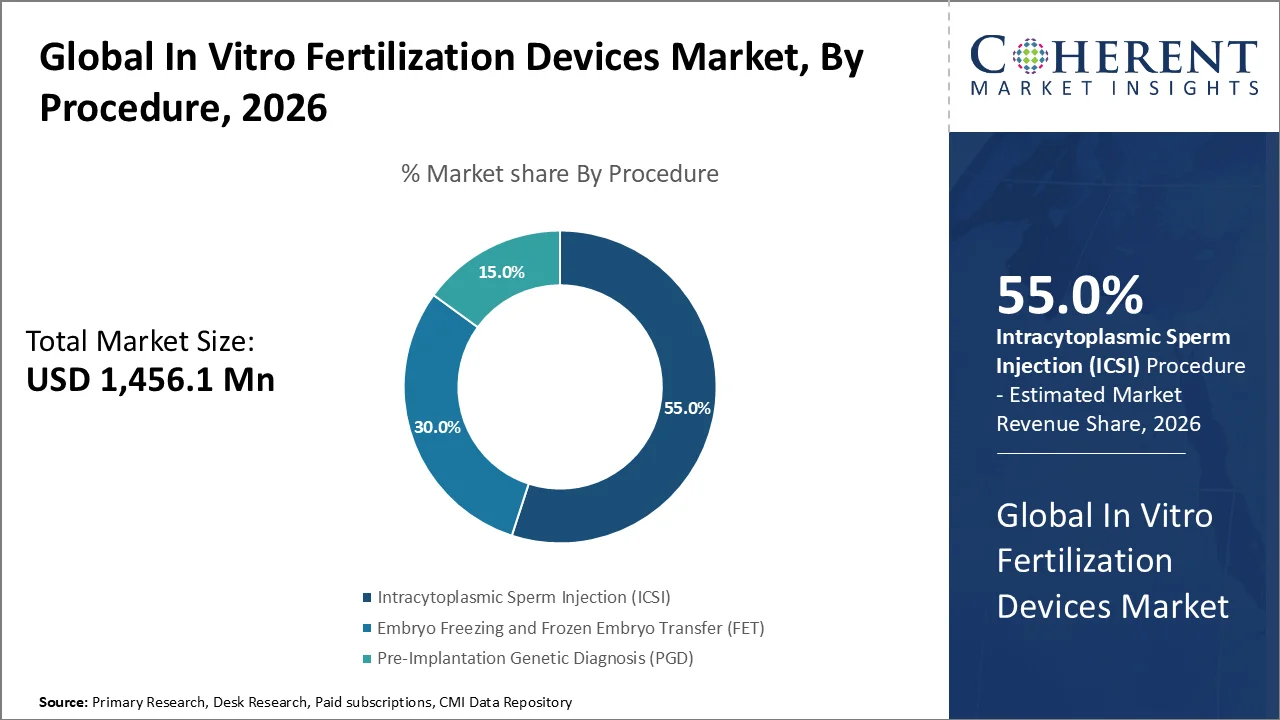
On the basis of procedure, the Intracytoplasmic Sperm Injection (ICSI) segment is estimated to lead the In Vitro Fertilization Devices Market with approximately 55.0% share in 2026. ICSI generates substantial demand for inverted microscopes, micromanipulators, microinjection systems, holding and injection pipettes, culture dishes, and associated IVF consumables because each mature oocyte is individually manipulated and injected with a selected sperm.
The committee opinion by ASRM in July 2026 has reiterated that ICSI has an already accepted role in the management of male factor infertility as well as fertilization failure and mentioned that the use of ICSI is increasing in cases where there are normal or borderline semen parameters. This opinion has been based on the analysis of a recent multi-centered randomized trial that has involved 824 women at six fertility centers.
Why do IVF Centers Hold the Largest Market Share?
On the basis of end user, the IVF center segment is expected to hold an approximate 65.0% share of the market in 2026. Dedicated IVF centers bring together specialized laboratories for embryology, specialist embryologists, cryopreservation facilities, ICSI technology, embryo incubators, microscopes, tanks for storage, culture media, and a large quantity of consumables in one unit, thereby offering higher device consumption compared to other healthcare facilities.
According to a December 2025 report from the U.S. CDC's National Center for Health Statistics, 13.7% of U.S. women aged 20–49 had used some form of fertility service, while 10.4% had received medical assistance to become pregnant. Importantly for the IVF-center segment, 1.6% had used IVF or another assisted reproductive technology procedure, demonstrating a substantial population accessing specialized ART services.
In July 2026, Gaudium IVF and Women Health Limited launched a new IVF center in South Delhi equipped with its AI-powered “Signature Lab,” marking the first step in the company's planned expansion of 19 fertility centers.
In Vitro Fertilization Devices Market Trends
- Increased use of AI-based embryo grading and digital IVF laboratories technology is leading to the evolution of embryo evaluation from morphology-based assessment to a data-driven decision support system. According to ESHRE in 2026, there has been an increase in the use of AI-based tools within the IVF laboratory settings mainly for embryo selection, ovulation induction, embryo grading through imaging, and decision making in clinics. This development is driving the demand for imaging systems, time-lapse incubators, digital microscopes, and IVF lab software solutions.
- The rising tendency towards employing the method of freeze-all IVF has increased the importance of embryo freezers, vitrification solutions, and cryogenic freezing technology. According to the ANZARD figures from UNSW for August 2026, 44.5 percent of fresh IVF cycles initiated in Australia and New Zealand resulted in a freeze-all of eggs/embryos in 2024, compared to only 31.6 percent five years ago. About 70 percent of embryo transfers involve frozen embryos.
- The growing incorporation of preimplantation genetic testing (PGT) into the process of IVF results in an extra demand for more precise microscopes, systems for embryo biopsy, incubators, culture media, and cryopreservation equipment. According to the analysis provided by the Australian Government in September 2025 concerning the current state of the ART industry, the amount of treatment cycles using PGT grew from 7,697 in 2020 to 9,865 in 2023; thus, the growth was approximately 28%.
Regional Insights
North America Dominates Owing to High IVF Procedure Volumes and Advanced Fertility-Care Infrastructure
North America will hold a major share of the global In Vitro Fertilization Devices Market, accounting for around 38.5% of the market in 2026. This is due to the high use of IVF treatments, robust clinic infrastructure in the region, quick adoption of cutting-edge embryology technologies, and high penetration of embryo culture, freezing, micromanipulation, and genetic tests.
According to ASRM, as reported by the current SART national figures published in March 2026, there were 449,772 cycles of IVF treatment carried out in the United States in 2024, which led to 97,549 live birth cycles and 100,158 IVF babies, becoming the first year when the number of annual U.S. IVF babies surpassed the figure of 100,000.
In July 2026, Alife Health partnered with First Fertility to deploy Embryo Predict across its U.S. fertility-center network. The FDA-cleared AI embryo-assessment system analyzes microscope images of Day 5, 6, and 7 blastocysts and provides embryologists with a data-driven embryo score.
Asia Pacific In Vitro Fertilization Devices Market Trends
Asia Pacific is expected to be the fastest-growing region in the In Vitro Fertilization Devices Market during 2026–2033. The region’s growth is owing to rapidly increasing ART treatment volumes, improving treatment reimbursement, expansion of fertility centers, and growing investments in advanced IVF laboratories across Japan, India, China, Australia, and other Asian countries.
India is also expanding public IVF infrastructure. In November 2025, AIIMS Nagpur inaugurated a new government ART Centre developed at a project cost of approximately ₹5 crore. The IVF facility includes advanced laboratories, incubator systems and cryopreservation units, and became the first government institute in Maharashtra and Central India to provide comprehensive IVF treatment.
U.S. In Vitro Fertilization Devices Market Trends
The U.S. is one of the major markets for IVF instruments due to the presence of state-of-the-art embryology labs, high levels of adoption of single embryo transfer, increasing usage of embryo selection techniques, and automation and digitization in labs. These factors are driving the demand for embryo incubators, inverted microscopes, ICSI systems, culture media, cryogenic storage equipment, and other IVF consumables.
According to the American Society for Reproductive Medicine (ASRM), in March 2026, approximately 79% of U.S. embryo-transfer cycles involved elective single-embryo transfer. Furthermore, more than 97% of IVF births were singleton births, while twins represented approximately 2.6% and triplets only 0.04%. The widespread shift toward single-embryo transfer increases the importance of precise embryo culture, monitoring, grading, and selection, thereby supporting adoption of advanced incubators, embryo-imaging systems, microscopes, and associated laboratory technologies.
China In Vitro Fertilization Devices Market Trends
The China In Vitro Fertilization Devices Market is expected to experience strong growth, driven by expansion of assisted-reproduction infrastructure, broader reimbursement for ART procedures, increasing utilization of IVF/ICSI services, and government efforts to reduce the financial burden of infertility treatment. These developments are increasing utilization of incubators, ICSI micromanipulation systems, embryo culture media, cryopreservation systems, and laboratory consumables across reproductive centers.
According to China's National Healthcare Security Administration (NHSA), by 2025 all 31 provinces, autonomous regions, municipalities, and the Xinjiang Production and Construction Corps had incorporated eligible assisted-reproductive procedures into medical-insurance coverage.
In August 2026, Jinxin Fertility launched and began piloting its internally developed “IVF Co-pilot” at Sichuan Jinxin Xinan Women’s and Children’s Hospital in Chengdu.
Who are the Major Companies in In Vitro Fertilization Devices Industry
Some of the major key players in In Vitro Fertilization Devices Market are Vitrolife AB, CooperSurgical Inc., Thermo Fisher Scientific Inc., COOK MEDICAL INC., Genea Biomedx, Merck KGaA, OvaScience, Inc., JXTG Holdings, Inc., Progyny, Inc., and Oxford Gene Technology Inc., EMD Serono,Inc., and Irvine Scientific.
Key News
- In January 2025, CooperSurgical introduced SAGE 1-Step GM-CSF, described as the first single-step embryo culture and transfer medium combining hyaluronan and GM-CSF cytokine.
- In October 2024, Cook Medical launched the NestVT Vitrification Device in the U.S. for vitrification, cryogenic storage, and relocation of embryos and oocytes.
Market Report Scope
In Vitro Fertilization Devices Market Report Coverage
| Report Coverage | Details | ||
|---|---|---|---|
| Base Year: | 2025 | Market Size in 2026: | USD 1,456.1 Mn |
| Historical Data for: | 2020 To 2024 | Forecast Period: | 2026 To 2033 |
| Forecast Period 2026 to 2033 CAGR: | 9.0% | 2033 Value Projection: | USD 2,661.7 Mn |
| Geographies covered: |
| ||
| Segments covered: |
| ||
| Companies covered: | Vitrolife AB, CooperSurgical Inc., Thermo Fisher Scientific Inc., COOK MEDICAL INC., Genea Biomedx, Merck KGaA, OvaScience, Inc., JXTG Holdings, Inc., Progyny, Inc., and Oxford Gene Technology Inc., EMD Serono,Inc., and Irvine Scientific. | ||
| Growth Drivers: |
| ||
| Restraints & Challenges: |
| ||
Analyst Opinion
- The In Vitro Fertilization Devices Market is shifting from conventional standalone equipment toward integrated, data-driven IVF laboratory platforms combining embryo incubation, imaging, genetic testing, electronic witnessing, and decision-support technologies. According to the HFEA's 2024 National Patient Survey, published in March 2025, 73% of fertility patients reported using at least one additional test, treatment, or emerging technology, while PGT-A utilization increased from 7% in 2021 to 13% in 2024. This indicates increasing willingness to incorporate technologically advanced procedures into IVF workflows and supports demand for sophisticated laboratory devices and associated consumables.
- Affordability will remain one of the most important factors determining the pace of IVF-device market expansion, particularly because equipment demand ultimately depends on patient treatment volumes. According to ASRM's December 2025 policy assessment, a single IVF cycle in the U.S. is estimated to cost approximately USD 15,000–20,000. ASRM also cited preliminary federal estimates indicating that recent fertility-drug pricing measures could provide savings of up to USD 2,200 per treatment cycle for medications alone. Improving affordability and benefit coverage could therefore increase IVF utilization and indirectly expand demand for incubators, ICSI systems, culture media, cryopreservation equipment, and other laboratory consumables.
- At the same time, evidence generation and regulatory credibility will become increasingly important for IVF-device manufacturers. Although 73% of respondents in the HFEA survey had used an additional test, treatment, or emerging technology, only 50% reported that their clinic explained its effectiveness and 37% said potential risks were explained. This will favor manufacturers that can demonstrate measurable clinical utility, standardized performance, traceability, and robust validation rather than relying solely on technological novelty.
Speak to the analyst
Want personalized insights?
Take the findings above to one of our principal consultants, or have the report rebuilt around the segments, geographies and competitors you actually track.
Market Segmentation
- By Product Type (Revenue, USD Mn, 2021-2033)
- Incubator
- IVF consumables
- Cultural media
- Cryopreservation media
- Semen processing media
- Embryo culture media
- Ovum processing media
- Inverted microscope
- Laminar air flow instrument
- Embryo freezers
- Embryo cryogenic storage tank
- By Procedure (Revenue, USD Mn, 2021-2033)
- Intra Cytoplasmic Sperm Injection (ICSI)
- Embryo Freezing and Frozen Embryo Transfer (FET)
- Pre-Implantation Genetic Diagnosis (PGD)
- By End User (Revenue, USD Mn, 2021-2033)
- Hospitals
- Gynecological clinics
- IVF center
- Clinical research institutes
- By Region (Revenue, USD Mn, 2021-2033)
- North America
- U.S.
- Canada
- Latin America
- Brazil
- Mexico
- Argentina
- Rest of Latin America
- Europe
- Germany
- U.K.
- France
- Italy
- Spain
- Russia
- Rest of Europe
- Asia Pacific
- China
- India
- Japan
- Australia
- South Korea
- ASEAN
- Rest of Asia Pacific
- Middle East
- GCC
- Israel
- Rest of Middle East
- Africa
- South Africa
- Central Africa
- North Africa
- North America
Sources
Primary Research Interviews
- IVF laboratory directors and senior embryologists
- Reproductive endocrinologists and fertility specialists
- IVF center and fertility clinic administrators
- IVF device and consumable manufacturers
- Cryopreservation and embryo storage specialists
- ART laboratory procurement and purchasing managers
- Fertility nursing and clinical operations professionals
- Key opinion leaders (KOLs) in reproductive medicine and embryology
Databases
- CDC – National ART Surveillance System (NASS)
- ClinicalTrials.gov
- U.S. FDA – 510(k) Premarket Notification Database
- U.S. FDA – AccessGUDID Medical Device Database
- WHO Global Health Observatory
- OECD Health Statistics
- Eurostat
- UN World Population Prospects
Magazines / Industry Publications
- Fertility and Sterility Dialog
- BioNews
- European Medical Journal – Reproductive Health
- Medical Device Network
- MedTech Dive
- Medical Product Outsourcing
Journals
- Fertility and Sterility
- Human Reproduction
- Human Reproduction Update
- Reproductive BioMedicine Online
- Journal of Assisted Reproduction and Genetics
- Reproductive Biology and Endocrinology
- The Journal of Clinical Endocrinology & Metabolism
Newspapers / Business Publications
- The New York Times
- The Wall Street Journal
- Financial Times
- Reuters
- The Guardian
- The Economic Times
Associations
- American Society for Reproductive Medicine (ASRM)
- Society for Assisted Reproductive Technology (SART)
- European Society of Human Reproduction and Embryology (ESHRE)
- International Federation of Fertility Societies (IFFS)
- Society for Reproductive Endocrinology and Infertility (SREI)
- Association of Reproductive and Clinical Scientists (ARCS)
Regulatory & Government Sources
- U.S. Food and Drug Administration (FDA)
- U.S. Centers for Disease Control and Prevention (CDC)
- Human Fertilisation and Embryology Authority (HFEA)
- European Commission – Health and Food Safety
- National Medical Products Administration (NMPA), China
- Therapeutic Goods Administration (TGA), Australia
- U.K. Medicines and Healthcare products Regulatory Agency (MHRA)
- National Health Commission of China
Public Domain Sources
- Company Annual Reports and Investor Presentations
- IVF Device Product Catalogs and Technical Specifications
- Regulatory Approval and Medical Device Registration Databases
- Fertility Clinic and ART Center Annual Reports
- National ART Registry Publications
- Government Fertility and Reproductive Health Statistics
- University and Academic Reproductive Medicine Publications
- Patent Databases such as WIPO, USPTO, and Google Patents
- Publicly Available IVF Clinical Guidelines and Laboratory Standards
Proprietary Elements
- CMI Data Analytics Tool
- Proprietary CMI Existing Repository of Information for the Last 10 Years
Get access to 250+ pages report
Every segment, forecast, competitor profile and data table behind the analysis above — available for instant download.
- ESOMAR Member
- ISO 9001:2015 Certified
- D-U-N-S Registered
- GDPR & CCPA Compliant
Missing comfort of reading report in your local language? Find your preferred language:
Transform your Strategy with Exclusive Trending Reports
Frequently Asked Questions
The In Vitro Fertilization Devices Market is expected to reach USD 2,661.7 Mn in 2033, compared with USD 1,456.1 Mn in 2026.
Major players operating in the global In Vitro Fertilization Devices Market include Vitrolife AB, CooperSurgical Inc., Thermo Fisher Scientific Inc., Cook Medical Inc., Genea Biomedx, Merck KGaA, OvaScience, Inc., JXTG Holdings, Inc., Progyny, Inc., Oxford Gene Technology Inc., EMD Serono, Inc., and Irvine Scientific.
The high cost of IVF treatment procedures and limited reimbursement coverage in several countries are among the major factors hampering market growth.
The increasing prevalence of infertility and delayed parenthood, rising adoption of IVF and other assisted reproductive technologies, expansion of fertility clinics, and technological advancements in embryo culture, cryopreservation, imaging, and micromanipulation systems are driving market growth.
The In Vitro Fertilization Devices Market is anticipated to grow at a CAGR of 9.0% between 2026 and 2033.
Among regions, North America is estimated to dominate the market with approximately 38.5% share in 2026, supported by high IVF procedure volumes, extensive fertility-clinic infrastructure, and rapid adoption of advanced embryology technologies.
The incubator segment is estimated to hold the largest share of approximately 29.0% in 2026, owing to its essential role in maintaining controlled embryo-culture conditions during IVF and ICSI procedures.