

Industrial Tank Cleaning Market Size and Forecast — 2026-2033
Industrial Tank Cleaning Market is estimated to be valued at USD 637.9 Mn in 2026 and is expected to reach USD 879.8 Mn in 2033, exhibiting a compound annual growth rate (CAGR) of 4.7% from 2026 to 2033.
Industrial tank cleaning is a crucial process in various industries such as manufacturing, oil & gas, food & beverage, and chemical among others. It involves the cleaning and maintenance of storage tanks that hold raw materials, semi-finished, or finished products. The process is essential to ensure the purity and quality of the substances stored, prevent cross-contamination, and maintain the efficiency and longevity of the tanks. The cleaning process can be complex and hazardous, often involving the removal of toxic or corrosive substances. It requires specialized equipment and trained personnel who can safely and effectively clean the tank
The industrial tank cleaning market is segmented into type of tank, mode of operation, service type, end user, and region.
Industrial Tank Cleaning Market Regional Insights:
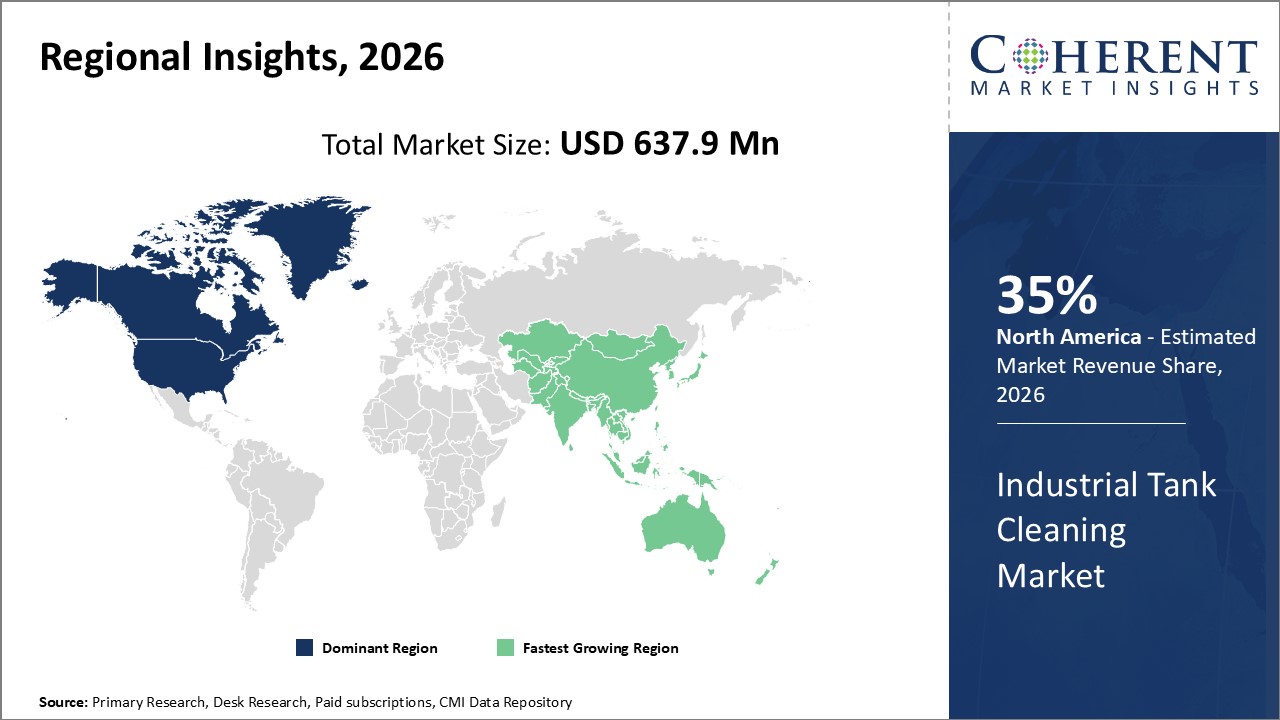
- North America accounted for the largest share of the market in 2026 due to the presence of a significant number of oil refineries and chemical plants in the region, which requires regular tank cleaning in order to maintain safety and hygiene standards. The demand for tank cleaning services is also driven by stringent government regulations for environmental safety.
- Asia-Pacific region is expected to witness the highest growth rate in the market during the forecast period due to rapid industrialization and infrastructure development in countries such as China, India, and Japan. The increasing demand for oil and gas, chemicals, and food and beverages in the region is expected to drive the demand for industrial tank cleaning services.
- Europe is also a significant market for industrial tank cleaning due to the presence of several chemical and pharmaceutical companies in the region. The Middle East & Africa and Latin America markets are expected to witness moderate growth rates due to the increasing demand for oil and gas in these regions.
Figure 1. Global Industrial Tank Cleaning Market Share (%), By Region, 2026
Analyst View Point: The global industrial tank cleaning market appears promising over the coming years. The market is anticipated to be primarily driven by the stringent regulations regarding cleaning and sanitization of tanks used in various industries such as oil and gas, chemical and food processing. Furthermore, the growing demand for cleaning of storage and transportation tanks across industries will supplement the market growth.
However, the market may face restraints from the availability of alternative technologies for tank cleaning such as manual cleaning and CIP systems. Additionally, the market players need to regularly invest in training workforce and comply with changing safety standards, which may negatively impact their profit margins.
Industrial Tank Cleaning Market Drivers
Stringent government regulations: Governments worldwide have implemented stringent regulations related to environmental safety and workplace hygiene, which requires companies to maintain their tanks in a clean and safe condition. This has resulted in a significant demand for industrial tank cleaning services.
- Increasing demand for oil and gas: The increasing demand for oil and gas across the world has led to an increase in the number of refineries and storage tanks, which requires regular cleaning and maintenance to ensure safety and prevent contamination.
- Growing chemical and pharmaceutical industries: The chemical and pharmaceutical industries require clean and safe tanks for the storage and transportation of their products. This has led to an increase in the demand for industrial tank cleaning services.
- Focus on workplace safety: Workplace safety is a top priority for companies in various industries. Regular cleaning and maintenance of tanks help prevent accidents and ensure workplace safety, which has increased the demand for industrial tank cleaning services.
Industrial Tank Cleaning Market Opportunities
- Expansion into emerging markets: Emerging markets such as India, China, and Brazil have a high demand for industrial tank cleaning services due to their growing industrialization and infrastructure development. Companies can expand into these markets and tap into demand.
- Diversification of services: Industrial tank cleaning companies can diversify their services by including other industrial cleaning services, such as HVAC (Heating, ventilation, and air conditioning) cleaning, duct cleaning, and industrial vacuuming. This helps the companies to increase their revenue and customer base.
- Adoption of new technologies: Companies can adopt new technologies such as robotics, automation, and remote tank cleaning to improve the efficiency and effectiveness of their cleaning services. This helps the companies to reduce costs and improve their competitiveness in the market.
- Strategic partnerships and collaborations: Companies such as Clean Harbors, Dulsco LLC, National Response Corporation (NRC), and others can form strategic partnerships and collaborations with other companies in the industry to expand their reach and provide comprehensive cleaning solutions to customers.
- Current Industry Events of 2026
- Market Size Estimation
- Regional Breakdown
- Competitive Landscape
- Customer Intelligence
- Segmental Analysis
- Pricing Analysis
- Key Market Drivers, Challenges & Future Trends
- Customized Insights Section
Industrial Tank Cleaning Market Report Coverage
| Report Coverage | Details | ||
|---|---|---|---|
| Base Year: | 2025 | Market Size in 2026: | USD 637.9 Mn |
| Historical Data for: | 2020 To 2024 | Forecast Period: | 2026 To 2033 |
| Forecast Period 2026 to 2033 CAGR: | 4.7% | 2033 Value Projection: | USD 879.8 Mn |
| Geographies covered: |
| ||
| Segments covered: |
| ||
| Companies covered: | Clean Harbors, Dulsco LLC, National Response Corporation (NRC), Tradebe Environmental Services, SPX Flow Inc., Midwestern Services Inc., HydroChemPSC, Scanjet Group AB, Ecolab Inc., Veolia Environnement S.A., PSC Industrial Services, Enva Group, Kärcher, and Thompson Industrial Services LLC | ||
| Growth Drivers: |
| ||
| Restraints & Challenges: |
| ||
Industrial Tank Cleaning Market Trends
- Increasing use of automated tank cleaning systems: The use of automated tank cleaning systems is becoming more prevalent in the industry due to their efficiency and cost-effectiveness. These systems can clean tanks more quickly and thoroughly than traditional methods, thereby reducing downtime and increasing productivity.
- Shift towards sustainable cleaning solutions: Many industrial tank cleaning companies are shifting towards sustainable cleaning solutions to meet the increasing demand for environmentally friendly services. This includes the use of biodegradable cleaning agents and adoption of sustainable cleaning technologies.
- Implementation of predictive maintenance: Predictive maintenance, which uses data analytics to predict equipment failures before its occurrence, is becoming more common in the industry. This helps the companies to schedule maintenance activities in advance, thereby reducing downtime and improving productivity.
- Use of remote monitoring and control: Remote monitoring and control technologies are being used to improve the safety and efficiency of tank cleaning operations. These technologies allow operators to remotely control and monitor cleaning systems, thereby reducing the need for personnel to enter tanks and minimizing the risk of accidents.
Industrial Tank Cleaning Market Restraints:
- High initial investment: The initial investment required for setting up an industrial tank cleaning business can be high, including the cost of equipment, cleaning agents, and skilled labor. This can be a barrier to entry for new market players.
- Health and safety concerns: Tank cleaning is a hazardous activity that involves exposure to chemicals and other harmful substances. Companies must comply with stringent safety regulations to ensure the safety of their workers, which can add to the cost and complexity of tank cleaning operations.
Counterbalance: As a result, the key market players need to focus on reducing the initial investment which is needed for the setting up of industrial tanks. Also, skilled laborers should also be made available by the companies in order to ensure safe and effective cleaning of tanks, after taking into considerations with the health and safety concerns of the employees.
Global Industrial Tank Cleaning Market
This led to a decrease in revenue for many businesses in the sector increased demand in Certain Sectors: On the other hand, certain industries such as pharmaceuticals, food & beverages, and chemicals saw an increased demand for tank cleaning services. This is due to the heightened focus on hygiene and cleanliness to prevent the spread of the virus. For instance, robotic tank cleaning systems, which minimize human contact, have seen increased demand. Safety Measures: Industrial tank cleaning companies have had to implement strict safety measures to protect their workers.
Recent Developments:
New product launches:
- In June 2022, The 'HomoSEP' robot, developed by researchers at the Indian Institute of Technology Madras to address the issue of manual scavenging, prepared for field deployment. Researchers are in communication with sanitation workers to pinpoint the specific locations in Tamil Nadu, India, where they intend to deploy ten of these robots.
Acquisition and partnerships:
- In October 2021, Clean Harbors, a leading provider of environmental, energy, and industrial services, announced the acquisition of HydroChem, a provider of industrial cleaning and environmental services. This acquisition expanded Clean Harbors' tank cleaning capabilities and allowed the company to offer a more comprehensive range of industrial services.
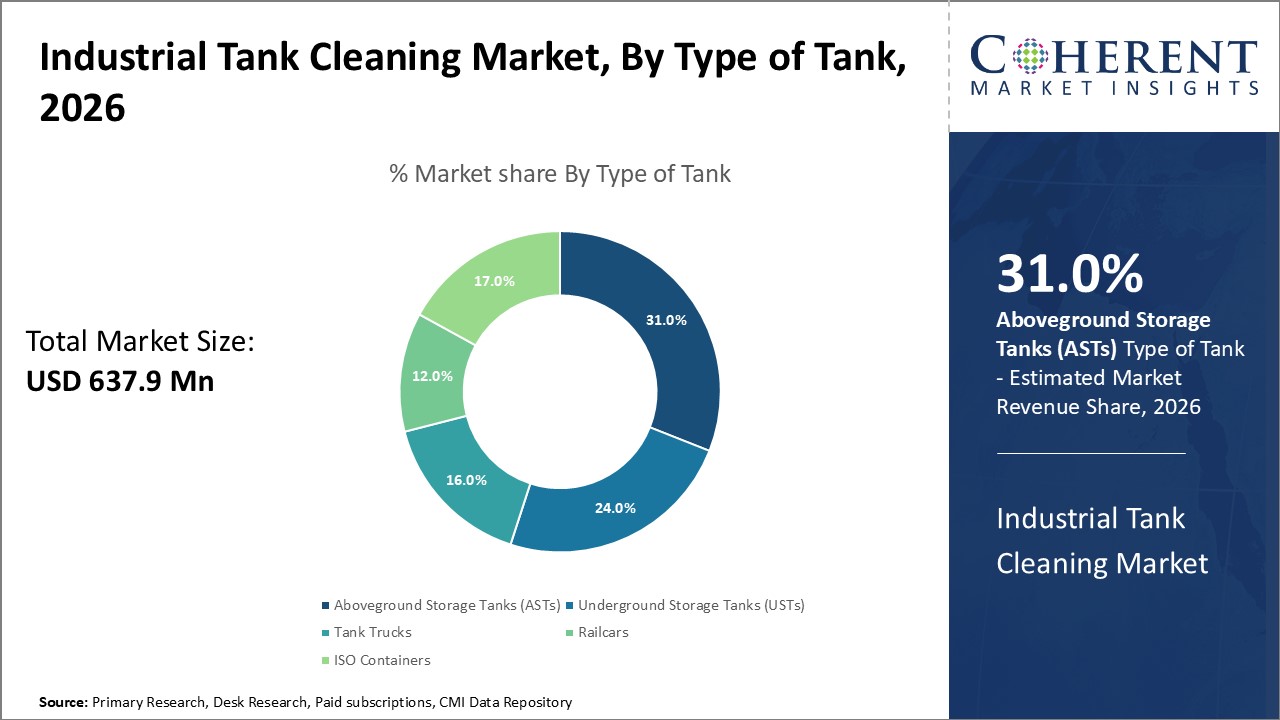
Figure 2. Global Industrial Tank Cleaning Market Share (%), By Type of tank, 2026
Top companies in Industrial Tank Cleaning Market:
- Dulsco LLC
- National Response Corporation (NRC)
- Tradebe Environmental Services
- SPX Flow Inc.
- Midwestern Services Inc.
- HydroChemPSC
- Scanjet Group AB
- Ecolab Inc.
- Veolia Environnement S.A.
- PSC Industrial Services
- Enva Group
- Kärcher
- Thompson Industrial Services LLC
- Clean Harbors
Sources
Primary Research Interviews
- Industrial tank cleaning contractors (e.g., Clean Harbors, Veolia North America, Stericycle, Republic Services)
- Refinery, chemical plant and terminal operations managers
- Confined-space safety consultants
Databases
- U.S. EPA industrial waste data
- OSHA confined space data
- Eurostat industrial services data
Magazines
- Cleanliner
- Industrial Safety & Hygiene News
Journals
- Journal of Hazardous Materials (Elsevier)
- Safety Science (Elsevier)
Newspapers
- Reuters Industrials
- Financial Times – Industrials
Associations
- API
- ASSP
- AIHA
Public Domain Sources
- OSHA 29 CFR 1910.146
- U.S. EPA RCRA
- ResearchGate publications on tank cleaning
Proprietary Elements
- CMI Data Analytics Tool, Proprietary CMI Existing Repository of information for last 10 years.
Definition: The industrial tank cleaning market refers to the industry that provides specialized cleaning services and equipment for various types of tanks used in industrial settings, including storage tanks, process vessels, and transportation tanks. This market involves the removal of residues, contaminants, and debris from tanks in order to maintain their operational efficiency, complies with safety and environmental regulations, and prevents potential hazards or product contamination.
Get access to 250+ pages report
Every segment, forecast, competitor profile and data table behind the analysis above — available for instant download.
- ESOMAR Member
- ISO 9001:2015 Certified
- D-U-N-S Registered
- GDPR & CCPA Compliant
Missing comfort of reading report in your local language? Find your preferred language:
Transform your Strategy with Exclusive Trending Reports
Frequently Asked Questions
The Industrial Tank Cleaning Market is estimated to be valued at USD 637.9 Mn in 2026, and is expected to reach USD 879.8 Mn by 2033.
The major factors hampering the industrial tank cleaning market growth include high initial investment, and health & safety concerns.
The leading component segment in the market is aboveground storage tanks (ASTs).
Some major players operating in the market include Clean Harbors, Dulsco LLC, National Response Corporation (NRC), Tradebe Environmental Services, SPX Flow Inc., Midwestern Services Inc., HydroChemPSC, Scanjet Group AB, Ecolab Inc., Veolia Environnement S.A., PSC Industrial Services, Enva Group, K rcher, and Thompson Industrial Services LLC.
North America is expected to continue leading the market during the forecast period.
The CAGR of the Industrial Tank Cleaning Market is projected to be 4.7% from 2026 to 2033.