

Marine Vessel Energy Efficiency Market Size and Forecast — 2026-2033
The Global Marine Vessel Energy Efficiency Market size is estimated to be valued at USD 5.06 billion in 2026 and is expected to reach USD 8.44 billion by 2033, exhibiting a compound annual growth rate (CAGR) of 7.6% from 2026 to 2033.
Overview
Products in the marine vessel energy efficiency segment include energy-saving devices and systems designed to reduce fuel consumption and emissions: air lubrication systems (micro-bubble or air-film generators), energy-efficient propellers and ducts, hull coatings with low friction, waste heat recovery units (WHR), hybrid electric propulsion modules and battery storage systems, shaft power management and RPM optimization controllers, onboard energy management software, and shore power (cold ironing) interfaces.
Key Takeaways
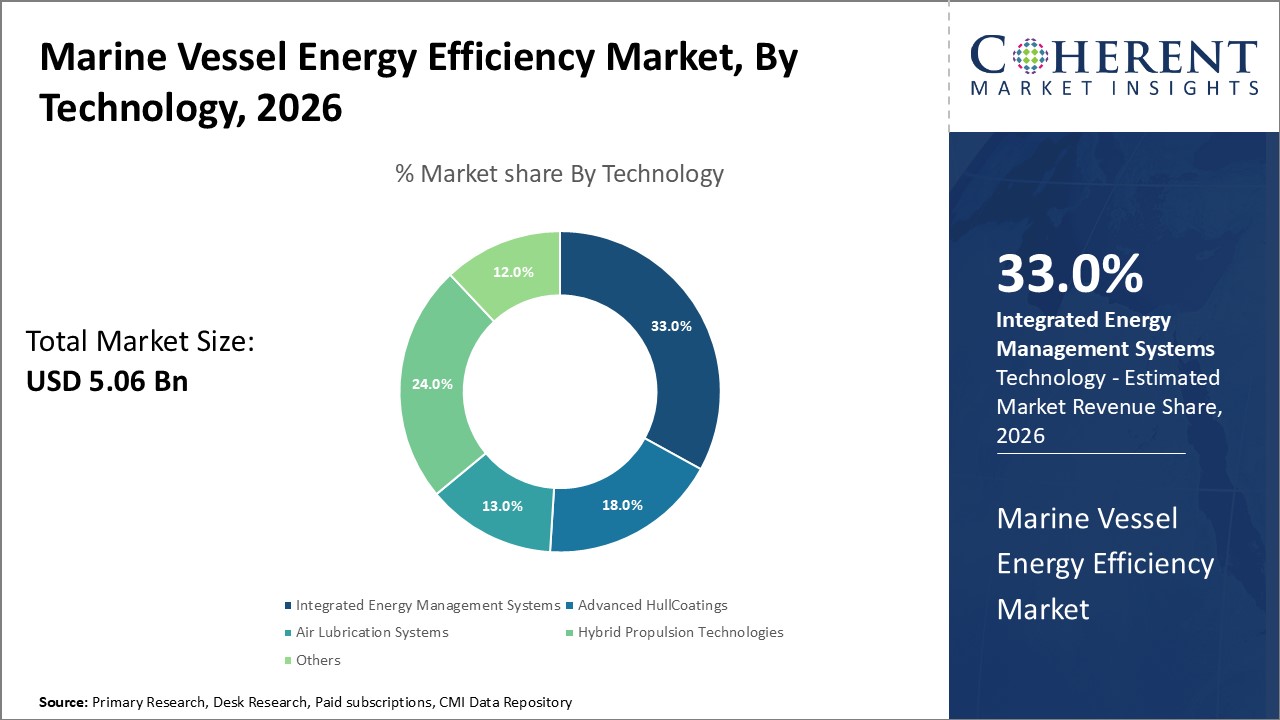
The Integrated Energy Management Systems segment accounts for the largest market share at 33%, driven by its capability to synchronize vessel operations effectively and ensure compliance with evolving environmental norms.
The propulsion systems subsegment is witnessing robust growth due to innovations in hybrid and electric propulsion solutions.
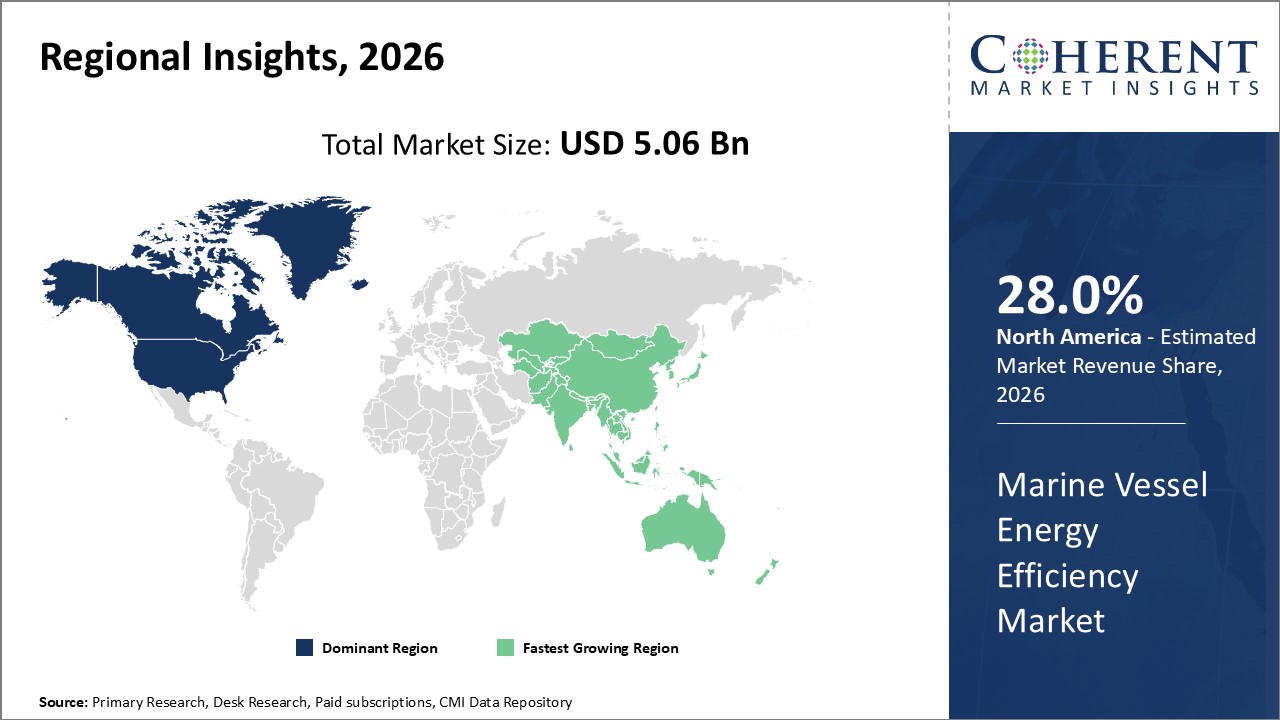
Regionally, North America leads with extensive adoption of cutting-edge energy efficiency solutions backed by strong governmental incentives and regulatory frameworks, capturing over 28% of industry share in 2026.
Asia Pacific emerges as the fastest-growing region, buoyed by expanding shipbuilding activities and increasing retrofit projects, with a CAGR exceeding 9% during the forecast period.
Europe remains strategically significant due to stringent environmental regulations stimulating investments in advanced energy-saving technologies.
Marine Vessel Energy Efficiency Market Segmentation Analysis
Marine Vessel Energy Efficiency Market Insights, By Technology
Integrated Energy Management Systems dominate the market share. These systems provide a holistic approach to monitoring and optimizing energy usage onboard vessels, thereby substantially reducing fuel costs and emissions. The fastest growing subsegment is Hybrid Propulsion Technologies, fueled by growing emphasis on alternative fuels and hybrid-electric systems that lower carbon footprints. Advanced Hull Coatings improve vessel hydrodynamics to reduce drag and enhance fuel economy, while Air Lubrication Systems introduce microbubbles to hull bottoms to minimize resistance.
Marine Vessel Energy Efficiency Market Insights, By Vessel Type
Container Ships are dominating the market share due to their high operational fuel consumption and stringent environmental regulations applying to large container fleet operators. The fastest growing segment is Bulk Carriers, where rising demand for energy retrofit solutions is driven by limited propulsion efficiency in older vessel classes. Tankers and Passenger Ships demonstrate steady adoption of energy-efficient technologies given the economic and regulatory imperative to reduce operating expenditures.
Marine Vessel Energy Efficiency Market Insights, By Component
Power Generation Units represent the fastest growing subsegment due to increased deployment of hybrid and battery-electric power modules replacing conventional diesel generators. Propulsion Systems dominate the market given their critical role in determining vessel energy efficiency, including improvements through hybrid propulsion and optimized engine designs. Auxiliary Equipment encompasses pumps, compressors, and HVAC systems undergoing modernization to reduce power consumption.
Marine Vessel Energy Efficiency Market Trends
The marine vessel energy efficiency market is experiencing strong momentum fueled by technological innovation and regulatory pressures.
Notable market trends include the rise in hybrid propulsion system deployment as a response to fluctuating fuel prices and environmental mandates.
For example, in 2026, hybrid systems accounted for nearly 25% of propulsion system orders in Asia Pacific shipyards.
Another significant trend is digitalization, with AI-powered voyage optimization platforms being increasingly adopted in major shipping fleets, cutting fuel usage by up to 11% during peak operational seasons.
Furthermore, the modular retrofit approach has gained traction, enabling ship operators to upgrade vessels more rapidly and cost-effectively than traditional methods.
Marine Vessel Energy Efficiency Market Insights, By Geography
North America Marine Vessel Energy Efficiency Market Analysis and Trends
In North America, the dominance in the Marine Vessel Energy Efficiency market stems from strong environmental regulations and substantial investments in clean technology by U.S. and Canadian shipping enterprises. The region accounts for over 28% of the global industry share as of 2026, attributed to government incentives promoting green vessel retrofits and pioneering projects in smart propulsion systems pioneered by companies like Wärtsilä and ABB Ltd.
Asia Pacific Marine Vessel Energy Efficiency Market Analysis and Trends
Meanwhile, Asia Pacific exhibits the fastest growth with a CAGR exceeding 9%, propelled by expanding shipbuilding activities in China, South Korea, and Japan, alongside growing retrofit demand for existing fleets. The intensification of climate policies by regional governments and the rising presence of key market players such as Hyundai Heavy Industries amplify this market momentum.
Marine Vessel Energy Efficiency Market Outlook for Key Countries
USA Marine Vessel Energy Efficiency Market Analysis and Trends
The USA’s market benefits from proactive regulatory frameworks such as the Environmental Protection Agency’s (EPA) initiatives targeting maritime emissions, enhancing marine vessel energy efficiency adoption. Major U.S.-based shipping operators, including Royal Caribbean and Carnival Corporation, are investing heavily in hybrid propulsion and integrated energy management systems, driving localized industry growth. These investments are backed by federal funding programs supporting green maritime infrastructure, resulting in a 15% year-on-year increase in energy efficiency expenditures among U.S. fleet operators since 2023.
China Marine Vessel Energy Efficiency Market Analysis and Trends
China’s market is experiencing rapid transformation due to its dominant shipbuilding industry and stringent state-mandated energy consumption targets. Leading local shipbuilders, including China State Shipbuilding Corporation (CSSC), have incorporated advanced hull coatings and propulsion innovations in over 60% of new vessels commissioned in 2025. Coupled with government subsidies promoting eco-friendly shipping technologies, China’s market momentum reflects substantial advancements contributing to the global marine vessel energy efficiency market size and revenue growth forecasts.
Analyst Opinion
Growing adoption of integrated energy management systems (EMS) has become a primary driver of market revenue. In 2025, over 33% of newly commissioned container ships were reported to feature EMS that optimize propulsion and auxiliary machinery usage. The implementation of such systems enhances fuel efficiency by 8-13%, reducing overall operational expenditure and boosting market share for EMS providers.
Demand-side indicators reveal increasing imports of energy-saving devices like advanced hull coatings and air lubrication systems, correlated with a 16% rise in retrofitting activities witnessed globally in 2026. Major shipping routes, including transpacific corridors, have seen enhanced uptake of these technologies, underscoring their business growth potential in navigating volatile fuel price environments.
Supply-side dynamics indicate a sharp 18% increase in manufacturing capacity of energy-efficient marine turbines and hybrid propulsion technologies by key production hubs in the Asia Pacific as of Q1 2026. This scale-up supports market expansion by shortening lead times and enabling faster integration on board both newbuild and existing vessels.
Micro-indicators from recent freight demand data suggest a quadruple rise in use cases involving smart voyage planning software between 2023 and 2026. This software minimizes unnecessary fuel consumption by optimizing routes based on real-time weather and traffic data, significantly impacting the overall marine vessel energy efficiency market size and offering substantial cost savings to operators.
- Current Industry Events of 2026
- Market Size Estimation
- Regional Breakdown
- Competitive Landscape
- Customer Intelligence
- Segmental Analysis
- Pricing Analysis
- Key Market Drivers, Challenges & Future Trends
- Customized Insights Section
Market Scope
| Report Coverage | Details | ||
|---|---|---|---|
| Base Year: | 2025 | Market Size in 2026: | USD 5.06 billion |
| Historical Data for: | 2020 To 2024 | Forecast Period: | 2026 To 2033 |
| Forecast Period 2026 to 2033 CAGR: | 7.6% | 2033 Value Projection: | USD 8.44 billion |
| Geographies covered: |
| ||
| Segments covered: |
| ||
| Companies covered: | Mitsubishi Heavy Industries, Ltd., Daewoo Shipbuilding & Marine Engineering Co., Ltd., DNV, Eco Marine Power, GreenTech Marine Solutions, Eniram Ltd., Corvus Energy, Royal Caribbean Group, Carnival Corporation & plc, HHI Green Technology. | ||
| Growth Drivers: |
| ||
Marine Vessel Energy Efficiency Market Growth Factors
Increasing regulatory frameworks, such as the IMO's Energy Efficiency Existing Ship Index (EEXI) mandate, are compelling market players to adopt compliant energy-efficient solutions. This regulation alone spurred a 22% surge in energy retrofits across global fleets in early 2026. Enhanced fuel costs and volatility push shipping companies to seek long-term fuel-saving technologies, reflected by an 11% annual growth in demand for hybrid propulsion systems in 2025. Rising environmental consciousness among stakeholders and end-users widens the market scope, particularly in eco-sensitive trade lanes across Europe and the Asia Pacific, encouraging investments in green shipping initiatives. Advances in digitalization and smart analytics adoption facilitate operational efficiencies, helping to identify energy-saving opportunities amounting to millions of dollars in cost reduction annually for large shipping conglomerates.
Marine Vessel Energy Efficiency Market Development
In October 2026, Maersk launched an efficiency program across its time-chartered fleet, aimed at reducing fuel consumption and lowering vessel-related emissions. The initiative focuses on operational optimization, data-driven performance monitoring, and closer collaboration with ship owners, supporting Maersk’s broader decarbonization strategy and progress toward net-zero maritime logistics.
In June 2026, PowerCell received its first order for a next-generation marine fuel cell system from an OEM customer, valued at approximately SEK 44 million. The order marked a major commercial milestone for PowerCell, validating the scalability and performance of its hydrogen-based fuel cell technology and supporting the accelerating transition toward zero-emission propulsion solutions in the global maritime industry.
Key Players
Leading Companies of the Market
Mitsubishi Heavy Industries, Ltd.
Daewoo Shipbuilding & Marine Engineering Co., Ltd.
DNV
Eco Marine Power
GreenTech Marine Solutions
Eniram Ltd.
Corvus Energy
Royal Caribbean Group
Carnival Corporation & plc
HHI Green Technology
Leading companies have increasingly adopted strategic partnerships to amplify their technological footprints. For instance, Wärtsilä’s collaboration with leading classification societies accelerated Type Approval certifications for energy-saving devices, resulting in a 20% revenue increase from newly commissioned vessels in 2025. Meanwhile, ABB Ltd’s integration of digital twin technologies into propulsion systems has improved predictive maintenance capabilities, reducing downtime by 18% and reinforcing its market positioning in 2026.
Marine Vessel Energy Efficiency Market Future Outlook
The future outlook is strongly shaped by global decarbonization initiatives and the maritime sector’s transition toward greener propulsion systems. Energy-saving devices will be critical to achieving IMO 2030 and 2050 targets, while hybrid power systems, battery modules, and alternative-fuel-compatible designs (LNG, methanol, ammonia) will grow rapidly. Digital optimization tools—AI-driven route planning, real-time fuel monitoring, predictive maintenance—will become standard. Retrofitting existing fleets with energy-saving systems will represent a major revenue stream, especially as regulatory compliance becomes mandatory across more vessel categories.
Marine Vessel Energy Efficiency Market Historical Analysis
Historically, energy efficiency in marine vessels gained importance as fuel costs rose and environmental regulations tightened. From the early 2010s, the International Maritime Organization (IMO) introduced progressively stricter emissions rules, pushing shipowners to adopt technologies like optimized propellers, hull coatings, waste heat recovery systems, and voyage optimization software. The market shifted from optional enhancements to essential retrofit and newbuild features as decarbonization pressures increased.
Sources
Primary Research Interviews:
Marine Engineers
Shipbuilders
Port Authorities
Fleet Managers
Databases:
IMO (International Maritime Organization)
Energy Institute Reports
UNCTAD Maritime Stats
Magazines:
Marine Log
Offshore Energy Today
Ship Technology Magazine
Journals:
Journal of Marine Engineering & Technology
Energy Efficiency Journal
Ocean Engineering
Newspapers:
Lloyd’s List
Financial Times Shipping
Reuters Maritime News
Associations:
International Maritime Organization (IMO)
BIMCO
Marine Engineers Association
Get access to 250+ pages report
Every segment, forecast, competitor profile and data table behind the analysis above — available for instant download.
- ESOMAR Member
- ISO 9001:2015 Certified
- D-U-N-S Registered
- GDPR & CCPA Compliant
Missing comfort of reading report in your local language? Find your preferred language:
Transform your Strategy with Exclusive Trending Reports
Frequently Asked Questions
Dominant players include Wärtsilä Corporation, Rolls-Royce Holdings plc, ABB Ltd, and MAN Energy Solutions, leading the market through innovation in propulsion technologies and energy management systems.
The market size is projected to grow from USD 5.06 billion in 2026 to USD 8.44 billion by 2033, driven by regulatory mandates and technological advancements.
The container shipping segment exhibits the largest growth opportunity, leveraging integrated energy management systems to achieve substantial fuel savings and emissions reductions.
Trends such as the adoption of hybrid propulsion, AI-driven energy optimization, and modular retrofitting will accelerate, reshaping market dynamics and expanding the scope of energy efficiency solutions.
The competitive landscape is characterized by technology-centric innovation and strategic alliances. Key challenges include high upfront retrofit costs and varying regulatory compliance across regions.
Leading companies focus on collaborative partnerships, technology licensing, and customized retrofit solutions to penetrate diverse shipping segments and regions effectively.