

Memory Enhancement Drugs Market Analysis & Forecast 2026-2033
The global memory enhancement drugs market is valued at USD 9,823.6 Mn in 2026 and is forecast to reach a value of USD 14,252.5 Mn by 2033 at a CAGR of 5.5% between 2026 and 2033.
Key Takeaways
- Based on Drug Class, the cholinesterase inhibitors segment is expected to lead the market with 37.2% share in 2026, due to proven Alzheimer’s efficacy.
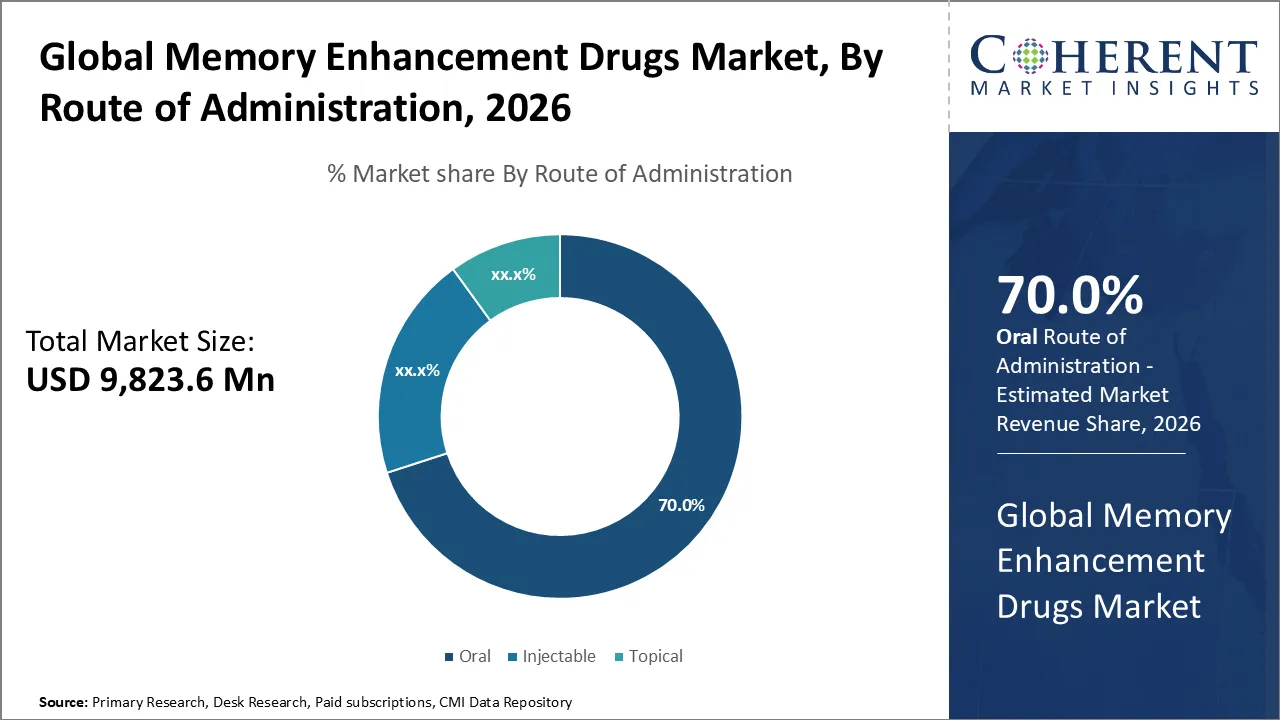
- Based on Route of Administration, Oral administration leads at nearly 70% because of patient convenience and compliance advantages.
- Based on Application, Disease treatment holds 60% share, driven by rising Alzheimer’s and age-related cognitive decline prevalence.
- Based on Distribution Channel, Retail pharmacies capture 45% share thanks to accessibility, affordability, and widespread prescription fulfillment
- Based on Region, North America is set to lead the memory enhancement drugs market with 39% share in 2026. While, Asia Pacific is anticipated to be the fastest growing region.
Market Overview
The memory enhancement drugs market is driven by rising prevalence of Alzheimer’s disease and Dementia, alongside increasing aging populations worldwide. Growing academic and workplace pressure has boosted demand for cognitive enhancers, particularly among younger individuals. Advances in Neuroscience and drug development are enabling more effective treatments. Additionally, higher awareness of mental health, expanding healthcare access, and increased investment by pharmaceutical companies are accelerating market growth. The popularity of nootropics and over-the-counter supplements, coupled with digital health trends and personalized medicine, further supports market expansion globally.
Current Events and their Impacts on the Memory Enhancement Drugs Market
Current Event | Description and its Impact |
Regulatory Developments in Key Markets |
|
Technological and Research Breakthroughs |
|
Are Memory Enhancement Drugs Truly Effective or Just Overhyped?
Drug | Trial Findings | Success Rate / Efficacy | Notes |
Donepezil (Aricept) | JAMA & Lancet trials show small but significant improvements in Alzheimer’s Disease Assessment Scale (ADAS-cog) scores over 24 weeks. | ~20–30% of patients show measurable cognitive benefit vs placebo. | Long-term benefits modest; does not halt disease progression. |
Memantine | Cochrane & ClinicalTrials.gov studies in moderate-to-severe Alzheimer’s show improved cognition and daily function compared to placebo. | ~15–25% improvement in cognition/function scores. | Often used in combination with cholinesterase inhibitors. |
Modafinil (Provigil) | Trials in sleep deprivation and fatigue show improved wakefulness and attention, but mixed results for memory enhancement. | Success in ~40–60% of trials for attention/wakefulness; limited evidence for long-term memory. | Approved for narcolepsy, not specifically for memory. |
Piracetam | Clinical trials show inconsistent results in dementia and cognitive impairment; some benefit in diabetic neuropathy studies. | Effect sizes small (Cohen’s d ~0.2–0.4); many trials inconclusive. | Widely used as a nootropic but lacks strong regulatory approval. |
- Current Industry Events of 2026
- Market Size Estimation
- Regional Breakdown
- Competitive Landscape
- Customer Intelligence
- Segmental Analysis
- Pricing Analysis
- Key Market Drivers, Challenges & Future Trends
- Customized Insights Section
Segmental Insights
Which drug class dominates the market in 2026 due to Alzheimer’s efficacy?
In terms of drug class, the cholinesterase inhibitors segment is expected to lead the market with 37.2% share in 2026. They are the best way to treat Alzheimer's since they boost neurotransmitter activity and slow down cognitive decline. They are still the most trusted treatment for memory problems caused by disease due to the strongly clinically validated, widely adopted by doctors, and approved by regulators.
For instance, in February 2026, The Paris Brain Institute study shows that acetylcholinesterase inhibitors like donepezil, rivastigmine, and galantamine can help Alzheimer's patients keep their cognitive function over time. Continued use can delay decline by up to 11 months over four years, and it does not raise mortality. These drugs are still only treating symptoms; they improve memory and daily function but cannot prevent the disease from getting worse.
Which route of administration captures nearly 70% of the market thanks to patient convenience and compliance?
In terms of route of administration, the oral segment is expected to hold 70% share of the market in 2026. For ease of use, adherence, and cost-effectiveness, tablets and capsules are the best choices. Patients prefer oral medications because they are convenient to take every day. Pharmaceutical companies prefer this method due to it has well-established manufacturing processes and wide distribution networks, making it the most common way to deliver medications.
For instance, in March 2026, BrightFocus declares there are new oral treatments for Alzheimer's. Over 33 months, Blarcamesine slowed cognitive decline by 50%. ALZ-801, on the other hand, improved outcomes in APOE4 carriers without putting their brains at risk. Both pill-based treatments aim to safely change the course of the disease. They are easy to use instead of infusions and work well with lifestyle changes to prevent disease.
Which application drives growth due to rising Alzheimer’s and cognitive decline cases?
In terms of application, the disease treatment segment is projected to account for 60% share of the market in 2026, owing to the rising cases of Alzheimer's, ADHD, and memory loss that comes with getting older. Demand is growing because the world's population is getting older and increasing awareness about neurodegenerative diseases. Therapeutic uses are the main driver of growth in this segment because clinical need is more important than performance enhancement uses.
For instance, in December 2025, DDW Online states that Xanamem, a pill taken once a day that targets cortisol, may slow or even stop cognitive decline in people with Alzheimer's. Early trials show that this therapy is safe and effective, and it could change the course of the disease. It can be taken by mouth, which is easier than infusion-based treatments that are still the most common way to treat Alzheimer's.
Which distribution channel leads because of accessibility, affordability, and widespread availability?
In terms of distribution channel, the retail pharmacy segment is projected to capture 45% share of the market in 2026. They are still the best option for patients as they are accessible and affordable. They offer both prescription drugs and supplements. Since they are so common in both cities and rural areas, they are always available. This makes them the best option compared to hospital and online pharmacies.
For instance, in February 2026, MemoTril launched a dietary supplement sold in stores that is supposed to help with memory, focus, and mental clarity. You can buy it online or at health food stores. It has natural nootropics like Bacopa, Ginkgo, and Lion's Mane. It does not have FDA-approved disease-modifying effects like prescription Alzheimer's drugs do. Instead, it focuses on general brain health.
Regional Insights
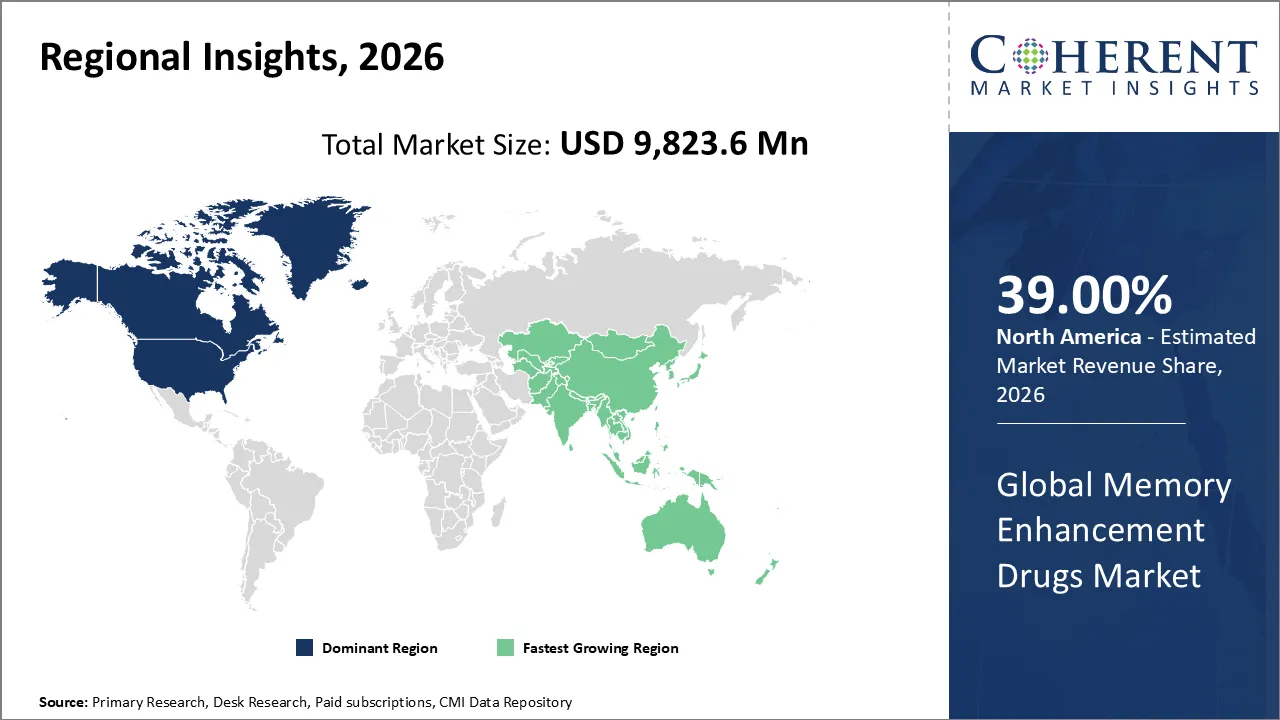
North America Memory Enhancement Drugs Market Analysis & Trends
North America is expected to dominate the memory enhancement drugs market with 39% share in 2026, due to a high rate of Alzheimer's and ADHD, strong pharmaceutical research and development, a well-developed healthcare system, and widespread insurance coverage. The fact that major pharmaceutical companies and consumers are aware of cognitive health only strengthens its position in the market.
For instance, in July 2025, The FDA has given Eli Lilly's Kisunla (donanemab-azbt) a new label that is valid in the United States. It adds a safer titration dosing schedule that keeps the drug effective while lowering the risk of ARIA. Kisunla, which is given through an IV, slows down the decline in thinking skills in early Alzheimer's patients who have amyloid pathology.
Asia Pacific Memory Enhancement Drugs Market Analysis & Trends
Asia Pacific is anticipated to be the fastest growing region, because the population is getting older quickly, middle-class healthcare costs are going up, and people are becoming more aware of cognitive health. The region's fastest growth is driven by more access to medicines, a rise in the number of people with dementia, and a strong use of nootropics in China, Japan, and India.
For instance, in June 2025, in a study in Beijing, people with vascular dementia were given gastrodine compound granule, a traditional Chinese herbal treatment. It improved memory, orientation, language, and daily life over 12 weeks compared to a standard drug, and it had fewer side effects. It was done at Dongzhimen Hospital and demonstrates the way China is focusing on herbal cognitive treatments in certain areas.
Memory Enhancement Drugs Market Outlook Country-Wise
The U.S. Memory Enhancement Drugs Market Trends
In 2026, the U.S. needs memory-enhancing drugs because there are a large population with Alzheimer's and ADHD, new drugs are being developed all the time, and the healthcare system is getting better. Widespread insurance coverage, consumers' knowledge of cognitive health, and the presence of major pharmaceutical companies all help the market stay strong and grow.
For instance, in September 2025, Reckitt launched Neuriva Memory 3D in the U.S. This dietary supplement helps with remembering, learning, and keeping information. It has Neurofactor® and Phosphatidylserine in it, and it is not meant to treat Alzheimer's but to improve cognitive health in general. It is now available in pharmacies and online, which increases Neuriva's presence in the American memory-enhancing supplement market.
Japan Memory Enhancement Drugs Market Trends
Japan's need for memory-enhancing drugs in 2026 is due to its quickly aging population, high rates of dementia and Alzheimer's, and the government's strong focus on healthcare for the elderly. Advanced pharmaceutical research and development, a growing public interest in cognitive health, and a growing interest in nootropics all help the market grow even more.
For instance, in November 2025, Eisai announced a subcutaneous autoinjector version of Leqembi (lecanemab) for treating Alzheimer's disease. Weekly injections had the same benefits as biweekly IV infusions, but with fewer side effects. This easy option could make it easier for people all over the world to get disease-modifying therapy that helps slow cognitive decline, but it needs to be approved in Japan first.
Market Report Scope
Memory Enhancement Drugs Market Report Coverage
| Report Coverage | Details | ||
|---|---|---|---|
| Base Year: | 2025 | Market Size in 2026: | USD 9,823.6 Mn |
| Historical Data for: | 2020 To 2024 | Forecast Period: | 2026 To 2033 |
| Forecast Period 2026 to 2033 CAGR: | 5.5% | 2033 Value Projection: | USD 14,252.5 Mn |
| Geographies covered: |
| ||
| Segments covered: |
| ||
| Companies covered: | Pfizer Inc., UCB S.A., Takeda Pharmaceutical Company, Shire plc., Sanochemia Pharmazeutika AG, Allergan plc., Novartis AG, Alkem Laboratories Ltd., Paradigm Healthcare, Intas Pharmaceutical Ltd., Taurus Laboratories Pvt. Ltd. | ||
| Growth Drivers: |
| ||
| Restraints & Challenges: |
| ||
Global Memory Enhancement Drugs Market Drivers
Increasing Prevalence of Aging Population
The memory enhancement drugs market growth because a growing number of individuals around the world are getting older. As people live longer, more of them experience cognitive decline related to age, such as memory loss and a lack of mental sharpness. This change in the population means that there will always be a need for drugs that improve quality of life and support brain health. As the number of older people grows quickly in North America, Europe, and Asia-Pacific, companies are spending a lot of money on research and development to meet this need.
Increasing Neurological Disorders
The rise in neurological diseases like Alzheimer's, dementia, and Parkinson's is driving up the memory enhancements drugs market demand around the world. These conditions make memory and thinking much worse, which makes it crucial to find effective treatments. As people become more aware, diagnostic tools get better, and healthcare infrastructure gets better, the need for drugs that can slow progression or improve memory performance is growing. As the number of neurological cases around the world grows, drug companies are working on new treatments to help this growing group of patients.
According to The World Health Organization (WHO), less than one in three countries has a national policy to deal with the growing number of neurological disorders, which kill more than 11 million people around the world every year.
Memory Enhancement Drugs Market Opportunity
Prescriptions Medications
The memory enhancement drugs market forecast shows that there are strong opportunities in prescription drugs. There is a steady demand for Alzheimer's and dementia treatments because there are more cases of neurodegenerative diseases. ADHD drugs are also becoming more popular as more people are diagnosed with the condition in North America and Europe. Companies that put funds into advanced neuropharmacology and targeted therapies can grow over time.
Analyst Opinion (Expert Opinion)
- Prescription medications: Cholinesterase inhibitors like donepezil, rivastigmine, and galantamine help Alzheimer's patients improves cognitive function by preventing the breakdown of acetylcholine. Studies have shown that these drugs can stabilize or slightly improve memory scores for 6 to 12 months. Memantine, an NMDA receptor antagonist, is efficacious in moderate-to-severe Alzheimer's disease, demonstrating statistically significant enhancements in daily functioning and cognitive performance relative to placebo. Combination therapies (e.g., memantine plus donepezil) offer enhanced cognitive benefits while elevating the risk of side effects, such as nausea and dizziness. Lecanemab and donanemab are newer monoclonal antibodies that target amyloid-beta plaques. Trials have shown that they can slow cognitive decline by 27–35% over 18 months, but patients need to have MRI scans to check for amyloid-related imaging problems.
- Nootropics and supplements: In randomized trials, natural substances like Bacopa monnieri have been shown to improve memory and information processing after 12 weeks of taking 300 mg per day. Ginkgo biloba shows mixed results; some studies show that it helps older adults’ mild improvement in memory, while others show no significant benefit. Older people who consume omega-3 fatty acids (DHA/EPA) may have slower cognitive decline, but the effects are small. Synthetic nootropics such as modafinil and racetams augment attention and working memory in controlled environments, yielding reaction time enhancements of up to 20% in cognitive tasks; however, long-term safety data is still insufficient.
Speak to the analyst
Want personalized insights?
Take the findings above to one of our principal consultants, or have the report rebuilt around the segments, geographies and competitors you actually track.
Recent Developments
- In December 2025, The University of California addressed about new discoveries in Alzheimer's research, such as FDA-approved anti-amyloid drugs that slow memory loss, experimental molecules that restore cognition in mice, and combination therapies that target both amyloid and tau. Researchers also made progress with blood tests, lifestyle changes, and gene editing, all with the goal of halting, slowing, or restoring memory function.
- In April 2025, Eisai’s announcement confirmed European Commission approval of Leqembi (lecanemab) for Alzheimer’s treatment. The drug is now authorized across the EU, Iceland, Liechtenstein, and Norway. Already approved in the U.S., Japan, China, South Korea, UK, Israel, and UAE, it slows cognitive decline by targeting amyloid-beta protofibrils.
Market Segmentation
- Global Memory Enhancement Drugs Market, By Drug Class
- Cholinesterase Inhibitors
- Smart Drugs and Cognitive Enhancers (Nootropics)
- Vitamins and Supplements
- Others
- Global Memory Enhancement Drugs Market, By Route of Administration
- Oral
- Injectable
- Topical
- Global Memory Enhancement Drugs Market, By Application
- Disease treatment
- Athletic performance
- Academic performance
- Others
- Global Memory Enhancement Drugs Market, By Distribution Channel
- Hospital Pharmacy
- Retail Pharmacy
- Online Pharmacy
- Global Memory Enhancement Drugs Market, By Region
- North America
- U.S.
- Canada
- Latin America
- Brazil
- Argentina
- Mexico
- Rest of Latin America
- Europe
- Germany
- U.K.
- Spain
- France
- Italy
- Russia
- Rest of Europe
- Asia Pacific
- China
- India
- Japan
- Australia
- South Korea
- ASEAN
- Rest of Asia Pacific
- Middle East
- GCC Countries
- Israel
- Rest of Middle East
- Africa
- South Africa
- North Africa
- Central Africa
- North America
- Key Players
- Pfizer Inc.
- UCB S.A.
- Takeda Pharmaceutical Company
- Shire plc.
- Sanochemia Pharmazeutika AG
- Allergan plc.
- Novartis AG
- Alkem Laboratories Ltd.
- Paradigm Healthcare
- Intas Pharmaceutical Ltd.
- Taurus Laboratories Pvt. Ltd.
Sources
Primary Research Interviews
- Neurologists
- Psychiatrists
- Pharmaceutical Manufacturers (Memory Enhancement Drugs)
- Medical Practitioners in Geriatrics
- Cognitive Health Specialists
- Clinical Research Organizations (CROs)
- Mental Health Centers and Clinics
- Healthcare Providers
- Patients using Memory Enhancement Drugs
- Others
Databases
- Bloomberg Terminal
- Thomson Reuters Eikon
- IHS Markit
- Euromonitor International
- S&P Global Market Intelligence
- PubMed
- Scopus
- ClinicalTrials.gov
- Others
Magazines
- Journal of Clinical Psychiatry
- Psychopharmacology Today
- Alzheimer's & Dementia Journal
- Neuropharmacology Magazine
- Cognitive Health Journal
- Others
Journals
- Journal of Alzheimer's Disease
- The Lancet Neurology
- Journal of Clinical Psychopharmacology
- Neurobiology of Aging
- The Journal of Neuroscience
- Others
Newspapers
- The Wall Street Journal
- The New York Times
- Financial Times
- Reuters Health
- The Guardian
- Others
Associations
- Alzheimer's Association
- International Alzheimer's Disease Association (IADA)
- American Neurological Association (ANA)
- International Society for Research on Memory (ISRM)
- European Federation of Neurological Societies (EFNS)
- Others
Public Domain Sources
- U.S. National Institute on Aging (NIA)
- World Health Organization (WHO)
- National Institutes of Health (NIH)
- European Medicines Agency (EMA)
- Food and Drug Administration (FDA)
- National Institute of Mental Health (NIMH)
- Others
Proprietary Elements
- CMI Data Analytics Tool
- Proprietary CMI Existing Repository of Information for the Last 8 Years
Get access to 250+ pages report
Every segment, forecast, competitor profile and data table behind the analysis above — available for instant download.
- ESOMAR Member
- ISO 9001:2015 Certified
- D-U-N-S Registered
- GDPR & CCPA Compliant
Missing comfort of reading report in your local language? Find your preferred language:
Transform your Strategy with Exclusive Trending Reports
Frequently Asked Questions
The global Memory Enhancement Drugs Market size was valued at USD 9,823.6 Mn in 2026 and is expected to reach USD 14,252.5 Mn in 2033.
The Global memory enhancement drugs market size is estimated to be valued at USD 9,823.6 Mn in 2026 and is expected to exhibit a CAGR of 5.5% between 2026 and 2033.
Factors such as increasing prevalence of aging population and increasing neurological disorders are expected to drive the market.
Cholinesterase Inhibitors segment is expected to hold a major market share during the forecast period.
The major factors hampering growth of the market include side effects of the drugs.
Major players operating in the market include Pfizer Inc., UCB S.A., Takeda Pharmaceutical Company, Shire plc. Sanochemia Pharmazeutika AG, Allergan plc., Novartis AG, Alkem Laboratories Ltd., Paradigm Healthcare, Intas Pharmaceutical Ltd., Taurus Laboratories Pvt. Ltd.