

Nanomedicines Market Size and Share Analysis: (2026 - 2033)
The global nanomedicines market size is expected to reach approximately USD 408.1 Bn in 2026 and USD 925.5 Bn by 2033, growing at a CAGR of 12.9% throughout the forecast period (2026-2033). The market is driven by the increasing regulatory approval for complex nano-formulations, stronger public and private investment in nanomedicine R&D, and expanding use of nanocarriers in oncology and RNA therapeutics.
Key Takeaways from the Nanomedicines Market Report
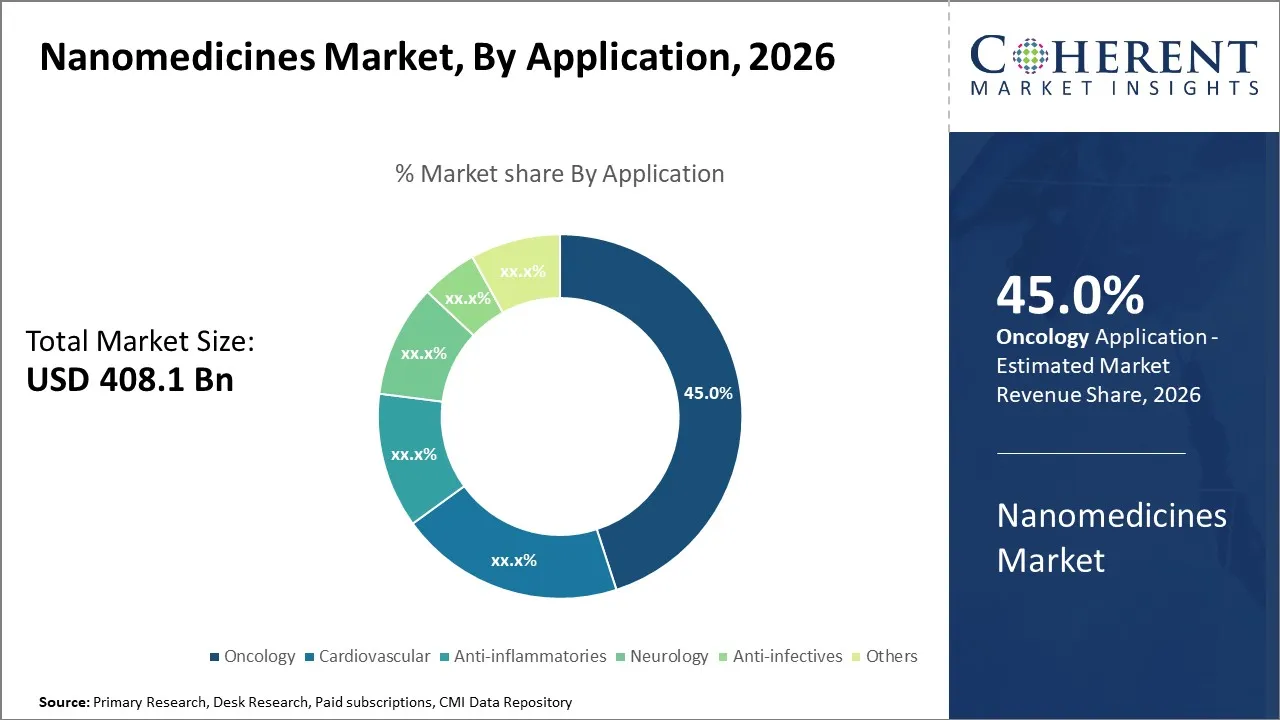
- The oncology main a highly sought-after type, accounting for about 45% of the market share in 2026 as high global prevalence of cancer and the strong need for targeted and effective treatment options as well as increasing research & development activities.
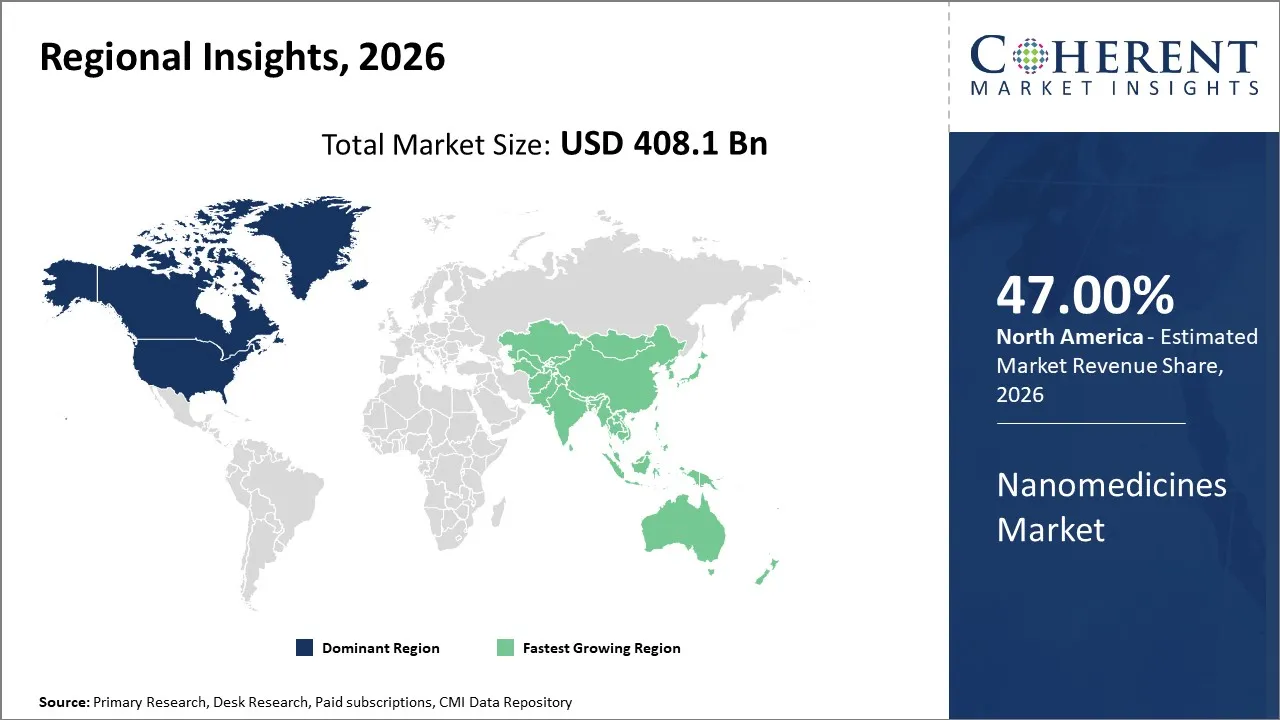
- North America is projected to dominate the global nanomedicines market in 2026, with a share of over 47% due to strong presence of key pharmaceutical companies and advanced healthcare facilities.
Nanomedicines Market Overview
Nanomedicines use nanotechnology (particles 1–100 nanometers) to change healthcare through focused drug delivery, enhanced diagnostics, and regenerative medicine. Improved drug stability and solubility, less systemic toxicity, the capacity to pass through biological barriers (such as the blood-brain barrier), and earlier, more accurate illness diagnosis are some of the main advantages. The application of nanotechnology principles to medicine is known as nanomedicine. This strategy encourages the growth of personalized medicine, which has the potential to completely transform healthcare. Nanomedicine has some drawbacks as well as intrinsic benefits including precision and biocompatibility when compared to traditional and molecular medicine. The nanomedicines market is gaining strategic importance due to improve drug delivery, increase efficacy, and reduce side effects compared with conventional formulations.
Current Events and Their Impact on the Nanomedicines Market
Current Event | Description and its Impact |
Increasing adoption of inorganic growth Strategies |
|
Public-sector nanotechnology funding remains strong, supporting future nanomedicine pipelines |
|
Segmental Insights
- Current Industry Events of 2026
- Market Size Estimation
- Regional Breakdown
- Competitive Landscape
- Customer Intelligence
- Segmental Analysis
- Pricing Analysis
- Key Market Drivers, Challenges & Future Trends
- Customized Insights Section
Nanomedicines Market Insights, By Application - Oncology Holds Dominant Application in the Market
Based on application, oncology is expected to lead the market, accounting for a revenue share of 45% in 2026. High global cancer burden and strong need for target drug delivery supports the dominance of the segment in the market. Cancer treatment requires precise targeting of tumor cells, which nanomedicines effectively provide through nanoparticle-based delivery systems. Many approved nanomedicines drugs (e.g., liposomal formulations) are extensively used in cancer therapy, contributing to higher market share. Pharmaceutical companies heavily in oncology-focused nanotechnology research, leading to continuous innovation and product development. Moreover, increasing prevalence of oncology has driven the growth of the market over the forecast period. For instance, in February 2026, the American Cancer Society (ACS) estimates that there will be more than 2.11 million new cases of cancer and roughly 626,140 cancer-related deaths in the U.S. in 2026, with an average of 5,800 new diagnoses every day. Lung cancer continues to be the most common cause of death, surpassing the total deaths from pancreatic and colorectal malignancies.
Regional Insights
North America Remains the Market Leader in 2026
North America is expected to dominate the global nanomedicines market, accounting for a share of 47% in 2026. North America region holds largest revenue share in the market due to its high healthcare expenditure, favourable regulations, and strong R&D capabilities, and advanced healthcare facilities. North America leads the global market due to the presence of a highly developed research ecosystem with leading research institutes, universities, and biotech hubs driving continuous innovation in nanomedicines. A large number of patients with cardiovascular diseases, neurological disorders, and cancer drives strong demand for effective and targeted treatments. North America is quick to adopt innovations such as personalized medicine and nanotechnology-based drug delivery, giving it a competitive edge over other region. Furthermore, many global leaders in nanomedicines and drug development are based in North America, contributing to large-scale production and commercialization.
Asia Pacific Nanomedicines Market Trends
Asia Pacific is expected to grow at the fastest CAGR in the nanomedicines market during the forecast period. Asia Pacific has huge population base with rising cases of cardiovascular diseases, diabetes, and cancer which creates strong demand for targeted and effective treatments. Rapid urbanization, changing lifestyle and aging are increasing chronic disease burden, driving the need for innovative drug delivery systems. Increasing government support and funding in the Asia Pacific region has significantly driven the growth of the market. Countries like China, India, and Japan are significantly increasing healthcare spending. Allowing greater adoption of advanced therapies like nanomedicines. Moreover, favorable regulatory developments and improving healthcare infrastructure has significantly driven the growth of the Asia Pacific market.
Nanomedicines Market Outlook – Country-wise
U.S. Nanomedicines Market Forecast
The U.S. country holds the dominant share in the North America nanomedicines market due to the presence of strong research & development ecosystem, high healthcare expenditure, and presence of major pharmaceutical & biotech companies in the U.S. The U.S. Food and Drug Administration provide a structured and supportive approval pathway for advanced therapies, encouraging frequent drug approvals and launches.
China Nanomedicines Market Trends
The China country dominates the Asia Pacific nanomedicines market due to presence of world’s largest populations, with rising cases of chronic diseases which creates strong demand for advanced treatment solutions like nanomedicines. Increasing government initiative and funding programs in China has improved access to advanced therapies and medicines. China promotes nanotechnology through national research programs, funding initiatives and strategic healthcare policies. China offers skilled workforce and lower production costs making it global hub for drug manufacturing and exports. Moreover, China is focused on improving its regulatory framework to encourage innovation and speed up drug approvals which supports faster commercialization.
Nanomedicines Market News
- In April 2026, on its first day of trading on the KOSDAQ market, the nanomedicine development business Inventera successfully doubled its IPO price, rising 140% above it. Using its Invinity platform technology, Inventera, a nanomedicine development business, is at the forefront of therapeutic medication research and precision diagnostics. Clinical trials in Korea and the US are being used by the company to validate its platform technology. The introduction of a nano-MRI contrast agent medication in 2027 is anticipated to trigger rapid revenue growth. Inventera is targeting a "FIDDO (Fully Integrated Drug Development Organization)" business model with patented core technology, a pipeline capable of successful development, and commercialization partnerships established. To provide a steady and long-lasting revenue basis, the approach blends in-house marketing with license-out agreements. Starting with the introduction of its nano-MRI medication next year, the business hopes to increase income quickly. It aims to generate about 37.6 billion won in total revenue from both domestic and foreign product sales and licensing fees by 2029, with an operational profit of 22.2 billion won, or a 59% operating margin.
- In March 2026, Researchers at Harbin Institute of Technology, Public university in Harbin, China states that DNA-based nanorobots are emerging as programmable machines that could one day deliver drugs, target diseased cells, and even capture viruses. Guided by biochemical reactions or signals such as light, electric, and magnetic fields, these proof-of-concept systems may also enable ultra-precise manufacturing and molecular computing, though practical use remains early for medicine and technology.
- In March 2025, Nanoworx B.V., a specialized Contract Research Organization (CRO) focused manufacturing advanced nanomedicines, revealed the introduction of its extensive service offering for partners in academia and business. Nanoworx, which is situated in Eindhoven, Netherlands, advances the design, development, and scalability of nanoparticle-based solutions by utilizing cutting-edge machinery and in-depth knowledge.
Market Report Scope
Nanomedicines Market Report Coverage
| Report Coverage | Details | ||
|---|---|---|---|
| Base Year: | 2025 | Market Size in 2026: | USD 408.1 Bn |
| Historical Data for: | 2020 To 2024 | Forecast Period: | 2026 To 2033 |
| Forecast Period 2026 to 2033 CAGR: | 12.9% | 2033 Value Projection: | USD 925.5 Bn |
| Geographies covered: |
| ||
| Segments covered: | By Application: Cardiovascular, Anti-inflammatories, Anti-infective, Neurology, Oncology, Others (dental, orthopedic, urology, opthalmic) | ||
| Companies covered: | Abbott Laboratories, CombiMatrix Corporation, Clene Nanomedicine, Inc., Cellics Therapeutics, Inc., Nanobiotix S.A, Celgene Corporation, GE Healthcare, NanoViricides, Inc., Johnson & Johnson, Mallinckrodt plc., Sirnaomics Inc., Precision NanoSystems Inc., Merck & Company Inc., Nanosphere, Inc., Pfizer Inc., and Sigma-Tau Pharmaceuticals Inc. | ||
| Growth Drivers: |
| ||
| Restraints & Challenges: |
| ||
Nanomedicines Market Drivers
Increasing Prevalence of Chronic Diseases
Rising prevalence of chronic diseases has significantly driven the growth of the market over the forecast period. Aging and unhealthy lifestyles are increasing chronic disease incidence globally. Due to increasing disease burden, there is rise in demand for advanced therapies. Chronic diseases like cardiovascular diseases, cancer, and neurological disorders require effective and long-term treatment solutions. Nanomedicines offer efficient targeted and efficient drug delivery, increasing adoption.
- For instance, in January 2026, according to the data published by the American Heart Association, ischemic heart disease (IHD) was expected to affect 254.28 million persons worldwide in 2021, with males having a higher prevalence than females (145.31 and 108.97 million, respectively). The age-standardized prevalence rate was 2946.38 per 100,000 (3610.24 per 100,000 for men and 2357.61 per 100,000 for women).. Based on data from 2021 to 2023, the American Heart Association's 2026 Heart Disease and Stroke Statistics Update found that 130.6 million adults in the U.S. had cardiovascular disease (CVD), or 48.9% of all adults. According to the same fact sheet, non-Hispanic Black people had the highest prevalence (63.0% of males and 59.5% of women). The 2026 report contains the most recent data available at the time it was published, according to the AHA.
Furthermore, according to World Health Organization, with an estimated 17.9 million deaths annually, cardiovascular diseases (CVDs) are the world's leading cause of mortality.
Approval and Launch of New Products
Increasing approval and launch of new products has expanded available treatment options. Approved products gain regulatory validation, which increases trust among physician and patients, leading to quicker adoption. Each new product launch generates additional sales and revenues streams, directly increasing overall market size. Innovation and launch of new product increase competition, pushes market players to improve drug delivery systems and develop more advanced formulations, which enhances overall market development.
- For instance, In March 2026, Oncotelic Therapeutics, Inc., an immuno-oncology company, revealed that that its subsidiary Sapu Nano, biotechnology company developing next-generation nanomedicine platforms will formally launch its Deciparticle nanomedicine platform and showcase its developing clinical pipeline at BIO-Europe Spring 2026, where the company has been chosen as a Presenting Company. Sapu Nano will present its exclusive Deciparticle platform, a cutting-edge drug delivery system designed to maximize tissue distribution, improve therapeutic index, and facilitate intravenous administration of extremely hydrophobic cancer drugs, at the session.
Nanomedicines Market Trends
Higher Adoption of Personalised Nanomedicine Treatments
Personalised medicines provide higher treatment effectiveness as they are manufactured based on molecular and genetic profile. The global shift toward precision healthcare is boosting the adoption of personalized nanomedicines, thereby expanding the overall market. Personalised nanomedicines are highly effective in cancer treatment, where therapies are designed based on tumor biology, driving demand in the dominant oncology segment. In addition, personalised customized therapies have higher success rates in clinical trials, encouraging pharmaceutical companies and biopharmaceutical companies to invest more in nanomedicine research & development. Moreover, increasing government funding for the development of the personalised nanomedicine and nanotechnology-based research, fuels product development and commercialization.
Development of Smart Nanocarriers
Smart Nanocarriers provide controlled and targeted drug release, which has increased the demand for the smart nanocarriers. Smart nanocarriers can release drugs in response to specific conditions such as temperature, enzymes, and pH, ensuring precise delivery to diseases sites and improving treatment efficiency. These advanced carriers reduce exposure of healthy tissues to drugs, thereby cutting-off toxicity and adverse reactions, increasing patient acceptance. Moreover, use of smart nanocarriers has many other benefits such as enhanced solubility and drug stability, improved therapeutic outcomes, and expansion into multiple therapeutic areas.
Nanomedicines Market Opportunities
Increasing Demand for Targeted Drug Delivery
Growing demand for targeted drug delivery has estimated to create significant opportunity for the growth of the nanomedicines market. Targeted drug delivery ensures that drugs reach the specific diseased sites (e.g., tumor cells), better patient outcomes and improves therapeutic efficiency. Nanomedicines reduce exposure of healthy tissues to drugs, thereby reducing adverse effects and toxicity, which increases their adoption over conventional therapies. Moreover, targeted drug delivery is highly effective in oncology and widely used in treating chronic diseases such as neurological and cardiovascular disorders. Nanotechnology enhances the stability of drugs and solubility, allowing better absorption and effectiveness, especially for poorly soluble drugs. Hence, rising demand for targeted drug delivery drives the nanomedicines market by improving treatment efficiency, safety and patient outcomes, while supporting advancements in chronic and personalized disease therapies.
Analyst Opinion (Expert Opinion)
- The nanomedicines market is anticipated to grow significantly due to increasing adoption of advanced drug delivery platforms and rising focus on precision therapeutics. Biotechnology and pharmaceutical companies are increasingly investing in polymeric nanoparticles, lipid nanoparticles, micelles, liposomes, and other nano-enabled systems to improve the efficacy and safety profile of both existing and pipeline drugs.
- Baseline demand in the Nanomedicines Market is being strengthened by the growing need for targeted and more effective therapeutic delivery. Drug solubility, bioavailability, controlled release, and site-specific targeting are all improved by nanomedicine-based formulations, which improve therapeutic results while lowering systemic side effects. These benefits are encouraging wider interest among healthcare providers and pharmaceutical companies, particularly in complex disease areas such as cancer, infectious diseases, and neurological disorders, thereby supporting steady market expansion.
- The North America holds dominant position in the nanomedicines market due to presence of strong research ecosystem, high adoption of innovative therapies and advanced healthcare infrastructure. Furthermore, Asia Pacific region is estimated to grow at highest CAGR due to rising healthcare expenditure, government support, and expanding pharmaceutical manufacturing. Moreover, Europe is growing at notable rate in the market due to well-established healthcare systems, supportive regulatory environment and strong research funding and collaborations.
- Overall, increasing prevalence of life-threatening and chronic diseases, increasing demand for targeted therapies, and continuous advancements in nanotechnology-based drug delivery platforms remain the primary growth catalysts. The growing use of nanomedicines in oncology, vaccine delivery, anti-inflammatory therapies, and gene-based treatment approaches is expected to support broader product adoption across hospitals, specialty clinics, and research settings, thereby driving sustained market growth.
Speak to the analyst
Want personalized insights?
Take the findings above to one of our principal consultants, or have the report rebuilt around the segments, geographies and competitors you actually track.
Nanomedicines Market Segmentation
- By Application Insights (Revenue, USD Bn, 2021 - 2033)
- Cardiovascular
- Anti-inflammatories
- Anti-infective
- Neurology
- Oncology
- Others (dental, orthopedic, urology, opthalmic).
- By Region Insights (Revenue, USD Bn, 2021 - 2033)
- North America
- U.S.
- Canada
- Latin America
- Brazil
- Argentina
- Mexico
- Rest of Latin America
- Europe
- Germany
- U.K.
- Spain
- France
- Italy
- Russia
- Rest of Europe
- Asia Pacific
- China
- India
- Japan
- Australia
- South Korea
- ASEAN
- Rest of Asia Pacific
- Middle East & Africa
- GCC Countries
- Israel
- Rest of Middle East & Africa
- North America
- Key Players
- Abbott Laboratories
- CombiMatrix Corporation
- Clene Nanomedicine, Inc
- Cellics Therapeutics, Inc
- Nanobiotix S.A
- Celgene Corporation
- GE Healthcare
- NanoViricides, Inc
- Johnson & Johnson
- Mallinckrodt plc
- Sirnaomics Inc
- Precision NanoSystems Inc
- Merck & Company Inc
- Nanosphere, Inc
- Pfizer Inc
- Sigma-Tau Pharmaceuticals Inc
Sources
Primary Research Interviews
- Interviews with nanomedicine researchers, formulation scientists, and drug delivery experts to understand technology trends, formulation challenges, and therapeutic potential.
- Insights from pharmaceutical companies, nanocarrier developers, and R&D teams on advances in lipid nanoparticles, liposomes, polymeric nanoparticles, and other nano-enabled platforms.
- Discussions with hospital pharmacists, oncologists, clinicians, and procurement stakeholders to assess adoption trends, cost concerns, reimbursement issues, and treatment preferences.
- Conversations with academic institutes, biotech firms, CDMOs, and translational research centers on nanomedicine use in oncology, infectious diseases, genetic disorders, and precision medicine.
Databases
- PubMed — Biomedical and pharmaceutical research studies related to nanomedicines, nanoparticle-based drug delivery, lipid nanoparticles, liposomes, and targeted therapeutics.
- ClinicalTrials.gov — Clinical trial registry for studies involving nanomedicines, nano-enabled therapeutics, lipid nanoparticle products, targeted oncology treatments, and advanced drug delivery systems.
- Web of Science — Research publications on nanocarrier technologies, nanoformulations, drug delivery systems, nanotoxicology, and precision medicine applications.
- Scopus — Multidisciplinary scientific literature covering nanomedicine development, therapeutic nanoparticles, controlled drug release, and nanoscale diagnostic platforms.
Magazines
- Genetic Engineering & Biotechnology News (GEN)
- Fierce Biotech
- GenomeWeb
- Pharmaceutical Technology Magazine
- BioPharma Dive
- Drug Discovery & Development
Journals
- Journal of Nanobiotechnology
- ACS Nano
- Journal of Controlled Release
- Nanomedicine: Nanotechnology, Biology and Medicine
- International Journal of Nanomedicine
Newspapers
- The Economic Times — Healthcare and Pharmaceuticals
- Reuters — Healthcare, Pharmaceuticals, and Biotechnology News
- The Wall Street Journal — Healthcare and Life Sciences
- The New York Times — Health and Science Section
- The Guardian — Science and Health
- The Hindu — Science and Healthcare
Associations
- Society for Biomaterials
- American Chemical Society (ACS)
- Controlled Release Society (CRS)
- American Association of Pharmaceutical Scientists (AAPS)
- European Federation for Pharmaceutical Sciences (EUFEPS)
Public Domain Sources
- U.S. Food and Drug Administration (FDA) — Drug approvals, regulatory guidance, and product information for liposomal drugs, lipid nanoparticles, and other nanomedicine-based products.
- European Medicines Agency (EMA) — Public reports, regulatory updates, and scientific guidance on nanotechnology-based medicinal products for human use.
- National Institutes of Health (NIH) / PubMed Central — Public research papers on nanomedicines, nano-enabled drug delivery, lipid nanoparticles, and therapeutic applications.
- ClinicalTrials.gov — Publicly accessible clinical trial information related to nanomedicines, targeted therapeutics, and advanced drug delivery technologies.
Proprietary Elements
- CMI Data Analytics Tool
- Proprietary CMI Existing Repository of Information for the Last 8 Years
Get access to 250+ pages report
Every segment, forecast, competitor profile and data table behind the analysis above — available for instant download.
- ESOMAR Member
- ISO 9001:2015 Certified
- D-U-N-S Registered
- GDPR & CCPA Compliant
Missing comfort of reading report in your local language? Find your preferred language:
Transform your Strategy with Exclusive Trending Reports
Frequently Asked Questions
The global market is estimated to be valued at USD 408.1 Bn in 2026.
The global Nanomedicines Market value is expected to reach USD 925.5 Bn by 2033.
The global market is poised to exhibit a CAGR of 12.9% from 2026 to 2033.
Major growth factors include increasing prevalence of chronic diseases and approval and launch of new products.
The global nanomedicines market growth is hampered due to lack of organized regulatory framework
Some major companies in the Abbott Laboratories, CombiMatrix Corporation, Clene Nanomedicine, Inc., Cellics Therapeutics, Inc., Nanobiotix S.A, Celgene Corporation, GE Healthcare, NanoViricides, Inc., Johnson & Johnson, Mallinckrodt plc., Sirnaomics Inc., Precision NanoSystems Inc., Merck & Company Inc., Nanosphere, Inc., Pfizer Inc., and Sigma-Tau Pharmaceuticals Inc. among others.
North America, with 47% share in 2026, is expected to lead the market during the forecast period.