

Non-Insulin Therapies for Diabetes Market Size and Forecast – 2026 to 2033
The Non-Insulin Therapies for Diabetes Market is anticipated to grow at a CAGR of 5.7% with USD 38.7 Bn in 2026 and is expected to reach USD 53.6 Bn in 2033. Rising diabetes prevalence, increasing obesity rates, growing demand for convenient oral and injectable treatments, and the adoption of personalized medicine are driving the Non-Insulin Therapies for Diabetes Market. Between 1980 and 2024, adult obesity prevalence increased substantially, rising from 6.8% to 17.2% among women and from 3.2% to 13.4% among men.
Key Takeaways
- Biguanides hold the largest market share of 38.6% in 2026 owing to the strong first-line treatment position. Biguanides are oral antidiabetic drugs primarily used to treat type 2 diabetes by reducing blood glucose levels.
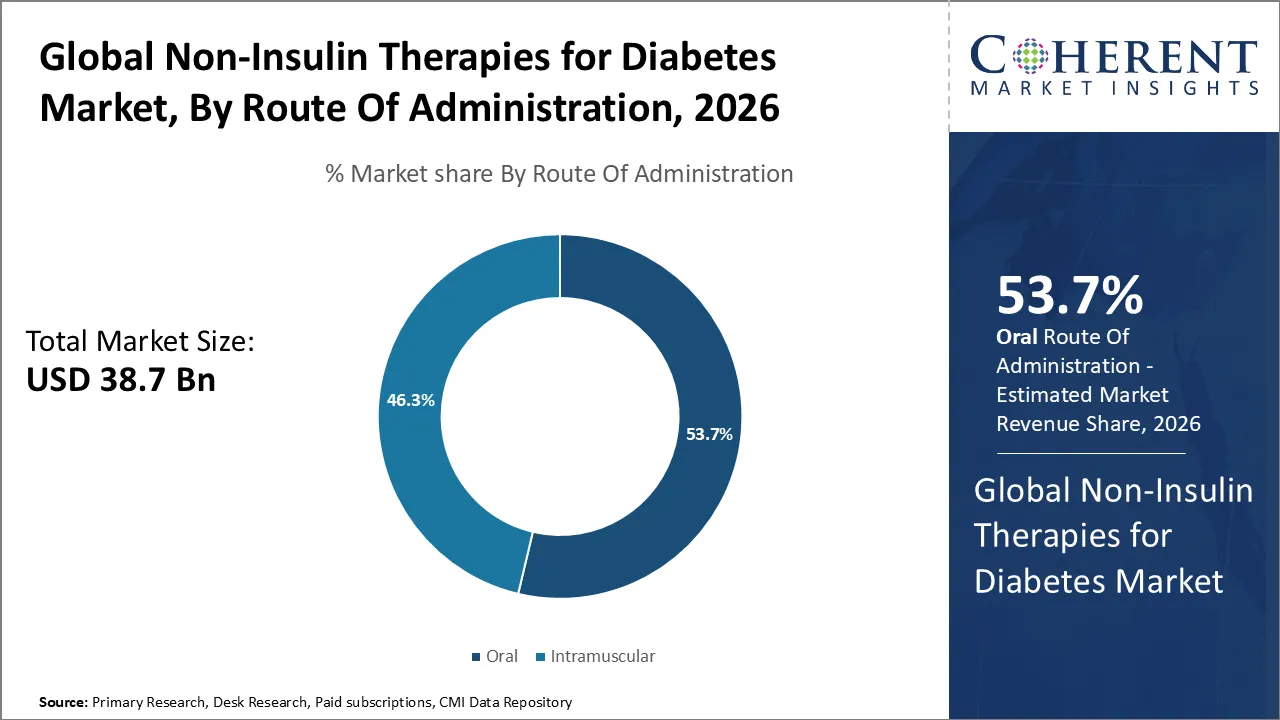
- Oral expected to hold largest market share of 53.7% in 2026 owing to its rising prevalence of type 2 diabetes. By 2050, approximately 853 million adults, about 1 in 8 are projected to be living with diabetes, representing a 46% increase.
- Hospital Pharmacy acquired the prominent market share of 42.2% in 2026 owing to its growing number of hospitalized patients with diabetes. In 2024, diabetes was associated with approximately 3.4 million deaths worldwide, equivalent to about one death every 9 seconds, and accounted for an estimated USD 1 trillion in health expenditure.
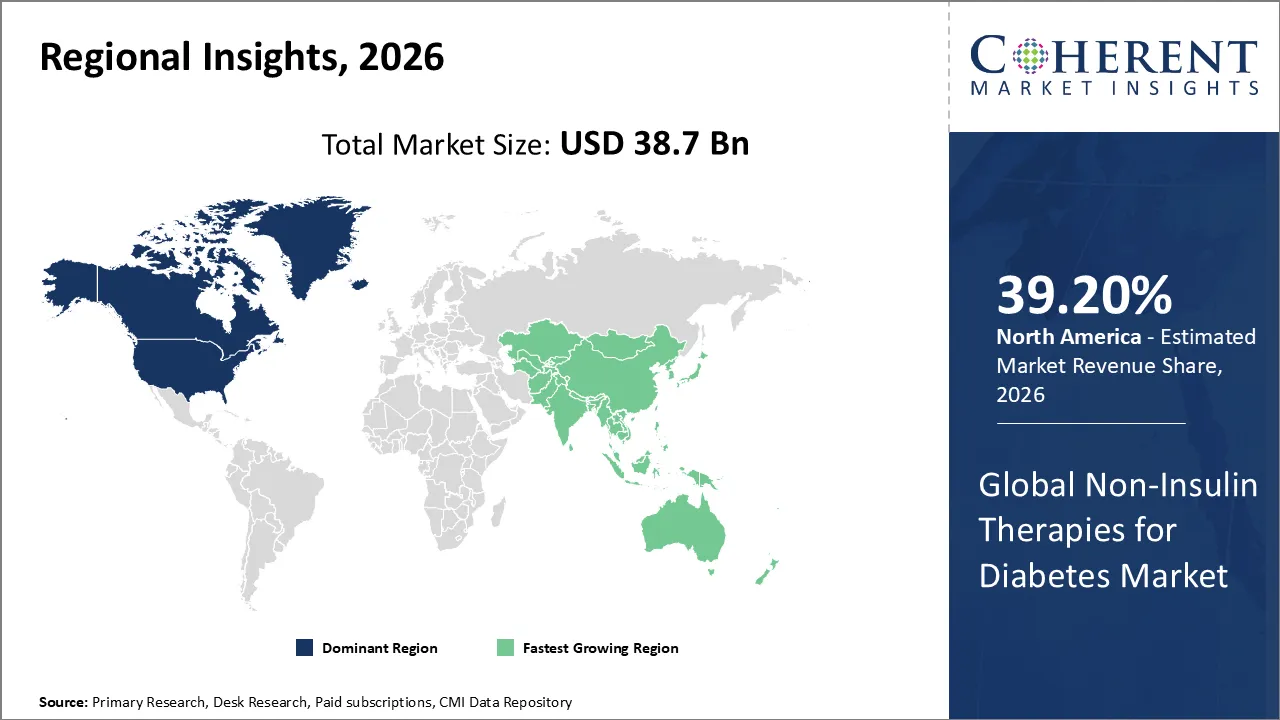
- North America is expected to acquire the dominant share of 39.2% in 2026 owing to the strong adoption of advanced therapies. Sanofi’s Tzield (teplizumab) was approved in the United States as the first disease-modifying therapy for adults and children aged 8 years and older with stage 2 type 1 diabetes, delaying progression to stage 3 disease.
Current Events and Their Impact on the Non-Insulin Therapies for Diabetes Market
Current Event | Description and its Impact |
FDA resolution of GLP-1 shortages and tighter compounding rules (2024–2025) |
|
Medicare price negotiation includes Ozempic and Rybelsus (2025–2027) |
|
Segmental Insights
- Current Industry Events of 2026
- Market Size Estimation
- Regional Breakdown
- Competitive Landscape
- Customer Intelligence
- Segmental Analysis
- Pricing Analysis
- Key Market Drivers, Challenges & Future Trends
- Customized Insights Section
Oral Expected to Hold Largest Market Share
Oral expected to hold largest market share of 53.7% in 2026 owing to its improving diabetes diagnosis and treatment rates. The rising prevalence of type 2 diabetes drives the oral segment, while patients value the convenience of taking glucose-lowering medicines without injections. Physicians commonly prescribe oral therapies such as metformin and SGLT2 inhibitors because these medicines effectively control blood glucose and provide additional benefits for suitable patients. Pharmaceutical companies offer multiple drug classes, combination treatments, generic options, and extended-release formulations, which expand treatment choices and encourage adoption. Growing patient demand for convenient therapies and improved access to diabetes care further support the segment. Novo Nordisk has launched Awiqli (insulin icodec) in India, introducing the world’s first once-weekly basal insulin for adults with diabetes. The therapy offers an alternative for people with type 2 diabetes who need insulin after diet, exercise, and oral medicines no longer provide adequate glucose control.
Why is Biguanides Acquiring the Largest Market Share?
Biguanides hold the largest market share of 38.6% in 2026. Metformin primarily drives the biguanides segment because of its proven efficacy, affordability, and widespread availability. Physicians commonly prescribe metformin as a first-line treatment for type 2 diabetes because it effectively controls blood glucose while carrying a low risk of hypoglycemia and generally having a neutral effect on weight. Manufacturers also offer immediate- and extended-release formulations, supporting broader use. Rising diabetes prevalence, increasing use of combination therapies, and metformin’s role in preventing diabetes among high-risk individuals further strengthen demand for biguanides. According to the National Institutes of Health (NIH), diabetes prevalence among adults aged 75–79 years was estimated at 24.0% in 2021 and is projected to increase to 24.7% by 2045.
Which Distribution Channel segment dominates the market?
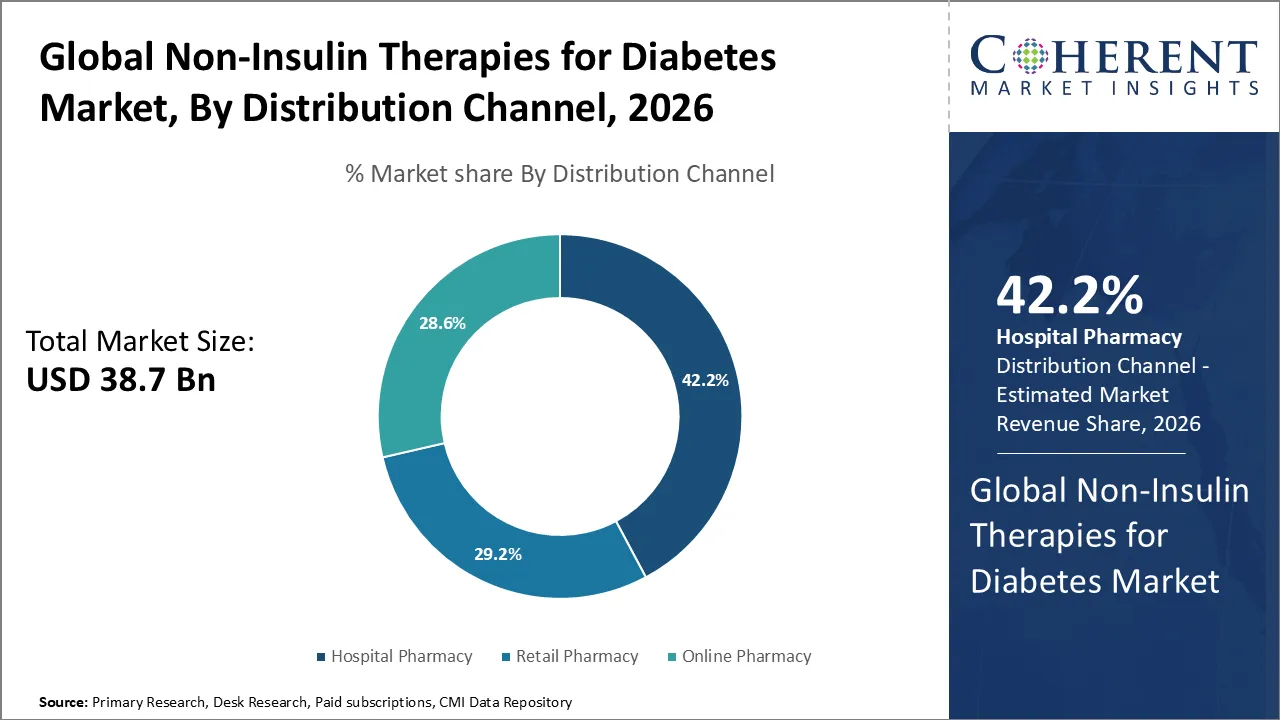
Hospital Pharmacy acquired the prominent market share of 42.2% in 2026. The growing number of patients with diabetes who require inpatient care and medication management drives the hospital pharmacy segment. Hospitals rely on pharmacy services to select, dispense, monitor, and manage transitions for non-insulin therapies. Advances in DPP-4 inhibitors and SGLT2 inhibitors broaden treatment options for suitable hospitalized patients. Pharmacists also conduct medication reconciliation, support formulary management, and coordinate discharge planning to optimize diabetes treatment and maintain continuity of care, thereby strengthening demand for non-insulin therapies through hospital pharmacy channels.
Non-Insulin Therapies for Diabetes Market Trends
- Growing global diabetes burden is expanding the addressable treatment population. According to the International Diabetes Federation (IDF) Diabetes Atlas 2025, an estimated 589 million adults aged 20–79 years were living with diabetes in 2024, equivalent to 1 in 9 adults. This figure is projected to reach 853 million by 2050, or approximately 1 in 8 adults. The expanding patient population is expected to sustain demand for long-term glucose-lowering therapies, including oral and other non-insulin treatments.
- Increasing use of SGLT2 inhibitors and GLP-1 receptor agonists for cardiorenal risk reduction is strengthening demand for newer non-insulin therapies. The American Diabetes Association (ADA) Standards of Care 2026 recommends an SGLT2 inhibitor or GLP-1 receptor agonist with demonstrated cardiovascular benefit for people with type 2 diabetes and established atherosclerotic cardiovascular disease or chronic kidney disease. For patients with heart failure, an SGLT2 inhibitor is recommended irrespective of A1C.
- Generic competition is expanding within established non-insulin drug classes. In April 2026, the U.S. FDA approved the first generics of dapagliflozin (Farxiga), including several manufacturers, for specified diabetes, cardiovascular, and kidney indications. FDA also approved the first generic liraglutide injection referencing Victoza in December 2024. These approvals introduce additional suppliers into established non-insulin therapy categories and may increase competition and affordability.
Regional Insights
North America dominates owing to expansion of combination therapies
North America is expected to acquire the dominant share of 39.20% in 2026. North America’s substantial diabetes population drives demand for non-insulin therapies, while its advanced healthcare infrastructure facilitates access to innovative treatments. A large patient pool in the United States creates sustained demand for effective glucose-lowering medicines. Physicians increasingly prescribe oral therapies and newer agents that support glycemic control and provide cardiovascular or renal benefits for appropriate patients. Expanded diabetes screening, personalized treatment strategies, combination therapies, improved healthcare access, and continued pharmaceutical innovation further strengthen the regional non-insulin diabetes therapies market. Approximately 37.3 million people in the United States, representing 11.3% of the population, have diabetes.
Asia Pacific Non-Insulin Therapies for Diabetes Market Trends
The Asia Pacific non-insulin therapies for diabetes market benefits from the rising burden of type 2 diabetes, urbanization, sedentary lifestyles, dietary changes, and population aging. India has the second-largest population of adults aged 20–79 years living with diabetes worldwide. Patients increasingly prefer convenient oral treatments such as metformin, DPP-4 inhibitors, and SGLT2 inhibitors, which drives adoption. Governments and healthcare providers continue to expand healthcare infrastructure, improve diabetes diagnosis, and raise disease awareness. Wider insurance coverage also supports treatment access, while pharmaceutical companies advance drug formulations and introduce newer therapies, creating further market opportunities across the region.
United States Non-Insulin Therapies for Diabetes Market Trends
Growing demand for effective glucose management drives the United States non-insulin diabetes therapies market. Healthcare providers increasingly adopt GLP-1 receptor agonists and SGLT2 inhibitors because these therapies support glucose control while offering cardiovascular, kidney, and weight-management benefits. In 2024, 26.5% of adults with diagnosed diabetes, more than one in four, used injectable GLP-1 receptor agonists. Updated clinical guidelines and broader treatment options encourage physicians to incorporate newer medicines alongside established oral therapies. Greater patient awareness, ongoing pharmaceutical innovation, and persistent challenges in achieving optimal glycemic control further stimulate demand for non-insulin diabetes treatments.
Japan Non-Insulin Therapies for Diabetes Market Trends
Japan’s non-insulin diabetes therapies market grows as healthcare providers seek effective ways to manage type 2 diabetes, especially among the aging population. Patients and physicians increasingly use oral therapies such as SGLT2 and DPP-4 inhibitors, while GLP-1 receptor-based treatments continue to gain traction. Pharmaceutical companies also expand therapies that address cardiovascular, renal, and weight-management needs. Japan’s healthcare system, established treatment guidelines, and focus on selecting safe medications for older adults further support sustained demand for non-insulin diabetes therapies.
Who are the Major Companies in Non-Insulin Therapies for Diabetes Industry
Some of the major key players in Non-Insulin Therapies for Diabetes are AstraZeneca, Boehringer Ingelheim GmbH, Bristol-Myers Squibb, F. Hoffmann-La Roche Ltd., Janssen Pharmaceuticals, Merck and Company, Novartis AG, Novo Nordisk, Pfizer, Sanofi Aventis, and Takeda Pharmaceuticals.
Key News
- In May 2026, DexCom launched Dexcom Flex, a new CGM system for adults with type 2 diabetes who do not use intensive insulin therapy, expanding glucose-monitoring access for patients using basal insulin, oral medicines, or GLP-1 therapies.
Market Report Scope
Non-Insulin Therapies for Diabetes Market Report Coverage
Report Coverage | Details | ||
Base Year: | 2025 | Market Size in 2026: | USD 38.7 Bn |
Historical Data for: | 2020 to 2024 | Forecast Period: | 2026 to 2033 |
Forecast Period 2026 to 2033 CAGR: | 5.7% | 2033 Value Projection: | USD 53.6 Bn |
Geographies covered: |
| ||
Segments covered: |
| ||
Companies covered: | AstraZeneca, Boehringer Ingelheim GmbH, Bristol-Myers Squibb, F. Hoffmann-La Roche Ltd., Janssen Pharmaceuticals, Merck and Company, Novartis AG, Novo Nordisk, Pfizer, Sanofi Aventis, and Takeda Pharmaceuticals. | ||
Analyst Opinion
- Non-insulin diabetes therapies are being driven by a fundamental shift in how diabetes is managed. More than 800 million adults worldwide live with diabetes, making the need for scalable glucose-lowering therapies impossible to ignore. The market’s strongest catalyst is the expanding clinical role of therapies that deliver benefits beyond glycemic control, particularly SGLT2 inhibitors and GLP-1 receptor agonists.
- SGLT2 inhibitors have become particularly important because major clinical trials have demonstrated cardiovascular and kidney benefits beyond blood-glucose reduction. For example, the EMPA-REG OUTCOME trial showed that empagliflozin reduced cardiovascular death by 38% in adults with type 2 diabetes and established cardiovascular disease. This evidence has fundamentally strengthened the case for using non-insulin therapies earlier and more strategically.
- GLP-1 receptor agonists are also reshaping treatment priorities by combining glucose control with substantial weight-loss effects. In the STEP 1 trial, adults receiving semaglutide achieved an average body-weight reduction of about 15% after 68 weeks, highlighting why these therapies increasingly appeal to patients and physicians managing diabetes alongside obesity. We believe this convergence of diabetes, cardiovascular, renal, and weight-management benefits will remain the defining force behind adoption of advanced non-insulin therapies.
Speak to the analyst
Want personalized insights?
Take the findings above to one of our principal consultants, or have the report rebuilt around the segments, geographies and competitors you actually track.
Market Segmentation
- By Drug Class (Revenue, USD Bn, 2021-2033)
- Biguanides
- Sulfonylureas
- Thiazolidinedione’s
- Alpha-Glucosidase Inhibitors
- DPP-4 Inhibitors
- GLP-1 Analogs
- Sodium-glucose co-transporter-2 (SGLT2) inhibitors
- By Route Of Administration (Revenue, USD Bn, 2021-2033)
- Oral
- Intramuscular
- By Distribution Channel (Revenue, USD Bn, 2021-2033)
- Retail Pharmacy
- Hospital Pharmacy
- Online Pharmacy
- By Region (Revenue, USD Bn, 2021-2033)
- North America
- U.S.
- Canada
- Latin America
- Brazil
- Mexico
- Argentina
- Rest of Latin America
- Europe
- Germany
- U.K.
- France
- Italy
- Spain
- Russia
- Rest of Europe
- Asia Pacific
- China
- India
- Japan
- Australia
- South Korea
- ASEAN
- Rest of Asia Pacific
- Middle East
- GCC
- Israel
- Rest of Middle East
- Africa
- South Africa
- Central Africa
- North Africa
- North America
Sources
Primary Research interviews
- Endocrinologists and diabetologists
- Diabetes specialists and primary-care physicians
- Hospital pharmacists and clinical pharmacists
- Pharmaceutical industry executives and product managers
- Regulatory and healthcare-policy professionals
- Hospital procurement and formulary-management professionals
Databases
- World Health Organization (WHO) Global Health Observatory
- International Diabetes Federation (IDF) Diabetes Atlas
- Centers for Disease Control and Prevention (CDC) Diabetes Data and Statistics
- National Institutes of Health (NIH) databases
- National Institute of Diabetes and Digestive and Kidney Diseases (NIDDK) databases
- U.S. Food and Drug Administration (FDA) drug databases
- European Medicines Agency (EMA) databases
- ClinicalTrials.gov
- PubMed/MEDLINE
- World Bank health and population databases
Magazines
- Diabetes Forecast
- Diabetes Self-Management
- Medscape
- Pharmaceutical Executive
- Drug Discovery & Development
- Pharmaceutical Technology
Journals
- Diabetes Care
- The Lancet Diabetes & Endocrinology
- Diabetologia
- The New England Journal of Medicine
- JAMA
- JAMA Internal Medicine
- Nature Medicine
- Diabetes, Obesity and Metabolism
- Cardiovascular Diabetology
- The Journal of Clinical Endocrinology & Metabolism
Newspapers
- The New York Times
- The Wall Street Journal
- Financial Times
- Reuters
- The Guardian
- The Washington Post
Associations
- American Diabetes Association (ADA)
- International Diabetes Federation (IDF)
- European Association for the Study of Diabetes (EASD)
- Endocrine Society
- American Association of Clinical Endocrinology (AACE)
- American College of Physicians (ACP)
- Japan Diabetes Society (JDS)
Public Domain sources
- World Health Organization (WHO) reports and diabetes statistics
- Centers for Disease Control and Prevention (CDC) National Diabetes Statistics Report
- National Institutes of Health (NIH) and NIDDK publications
- U.S. Food and Drug Administration (FDA) regulatory documents and drug approvals
- European Medicines Agency (EMA) assessment reports and regulatory documents
- ClinicalTrials.gov clinical-trial records
- International Diabetes Federation (IDF) diabetes statistics
- National health ministry and government healthcare statistics
- World Bank demographic and health datasets
- PubMed-indexed scientific publications
Proprietary Elements
- CMI Data Analytics Tool
- Proprietary CMI Existing Repository of information for last 10 years
Get access to 250+ pages report
Every segment, forecast, competitor profile and data table behind the analysis above — available for instant download.
- ESOMAR Member
- ISO 9001:2015 Certified
- D-U-N-S Registered
- GDPR & CCPA Compliant
Missing comfort of reading report in your local language? Find your preferred language:
Transform your Strategy with Exclusive Trending Reports
Frequently Asked Questions
The Non-Insulin Therapies for Diabetes Market is anticipated to grow at a CAGR of 5.7% with USD 38.7 Bn in 2026 and is expected to reach USD 53.6 Bn in 2033.
The market is primarily driven by the rising prevalence of type 2 diabetes, increasing obesity, and growing demand for therapies that provide benefits beyond glycemic control.
Biguanides represent the leading drug class in the provided market assessment, supported primarily by the widespread use of metformin.
SGLT2 inhibitors are gaining importance because clinical evidence has demonstrated benefits extending beyond blood-glucose control.
GLP-1 receptor agonists are changing treatment priorities by addressing both diabetes and obesity-related concerns.
Oral therapies benefit from ease of administration and patient convenience, particularly for people managing type 2 diabetes over the long term.