

Non-Invasive Prenatal Testing (NIPT) Market Analysis & Forecast: 2026-2033
The Global Non-invasive Prenatal Testing (NIPT) Market size is estimated to be valued at USD 5.62 Bn in 2026 and is expected to reach USD 11.37 Bn by 2033, exhibiting a compound annual growth rate (CAGR) of 10.6% from 2026 to 2033.
Key Takeaways of the Non-invasive Prenatal Testing (NIPT) Market
- By Product & Service, The Product Segment is expected to contribute the highest share of the market with 56.6% in 2026.
- By Application, The Trisomy Detection Segment is expected to contribute the highest share of the market with 43.9% in 2026.
- By Technology, The Next-Generation Sequencing (NGS) segment is expected to contribute the highest share of the market with 40.6% in 2026.
- North America is projected to top the global market with 37.8% share, followed by Asia Pacific with 28.2% share in 2026.
Market Overview
The Non-invasive Prenatal Testing (NIPT) market share is expanding rapidly as growing awareness and a surge in new product launches by key players boost adoption worldwide. Growing prevalence of Down’s syndrome and other genetic disorders in babies and rapid expansion of application areas of non-invasive prenatal testing are expected to drive the market growth during the forecast period. Furthermore, increasing preference of non-invasive techniques over invasive methods and reimbursement for NIPT in many countries have been supporting the growth of this market. However, availability of alternative diagnostic techniques and ethical concerns regarding NIPT are expected to hamper the market growth to some extent.
Current Events and Its Impact on the Non-Invasive Prenatal Testing (NIPT) Market
Event | Description and Impact |
Regulatory Framework Evolution and FDA Modernization |
|
Technological Advancement and AI Integration |
|
Healthcare Infrastructure and Reimbursement Policy Shifts |
|
Non-Invasive Prenatal Testing (NIPT) Market: Pipeline Analysis
The NIPT pipeline is expanding, driven by innovations in sequencing, bioinformatics, and test accessibility. In late-stage development, Natera's enhanced Panorama panel, Yourgene's IONA Nx, and Roche's Harmony test are undergoing validation and regional expansions, focusing on microdeletion detection and regulatory approvals. Mid-stage players like Illumina and BGI are optimizing cost-efficient NIPT workflows and extended panels for emerging markets.
In early-phase trials, Cradle Genomics is advancing sustainable test kits, while Juno Diagnostics pilots low-resource screening solutions. Preclinical innovation includes microfluidic fetal cell capture (Prelude Genetics), AI-driven variant analysis (Cygenica), and programmable reagents (DNAscript) for decentralized NIPT.
Key platforms include SNP-based, WGS-enabled, and microfluidics-integrated tests, supporting non-invasive detection of trisomies and rare chromosomal anomalies. Major trends include CE-IVD and FDA regulatory momentum, sequencing cost decline, and AI-enhanced accuracy. These developments reflect a shift toward accessible, high-precision prenatal screening globally.
- Current Industry Events of 2026
- Market Size Estimation
- Regional Breakdown
- Competitive Landscape
- Customer Intelligence
- Segmental Analysis
- Pricing Analysis
- Key Market Drivers, Challenges & Future Trends
- Customized Insights Section
Non-Invasive Prenatal Testing (NIPT) Market: Patent Landscape
The NIPT market exhibits a dynamic and competitive patent landscape, with over 70% of active patents held by key players such as Illumina, Natera, Roche, BGI Genomics, and Myriad Genetics. Core innovation areas include cell-free fetal DNA extraction, single nucleotide polymorphism (SNP)-based analysis, next-generation sequencing (NGS) workflows, and bioinformatics algorithms for chromosomal anomaly detection.
Recent patent filings emphasize AI-driven data interpretation, microdeletion detection, and non-invasive fetal cell isolation techniques. Intellectual property around expanded NIPT panels, particularly for rare aneuploidies and monogenic disorders, is rapidly growing, reflecting a market push toward comprehensive prenatal genomic screening.
Emerging players and research institutions are contributing to IP activity in microfluidics, portable NIPT platforms, and machine learning–enabled risk modeling, supporting the shift toward cost-effective and decentralized testing solutions.
The U.S. leads global patent filings, followed by China, Europe, and South Korea, indicating a strong global innovation footprint. This intensifying IP environment reinforces technological differentiation, supports strategic licensing, and poses high entry barriers for new market entrants in the NIPT sector.
Reimbursement Scenario
The global reimbursement landscape for non-invasive prenatal testing (NIPT) is highly variable, influenced by national healthcare systems, risk stratification guidelines, and payer policies. In the U.S., reimbursement is guided by CPT code 81420 for trisomy screening, with Medicare covering high-risk pregnancies and some commercial payers extending coverage to all-risk cases. Average reimbursement ranges from $450 to $800, depending on the test panel and provider network.
Private insurers like Aetna and Cigna have expanded NIPT coverage to include microdeletions, though prior authorization is often required. Medicaid coverage varies by state and may be limited to high-risk pregnancies, creating disparities in access.
In the EU, reimbursement is country-specific. Germany’s G-BA approved NIPT for trisomy 21 reimbursement in 2022, while the UK’s NHS funds testing for high-risk cases under NICE guidelines. France and Italy offer partial reimbursement based on gestational age and clinical indication.
Across Asia-Pacific, Australia includes NIPT under out-of-pocket coverage with optional private insurance reimbursement, while China and India remain largely self-pay markets. Globally, reimbursement trends are shifting toward expanded access, especially as cost-effectiveness improves and clinical utility is validated through long-term data.
Prescribers’ Preference
NIPT is widely favored by obstetricians, maternal-fetal medicine (MFM) specialists, and genetic counselors for its high sensitivity in detecting common aneuploidies. Prescribers prefer SNP-based or whole-genome sequencing (WGS) platforms such as Panorama (Natera) and Harmony (Roche) for their validated accuracy in high-risk pregnancies. For low- to average-risk pregnancies, non-invasive prenatal testing using cfDNA platforms such as Verifi (Illumina) and IONA Nx (Yourgene) is gaining wider adoption, influenced by insurance coverage and regional healthcare guidelines.
Clinicians often recommend NIPT after first-trimester ultrasound or abnormal serum screening results, typically between 10–12 weeks gestation. In cases with positive results, follow-up diagnostic procedures like amniocentesis or CVS are advised to confirm findings. MFM specialists may also order expanded NIPT panels to assess microdeletions or rare autosomal anomalies in complex pregnancies.
Prescribers prioritize test accuracy, turnaround time (usually 5–10 days), ease of blood sample collection, and availability of genetic counseling services. Choice of NIPT is further influenced by lab partnerships, regional regulations, and the test’s ability to integrate into electronic health records and prenatal care workflows.
Segmental Insights
Non-Invasive Prenatal Testing (NIPT) Market Insights, By Product & Service
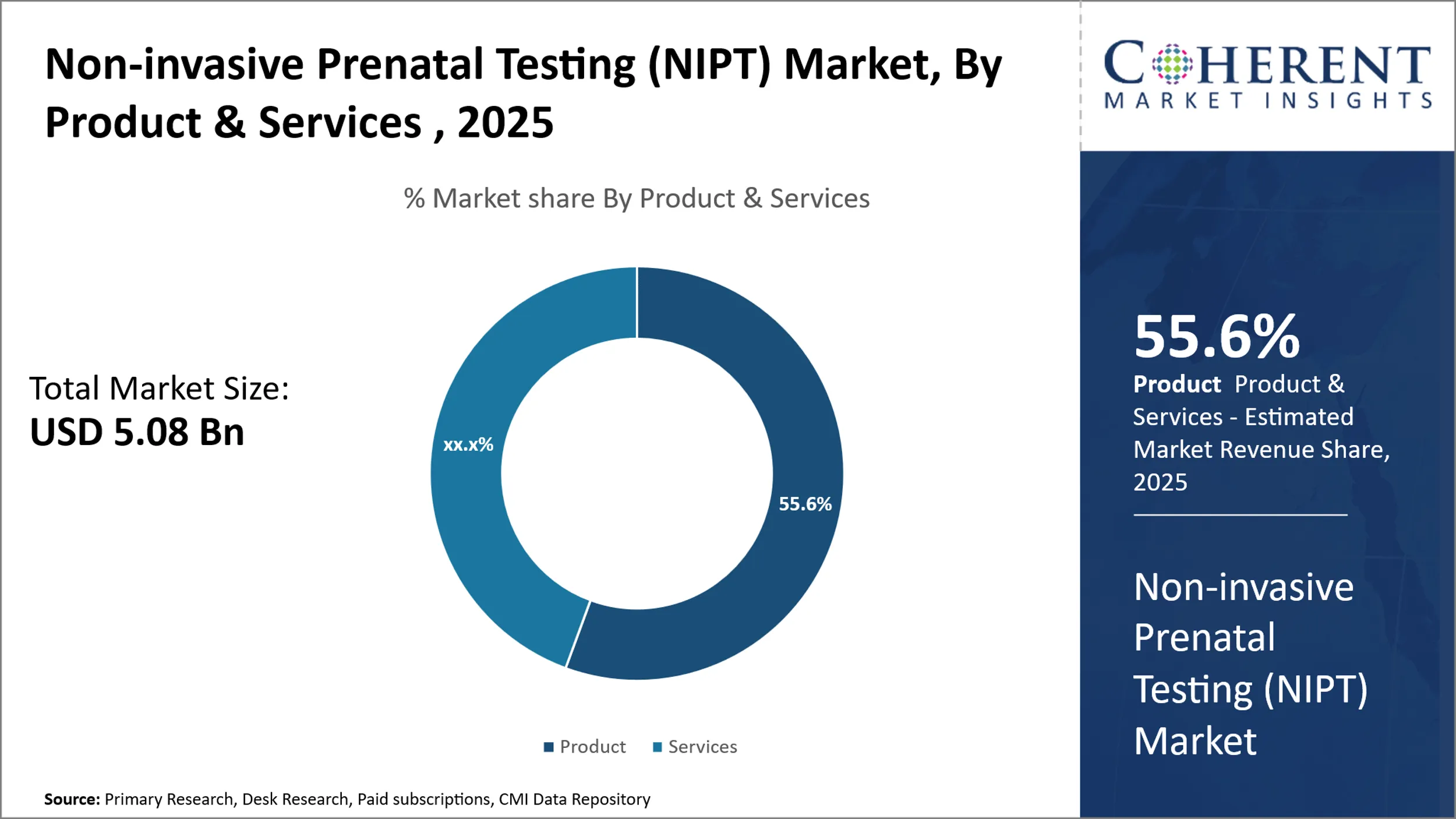
In terms of product & service, the product segment is expected to contribute the highest share of the market with 56.6% in 2026 owing to the growing need for rapid and accurate non-invasive screening and diagnosis solutions among expectant mothers and healthcare providers. Products such as instruments and equipment that facilitate quick and reliable detection of fetal chromosomal abnormalities without invasive procedures have seen rising uptake.
Continuous technological advancements enabling high-volume testing with improved accuracy have boosted product demand. Ultrasound devices with innovative features for detailed fetal scanning without risk of pregnancy loss are widely adopted. Likewise, next-generation sequencing platforms that can efficiently analyze cell-free DNA for various genetic parameters gain popularity.
-market-by-application.webp "Ceramic Membrane Market By Product & Services")
Non-Invasive Prenatal Testing (NIPT) Market Insights, By Application
In terms of application, the Non-invasive Prenatal Testing (NIPT) market for trisomy detection is projected to hold the largest share, accounting for 43.9% in 2026, driven by the high prevalence and significant health implications of common fetal trisomies. Trisomy 13, 18 and 21 which cause Patau, Edwards, and Down’s syndromes respectively are among the major aneuploidies detected via non-invasive prenatal testing.
As these conditions are leading genetic causes of miscarriages and developmental disabilities, expectant mothers opt for early screening. Rising public health awareness about availability of NIPT and its efficacy in trisomy risk assessment compared to older tests has raised demand.
Government initiatives promoting routine testing have further aided segment revenue. Likewise, increasing pregnancies in high risk groups and advancing maternal age where chances of trisomy rise bolster uptake. Comprehensive profiling with precision has made trisomy detection the major application area.
Non-Invasive Prenatal Testing (NIPT) Market Insights, By Technology
In terms of technology, the next-generation sequencing (NGS) is expected to contribute the highest share of the market with 40.6% in 2026 owing to the technological advantages it offers over legacy methods. NGS platforms have played a key role in establishing the non-invasiveness of NIPT through high-throughput analysis of cell-free DNA from maternal plasma.
Tests based on NGS achieve higher resolution and sensitivity in genome screening. The massive parallel sequencing capability enables faster and more efficient detection of multiple chromosomal regions simultaneously. Continuous refinement of NGS technologies has improved analytical accuracy while bringing down costs.
Vendors have also launched automated NGS workflows with simplified sample-to-result times attracting more laboratories and clinics. Additionally, expanding applications of NGS-based NIPT like microdeletion screening and investigation of other genetic factors drive segment revenue. Its rising acceptance as the gold standard for reliable and detailed prenatal screening sustains segment leadership.
Non-Invasive Prenatal Testing (NIPT) Market - Regional Insights
North America Non-invasive Prenatal Testing (NIPT) Market Trends
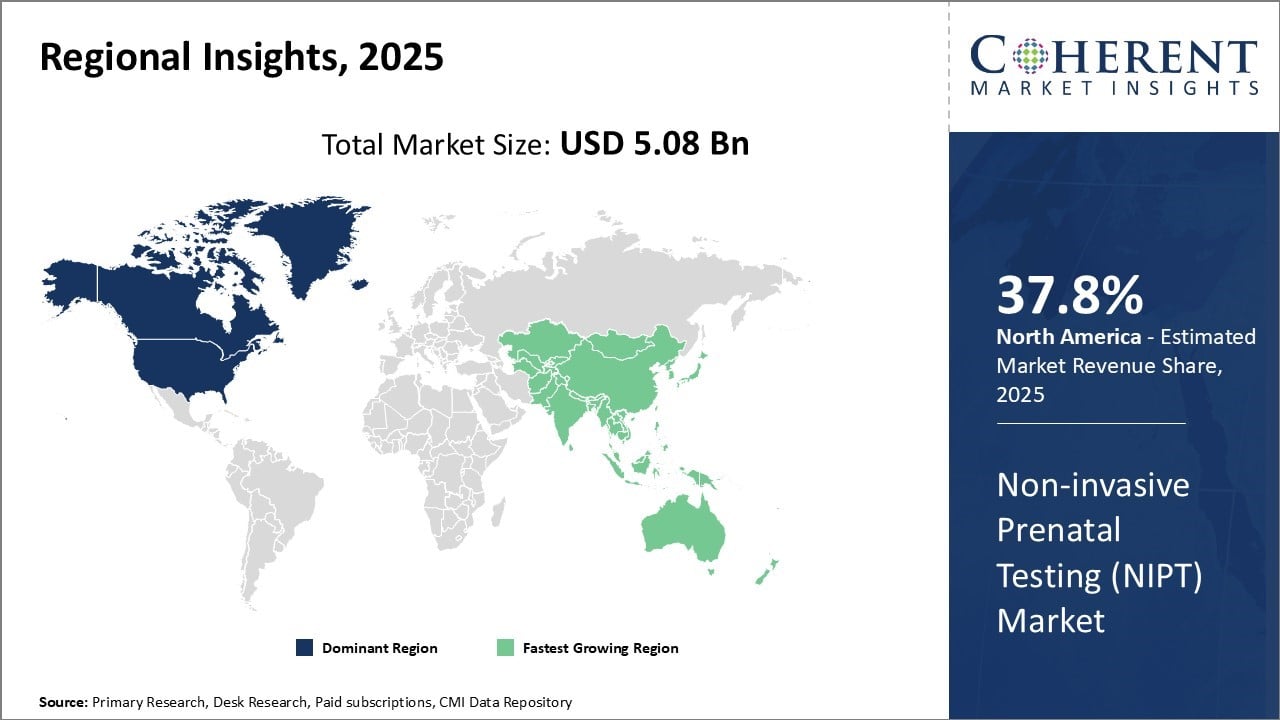
In North America, the Non-invasive Prenatal Testing (NIPT) market demand is expected to remain strong, holding a 37.8% share in 2026, fueled by increasing awareness, focus on early disease detection, and well-established healthcare infrastructure. The region is home to various pioneers offering advanced testing solutions, while government policies focus on improving maternal and child healthcare.
Asia Pacific Non-invasive Prenatal Testing (NIPT) Market Trends
Meanwhile, the Asia Pacific Non-invasive Prenatal Testing (NIPT) market forecast predicts the fastest growth, with the region capturing a 28.2% share by 2026. This can be credited to the rising healthcare spending of developing countries, growing initiatives to enhance prenatal care, and increasing investments by international players looking to tap potential markets.
Non-invasive Prenatal Testing (NIPT) Market Outlook for Key Countries
United States Non-invasive Prenatal Testing (NIPT) Market Trends
Enhanced reimbursement policies for average and low-risk pregnancies are anticipated to boost the adoption of non-invasive prenatal screening tests. In the U.S., Medicaid programs provide coverage for NIPT for high-risk patients following first-trimester screening. Additionally, NIPT is covered by insurers for approximately 114 million women with average-risk singleton pregnancies in the country.
Germany Non-invasive Prenatal Testing (NIPT) Market Trends
The Germany non-invasive prenatal testing (NIPT) market is supported by favorable healthcare policies. In January 2023, the German Federal Joint Committee announced new guidelines that include NIPT as a standard prenatal screening option, which is expected to enhance its adoption among expectant parents.
India Non-invasive Prenatal Testing (NIPT) Market Trends
The India non-invasive prenatal testing (NIPT) market is expanding due to the rising burden of genetic disorders. In October 2023, the Indian Council of Medical Research (ICMR) launched a national initiative to promote non-invasive prenatal testing, aiming to improve maternal and fetal health outcomes across the country.
Market Players, Key Development, and Competitive Intelligence
Key Developments
- In October 2024, Yourgene Health, a part of the Novacyt Group and a leader in molecular diagnostics, partnered with Genetix, a high-tech genetic diagnostics organization, to launch Colombia's first local non-invasive prenatal testing (NIPT) service. Utilizing Yourgene’s IONA Nx NIPT Workflow, Genetix's NipTest offers safe, fast, and accurate prenatal testing, reducing turnaround times and eliminating shipping challenges for expectant parents in the region.
- In September 2023, Yourgene Health plc, a leading provider of genomic solutions, launched the Yourgene MagBench Automated DNA Extraction Instrument and Kit for Sage customers in Asia Pacific and the Middle East. This cost-effective bench-top robotic workstation, designed for the Sage 32 NIPT Workflow, enables clinical labs to offer precise and efficient NIPT services.
- In August 2022, Natera, Inc., a pioneer in cell-free DNA testing, announced at the Canaccord Genuity Growth Conference that it had initiated the U.S. FDA pre-submission process for its Panorama NIPT. The filing targets fetal chromosomal aneuploidies and 22q11.2 deletion syndrome, highlighting Natera's commitment to regulatory compliance and advanced prenatal diagnostics.
- In September 2022, Yourgene Health plc, a leader in genomic and diagnostic solutions, received Health Sciences Authority (HSA) approval in Singapore for its IONA Nx NIPT Workflow. This approval enables clinical laboratories to offer advanced non-invasive prenatal testing (NIPT) services.
Market Report Scope
Non-Invasive Prenatal Testing (NIPT) Market Report Coverage
| Report Coverage | Details | ||
|---|---|---|---|
| Base Year: | 2025 | Market Size in 2026: | USD 5.62 Bn |
| Historical Data for: | 2020 To 2024 | Forecast Period: | 2026 To 2033 |
| Forecast Period 2026 to 2033 CAGR: | 10.6% | 2033 Value Projection: | USD 11.37 Bn |
| Geographies covered: |
| ||
| Segments covered: |
| ||
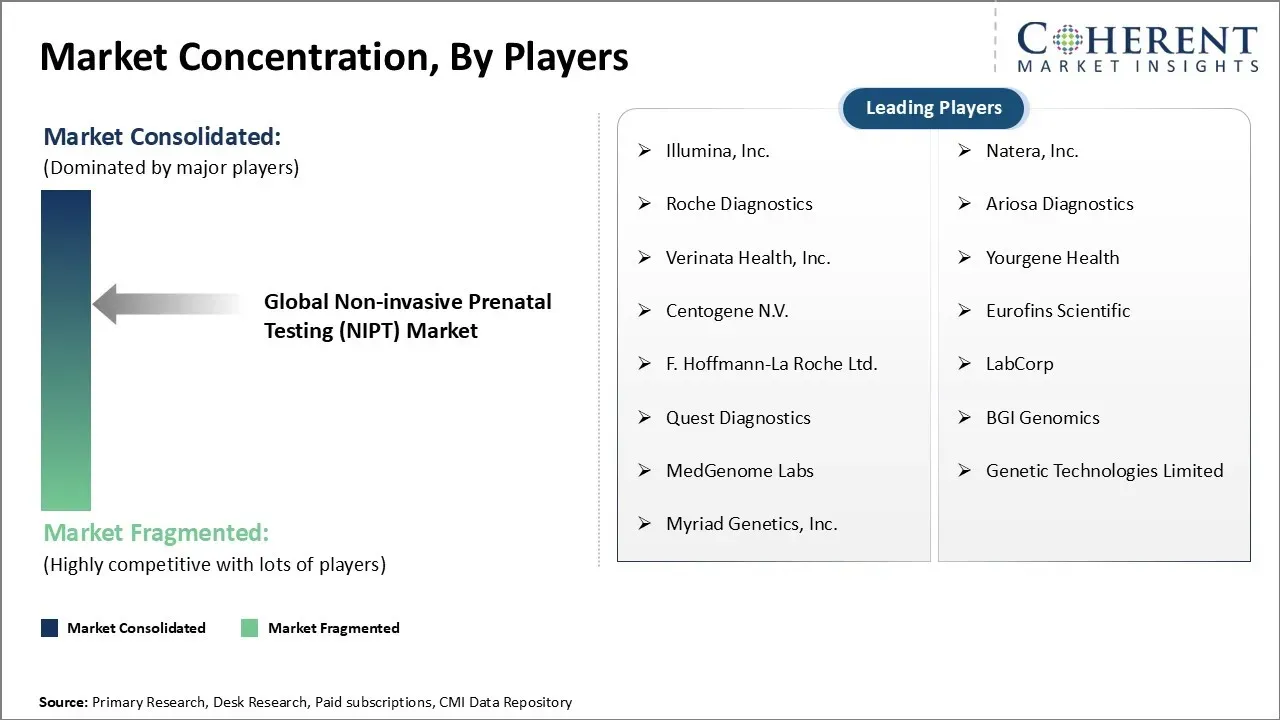
| Companies covered: | Illumina, Inc., Natera, Inc., Roche Diagnostics, Ariosa Diagnostics, Verinata Health, Inc., Yourgene Health, Centogene N.V., Eurofins Scientific, F. Hoffmann-La Roche Ltd., LabCorp, Quest Diagnostics, BGI Genomics, MedGenome Labs, Genetic Technologies Limited, and Myriad Genetics, Inc. | ||
| Growth Drivers: |
| ||
| Restraints & Challenges: |
| ||
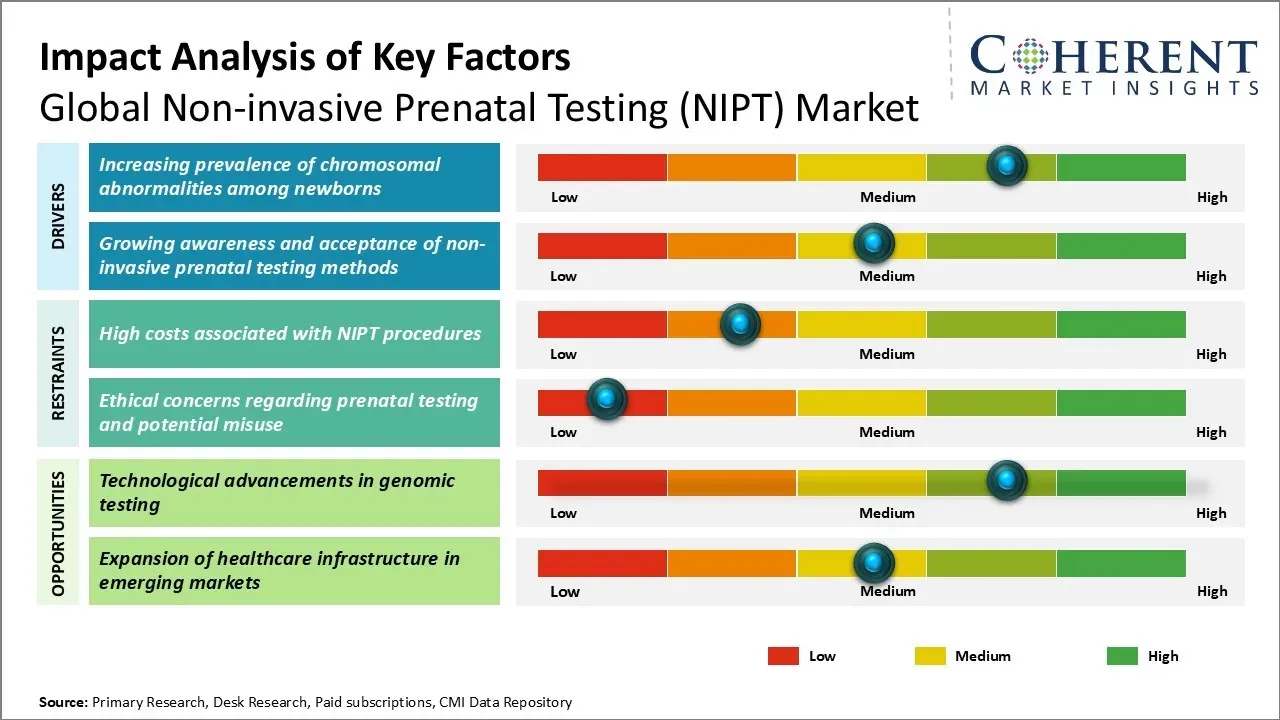
Market Driver - Increasing prevalence of chromosomal abnormalities among newborns
The prevalence of chromosomal abnormalities in newborns has been increasing over recent decades. Conditions such as Down syndrome, Trisomy 18, Trisomy 13, and Turner syndrome can severely impact a child’s health and development while placing significant emotional and financial strain on families.
The risk of these abnormalities rises with parental age at conception. As more people delay parenthood to prioritize their careers, the average age of new parents has risen worldwide, increasing the likelihood of serious chromosomal defects in babies.
For instance, in December 2022, according to Springer Nature, a study in Zhejiang Province, China (2014–2020), showed rising chromosomal abnormalities (CAs), with sex chromosomal abnormalities increasing from 1.70 to 7.30 per 10,000 births and microdeletions/duplications from 0.30 to 6.81. The prenatal diagnosis rate for trisomy 21 improved from 20.8% to 70.1%. Elevated maternal age (≥35 years) and advances in prenatal diagnostics contributed to these trends.
Market Challenge - High costs associated with NIPT procedures
One of the main factors limiting the Non-invasive Prenatal Testing (NIPT) market growth globally is the high cost of NIPT procedures. NIPT tests analyze cell-free DNA from a maternal blood sample to screen for fetal chromosome abnormalities such as Down syndrome, without risking the health of the fetus. However, the procedures and techniques involved in extracting and analyzing fetal cell-free DNA are highly complex and require sophisticated laboratory equipment and genetic expertise.
This makes NIPT tests quite expensive, with an average cost ranging from USD 1,000-2,000 per test. The high costs pose affordability issues, restricting NIPT to high-income groups, and developed regions of the world. Several developing and underdeveloped markets have low acceptance and adoption rates of NIPT due to the high expenditure required.
Market Opportunities - Technological advancements in genomic testing
One of the major drivers enhancing the Non-invasive Prenatal Testing (NIPT) market value is the continuous technological advancement in genomic testing. Continuous research and development is helping refine NIPT methodologies and optimize associated laboratory processes.
Improvements in next generation sequencing (NGS) technologies have enabled more accurate and efficient analysis of cell-free DNA from smaller sample sizes. Advanced analytics and machine learning applications are also aiding the interpretation of NIPT results.
Portable and decentralized testing solutions are being innovated to facilitate POINT-of-CARE NIPT outside conventional laboratory settings. Such technological upgrades are helping reduce the costs and complexities of NIPT. As tests become more affordable and accessible, demand for NIPT is expected to tremendously increase across different global regions.
Analyst Opinion
- Increased awareness about NIPT and its benefits among expectant mothers across regions is a key driver. Growing preference for non-invasive procedures during pregnancy will further propel market expansion. Additionally, continuous technological developments are enabling NIPT to identify an extensive number of genetic abnormalities at an early gestational age. This factor will aid in cementing NIPT's position as a primary screening method globally.
- Strict regulatory norms and reimbursement policies pose challenges to market players in various countries. Different regulatory pathways also result in delay in test approval, restricting market access. On the other hand, higher test costs compared to traditional screening techniques could deter certain segments. Nevertheless, rising healthcare expenditures are facilitating the incorporation of NIPT in national healthcare programs, offering new opportunities.
- Among regions, North America currently dominates the NIPT landscape owing to accessibility to advanced healthcare facilities and supportive insurance coverage. However, Asia Pacific is likely to emerge as the most lucrative market in the long run. Factors such as the increasing accessibility of NIPT, rising healthcare infrastructure, and growing medical tourism will majorly support the regional market growth over the coming decade.
Speak to the analyst
Want personalized insights?
Take the findings above to one of our principal consultants, or have the report rebuilt around the segments, geographies and competitors you actually track.
Market Segmentation
- By Product & Service Insights (Revenue, USD Bn, 2021 - 2033)
- Product
- Consumables
- Assay Kits and Reagents
- Instruments
- Services
- By Application Insights (Revenue, USD Bn, 2021 - 2033)
- Trisomy Detection
- Microdeletion Detection
- Sex Chromosome Aneuploidy Detection
- By Technology Insights (Revenue, USD Bn, 2021 - 2033)
- Next-Generation Sequencing (NGS)
- Polymerase Chain Reaction (PCR)
- Array Technology
- Rolling Circular Amplification
- By Period Insights (Revenue, USD Bn, 2021 - 2033)
- 0-12 Weeks
- 13-24 Weeks
- 25-36 Weeks
- By End User Insights (Revenue, USD Bn, 2021 - 2033)
- Hospitals
- Diagnostic Laboratories
- Home Care Settings
- Others
- Regional Insights (Revenue, USD Bn, 2021 - 2033)
- North America
- U.S.
- Canada
- Latin America
- Brazil
- Argentina
- Mexico
- Rest of Latin America
- Europe
- Germany
- U.K.
- Spain
- France
- Italy
- Russia
- Rest of Europe
- Asia Pacific
- China
- India
- Japan
- Australia
- South Korea
- ASEAN
- Rest of Asia Pacific
- Middle East
- GCC Countries
- Israel
- Rest of Middle East
- Africa
- South Africa
- North Africa
- Central Africa
Sources
Primary Research Interviews
- Healthcare providers and obstetricians specializing in prenatal care
- Laboratory directors and genetic counselors
- NIPT kit manufacturers and suppliers
- Pregnant women and expectant families
- Others
Databases
- National Center for Biotechnology Information (NCBI)
- Global Health Observatory (GHO) data repository
- FDA Medical Device Database
- Healthcare Cost and Utilization Project (HCUP)
- Others
Magazines
- Clinical Laboratory News
- Genetic Engineering & Biotechnology News
- Modern Healthcare Magazine
- Laboratory Medicine Magazine
- Others
Journals
- Prenatal Diagnosis Journal
- American Journal of Obstetrics and Gynecology
- Genetics in Medicine
- Others
Newspapers
- The Wall Street Journal (Healthcare Section)
- Financial Times (Healthcare & Pharmaceuticals)
- Reuters Health News
- Bloomberg Healthcare
- Others
Associations
- American College of Obstetricians and Gynecologists (ACOG)
- International Society for Prenatal Diagnosis (ISPD)
- American Society of Human Genetics (ASHG)
- National Society of Genetic Counselors (NSGC)
- Others
Public Domain Sources
- World Health Organization (WHO) reports
- Centers for Disease Control and Prevention (CDC)
- National Institutes of Health (NIH)
- FDA guidance documents and approvals
- Others
Proprietary Elements
- CMI Data Analytics Tool
- Proprietary CMI Existing Repository of information for last 8 years
Get access to 250+ pages report
Every segment, forecast, competitor profile and data table behind the analysis above — available for instant download.
- ESOMAR Member
- ISO 9001:2015 Certified
- D-U-N-S Registered
- GDPR & CCPA Compliant
Missing comfort of reading report in your local language? Find your preferred language:
Transform your Strategy with Exclusive Trending Reports
Frequently Asked Questions
The Non-invasive Prenatal Testing (NIPT) Market size is estimated to be valued at USD 5.62 Bn in 2026, and is expected to reach USD 11.37 Bn by 2033.
The CAGR of the global Market is projected to be 10.6% from 2026 to 2033.
Non-invasive Prenatal Testing (NIPT) can screen for common chromosomal conditions such as trisomies 21, 18, and 13, as well as sex chromosome abnormalities and certain microdeletions.
Illumina, Inc., Natera, Inc., Roche Diagnostics, Ariosa Diagnostics, Verinata Health, Inc., Yourgene Health, Centogene N.V., Eurofins Scientific, F. Hoffmann-La Roche Ltd., LabCorp, Quest Diagnostics, BGI Genomics, MedGenome Labs, Genetic Technologies Limited, and Myriad Genetics, Inc. are the major players.
Yes, specific NIPT panels target microdeletions, offering early detection of rare genetic disorders and enhancing prenatal risk assessment beyond common chromosomal abnormalities.