

Global Office Furniture Market Size and Forecast 2026-2033
The global office furniture market is estimated to be valued at USD 75.52 Bn in 2026 and is expected to reach USD 115.06 Bn by 2033, exhibiting a compound annual growth rate (CAGR) of 6.2% from 2026 to 2033.
Key Takeaways of the Global Office Furniture Market
- In terms of material type, wood is expected to contribute 35.7 % share of the office furniture market in 2026.
- In terms of product type, desks & tables is expected to contribute 38.7 % share of the office furniture market in 2026.
- In terms of end user, corporate offices are expected to contribute 41.2 % share of the office furniture market in 2026.
- North America has been the dominant region in the global office furniture market with an estimated market share of 38.0 % in 2026.
Market Overview
The global office furniture market has been witnessing steady growth over the past few years. There is a rising demand for more flexible and automated furniture solutions that can adapt to the hybrid work models adopted by many organizations post-pandemic. Modular and sit-stand desks as well as storage cabinets on wheels are gaining more traction among office space designers. Sustainability also remains a key factor influencing purchasing decisions in this market. Many companies are investing in furniture made from recycled, recyclable, or remanufactured materials to reduce their environmental footprint.
Current Events and Its Impact
Current Events | Description and its impact |
Economic Pressures and Inflation |
|
Trade Policy Shifts |
|
Market Trends
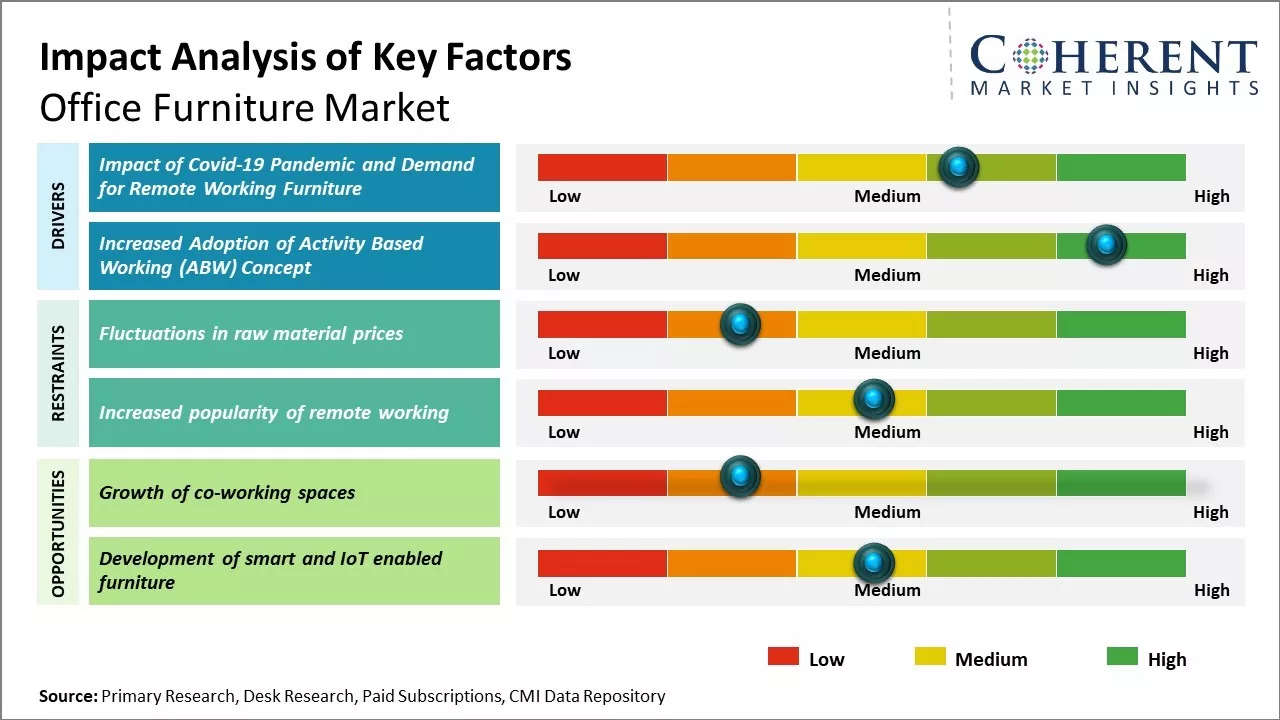
Increased Adoption of Activity Based Working (ABW) Concept
There is a strong trend of shifting towards more flexible and collaborative workspace designs in modern offices. The traditional cubicle-based designs are being replaced by open floor plans focusing on mobility, connectivity, and functionality. This concept of Activity Based Working or ABW encourages employees to choose different settings and spaces within the office based on the task or work being performed.
For instance, in early 2022, Deloitte’s Amsterdam office underwent a redesign adopting the ABW model featuring movable desks, quiet focus booths, hub-and-spoke meeting areas, and casual lounges.
Hybrid Workspaces Catalyzing Furniture Industry Evolution
The global office furniture market is undergoing a significant transformation, driven by the widespread adoption of hybrid work models and a heightened focus on employee well-being. This shift is fueling demand for flexible, modular, and ergonomic furniture solutions that can adapt to various work styles and environments, whether in traditional offices or home-based setups.
Additionally, sustainability is a key driver, with increasing preference for eco-friendly materials and production processes, alongside the growing integration of smart technology like built-in charging and IoT capabilities to enhance productivity and convenience. For instance, in early 2024, Herman Miller enhanced its OE1 Workspace Collection originally introduced in 2021 with agile additions like a pedal‑powered sit‑stand table, portable powerbox, work‑on‑the‑go Workbox, Personal Hoodie, and movable screens.
- Current Industry Events of 2026
- Market Size Estimation
- Regional Breakdown
- Competitive Landscape
- Customer Intelligence
- Segmental Analysis
- Pricing Analysis
- Key Market Drivers, Challenges & Future Trends
- Customized Insights Section
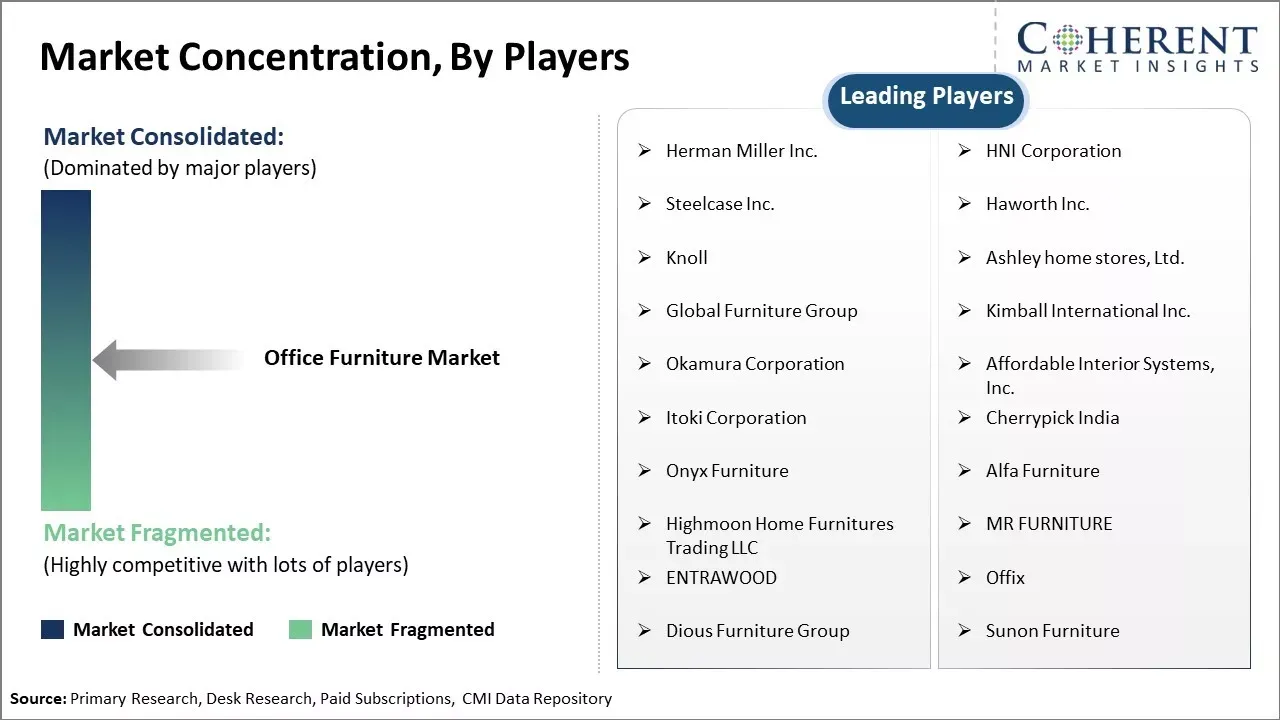
Market Concentration and Competitive Landscape
Analyst View
- The office furniture sector is clearly on an upward trajectory, fueled by the continuous stream of new startups, expanding corporate footprints, and the now-ingrained culture of hybrid work. However, this promising outlook is severely hampered by persistent supply chain snags and the inescapable rise in raw material costs, which are undeniably squeezing profit margins.
- While North America, spearheaded by the U.S., currently dominates demand, it's an undeniable fact that Asia Pacific is set to be the long-term growth engine. This shift is being aggressively driven by Chinese manufacturers expanding their reach, and the increasing appeal of India and Vietnam as cost-effective offshore manufacturing alternatives—a clear sign of global production rebalancing.
- The burgeoning tech industry's expanding workforce is, without a doubt, a critical demand driver, necessitating innovative workplace solutions that prioritize adaptability and mobility for hybrid models. More importantly, the growing emphasis on Environmental, Social, and Governance (ESG) considerations means that furniture made from recyclable and sustainable materials isn't just a niche preference anymore; it's rapidly becoming a fundamental procurement requirement.
Speak to the analyst
Want personalized insights?
Take the findings above to one of our principal consultants, or have the report rebuilt around the segments, geographies and competitors you actually track.
Market Opportunity: Growth of Co-Working Spaces
The rise of co-working spaces has been one of the biggest trends to emerge in the commercial real estate sector over the past decade. As remote work has increased flexibility and more entrepreneurs and small businesses operate virtually, the demand for shared, flexible workspaces has surged. Unlike traditional offices with long furniture replacement cycles, co-working operators need to quickly and regularly refresh their spaces to keep up contemporary design trends and cater to a diverse set of clients.
In March 2025, Verci, a members-only coworking and social workspace in Manhattan, launched a vibrant, tech-forward office environment tailored to Gen Z startups. Designed as a multifunctional hub with a rooftop deck, event floor, meeting areas, and café-style lounges, Verci’s space is regularly refreshed with modular desks, trending seating, and flexible storage to meet evolving member preferences making furniture subscriptions and frequent updates a key part of its business model.
Segmental Insights
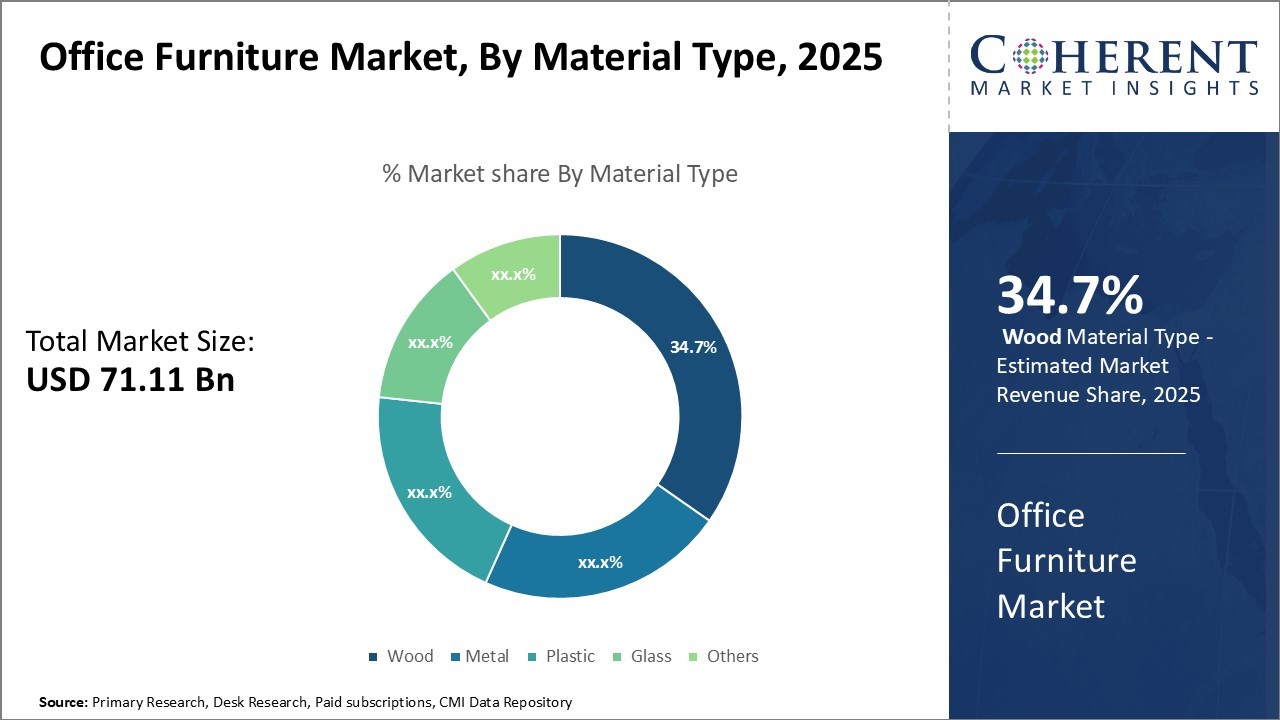
Global Office Furniture Market Insights, by Material Type: Natural Durability Boosts Wood's Popularity
In terms of material type, wood is expected to contribute 35.7% share of the office furniture market in 2026, owing to its natural durability properties. While wood requires more maintenance than other materials, it retains its structural integrity well over time if properly finished and sealed. The natural aesthetics of wood also appeal to many clients and workers compared to harsher artificial materials. Various wood types each have their own unique grains, knots, and textures that make for visually appealing desk tops, chairs and partition panels.
Withstanding wear-and-tear from daily use, wood maintains its integrity of form without cracking or breaking down. Its ability to be refinished also extends the productive lifecycle of wood furniture pieces for decades to come. While more expensive up front than plastic or metal, wood furniture represents a long-term investment and contributes to a warmer, more organic atmosphere in offices.
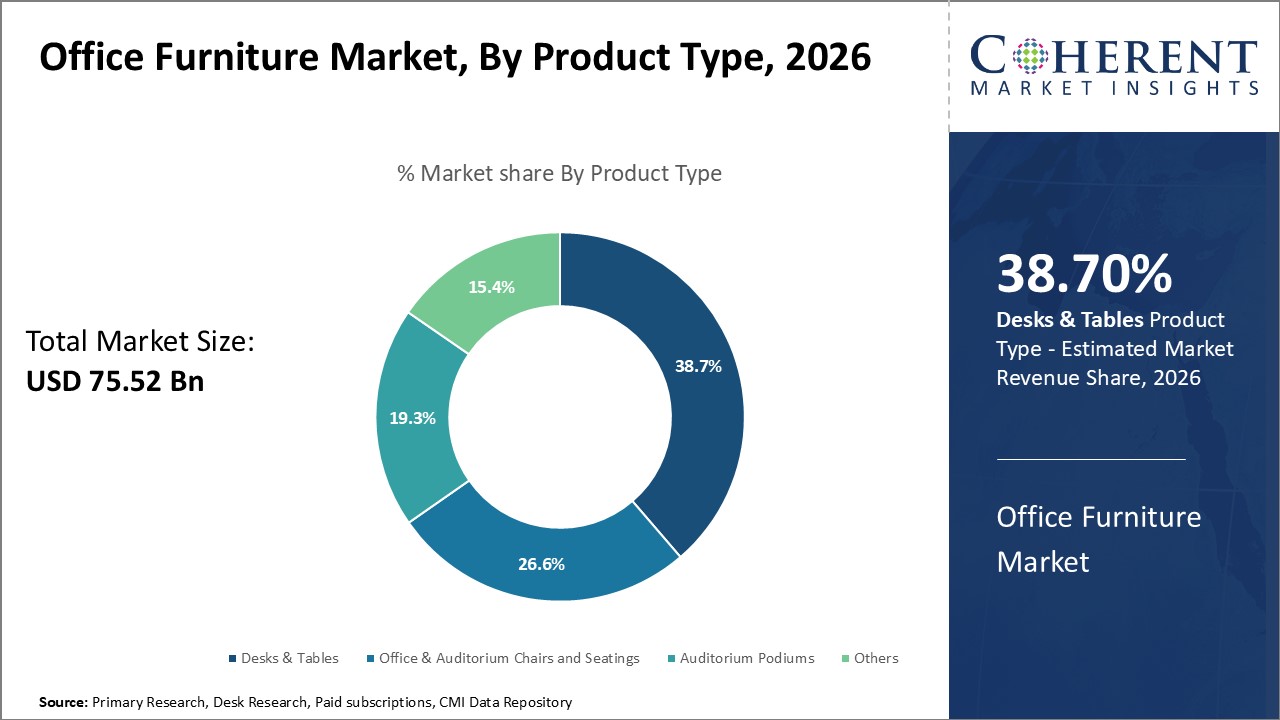
Global Office Furniture Market Insights, by Product Type: Versatility Drives the Demand for Desks and Tables
In terms of product type, desks & tables is expected to contribute 38.7% share of the office furniture market in 2026, owing to their versatile functionality. From personal work stations to conference room setups, desks and tables provide surfaces for a variety of tasks throughout the work day. Individual desks allow for focused work while tables are ideal for collaborating in teams. Features like leg heights, desktop sizes, filing compartments, and electrical connections allow desks and tables to be customized for different work environments and employee roles. Mobility is also an advantage, as desks and tables can be easily rearranged or redistributed as needs change. Available in a diversity of styles from modern to traditional, desks and tables meet the design preferences of various corporate cultures. Their central usefulness in any office space solidifies desks and tables as fundamental product types within the industry.
Global Office Furniture Market Insights, by End User: Corporate Demands Drive Volume
In terms of end user, corporate offices is expected to contribute 41.2% share of the office furniture market in 2026, owing to high work space volume demands. Large corporations occupy sizeable commercial real estate footprints nationally and globally. When companies expand or relocate offices, they require complete furniture overhauls at scale. Corporate procurement teams coordinate major installations involving hundreds of pieces. Strict branding and quality standards must be met for suites, workstations, and common areas.
Furniture acts as a non-monetary form of compensation for employees as well. Large staff counts translate into bulk order volumes that fuel significant business within the contract furniture segment. Government offices and other workplace environments also purchase, but corporate needs present the most consistent market potential due to vast staff sizes and periodic refresh cycles.
Regional Insights
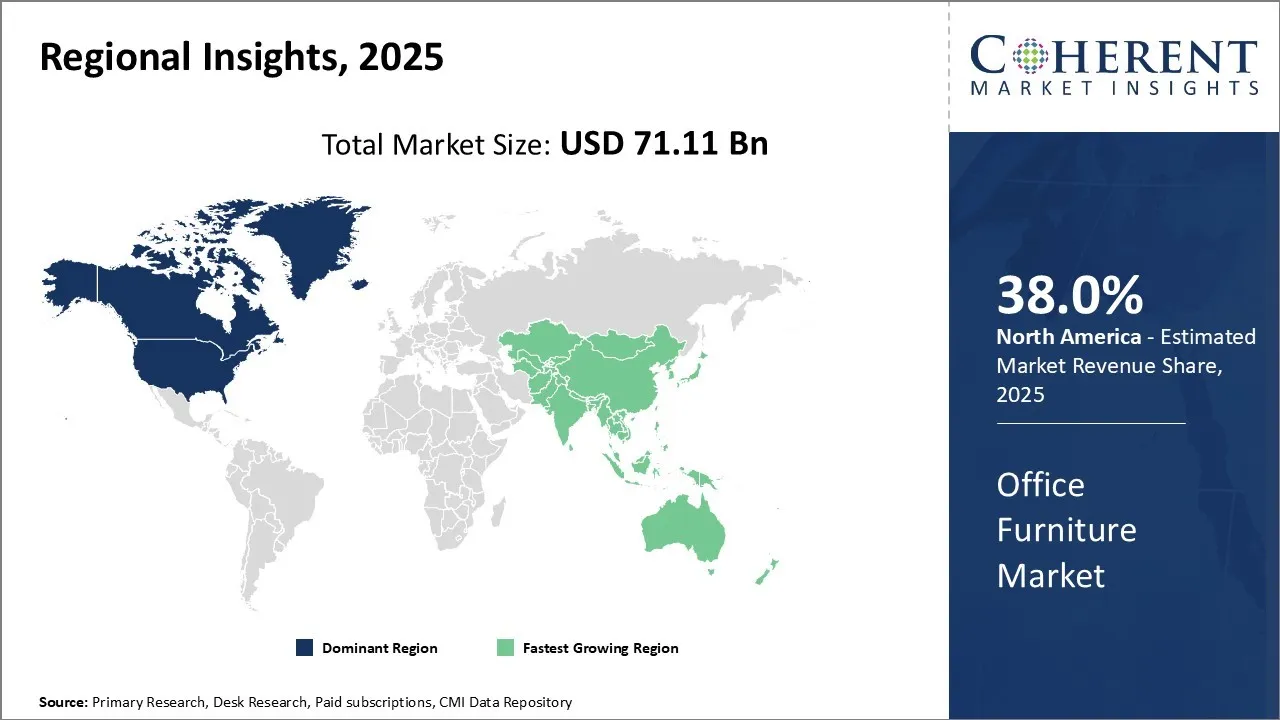
North America Office Furniture Market Trends and Analysis
North America has established itself as the dominant region in the global office furniture market over the past few decades. The region is expected to account for 38.0% of the market share in 2026. The large and developed economies of U.S. and Canada have provided considerable growth opportunities for industry players. Major office furniture companies have their headquarters located within the region that allows them to cater effectively to the demands of clients. A strong presence of multinational corporations from various industry verticals has generated a steady demand for high-quality and ergonomic office furniture. Moreover, the focus on employee well-being and productivity has prompted organizations to invest more in furnishings that promote healthy work environments.
North American brands are known to offer innovative furniture lines integrating latest design aesthetics and technological features. For instance, on April 25, 2023, a U.S.-based Steelcase introduced the Karman ergonomic mesh chair, which uses a unique Intermix textile and a weight-responsive frame to enhance movement, comfort, and sustainability showcasing North America’s continued leadership in premium, wellness-driven office furniture.
Asia Pacific Office Furniture Market Trends and Analysis
The Asia Pacific region has emerged as the fastest growing market for office furniture in recent times. Rapid urbanization and growth of small and medium enterprises have bolstered the commercial real estate boom across major countries like China, India, and Vietnam. This has translated to new office space requirements for various startup cultures.
Local furniture manufacturers are building capabilities to cater for the affordable segments by offering diverse collections at competitive price points. Developing trade relations with North America and Europe have supported imports of premium furniture lines as well. Meanwhile, numerous foreign players are setting up manufacturing plants within Asia to leverage lower production costs and tap into the attractive market potentials. The expanding middle class population also contributes towards the increased spending on workplace enhancements. Overall, the Asia Pacific region remains a lucrative prospect for sustained future expansions in the global office furniture landscape.
For instance, in April 2026, India's Godrej Interio announced INR 55 crore (approximately USD 6.8 million) investment to transform its B2B office segment, targeting a 30% increase in institutional business by FY 2027. This reflects Asia Pacific’s rapid regional expansion and local manufacturers scaling up to serve growing SME and corporate demand.
Office Furniture Market Outlook for Key Countries
U.S. Office Furniture Market Trends
The U.S. office furniture market is being reshaped by hybrid work models, ergonomic innovation, and sustainability demands. Employers are investing in wellness-focused products like sit-stand desks and lumbar-support chairs. Smart furniture integrated with IoT features such as desks with built-in chargers and adjustable presets is also gaining popularity.
Sustainability, tariff impacts, and local sourcing are influencing consumer and corporate buying decisions. For instance, Steelcase reported a 9% increase in order volume across the Americas, largely driven by demand for height-adjustable desks and collaborative furniture as companies revamped office layouts to support hybrid teams.
China Office Furniture Market Trends
China's office furniture market is expanding rapidly due to urbanization, SME growth, and rising environmental awareness. Demand is surging for smart and ergonomic designs suitable for compact urban spaces and home offices. Companies are also adopting sustainable practices by using bamboo, recycled plastics, and energy-efficient production.
Tech integration and brand customization are increasingly influencing purchasing decisions. For instance, Markor Smart, a China-based company, has introduced AI-enabled ergonomic chairs with auto posture correction and app integration, targeting remote workers and tech offices in Beijing and Shanghai.
Germany Office Furniture Market Trends
Germany’s office furniture market is focusing on modularity, eco-design, and tech-enabled systems. The shift to hybrid work has prompted increased adoption of flexible setups, including foldable tables, space-saving storage, and ergonomic seating. Regulatory standards like EU Eco-design are driving sustainability.
Online showrooms and direct-to-consumer sales are becoming more common across German brands. For instance, German brand König + Neurath launched a modular office system with FSC-certified wood and integrated wireless charging pads, aligning with EU green design rules and appealing to both startups and large corporations.
Market Report Scope
Office Furniture Market Report Coverage
| Report Coverage | Details | ||
|---|---|---|---|
| Base Year: | 2025 | Market Size in 2026: | USD 75.52 Bn |
| Historical Data for: | 2020 To 2024 | Forecast Period: | 2026 To 2033 |
| Forecast Period 2026 to 2033 CAGR: | 6.2% | 2033 Value Projection: | USD 115.06 Bn |
| Geographies covered: |
| ||
| Segments covered: |
| ||
| Companies covered: | Herman Miller Inc., HNI Corporation, Steelcase Inc., Haworth Inc., Knoll, Ashley home stores, Ltd., Global Furniture Group, Kimball International Inc., Okamura Corporation, Affordable Interior Systems, Inc., Itoki Corporation, Cherrypick India, Onyx Furniture, Alfa Furniture, Highmoon Home Furnitures Trading LLC, MR FURNITURE, ENTRAWOOD, Offix, Dious Furniture Group, and Sunon Furniture | ||
| Growth Drivers: |
| ||
| Restraints & Challenges: |
| ||
Global Office Furniture Industry News
- In January 2024, IKEA announced the launch of more central, small-sized stores in the U.K. The launch will help improve the physical retail availability of office furniture products in the country.
- In March 2024, IKEA introduced MITTZON, its most extensive office system to date, comprising 85 products designed to support various work activities and improve office experiences. The MITTZON collection emphasizes ergonomics, with acoustic screens and biophilic design elements, promoting flexible, comfortable, and healthy work environments.
- In April 2024, Bentley Home, the luxury furniture brand owned by the iconic U.K.-based car manufacturer, Bentley Motors, made its debut in the office furniture market at the Milan Design Week. This highly anticipated launch showcased Bentley Home's commitment to bringing its signature style and craftsmanship to the world of office furnishings.
- In August 2024, MillerKnoll reported a resurgence in demand for office furniture, including chairs, couches, and desks, marking its first organic order growth in two years. This recovery was attributed to corporate investments in furnishings tailored for hybrid work and nontraditional office settings.
Emerging Applications
- Smart furniture is evolving, with prototypes integrating biometric sensors to monitor posture and vital signs, offering real-time ergonomic feedback. Adoption is currently limited to innovative firms like those using Herman Miller's Live OS.
- There's a growing push for adaptive workspaces tailored for neurodiverse employees, featuring sensory-adjustable furniture. While solutions like Steelcase's Quiet Spaces exist, systematic enterprise-wide deployment remains low.
Macroeconomic and Microeconomic Factors Impacting Office Furniture Market
Macroeconomic Factors
Labor Market Trends
- The widespread adoption of remote and hybrid work models is fundamentally reshaping office furniture demand, both in terms of geographical distribution and functional requirements. By 2024, approximately 60% of U.S. companies had adopted hybrid work, fueling a 5.13% compound annual growth rate in ergonomic home office furniture. This trend is exemplified by companies like Steelcase, which strategically pivoted their offerings to focus on modular home-office products in response to the surge in remote work.
Government Infrastructure Policies
- Public investment in commercial zones, driven by government infrastructure policies, acts as a significant stimulant for office furniture procurement. Federal infrastructure bills, for instance, funded over 120 new business parks between 2023 and 2024. This direct investment substantially increased orders for collaborative office systems, demonstrating the tangible link between government policy and market demand.
Microeconomic Factors
Consumer Preferences & Demand Shifts
- Ergonomics and flexibility are increasingly driving purchasing decisions among consumers. A significant 78% of buyers now prioritize height-adjustable desks due to perceived health benefits. This trend is exemplified by Herman Miller’s Aeron chair sales, which rose 30% after its design was explicitly linked to posture health.
Competitive Dynamics
Market fragmentation is intensifying, which in turn is fostering significant innovation in office furniture design. New entrants and startups, such as Branch Furniture, have successfully gained approximately 8% market share by offering modular, SMB-targeted solutions
Market Segmentation
- Material Type Insights (Revenue, USD Bn, 2021 - 2033)
- Metal
- Wood
- Plastic
- Glass
- Others (Steel, etc.)
- Product Type Insights (Revenue, USD Bn, 2021 - 2033)
- Office & Auditorium Chairs and Seatings
- Desks & Tables
- Auditorium Podiums
- Others (Sofa, Dining Table, etc.)
- End User Insights (Revenue, USD Bn, 2021 - 2033)
- Corporate Offices
- Government Offices
- Others (Factory Offices, etc.)
- Sales Channel Insights (Revenue, USD Bn, 2021 - 2033)
- Retail Stores
- Specialty Stores
- Online Stores
- Others (Rental Stores, etc.)
- Regional Insights (Revenue, USD Bn, 2021 - 2033)
- North America
- U.S.
- Canada
- Latin America
- Brazil
- Argentina
- Mexico
- Rest of Latin America
- Europe
- Germany
- U.K.
- Spain
- France
- Italy
- Russia
- Rest of Europe
- Asia Pacific
- China
- India
- Japan
- Australia
- South Korea
- ASEAN
- Rest of Asia Pacific
- Middle East & Africa
- GCC Countries
- Israel
- Rest of Middle East & Africa
- Key Players Insights
- Herman Miller Inc.
- HNI Corporation
- Steelcase Inc.
- Haworth Inc.
- Knoll
- Ashley home stores, Ltd.
- Global Furniture Group
- Kimball International Inc.
- Okamura Corporation
- Affordable Interior Systems, Inc.
- Itoki Corporation
- Cherrypick India
- Onyx Furniture
- Alfa Furniture
- Highmoon Home Furnitures Trading LLC
- MR FURNITURE
- ENTRAWOOD
- Offix
- Dious Furniture Group
- Sunon Furniture
Sources
Stakeholders
- Office Furniture Manufacturers Representatives
- Corporate Procurement Managers
- E-commerce Platform Executives (Specializing in Furniture Sales)
- Interior Designers specializing in Office Spaces
- Others
Magazines
- Furniture Today
- Office Insight Magazine
- Interior Design Magazine
- Others
Journals
- Journal of Interior Design
- International Journal of Industrial Ergonomics
- Journal of Business Research
- Others
Newspapers
- The Wall Street Journal (Business Section)
- Financial Times
- The Economic Times
- Others
Associations
- Business and Institutional Furniture Manufacturer’s Association (BIFMA)
- American Society of Interior Designers (ASID)
- International Federation of Office Furniture Associations (IFOA)
- Others
Public Domain sources
- Government Trade and Commerce Departments (e.g., U.S. Census Bureau)
- World Bank Data
- United Nations Industrial Development Organization (UNIDO) Reports
- Others
Proprietary Elements
- CMI Data Analytics Tool
- Proprietary CMI Existing Repository of information for last 8 years
*Definition: The office furniture market caters to the needs of commercial organizations looking to furnish their office spaces. It offers a variety of products that includes desks, chairs, storage units, filing cabinets, shelves, sofa sets and other accessories essential for modern offices. Key customers in this market are corporate offices, billing and accounting firms, architectural and designing companies, and other professional workspaces seeking well-designed, functional, and ergonomic furniture solutions for their employees and visitors.
Get access to 250+ pages report
Every segment, forecast, competitor profile and data table behind the analysis above — available for instant download.
- ESOMAR Member
- ISO 9001:2015 Certified
- D-U-N-S Registered
- GDPR & CCPA Compliant
Missing comfort of reading report in your local language? Find your preferred language:
Transform your Strategy with Exclusive Trending Reports
Frequently Asked Questions
The office furniture market is estimated to be valued at USD 75.52 Bn in 2026, and is expected to reach USD 115.06 Bn by 2033.
The CAGR of the office furniture market is projected to be 6.2% from 2026 to 2033.
The demand for remote working furniture and increased adoption of Activity Based Working (ABW) concept are the major factors driving the growth of the office furniture market.
Fluctuations in raw material prices and increased popularity of remote working are the major factors hampering the growth of the office furniture market.
Office furniture commonly uses materials like wood (solid and engineered), metal, plastics, glass, and others.
Yes, subscription-based office furniture models are gaining significant popularity, particularly due to their flexibility, cost-effectiveness, and alignment with hybrid work trends.
Yes, AI is increasingly being used in office furniture design to personalize designs, optimize ergonomics and space, simulate prototypes, and suggest sustainable materials.