

Ophthalmic Ultrasound Imaging Systems Market Size and Share Analysis - 2026 To 2033
The ophthalmic ultrasound imaging systems market is anticipated to grow at a CAGR of 5.51% with USD 700.5 Mn in 2026 and is expected to reach USD 1,019.71 Mn in 2033. Increasing prevalence of eye disease (In 2026, about 200 Mn people around the world are living with Age-related Macular Degeneration (AMD), an eye disease that can cause vision loss.) such as uncorrected refractive errors, glaucoma, cataract, ciliary body cysts, neoplasms, and angle trauma are major driving factors for growth of the ophthalmic ultrasound imaging systems market. Manufacturers are focusing on developing new advanced imaging systems for application in intraocular measurement and anterior segment examination and this is expected to propel growth of the ophthalmic ultrasound imaging systems market.
Key Takeaways
- B-Scan segment is expected to account the largest share of 45.0% in 2026, B-scan ultrasound is the most widely used modality because it provides detailed images of the back of the eye, especially when cataracts, bleeding, or other conditions prevent direct examination. The B-scan ultrasound is a small and useful tool for eye care. It is a painless test that uses sound waves between 10 and 12 MHz to create images of the inside of the eye.
- Standalone segment will dominate with 60.0% in 2026, standalone systems dominate due to their higher imaging quality, advanced features, and widespread use in hospitals and specialty eye clinics for comprehensive eye examinations and surgical planning. In 2026, around 1.8 billion people around the world have presbyopia.
- Eye hospitals segment will dominate with 45.0% in 2026, eye hospitals perform the largest number of ophthalmic imaging procedures. They have advanced diagnostic equipment, experienced ophthalmologists, and treat a high volume of patients requiring ultrasound imaging before surgery and for retinal disorders. In 2023, about 106 out of every 100,000 people had IRDs. The number of new IRD cases also increased from 12.5 to 15.5 cases per 100,000 people during the same period.
- North America is expected to acquire the dominant share of 42.00% in 2026, enabling widespread deployment of high-end ophthalmic diagnostic equipment across hospitals and specialty eye clinics. Healthcare spending in the U.S. increased by 7.2% in 2024, reaching USD 5.3 trillion. This equals about USD 15,474 spent per person on healthcare.
Segmental Insights
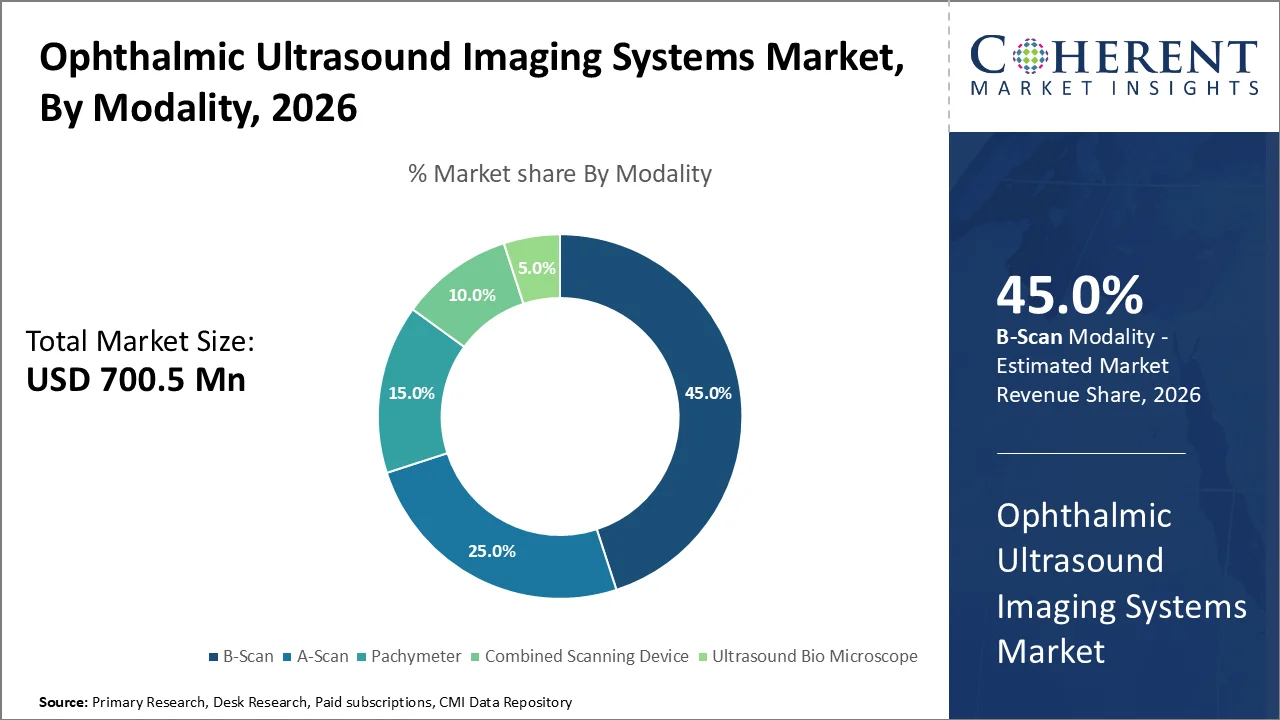
Why is B-Scan Segment Acquiring the Largest Market Share?
B-Scan segment is projected to account for the largest share of modality in 2026, representing approximately 45.0% of the total volume. Because of its capacity to produce two-dimensional, cross-sectional images of the eye and orbit, enabling clinicians to visualize structures that are otherwise inaccessible through conventional optical examination.
This is especially critical in cases where media opacities such as dense cataracts, vitreous hemorrhage, corneal scarring, etc., prevent direct fundus visualization. In such scenarios, B-Scan ultrasound becomes not merely a supplementary tool but an essential and usually irreplaceable diagnostic instrument. In a study done by the Ophthalmology Journal, eyes with vitreous hemorrhage, bleeding blocked the view of the back of the eye (fundus) in 295 eyes, which was 80.6% of the cases. The bleeding cleared on its own in 227 eyes (62%), while 61 eyes developed a retinal detachment (RRD).
According to the World Health Organization (WHO), cataracts remain the prominent cause of blindness globally, accounting for approximately 51% of world blindness, representing around 20 million people. This high prevalence directly correlates with the high clinical dependency on B-Scan imaging, as ophthalmologists routinely install this modality for pre-operative evaluation in cataract surgery cases where fundus examination is obscured.
- Current Industry Events of 2026
- Market Size Estimation
- Regional Breakdown
- Competitive Landscape
- Customer Intelligence
- Segmental Analysis
- Pricing Analysis
- Key Market Drivers, Challenges & Future Trends
- Customized Insights Section
Standalone Segment holds the Largest Market Share
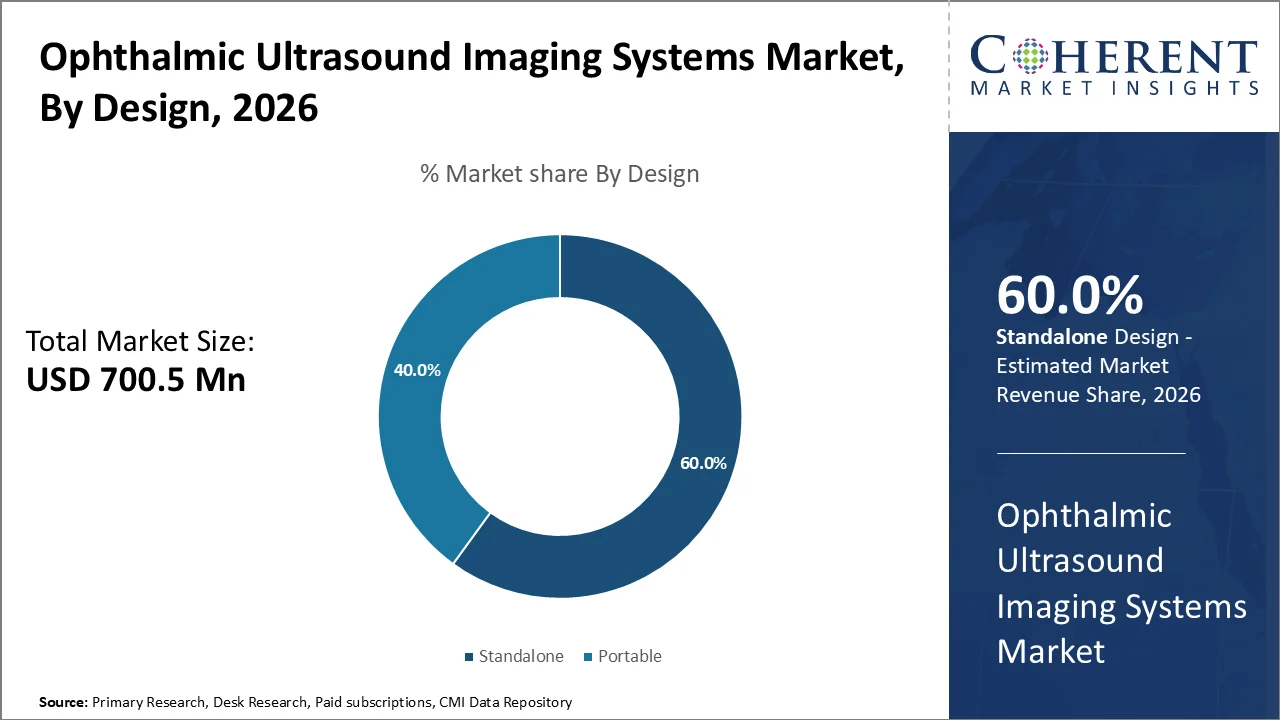
Based on design, standalone segments dominates the market, accounting for a significant 60.0% share in 2026. Owing to its well-established infrastructure integration capabilities, superior imaging resolution, as well as deep-rooted presence across tertiary care hospitals, ophthalmology centers, and academic medical institutions globally.
The standalone ophthalmic ultrasound imaging systems have long served as the clinical gold standard for ocular diagnostics, as well as their dominance in the market is supported by the complex diagnostic workflows that demand high-precision imaging outputs that only full-featured, stationary platforms can reliably deliver.
These systems are engineered with advanced transducer arrays, multi-frequency probes, as well as sophisticated signal processing architectures that enable comprehensive examination of both anterior and posterior ocular segments, including detailed assessments of retinal detachment, vitreous hemorrhage, choroidal tumors, intraocular foreign bodies, and lens abnormalities that require consistent image depth and clarity.
Eye Hospitals Segment holds the Largest Market Share
Based on distribution channel, retail pharmacy segments dominates the market, accounting for a significant 45.0% share in 2026. Owing to their established role as primary referral centers for complex ocular diseases, their capacity to handle high volumes of patients with diverse ophthalmic conditions, as well as their capability to invest in and maintain sophisticated imaging technologies. Only about 40% of eye hospitals in India provide emergency services for serious eye injuries, as well as the country has fewer than 21,000 eye care professionals.
These facilities are specifically made to manage a broad spectrum of eye disorders ranging from retinal detachments and vitreous hemorrhages to intraocular tumors and glaucoma, all of which require detailed as well as accurate imaging through ophthalmic ultrasound systems.
The concentration of specialized ophthalmic surgeons, retinal specialists, as well as trained technicians in these hospitals further drives the sustained and frequent use of ultrasound imaging equipment as part of routine diagnostic protocols.
Market Drivers
A-Scan Biometry Technology: Customization and Precision: A major breakthrough in Ophthalmic Ultrasound Imaging Systems
A-Scan Biometry Technology uses ultrasound waves to measure the length of the eye. It checks the time taken for sound waves to travel through the eye and return as echoes, aid doctors estimate the correct power of intraocular lenses (IOLs) used in cataract surgery. Two common methods are contact A-scan, where the probe touches the cornea, as well as immersion A-scan, where the eye is measured using a saline solution for better accuracy.
Over the years, A-scan technology has improved from basic analog systems to advanced digital devices with automated measurements, AI support, as well as cloud connectivity. Companies including Quantel Medical, Nidek, Reichert Technologies, etc., have developed advanced A-scan systems that improve measurement accuracy, reduce errors, as well as aid surgeons achieve better results after cataract procedures. These improvements have made A-scan biometry an important tool for modern eye care.
Current Events and Their Impact on the Ophthalmic Ultrasound Imaging Systems Market
Current Event | Description and its Impact |
Expansion of Global Medical Device Regulations and Quality Standards (2025–2026) |
|
Government-Led Vision Care and Blindness Prevention Programs |
|
Ophthalmic Ultrasound Imaging Systems Market Trends
- Artificial intelligence is fundamentally reshaping the ophthalmic ultrasound imaging systems market. AI-powered image interpretation algorithms are being embedded within ultrasound platforms to enable automated lesion detection, tissue characterization, and diagnostic decision support. An AI system achieved 94.38% accuracy in detecting vitreous hemorrhage. It is an open-source, lightweight AI model designed to support different biomedical tasks.
- A significant trend reshaping market dynamics is the rapid proliferation of portable and handheld ophthalmic ultrasound devices. These compact systems are designed to extend diagnostic capabilities beyond traditional hospital and clinic settings into emergency departments, rural healthcare facilities, and field-based screenings. A portable eye testing device made in India achieved 88.9% accuracy, while another device achieved 85.5% accuracy. The agreement between repeated tests by the same examiner was 95%. Some portable ultrasound systems are now available at a lower cost of around USD2,699.
- Advances in high-frequency transducer technology particularly in the 35–80 MHz range are enabling unparalleled resolution of anterior segment structures, including the cornea, iris, ciliary body, and trabecular meshwork. UBM is gaining significant clinical traction in the diagnosis and management of glaucoma, anterior segment tumors, and angle-closure disorders.
- The dramatic global rise in cataract surgeries with over 10 million procedures performed annually is generating substantial demand for optical biometry and A-scan ultrasound systems used in intraocular lens (IOL) power calculation.
- The post-pandemic acceleration of telehealth and remote diagnostics has spurred the integration of ophthalmic ultrasound systems with telemedicine platforms.
Regional Insights
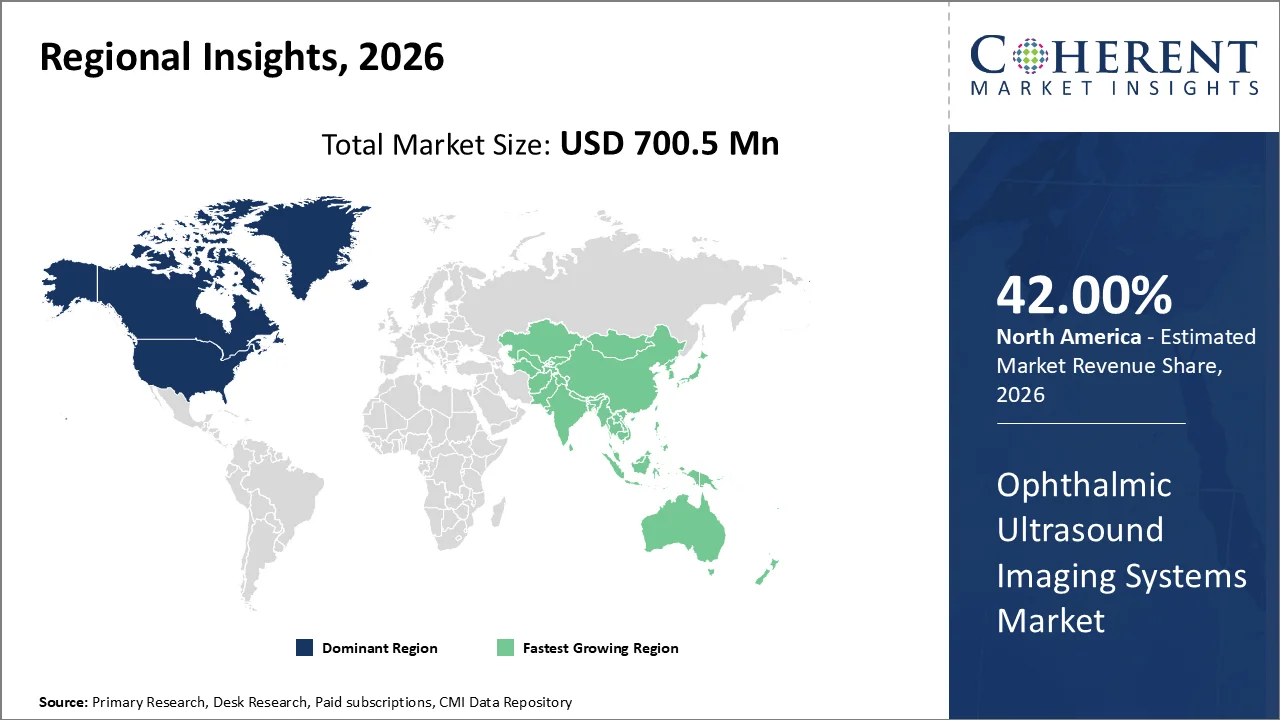
North America dominates owing to high adoption rate of advanced diagnostic technologies
North America account 42.00% market share in 2026, owing to its exceptionally well-developed healthcare infrastructure, high adoption rate of advanced diagnostic technologies, and the presence of a significantly large patient population suffering from various ocular disorders. Dry eye disease affects at least 16 million people in the U.S. Some estimates suggest that the actual number of cases may be much higher, reaching 30 million to 49 million people.
The United States, being the dominant force within this regional segment, benefits from robust federal and state-level healthcare funding mechanisms that consistently support the procurement of sophisticated ophthalmic diagnostic equipment across both public and private healthcare settings.
According to the Centers for Disease Control and Prevention (CDC), approximately 93 million adults in the United States are at high risk for serious vision loss, with only half having visited an eye doctor in the past 12 months, which directly amplifies demand for more efficient diagnostic tools such as ophthalmic ultrasound imaging systems.
Furthermore, the National Eye Institute (NEI) has been actively funding research programs aimed at advancing ocular imaging technologies, reinforcing the technology adoption pipeline across American ophthalmic care centers.
For instance, Ellex Medical Lasers Ltd. introduced the latest version of its eye diagnostic ultrasound system, called Eye Cubed, at the annual meeting of the American Academy of Ophthalmology.
Asia Pacific Ophthalmic Ultrasound Imaging Systems Market Trends
The Asia Pacific region is poised to be the fastest-growing region through 2026-2033, expanding at a CAGR of approximately 6.8%. Driven by rapid urbanization, and large-scale government investments in healthcare modernization across countries such as China, India, Japan, South Korea, and Australia.
The International Agency for the Prevention of Blindness has consistently highlighted Asia-Pacific as the region bearing the highest burden of preventable and treatable blindness globally, with cataracts, glaucoma, and diabetic eye disease representing primary clinical concerns that necessitate advanced diagnostic imaging solutions. South and Central Asia have one of the highest rates of vision loss in the world. About 11.9 million people in the region are blind, and 96.2 million people have moderate to severe vision impairment (MSVI).
China's National Health Commission has been actively rolling out programs aimed at expanding eye care service delivery in tier-two and tier-three cities, which is progressively driving procurement of diagnostic ophthalmic instruments including ultrasound imaging systems at the institutional level.
India's National Programme for Control of Blindness and Visual Impairment under the Ministry of Health and Family Welfare has similarly intensified its focus on early screening and diagnostic capabilities across district and sub-district hospitals.
High Prevalence of Ocular Diseases is Accelerating the Ophthalmic Ultrasound Imaging Systems Market Demand in U.S.
The U.S. contributes the highest share in the ophthalmic ultrasound imaging systems market in North America owing to its well-established healthcare infrastructure, high prevalence of ocular diseases, and robust reimbursement frameworks that actively support advanced ophthalmic diagnostic technologies.
The United States has one of the most comprehensive networks of ophthalmology clinics, academic medical centers, and ambulatory surgical centers equipped with cutting-edge imaging systems, making it the dominant force within the North American regional landscape.
According to the American Academy of Ophthalmology (AAO), millions of Americans are diagnosed with visually impairing conditions such as glaucoma, cataracts, diabetic retinopathy, and age-related macular degeneration each year, in the United States, about 12 million people aged 40 and older have vision problems. Around 1 million of them are blind.
China Ophthalmic Ultrasound Imaging Systems Market Trends
China contributes the highest share in the ophthalmic ultrasound imaging systems market in Asia Pacific owing to its massive patient pool suffering from ophthalmic disorders, a well-established healthcare infrastructure, and aggressive government-led investment programs targeting eye care services across both urban and rural geographies.
China has one of the world's highest burdens of myopia, with the National Health Commission of China reporting that over 600 million people in the country are affected by myopia, and approximately 81% of high school students exhibit some degree of myopia-related visual impairment.
This staggering prevalence directly fuels the demand for advanced diagnostic imaging tools, including A-scan and B-scan ophthalmic ultrasound systems, which are routinely deployed in hospital ophthalmology departments and specialized eye clinics for pre-surgical evaluations, retinal detachment assessments, and intraocular lens (IOL) power calculations.
The Chinese government's Healthy China 2030 initiative, which explicitly prioritizes vision health improvement among children and elderly populations, has mandated expanded ophthalmic screening capabilities across provincial and county-level hospitals, resulting in a surge in procurement of diagnostic ophthalmic devices.
Who are the Major Companies in Ophthalmic Ultrasound Imaging Systems Industry
Some of the major key players in ophthalmic ultrasound imaging systems market include, Sonomed Escalon, Quantel Medical, Carl Zeiss Meditech AG, Ellex Medical Lasers Ltd., DGH Technology, Inc NIDEK CO., LTD., MEDA Co., Ltd, Halma plc, Micro Medical Devices, Inc., Optos plc, and Sonogage, Inc.
Key News
- In May 2026, ZEISS Medical Technology announced that Mexico’s health regulator, COFEPRIS, approved the ZEISS ARTEVO 850 eye microscope and the ZEISS MICOR 700. Both technologies can be used with ZEISS’s latest cataract surgery system. The two products will be displayed at the ZEISS booth during the XXXVIII Mexican Congress of Ophthalmology in Monterrey, Mexico, from May 30 to June 3, 2026.
- In July 2026, CorVascular announced the launch of the ASUS handheld ultrasound devices for the U.S. vascular market. The launch took place at the Society for Vascular Ultrasound (SVU) 2026 Annual Conference in National Harbor, Maryland, from July 30 to August 1, 2026. The devices help vascular doctors use portable ultrasound imaging at the point of care.
Market Report Scope
Ophthalmic Ultrasound Imaging Systems Market Report Coverage
| Report Coverage | Details | ||
|---|---|---|---|
| Base Year: | 2025 | Market Size in 2026: | USD 700.5 Mn |
| Historical Data for: | 2020 To 2024 | Forecast Period: | 2026 To 2033 |
| Forecast Period 2026 to 2033 CAGR: | 5.51% | 2033 Value Projection: | USD 1,019.71 Mn |
| Geographies covered: |
| ||
| Segments covered: |
| ||
| Companies covered: | Sonomed Escalon, Quantel Medical, Carl Zeiss Meditech AG, Ellex Medical Lasers Ltd., DGH Technology, Inc NIDEK CO., LTD., MEDA Co., Ltd, Halma plc, Micro Medical Devices, Inc., Optos plc, and Sonogage, Inc. | ||
| Growth Drivers: |
| ||
| Restraints & Challenges: |
| ||
Analyst Opinion
- The ophthalmic ultrasound imaging systems market is poised for significant advancement, driven by the escalating global prevalence of ocular disorders such as cataracts, glaucoma, retinal detachment, and age-related macular degeneration. Worldwide, at least 2.2 billion people have problems seeing clearly either near or far. For at least 1 billion of these people, their vision problem could have been prevented or has not yet been treated.
- As the aging population continues to expand worldwide, demand for precise and non-invasive diagnostic tools in ophthalmology is witnessing a consistent upward trajectory.
- Technological innovations, particularly the integration of high-frequency ultrasound and advanced signal processing capabilities, are substantially enhancing imaging resolution and diagnostic accuracy, compelling healthcare providers to upgrade their existing systems.
- The growing adoption of portable and handheld ophthalmic ultrasound devices is further democratizing access to eye care diagnostics, especially across emerging economies where infrastructure limitations previously hindered advanced diagnostic capabilities. Suresult D3Ultra is a handheld ultrasound device that can be used for multiple purposes. It has certification documents that customers can check before buying the device.
- Opportunities remain abundant in telemedicine integration, artificial intelligence-assisted diagnostic capabilities, and expansion into untapped rural healthcare markets, collectively positioning this market for sustained long-term evolution.
Speak to the analyst
Want personalized insights?
Take the findings above to one of our principal consultants, or have the report rebuilt around the segments, geographies and competitors you actually track.
Market Segmentation
- By Modality (Revenue, USD Mn, 2021-2033)
- A-Scan
- B-Scan
- Pachymeter
- Combined Scanning Device
- Ultrasound Bio Microscope
- By Design (Revenue, USD Mn, 2021-2033)
- Portable
- Standalone
- By End User (Revenue, USD Mn, 2021-2033)
- Eye Hospitals
- Eye Clinics
- Ambulatory Surgical Centre
- Eye Research Institutes
- By Region (Revenue, USD Mn, 2021-2033)
- North America
- U.S.
- Canada
- Latin America
- Brazil
- Mexico
- Argentina
- Rest of Latin America
- Europe
- Germany
- U.K.
- France
- Italy
- Spain
- Russia
- Rest of Europe
- Asia Pacific
- China
- India
- Japan
- Australia
- South Korea
- ASEAN
- Rest of Asia Pacific
- Middle East
- GCC
- Israel
- Rest of Middle East
- Africa
- South Africa
- Central Africa
- North Africa
- North America
Sources
Primary Research Interviews
- Ophthalmologists & Retinal Specialists
- Ophthalmic Device Manufacturers
- Hospital Procurement & Clinical Decision Makers
- Ophthalmic Imaging Technology Distributors
- Others
Databases
- GlobalData Healthcare Database
- IQVIA Medical Device Database
- Clarivate Analytics Life Sciences Database
- Statista Healthcare Database
- Others
Magazines
- Ophthalmology Times
- Review of Ophthalmology
- Ocular Surgery News
- EyeWorld Magazine
- Others
Journals
- American Journal of Ophthalmology
- British Journal of Ophthalmology
- Journal of Ultrasound in Medicine
- Investigative Ophthalmology & Visual Science
- Others
Newspapers
- The Wall Street Journal (Healthcare Section)
- Financial Times (MedTech Coverage)
- Reuters Health News
- Modern Healthcare
- Others
Associations
- American Academy of Ophthalmology (AAO)
- European Society of Ophthalmology (SOE)
- American Institute of Ultrasound in Medicine (AIUM)
- International Society of Ocular Oncology (ISOO)
- Others
Public Domain Sources
- U.S. Food and Drug Administration (FDA) – Medical Device Database
- World Health Organization (WHO) – Vision & Eye Health Data
- National Institutes of Health (NIH) – PubMed Repository
- Centers for Medicare & Medicaid Services (CMS) – Reimbursement Data
- Others
Proprietary Elements
- CMI Data Analytics Tool
- Proprietary CMI Existing Repository of information for last 10 years
Get access to 250+ pages report
Every segment, forecast, competitor profile and data table behind the analysis above — available for instant download.
- ESOMAR Member
- ISO 9001:2015 Certified
- D-U-N-S Registered
- GDPR & CCPA Compliant
Missing comfort of reading report in your local language? Find your preferred language:
Transform your Strategy with Exclusive Trending Reports
Frequently Asked Questions
The ophthalmic ultrasound imaging systems market is expected to reach USD 1,019.71 Mn in 2033.
Major players operating in the global ophthalmic ultrasound imaging systems market include Sonomed Escalon, Quantel Medical, Carl Zeiss Meditech AG, Ellex Medical Lasers Ltd., DGH Technology, Inc NIDEK CO., LTD., MEDA Co., Ltd, Halma plc, Micro Medical Devices, Inc., Optos plc, and Sonogage, Inc.
High equipment costs, limited reimbursement frameworks in developing nations, and a shortage of skilled ophthalmic professionals capable of operating sophisticated imaging systems are the major factors that is expected to hamper growth of the market over the forecast period.
Technological innovations, particularly the integration of high-frequency ultrasound and advanced signal processing capabilities, are substantially enhancing imaging resolution and diagnostic accuracy is driving growth of the global Ophthalmic Ultrasound Imaging Systems market.
The ophthalmic ultrasound imaging systems market is anticipated to grow at a CAGR of 5.51% between 2026 and 2033.
Which region is dominating the ophthalmic ultrasound imaging systems market growth?
Ophthalmic imaging includes three main types: fundus photography, optical coherence tomography (OCT), and fluorescein angiography. These imaging techniques help ophthalmic imaging specialists visualize and diagnose eye conditions by capturing detailed images of the retina, optic nerve, and blood vessels.