

Organic Milk Market Size and Forecast — 2026 - 2033
The Global Organic Milk Market size is estimated to be valued at USD 14.3 billion in 2026 and is expected to reach USD 27.1 billion by 2033, exhibiting a compound annual growth rate (CAGR) of 9.5% from 2026 to 2033.
Overview
The organic milk market is driven by rising consumer awareness of health and wellness, along with concerns about chemical residues, antibiotics, and hormones in conventional dairy products. Increasing demand for clean-label and sustainably produced foods is encouraging consumers to shift toward organic options. Growth in disposable incomes and urbanization, especially in developing regions, further supports market expansion. Additionally, environmental and animal welfare concerns are prompting preference for organic farming practices. Strong retail distribution networks, government support for organic agriculture, and expanding product availability in supermarkets and online platforms are also key factors accelerating the growth of the organic milk market globally.
Key Takeaways
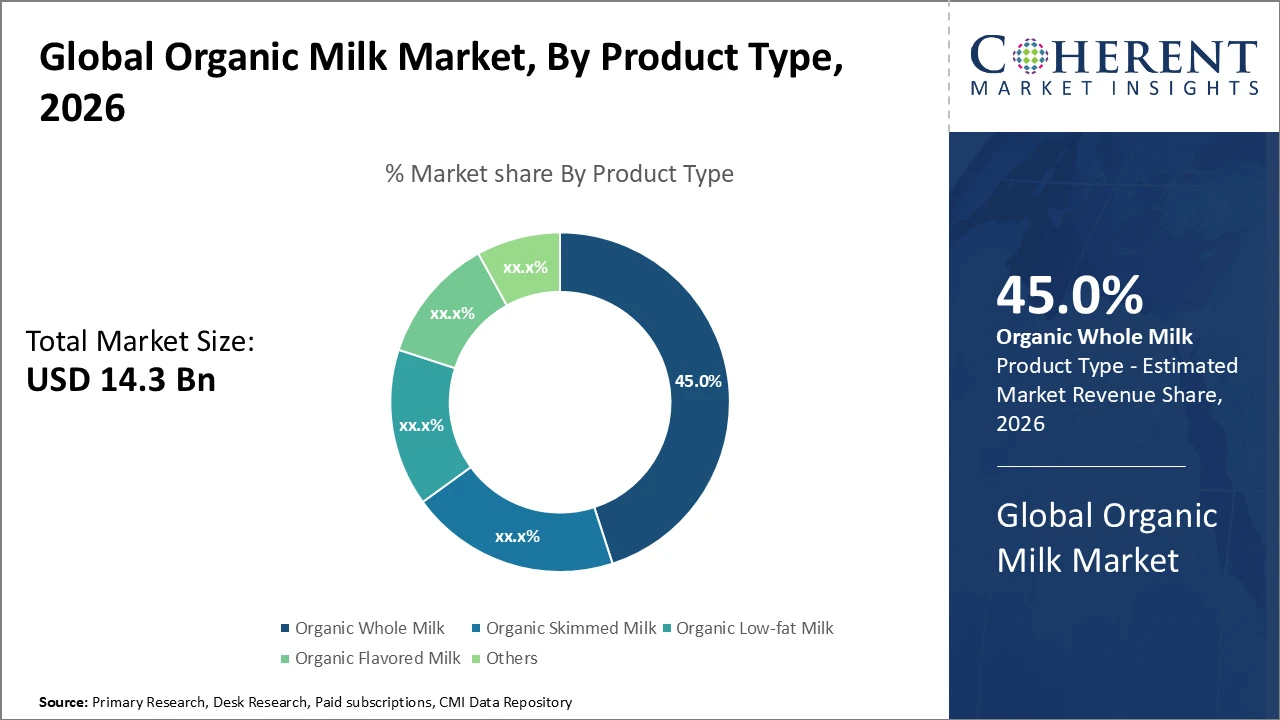
Organic Whole Milk accounts for nearly 45% of the overall market share due to strong consumer preference for full-fat organic milk and its wide range of applications.
Supermarkets and hypermarkets lead the distribution channels, supported by high consumer trust and easy product accessibility.
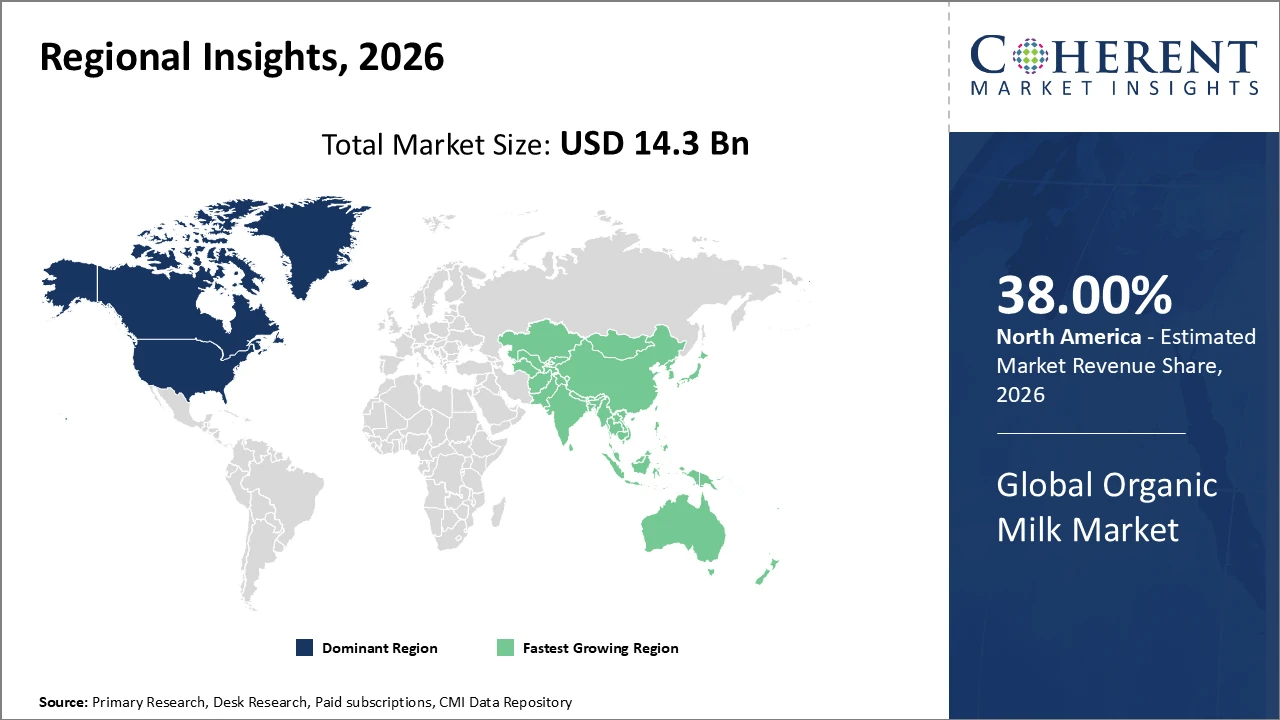
North America dominates the market with around 38% share in 2026, driven by a well-established organic dairy industry and a strong consumer base.
Asia Pacific is the fastest-growing region, registering a CAGR above 11% due to rising urbanization and increasing disposable incomes.
Europe shows steady growth, supported by favorable government regulations and a well-developed retail infrastructure.
Organic Milk Market Segmentation Analysis
Organic Milk Market Insights, By Product Type
Organic Whole Milk dominates the market share due to its widespread use in both household and commercial dairy consumption. Its full-fat content provides rich taste and higher nutritional value, making it highly preferred among consumers. This segment accounts for nearly 45% of the total market revenue, reflecting consistent demand. Organic Skimmed Milk and Organic Low-fat Milk are also gaining traction, particularly among health-conscious consumers seeking reduced calorie options, with strong growth in North America and Europe. Meanwhile, Organic Flavored Milk serves a niche segment, attracting younger consumers with innovative flavors and expanding steadily in urban markets.
Organic Milk Market Insights, By Distribution Channel
Supermarkets and hypermarkets maintain dominance in the organic milk market due to strong consumer trust, wide accessibility, and extensive product variety. These channels hold the largest market share, supported by promotional activities and established retail networks, particularly in urban areas across North America and Europe. Meanwhile, online retail is the fastest-growing segment, expanding at an annual rate of around 17% as digital adoption increases. E-commerce platforms offer convenience, direct-to-consumer access, and a broader selection of products. Specialty stores cater to health-focused buyers, while convenience stores serve impulse purchases but account for a smaller market share overall.
Organic Milk Market Insights, By End User Industry
Residential consumers represent the largest segment in the organic milk market, driven by steady household demand and growing awareness of health and sustainability. In 2026, over 70% of organic milk purchases are attributed to personal consumption, highlighting its strong presence in daily diets. The foodservice industry is the fastest-growing segment, with restaurants and cafes increasingly using organic milk in premium beverages and health-focused menus. Dairy product manufacturers also contribute by using organic milk in products like cheese and yogurt, holding a moderate share. Other segments include institutional buyers such as hospitals, which are gradually adopting organic milk for specialized nutritional requirements.
Organic Milk Market Trends
The organic milk market is experiencing rapid innovation driven by evolving consumer preferences and demand for healthier options.
Value-added products such as lactose-free and fortified organic milk are gaining strong traction, contributing significantly to market revenue, especially in health-conscious regions.
Adoption of digitally enabled supply chains, including blockchain technology, has improved transparency and strengthened consumer trust, particularly in Europe since 2024.
The COVID-19 pandemic accelerated the growth of online retail channels, transforming distribution patterns globally.
E-commerce sales of organic milk have grown by over 15% annually in major markets like North America and Asia Pacific between 2024 and 2026.
Sustainability continues to be a key focus, influencing product innovation, packaging, and marketing strategies worldwide.
Organic Milk Market Insights, By Geography
North America Organic Milk Market Analysis and Trends
North America leads the organic milk market, with a share of 38%, due to its well-established organic dairy farming infrastructure and strong regulatory support for organic certification. Consumers in the region show a high willingness to pay premium prices for organic products, further boosting market growth. The United States alone accounts for nearly 38% of the market share by volume in 2026, driven by key industry players focusing on supply chain innovation and consumer awareness initiatives. Additionally, government subsidies and supportive certification programs have strengthened the region’s position, ensuring consistent quality standards and reinforcing North America’s dominance in the global organic milk market.
Asia Pacific Organic Milk Market Analysis and Trends
The Asia Pacific region is the fastest-growing market for organic milk, with a CAGR exceeding 11% from 2026 onward. This growth is fueled by rapid urbanization, rising health awareness, and increasing disposable incomes among consumers. Countries such as China and India are witnessing a significant rise in organic milk consumption, supported by expanding retail availability and product variety. Despite this growth, the market is still in a developing stage and relies heavily on imports to meet demand. This dependency highlights substantial opportunities for local production, investment, and supply chain development across the region in the coming years.
Organic Milk Market Outlook for Key Countries
USA Organic Milk Market Analysis and Trends
The United States dominates the organic milk market, supported by extensive organic dairy farming and a large, health-conscious consumer base. In 2026, organic milk revenue reached approximately USD 5.7 billion, marking a 13% increase from the previous year. Leading companies such as Organic Valley and Horizon Organic play a crucial role by adopting advanced technologies to enhance supply chain transparency and strengthen direct consumer engagement. Additionally, strong government support through organic certification programs and financial incentives boosts production capacity, ensuring consistent quality standards and reinforcing the country’s leading position in the global organic milk market.
Germany Organic Milk Market Analysis and Trends
Germany is a key player in Europe’s organic milk market, accounting for over 20% of the continent’s production. The country’s adoption of innovative farming practices, coupled with strict organic certification regulations, ensures high-quality standards and drives market growth. In 2025, Germany’s organic milk exports rose by 18%, reinforcing its role in both European and global supply chains. Leading domestic companies have focused on product diversification, premium branding, and value-added offerings, enhancing competitiveness. These strategic initiatives have strengthened market presence, attracted health-conscious consumers, and supported sustained growth, positioning Germany as a benchmark for organic milk production and innovation in Europe.
Analyst Opinion
Organic milk production is expanding rapidly, with new dairy farms adopting certification standards in regions like the U.S. and Germany. North America’s output grew by 15% in 2025, supported by subsidies and streamlined certification processes, reducing scarcity and boosting market revenue.
Consumer behavior is shifting, with a 22% rise in organic dairy consumption among European millennials in 2024, driven by health awareness and clean-label trends, extending usage into infant nutrition and premium dairy products.
Organic milk imports in Asia Pacific increased by 28% in 2025 due to limited local production amid rising urban affluence.
Countries like France and Denmark expanded organic milk exports, accounting for over 14% of global trade by 2026.
Organic milk is priced roughly 40% higher than conventional milk in the U.S. in 2026, reflecting premiumization trends.
Despite higher prices, consumer willingness to pay a premium is growing as organic milk is increasingly seen as a value-driven choice rather than a luxury.
- Current Industry Events of 2026
- Market Size Estimation
- Regional Breakdown
- Competitive Landscape
- Customer Intelligence
- Segmental Analysis
- Pricing Analysis
- Key Market Drivers, Challenges & Future Trends
- Customized Insights Section
Market Scope
| Report Coverage | Details | ||
|---|---|---|---|
| Base Year: | 2025 | Market Size in 2026: | USD 14.3 billion |
| Historical Data for: | 2020 To 2024 | Forecast Period: | 2026 To 2033 |
| Forecast Period 2026 to 2033 CAGR: | 9.5% | 2033 Value Projection: | USD 27.1 billion |
| Geographies covered: |
| ||
| Segments covered: |
| ||
| Companies covered: | Organic Valley, Horizon Organic, Danone, Amul, Nestle SA, Vital Farms, Mother Dairy, Saputo Inc., Lactalis Group, Arla Foods | ||
| Growth Drivers: |
| ||
Organic Milk Market Growth Factors
The growing consumer preference for health-focused food products is driving strong demand for organic milk, with health-conscious segments increasing by 18% in 2025. Government incentives in Europe and North America have reduced entry barriers, encouraging conventional dairy farms to transition to organic practices, as seen in Germany where organic farm registrations rose 14% in 2024. Increased awareness of sustainability and animal welfare has strengthened brand positioning, with 63% of consumers prioritizing eco-friendly practices in 2026. Technological innovations, such as sensor-based feeding and automated organic certification, have improved production efficiency and product quality, further boosting revenue growth in the organic milk market.
Organic Milk Market Development
In November 2025, Akshayakalpa Organic, a leading certified organic dairy brand in India, launched High Protein Milk to expand its high-protein range.
Key Players
Leading Companies of the Market
Organic Valley
Horizon Organic
Danone
Amul
Mother Dairy
Saputo Inc.
Vital farms
Nestle SA
Arla Foods
Lactalis Group
Several market players have increasingly embraced sustainability-linked growth strategies to strengthen their positions in the organic milk market. For instance, Danone’s acquisition of organic dairy brands in 2024 led to a 12% revenue increase, allowing the company to expand its presence across Europe and Asia. Similarly, Organic Valley enhanced its supply chain transparency by implementing blockchain technology in 2025, which bolstered consumer trust and resulted in a 9% increase in market share in North America. These strategic initiatives highlight the growing emphasis on sustainability and transparency as key drivers of market growth.
Organic Milk Market Future Outlook
The future of the organic milk market is poised for robust growth, driven by rising health awareness, sustainability concerns, and premiumization trends among consumers globally. Expanding urban populations and increasing disposable incomes in regions like Asia Pacific are expected to accelerate demand, while technological advancements in farm management and supply chain transparency will enhance efficiency and product quality. E-commerce and direct-to-consumer channels are projected to gain further traction, complementing traditional retail. Additionally, government incentives and supportive organic certification frameworks will encourage new market entrants and production expansion. Overall, the market is set for sustained growth with innovation, sustainability, and consumer trust at its core.
Organic Milk Market Historical Analysis
The organic milk market has experienced steady growth over the past decade, driven by rising consumer awareness of health, nutrition, and environmental sustainability. Historically, North America and Europe have dominated the market due to well-established organic dairy farming, regulatory support, and strong consumer demand for premium dairy products. Early adoption of organic certification programs and government incentives facilitated the transition from conventional to organic farming. Over time, product diversification, including flavored, low-fat, and fortified organic milk, expanded consumer appeal. E-commerce and modern retail channels further supported market penetration, while emerging regions such as Asia Pacific began showing gradual uptake in the mid-2010s.
Sources
Primary Research Interviews:
Dairy farmers and organic milk producers focusing on farm management and organic certification compliance
Supply chain managers, distributors, and retail managers in supermarkets, hypermarkets, and e-commerce channels
Nutritionists, food scientists, and product development specialists in organic dairy products
Magazines:
Dairy Foods – Innovations in Organic Dairy, Product Launches, and Market Insights
Progressive Dairy – Organic Farming Practices, Consumer Trends, and Regulatory Updates
Food Business News – Organic Milk Market Expansion, Retail Developments, and Health Trends
Nutrition Insight – Organic Milk Fortification, Health Benefits, and Consumer Behavior
Journals:
Journal of Dairy Science – Organic Milk Production, Quality Analysis, and Nutritional Studies
International Dairy Journal – Consumer Adoption, Processing Techniques, and Market Trends
Food Control – Safety, Certification, and Quality Compliance in Organic Milk
Newspapers:
The Wall Street Journal – Organic Food Market Developments and Industry Investments
Financial Times – Retail Expansion, Premium Dairy Products, and Global Market Trends
Business Insider – Organic Milk Market Updates, Consumer Behavior, and Competitive Insights
Reuters – News on Organic Agriculture, Supply Chains, and Market Forecasts
Associations:
Organic Trade Association (OTA) – Standards, Certification Guidelines, and Market Research
International Federation for Organic Agriculture Movements (IFOAM) – Organic Farming Regulations and Best Practices
USDA National Organic Program (NOP) – Certification, Compliance, and Labeling Standards
European Organic Certifiers (e.g., ECOCERT) – Organic Milk Regulations, Quality Assurance, and Market Data
Get access to 250+ pages report
Every segment, forecast, competitor profile and data table behind the analysis above — available for instant download.
- ESOMAR Member
- ISO 9001:2015 Certified
- D-U-N-S Registered
- GDPR & CCPA Compliant
Missing comfort of reading report in your local language? Find your preferred language:
Transform your Strategy with Exclusive Trending Reports
Frequently Asked Questions
Leading companies include Organic Valley, Horizon Organic, Danone (Alpro), Amul, and Arla Foods, which collectively hold a significant portion of market share through robust production and distribution networks.
The Organic Milk market size is projected to grow from USD 14.3 billion in 2026 to USD 27.1 billion by 2033, reflecting strong market expansion at a CAGR of 9.5%.
The residential consumer segment dominates, but growth opportunities are rapidly emerging within the foodservice industry and specialty dairy product manufacturers.
Increasing consumer preference for value-added organic milk variants, heightened digitalization in supply chains, and expansion of e-commerce channels will drive market trends.
The market is competitive with established players focusing on premiumization and innovation; challenges include price volatility and regulatory compliance complexities.
Strategies include mergers and acquisitions for vertical integration, enhancing supply chain transparency via technology, and targeted marketing emphasizing sustainability and health benefits.