

Osteonecrosis Treatment Market Size and Forecast – 2026 to 2033
The Osteonecrosis Treatment Market is anticipated to grow at a CAGR of 7.2% with USD 276.9 Bn share in 2026 and is expected to reach USD 490.7 Bn in 2033. The rising prevalence of bone disorders, along with increasing osteonecrosis cases caused by trauma, corticosteroid use, and chronic diseases, drives the growth of the Osteonecrosis Treatment Market. Among men aged 50 years and older, 4.2% have osteoporosis, while 33.5% have low bone mass.
Key Takeaways
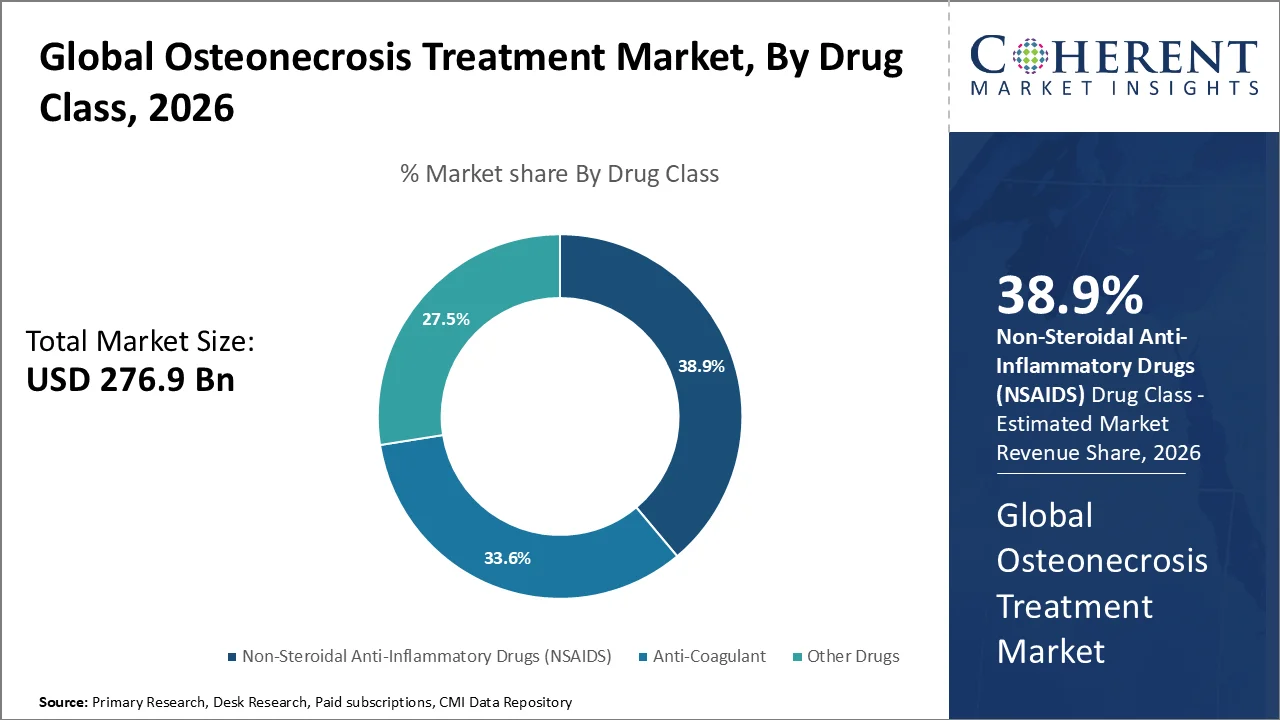
- Non-Steroidal Anti-Inflammatory Drugs (NSAIDS) hold the largest market share of 38.9% in 2026 owing to the rising prevalence of osteonecrosis. An estimated 75 million people across Europe, the United States, and Japan are affected by osteoporosis.
- Hospital Pharmacies expected to hold largest market share of 42.2% in 2026 owing to its increasing number of osteonecrosis cases requiring specialized care.
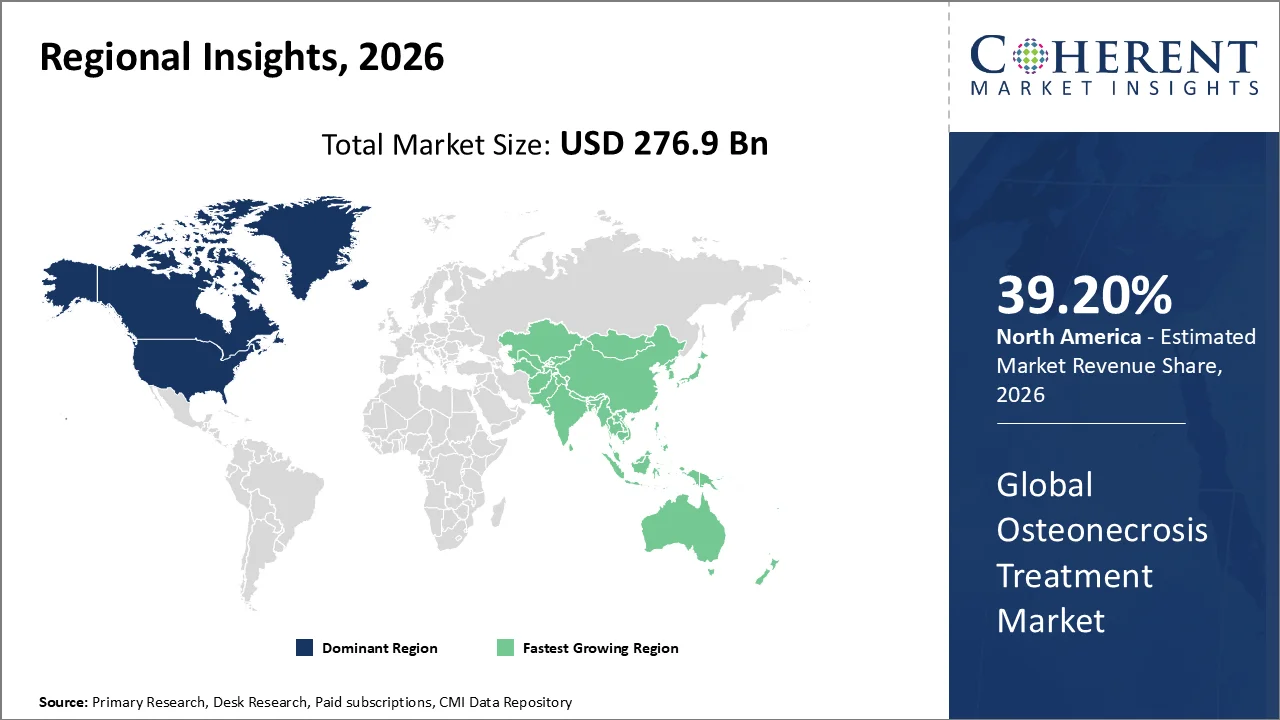
- North America is expected to acquire the dominant share of 39.2% in 2026 owing to the high prevalence of osteonecrosis risk factors. According to the Journal of Arthroplasty, more than 20,000 new cases of osteonecrosis of the femoral head (ONFH) occur annually in the U.S.
(Source: Journal of Arthroplasty)
Current Events and Their Impact on the Osteonecrosis Treatment Market
Current Event | Description and its Impact |
European Union In Vitro Diagnostic and Medical Device Regulatory Implementation |
|
CMS Maintains Coverage for Intravenous Bisphosphonate Therapy |
|
Segmental Insights
- Current Industry Events of 2026
- Market Size Estimation
- Regional Breakdown
- Competitive Landscape
- Customer Intelligence
- Segmental Analysis
- Pricing Analysis
- Key Market Drivers, Challenges & Future Trends
- Customized Insights Section
Why is Non-Steroidal Anti-Inflammatory Drugs (NSAIDS) Acquiring the Largest Market Share?
Non-Steroidal Anti-Inflammatory Drugs (NSAIDS) hold the largest market share of 38.9% in 2026. Non-Steroidal Anti-Inflammatory Drugs (NSAIDs) are gaining traction in the osteonecrosis treatment market as patients increasingly seek effective solutions for pain relief and inflammation management. The rising incidence of osteonecrosis caused by trauma, corticosteroid exposure, and chronic conditions is encouraging healthcare providers to use NSAIDs as supportive therapy. Their affordability, widespread availability, proven clinical benefits, and ability to improve patient comfort drive their adoption. Improved healthcare access and earlier diagnosis of osteonecrosis further strengthen demand for NSAID-based treatment options. In April 2026, YARAL Pharma Inc. launched a 15-count carton of its Diclofenac Epolamine Topical System 1.3%, the authorized generic of Flector, to provide a topical NSAID treatment for acute pain from minor strains, sprains, and contusions in adults and children aged 6 years and older.
Hospital Pharmacies expected to hold largest market share
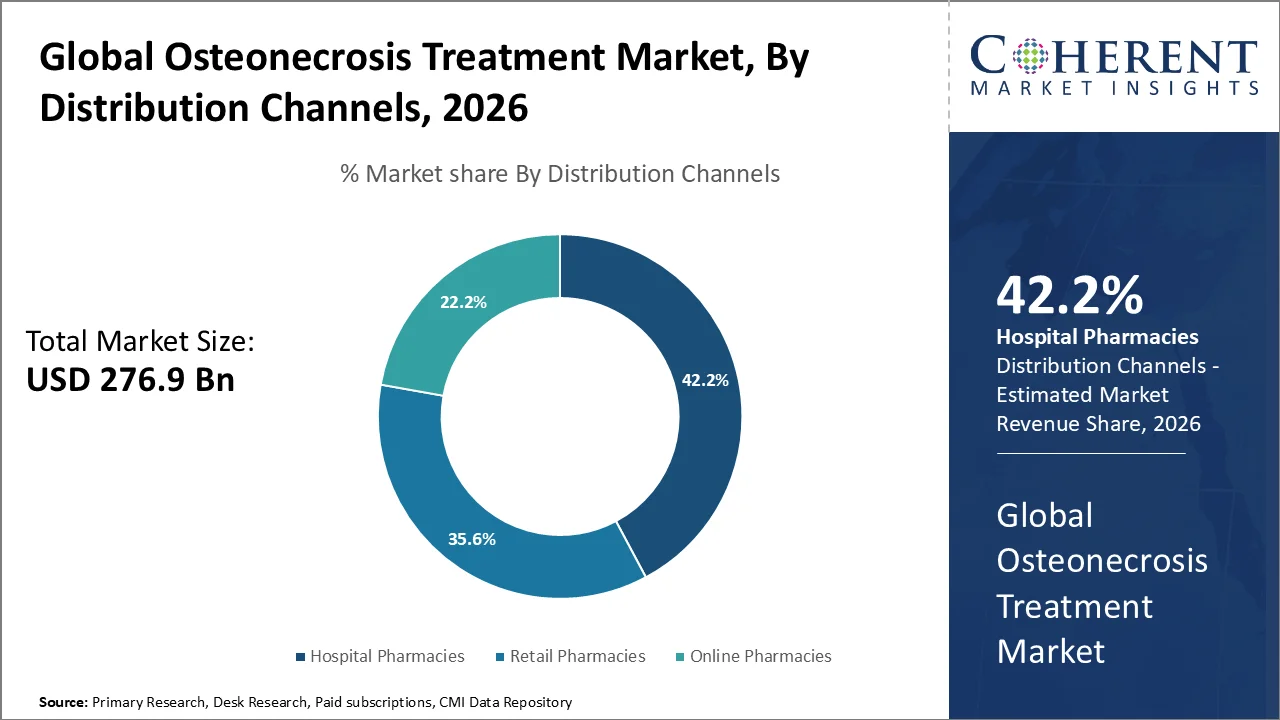
Hospital Pharmacies expected to hold largest market share of 42.2% in 2026 owing to its expansion of hospital infrastructure and specialty care centers. Hospital pharmacies play a vital role in the osteonecrosis treatment market as healthcare providers increasingly require specialized medication management and supportive care services. Growing orthopedic procedures, rising hospital admissions, and increasing demand for pain management solutions encourage greater use of hospital pharmacy services. More than 30 million orthopedic procedures are performed globally each year, making orthopedics the second-largest surgical specialty by procedure volume. These pharmacies supply essential medications, including analgesics, anti-inflammatory drugs, and post-operative therapies, to support patient care. Expanding healthcare facilities, improved access to specialized treatments, and pharmacists’ active involvement in medication monitoring further drive the adoption of hospital pharmacy services in osteonecrosis management.
Osteonecrosis Treatment Market Trends
- Growing use of personalized treatment approaches, including patient-specific surgical planning, advanced imaging guidance, and biologic therapies, is enhancing clinical outcomes and improving functional recovery. MRI-based staging and individualized treatment selection have become standard practice for early-stage osteonecrosis, enabling clinicians to choose joint-preserving procedures before irreversible bone collapse. The American College of Radiology (ACR) recognizes MRI as the most sensitive imaging modality for detecting early osteonecrosis.
- Aging populations and the increasing prevalence of osteonecrosis risk factors—including long-term corticosteroid therapy, excessive alcohol consumption, trauma, and chronic diseases—are driving demand for advanced diagnostic and therapeutic solutions. According to the Journal of Arthroplasty, more than 20,000 new cases of osteonecrosis of the femoral head (ONFH) occur annually in the U.S. Additionally, the World Economic Forum reports that more than one in ten people in Japan are aged 80 years or older, contributing to a growing population at risk for degenerative bone disorders requiring orthopedic care.
- Favorable healthcare reimbursement policies and expanding access to orthopedic care are improving patient access to surgical procedures and advanced treatment options. In the United States, Medicare (CMS) continues to provide reimbursement for medically necessary total hip arthroplasty and other orthopedic procedures, while coverage for intravenous bisphosphonate therapy is also maintained under applicable coverage determinations. These reimbursement policies support broader treatment adoption and reduce financial barriers for patients requiring osteonecrosis management.
Regional Insights
North America dominates owing to increasing number of orthopedic surgeries
North America is expected to acquire the dominant share of 39.2% in 2026. North America strengthens the osteonecrosis treatment market by leveraging advanced healthcare infrastructure, adopting innovative orthopedic procedures, and increasing demand for effective treatment solutions. The region experiences growing osteonecrosis cases due to factors such as corticosteroid use, trauma, and chronic health conditions, which encourage the adoption of advanced therapies. The average annual prevalence of oral corticosteroid use was 6.8% in the United States. Healthcare providers use advanced imaging technologies for early diagnosis, while specialized orthopedic centers and supportive reimbursement systems improve patient access. Continuous research in regenerative medicine and minimally invasive treatments further enhances North America’s role in osteonecrosis management. For instance, Biocon Limited commercially launched Bosaya and Aukelso, biosimilars to Prolia and Xgeva, respectively, across the United States through specialty pharmacies and healthcare providers.
Asia Pacific Osteonecrosis Treatment Market Trends
The Asia Pacific osteonecrosis treatment market gains momentum as the region experiences a rising prevalence of bone-related disorders, a growing aging population, increased awareness of advanced treatment options, and improved healthcare infrastructure. India's population aged 60 years and above is projected to increase from 100 million in 2011 to 230 million by 2036 and 347 million by 2050, accounting for 20.8% of the total population Healthcare providers are expanding orthopedic services, adopting minimally invasive procedures, and investing in regenerative therapy research to enhance treatment outcomes. Improved access to medical facilities, better diagnosis rates, and increased healthcare investments in emerging economies further drive the demand for effective osteonecrosis treatments across the region.
United States Osteonecrosis Treatment Market Trends
Healthcare providers in the United States drive the osteonecrosis treatment market by addressing the rising burden of orthopedic disorders, trauma-related bone injuries, and age-related joint degeneration. They promote early diagnosis through the widespread use of advanced imaging technologies, enabling timely intervention. Medical innovators continue to develop minimally invasive surgical procedures, regenerative medicine approaches, and biologic therapies that enhance patient outcomes. In addition, a well-established healthcare infrastructure, supportive reimbursement policies for orthopedic procedures, increasing research investments, and the strong presence of leading medical device and pharmaceutical companies further propel market expansion. For instance, Sandoz launched WYOST and Jubbonti (denosumab-bbdz) in the U.S., expanding access to biosimilar treatments for osteoporosis and cancer-related skeletal events.
Japan Osteonecrosis Treatment Market Trends
Japan's aging population drives the osteonecrosis treatment market by increasing the incidence of bone disorders and degenerative joint conditions that require timely medical intervention. Healthcare providers are promoting early diagnosis, expanding access to advanced imaging technologies, and enhancing orthopedic care, which strengthens demand for effective treatment options. Medical institutions are increasingly adopting minimally invasive surgical procedures and regenerative medicine approaches, while the country's well-established healthcare infrastructure supports broader treatment access. In addition, researchers and healthcare organizations are advancing clinical studies, and government initiatives are encouraging the development and adoption of innovative osteonecrosis therapies.
Who are the Major Companies in Osteonecrosis Treatment Industry
Some of the major key players in Osteonecrosis Treatment are Bone Therapeutics, Enzo Biochem Inc., and K-Stemcell Co Ltd.
Market Report Scope
Osteonecrosis Treatment Market Report Coverage
| Report Coverage | Details | ||
|---|---|---|---|
| Base Year: | 2025 | Market Size in 2026: | USD 276.9 Bn |
| Historical Data for: | 2020 To 2024 | Forecast Period: | 2026 To 2033 |
| Forecast Period 2026 to 2033 CAGR: | 7.2% | 2033 Value Projection: | USD 490.7 Bn |
| Geographies covered: |
| ||
| Segments covered: |
| ||
| Companies covered: | Bone Therapeutics, Enzo Biochem Inc., and K-Stemcell Co Ltd. | ||
Analyst Opinion
- Osteonecrosis remains significantly underdiagnosed until advanced stages, making early intervention the biggest unmet need rather than the availability of treatment itself. Clinical evidence suggests that 60–80% of untreated femoral head osteonecrosis cases eventually progress to femoral head collapse, forcing patients toward joint replacement instead of joint-preserving therapies. This highlights that improving early detection will have a greater impact on treatment outcomes than introducing additional late-stage surgical options.
- The growing burden of corticosteroid use, trauma, and chronic diseases continues to expand the patient pool. Studies estimate that 10,000–20,000 new osteonecrosis cases are diagnosed annually in the United States, while osteonecrosis accounts for approximately 10% of all total hip replacements performed each year. In the analyst’s view, this demonstrates that osteonecrosis has already become a clinically significant orthopedic condition, creating sustained demand for therapies that delay or prevent joint replacement.
- Regenerative medicine is expected to reshape the treatment landscape more than conventional surgical innovation. Procedures combining core decompression with bone marrow aspirate concentrate (BMAC) or stem cell therapy have reported improved femoral head preservation compared with core decompression alone in selected early-stage patients. As long-term clinical evidence continues to strengthen and biologic technologies become more standardized, regenerative therapies are likely to become a defining competitive differentiator, particularly for younger patients where preserving the native joint remains the primary clinical objective.
Speak to the analyst
Want personalized insights?
Take the findings above to one of our principal consultants, or have the report rebuilt around the segments, geographies and competitors you actually track.
Market Segmentation
- By Drug Class (Revenue, USD Bn, 2021-2033)
- Non-Steroidal Anti-Inflammatory Drugs (NSAIDS)
- Anti-Coagulant
- Other Drugs
- By Distribution Channels(Revenue, USD Bn, 2021-2033)
- Hospital Pharmacies
- Retail Pharmacies
- Online Pharmacies
- By Region(Revenue, USD Bn, 2021-2033)
- North America
- U.S.
- Canada
- Latin America
- Brazil
- Mexico
- Argentina
- Rest of Latin America
- Europe
- Germany
- U.K.
- France
- Italy
- Spain
- Russia
- Rest of Europe
- Asia Pacific
- China
- India
- Japan
- Australia
- South Korea
- ASEAN
- Rest of Asia Pacific
- Middle East
- GCC
- Israel
- Rest of Middle East
- Africa
- South Africa
- Central Africa
- North Africa
- North America
Sources
Primary Research Interviews
- Healthcare professionals specializing in orthopedic surgery
- Rheumatologists and musculoskeletal disease specialists
- Hospital procurement and pharmacy managers
- Clinical researchers involved in osteonecrosis studies
- Pharmaceutical and biotechnology industry experts
- Key opinion leaders (KOLs) in bone and joint disorders
- Regulatory and reimbursement specialists
Databases
- PubMed
- MEDLINE
- Embase
- Scopus
- ClinicalTrials.gov
- World Health Organization (WHO) Database
- U.S. Food and Drug Administration (FDA) Database
- European Medicines Agency (EMA) Database
Magazines
- Orthopedics Today
- Bone & Joint Health Magazine
- Pharmaceutical Executive
- MedTech Outlook
- Healthcare Business Today
Journals
- The Journal of Bone and Joint Surgery (JBJS)
- Journal of Orthopaedic Research
- Clinical Orthopaedics and Related Research (CORR)
- Osteoporosis International
- Bone
- BMC Musculoskeletal Disorders
- Journal of Orthopaedic Surgery and Research
Newspapers
- The Wall Street Journal
- Financial Times
- The New York Times
- The Guardian
- Business Standard
Associations
- American Academy of Orthopaedic Surgeons (AAOS)
- Orthopaedic Research Society (ORS)
- International Osteoporosis Foundation (IOF)
- European Federation of National Associations of Orthopaedics and Traumatology (EFORT)
- American College of Rheumatology (ACR)
Public Domain Sources
- World Health Organization (WHO)
- U.S. Food and Drug Administration (FDA)
- European Medicines Agency (EMA)
- National Institutes of Health (NIH)
- Centers for Disease Control and Prevention (CDC)
- National Center for Biotechnology Information (NCBI)
- ClinicalTrials.gov
- Organisation for Economic Co-operation and Development (OECD)
Proprietary Elements
- CMI Data Analytics Too
- Proprietary CMI Existing Repository of Information for Last 10 Years
Get access to 250+ pages report
Every segment, forecast, competitor profile and data table behind the analysis above — available for instant download.
- ESOMAR Member
- ISO 9001:2015 Certified
- D-U-N-S Registered
- GDPR & CCPA Compliant
Missing comfort of reading report in your local language? Find your preferred language:
Transform your Strategy with Exclusive Trending Reports
Frequently Asked Questions
Osteonecrosis treatment includes medications, physical therapy, core decompression, bone grafting, regenerative therapies, and joint replacement procedures aimed at preserving bone tissue and restoring joint function.
The market is driven by the rising incidence of osteonecrosis, increasing use of corticosteroids, growing aging population, advancements in regenerative medicine, and improvements in orthopedic surgical techniques.
Surgical treatments, particularly total joint replacement and core decompression, account for the largest market share due to their widespread use in moderate-to-advanced disease stages.
North America leads the market owing to its advanced healthcare infrastructure, high adoption of innovative orthopedic procedures, and strong presence of leading medical device and pharmaceutical companies.
Opportunities include the development of stem cell-based therapies, biologics, minimally invasive procedures, AI-assisted diagnostic tools, and expansion into emerging healthcare markets with improving orthopedic care.