

Anastrozole Tablets Market Size and Forecast – 2026 to 2033
The Anastrozole Tablets Market is anticipated to grow at a CAGR of 11.7% with USD 6.8 Bn share in 2026 and is expected to reach USD 18.4 Bn in 2033. Rising incidence of breast cancer, increasing awareness & early diagnosis and Expansion of generic drugs is driving the market growth.
Key Takeaways
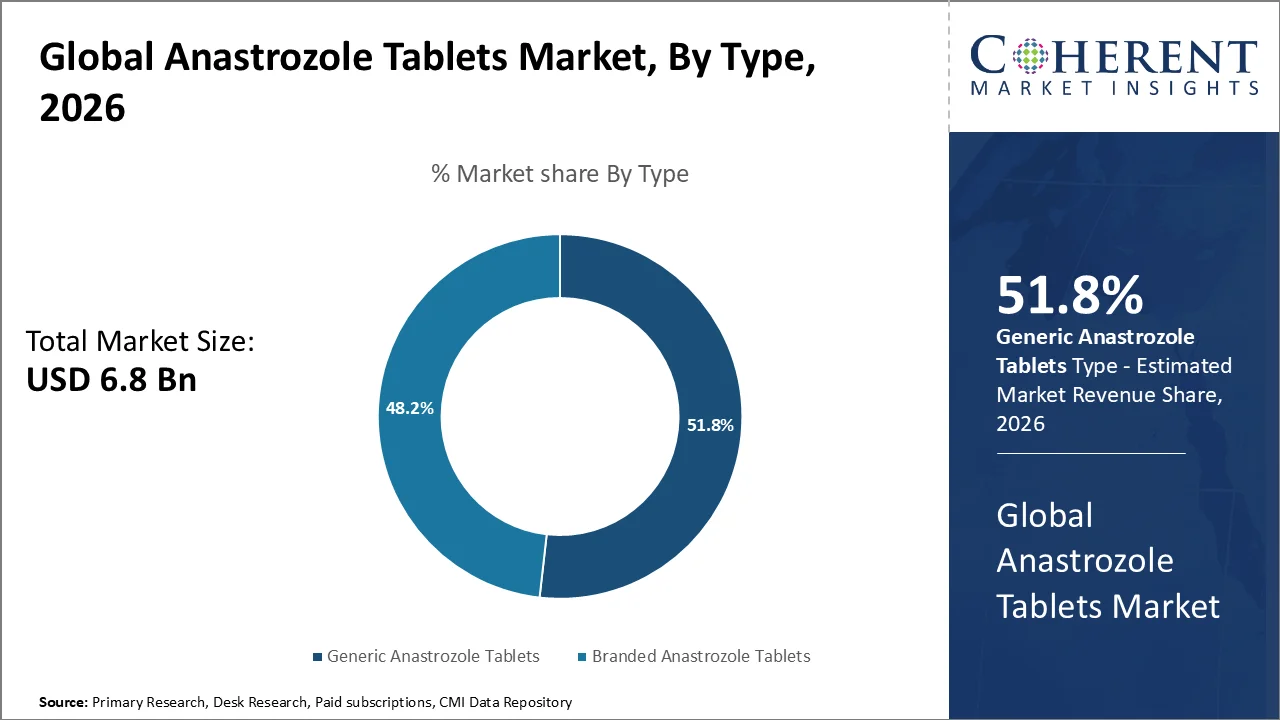
- By Type, generic anastrozole tablets hold the largest market share of 51.8% in 2026 owing to its cost-effectiveness and affordability.
- By Distribution Channel, Hospital Pharmacies expected to hold largest market share of 42.7% in 2026 owing to the primary point of cancer treatment and drug initiation.
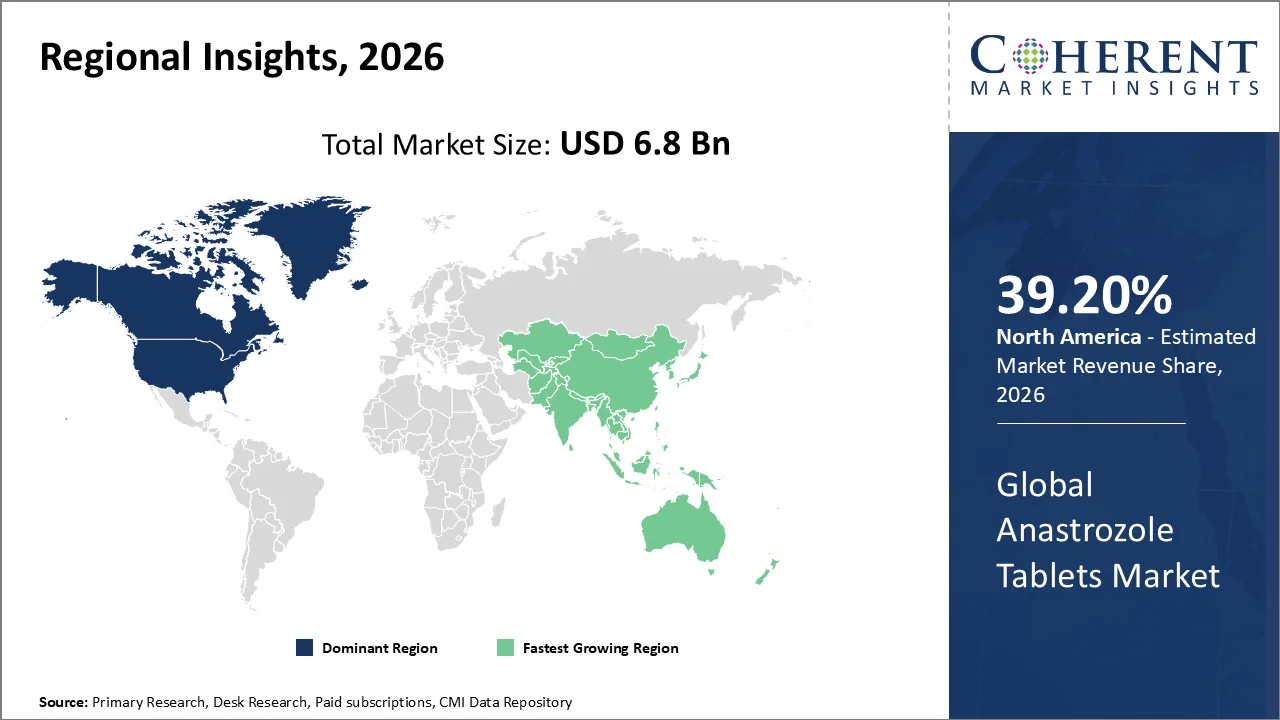
- By Region, North America is expected to acquire the dominant share of 39.2% in 2026 owing to its strong adoption of guideline-based treatment.
Current Events and Their Impact on the Anastrozole Tablets Market
Current Event | Description and its Impact |
UK Approval of Anastrozole for Breast Cancer Prevention (2023) |
|
Inclusion of Anastrozole in India’s Essential Medicines Pricing Framework |
|
Segmental Insights
- Current Industry Events of 2026
- Market Size Estimation
- Regional Breakdown
- Competitive Landscape
- Customer Intelligence
- Segmental Analysis
- Pricing Analysis
- Key Market Drivers, Challenges & Future Trends
- Customized Insights Section
Generic Anastrozole Tablets hold the largest market share
Generic Anastrozole Tablets hold the largest market share of 51.8% in 2026 owing to its insurance coverage and reimbursement support. Manufacturers drive the growth of generic anastrozole tablets by offering them at affordable prices compared to branded alternatives, which improves accessibility across healthcare systems. Patent expirations enable multiple companies to enter the market, increasing competition and availability. For instance, Teva received FDA approval and immediately launched its generic version of AstraZeneca’s breast cancer drug Arimidex (anastrozole), used in postmenopausal women.
Physicians prescribe these tablets confidently due to their proven therapeutic equivalence and safety profile, building patient trust. The rising incidence of hormone receptor-positive breast cancer and an aging population further increase demand. Governments, insurers, and distributors also support and expand the global adoption of generic anastrozole tablets.
Why Hospital pharmacies dominate the Anastrozole Tablets Market?
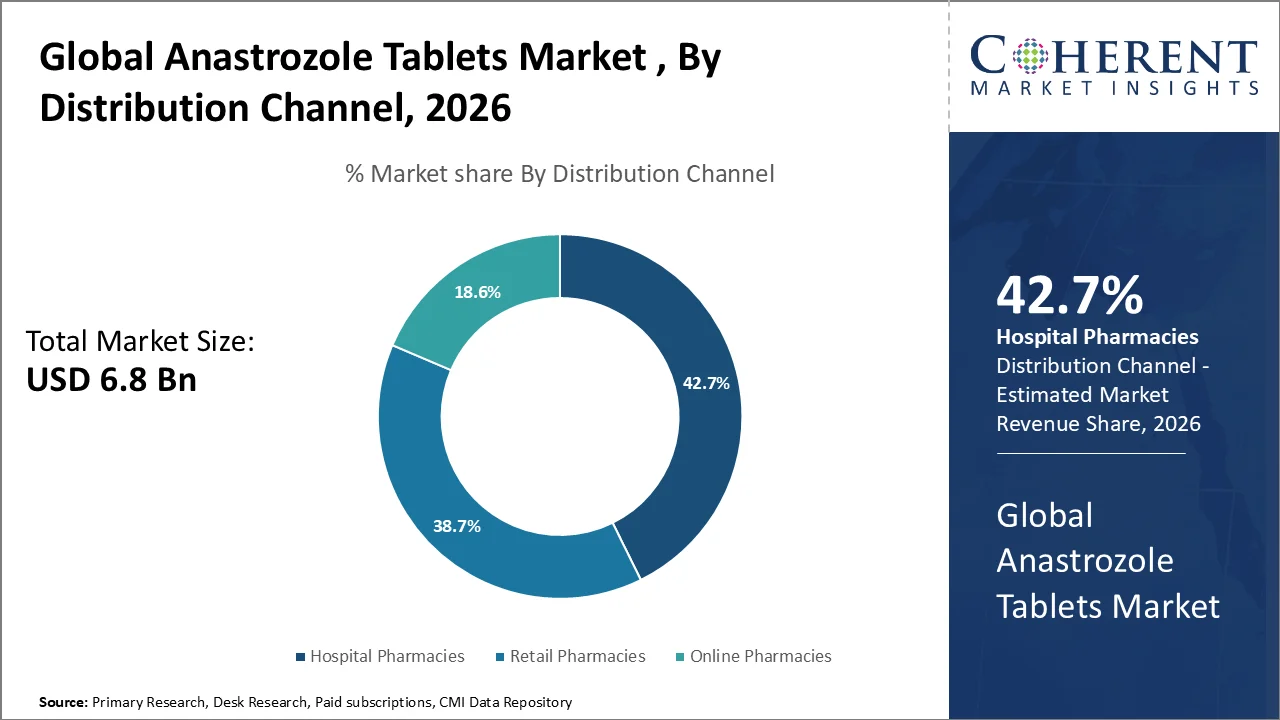
Hospital Pharmacies expected to hold largest market share of 42.7% in 2026 owing to the Strong patient adherence and counseling support. Hospital pharmacies drive the Anastrozole tablets market by acting as primary centers for cancer diagnosis, initiating treatment, and monitoring therapy. They ensure controlled dispensing under strict medical supervision and promote patient adherence through counseling and follow-up care.
Oncology teams collaborate with hospital pharmacies to manage treatment effectively and adjust doses when needed. Hospitals procure drugs in bulk to improve availability and reduce costs. High patient inflow, insurance-linked services, and advanced infrastructure further strengthen their role in distributing anastrozole tablets.
Anastrozole Tablets Market Trends
- Increasing adoption of generic Anastrozole tablets improves affordability and expands patient access across both developed and emerging healthcare systems.
- Growing focus on personalized cancer treatment, including hormone receptor testing, supports targeted use of anastrozole and improves treatment outcomes in breast cancer patients.
- Rising preference for oral hormonal therapies enhances convenience, reduces hospital visits, and improves long-term patient adherence to treatment.
- Aging global population increases the incidence of hormone receptor-positive breast cancer, significantly boosting demand for anastrozole-based therapies. According to the Surveillance Epidemiology and End Results registry, the median age at breast cancer diagnosis is 63, and about 20% of cases occur in women over 75. Women in their 70s face the highest risk of being diagnosed, while those in their 80s have the greatest risk of death.
Regional Insights
North America dominates owing to Strong presence of pharmaceutical companies
North America is expected to acquire the dominant share of 39.20% in 2026. North America drives the Anastrozole tablets market through its advanced healthcare infrastructure and strong oncology care systems. The region records a high prevalence of hormone receptor-positive breast cancer, and widespread screening programs support early diagnosis and timely treatment. Physicians follow evidence-based guidelines and actively prescribe anastrozole in clinical practice. Insurance providers and reimbursement systems improve patient access to therapy. Major pharmaceutical companies operate in the region, while manufacturers supply generic versions, and high healthcare spending further supports market growth across North America. For instance, Eli Lilly and Company announced that the FDA approved an expanded indication for Verzenio (abemaciclib) in combination with endocrine therapy for adjuvant treatment of adults with HR+, HER2-, node-positive early breast cancer at high risk of recurrence.
Asia Pacific expected to dominate the Anastrozole Tablets market
The Asia Pacific region drives the Anastrozole tablets market through its large patient population and a rising incidence of hormone receptor-positive breast cancer. Expanding healthcare infrastructure and improved oncology services enable early diagnosis and encourage treatment adoption. Growing awareness of breast cancer screening and government healthcare initiatives increase demand for therapy. Manufacturers supply low-cost generic medicines, improving patient affordability. Rising healthcare spending, rapid urbanization, and expanding pharmaceutical distribution networks further strengthen market growth across the region.
United States Anastrozole Tablets Market Trends
The United States drives the Anastrozole tablets market through its advanced oncology infrastructure and strong adoption of evidence-based treatment guidelines. A significant prevalence of hormone receptor-positive breast cancer increases demand for effective hormonal therapies. Insurance providers and reimbursement systems improve patient access to long-term treatment. Major pharmaceutical companies operate in the country and supply widely available generic versions, enhancing affordability and availability. Additionally, extensive cancer screening programs and high healthcare spending further support market growth across the United States.
India Anastrozole Tablets Market Trends
India drives the Anastrozole tablets market through its large and growing patient population and rising cases of breast cancer. Expanding healthcare infrastructure and improved oncology services enable earlier diagnosis and faster treatment adoption. Increased awareness of cancer screening and government healthcare initiatives promote timely therapy. Pharmaceutical companies supply affordable generic medicines widely, improving patient access. Growing manufacturing capabilities, expanding hospital networks, and rising healthcare spending further strengthen market growth across the country.
Who are the Major Companies in Anastrozole Tablets Industry
Some of the major key players in Anastrozole Tablets are AstraZeneca Plc, Zydus Pharmaceuticals, Teva Pharmaceutical Industries Ltd., Hikma Pharmaceuticals, Natco Pharma, Fresenius Kabi, Accord Healthcare Ltd., Mylan N.V., Cipla Ltd., Apotex Inc., Zhejiang Hisun, Chongqing Huapont Pharmaceutical Co., Ltd., Zhejiang Wansheng Pharmaceutical Co. Ltd., and Yangtze River Pharmaceutical Group.
Key News
- In November 2024, Novartis announced that the European Commission approved Kisqali (ribociclib) in combination with an aromatase inhibitor for the initial endocrine-based treatment of postmenopausal women with HR+/HER2- locally advanced or metastatic breast cancer.
Market Report Scope
Anastrozole Tablets Market Report Coverage
| Report Coverage | Details | ||
|---|---|---|---|
| Base Year: | 2025 | Market Size in 2026: | USD 6.8 Bn |
| Historical Data for: | 2020 To 2024 | Forecast Period: | 2026 To 2033 |
| Forecast Period 2026 to 2033 CAGR: | 11.7% | 2033 Value Projection: | USD 18.4 Bn |
| Geographies covered: |
| ||
| Segments covered: |
| ||
| Companies covered: | AstraZeneca Plc, Zydus Pharmaceuticals, Teva Pharmaceutical Industries Ltd., Hikma Pharmaceuticals, Natco Pharma, Fresenius Kabi, Accord Healthcare Ltd., Mylan N.V., Cipla Ltd., Apotex Inc., Zhejiang Hisun, Chongqing Huapont Pharmaceutical Co., Ltd., Zhejiang Wansheng Pharmaceutical Co. Ltd., and Yangtze River Pharmaceutical Group. | ||
Analyst Opinion
- The Anastrozole tablets market is fundamentally driven by clinical necessity rather than discretionary adoption, as hormone receptor-positive breast cancer continues to represent a major global oncology burden. According to GLOBOCAN 2022 estimates, breast cancer accounted for about 2.3 million new cases worldwide, with a large proportion requiring endocrine therapy such as aromatase inhibitors. In postmenopausal patients, anastrozole remains a first-line standard, meaning its demand is structurally embedded in treatment protocols rather than influenced by short-term trends.
- From a clinical practice perspective, aromatase inhibitors, including anastrozole, are consistently preferred over older therapies due to superior outcomes in recurrence prevention. The ATAC (Arimidex, Tamoxifen Alone or in Combination) trial demonstrated that anastrozole reduced disease recurrence risk compared to tamoxifen in early breast cancer patients, reinforcing its position in long-term adjuvant therapy guidelines. This evidence base has resulted in persistent prescribing behavior across oncology networks, particularly in North America and Europe, where guideline adherence is strict.
- Another major driver is treatment duration intensity. Breast cancer survivors often remain on endocrine therapy for 5–10 years, meaning demand is not linked to one-time prescription events but sustained long-term drug utilization. For example, large oncology registries in the U.S. indicate that endocrine therapy adherence directly correlates with reduced recurrence risk, pushing clinicians to prioritize continuation of aromatase inhibitor therapy like anastrozole whenever tolerated.
- The widespread shift toward generic substitution has structurally expanded access. Since patent expiry of originator brands, multiple studies and real-world prescribing data show rapid transition toward low-cost generics, significantly increasing volume consumption without changing clinical outcomes. This has made anastrozole one of the most widely used oral endocrine therapies globally, with demand anchored in survival benefit, guideline enforcement, and long-term therapeutic dependency rather than market-driven expansion.
Speak to the analyst
Want personalized insights?
Take the findings above to one of our principal consultants, or have the report rebuilt around the segments, geographies and competitors you actually track.
Market Segmentation
- By Type
- Branded Anastrozole Tablets
- Generic Anastrozole Tablets
- By Distribution Channel
- Hospital Pharmacies
- Retail Pharmacies
- Online Pharmacies
- By Region
- North America
- U.S.
- Canada
- Latin America
- Brazil
- Mexico
- Argentina
- Rest of Latin America
- Europe
- Germany
- U.K.
- France
- Italy
- Spain
- Russia
- Rest of Europe
- Asia Pacific
- China
- India
- Japan
- Australia
- South Korea
- ASEAN
- Rest of Asia Pacific
- Middle East
- GCC
- Israel
- Rest of Middle East
- Africa
- South Africa
- Central Africa
- North Africa
- North America
Sources
Primary Research interviews
- Oncologists and medical practitioners specializing in breast cancer treatment
- Hospital pharmacists and oncology department procurement heads
- Generic pharmaceutical manufacturers and distributors
- Healthcare policymakers and insurance reimbursement professionals
Databases
- World Health Organization (WHO) Global Health Observatory
- GLOBOCAN (International Agency for Research on Cancer)
- National cancer registries (e.g., SEER Program – USA)
- PubMed and NCBI biomedical databases
- ClinicalTrials.gov for ongoing and completed clinical studies
Magazines
- The Lancet Oncology news features
- Nature Reviews Clinical Oncology highlights
- Pharma industry and oncology-focused medical magazines
- Healthcare business and clinical practice magazines
Journals
- Journal of Clinical Oncology
- Breast Cancer Research and Treatment
- The Lancet Oncology
- Cancer Treatment Reviews
- International Journal of Cancer
Newspapers
- The New York Times (health section)
- The Guardian (science and health coverage)
- The Hindu (health and medical reporting)
- Financial Times (pharma and healthcare updates)
Associations
- American Cancer Society (ACS)
- American Society of Clinical Oncology (ASCO)
- European Society for Medical Oncology (ESMO)
- National Comprehensive Cancer Network (NCCN)
- World Health Organization (WHO) cancer programs
Public Domain sources
- Government health ministry publications and cancer control programs
- National cancer statistics reports and registries
- WHO and UN health datasets
- Peer-reviewed open-access medical research papers
- Hospital and academic medical institution reports
Proprietary Elements
- CMI Data Analytics Tool
- Proprietary CMI Existing Repository of information for last 8 years
Get access to 250+ pages report
Every segment, forecast, competitor profile and data table behind the analysis above — available for instant download.
- ESOMAR Member
- ISO 9001:2015 Certified
- D-U-N-S Registered
- GDPR & CCPA Compliant
Missing comfort of reading report in your local language? Find your preferred language:
Transform your Strategy with Exclusive Trending Reports
Frequently Asked Questions
The CAGR of the anastrozole tablets market is 11.7% during the forecast period.
The value of global anastrozole tablets market is USD 18.4 Bn in 2033.
The prominent players of anastrozole tablets market across the globe are AstraZeneca Plc, Zydus Pharmaceuticals, Teva Pharmaceutical Industries Ltd., Hikma Pharmaceuticals, Natco Pharma, Fresenius Kabi, Mylan N.V., and Cipla Ltd.
The anastrozole tablets market is segmented into three segments on the basis of type, distribution channel, and region.
Increasing research and development activities, clinical trials, and product launches are expected to drive growth of the anastrozole tablets market.