

Physiotherapy Equipment Market Size and Trends Forecast: 2026 - 2033
The physiotherapy equipment market is estimated to be valued at USD 30.18 Bn in 2026 and is expected to reach USD 48.78 Bn by 2033, exhibiting a compound annual growth rate (CAGR) of 7.1% from 2026 to 2033.
Key Takeaways of the Physiotherapy Equipment Market
- By application, the musculoskeletal segment is expected to contribute the highest share of the physiotherapy equipment market with 46% in 2026.
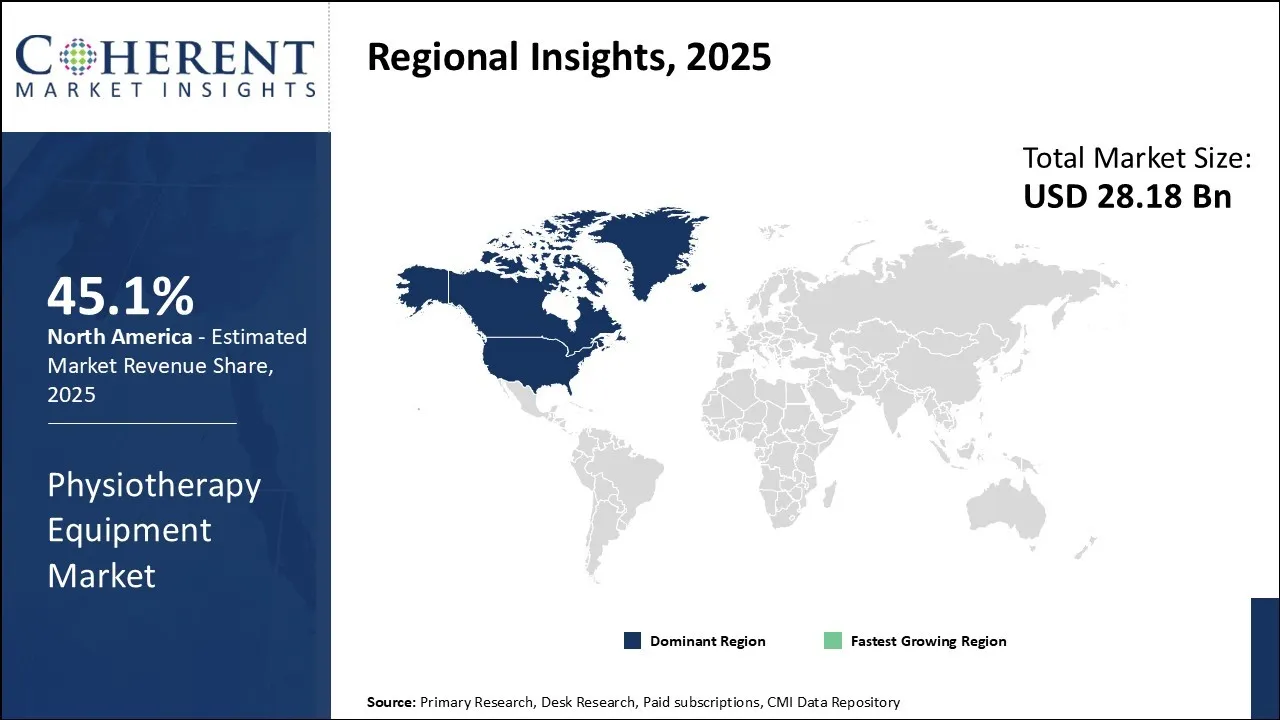
- North America has established itself as the dominant region with an estimated market share of 45. 1% in 2026.
- The Asia pacific region is expected to hold the second dominant position after North America in the global physiotherapy equipment market over the forecast period.
Market Overview
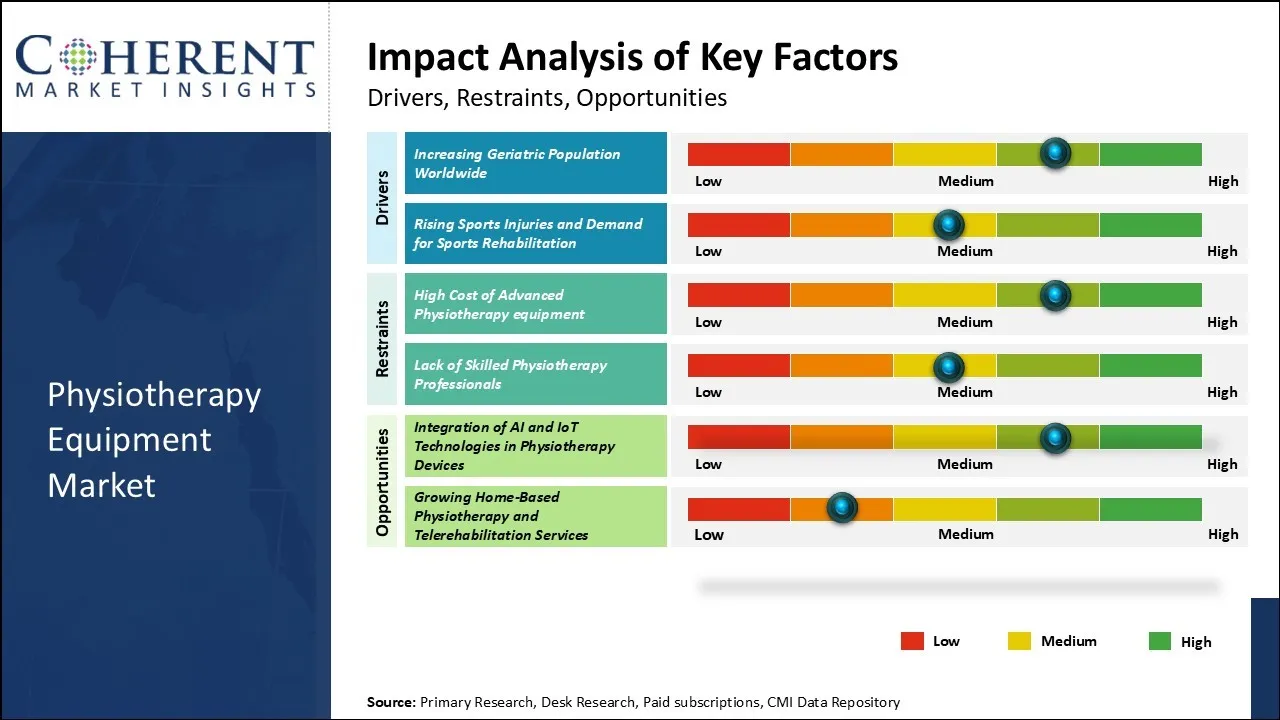
The physiotherapy equipment market growth is primarily driven by the rising prevalence of musculoskeletal disorders, neurological conditions, and chronic diseases such as arthritis and stroke, which require long-term rehabilitation. An aging global population is significantly contributing to the increased demand for physiotherapy services, particularly in high-income regions. Additionally, growing awareness about preventive healthcare, fueled by sedentary lifestyles and increasing physical inactivity, is encouraging both patients and providers to adopt physiotherapy solutions.
However, the global physiotherapy equipment market growth can be hindered by inadequate reimbursement policies.
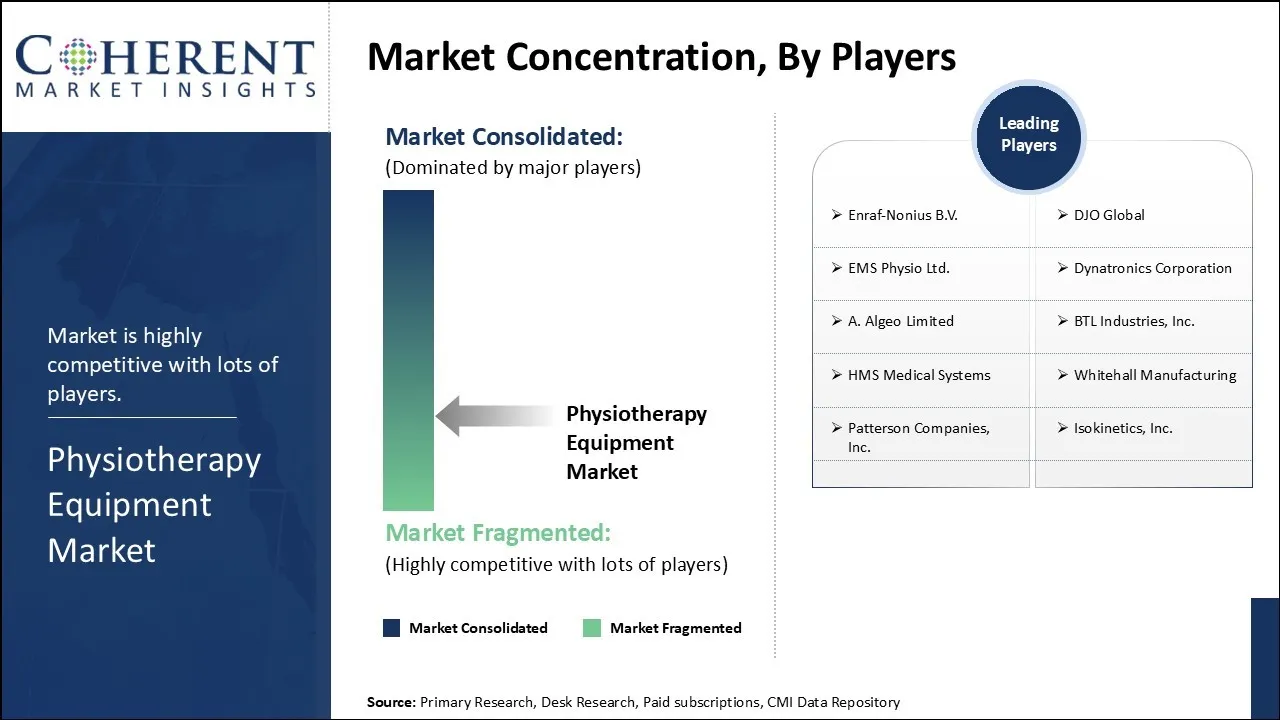
Market Concentration and Competitive Landscape
Current Events and their Impact on the Physiotherapy Equipment Market
Current Events | Description and its impact |
Geopolitical and Trade Dynamics |
|
Economic Factors and Healthcare Spending Trends |
|
- Current Industry Events of 2026
- Market Size Estimation
- Regional Breakdown
- Competitive Landscape
- Customer Intelligence
- Segmental Analysis
- Pricing Analysis
- Key Market Drivers, Challenges & Future Trends
- Customized Insights Section
Market Trends
Rising Awareness about Physical Fitness and Rehabilitation
Growing recognition of the importance of physical fitness and rehabilitation has become a major catalyst in expanding the physiotherapy equipment market. In recent years, a global shift toward preventive healthcare and physical well-being has been driven by increasing prevalence of lifestyle-related ailments, including musculoskeletal disorders, obesity, and chronic diseases.
For instance, a 2022 World Health Organization–Lancet Global Health study revealed that nearly one‑third of adults worldwide (31%)—about 1.8 billion people—are physically inactive, failing to meet the recommended 150 minutes of moderate‑intensity activity per week, or an equivalent. This increase represents a 5 percentage-point rise from 2010 levels. If this alarming trajectory continues—as suggested by WHO data released in June 2024—the share of insufficiently active adults is projected to reach 35% by 2030, making the global target of a 15% reduction ever more unlikely.
Segmental Insights
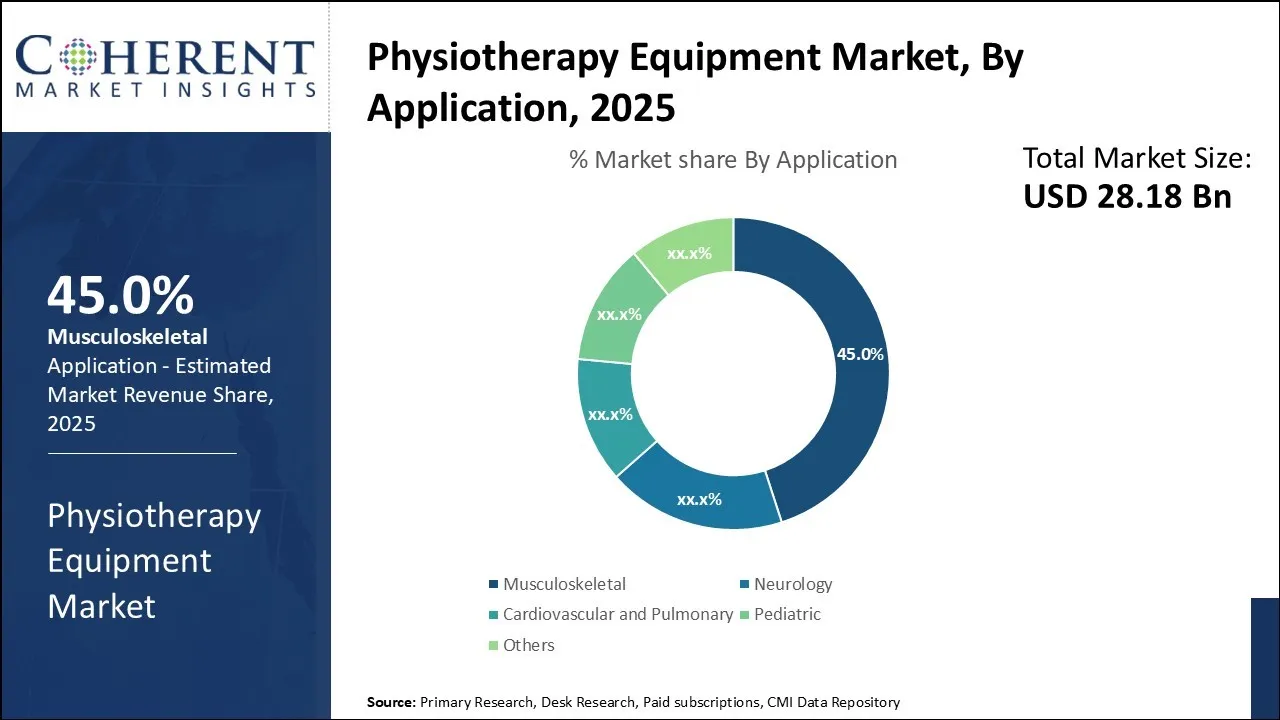
Physiotherapy Equipment Market Insights, By Application: Musculoskeletal Segment Leads Owing to the Widespread Prevalence of Musculoskeletal Disorders (MSDs) Globally
The musculoskeletal segment is expected to contribute the highest share of 46.0% in 2026. Musculoskeletal disorders affect approximately 1.71 billion people worldwide, representing a leading cause of disability across age groups—with the burden extending from low back pain and osteoarthritis to injuries involving bones, joints, ligaments, tendons, and muscles.
Conditions such as osteoarthritis, rheumatoid arthritis, back pain, and sports injuries are chief contributors to this segment’s dominance. The World Health Organization (WHO) has highlighted that musculoskeletal conditions are among the leading causes of disability worldwide, affecting work productivity and quality of life for a substantial portion of the population.
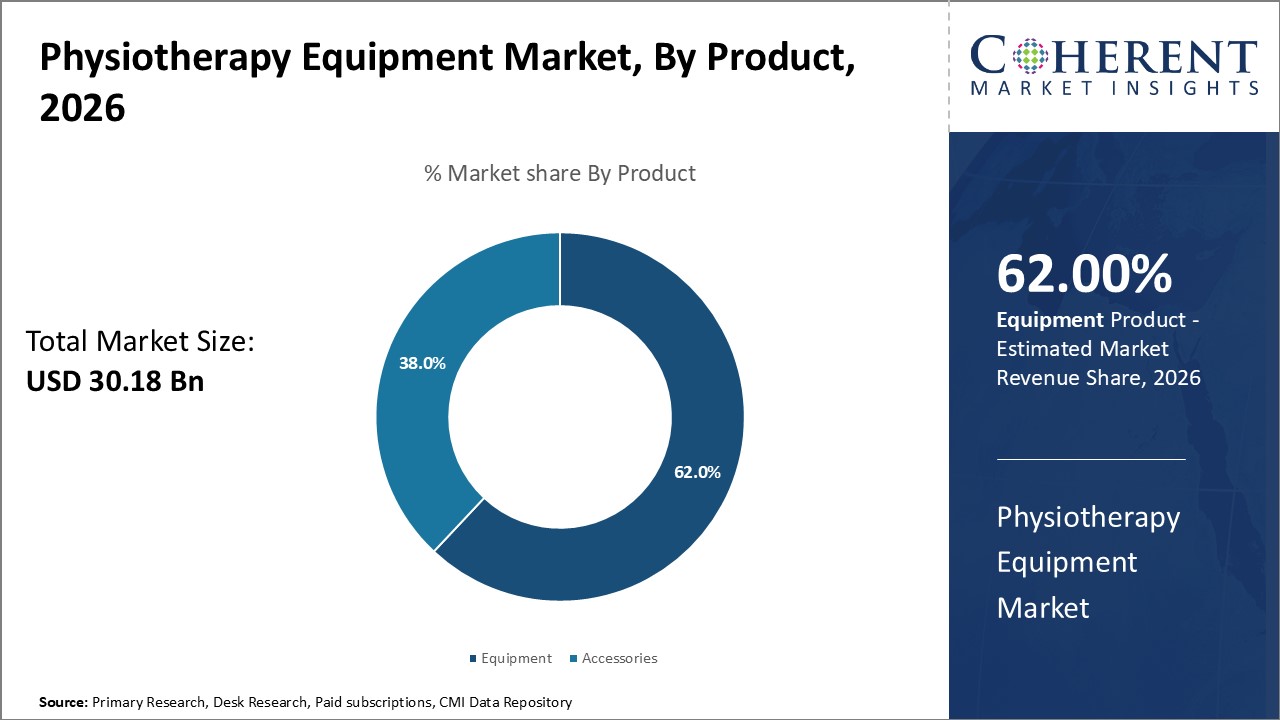
Physiotherapy Equipment Market Insights, By Product: Equipment Segment Contributes the Highest Share, Primarily Owing to its Broad Application Spectrum
The equipment segment contributes the highest share of the market, primarily owing to its broad application spectrum across various therapeutic settings and the critical role it plays inpatient rehabilitation and recovery.
Equipment such as electric stimulation devices and hydrotherapy units are widely adopted in hospitals, clinics, and outpatient care centers globally, due to their effectiveness in accelerating muscle recovery, reducing pain, and improving mobility in patients suffering from musculoskeletal injuries or neurological disorders.
Physiotherapy Equipment Market Insights, By End User: Hospitals Segment Dominates Owing to their Extensive Infrastructure
Hospitals contribute the highest share in the market owing to their extensive infrastructure, broad patient base, and the critical role they play in post-operative and rehabilitative care.
Hospitals encompass multi-specialty setups often equipped with dedicated physiotherapy departments, making them primary consumers of advanced physiotherapy equipment. Their demand is significantly propelled by the increasing number of surgeries, trauma cases, and chronic disease management that require structured rehabilitation programs.
Emerging Innovations in the Physiotherapy Equipment Market
- The Incorporation of Smart and Connected Devices
- Wearable sensors and motion tracking systems have gained prominence as they offer real-time data on patient movements, enabling more precise diagnosis and tailored treatment plans. These devices frequently connect to mobile apps or cloud-based platforms, providing continuous monitoring outside the clinical environment. As a result, physiotherapists can track recovery progress, adjust exercises remotely, and enhance patient compliance through personalized feedback.
- The Rise of Robotics and Automated Systems in Rehabilitation
- Robotic exoskeletons and assistive devices are increasingly used in clinical settings to support patients with mobility impairments, particularly those recovering from strokes, spinal cord injuries, or neurological disorders. These machines enable repetitive and controlled limb movements that promote muscle strength and neuroplasticity, which are crucial for rehabilitation. The precision and consistency offered by robotic equipment also reduce the physical strain on therapists, allowing for more efficient therapy sessions.
Emerging Application and Use Cases in the Physiotherapy Equipment Market
Emerging Application Areas | Total Addressable Market (TAM) for Emerging Applications | Future Application Areas |
One of the promising emerging use cases is the integration of physiotherapy equipment with tele-rehabilitation and remote patient monitoring. Devices equipped with sensors and Internet of Things (IoT) capabilities enable physiotherapists to administer treatment and track patient progress remotely. | Taking the tele-rehabilitation application as a case study, the TAM can be significant but still underpenetrated. | Looking ahead, physiotherapy equipment is expected to converge more with artificial intelligence (AI) and machine learning (ML) to create intelligent, adaptive rehabilitation solutions. AI-driven systems can tailor therapies in real-time based on patient feedback and predictive analytics, seen in early-stage products like Reflexion Health’s virtual therapy platform. |
Regional Insights
North America Physiotherapy Equipment Market Analysis and Trends
North America has established itself as the dominant region with an estimated market share of 45.1% in 2026 in the global physiotherapy equipment market. Within the region, the U.S. plays a critical role, driven by high demand for physiotherapy devices such as electrotherapy equipment, therapeutic ultrasound systems, traction units, and cryotherapy devices.
Despite this dominance, rehabilitation accessibility challenges persist. According to a survey by the Chartered Society of Physiotherapy, 94% of pediatric physiotherapists expressed concern that their patients are unable to access the rehabilitation treatment they need. This growing awareness of care gaps—particularly among vulnerable populations—is expected to fuel demand for portable and home-based physiotherapy solutions, further accelerating market growth in regions like the U.S., where outpatient care and tele-rehabilitation are expanding.
Asia Pacific Physiotherapy Equipment Market Analysis and Trends
The Asia Pacific region is expected to hold the second dominant position after North America in the global physiotherapy equipment market over the forecast period.
For instance, in December 2021, according to data published by the Clinical Trials Arena, The Asia Pacific region has seen a 158% increase in the number of musculoskeletal disorders trials taking place over the past decade, which is the largest increase for any region worldwide.
Physiotherapy Equipment Market Outlook for Key Countries
U.S. Physiotherapy Equipment Market Analysis and Trends
The U.S. remains the largest market for physiotherapy equipment in 2026, driven by its advanced healthcare infrastructure, widespread adoption of rehabilitation technologies, and a rapidly growing geriatric population. With a high prevalence of chronic conditions like arthritis, stroke, and back pain, the U.S. healthcare system is increasingly investing in electrotherapy, therapeutic ultrasound, cryotherapy, and robotic rehab devices. Additionally, the expansion of home healthcare and tele-rehabilitation services continues to boost demand for portable and user-friendly physiotherapy devices.
Germany Physiotherapy Equipment Market Analysis and Trends
Germany leads the physiotherapy equipment market in Europe, fueled by its aging population, strong public health insurance system, and government-supported rehabilitation initiatives. The country has seen rising demand for post-operative physiotherapy, especially following orthopedic surgeries and stroke recovery, prompting hospitals and rehab centers to invest in advanced equipment. Germany's emphasis on early mobility and preventive care has also increased the usage of robot-assisted therapy, motorized treadmills, and neuromuscular stimulators in both public and private clinics.
China Physiotherapy Equipment Market Analysis and Trends
China is emerging as a dominant force in the global physiotherapy equipment market, driven by massive healthcare reforms, the rise of urban middle-class populations, and growing government focus on elderly care. The country continues to expand its rehabilitation infrastructure across both urban and rural areas. The Made in China 2026 initiative also promotes domestic production of medical devices, including physiotherapy equipment, making advanced solutions more affordable and widely available. These trends are significantly increasing demand for cost-effective and scalable physiotherapy technologies.
India Physiotherapy Equipment Market Analysis and Trends
India’s physiotherapy equipment market is rapidly growing, supported by rising healthcare investments, initiatives like Ayushman Bharat, and growing awareness about physical rehabilitation. A surge in non-communicable diseases (e.g., diabetes, stroke, musculoskeletal disorders), coupled with an expanding middle-class population, is driving demand for modern physiotherapy clinics and equipment in tier-1 and tier-2 cities. Additionally, the increasing presence of foreign and domestic device manufacturers is improving access to innovative technologies such as electrotherapy machines, ultrasound therapy units, and digital motion analysis systems.
Pricing Analysis of the Physiotherapy Equipment Market
Brand | Product Focus | Typical Price Range (USD) |
Chattanooga (DJO Global) | Electrotherapy, Ultrasound, Traction | 800 - 15,000 and above |
Compex | EMS Electrotherapy | 250 - 600 |
Omron | TENS units | 30 - 150 |
Saunders | Traction Equipment | 80 - 15,000 and above |
Game Ready | Cold Compression Therapy | 500 - 2,000 |
Market Report Scope
Physiotherapy Equipment Market Report Coverage
| Report Coverage | Details | ||
|---|---|---|---|
| Base Year: | 2025 | Market Size in 2026: | USD 30.18 Bn |
| Historical Data for: | 2020 To 2024 | Forecast Period: | 2026 To 2033 |
| Forecast Period 2026 to 2033 CAGR: | 7.1% | 2033 Value Projection: | USD 48.78 Bn |
| Geographies covered: |
| ||
| Segments covered: |
| ||
| Companies covered: | Enraf-Nonius B.V., DJO Global, EMS Physio Ltd., Dynatronics Corporation, A. Algeo Limited, BTL Industries, Inc., HMS Medical Systems, Whitehall Manufacturing, Patterson Companies, Inc., and Isokinetics, Inc. | ||
| Growth Drivers: |
| ||
| Restraints & Challenges: |
| ||
Physiotherapy Equipment Industry News
- In January 2025, Kaphaphysio, participated in Arab Health 2025, at the Dubai World Trade Centre. The company showcased series of advanced physiotherapy machine designed to enhance patient care and recovery, including standard line (For wholesaler), class line and premium line (For Selective Distributor).
- In September 2024, Jipmer’s department of physical medicine and rehabilitation launched a standard manual for physiotherapy equipment at an event. Observing World Physiotherapy Day, a Standard Operating Procedure (SOP) was launched.
- In January 2024, Kinvent secured a USD 18.8 million investment during its third round of fundraising. This investment enabled the company to enter a new phase of acceleration, including market penetration in the U.S. in 2024, increased R&D projects, as well as massive external expansion. To support the company in this phase, French private equity firm Eurazeo joined the company's leadership.
- In January 2024, Bharat Electronics Limited (BEL), a Navratna Defence PSU, donated advanced physiotherapy equipment to the Physiotherapy Centre at NITK Suratkal, Karnataka, as part of its CSR efforts. Initiatives like this help bridge gaps in public access to rehabilitation technologies and indirectly contribute to market visibility and utilization of physiotherapy devices.
Analyst View
- The physiotherapy equipment market is experiencing notable momentum driven by increasing prevalence of chronic diseases, aging populations, and growing awareness about physical rehabilitation. Advances in technology have led to the development of innovative and user-friendly devices, enhancing treatment effectiveness and patient compliance.
- Additionally, rising healthcare expenditure and expanding physiotherapy centers globally are further propelling market demand. However, high costs associated with advanced equipment and limited reimbursement policies in certain regions continue to pose challenges for widespread adoption.
- Opportunities abound with the integration of smart technologies such as IoT and AI, which enable remote monitoring and personalized therapy plans, thereby improving patient outcomes. Furthermore, the growing trend of homecare physiotherapy devices is opening new avenues for market expansion, particularly in regions with limited access to healthcare facilities.
- Geographically, North America remains dominant due to well-established healthcare infrastructure, higher awareness levels, and strong government support.
- In summary, while cost and regulatory complexities may restrain market growth, the continuous technological innovation coupled with expanding healthcare accessibility in developing regions positions the physiotherapy equipment market for sustained growth in the near future. Stakeholders focusing on affordable and technologically advanced solutions are likely to capitalize on the evolving market dynamics effectively.
Market Segmentation
- Product Insights (Revenue, USD Bn, 2021 - 2033)
- Equipment
- Hydrotherapy
- Cryotherapy
- Continuous Passive Motion (CPM)
- Electric Stimulation
- Heat Therapy
- Therapeutic Exercises
- Ultrasound
- Accessories
- Application Insights (Revenue, USD Bn, 2021 - 2033)
- Musculoskeletal
- Neurology
- Cardiovascular and Pulmonary
- Pediatric
- Others
- End User Insights (Revenue, USD Bn, 2021 - 2033)
- Hospitals
- Clinics
- Others
- Regional Insights (Revenue, USD Bn, 2021 - 2033)
- North America
- U.S.
- Canada
- Latin America
- Brazil
- Argentina
- Mexico
- Rest of Latin America
- Europe
- Germany
- U.K.
- Spain
- France
- Italy
- Russia
- Rest of Europe
- Asia Pacific
- China
- India
- Japan
- Australia
- South Korea
- ASEAN
- Rest of Asia Pacific
- Middle East
- GCC Countries
- Israel
- Rest of Middle East
- Africa
- North Africa
- Central Africa
- South Africa
- Key Players Insights (Revenue, USD Bn, 2021 - 2033)
- Enraf-Nonius B.V.
- DJO Global
- EMS Physio Ltd.
- Dynatronics Corporation
- A. Algeo Limited
- BTL Industries, Inc.
- HMS Medical Systems
- Whitehall Manufacturing
- Patterson Companies, Inc.
- Isokinetics, Inc.
Sources
Primary Research Interviews
- Physiotherapy Equipment Manufacturers
- Healthcare Providers and Clinics
- Distributors and Suppliers of Physiotherapy Devices
- Market Experts and Analysts
- Others
Magazines
- Physiotherapy Today
- Rehabilitation Journal
- Medical Device and Diagnostic Industry (MD+DI)
- Physical Therapy Products Magazine
- Others
Journals
- Journal of Physiotherapy
- Archives of Physical Medicine and Rehabilitation
- International Journal of Rehabilitation Research
- Others
Newspapers
- The Economic Times (Healthcare Section)
- The Guardian (Health Section)
- Reuters Healthcare News
- Business Standard (Healthcare)
- Others
Associations
- World Confederation for Physical Therapy (WCPT)
- American Physical Therapy Association (APTA)
- International Society of Physical and Rehabilitation Medicine (ISPRM)
- National Association of Rehabilitation Providers and Agencies (NARA)
- Others
Public Domain Sources
- World Health Organization (WHO) Publications
- Centers for Disease Control and Prevention (CDC) Reports
- National Institutes of Health (NIH) Database
- Market Research Reports from Government Health Agencies
- Others
Proprietary Elements
- CMI Data Analytics Tool – Physiotherapy Equipment Market
- CMI Existing Repository of Information for the Last 8 Years
*Definition: The physiotherapy equipment market refers to the global industry involved in the manufacturing, distribution, and sale of devices and tools used for physical rehabilitation, pain management, and functional recovery. This includes equipment such as electrotherapy devices, ultrasound units, traction systems, cryotherapy machines, and rehabilitation exercise tools, used in hospitals, clinics, rehabilitation centers, and home care settings to treat musculoskeletal, neurological, and chronic health conditions.
Get access to 250+ pages report
Every segment, forecast, competitor profile and data table behind the analysis above — available for instant download.
- ESOMAR Member
- ISO 9001:2015 Certified
- D-U-N-S Registered
- GDPR & CCPA Compliant
Missing comfort of reading report in your local language? Find your preferred language:
Transform your Strategy with Exclusive Trending Reports
Frequently Asked Questions
The physiotherapy equipment market is estimated to be valued at USD 30.18 Bn in 2026 and is expected to reach USD 48.78 Bn by 2033.
The CAGR of the physiotherapy equipment market is projected to be 7.1% from 2026 to 2033.
The global demand for rehabilitation and physiotherapy services is being fueled by the rising prevalence of musculoskeletal disorders, particularly among the elderly—driven by population aging and increased rates of fractures and chronic pain—and the growing incidence of sports-related injuries, including a notable surge in orthopedic trauma among older adults as they remain more active.
The global physiotherapy equipment market is constrained by the high costs of advanced therapeutic devices and a widespread shortage of skilled professionals capable of operating and optimizing their use.
In terms of application, musculoskeletal is estimated to dominate the market revenue share in 2026.
Major players operating in the physiotherapy equipment market include Enraf-Nonius B.V., DJO Global, EMS Physio Ltd., Dynatronics Corporation, A. Algeo Limited, BTL Industries, Inc., HMS Medical Systems, Whitehall Manufacturing, Patterson Companies, Inc., and Isokinetics, Inc.
North America is expected to lead the physiotherapy equipment market in 2026.