

Polyether Polyols Market Size and Forecast — 2026-2033
The Global Polyether Polyols Market size is estimated to be valued at USD 6.23 billion in 2026 and is expected to reach USD 9.3 billion by 2033, exhibiting a compound annual growth rate (CAGR) of 7.4% from 2026 to 2033.
Overview
Polyether polyols are liquid organic polymers produced via the polymerization of ethylene oxide or propylene oxide, serving as key precursors in polyurethane foam, coatings, adhesives, and elastomers. Known for controlled reactivity, flexibility, and compatibility, they are heavily used in furniture, automotive seating, insulation panels, and footwear.
Key Takeaways
Flexible foams lead the application segment, capturing the largest market share owing to their widespread use in automotive and furniture industries; rigid foams observe accelerated growth tied to construction sector demands.
Specialty polyether polyols, particularly bio-based types, are becoming critical subsegments highlighting shifts in industry trends and environmental compliance.
North America dominates the market owing to its strong automotive and construction industries, supported by established supply chains and innovation hubs.
Asia Pacific registers the fastest market growth driven by expanding polyurethane demand, improving industrial infrastructure, and government policies promoting sustainable manufacturing.
Polyether Polyols Market Segmentation Analysis
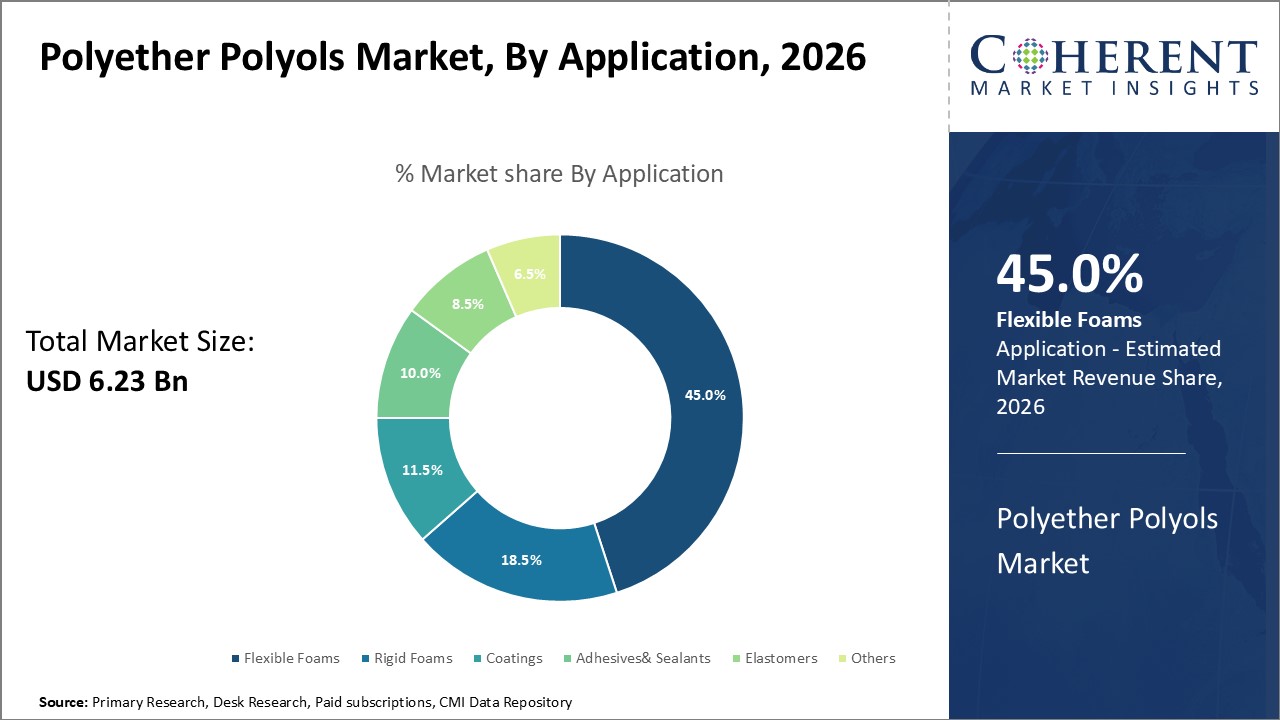
Polyether Polyols Market Insights, By Application
Flexible Foams dominate the market share with 45%, primarily due to their extensive usage in automotive seating, furniture, and bedding, where lightweight and comfort are critical. The demand for flexible foams continues to rise as automotive manufacturers increasingly prioritize passenger comfort and safety, supported by innovations in highly resilient polyether polyols that improve foam durability and elasticity. Rigid Foams represent the fastest-growing subsegment, driven by indoor and outdoor insulation needs in the construction industry. Enhanced energy efficiency standards are boosting the adoption of rigid polyurethane foams, which require specialized polyether polyols exhibiting excellent thermal insulation properties.
Polyether Polyols Market Insights, By End-Use Industry
Furniture & Bedding holds the lead with a 38% market share, reflecting increasing consumer demand for comfort-enhanced mattresses and upholstered furniture. Rapid urbanization and rising disposable incomes in Latin America and the Asia Pacific are expanding this segment. The automotive industry is the fastest-growing subsegment, accelerated by mandates for lighter vehicle components to improve fuel efficiency and reduce emissions. Polyether polyols tailored for flexible foams used in automotive interiors and seating provide a competitive edge by balancing performance and cost.
Polyether Polyols Market Insights, By Type
Standard Polyether Polyols command the dominant market share given their broad applicability and cost-effectiveness in standard polyurethane foam production. Specialty Polyether Polyols are the fastest-growing subsegment, benefiting from demand in applications requiring enhanced chemical resistance, flame retardancy, and mechanical strength, such as electronic housings and automotive parts. Bio-based Polyether Polyols, while currently holding a smaller share, are rapidly expanding due to regulatory pressures and corporate sustainability initiatives, with increasing product launches addressing the need for renewable and environmentally friendly polyols.
Polyether Polyols Market Trends
Recent market trends highlight a decisive movement towards sustainability and digital transformation within the polyether polyols domain.
The shift towards bio-based polyether polyols has gained momentum, as seen with major producers ramping up output by approximately 20-25% in the past two years, driven by regulatory mandates in Europe and amplified consumer demand for greener products.
Moreover, automation and Industry 4.0 integration have enabled key manufacturers in North America to reduce cycle times by up to 15%, resulting in enhanced market competitiveness and resilience amidst supply chain constraints seen during 2025-2026.
Polyether Polyols Market Insights, By Geography
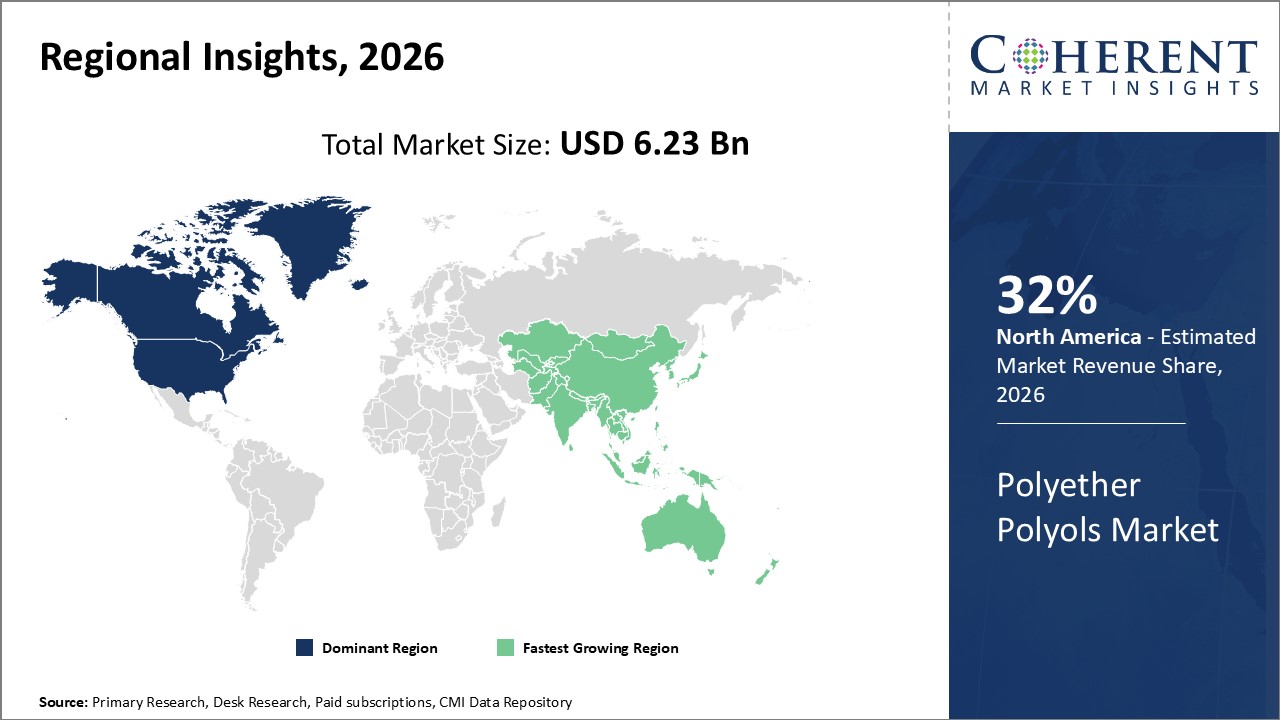
North America Polyether Polyols Market Analysis and Trends
In North America, the dominance in the Polyether Polyols market stems from well-established automotive and construction sectors. The presence of major market companies like Covestro AG and BASF SE, coupled with strong R&D infrastructure, has solidified the region’s market share at approximately 32% in 2026. Regulatory emphasis on energy-efficient insulation and lightweight materials supports steady industry growth, ensuring consistent market revenue expansion.
Asia Pacific Polyether Polyols Market Analysis and Trends
Meanwhile, the Asia Pacific exhibits the fastest growth with a CAGR exceeding 9%, propelled by rapid industrialization, government initiatives promoting sustainable chemical manufacturing, and expanding polyurethane applications in developing countries such as India and China. Investments by companies like Wanhua Chemical Group and Mitsui Chemicals have increased regional production capacity, accelerating market growth.
Polyether Polyols Market Outlook for Key Countries
USA Polyether Polyols Market Analysis and Trends
The USA's market significantly contributes to regional prominence, driven by its vast automotive manufacturing ecosystem, accounting for nearly 40% of North America’s polyether polyol consumption in 2026. Both domestic producers and importers have scaled operations to meet the robust demand for flexible foams and specialty polyols. Innovations such as high-resilience foam solutions and bio-based polyols have bolstered business growth. Major players, including Covestro AG’s U.S. facility expansions and Huntsman Corporation's strategic acquisitions, have enhanced supply chain agility and product offerings, reflecting the country’s critical role in global market dynamics.
China Polyether Polyols Market Analysis and Trends
China’s market has evolved into a strategic production and consumption hub due to substantial government support aimed at chemical industry modernization and environmental sustainability. The country has witnessed a significant 22% increase in polyether polyol production capacity between 2023 and 2026. Leading manufacturers such as Wanhua Chemical Group and Mitsui Chemicals are enhancing their product portfolios with bio-based and specialty polyols to capture growing end-use markets like automotive and construction. Rising urbanization and infrastructure development continue to fuel market growth, positioning China as a pivotal player in the global polyether polyols industry.
Analyst Opinion
A significant driver contributing to market size is the rising production capacity in the Asia Pacific, particularly in China and India, where increased investments in polyurethane manufacturing facilities have raised regional output volumes by over 18% year-on-year in 2025. This production surge supports downstream market revenue growth, enabling competitive pricing strategies globally.
Demand-side indicators also highlight a rapid expansion of imports in North America, with polyether polyol imports increasing by 12% in 2026 compared to the previous year, reflecting escalating consumption in the automotive and bedding industries. This market demand diversification accentuates the evolving industry trends and market dynamics shaping regional supply chains.
Nano-sized subsegments, such as specialty polyether polyols with bio-based modifications, are gaining traction due to increasing environmental regulations in Europe. For instance, bio-derived polyether polyols accounted for nearly 15% of the European market share in 2026, driven by both regulatory frameworks and consumer preferences favoring greener chemicals.
Pricing trends reveal moderate volatility attributed to fluctuating raw material costs, especially propylene oxide. The average weighted price of polyether polyols rose by approximately 6% in early 2026 due to supply constraints, thereby impacting the market growth strategies of regional players and influencing the overall market forecast.
- Current Industry Events of 2026
- Market Size Estimation
- Regional Breakdown
- Competitive Landscape
- Customer Intelligence
- Segmental Analysis
- Pricing Analysis
- Key Market Drivers, Challenges & Future Trends
- Customized Insights Section
Market Scope
| Report Coverage | Details | ||
|---|---|---|---|
| Base Year: | 2025 | Market Size in 2026: | USD 6.23 billion |
| Historical Data for: | 2020 To 2024 | Forecast Period: | 2026 To 2033 |
| Forecast Period 2026 to 2033 CAGR: | 7.4% | 2033 Value Projection: | USD 9.3 billion |
| Geographies covered: |
| ||
| Segments covered: |
| ||
| Companies covered: | Covestro AG, BASF SE, Huntsman Corporation, Dow Inc., Mitsui Chemicals, Inc., Shell Chemicals, Wanhua Chemical Group, Bayer MaterialScience LLC, Toray Industries, Inc., LyondellBasell Industries | ||
| Growth Drivers: |
| ||
Polyether Polyols Market Growth Factors
Increasing automotive production fueled a rise in demand for lightweight and durable flexible foam components, which accounted for nearly 36% of the market revenue in 2026. Growing construction activities in emerging economies, particularly in India and Southeast Asia, have heightened the usage of rigid foam insulation, boosting the market size due to enhanced energy efficiency mandates imposed in 2025. Advancements in bio-based polyether polyols, encouraged by regulatory pressures in Europe and North America, have shifted market dynamics toward environmentally sustainable alternatives, contributing to business growth. Expansion in the furniture and bedding industries due to urbanization and rising disposable incomes across Latin America has expanded the market footprint, particularly for flexible foam applications.
Polyether Polyols Market Development
In 2026, Dow introduced its VORANOL™ WK5750 polyol to the North American market, a next-generation polyether polyol designed to enhance the performance of flexible polyurethane foams used in furniture, bedding, and automotive seating. The formulation offers improved processing efficiency, higher foam resilience, and superior comfort characteristics, while also supporting manufacturers seeking better consistency and reduced scrap rates. With growing demand for durable and ergonomically optimized foams, this launch reinforces Dow’s strategic focus on innovation within the polyurethane value chain.
In 2025, BASF announced significant enhancements to its portfolio of polyether polyols aimed at reducing VOC emissions in vehicle interiors. The improved polyol technology lowers the formation of aldehydes and other emission-generating byproducts during polyurethane foam production, helping automakers meet increasingly stringent air-quality and sustainability requirements. By enabling cleaner interiors without compromising mechanical performance or comfort, BASF’s upgraded polyols support broader automotive industry goals related to low-emission materials and enhanced occupant well-being.
Key Players
Leading Companies of the Market
Covestro AG
BASF SE
Huntsman Corporation
Dow Inc.
Mitsui Chemicals, Inc.
Shell Chemicals
Wanhua Chemical Group
Bayer MaterialScience LLC
Toray Industries, Inc.
LyondellBasell Industries
A few leading market companies have adopted aggressive expansion strategies focusing on specialty polyether polyols to capture niche applications in high-performance coatings and elastomers. For example, Covestro AG’s recent investment in a new production facility in the U.S. reported a 21% increase in specialty polyether polyols output in 2025, enabling it to strengthen its foothold in the automotive and electronics sectors. Meanwhile, BASF SE’s strategic partnership with renewable feedstock suppliers has accelerated its market share in bio-based polyether polyols, reflecting a shift in market growth strategies toward sustainability.
Polyether Polyols Market Future Outlook
In the future, sustainability initiatives, energy-efficient buildings, and electric vehicle manufacturing will support continued market growth. Bio-based polyether polyols, recycled carbon feedstocks, and low-VOC formulations are expected to gain prominence as regulatory bodies push for greener polyurethane production. Demand for rigid polyurethane foams used in insulation and refrigeration will accelerate due to global energy-efficiency policies. Strategic backward integration and technological process optimization will help reduce raw-material volatility.
Polyether Polyols Market Historical Analysis
The polyether polyols market historically expanded with the proliferation of polyurethane products, particularly in furniture, automotive seating, coatings, flexible foams, adhesives, and insulation. Petroleum-derived feedstocks and large-scale chemical production supported an abundant supply and competitive pricing. Growing construction and transportation industries, especially in China and North America, fueled long-term demand.
Sources
Primary Research interviews:
Polyol Manufacturers
Polyurethane Foam Producers
Chemical Procurement Managers
Databases:
Polyurethane Global Markets Database
ICIS Polyols Data
Magazines:
Urethane Technology International
Chemical Weekly
Polyurethane Magazine
Journals:
Journal of Applied Polymer Science
Industrial Chemistry Research
Polymer Chemistry
Newspapers:
The Economic Times (Materials)
Nikkei Asia (Chemicals)
Associations:
American Chemistry Council – PU Division
Polyurethane Manufacturers Association (PMA)
European Diisocyanate & Polyol Producers Association (ISOPA)
Get access to 250+ pages report
Every segment, forecast, competitor profile and data table behind the analysis above — available for instant download.
- ESOMAR Member
- ISO 9001:2015 Certified
- D-U-N-S Registered
- GDPR & CCPA Compliant
Missing comfort of reading report in your local language? Find your preferred language:
Transform your Strategy with Exclusive Trending Reports
Frequently Asked Questions
Dominant players include Covestro AG, BASF SE, Huntsman Corporation, and Dow Inc., recognized for their extensive product portfolios and investment in specialty and bio-based polyether polyols.
The Polyether Polyols market is projected to grow from USD 6.23 billion in 2026 to USD 9.3 billion by 2033, driven by surging demand across the automotive, construction, and furniture industries.
The automotive industry presents the largest growth opportunity due to its increasing use of flexible foam components for lightweight and safety features in vehicle manufacturing.
Market trends will evolve towards sustainable, bio-based polyether polyols, enhanced product functionalities, and integration of digital manufacturing technologies for production efficiency and cost optimization.
The landscape is highly competitive, with companies focusing on innovation and sustainability. Market challenges include volatility in raw material prices and stringent environmental regulations.
Key strategies include capacity expansions, strategic partnerships for bio-based feedstocks, product differentiation via specialty polyols, and geographic diversification targeting emerging markets.