

Radiodermatitis Market Size and Forecast - 2026 to 2033
Radiodermatitis Market is estimated to be valued at USD 462.7 Mn in 2026 and is expected to reach USD 629.7 Mn in 2033, exhibiting a compound annual growth rate (CAGR) of 4.5% from 2026 to 2033.
Key Takeaways
- Based on Product Type, Topical Agents segment is expected to dominate the market with 41% market share in 2026.
- North America is estimated to hold a dominant position in the global radiodermatitis market over the forecast period with 43.8% market share.
Market Overview
The Radiodermatitis Market demand is witnessing growth due to increasing cancer prevalence and the widespread use of radiotherapy in oncology treatments. Rising awareness of radiation-induced skin injuries and demand for effective prevention and treatment products, including topical creams, dressings, and advanced skin care solutions, are driving market adoption. Expansion in healthcare infrastructure and oncology centers further fuels the Radiodermatitis Market demand.
Current Events and Its Impact
Current Events | Description and its impact |
Topical Cream and Drug Solution Expansion for Radiodermatitis
|
|
Integration of Digital Tools and AI in Radiodermatitis Management |
|
Pricing Analysis
The cost structure of the radiodermatitis market is determined by the prices of different treatments, ranging from topical treatments, dressings, to treatments involving advanced therapies.
- Topical treatments, including corticosteroids, hydrophilic creams, and antibiotics, are the most widely used and affordable treatments, with the majority of them costing in the range of $20 to $150 per product, depending on the name brand and composition.
- Hydrocolloid and hydrogel dressings, generally used for the management of radiodermatitis, can range from $5 to $25 per dressing, depending on material and size.
- More advanced treatments, including biologics and specialty ointments, may be much more costly, ranging from $100 to $500 or more per session. There is also an increase in patient-specific products that can drive costs higher because of customization.
- Current Industry Events of 2026
- Market Size Estimation
- Regional Breakdown
- Competitive Landscape
- Customer Intelligence
- Segmental Analysis
- Pricing Analysis
- Key Market Drivers, Challenges & Future Trends
- Customized Insights Section
Global Radiodermatitis Market – Driver
Increasing Research and Development Activities in Radiodermatitis
Increasing research and development in the field of radiodermatitis is expected to drive the global radiodermatitis market growth over the forecast period.
In 2024, major developments in treating radiodermatitis were announced, especially for Photo Biomodulation Therapy (PBMT). A scoping review on PubMed emphasized that PBMT has been considered effective in minimizing the severity of radiodermatitis in patients with cancer who receive radiation treatment. The review considered 14 studies, 85.71% of which showed favorable results with no side effects, making PBMT a safe and effective treatment method.
Global Radiodermatitis Market: Key Trend
Introduction of newer applications of drugs
Introduction of the application of drugs can drive the growth of the market. For instance, in 2024, important progress in the management of radiodermatitis was documented, especially with respect to the use of topical medications. An important paper appeared in the British Journal of Clinical Pharmacology, in which it was shown that a nonsteroidal anti-inflammatory agent, doxepin cream, alleviated the intensity of radiation-induced dermatitis (RID) in breast cancer patients receiving radiotherapy. This double-blind, randomized trial showed that upon treatment for three weeks, 50% of the patients who used doxepin cream showed no dermatitis, while all the patients in the placebo group developed grade 2 or 3 dermatitis.
Segmental Insights
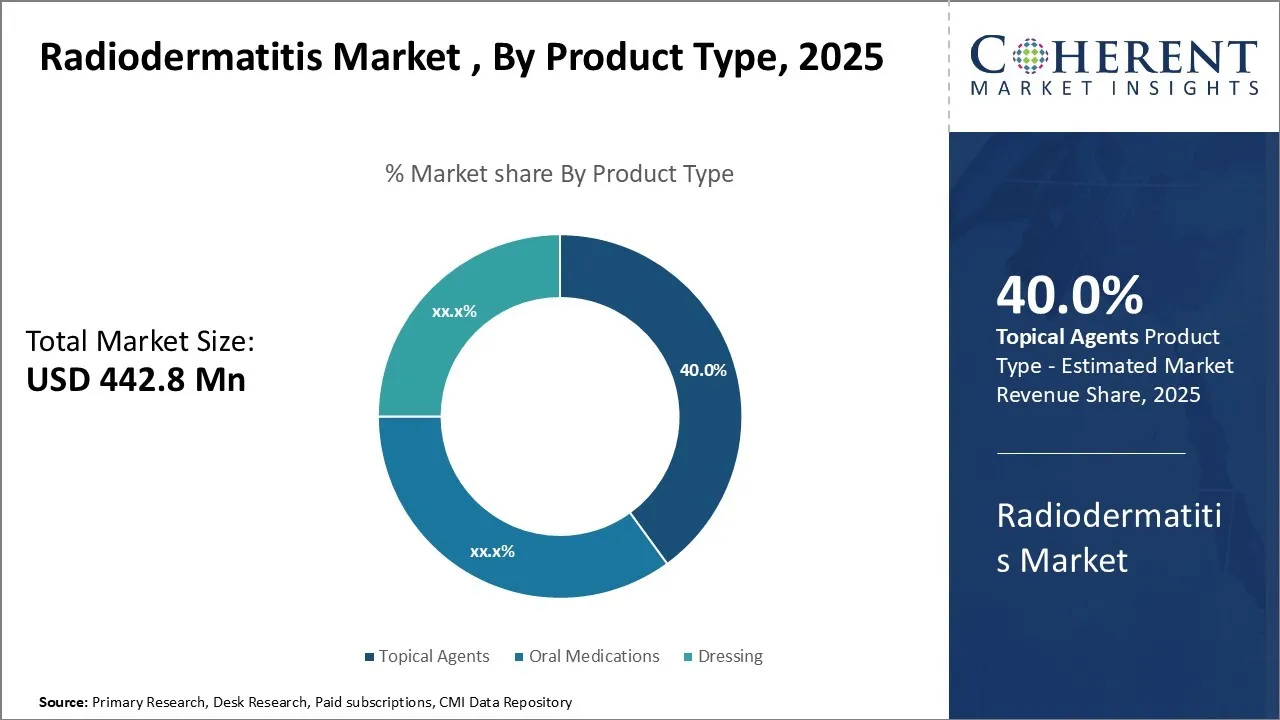
The Global Radiodermatitis Market insights, by Product Type
Based on Product Type, the global radiodermatitis market is segmented into Topical Agents, Oral Medication, dressing. Out of which, Topical Agents segment is expected to dominate the market due to increasing launch of products.
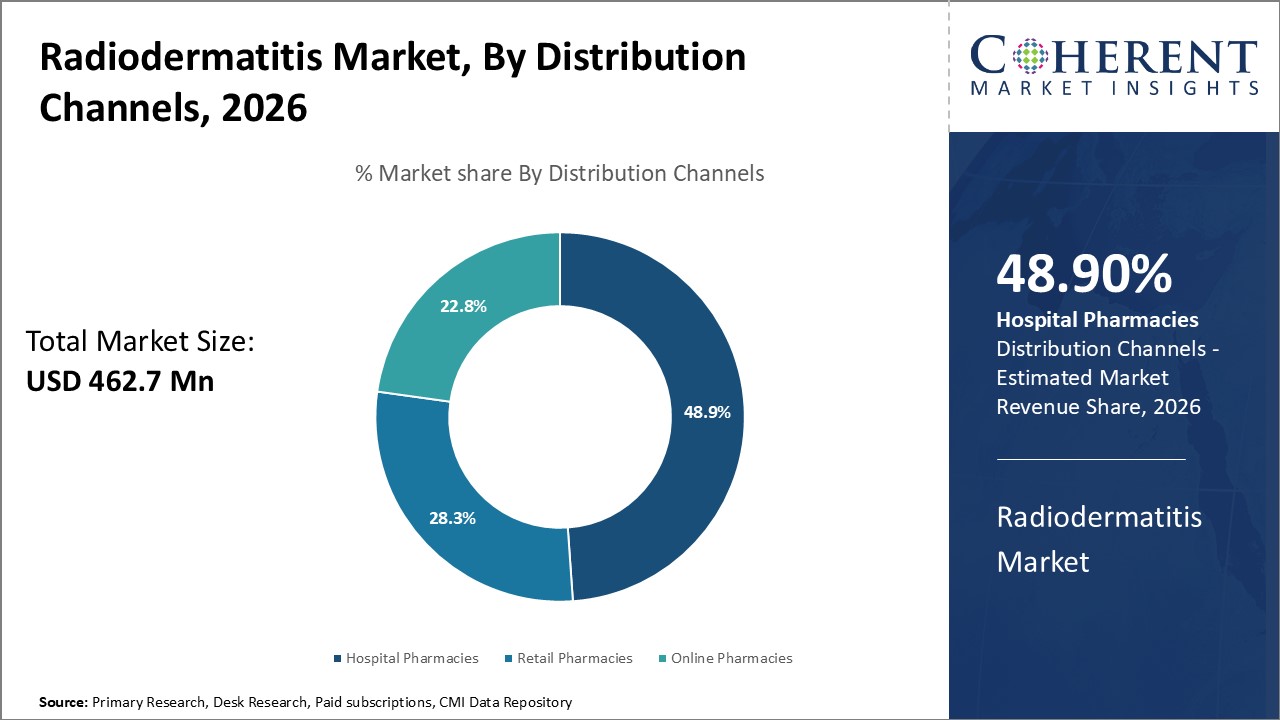
The Global Radiodermatitis Market Insights, by Distribution Channels
Based on distribution channels, the hospital pharmacies are segmented into Hospital Pharmacies, Retail Pharmacies, and Online Pharmacies. Among these, the hospital pharmacies segment is expected to dominate the market over the forecast period, owing to increasing treatments and medicines.
Regional Insights
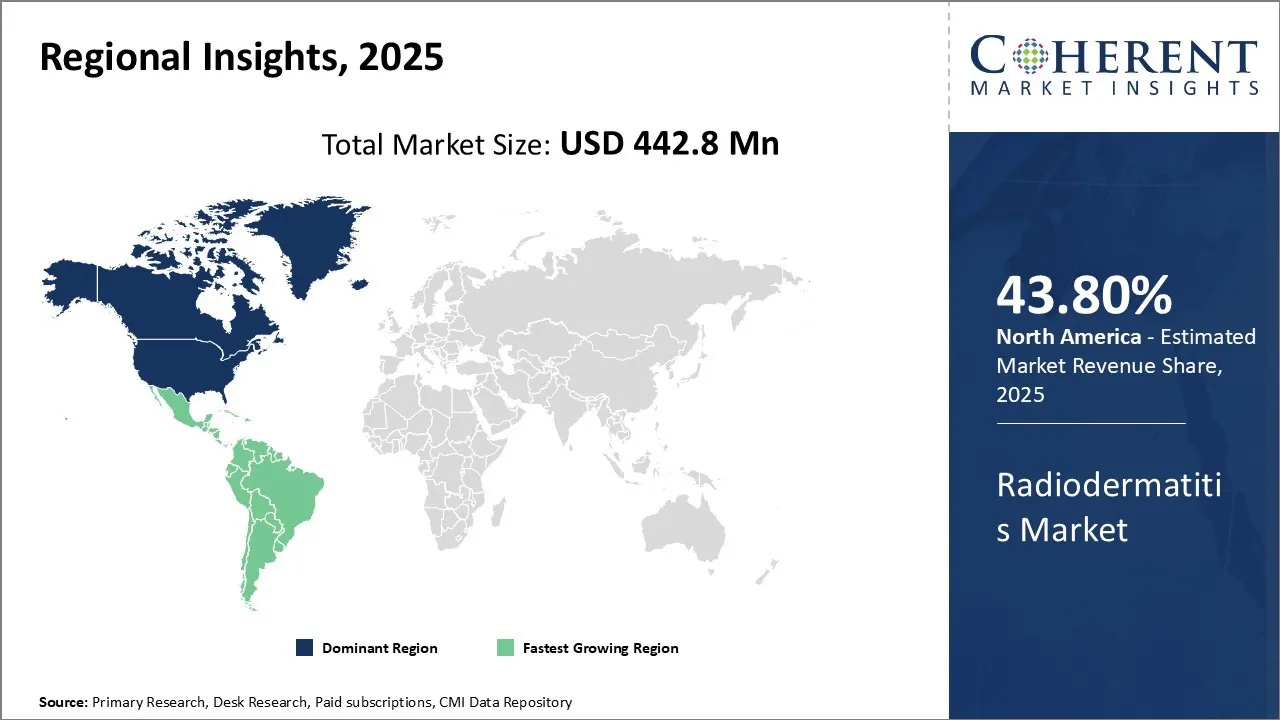
North America Radiodermatitis Market Growth Outlook
Among region, North America is estimated to hold a dominant position in the global radiodermatitis market over the forecast period, owing to increasing treatment for radiodermatitis. Ulcers develop. 23.7% of individuals in the control group experienced severe acute radiation dermatitis. The antibacterial regimen included twice-daily application of 2% mupirocin nasal ointment and 4% chlorhexidine gluconate body wash for five days before to radiotherapy and continued every other week throughout treatment.
Radiodermatitis Market- Dominating Countries
United States Radiodermatitis Market Analysis and Trend
The United States is among the prominent markets for radiodermatitis treatments, supported by high cancer incidence, which enhances demand for radiation therapy and associated skin ailments. Well-developed healthcare infrastructure combined with extensive insurance coverage guarantees that patients can access the most advanced treatments for radiodermatitis. The nation is also supported by robust research and development in healthcare, which keeps bringing innovative solutions such as specialized dressings and topical treatments.
Germany Radiodermatitis Market Analysis and Trend
Germany is a leading player in the European market for radiodermatitis, primarily because of its strong healthcare system and large population of cancer patients receiving radiation therapy. Germany's healthcare policies promote the availability of advanced wound care products and treatments, such as those for radiodermatitis, to patients. German organizations are in the lead when it comes to the creation of specialized dressings and topical preparations, fueling the growth of the market.
Market Report Scope
Radiodermatitis Market Report Coverage
| Report Coverage | Details | ||
|---|---|---|---|
| Base Year: | 2025 | Market Size in 2026: | USD 462.7 Mn |
| Historical Data for: | 2020 To 2024 | Forecast Period: | 2026 To 2033 |
| Forecast Period 2026 to 2033 CAGR: | 4.5% | 2033 Value Projection: | USD 629.7 Mn |
| Geographies covered: |
| ||
| Segments covered: |
| ||
| Companies covered: | Acelity, Inc. (3M) BMG Pharma S.r.l., ConvaTec Group PLC, DermaSciences Inc. (Integra LifeSciences Holdings Corporation), Intermed Pharmaceuticals, Mölnlycke Health Care, Smith & Nephew Plc, Stratpharma AG, Kannalife, Inc., McKesson Corporation. | ||
| Growth Drivers: |
| ||
| Restraints & Challenges: |
| ||
Analyst Opinion (Expert Opinion)
- The market for radiodermatitis is on the cusp of expansion, fueled by rising worldwide incidence of cancer and consequent need for radiation therapy, continuing to be a major source of radiation-induced skin damage. Growing capabilities in treatment options, including the innovation of sophisticated topical agents and bioactive dressings, are improving efficacy and comfort for patients, favoring market growth. Furthermore, increasing awareness among healthcare professionals regarding preventive skincare products during radiotherapy is promoting early treatment, minimizing severe complications.
- Emerging markets in Asia-Pacific and the Middle East region, including Japan and Saudi Arabia, are expected to see faster adoption thanks to enhanced healthcare infrastructure and rising investments in cancer care. On the other hand, mature markets including the U.S. and U.K. are emphasizing individualized treatment methods and partnerships among pharmaceutical companies and research institutions to maximize product pipelines.
Streamlining regulations for new therapies and the growth of online e-commerce platforms are also likely to democratize access to specialist products. Challenges notwithstanding, the patient-centricity focus and preventive dermatology enable the market to effectively address unmet clinical needs, ensuring long-term growth in oncology supportive care
Speak to the analyst
Want personalized insights?
Take the findings above to one of our principal consultants, or have the report rebuilt around the segments, geographies and competitors you actually track.
Global Radiodermatitis Market: Key Developments
- In January 2024, Smith & Nephew launched a foam dressing based on silicone to control exudate and support sensitive skin, especially useful in the case of patients who received radiation therapy and had radiodermatitis.
- In April 2024, Mölnlycke Health Care entered into an agreement to acquire P.G.F. Industry Solutions GmbH, a company producing Granudacyn, a series of solutions for wound cleansing and moisturizing. The acquisition is intended to strengthen Mölnlycke's position as a global leader in wound care.
Market Segmentation
- Global Radiodermatitis Market, By Product Type (Revenue, USD Mn, 2021 - 2033)
- Topical Agents
- Corticosteroids
- Hydrophilic Creams
- Others
- Oral Medication
- Corticosteroids
- Other
- Analgesic & Anti-Inflammatory
- Dressing
- Hydrogel, Hydrocolloid
- No Sting Barrier Film
- Honey Impregnated Dressing
- Silicone coated Dressing
- Others
- Topical Agents
- Global Radiodermatitis Market, By Distribution Channel (Revenue, USD Mn, 2021 - 2033)
- Hospital Pharmacies
- Retail Pharmacies
- Online Pharmacies
- Global Radiodermatitis Market, By Region (Revenue, USD Mn, 2021 - 2033)
- North America
- U.S.
- Canada
- Latin America
- Brazil
- Mexico
- Argentina
- Rest of Latin America
- Europe
- Germany
- U.K.
- France
- Italy
- Spain
- Russia
- Rest of Europe
- Asia Pacific
- China
- India
- Japan
- Australia
- South Korea
- ASEAN
- Rest of Asia Pacific
- Middle East
- GCC
- Israel
- Rest of Middle East
- Africa
- South Africa
- Central Africa
- North Africa
- North America
- Company Profiles
- Acelity, Inc. (3M)
- BMG Pharma S.r.l.
- ConvaTec Group PLC
- DermaSciences Inc. (Integra LifeSciences Holdings Corporation)
- Intermed Pharmaceuticals
- Molnlycke Health Care
- Smith & Nephew Plc.
- Stratpharma AG
- Kannalife, Inc.
- McKesson Corporation
Sources
Primary Research Interviews
- Senior Oncologists from leading cancer treatment centers
- Radiation Therapy Department Heads at academic hospitals
- Dermatology Specialists focusing on radiation-induced skin conditions
- Medical Device Representatives from topical therapy manufacturers
- Others
Databases
- CDC WONDER (Cancer Incidence and Mortality Database)
- SEER (Surveillance, Epidemiology, and End Results Program)
- GLOBOCAN (Global Cancer Observatory)
- Others
Magazines
- Oncology Times (Radiation Therapy Innovations Section)
- Dermatology Weekly (Clinical Practice Updates)
- Medical Device News Magazine (Topical Product Launches)
- Others
Journals
- Journal of Radiation Oncology (Skin Toxicity Studies)
- Dermatologic Surgery (Radiodermatitis Management Guidelines)
- International Journal of Cancer (Epidemiological Data on Radiation Side Effects)
- Others
Newspapers
- The New York Times (Healthcare and Oncology Trends)
- Reuters Health (Radiation Therapy Advancements)
- STAT News (Patient-Centric Treatment Innovations)
- Others
Associations
- American Cancer Society (Radiation Therapy Guidelines)
- European Society for Radiotherapy and Oncology (ESTRO)
- RAD-AID International (Global Access to Radiation Oncology)
- Others
Public Domain Sources
- Straits Research (Radiodermatitis Market Size Analysis)
- IMARC Group (CAGR and Regional Market Share Data)
- Persistence Market Research (Historical and Forecast Growth Trends)
- Others
Proprietary Elements
- CMI Data Analytics Tool
- Proprietary CMI Existing Repository of Information for Last 8 Years
*Definition: Radiodermatitis is a skin condition in which the skin becomes dry, itchy and inflamed, causing redness, swelling, scaling, and peeling. Radiodermatitis is the body's reaction to ionizing radiation given to cancer patients and in imaging techniques It is also referred to as radiation damage, radiation skin responses, radiation dermatitis, and X-ray rash. Disasters and nuclear assaults may also contribute to the condition. X-ray rash, radiation dermatitis, radiation skin responses, or radiation damage are other names for radiation dermatitis. is a side effect of external ionizing radiation. Radiation therapy, used to treat cancer or other diseases, is a leading cause of radiation dermatitis. Nuclear attacks and disasters can also cause the condition. The distribution channel includes retail pharmacies and online pharmacies.
Get access to 250+ pages report
Every segment, forecast, competitor profile and data table behind the analysis above — available for instant download.
- ESOMAR Member
- ISO 9001:2015 Certified
- D-U-N-S Registered
- GDPR & CCPA Compliant
Missing comfort of reading report in your local language? Find your preferred language:
Transform your Strategy with Exclusive Trending Reports
Frequently Asked Questions
The Radiodermatitis Market size is estimated to be valued at USD 462.7 Mn in 2026, and is expected to reach USD 629.7 Mn by 2033.
The CAGR of the global Market is projected to be 4.5% from 2026 to 2033.
Increasing research and development activities in radiodermatitis are expected to drive the market growth
Product type is the leading segment in the market.
Risk related to radiodermatitis is expected to hinder the market growth over the forecast period.
Major players operating in the market include Acelity, Inc. (3M) BMG Pharma S.r.l., ConvaTec Group PLC, DermaSciences Inc. (Integra LifeSciences Holdings Corporation), Intermed Pharmaceuticals, Mölnlycke Health Care, Smith & Nephew Plc, Stratpharma AG, Kannalife, Inc., McKesson Corporation.