

Recovered Carbon Black Market Size and Forecast — 2026 - 2033
The Global Recovered Carbon Black Market size is estimated to be valued at USD 2.45 billion in 2026 and is expected to reach USD 3.90 billion by 2033, exhibiting a compound annual growth rate (CAGR) of 6.48% from 2026 to 2033.
Overview
Recovered carbon black is a sustainable material produced through the thermal decomposition of end-of-life tires or rubber waste. The product serves as an alternative to virgin carbon black and is used as a reinforcing filler and pigment. Recovered carbon black offers properties such as abrasion resistance, UV protection, and color enhancement. It is commonly applied in rubber products, tires, plastics, inks, and coatings, providing both functional performance and environmental benefits.
Key Takeaways
The Furnace Black subsegment leads the product type market share at 45%, driven by its scalability and product consistency.
Within the application segment, Tires & Rubber Products dominate due to extensive demand from the automotive industry, contributing over 60% of the market revenue.
End-user analysis identifies automotive as the fastest-growing segment, capitalizing on the integration of recovered carbon black to meet sustainability norms.
Regionally, North America holds the largest market share, supported by advanced recovery technologies and rigorous environmental policies.
The Asia Pacific region exhibits the fastest CAGR, largely due to expanding automotive production and infrastructural developments in emerging economies like India and China, presenting lucrative business growth opportunities.
Recovered Carbon Black Market Segmentation Analysis
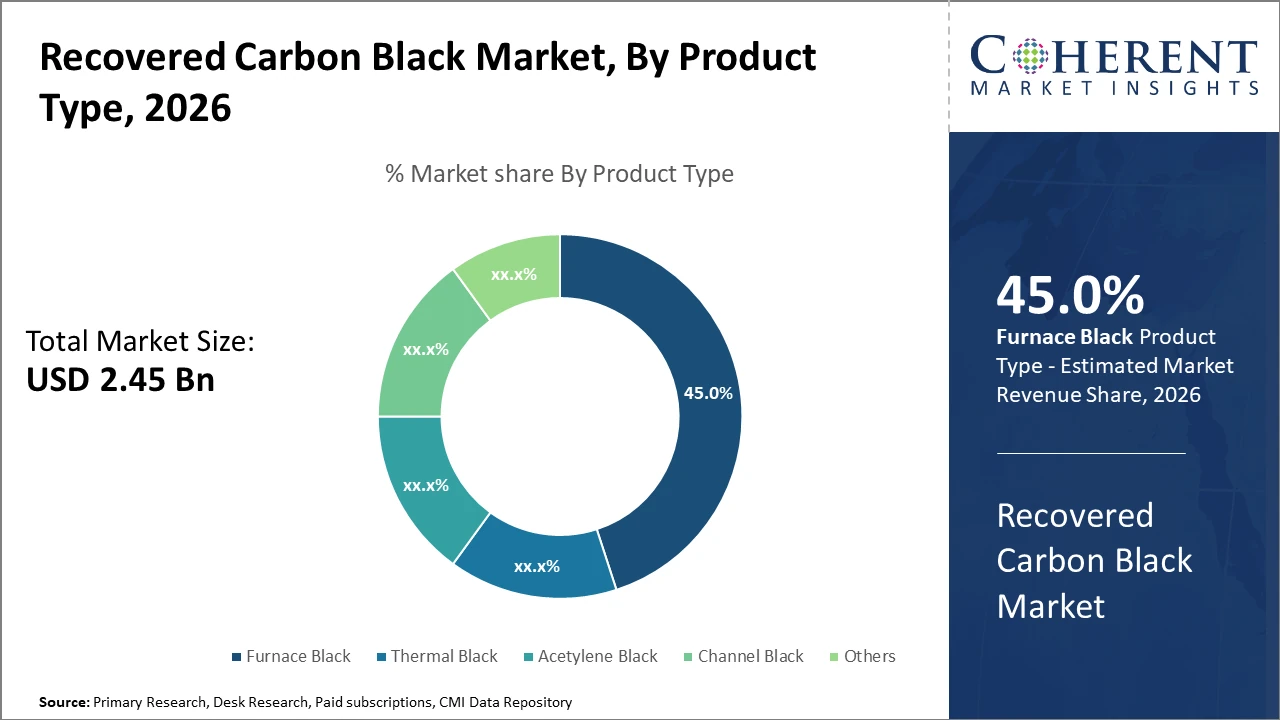
Recovered Carbon Black Market Insights, By Product Type
Furnace Black’s dominance stems from its widespread industrial use and ability to meet quality expectations for critical applications such as tire manufacturing. It accounts for a significant portion of recovered carbon black market revenue due to its scalable production processes and cost efficiency. Thermal Black is recognized for niche applications requiring high purity and tailored properties, being the fastest-growing subsegment owing to innovative recovery techniques enhancing its yield. Acetylene Black holds moderate market relevance, primarily in specialized electronics and battery sectors. Channel Black and Other segments maintain smaller shares, serving specific applications with limited but steady demand.
Recovered Carbon Black Market Insights, By Application
The Tires & Rubber Products segment dominates due to the high demand from the automotive and manufacturing sectors, which are focused on incorporating recycled content. Its expansive use encompasses passenger and commercial vehicle tires, where sustainability requirements are stringently enforced. Plastics & Polymers represent the fastest-growing subsegment, driven by increasing adoption in packaging and molded components requiring enhanced mechanical properties with sustainable materials. Inks & Coatings also contribute significantly, with recovered carbon black used as a pigment and protective additive in printing and coating formulations.
Recovered Carbon Black Market Insights, By End-User
Automotive leads due to the sector’s large-scale tire production and regulatory mandates around recycled content. The industry's sustained demand for durable and compliant materials boosts the use of recovered carbon black extensively. Construction emerges as the fastest-growing subsegment, propelled by infrastructure projects employing advanced composite materials enhanced with recovered carbon black for improved durability and environmental compliance. Electronics leverage specialized grades for conductive and insulating components, experiencing steady growth aligned with digitalization trends. Packaging and Manufacturing industries utilize recovered carbon black for cost-effective and performance-driven applications, catering to evolving market requirements.
Recovered Carbon Black Market Trends
The Recovered Carbon Black market trend emphasizes sustainability-driven transformation, where regulatory mandates compel industry players to integrate higher percentages of recycled materials in manufacturing processes.
For example, the European Green Deal and similar initiatives in North America have accelerated the shift towards cleaner production practices.
Additionally, the technological maturation of pyrolysis processes allows for improved product consistency, verified by a 15% increase in the supply of high-grade recovered carbon black in 2024.
Market players are also leveraging digital solutions to optimize raw material recovery and quality assurance processes, enhancing overall supply chain efficiency.
Recovered Carbon Black Market Insights, By Geography
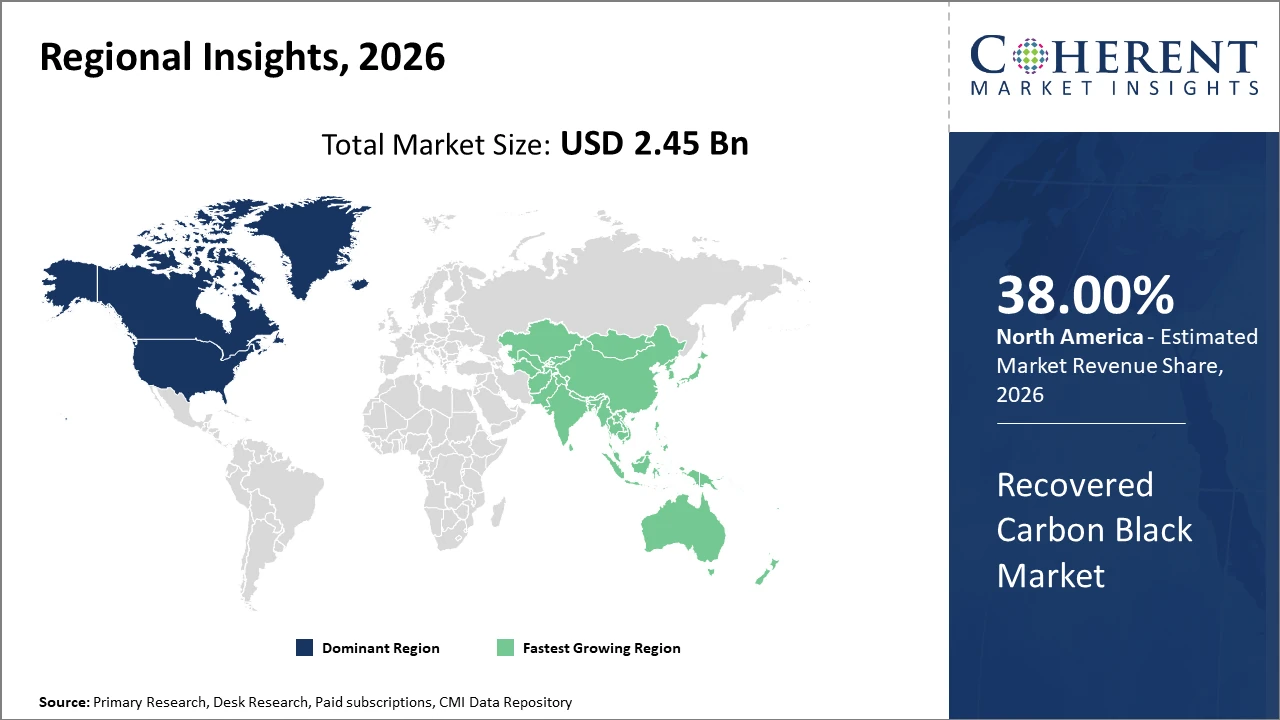
North America Recovered Carbon Black Market Analysis and Trends
In North America, the dominance in the Recovered Carbon Black market is primarily attributed to advanced technological infrastructure, stringent environmental regulations, and strong industry presence, accounting for approximately 38% of the market share. Growth in automotive production and recycling mandates has consistently driven market revenue in this region. Companies like Cabot Corporation have anchored the region's position by significantly scaling up recovered carbon black manufacturing.
Asia Pacific Recovered Carbon Black Market Analysis and Trends
Meanwhile, the Asia Pacific exhibits the fastest growth with a CAGR exceeding 7%, spurred by rapid industrialization, expanding automotive and tire industries, and increasing government focus on sustainable manufacturing practices. Market players such as Birla Carbon and China Sunshine Co. are actively expanding operations to cater to the rising demand in markets like India and China.
Recovered Carbon Black Market Outlook for Key Countries
USA Recovered Carbon Black Market Analysis and Trends
The USA’s recovered carbon black market benefits from stringent environmental regulations such as the EPA’s Sustainable Materials Management program, fostering advanced recycling infrastructure and extended producer responsibility measures. The automotive and tire manufacturing sector, contributing over 40% market revenue, is shifting towards sustainable raw materials, with manufacturers reporting up to 18% reduction in lifecycle emissions by utilizing recovered carbon black. Cabot Corporation’s expansion of pyrolysis-based production units in the USA in 2024 notably increased domestic supply, securing a competitive advantage in the recovered carbon black landscape.
India Recovered Carbon Black Market Analysis and Trends
India’s recovered carbon black market is rapidly evolving, riding on increasing government initiatives such as the Plastic Waste Management Rules and tire recycling mandates. The country’s robust automotive manufacturing base and ongoing push for circular economy principles have accelerated the adoption of recovered carbon black by approximately 22% in 2024 compared to 2023. Birla Carbon’s strategic partnerships with local tire makers have facilitated higher recycled carbon content incorporation in products, promoting market stabilization and growth despite feedstock constraints.
Analyst Opinion
The increasing production capacity of recovered carbon black is a prominent supply-side indicator driving market revenue growth. With various recovery plants expanding operations, production volumes have surged by approximately 15% in 2024 compared to the previous year, reflecting a proactive approach toward meeting rising demand. For instance, key manufacturing hubs in North America reported a 20% increase in output capacity in 2024.
Demand-side dynamics such as expanding end-use applications significantly contribute to market size expansion. The tire and rubber industry alone accounted for nearly 60% of the recovered carbon black market share in 2024, driven by durable goods manufacturing and automotive aftermarket growth, bolstered by rising global automotive production which saw a 5% rise in 2024.
Pricing trends have experienced moderate volatility, with recovered carbon black pricing aligning closely to virgin carbon black prices but offering a cost advantage of up to 15%, spurring adoption across cost-sensitive industries. For instance, manufacturers in Asia Pacific reported up to 12% cost savings in their compounding operations using recovered carbon black.
Export and import statistics reveal an evolving global trade ecosystem, with exports of recovered carbon black from Europe to the Asia Pacific increasing by 10% in 2024, indicating strengthened supply chains and heightened acceptance in emerging markets such as India and Southeast Asia.
- Current Industry Events of 2026
- Market Size Estimation
- Regional Breakdown
- Competitive Landscape
- Customer Intelligence
- Segmental Analysis
- Pricing Analysis
- Key Market Drivers, Challenges & Future Trends
- Customized Insights Section
Market Scope
| Report Coverage | Details | ||
|---|---|---|---|
| Base Year: | 2025 | Market Size in 2026: | USD 2.45 billion |
| Historical Data for: | 2020 To 2024 | Forecast Period: | 2026 To 2033 |
| Forecast Period 2026 to 2033 CAGR: | 6.48% | 2033 Value Projection: | USD 3.90 billion |
| Geographies covered: |
| ||
| Segments covered: |
| ||
| Companies covered: | Cabot Corporation, Birla Carbon, Continental Carbon Company, Orion Engineered Carbons, Tokai Carbon Co., Ltd., Phillips Carbon Black Limited, Mitsubishi Chemical Corporation, China Sunshine Co. Ltd., Sid Richardson Carbon & Energy Co., Jiangxi Black Cat Carbon Black Inc. | ||
| Growth Drivers: |
| ||
Recovered Carbon Black Market Growth Factors
The market growth is propelled primarily by the push towards sustainability and the reduction of environmental footprints in manufacturing. Increasing legislative frameworks mandating recycled content in the automotive and tire manufacturing sectors drive demand effectively. In 2024, regulatory shifts in the European Union requiring a minimum of 10% recycled material in tire manufacturing have substantially accelerated the recovered carbon black. Secondly, the raw material supply constraint faced in virgin carbon black production, due to fluctuating crude oil prices and supply chain disruptions in 2023-2024, forces industries to pivot towards recovered carbon black solutions.
Furthermore, advancements in pyrolytic technologies have improved the quality and consistency of recovered carbon black, widening its application scope beyond tires into specialty plastics and inks, substantiated by a 12% market revenue increase from non-tire applications in 2024. Lastly, growing consumer and industrial awareness regarding circular economy models, alongside cost efficiency benefits, incentivizes market players to adopt recovered carbon black, which can reduce carbon emissions by up to 60% compared to primary carbon black manufacturing.
Recovered Carbon Black Market Development
In January 2025, Epsilon Carbon launched Terrablack, a sustainable recovered carbon black (rCB) solution, aimed at reducing dependence on virgin fossil-based carbon black in rubber, plastics, and specialty applications. The launch is supported by the company’s plans to commission a large integrated recycling facility in India by FY26, strengthening circular economy adoption and domestic supply of sustainable carbon materials.
In 2024, Orion S.A. introduced ECOLAR® 50 POWDER, a bio-circular carbon black developed for sustainable coatings applications. The product is manufactured using bio-based and circular feedstocks, enabling coatings manufacturers to lower carbon footprint while maintaining performance, dispersion quality, and regulatory compliance for environmentally responsible formulations.
Key Players
Leading Companies of the Market
Cabot Corporation
Birla Carbon
Continental Carbon Company
Orion Engineered Carbons
Tokai Carbon Co., Ltd.
Phillips Carbon Black Limited
Mitsubishi Chemical Corporation
China Sunshine Co. Ltd.
Sid Richardson Carbon & Energy Co.
Jiangxi Black Cat Carbon Black Inc.
Competitively, Cabot Corporation’s recent strategic acquisition of key recycling facilities in North America enhanced its recovered carbon black production capacity by 25% in 2024, directly impacting its market share. Similarly, Birla Carbon adopted a vertical integration approach by collaborating with tire manufacturers in India, which resulted in a 15% increase in recycled content usage in their supply chain.
Recovered Carbon Black Market Future Outlook
In the future, the recovered carbon black market is expected to gain traction as companies increasingly commit to sustainability goals and circular supply chains. Eco-conscious tire manufacturers and polymer compounders will continue exploring higher-content rCB formulations that meet performance standards while reducing carbon footprints. Advances in recycling technologies—such as improved pyrolysis reactors, solvent extraction processes, and post-treatment purification—will elevate the quality and consistency of recovered carbon black, expanding its applicability beyond traditional rubber reinforcement into plastics, coatings, and specialty compounds. Regulatory incentives and extended producer responsibility programs in key regions will reinforce the economic viability of rCB recovery. Collaboration across the value chain—from waste collectors and recyclers to OEMs and converters—will be crucial in establishing robust, scalable, and economically sustainable recovered carbon black supply ecosystems.
Recovered Carbon Black Market Historical Analysis
The recovered carbon black (rCB) market emerged over the past two decades as sustainability concerns and regulatory pressures on waste management catalyzed the search for circular economy solutions in the rubber and plastics industries. Traditionally, carbon black has been produced through the controlled partial combustion of heavy petroleum products, supplying a reinforcing filler used extensively in tires, rubber goods, plastics, inks, and coatings. With the global proliferation of end-of-life tires and rubber waste, environmental campaigns, landfill restrictions, and resource conservation goals motivated the development of recovery technologies capable of reclaiming carbon black from waste streams. Pyrolysis and grinding processes evolved to produce recovered carbon black that could partially substitute for virgin carbon black in select applications, delivering both environmental and cost benefits.
Sources
Primary Research Interviews:
Tire Manufacturers
Recycling Technology Providers
Sustainability Managers
Rubber Compounders
Pyrolysis Operators
Databases:
European Tyre Recycling Association Data
UN Waste Statistics
OECD Environment Data
Magazines:
Rubber World
Tire Technology International
Recycling Today
Sustainable Materials Magazine
Plastics & Rubber Asia
Journals:
Journal of Cleaner Production
Waste Management Journal
Rubber Chemistry and Technology
Environmental Engineering Journal
Resources Conservation Journal
Newspapers:
Reuters Sustainability
Financial Times (Climate)
The Guardian (Environment)
Bloomberg Green
Business Standard
Associations:
European Tyre Recycling Association
Rubber Manufacturers Association
International Carbon Black Association
Global Recycling Foundation
Circular Economy Network
Get access to 250+ pages report
Every segment, forecast, competitor profile and data table behind the analysis above — available for instant download.
- ESOMAR Member
- ISO 9001:2015 Certified
- D-U-N-S Registered
- GDPR & CCPA Compliant
Missing comfort of reading report in your local language? Find your preferred language:
Transform your Strategy with Exclusive Trending Reports
Frequently Asked Questions
The market is led by established players such as Cabot Corporation, Birla Carbon, and Orion Engineered Carbons, which have significantly expanded production capacities and entered strategic collaborations to strengthen their market share.
The market size is projected to grow from USD 2.45 billion in 2026 to USD 3.90 billion by 2033, reflecting robust demand and adoption driven by sustainability and regulatory factors.
The automotive industry, particularly tire manufacturing, holds the largest growth opportunity due to mandatory recycled content requirements and increasing production volumes worldwide.
Emerging trends such as enhanced pyrolysis technology adoption, circular economy business models, and stricter environmental policies will drive market dynamics, increasing the integration of recovered carbon black in diverse applications.
The market is competitive, with companies focusing on production capacity expansion, vertical integration, and innovation in product quality. Challenges include feedstock availability and consistent quality of recovered carbon black.
Strategic partnerships, mergers & acquisitions, and increased investment in recycling technologies are common strategies adopted by market players to enhance market penetration and meet rising demand.