

Saudi Arabia Pharmaceutical Drugs Market Analysis & Forecast: 2026-2033
Saudi Arabia Pharmaceutical Drugs Market is estimated to be valued at USD 15.73 Bn in 2026 and is expected to reach USD 26.61 Bn in 2033, exhibiting a compound annual growth rate (CAGR) of 7.8% from 2026 to 2033.
Key Takeaways:
- By product type, branded drugs are projected to dominate the Saudi Arabia pharmaceutical drugs market with a 52.6% share in 2026, reflecting strong brand loyalty and preference for patented medications in the region.
- By distribution channel, hospital pharmacies are anticipated to lead the market with a 42.8% share in 2026, driven by the high demand for pharmaceuticals in institutional healthcare settings.
Market Overview
The Saudi Arabian pharmaceutical drugs market is driven by a rising prevalence of chronic diseases, notably diabetes. In 2026, the number of adults with diabetes is projected to reach approximately 3.39 million, accounting for 11.9% of the population aged 15 and above. This escalating health burden underscores the increasing demand for pharmaceutical interventions and healthcare solutions. Increased investment in healthcare infrastructure and public-private partnerships also boost domestic production, while the shift toward generics—backed by regulatory reforms—ensures affordability and access. These drivers collectively strengthen the market’s foundation for sustained growth through 2033.
Current Events and Its Impact on the Saudi Arabia Pharmaceutical Drugs Market
Event | Description and Impact |
Saudi Arabia's Vision 2030 |
|
Demographic Shifts |
|
Technological Advancements |
|
Pricing Analysis
Pharmaceutical pricing in Saudi Arabia is subject to regulatory oversight by the Ministry of Health and the Saudi Food and Drug Authority (SFDA) to ensure medicines remain affordable and accessible to the population. The pricing framework incorporates reference pricing mechanisms, including external price referencing with Gulf Cooperation Council (GCC) countries, enabling competitive pricing aligned with regional benchmarks.
Market Segmentation and Pricing Overview
The market is broadly segmented into prescription drugs (both branded and generic), over-the-counter (OTC) drugs, and specialty medications. Each segment exhibits distinct pricing dynamics influenced by therapeutic category, market demand, and regulatory policies.
Pricing Analysis by Therapeutic Area
- Cardiovascular Drugs: Popular branded drugs like Lipitor (Atorvastatin) are priced between SAR 150-200 per 30 tablets, while Plavix (Clopidogrel) and Norvasc (Amlodipine) range from SAR 100-250 depending on dosage.
- Diabetes Medications: Insulin-based products such as Lantus (Insulin Glargine) are priced at SAR 200-250 per 10ml vial. Oral antidiabetics like Januvia (Sitagliptin) and Glucophage (Metformin) range from SAR 50 to 350 per package.
- Respiratory Drugs: Inhalers such as Seretide (Fluticasone/Salmeterol) and Symbicort (Budesonide/Formoterol) command premium prices between SAR 200-300, while Ventolin (Salbutamol) is more affordable at SAR 50-100 per inhaler.
- Central Nervous System (CNS) Drugs: Medications such as Lyrica (Pregabalin) and Seroquel (Quetiapine) are priced at SAR 200-350, reflecting their specialized use.
- Oncology Drugs: Specialty cancer treatments like Herceptin (Trastuzumab) and Gleevec (Imatinib) are among the highest priced, ranging from SAR 5,000 up to SAR 10,000 per vial or package, emphasizing the high cost of innovative therapies.
- Other Therapeutic Areas: Common antibiotics (e.g., Augmentin, Zithromax) and gastrointestinal drugs (e.g., Nexium, Motilium) range from SAR 50 to 250, while pain management drugs like Celebrex and Voltaren remain competitively priced.
Pricing Trends by Drug Type
- Branded Drugs: Premium pricing is typical for innovative and specialty medications, often negotiated with healthcare payers to balance access and profitability. The high prices reflect research and development costs and market exclusivity.
- Generic Drugs: Competitively priced to encourage widespread adoption, generics play a critical role in cost containment strategies, offering affordable alternatives to branded drugs and reducing the financial burden on the healthcare system.
Emerging Pricing Models and Market Pressures
Value-based pricing is increasingly adopted, particularly for oncology and rare disease drugs, aligning costs with therapeutic outcomes to enhance healthcare sustainability. However, pharmaceutical pricing faces pressures from government cost-containment policies, growing generic competition, and economic factors including inflation and currency fluctuations, which have led to periodic adjustments in drug prices in recent years.
- Current Industry Events of 2026
- Market Size Estimation
- Regional Breakdown
- Competitive Landscape
- Customer Intelligence
- Segmental Analysis
- Pricing Analysis
- Key Market Drivers, Challenges & Future Trends
- Customized Insights Section
Reimbursement Scenario in Saudi Arabia’s Pharmaceutical Market
The reimbursement landscape for pharmaceutical drugs in Saudi Arabia is shaped by a structured framework of laws, regulatory bodies, and insurance schemes aimed at ensuring broad healthcare coverage and financial protection for patients.
Regulatory Framework and Codes
- The Health Insurance Law (1999) mandates compulsory health insurance for all non-Saudi residents working in the private sector.
- The Cooperative Health Insurance Law (2003) extends this requirement to Saudi citizens employed in the private sector.
- The Council of Cooperative Health Insurance (CCHI) establishes and enforces regulations guiding the implementation of the cooperative health insurance system.
Key Agencies and Processes
- The CCHI regulates and supervises cooperative health insurance operations.
- The Saudi Central Bank (SAMA) oversees the insurance sector's compliance with financial and regulatory standards.
- The Ministry of Health (MOH) manages public health services and policies.
- Private insurance companies provide health plans, manage claims, and facilitate reimbursement.
- Healthcare providers deliver medical services and submit reimbursement claims to insurers.
Insurance Plans and Coverage
- Compulsory Employment-Based Health Insurance (CEBHI):
Covers all non-Saudi residents and Saudi citizens in the private sector, with employers mandated to provide coverage for employees and their dependents.
In 2020, CEBHI expenditures reached SAR 20.5 billion (USD 5.46 billion), representing about 30% of the country’s total healthcare spending. Coverage includes outpatient, inpatient, medications, and emergency services, typically reimbursing 80-100% of eligible expenses depending on the plan.
- Private Health Insurance (PHI):
Voluntary insurance plans for individuals and families, with varying coverage levels from basic to comprehensive.
PHI spending was SAR 5.8 billion (USD 1.54 billion) in 2020, about 8% of total healthcare expenditure. Reimbursement generally covers 70-90% of eligible costs depending on the specific plan.
- Government Health Services (GHS):
Provided by MOH and other government entities, offering free or highly subsidized care for Saudi citizens.
GHS accounted for SAR 42.3 billion (USD 11.28 billion) in 2020, approximately 62% of total healthcare expenditure. Coverage is typically comprehensive with minimal out-of-pocket costs.
- Specialty Drug Reimbursement and Emerging Trends
Reimbursement for specialty pharmaceuticals is evolving, with increasing adoption of outcomes-based contracts to align drug pricing with clinical effectiveness. The National Unified Procurement Company (NUPCO) plays a central role in centralized purchasing and pricing negotiations, facilitating reimbursement processes. Additionally, the newly introduced National Health Insurance aims to broaden reimbursement access and reduce patients’ out-of-pocket expenses.
- Patient Cost Sharing
Co-payment requirements vary across drug categories and insurance policies, reflecting plan-specific terms and efforts to balance affordability with sustainable healthcare funding.
Analysts’ Views on the Saudi Arabia Pharmaceutical Drugs Market:
- Saudi Arabia has one of the largest pharmaceutical markets in the Middle East and North Africa (MENA) region. The country's pharmaceutical industry has been steadily growing over the years due to factors like a growing population, increasing healthcare expenditure, and a rising prevalence of chronic diseases. Saudi Arabia has been making efforts to reduce its dependence on imported pharmaceuticals. The government has implemented policies to promote local pharmaceutical manufacturing. This includes incentives for local production and stricter regulations for imported drugs.
- The increasing prevalence of chronic diseases, coupled with a growing and aging population, is a significant driver for the demand for pharmaceutical drugs in the country. Additionally, the government's initiatives to improve healthcare infrastructure and expand insurance coverage are expected to further boost the market growth.
- However, the market also faces certain restraints, such as the high cost of drug development and the presence of counterfeit drugs, which could hinder the growth of the legitimate pharmaceutical industry. Moreover, the market is subject to strict regulatory requirements, which may pose challenges for pharmaceutical companies operating in Saudi Arabia.
- Despite these restraints, the Saudi Arabia pharmaceutical drugs market offers numerous opportunities for growth and investment. The increasing focus on research and development activities, along with the adoption of innovative technologies, is expected to drive the development of novel and advanced drug formulations. Furthermore, the growing demand for generic drugs and the untapped potential in the rural markets present significant growth prospects for pharmaceutical companies.
- In terms of regional analysis, the central region, which includes major cities like Riyadh and Jeddah, is expected to dominate the pharmaceutical drugs market in Saudi Arabia. This can be attributed to the high concentration of healthcare facilities, advanced infrastructure, and a large patient pool in these urban centers. However, the eastern and western regions are also expected to witness significant growth in the coming years, driven by the government's efforts to improve healthcare access in these areas.
Segmentation Analysis
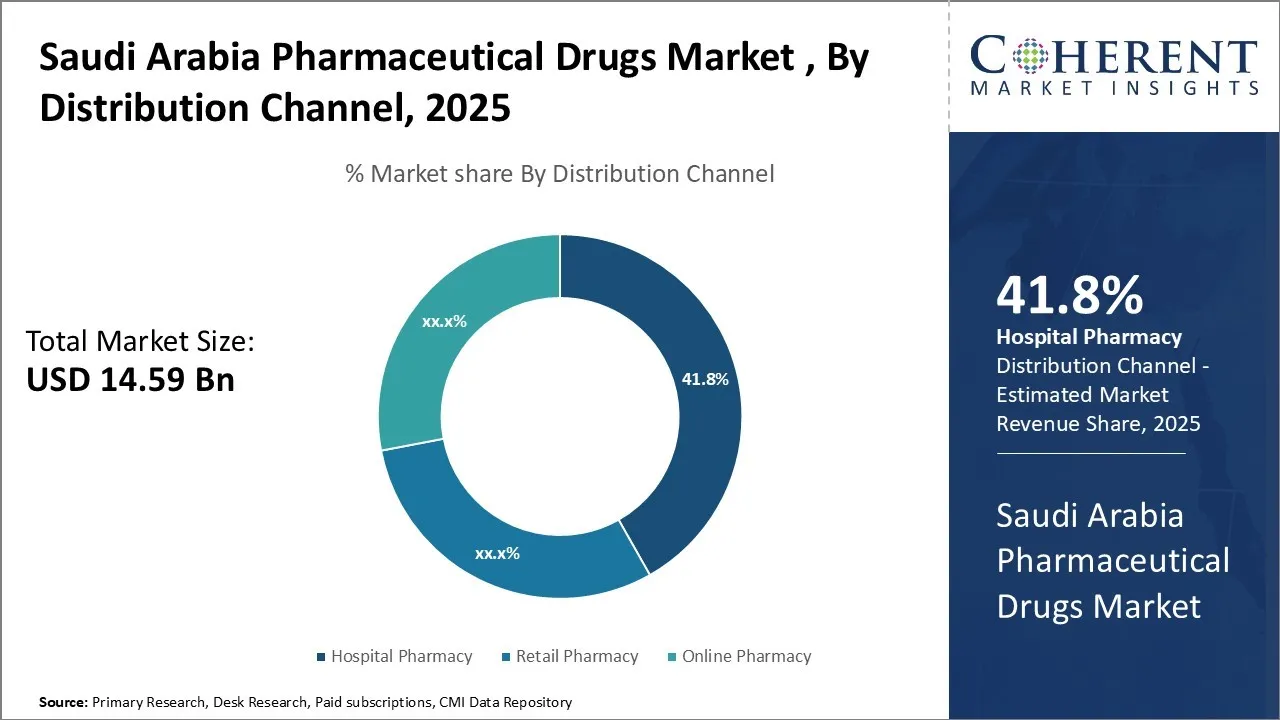
Saudi Arabia Pharmaceutical Drugs Market Insights, by Distribution Channel
By distribution channel, hospital pharmacies are expected to lead the market with a share of about 42.8% throughout the forecast period. This is attributed to the high rate of hospital admissions and increased treatment of chronic diseases requiring pharmaceutical intervention. Retail pharmacies and online pharmacies follow, capturing significant shares as well, fueled by growing consumer preference for convenient access to medications.
Saudi Arabia Pharmaceutical Drugs Market Insights, by Drug Type
By drug type, the branded drugs segment is projected to hold the major share, accounting for approximately 51.6% of the Saudi Arabia pharmaceutical drugs market during the forecast period. This dominance is driven by the strong presence of established pharmaceutical companies focusing on brand recognition and product innovation. Meanwhile, generic drugs hold the remaining share, reflecting growing efforts by key players to increase product approvals and expand more cost-effective options in the market.

Saudi Arabia Pharmaceutical Drugs Market Insights, by Product Type
By product type, the prescription drugs segment is expected to lead the market over the forecast period. The rising prevalence of chronic diseases such as diabetes, cardiovascular disorders, and metabolic conditions is fueling demand for prescription medications. Healthcare providers are increasingly relying on prescription drugs for effective disease management and long-term patient care.
Saudi Arabia Pharmaceutical Drugs Market Insights, by Application
By application, the metabolic disorder segment is anticipated to dominate the pharmaceutical drugs market in Saudi Arabia throughout the forecast period. This is attributed to the high incidence of metabolic disorders, including diabetes and obesity, which require ongoing pharmacological intervention. The growing focus on lifestyle diseases further supports the increased adoption of drugs targeting metabolic conditions.
Saudi Arabia Pharmaceutical Drugs Market: Key Developments
- In May 2025, the Kingdom launched the world’s first AI-powered virtual doctor clinic in Al Ahsa, developed in collaboration with Synyi AI and Almoosa Health Group. The clinic features ‘Dr. Hua,’ an AI physician that diagnoses and prescribes treatments for respiratory illnesses, with plans to cover additional conditions.
- In March 2025, Avalon Pharmaceuticals, a Saudi-based pharmaceutical manufacturer, announced the launch of its fourth manufacturing facility focused on producing complex medications, including oncology and injectable drugs, supporting the Kingdom’s Vision 2030 initiative to enhance local pharmaceutical production.
- In January 2025, the Saudi Food and Drug Authority (SFDA) approved five new therapies, including biologics and advanced blood products, expanding treatment options for patients across the Kingdom.
Market Report Scope
Saudi Arabia Pharmaceutical Drugs Market Report Coverage
| Report Coverage | Details | ||
|---|---|---|---|
| Base Year: | 2025 | Market Size in 2026: | USD 15.73 Bn |
| Historical Data for: | 2020 To 2024 | Forecast Period: | 2026 To 2033 |
| Forecast Period 2026 to 2033 CAGR: | 7.8% | 2033 Value Projection: | USD 26.61 Bn |
| Segments covered: |
| ||
| Companies covered: | Pfizer Inc., Sanofi S. A., Daewoong Pharmaceutical Co., GlaxoSmithKline Plc., AstraZeneca Plc, Baxter International Inc., Astellas Pharma, Life Care Group of Pharmacies, Tadawi Pharmacies, Planet Pharmacies (Zahrat Al Rawdah), Al-Safwwa Pharmacy, Al Nahdi Medical, Saudi Pharmaceutical Industries & Medical Appliances Corporation (SPIMACO), Tabuk Pharmaceuticals, Hikma Pharmaceuticals PLC, Jamjoom Pharmaceuticals Co., Julphar, Biocon Limited, and BeiGene | ||
| Growth Drivers: |
| ||
| Restraints & Challenges: |
| ||
Saudi Arabia Pharmaceutical Drugs Market - Drivers
- Key companies focusing on facility expansion for pharmaceutical drugs: The key companies focusing on facility expansion is expected to propel the growth of the Saudi Arabia pharmaceutical drugs market over the forecast period. For instance, in September 2023, Avalon Pharmaceuticals is a biopharmaceutical company, is set to launch its fourth manufacturing plant in Saudi Arabia, Avalon 4, to foster its growth and expansion plans across the region. Avalon 4 will focus on various forms of complex and high-tech medications such as oncology and general injectables.
- Increasing product launches or approvals by market players: Increasing product launches or approvals by market players are expected to drive the Saudi Arabia pharmaceutical drugs market growth over the forecast period. For instance, in August 2023, Futura Medical plc, a research and development pharmaceutical company, announced that its distribution partner, Labatec Pharma (Labatec), a privately-owned Switzerland-based pharmaceutical company, had received regulatory approval for MED3000, Futura’s innovative topical, gel-based Erectile Dysfunction (ED) treatment, in the Kingdom of Saudi Arabia.
Saudi Arabia Pharmaceutical Drugs Market: Key Trends
- Increasing inorganic growth strategies by market players: Increasing inorganic growth strategies, such as partnerships, for pharmaceutical drugs is expected to drive the growth of the Saudi Arabia pharmaceutical drugs market over the forecast period. For instance, in December 2021, Biocon Limited, an innovation-led global biopharmaceutical company, announced a partnership with Tabuk Pharmaceutical Manufacturing Company, a leading pharmaceutical company in the Middle East and North Africa (MENA), to commercialise select speciality products in the Middle East. Under the terms of this agreement, Tabuk Pharmaceuticals will hold the marketing authorization for these products and will be responsible to register, import, and promote them in Saudi Arabia and other Middle East countries.
Saudi Arabia Pharmaceutical Drugs Market: Restraint
Product recalls: Product recalls of pharmaceutical drugs are expected to hinder the market growth over the forecast period. For instance, the Saudi Food and Drug Authority (SFDA) had issued a decision to recall and suspend the registration of the product (RABEZOLE) for the two registered strengths of 20 mg and 10 mg, (Registration No 95-368-07 and 96-368-07). The products are marketed by Jamjoom Pharmaceuticals, a Saudi Arabia-based pharmaceutical company. The decision was taken as the product was found to be not bioequivalent with the reference product. SFDA stated that bioequivalence study is a study that is conducted according to internationally recognized scientific standards to verify that there are no differences between the generic product (similar) and the reference product in terms of rate and extent to which the Active Pharmaceutical Ingredient (API) becomes available at the site(s) of drug action when used in the same dose.
Key players operating in the market should seek guidance from regulatory experts and consultants who specialize in navigating the complex process of reversing bans. Their insights and experience can be invaluable in crafting a persuasive strategies.
Saudi Arabia Pharmaceutical Drugs Market - Key Players
The major players operating in the Saudi Arabia Pharmaceutical Drugs market include Pfizer Inc., Sanofi S. A., Daewoong Pharmaceutical Co., GlaxoSmithKline Plc., AstraZeneca Plc, Baxter International Inc., Astellas Pharma, Life Care Group of Pharmacies, Tadawi Pharmacies, Planet Pharmacies (Zahrat Al Rawdah), Al-Safwwa Pharmacy, Al Nahdi Medical, Saudi Pharmaceutical Industries & Medical Appliances Corporation (SPIMACO), Tabuk Pharmaceuticals, Hikma Pharmaceuticals PLC, Jamjoom Pharmaceuticals Co., Julphar, Biocon Limited, and BeiGene.
Market Segmentation:
- Saudi Arabia Pharmaceutical Drugs Market, By Drug Type:
- Generic Drugs
- Branded Drugs
- Saudi Arabia Pharmaceutical Drugs Market, By Product Type:
- Prescription Drugs
- Over-the-counter (OTC) Drugs
- Saudi Arabia Pharmaceutical Drugs Market, By Application:
- Cardiovascular
- Musculoskeletal
- Oncology
- Anti-infective
- Metabolic Disorder
- Central Nervous System
- Gastrointestinal
- Respiratory
- Hematology
- Dermatology
- Ophthalmology
- Others (Nutraceutical, Dental and Veterinarian )
- Saudi Arabia Pharmaceutical Drugs Market, By Distribution Channel:
- Hospital Pharmacy
- Retail Pharmacy
- Online Pharmacy
- Company Profiles
- Pfizer, Inc.
- Sanofi S. A.
- GlaxoSmithKline Plc.
- AstraZeneca Plc
- Baxter International Inc.
- Life Care Group of Pharmacies
- Tadawi Pharmacies
- Planet Pharmacies (Zahrat Al Rawdah)
- Al-Safwwa Pharmacy
- Al Nahdi Medical
- Saudi Pharmaceutical Industries & Medical Appliances Corporation (SPIMACO)
- Tabuk Pharmaceuticals
- Hikma Pharmaceuticals PLC
- Jamjoom Pharmaceuticals Co.
- Julphar
Sources:
Primary Research Interviews:
- Pharmaceutical Drug Manufacturers
- Hospitals and Healthcare Providers
- Pharmaceutical Distributors and Retail Pharmacies
- Industry Consultants and Key Opinion Leaders
- Others
Databases:
- IMS Health Database
- Saudi Food and Drug Authority (SFDA) Database
- World Health Organization (WHO) Database
- Organization for Economic Co-operation and Development (OECD) Stats Database
- Others
Magazines:
- Pharma Times
- Pharmaceutical Technology Magazine
- Pharma Focus Asia
- PharmaVOICE
- Others
Journals:
- Saudi Pharmaceutical Journal
- Journal of Pharmaceutical Health Services Research
- International Journal of Pharmaceutical Sciences and Research
- Others
Newspapers:
- Saudi Gazette
- Arab News
- Al Riyadh Newspaper
- Gulf News
- Others
Associations:
- Saudi Pharmaceutical Society
- Saudi Food and Drug Authority (SFDA)
- Arab Union of the Manufacturers of Pharmaceuticals & Medical Appliances (AUPAM)
- Others
Public Domain Sources:
- Ministry of Health (MOH), Saudi Arabia
- Saudi Vision 2030 Official Portal
- General Authority for Statistics, Saudi Arabia (GaStat)
- Gulf Cooperation Council (GCC) Health Portal
- Others
Proprietary Elements:
- CMI Data Analytics Tool, Proprietary CMI Existing Repository of Information for last 8 years
Definition: Pharmaceutical drugs, often simply referred to as drugs, are substances intended for use in the diagnosis, treatment, cure, or prevention of diseases and medical conditions in humans and, in some cases, animals. They are also used to alleviate symptoms, manage health conditions, or modify physiological processes for a specific therapeutic purpose.
Get access to 250+ pages report
Every segment, forecast, competitor profile and data table behind the analysis above — available for instant download.
- ESOMAR Member
- ISO 9001:2015 Certified
- D-U-N-S Registered
- GDPR & CCPA Compliant
Missing comfort of reading report in your local language? Find your preferred language:
Transform your Strategy with Exclusive Trending Reports
Frequently Asked Questions
The Saudi Arabia Pharmaceutical Drugs Market is estimated to be valued at USD 15.73 Bn in 2026, and is expected to reach USD 26.61 Bn by 2033.
The CAGR of the Saudi Arabia Pharmaceutical Drugs Market is projected to be 7.8% from 2026 to 2033.
Key companies focusing on facility expansion for pharmaceutical drugs and increasing product launches or approvals by market players by market players expected to drive the market growth.
Generic drugs is the leading drug type in the market
Product recalls are expected to hinder the market growth over the forecast period.
The major players operating in the market are Pfizer Inc., Sanofi S. A., Daewoong Pharmaceutical Co., GlaxoSmithKline Plc., AstraZeneca Plc, Baxter International Inc., Astellas Pharma, Life Care Group of Pharmacies, Tadawi Pharmacies, Planet Pharmacies (Zahrat Al Rawdah), Al-Safwwa Pharmacy, Al Nahdi Medical, Saudi Pharmaceutical Industries & Medical Appliances Corporation (SPIMACO), Tabuk Pharmaceuticals, Hikma Pharmaceuticals PLC, Jamjoom Pharmaceuticals Co., Julphar, Biocon Limited, and BeiGene.