

Global Semaglutide Market Size and Forecast
The Global Semaglutide Market is estimated to be valued at USD 28.24 Bn in 2026 and is expected to reach USD 51.95 Bn by 2033, exhibiting a compound annual growth rate (CAGR) of 9.1% from 2026 to 2033. This significant growth reflects increasing adoption of Semaglutide for the treatment of type 2 diabetes and obesity, driven by rising prevalence rates and favorable reimbursement policies across key regions.
Key Takeaways of the Global Semaglutide Market
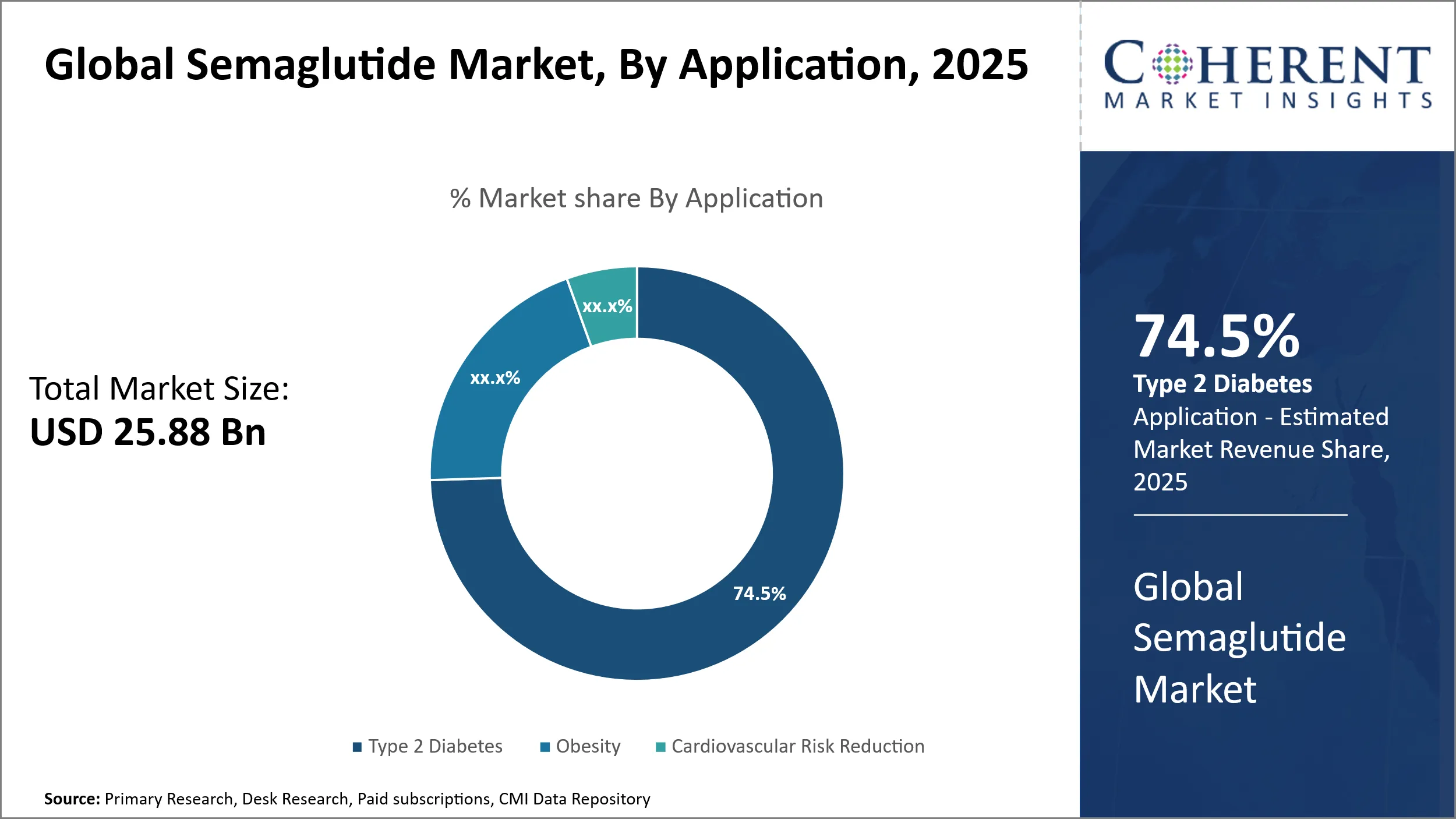
- The type 2 diabetes segment holds a dominant position in the global Semaglutide market, accounting for an estimated 75.5% share in 2026, driven by the rising prevalence of this chronic metabolic disease worldwide.
- Ozempic, one of the leading Semaglutide brands, is projected to capture the largest individual market share at 39.2% in 2026, supported by its strong clinical trial results and extensive real-world use.
- Meanwhile, oral segment marks a significant innovation as one of the first GLP-1 receptor agonists available in tablet form, anticipated to represent an estimated 56.2% of the market in 2026.
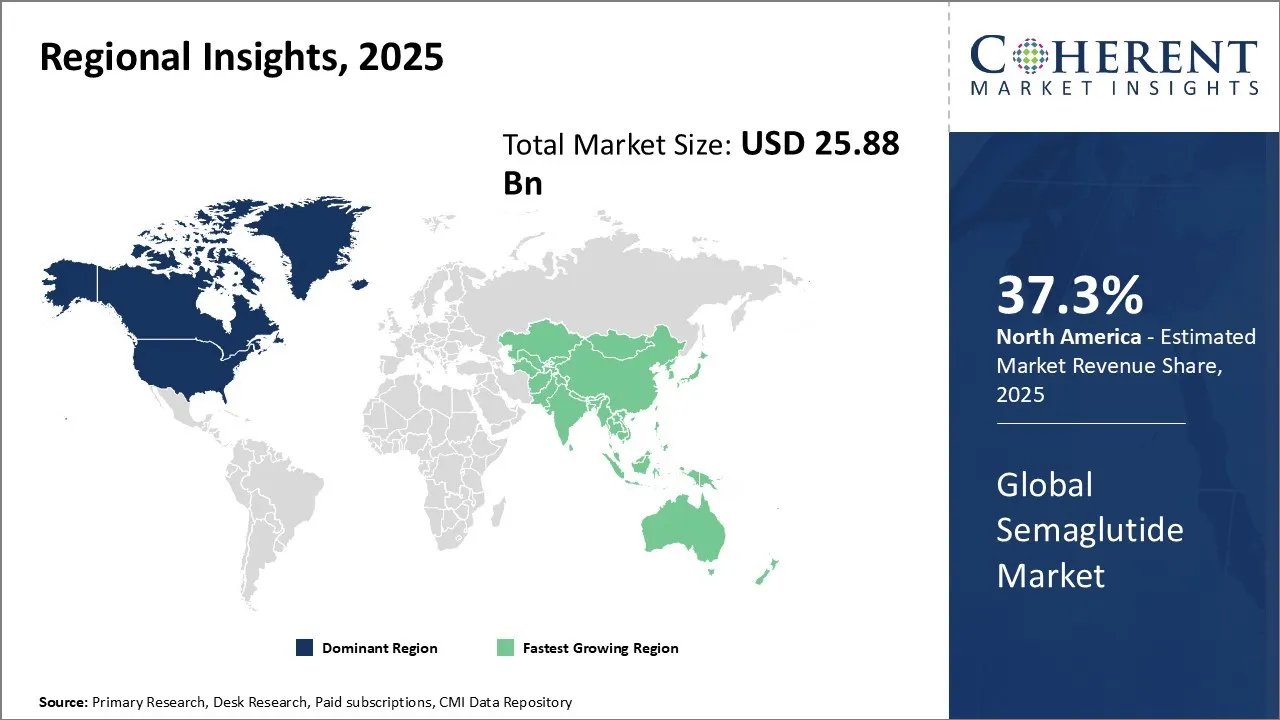
- North America is expected to lead the market, holding a share of 37.3% in 2026. Asia Pacific is anticipated to be the fastest-growing region, with a market share of 25.2% in 2026.
Market Overview
The market is witnessing a strong trend toward the development of novel Semaglutide formulations, including once-weekly injections and oral tablets, which enhance patient compliance and convenience. Additionally, expanding indications beyond diabetes, such as weight management and cardiovascular risk reduction, are propelling market demand. Strategic partnerships and increased investment in research and development by pharmaceutical companies are further accelerating product innovation and market expansion globally.
Currents Events and their Impact
Current Events | Description and its impact |
Patent Expirations and Generic Market Entry |
|
Strategic partnership with WeightWatchers to expand access to its widely used weight-loss medication, Wegovy |
|
Segmental Insights
- Current Industry Events of 2026
- Market Size Estimation
- Regional Breakdown
- Competitive Landscape
- Customer Intelligence
- Segmental Analysis
- Pricing Analysis
- Key Market Drivers, Challenges & Future Trends
- Customized Insights Section
Semaglutide Market Insights, By Application - Type 2 diabetes contributes the highest share of the market owing to the increasing global prevalence and rising awareness of the disease management benefits associated with Semaglutide
The escalating prevalence of chronic metabolic disorders, particularly Type 2 Diabetes Mellitus (T2DM), is directly linked to the increasing demand for Semaglutide as a therapeutic option. The type 2 diabetes segment is expected to contribute the largest share of the Semaglutide market with 75.5% in 2026, driven by the rising global prevalence of the disease, compounded by the growing incidence of related disorders such as Metabolic Dysfunction-Associated Steatosis Liver Disease (MASLD) and Alcohol-Associated Liver Disease (ALD).
For instance, in July 2024, according to the National Library of Medicine, metabolic disorders like Metabolic Dysfunction-Associated Steatosis Liver Disease (MASLD) are rapidly increasing, with one-fourth of the global adult population now affected. Semaglutide, a glucagon-like peptide-1 (GLP-1) receptor agonist, is gaining attention not only for its blood glucose-lowering effects but also for its ability to improve liver function and reduce liver fat accumulation, which is particularly beneficial for MASLD patients who often have coexisting T2DM. The growing awareness of Semaglutide's efficacy in managing both diabetes and liver-related complications makes it a critical player in addressing the expanding global burden of metabolic disorders.
Type 2 diabetes mellitus, characterized by insulin resistance and impaired insulin secretion, has become a major public health concern due to lifestyle changes, urbanization, and aging populations. Moreover, Semaglutide’s capability to reduce glycated hemoglobin levels effectively while promoting weight loss enhances its clinical value, which is critical given the established relationship between excess weight and insulin resistance.
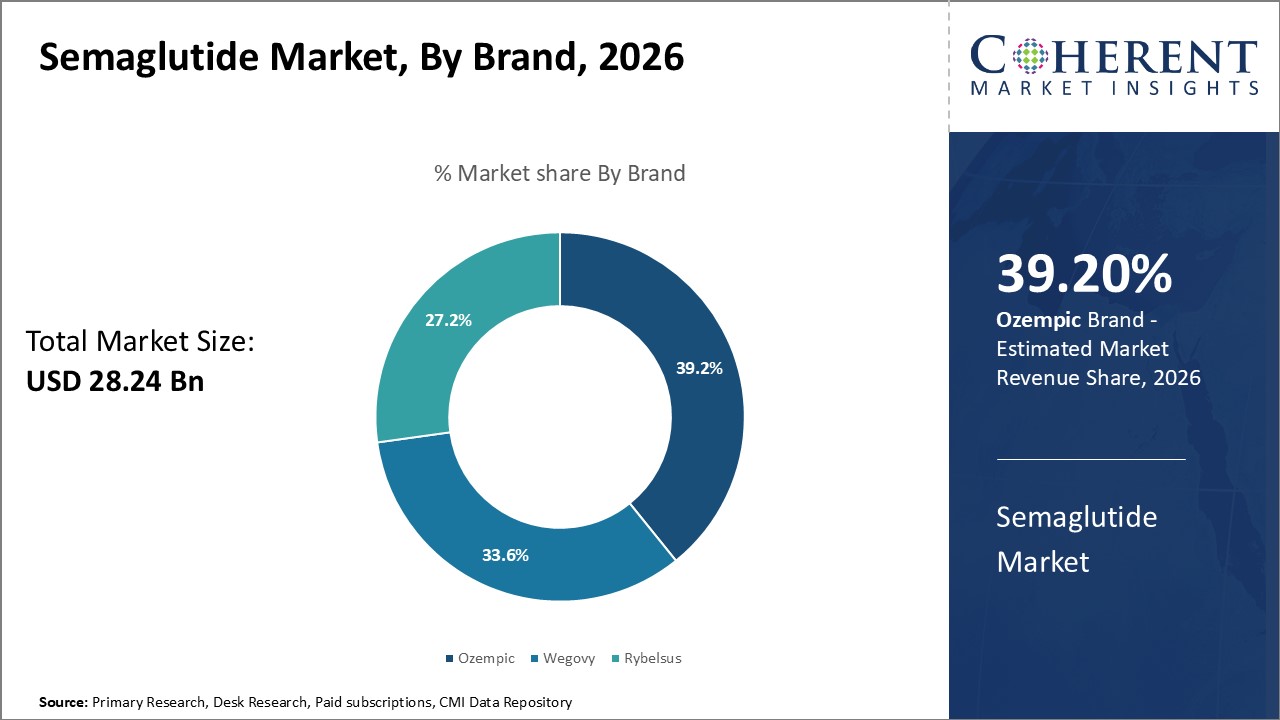
Semaglutide Market Insights, By Brand - Ozempic holds the highest market share due to its proven efficacy, strong brand recognition, and compelling clinical outcomes in Type 2 diabetes management and weight control
Ozempic, one of the flagship brands of Semaglutide, commands the largest share in the market with an estimated share of 39.2% in 2026 largely due to its established position backed by extensive clinical trials and real-world evidence. This brand has been positioned as a front-runner for patients who require substantial improvements in glycemic control while also seeking cardiovascular risk reduction. Its once-weekly subcutaneous injection regimen improves patient adherence by simplifying the treatment routine, making it an attractive option for both patients and healthcare providers.
The brand’s reputation is boosted by the robust clinical data demonstrating not only significant reduction in blood sugar levels but also pronounced weight loss and reduced risk of major adverse cardiovascular events. This has carved out a unique competitive edge in the Semaglutide market, where managing multifactorial complications is critical. Furthermore, Ozempic’s flexible dosing options allow customization based on patient response, enhancing treatment satisfaction and outcomes.
Semaglutide Market Insights, By Formulation - Oral Semaglutide leads the market driven by greater patient convenience, advancements in oral peptide delivery technology, and shifting preference towards non-invasive treatment options
Oral segment represents a groundbreaking innovation in the Semaglutide market, being one of the first GLP-1 receptor agonists formulated for oral administration with an estimated share of 56.2% in 2026. The shift from injectable forms to an oral formulation marks a significant advancement addressing one of the major barriers in diabetes care, needle aversion. Many patients experience anxiety or discomfort with injections, which can reduce treatment adherence; oral Semaglutide provides a more patient-friendly alternative, directly influencing its higher market share.
Technological breakthroughs enabling the stability and bioavailability of the peptide in oral form have expanded the therapeutic landscape, making it possible for more patients to benefit from GLP-1 receptor agonist therapy without compromising efficacy. Oral Semaglutide maintains clinical effectiveness comparable to its injectable counterparts, ensuring that efficacy is not sacrificed for convenience.
For instance, in May 2025, Novo Nordisk, one of the pharmaceutical leaders in diabetes and obesity care, announced that the U.S. FDA has accepted for review its New Drug Application for a 25mg oral Semaglutide formulation for chronic weight management. Supported by the phase 3 OASIS 4 trial, the 64-week study showed a 13.6% average weight reduction in patients taking Semaglutide versus 2.2% with placebo, along with significant improvements in cardiometabolic risk factors. If approved, this would become the first oral GLP-1 treatment for obesity, expanding options for patients seeking more individualized therapies.
Brand And Pricing Analysis
Company
Novo Nordisk A/S
| Brand | Details | Average Selling Price (USD) |
Ozempic | Ozempic is a weekly injection that aids in lowering blood sugar by stimulating the pancreas to produce more insulin. Although it is not approved for weight loss, some physicians prescribe it for this purpose. | 938 to 966 per month
| |
Wegovy | Wegovy is a brand name for Semaglutide, a glucagon-like peptide-1 (GLP-1) receptor agonist. It contains a higher dose of the same active ingredient found in Ozempic, which is used to help control blood sugar levels in individuals with type 2 diabetes. | 1,351.02 to 1,432.1/per month
| |
Rybelsus | Rybelsus is a medication used to control blood glucose levels in adults with inadequately controlled type 2 diabetes. It can be used alone when metformin, another diabetes medication, is not suitable, or in combination with other diabetes medicines. It should be used in conjunction with an appropriate diet and physical exercise. | 1,351.02 to 1,432.1/per month
|
Regional Insights
North America Semaglutide Market
In North America, the dominance in the global Semaglutide market is driven by a well-established healthcare infrastructure and a strong emphasis on innovation within the pharmaceutical sector with an estimated share of 37.3% in 2026. Moreover, in March 2024, the U.S. Food and Drug Administration approved a new indication for use for Wegovy (Semaglutide) injection to reduce the risk of cardiovascular death, heart attack and stroke in adults with cardiovascular disease and either obesity or overweight. Wegovy should be used in addition to a reduced calorie diet and increased physical activity.
The dominance of Semaglutide products like Ozempic and Rybelsus in the market is largely driven by Novo Nordisk, a leader in the diabetes and obesity treatment space. The company's strategic focus on innovation, supported by favorable policies like fast-track drug approval by the U.S. FDA, has contributed to the widespread adoption of its therapies. This is further amplified by a high prevalence of Type 2 diabetes and obesity, making the demand for effective treatments, such as Semaglutide, more critical.
For instance, in October 2024, Novo Nordisk made significant strides with Rybelsus, as the company announced its plan to expand the drug’s indication to prevent major adverse cardiovascular events (MACE) in patients with Type 2 diabetes, cardiovascular disease (CVD), or chronic kidney disease (CKD). The promising results from the Phase III SOUL trial, which demonstrated a 14% reduction in MACE occurrence with Rybelsus, have further validated its role in cardiovascular disease prevention. With plans to file for label expansion in the U.S. and Europe by early 2026, Novo Nordisk continues to solidify its leadership in both diabetes and cardiovascular care.
Asia Pacific Semaglutide Market
The Asia Pacific region is expected to exhibit the fastest growth in the Semaglutide market with a share of 25.2% in 2026, driven by rising awareness about metabolic diseases and increasing healthcare expenditure. Countries like China and India showcase expanding middle classes with growing access to modern medicines. Governments across the region are undertaking initiatives to improve healthcare infrastructure and streamline regulatory frameworks, facilitating quicker drug approvals and market entry.
Moreover, Novo Nordisk is adopting various growth strategies such as launching Wegovy in various Asian Countries which is expected to augment the Asia Wegovy market over the analysis period. For instance, on April 29, 2026, Novo Nordisk announced the launch of its highly popular weight management medication, Wegovy, in Thailand, according to an executive from the Danish pharmaceutical company’s local subsidiary. This development marks Wegovy’s first introduction into the Southeast Asian market. Expanding awareness about obesity’s health risks and improving healthcare infrastructure, especially in countries like China and India, are critical factors propelling market expansion.
Moreover, improving health insurance penetration and government reimbursement schemes are reducing out-of-pocket expenses for patients, accelerating adoption. Pharmaceutical players, including global giants like Novo Nordisk and emerging local companies, are actively expanding their footprint here with strategic partnerships and localized clinical trials. The rise of e-commerce and digital health platforms also aids patient access to advanced therapies like Semaglutide.
Semaglutide Market Outlook for Key Countries
U.S. Semaglutide Market Trends
The U.S. Semaglutide market remains a powerhouse for Semaglutide, supported by the country’s advanced healthcare infrastructure and proactive strategies to tackle chronic lifestyle-related conditions such as obesity and type 2 diabetes. Novo Nordisk has established a strong footprint, driving widespread physician and patient education campaigns around both injectable and oral Semaglutide formulations. Extensive clinical research and the U.S. Food and Drug Administration’s (FDA) priority review pathways have further accelerated the approval and adoption of new indications. Additionally, payer systems increasingly recognize the long-term cost-effectiveness of GLP-1 receptor agonists, resulting in broader reimbursement coverage that fuels market growth.
In May 2026, SynergenX, a U.S.-based provider of hormone therapy and wellness services, partnered with Low T Center to launch a summer weight-loss campaign featuring Semaglutide treatment. New patients starting Semaglutide prescriptions will receive a free consultation and a complimentary B-12 shot to boost energy and metabolism. Targeting adults 30–60, the program offers medically supervised, personalized weight-loss plans designed to deliver safe and sustainable results.
Australia Semaglutide Market Trends
The Semaglutide market in Australia is growing rapidly, fueled by rising use for both diabetes and off-label weight loss, which has led to persistent supply shortages and increased black-market activity. Regulatory bodies like the TGA have tightened controls to curb counterfeit products, while demand continues to outpace supply. At the same time, safety concerns such as overdoses and severe side effects are becoming more common. Pharmaceutical companies are investing in new formulations, including oral and long-acting options, as the market awaits decisions on broader reimbursement for obesity treatment and strategies to improve access.
In August 2024, Novo Nordisk, one of the pharmaceutical leaders in diabetes and obesity care, launched its weight-loss drug Wegovy in Australia, intended for chronic weight management in patients with obesity or overweight with related conditions like diabetes or hypertension, Wegovy entered the market amid ongoing Ozempic supply concerns.
U.K. Semaglutide Market Trends
In the U.K., Semaglutide demand continues to surge, driven by its established role in diabetes care and growing recognition of broader health benefits. The June 2024 results from Novo Nordisk’s Phase 3 FLOW trial, which showed a 24% reduction in kidney disease-related events in patients with type 2 diabetes and chronic kidney disease, have strengthened clinical confidence and are likely to influence prescribing trends. As the U.S. Food and Drug Administration reviews label expansion, U.K. clinicians and policymakers are closely watching for similar approvals that could support wider NHS adoption. The findings, shared in the New England Journal of Medicine and at the American Diabetes Association conference, reinforce Semaglutide’s potential beyond glucose control, further fueling interest in its use across high-risk patient groups.
Japan Semaglutide Market Trends
The Semaglutide market in Japan is expanding rapidly, driven by rising obesity rates, growing demand for innovative chronic disease treatments, and supportive healthcare policies that improve patient access. Government initiatives to modernize healthcare delivery and broaden insurance coverage for advanced therapies have created a favorable environment for adoption. Regulatory authorities have also introduced streamlined approval processes for breakthrough drugs, enabling quicker market entry.
For instance, in June 2026, Novo Nordisk and Sumitomo Pharma, two major global pharmaceutical companies, announced that they have finalized a co-promotion agreement for Ozempic (Semaglutide SC injection) in Japan. Ozempic, a once-weekly GLP-1 receptor agonist, is approved for the treatment of Type 2 diabetes. The promotion of Ozempic under this new partnership will begin in July 2026, marking a strategic move to enhance the accessibility and availability of the medication in the Japanese market.
India Semaglutide Market Analysis
The India Semaglutide market is estimated to be valued at USD 1.39 Bn in 2026 and is expected to reach USD 3.01 Bn by 2032, exhibiting a compound annual growth rate (CAGR) of 11.7% from 2026 to 2032.
Market Trends
India's Semaglutide market is gaining traction through improved healthcare accessibility and increasing investments in diabetes care infrastructure. Public and private sector initiatives promote screening and early intervention, creating demand for advanced therapies. Regulatory reforms have shortened approval timelines, encouraging multinational companies to invest and launch products. The rise of telemedicine and digital health services is enhancing reach, especially in tier-2 and tier-3 cities, allowing companies to tap into previously underserved populations.
On June 24, 2026, Novo Nordisk, a global leader in diabetes and obesity treatments, officially launched its flagship weight-loss drug Wegovy (Semaglutide) in India. Approved as a once-weekly GLP-1 receptor agonist for chronic weight management in adults with obesity or overweight-related health conditions, Wegovy entered the India Semaglutide market ahead of its patent expiry to counter rising competition from Eli Lilly’s Mounjaro.
India Specific Drug Approved Matrix
Category | Details |
Generic Name | Semaglutide |
Brand Names (India) | Ozempic, Rybelsus, Wegovy |
Therapeutic Class | Antidiabetic (GLP-1 Receptor Agonist); Anti-Obesity (Wegovy) |
Approved Indications | Type-2 Diabetes Mellitus (Ozempic, Rybelsus); Chronic Weight Management in Obesity/Overweight with Comorbidities (Wegovy) |
Dosage Forms (Approved) | Pre-filled pen injections: 0.25 mg, 0.5 mg, 1.0 mg weekly (Ozempic); 2.4 mg weekly (Wegovy), Tablets: 3 mg, 7 mg, 14 mg daily (Rybelsus) |
Key Manufacturers | Novo Nordisk |
OTC/Rx Status | Prescription-only (Rx) |
Post-Marketing Requirements | Pharmacovigilance compliance (PvPI); Periodic Safety Update Reports (PSURs); Risk Management Plan (RMP) |
Physician Opinion on Semaglutide in India
- Many physicians in India view Semaglutide as a significant advancement in both diabetes management and obesity treatment. Clinicians appreciate its dual benefits: effective glucose control in type 2 diabetes and substantial weight loss in patients struggling with obesity or metabolic syndrome. With injectable options like Ozempic and Wegovy, as well as oral Rybelsus, doctors now have flexible dosing choices to tailor therapy based on patient preferences and comorbidities. Physicians often highlight that Semaglutide’s proven cardiovascular risk reduction further strengthens its value as a comprehensive treatment, especially in a country where diabetes and heart disease are widespread.
- At the same time, healthcare providers express concerns about affordability and long-term adherence. The high cost of Semaglutide remains a barrier for many patients, particularly when insurance coverage is limited. Doctors also note the importance of careful patient education on gastrointestinal side effects, which are common during dose escalation. Overall, Indian physicians see Semaglutide as a promising option that can transform care standards, provided strategies are implemented to improve access and support sustained use.
Epidemiology & Clinical Efficacy of Semaglutide Use
- Semaglutide is increasingly prescribed worldwide as both an antidiabetic and anti-obesity medication, reflecting the rising prevalence of metabolic diseases. Type 2 diabetes mellitus affects hundreds of millions globally, with many patients struggling to achieve glycemic targets through standard therapies. Similarly, obesity rates continue to climb, particularly in high-income and rapidly urbanizing countries, driving demand for pharmacological treatments that address weight-related comorbidities. Large-scale epidemiological studies and prescription data show that Semaglutide use has expanded rapidly across Europe, North America, and parts of Asia, fueled by favorable reimbursement policies, clinician confidence, and growing patient awareness of GLP-1 receptor agonists.
- Semaglutide has demonstrated robust clinical benefits across multiple indications. In type 2 diabetes, trials such as SUSTAIN and PIONEER have shown significant reductions in HbA1c and body weight compared with other glucose-lowering agents. For chronic weight management, Semaglutide 2.4 mg weekly (Wegovy) achieved average weight loss exceeding 15% in the STEP trials, far surpassing placebo and other treatments. More recently, the Phase 3 FLOW trial highlighted Semaglutide’s ability to lower kidney disease-related events by 24% in patients with diabetes and chronic kidney disease. These consistent outcomes underline its efficacy not only in glycemic control but also in weight reduction and organ protection, positioning Semaglutide as a transformative therapy in metabolic disease management.
Market Players, Key Developments, and Competitive Intelligence

Key Developments
- In May 2025, Zydus Lifesciences, an Indian pharmaceutical company specializing in chronic disease therapies, is set to launch a single-pen Semaglutide treatment targeting diabetes and obesity. The innovative device lets patients choose from multiple dose strengths in one pen, improving convenience and adherence. According to Managing Director Sharvil Patel, Zydus plans a day-one rollout in India and other developing markets once regulatory approval is secured.
- In May 2025, Dr Reddy’s Laboratories, one of the leading Indian pharmaceutical company, plans to launch generic versions of Semaglutide (Ozempic) in markets where patents expire from next year. According to CFO M.V. Narasimham, this move, along with new biosimilars, acquisitions, and licensing deals, aims to offset revenue losses as the gRevlimid patent expires in the U.S. in January 2026. The company remains confident about sustaining double-digit sales growth despite rising competition.
- In April 2025, LifeMD, Inc., a leading provider of virtual primary care services, announced plans to offer broad, affordable, and streamlined access to Wegovy (Semaglutide) through NovoCare Pharmacy. This integration offers a simplified pathway for cash-pay patients to access all U.S. FDA-approved dose strengths of Wegovy directly within LifeMD’s virtual care platform. LifeMD’s weight management program is one of the fastest-growing cash-pay offerings in the country, delivering virtual consultations, lab testing, diet and lifestyle support, and prescriptions to anti-obesity medications including GLP-1s when clinically appropriate, within a single, tech-enabled platform.
- In March 2025, Alkem Laboratories, one of the leading Indian pharmaceutical companies, plans to introduce a generic version of Semaglutide in India as the patent held by Novo Nordisk expires in March 2026. The company has begun clinical trials of the GLP-1 drug after receiving Central Drugs Standard Control Organization. approval and aims to launch around the patent expiry to tap into the growing diabetes and weight loss market.
Market Report Scope
Semaglutide Market Report Coverage
| Report Coverage | Details | ||
|---|---|---|---|
| Base Year: | 2025 | Market Size in 2026: | USD 28.24 Bn |
| Historical Data for: | 2020 To 2024 | Forecast Period: | 2026 To 2033 |
| Forecast Period 2026 to 2033 CAGR: | 9.1% | 2033 Value Projection: | USD 51.95 Bn |
| Geographies covered: |
| ||
| Segments covered: |
| ||
| Companies covered: | Novo Nordisk A/S | ||
| Growth Drivers: |
| ||
| Restraints & Challenges: |
| ||
Semaglutide Market Dynamics
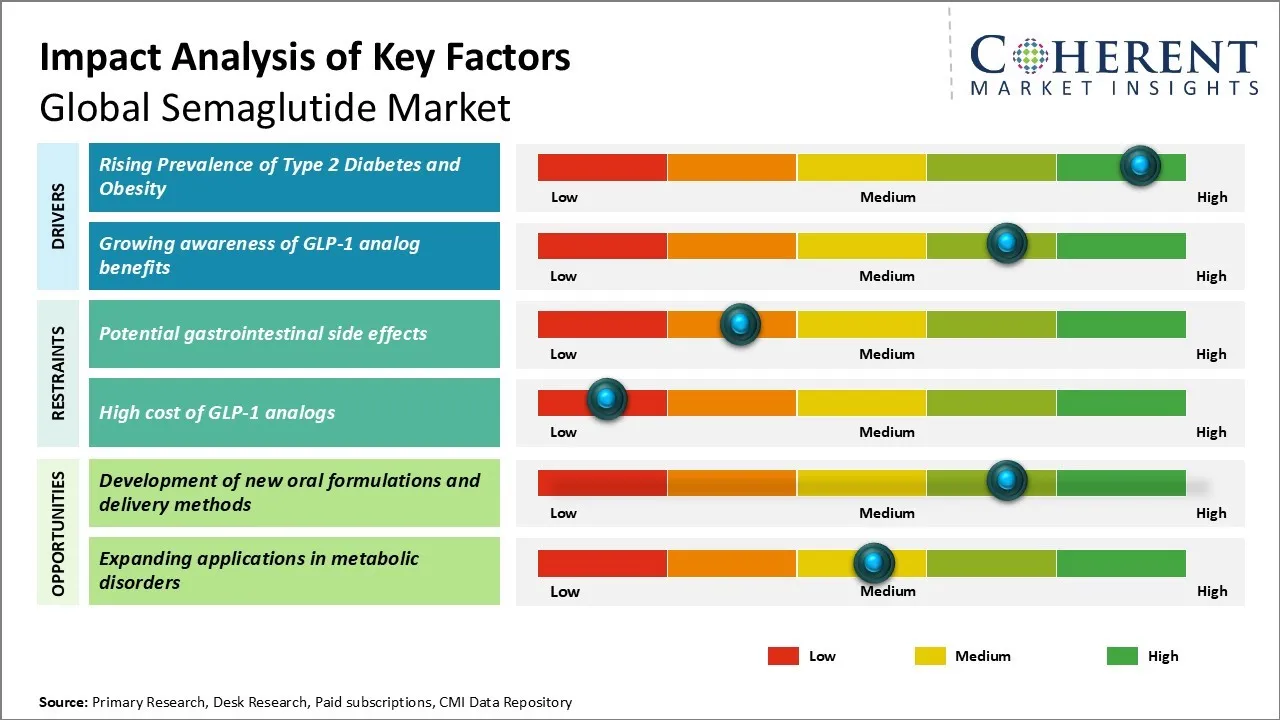
Semaglutide Market Driver - Rising Prevalence of Type 2 Diabetes and Obesity
The escalating incidence of type 2 diabetes and obesity worldwide significantly propels the demand for Semaglutide, a glucagon-like peptide-1 (GLP-1) receptor agonist known for its efficacy in glycemic control and weight management. As sedentary lifestyles and unhealthy dietary habits become increasingly prevalent, more individuals are diagnosed with metabolic disorders that require effective therapeutic interventions. Semaglutide’s dual benefits of improving blood sugar levels and facilitating substantial weight loss make it an attractive treatment option for patients struggling with these chronic conditions. Furthermore, public health initiatives and increased awareness about the complications associated with diabetes and obesity have led to greater diagnosis rates, thereby expanding the patient pool seeking advanced pharmaceutical solutions.
For instance, in June 2024, a recent study by the National Library of Medicine, Secular Trends in Diabetes in India (STRiDE-I), revealed a concerning rise in type 2 diabetes (T2DM) prevalence among younger individuals (ages 20–39) in southern India. Over a 10-year period, the prevalence in younger individuals increased by 36%, from 4.5% to 7.8%, significantly outpacing the 11% rise in older individuals (ages 40 and above). The incidence of T2DM in the younger group surged by 120%, highlighting a troubling trend in youth diabetes rates. Key risk factors contributing to this increase were obesity and a family history of diabetes, both of which were more prevalent among younger individuals. The study also found that cardiometabolic risks, including dyslipidemia and hypertension, rose more rapidly in the younger population. These findings underscore the need for targeted interventions to address diabetes risk factors in the youth population.
Semaglutide Market Opportunity - Development of New Oral Formulations and Delivery Methods
The global Semaglutide market presents a significant opportunity through the development of innovative oral formulations and alternative delivery methods, expanding accessibility and patient compliance. Traditionally, Semaglutide has been administered via subcutaneous injections, which pose challenges such as discomfort, needle phobia, and inconvenience, potentially limiting adherence and market penetration. The advancement of oral Semaglutide formulations marks a pivotal shift, offering patients a more convenient, non-invasive therapeutic option. Pharmaceutical companies and research institutions are investing heavily in enhancing the bioavailability and efficacy of oral Semaglutide, leveraging novel drug delivery technologies like nanoparticle encapsulation and absorption enhancers to overcome gastrointestinal barriers.
Additionally, exploring other delivery mechanisms such as transdermal patches and inhalation systems can cater to diverse patient preferences and clinical needs, driving broader adoption across diabetic and obesity management markets. The development of oral Semaglutide (Ozempic, Rybelsus) can also drive the market growth. Semaglutide is a once-weekly injectable and a once-daily oral medication that makes it a versatile treatment option for patients with type 2 diabetes. The oral formulation of Semaglutide, Rybelsus, was approved by the U.S. FDA in 2019, providing an alternative to injectable treatments for those who prefer oral administration. For instance, according to a research article published by the National Institutes of Health (NIH) in December 2020, titled ‘Oral Nano Drug Delivery Systems for the Treatment of Type 2 Diabetes Mellitus,’ it was found that oral nano drug delivery systems for phytocompounds aimed at treating T2DM not only retain the benefits of oral administration but also address the limitations of traditional oral drug delivery methods.
Analyst Opinion (Expert Opinion)
- The global Semaglutide market is witnessing robust expansion driven by a confluence of factors, including rising prevalence of type 2 diabetes and obesity, strong regulatory backing for GLP-1 receptor agonists, and continuous innovation in drug delivery mechanisms. The growing preference for once-weekly injectable formulations and the development of oral Semaglutide have significantly improved patient adherence, reinforcing market demand. However, challenges such as high treatment costs, supply constraints, and concerns about long-term safety profiles in broader populations remain critical considerations for stakeholders. Emerging opportunities lie in expanding indications beyond diabetes, particularly in chronic weight management, and leveraging digital health platforms to enhance treatment outcomes.
- Recent years have also seen noteworthy developments shaping the market landscape. For instance, Novo Nordisk’s STEP and SELECT clinical programs have underscored Semaglutide’s transformative potential in obesity care, while regulatory approvals in the U.S., Europe, and parts of Asia are accelerating global uptake. Events such as the International Diabetes Federation Congress and the American Diabetes Association Scientific Sessions have played a vital role in disseminating clinical evidence, informing treatment guidelines, and fostering cross-sector collaborations. Collectively, these advancements are expected to sustain growth momentum and drive wider adoption of Semaglutide-based therapies worldwide.
Speak to the analyst
Want personalized insights?
Take the findings above to one of our principal consultants, or have the report rebuilt around the segments, geographies and competitors you actually track.
Market Segmentation
- Application Insights (Revenue, USD Bn, 2021 - 2033)
- Type 2 Diabetes
- Obesity
- Cardiovascular Risk Reduction
- Brand Insights (Revenue, USD Bn, 2021 - 2033)
- Ozempic
- Wegovy
- Rybelsus
- Formulation Insights (Revenue, USD Bn, 2021 - 2033)
- Oral
- Subcutaneous
- Gender Insights (Revenue, USD Bn, 2021 - 2033)
- Male
- Female
- Age Group Insights (Revenue, USD Bn, 2021 - 2033)
- Adult
- Geriatric
- Pediatric
- Distribution Channel Insights (Revenue, USD Bn, 2021 - 2033)
- Hospital Pharmacies
- Retail Pharmacies
- Online Pharmacies
- End User Insights (Revenue, USD Bn, 2021 - 2033)
- Hospitals and Clinics
- Specialty Endocrinology and Obesity Centers
- Ambulatory Surgical Centers (ASCs)
- Home Healthcare Services
- Others (Academic and Research Institutes, etc.)
- Regional Insights (Revenue, USD Bn, 2021 - 2033)
- North America
- U.S.
- Canada
- Latin America
- Brazil
- Argentina
- Mexico
- Rest of Latin America
- Europe
- Germany
- U.K.
- Spain
- France
- Italy
- Russia
- Rest of Europe
- Asia Pacific
- China
- India
- Japan
- Australia
- South Korea
- ASEAN
- Rest of Asia Pacific
- Middle East
- GCC Countries
- Israel
- Rest of Middle East
- Africa
- South Africa
- North Africa
- Central Africa
- North America
- Key Players Insights
- Novo Nordisk A/S
Sources
Primary Research Interviews
- Healthcare Practitioners (Endocrinologists, Diabetologists)
- Clinical Trial Coordinators
- Pharmaceutical Executives
- Patient Advocacy Groups
- Regulatory bodies (e.g., U.S. FDA, EMA)
- Healthcare Providers (Hospitals, Clinics)
Government and International Databases
- World Health Organization (WHO)
- U.S. Food and Drug Administration (FDA)
- European Medicines Agency (EMA)
- Centers for Disease Control and Prevention (CDC)
- National Institutes of Health (NIH)
- United Nations Population Division
- Global Health Data Exchange (GHDx)
Trade Publications
- Pharmaceutical Technology
- Diabetes Care
- Endocrinology Today
- The Pharmaceutical Journal
- Medical News Today
Academic Journals
- The Lancet Diabetes & Endocrinology
- Journal of Clinical Endocrinology & Metabolism
- Diabetes Research and Clinical Practice
- Nature Reviews Endocrinology
- Journal of Diabetes Science and Technology
- Diabetes, Obesity and Metabolism
Reputable Newspapers
- The New York Times
- The Guardian
- Financial Times
- Wall Street Journal
- The Washington Post
Industry Associations
- American Diabetes Association (ADA)
- European Association for the Study of Diabetes (EASD)
- International Diabetes Federation (IDF)
- Diabetes UK
- American Association of Clinical Endocrinologists (AACE)
Public Domain Resources
- National Library of Medicine (NLM)
- U.S. National Library of Medicine’s
- Open Government Data Platforms
Proprietary Elements
- CMI Data Analytics Tool Proprietary analytics tool to analyze real-time market trends, consumer behavior, and technology adoption in market
- Proprietary CMI Existing Repository of Information for Last 8 Years
Get access to 250+ pages report
Every segment, forecast, competitor profile and data table behind the analysis above — available for instant download.
- ESOMAR Member
- ISO 9001:2015 Certified
- D-U-N-S Registered
- GDPR & CCPA Compliant
Missing comfort of reading report in your local language? Find your preferred language:
Transform your Strategy with Exclusive Trending Reports
Frequently Asked Questions
The global Semaglutide market is estimated to be valued at USD 28.24 Bn in 2026 and is expected to reach USD 51.95 Bn by 2033.
The CAGR of the global Semaglutide market is projected to be 9.1% from 2026 to 2033.
Rising prevalence of type 2 diabetes and obesity and growing awareness of GLP-1 analog benefits are the major factors driving the growth of the global Semaglutide market.
Potential gastrointestinal side effects and high cost of GLP-1 analogs are the major factors hampering the growth of the global Semaglutide market.
In terms of application, the Type 2 diabetes segment is estimated to dominate the market revenue share in 2026.
Novo Nordisk A/S are the major players.
North America is expected to lead the global Semaglutide market in 2026.