

Smart Inhalers Market Analysis & Forecast: 2026-2033
Smart Inhalers Market is estimated to be valued at USD 1488.3 Mn in 2026 and is expected to reach USD 37,567.6 Mn in 2033, exhibiting a compound annual growth rate (CAGR) of 58.6% from 2026 to 2033.
Key Takeaways
- Based on Product, the Inhalers segment is expected to lead the market with 95.4% share in 2026, driven by ease, affordability, and smart technology integration.
- Based on Distribution Channel, the Hospitals segment is projected to account for the largest share of the market in 2026, driving adoption through patient care, education, and digital integration.
- Based on Region, North America is set to lead the smart inhalers market in 2205 with 35.8% share. While, Asia Pacific is anticipated to be the fastest growing region.
Market Overview
The Smart Inhalers Market demand is expected to expand quickly in 2026 as more individuals are getting asthma and COPD and more people are using digital health technologies. Smart inhalers with sensors help patients stick to their treatment plans, keep track of their doses, and give healthcare providers real-time data. North America is the most popular place for adoption, and hospitals are still the main way to get the product. Smart inhalers are the best choice considering they are affordable, easy to use, and work with other connected platforms. This has led to strong growth in the global market.
Current Events and Its Impacts on the Smart Inhalers Market
Current Event | Description and Its Impact |
Regulatory Framework Evolution and Digital Health Integration |
|
Technological Breakthrough in AI and Sensor Integration |
|
Smart Inhaler Market Trends
- Effect on Patient Adherence: Non-adherence in asthma/COPD treatment costs the U.S. healthcare system $300 billion a year. Smart inhalers fill this gap by keeping track of patients and reminding them.
- Technology Adoption: By 2030, more than 70% of new inhaler prescriptions in developed markets are expected to come with digital monitoring solutions.
- Hospital Integration: Smart inhalers are becoming continuously connected to Electronic Health Records (EHRs). This lets doctors keep an eye on how patients are using their inhalers from afar and change their treatment plans right away.
- Environmental Viewpoint: Partnerships like Lupin–Honeywell are pushing for eco-friendly propellants that work with smart inhalers while still being able to connect to the internet.
- Current Industry Events of 2026
- Market Size Estimation
- Regional Breakdown
- Competitive Landscape
- Customer Intelligence
- Segmental Analysis
- Pricing Analysis
- Key Market Drivers, Challenges & Future Trends
- Customized Insights Section
Segmental Insights
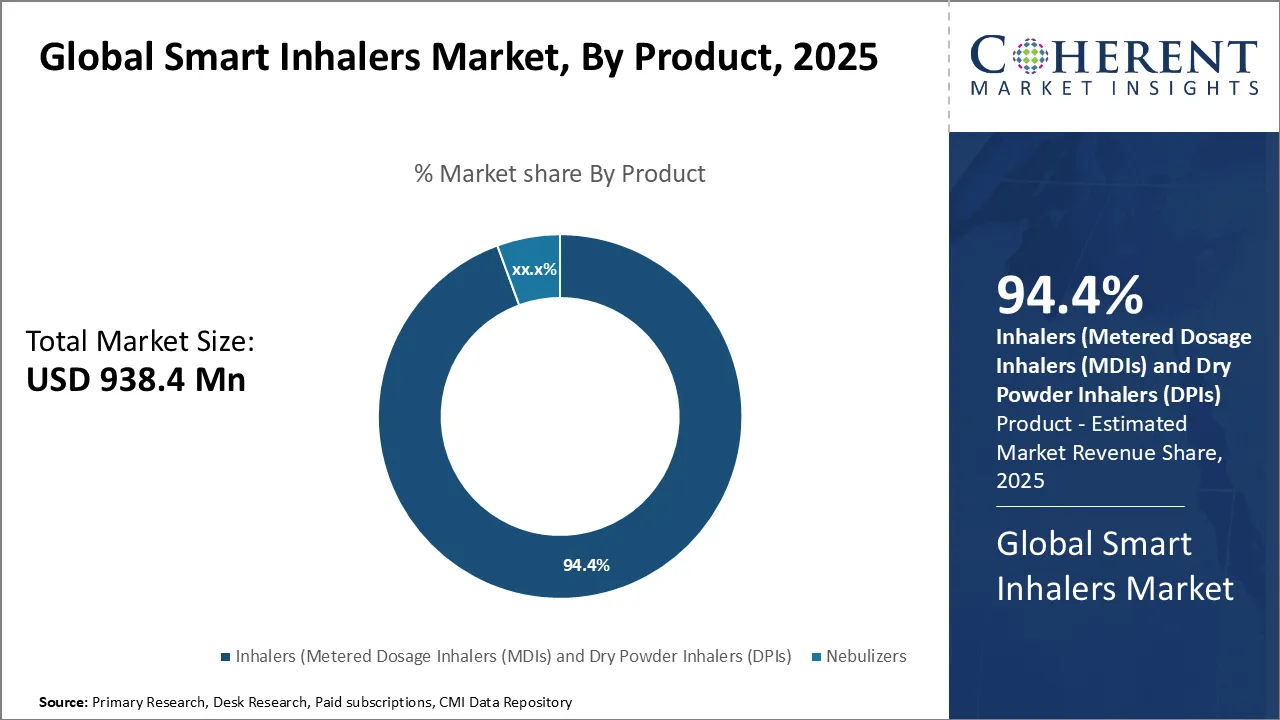
Global Smart Inhalers Market Insights, By Product: Inhalers Dominance Is Driven by Ease, Affordability, And Smart Technology Integration
In terms of product, the inhalers segment is expected to lead the market with 95.4% share in 2026. This is mostly as inhalers are widely used to treat asthma and chronic obstructive pulmonary disease (COPD), which remain two of the most common respiratory conditions in the world. Inhalers, especially Metered Dose Inhalers (MDIs) and Dry Powder Inhalers (DPIs), are smaller, easier to carry, and easier for patients to use compared to nebulizers, which are larger and usually only used in hospitals or at home.
Given their design, they adapt with smart technologies. This allows sensors to keep track of dosage, inhalation technique, and patient adherence in real time. This not only leads to better treatment outcomes, but it also gives healthcare providers useful information for keeping an eye on and changing therapy. In addition, inhalers are reasonably priced, widely prescribed, and well-known to both patients and doctors, which is why they are still the most popular choice.
For instance, in March 2025, Smart Respiratory has announced a new pilot program to change the way respiratory care is done in community pharmacies. The goal of the initiative is to use smart inhaler technology to help patients stick to their treatment plans, keep an eye on their health, and manage their diseases better. The goal of the project is to give pharmacists more power to help patients with asthma and COPD by combining sensors and digital health platforms. This will lead to fewer hospital visits and better outcomes.
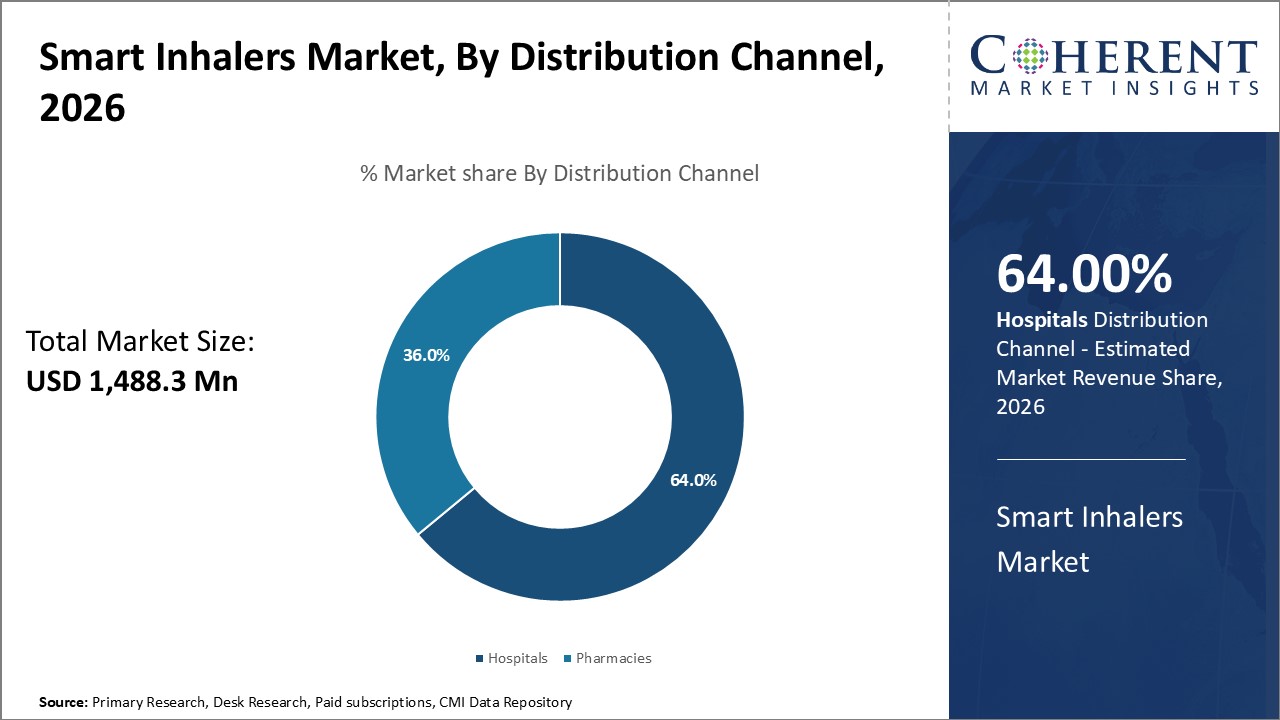
Global Smart Inhalers Market Insights, By Distribution Channel: Hospitals Lead Is Driving Adoption Through Patient Care, Education, And Digital Integration
In terms of distribution channel, the hospitals segment is projected to account for the largest share of the market in 2026. Hospitals are the main places where people with chronic respiratory conditions get care, thus being where smart inhalers are first prescribed and provided. In a hospital, patients get the right information on usage of devices, connect sensors, and keep track of their adherence, which is important for managing their disease.
In addition, hospitals often work with device makers and digital health platforms, which speeds up the use of smart inhalers in clinical practice.
For instance, in May 2025, the University of Leicester and the University Hospitals of Leicester NHS Trust have started the first NHS study in the UK on smart inhalers for kids with asthma. The project uses the Hailie® device to keep track of how often people use their inhalers, how they use them, and how well they follow the instructions. It then shares this information with families and doctors. The goal of the program is to help people with asthma manage their condition better, have fewer flare-ups, and keep kids out of the hospital.
Regional Insights
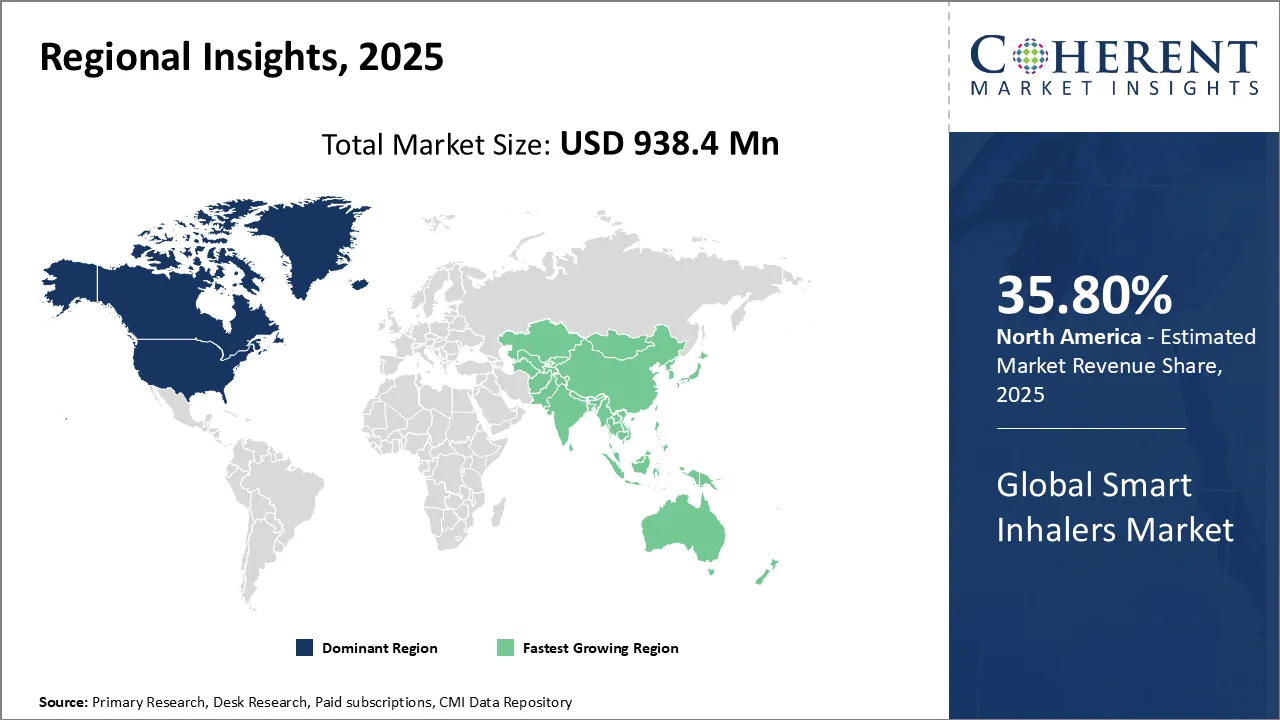
North America Smart Inhalers Market Analysis & Trends
North America is expected to gain highest share of 35.8% in the market in 2026, due to the rise in prevalence of respiratory disorders, such as chronic obstructive pulmonary disease (COPD) and asthma, increase in air pollution, rise in indoor air pollutants, and increase in adoption of smart inhalers in the region. For instance, in the United States, COPD affects around 15 million adults, and many more do not know they have it. More than half of those diagnosed are women. COPD is a major cause of disability, and it is the 4th leading cause of death in the United States, according to the Centers for Disease Control and Prevention (CDC).
For instance, in September 2026, Adherium's Smartinhaler shown amazing results in a real-world respiratory study carried out within the US. The program worked with Intermountain Health and CareCentra and included more than 850 patients in five facilities. The results showed that adherence was much better than what was reported in the literature. This shows that smart inhaler technology could change how asthma and COPD are treated in hospitals and clinics.
Asia Pacific Smart Inhalers Market Analysis & Trends
Asia Pacific is projected to be the fastest growing region, due to pollution, smoking, and urbanization are causing more asthma and COPD cases. The adoption rate is going up owing to better healthcare infrastructure, more people learning about digital health, and government programs to make respiratory care better. The region is the fastest-growing market in the world because connected medical devices are becoming more affordable and more people are investing in them.
For instance, in August 2026, PHARMAC, New Zealand’s Pharmaceutical Management Agency, announced improved access to asthma inhalers and intrauterine devices (IUDs). The move aims to make essential treatments more affordable and widely available for patients. The update is important for respiratory care, but it mostly talks about general access to inhalers instead of smart inhalers or hospital-specific programs.
Smart Inhalers Market Outlook Country-Wise
The U.S. Smart Inhalers Market Trends
The market for smart inhalers in the U.S. is going to be highly profitable in 2026 since asthma and COPD are becoming more common, digital health technologies are becoming more popular, and the FDA is approving them. North America is the world's leading region with its advanced healthcare infrastructure, the presence of major companies, and the growing focus on patient adherence and remote monitoring.
For instance, in October 2026, The FDA granted Aptar Digital Health permission to sell its connected inhaler platform in the US. The approval indicates that the company's smart inhaler technology works for managing asthma and COPD by keeping track of the frequency that patients use it and whether they follow the instructions. This milestone makes Aptar's presence in North America stronger and is a big step forward for digital respiratory care solutions.
China Smart Inhalers Market Trends
In 2026, the market for smart inhalers in China is highly competitive as asthma and COPD are becoming more common because of pollution, smoking, and rapid urbanization. The adoption of digital health solutions is driven by the growth of healthcare infrastructure, government efforts to improve respiratory care, and more people becoming aware of them. More affordable and more investment in connected medical devices are also speeding up market growth in the area.
Market Report Scope
Smart Inhalers Market Report Coverage
| Report Coverage | Details | ||
|---|---|---|---|
| Base Year: | 2025 | Market Size in 2026: | USD 1488.3 Mn |
| Historical Data for: | 2020 To 2024 | Forecast Period: | 2026 To 2033 |
| Forecast Period 2026 to 2033 CAGR: | 58.6% | 2033 Value Projection: | USD 37,567.6 Mn |
| Geographies covered: |
| ||
| Segments covered: |
| ||
| Companies covered: | Adherium Limited, AstraZeneca, Boehringer Ingelheim, Cohero Health, GSK, Novartis, and ResMed, among others. | ||
| Growth Drivers: |
| ||
| Restraints & Challenges: |
| ||
Global Smart Inhalers Market Drivers
Rise in prevalence of respiratory disorders to drive market growth
One of the key factors expected to augment the growth of the global smart inhalers market over the forecast period is the rise in prevalence of respiratory disorders worldwide. Such a high burden of respiratory diseases, such as Asthma and COPD, leads to an increase in demand for or adoption of smart inhalers worldwide.
Around 90% of COPD deaths in those under 70 years of age occur in low- and middle-income countries (LMIC). Moreover, COPD is the 7th leading cause of poor health worldwide (measured by disability-adjusted life years).
Growing geriatric population to underpin market growth
Another factor which is driving growth of the global smart inhalers market is the growing geriatric (aging) population around the world. For instance, the prevalence of COPD is two to three times higher in people over the age of 60 years than in younger age groups. Moreover, elderly asthmatics are at a higher risk for morbidity and mortality from their asthma than younger patients. According to the Asthma and Allergy Foundation of America, asthma is common in adults ages 65 and older, around 7.8% of older adults in the United States have asthma. That is about the same as the number of people in the general population who have asthma.
Global Smart Inhalers Market Opportunities
Increasing demand for smart inhalers or growing adoption of smart inhalers is expected to provide significant growth opportunities for players in the global smart inhalers market. For instance, with the rise in burden of respiratory disorders and increase in awareness among people about benefits of smart inhalers is also increasing rapidly.
Analyst Opinion (Expert Opinion)
As respiratory care evolves toward data-driven disease management, the smart inhalers market value is growing. More than 250 million people around the world have asthma, and only a small percentage of adults have COPD. This means that digital adherence tools have a huge user base. Clinical studies consistently indicate that 30–70% of patients fail to adhere to prescribed inhaler regimens, with incorrect usage rates surpassing 70% in certain cohorts. These numbers show how many avoidable exacerbations, emergency visits, and treatment inefficiencies connected inhalers are meant to cut down on.
Regulatory approvals for integrated digital inhalers and add-on sensors have confirmed the technology, which has led to major pharmaceutical and digital health companies launching products. There is also evidence that smart inhaler data can help with better monitoring of rescue-medication overuse, technique guidance, and earlier intervention in uncontrolled cases. This makes adoption more likely.
Speak to the analyst
Want personalized insights?
Take the findings above to one of our principal consultants, or have the report rebuilt around the segments, geographies and competitors you actually track.
Global Smart Inhalers Market: Key Developments
- In October 2025, The FDA gave Aptar Digital Health its approval to sell HeroTracker Sense, a connected add-on for metered dose inhalers. By keeping track of how often and how well people use their inhalers, this new technology turns regular inhalers into smart inhalers. This clearance is a big step forward for digital respiratory care. It will make it easier to monitor asthma and COPD patients and connect them with healthcare platforms.
- In March 2025, Adherium Limited has raised AUD 2.6 million to move its smart inhaler technology forward in the US. The funds are going to help sensor-enabled inhalers that track how well patients follow their asthma and COPD treatment plans become more widely used. This investment makes Adherium stronger in the field of digital respiratory health and shows that there is a growing need for connected inhaler solutions in North America.
- In January 2023, Aseptika won an Innovate UK Smart Award to develop a Smart Inhaler Tracker for patients with lung health conditions. The Smart Award will help the company develop its third-generation smart inhaler tracker, which will have 5G mobile connectivity built-in.
Market Segmentation
- Global Smart Inhalers Market, By Product (Revenue, USD Mn, 2021 - 2033)
- Inhalers
- Metered Dosage Inhalers (MDIs)
- Dry Powder Inhalers (DPIs)
- Nebulizers
- Global Smart Inhalers Market, By Distribution Channel (Revenue, USD Mn, 2021 - 2033)
- Hospitals
- Pharmacies
- Global Smart Inhalers Market, By Geography (Revenue, USD Mn, 2021 - 2033)
- North America
- U.S.
- Canada
- Latin America
- Brazil
- Argentina
- Mexico
- Rest of Latin America
- Europe
- Germany
- U.K.
- Spain
- France
- Italy
- Russia
- Rest of Europe
- Asia Pacific
- China
- India
- Japan
- Australia
- South Korea
- ASEAN
- Rest of Asia Pacific
- Middle East & Africa
- GCC Countries
- Israel
- Rest of Middle East & Africa
- North America
- Key Companies Insights (Revenue, USD Mn, 2021 - 2033)
- Adherium Limited
- AstraZeneca
- Boehringer Ingelheim
- Cohero Health
- GSK
- Novartis
- ResMed
Sources
Primary Research Interviews
- Smart Inhaler Manufacturers
- Digital Respiratory Device OEMs
- Pharmaceutical Companies (Respiratory Portfolio Teams)
- Respiratory Therapists & Pulmonologists
- Healthcare IT Integration Specialists
- Medical Device Distributors
- Others
Databases
- Bloomberg Terminal
- Thomson Reuters Eikon
- IHS Markit
- Euromonitor International
- S&P Global Market Intelligence
- Statista Medical Devices
- Others
Magazines
- Respiratory Therapy Magazine
- Medical Device & Diagnostic Industry (MD+DI)
- Pharma Technology Focus
- Healthcare IT News
- Others
Journals
- Journal of Aerosol Medicine and Pulmonary Drug Delivery
- Respiratory Medicine Journal
- The Lancet Respiratory Medicine
- Journal of Medical Internet Research (JMIR) – Digital Health
- Others
Newspapers
- Financial Times
- The Wall Street Journal
- Reuters
- Bloomberg News
- The Guardian – Health Section
- Others
Associations
- American Thoracic Society (ATS)
- European Respiratory Society (ERS)
- Global Initiative for Asthma (GINA)
- International Society for Pharmacoeconomics and Outcomes Research (ISPOR)
- Others
Public Domain Sources
- U.S. Food & Drug Administration (FDA) – Medical Devices
- National Institutes of Health (NIH) – Respiratory Disorders
- World Health Organization (WHO) – Asthma & COPD Data
- Centers for Disease Control and Prevention (CDC) – Respiratory Health
- European Medicines Agency (EMA)
- Others
Proprietary Elements
- CMI Data Analytics Tool
- Proprietary CMI Existing Repository of Information for the Last 8 Years
Definition: A smart inhaler is a medical device that integrates connectivity with a mobile app, via Bluetooth, for instance. These devices are built with sensor technology that helps record data about the time and date of use, and the location of the patient at each use.
Get access to 250+ pages report
Every segment, forecast, competitor profile and data table behind the analysis above — available for instant download.
- ESOMAR Member
- ISO 9001:2015 Certified
- D-U-N-S Registered
- GDPR & CCPA Compliant
Missing comfort of reading report in your local language? Find your preferred language:
Transform your Strategy with Exclusive Trending Reports
Frequently Asked Questions
The Smart Inhalers Market is estimated to be valued at USD 1488.3 Mn in 2026, and is expected to reach USD 37,567.6 Mn by 2033.
The CAGR of the Smart Inhalers Market is projected to be 58.6% from 2026 to 2033.
Rise in prevalence of respiratory disorders and growing geriatric (aging) population around the world is fueling the growth of the market.
The Inhalers segment is the leading product segment in the market.
Misuse of data and breach of data privacy and lack of awareness and high cost of smart inhalers are major factors restraining growth of the market.
Major players operating in the market are Adherium Limited, AstraZeneca, Boehringer Ingelheim, Cohero Health, GSK, Novartis, and ResMed, among others.