

Global Spinal Muscular Atrophy Market Analysis & Forecast: 2026-2033
Global spinal muscular atrophy market size is estimated to be valued at USD 2,295.5 Mn in 2026 and is expected to exhibit a CAGR of 13.7% during the forecast period (2026-2033).
Key Takeaways
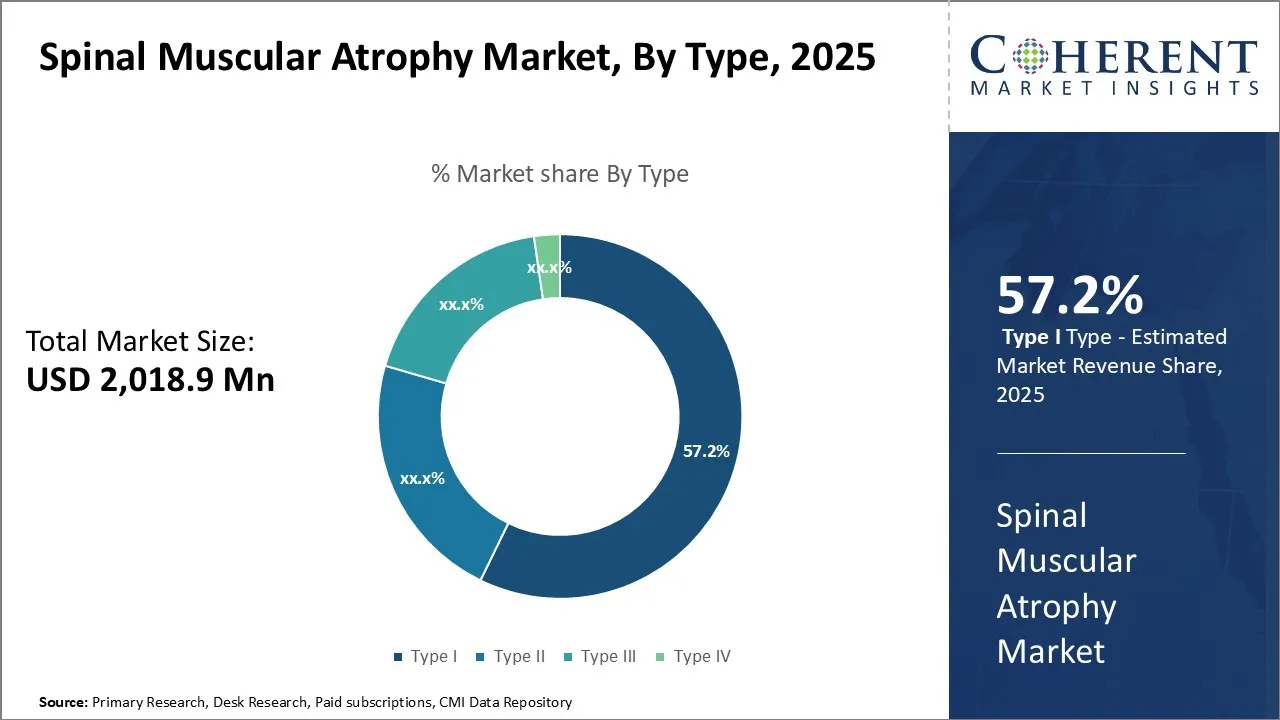
- By Type, Type I Spinal Muscular Atrophy will continue commanding the largest share of the market at 58.2% in 2026 due to diagnosis at infancy and high treatment urgency. This type also receives attention from the developmental laboratories because of its severity.
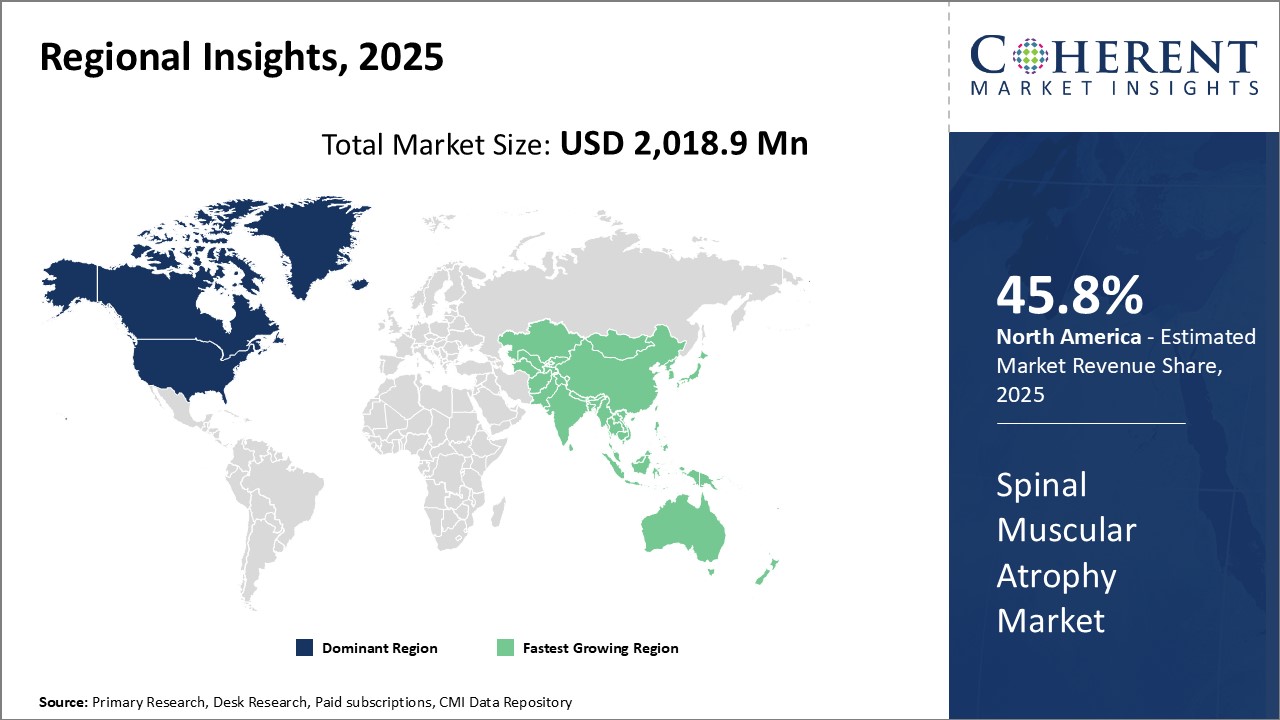
- By Region, the North America region is foreseen to lead the global spinal muscular atrophy market outlook in 2026 with a share of 45.8% owing to the developed healthcare facilities, favorable reimbursement policies, and vast knowledge regarding genetic disorders.
Market Overview
Spinal Muscular Atrophy (SMA) is characterized as a genetic condition with gradual muscle motor weakness as a result of loss of motor neurons, affecting firstly the muscles closest to the center of the body. The spinal muscular atrophy market growth is expanding rapidly with the introduction of new gene therapies like Zolgensma by Novartis, which has been approved by the FDA, and aims to treat the genetic cause of the disease. Broader diagnosis initiatives, growing concern, and favorable reimbursement policies are propelling growth in the SMA market. Active studies, along with increasing healthcare availability in developing areas, heighten overall growth, positioning SMA as a key focus in the therapeutics of rare diseases.
Current Events and Its Impact
Event | Description and Impact |
Advances in Gene Therapy Research |
|
Global Pharmaceutical Industry Supply Chain Disruptions |
|
Economic Instability and Healthcare Budget Constraints |
|
Segmental Insights
- Current Industry Events of 2026
- Market Size Estimation
- Regional Breakdown
- Competitive Landscape
- Customer Intelligence
- Segmental Analysis
- Pricing Analysis
- Key Market Drivers, Challenges & Future Trends
- Customized Insights Section
Spinal Muscular Atrophy Market Insights, by Type
The Type 1 segment is expected to dominate the spinal muscular atrophy market with a commanding share of 58.2% in 2026. This dominance is primarily due to the severe nature and early onset of Type 1 SMA, also known as infantile-onset SMA, which necessitates immediate and intensive therapeutic intervention. The high prevalence and critical need for effective treatments in newborns and infants drive significant demand for advanced therapies targeting this segment.
Patients with Type 1 SMA experience rapid motor neuron degeneration leading to severe muscle weakness and respiratory complications, making early diagnosis and treatment crucial. Consequently, pharmaceutical advancements focusing on gene therapy, antisense oligonucleotides, and supportive care are predominantly tailored for this segment, fueling market growth.
Regional Insights
North America Spinal Muscular Atrophy Market Analysis and Trends
North America is projected to dominate the global spinal muscular atrophy market, accounting for an estimated 45.8% share in 2026. This leadership position is driven by the region’s advanced healthcare infrastructure, strong reimbursement frameworks, and widespread awareness about genetic disorders. The U.S. and Canada host numerous specialized treatment centers and research institutions focused on rare neuromuscular diseases, facilitating early diagnosis and access to innovative therapies.
Robust government and private funding for genetic research and rare disease drug development further strengthen the region’s competitive edge. Additionally, comprehensive insurance coverage and patient support programs ensure better affordability and adherence to high-cost SMA treatments. North America’s collaborative ecosystem involving pharmaceutical companies, healthcare providers, and patient advocacy groups continues to propel market growth and drive breakthroughs in spinal muscular atrophy care.
Asia Pacific Spinal Muscular Atrophy Market Analysis and Trends
Asia Pacific is anticipated to be the fastest-growing Spinal Muscular Atrophy Market Trends during the forecast period. Rapid economic growth, improving healthcare access, and increasing awareness about genetic conditions are key factors propelling demand in countries such as China, India, Japan, and South Korea. The expanding healthcare infrastructure and rising government initiatives focused on rare diseases are fostering enhanced diagnosis and treatment availability.
The region’s large patient pool and increasing adoption of advanced genetic therapies are attracting investments from global pharmaceutical companies aiming to capture growth opportunities. Moreover, cost-effective manufacturing and distribution channels, coupled with growing patient advocacy, are expected to sustain long-term market expansion in the Asia Pacific region.
Dominating Countries in the Spinal Muscular Atrophy Market
United States Spinal Muscular Atrophy Market Analysis and Trends
The United States continues to lead the North American spinal muscular atrophy market, supported by its world-class healthcare system and extensive rare disease research initiatives. The presencae of leading biopharmaceutical companies specializing in SMA therapies, such as gene therapy and antisense oligonucleotides, underpins the country’s market dominance. Strong regulatory support from the FDA and expansive insurance coverage facilitate faster patient access to innovative treatments. Additionally, growing awareness campaigns and patient advocacy organizations contribute to improved diagnosis rates and early intervention, sustaining robust market growth.
China Spinal Muscular Atrophy Market Analysis and Trends
China is emerging as a high-growth market within the Asia Pacific region, driven by increasing government focus on rare disease management and expanding healthcare infrastructure. The country’s large patient population, coupled with rising investments in genetic research and biotechnology, is accelerating the availability and adoption of advanced SMA therapies. Favorable policy reforms aimed at improving drug accessibility and reimbursement are also enhancing market prospects.
Market Report Scope
Global Spinal Muscular Atrophy Market Report Coverage
| Report Coverage | Details | ||
|---|---|---|---|
| Base Year: | 2025 | Market Size in 2026: | USD 2,295.5 Mn |
| Historical Data for: | 2020 To 2024 | Forecast Period: | 2026 To 2033 |
| Forecast Period 2026 to 2033 CAGR: | 13.7% | 2033 Value Projection: | USD 5,638.9 Mn |
| Geographies covered: |
| ||
| Segments covered: |
| ||
| Companies covered: | Biogen, CYTOKINETICS, F. Hoffmann-La Roche Ltd, Genentech, Inc., PTC Therapeutics, Inc., Novartis AG, Ionis Pharmaceuticals, Chugai Pharmaceutical Co., Ltd., NMD PHARMA A/S, and Astellas Pharma Inc. | ||
| Growth Drivers: |
| ||
| Restraints & Challenges: |
| ||
Increasing prevalence of spinal muscular atrophy is expected to drive growth of spinal muscular atrophy market
The increasing prevalence of spinal muscular atrophy (SMA) is expected to drive the market growth over the forecast period. For instance, according to the Spinal Muscular Atrophy Foundation, a voluntary organization whose mission is to accelerate the development of a treatment for spinal muscular atrophy, SMA is believed to affect around 10,000 to 25,000 children and adults in the U.S., and therefore it is one of the most common rare diseases.
Increasing product launches are expected to drive the market growth during the forecast period.
Increasing product launches are expected to drive the market growth over the forecast period. For instance, in June 2021, F. Hoffmann-La Roche Ltd, a multinational healthcare company, launched prescription medicine Evrysdi, indicated for the treatment of spinal muscular atrophy (SMA) in adults and children aged 2 months and older, in India.
Global Spinal Muscular Atrophy Market: Restraint
The major factor that hinder growth of the global spinal muscular atrophy market include high cost of the treatment. For instance, according to an article published by MJH Life Sciences, largest privately held medical media company in the U.S., in March 2021, the mean per-patient annual direct medical cost was estimated to be between US$ 3,320 (spinal muscular atrophy type 3) in Italy and US$ 324,210 (type 1) in the U.S., with the variability high for other measures as well.
Key Developments
- April 2025: Novartis presented updated Phase 3 trial data for its gene therapy onasemnogene abeparvovec, showing significant motor function improvement in children aged 2 to 18 with SMA. The study supports expanding use of Zolgensma to broader pediatric age groups and reinforces its favorable safety profile.
- March 2025: Scholar Rock announced that the U.S. FDA accepted apitegromab for priority review for improving motor function in SMA patients.
- February 2025: St. Jude Children's Research Hospital revealed the first prenatal use of risdiplam, administered in the final six weeks of pregnancy. At two years old, the child treated in utero shows no identifiable symptoms of SMA, offering a groundbreaking direction for early intervention.
Analyst Viewpoint
- The global spinal muscular atrophy (SMA) market is poised for significant growth driven by increasing awareness among healthcare professionals and patient advocacy groups, alongside rising diagnosis rates worldwide. Advances in precision medicine, particularly the growing adoption of innovative gene therapies and antisense oligonucleotide treatments, are transforming clinical management and improving patient outcomes.
- Supportive regulatory frameworks and expedited approval processes continue to accelerate market momentum, especially in developed regions. However, the exceptionally high cost of advanced SMA therapies remains a major challenge, limiting accessibility and adoption in low- and middle-income countries.
- North America maintains its leadership position due to strong healthcare infrastructure, substantial rare disease research investments, and favorable regulatory policies facilitating rapid therapy availability. Meanwhile, Asia Pacific is emerging as the fastest-growing market, propelled by expanding patient populations, enhanced diagnostic capabilities, government initiatives to raise rare disease awareness, and increasing access to novel treatments.
- Looking ahead, opportunities in personalized medicine and biomarker research are expected to enable earlier diagnosis and tailored treatment approaches, enhancing clinical outcomes. Pharmaceutical stakeholders are advised to focus on strategic collaborations with regulatory authorities, patient advocacy groups, and healthcare providers to accelerate clinical development. Additionally, forming partnerships targeting emerging markets can unlock substantial growth potential within this rapidly evolving therapeutic landscape.
Market Segmentation
- Global Spinal Muscular Atrophy Market, By Type (Revenue, USD Mn, 2021 - 2033)
- Type I
- Type II
- Type III
- Type IV
- Global Spinal Muscular Atrophy Market, By Treatment (Revenue, USD Mn, 2021 - 2033)
- Gene Therapy
- Disease-modifying drugs
- Global Spinal Muscular Atrophy Market, By Age Group (Revenue, USD Mn, 2021 - 2033)
- Infant
- Adult
- Global Spinal Muscular Atrophy Market, By Route of Administration (Revenue, USD Mn, 2021 - 2033)
- Oral
- Injectables
- Global Spinal Muscular Atrophy Market, By Distribution Channel (Revenue, USD Mn, 2021 - 2033)
- Hospital Pharmacies
- Retail Pharmacies
- Online Pharmacies
- Global Spinal Muscular Atrophy Market, By Region (Revenue, USD Mn, 2021 - 2033)
- North America
- U.S.
- Canada
- Latin America
- Brazil
- Argentina
- Mexico
- Rest of Latin America
- Europe
- Germany
- U.K.
- Spain
- France
- Italy
- Russia
- Rest of Europe
- Asia Pacific
- China
- India
- Japan
- Australia
- South Korea
- ASEAN
- Rest of Asia Pacific
- Middle East
- GCC Countries
- Israel
- Rest of Middle East
- Africa
- South Africa
- North Africa
- Central Africa
- North America
- Company Profiles
- Biogen, CYTOKINETICS
- F. Hoffmann-La Roche Ltd
- Genentech, Inc.
- PTC Therapeutics, Inc.
- Novartis AG
- Ionis Pharmaceuticals
- Chugai Pharmaceutical Co., Ltd.
- NMD PHARMA A/S
- Astellas Pharma Inc.
Sources
Primary Research Interviews
- Key Opinion Leaders (KOLs) in the Spinal Muscular Atrophy field
- Healthcare Professionals (Neurologists, Pediatricians, Geneticists)
- Pharmaceutical and Biotech Company Representatives
- Patient Advocacy Groups
- Others
Databases
- National Center for Biotechnology Information (NCBI)
- Orphanet (Rare Diseases Database)
- ClinicalTrials.gov
- Others
Magazines
- Neurology Today
- Rare Disease Report
- Neurology Now
- MDA Quest Magazine
- Others
Journals
- Journal of Neuromuscular Diseases
- Neuromuscular Disorders
- Journal of Neurology
- Others
Newspapers
- The New York Times
- The Wall Street Journal
- USA Today
- The Guardian
- Others
Associations
- Cure SMA
- Muscular Dystrophy Association (MDA)
- SMA Foundation
- SMA Europe
- Others
Public Domain Sources
- World Health Organization (WHO)
- National Institute of Neurological Disorders and Stroke (NINDS)
- Centers for Disease Control and Prevention (CDC)
- European Medicines Agency (EMA)
- Others
Proprietary Elements
- CMI Data Analytics Tool
- Proprietary CMI Existing Repository of information for last 8 years
Get access to 250+ pages report
Every segment, forecast, competitor profile and data table behind the analysis above — available for instant download.
- ESOMAR Member
- ISO 9001:2015 Certified
- D-U-N-S Registered
- GDPR & CCPA Compliant
Missing comfort of reading report in your local language? Find your preferred language:
Transform your Strategy with Exclusive Trending Reports
Frequently Asked Questions
The Spinal Muscular Atrophy Market size is estimated to be valued at USD 2,295.5 Mn in 2026, and is expected to reach USD 5,638.9 Mn by 2033.
The CAGR of the global Market is projected to be 13.7% from 2026 to 2033.
Factors such as increasing prevalence of spinal muscular atrophy, increasing research and development activities, and increased product launches are expected to drive the market growth.
Type I is the leading type segment in the market.
The major factor hampering growth of the market include high cost of the treatment.
Major players operating in the market include Biogen, CYTOKINETICS, F. Hoffmann-La Roche Ltd, Genentech, Inc., PTC Therapeutics, Inc., Novartis AG, Ionic Pharmaceuticals, Chugai Pharmaceutical Co., Ltd., NMD PHARMA A/S, and Astellas Pharma Inc.