

Hypoxia Chamber Market Size and Share Analysis: 2026 - 2033
The global hypoxia chamber market size is projected to grow from USD 100.5 Mn in 2026 to USD 169.1 Mn by 2033, registering a compound annual growth rate (CAGR) of 7.7% during the forecast period (2026–2033). This growth in the market is mainly attributable to rising popularity in use for sports training and enhancing athletic performance, increasing applications in the field of medicine and therapy, and increasing interest in simulated altitude training technology.
Key Takeaways from the Hypoxia Chamber Market Report
- By type, 12 × 96-well plates segment is predicted to dominate the market by accounting for 35% share in 2026 due to the popularity of multi-well plates used in HTS and cell-based assay techniques. As stated by the National Institute of Health, HTS technology plays an important role in modern biomedical research as it allows performing thousands of tests at one time.
- The drug discovery category will hold the largest market share of 45% by 2026 due to the increase in R&D expenditures and the increased attention being paid to research in the areas of cancer and hypoxia. Biopharmaceutical companies spent more than USD 100 billion in annual R&D expenses, which reflects the increased need for scientific research tools like the hypoxia chamber in drug discovery.
- In terms of end user, biopharmaceutical companies’ segment is estimated to hold the highest market share of 55%, with a forecast of rising at a high growth rate by 2026, owing to higher financing ability and broad application in research laboratories. As per the International Federation of Pharmaceutical Manufacturers & Associations, the pharmaceutical industry holds significant importance in medical innovations with constant investments in research facilities leading to the need for laboratory equipment.
- The North American region is projected to lead the hypoxia chamber market with a share of 40% in 2026 due to the prevalence of biopharmaceutical organizations, highly developed research framework, and substantial investment in R&D activities by the countries of the United States and Canada. The United States contributes a significant share to global R&D expenses, exceeding USD 800 billion per year as mentioned by the National Science Foundation.
Segmental Insights
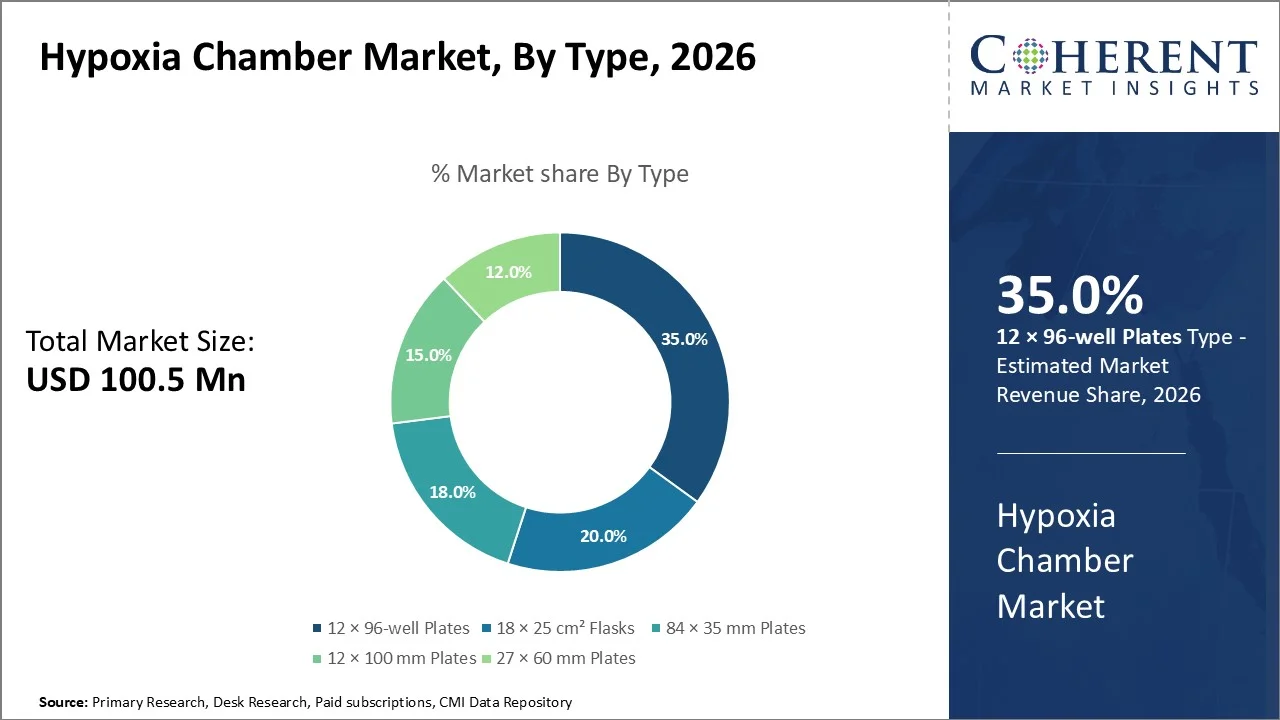
Why is the Hypoxia Chamber Market Dominated by 12 × 96-Well Plates Segment?
The 12 × 96 well plates segment is expected to have the highest market share of 35% in 2026 due to its extensive application in high throughput screening and cellular assays. This is mainly owing to the rise in demand for automation of drug discovery procedures in scientific laboratories.
In June 2025, Mitsui Chemicals officially announced the launch of InnoCell™ cell culture microplates, designed with high oxygen permeability to improve physiological relevance in cell-based experiments. These plates support advanced drug discovery workflows that often use 96-well and high-throughput screening formats, which are directly aligned with hypoxia research applications.
- Current Industry Events of 2026
- Market Size Estimation
- Regional Breakdown
- Competitive Landscape
- Customer Intelligence
- Segmental Analysis
- Pricing Analysis
- Key Market Drivers, Challenges & Future Trends
- Customized Insights Section
Which Application Segment Dominates the Hypoxia Chamber Market?
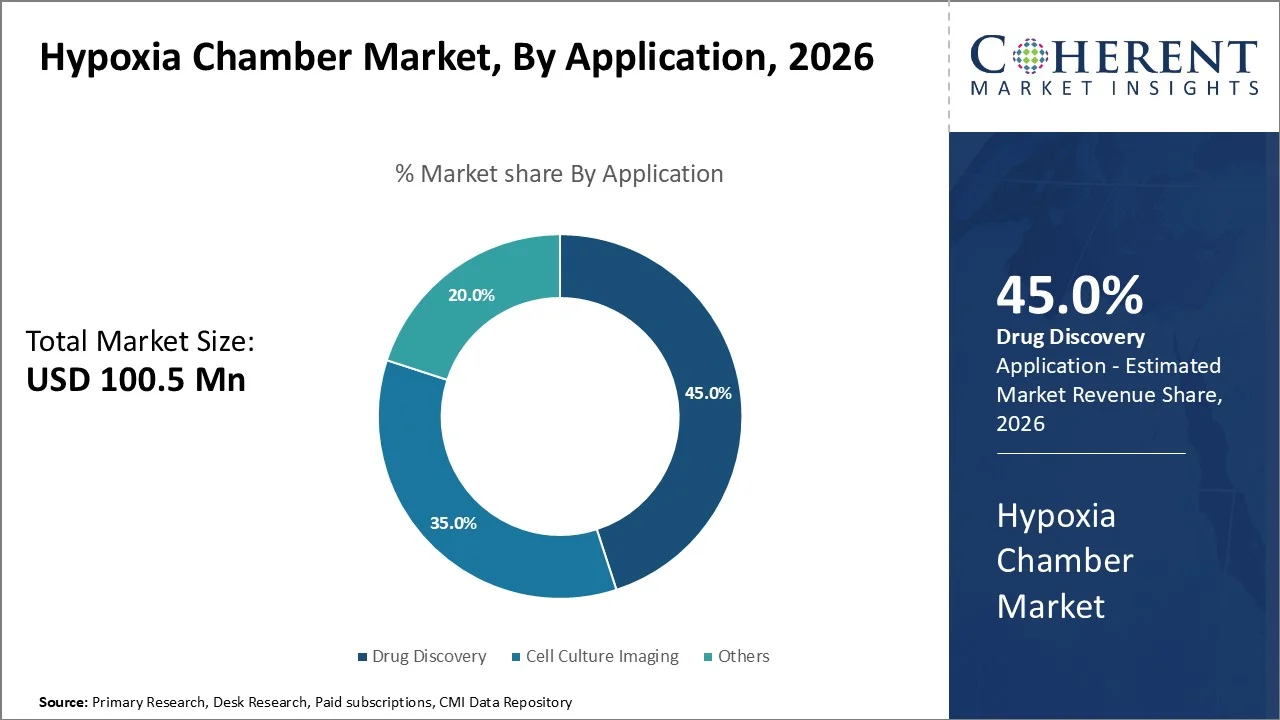
Drug discovery segment is expected to lead the market with a market share of 45% by 2026, owing to higher investment in pharmaceutical R&D activities along with increased research related to cancer and hypoxia. Drug discovery procedures are becoming highly dependent on hypoxia incubators to mimic tumor growth.
Moreover, growing prevalence of cancer and rising demand for precision medicine are further strengthening the role of hypoxia-based drug screening platforms in pharmaceutical research workflows.
In October 2025, Thermo Fisher Scientific announced major expansion of its Accelerator Drug Development platform, integrating AI to improve drug discovery speed, clinical research efficiency, and preclinical testing workflows.
Which End User Segment Dominates the Hypoxia Chamber Market?
The biopharmaceutical company sector is expected to hold the highest market share of 55%, owing to their excellent funding abilities and wide application in preclinical and clinical research studies. Biopharmaceutical companies require hypoxia chambers to conduct their cancer studies and drug tests.
In addition, major vendors of life sciences technology solutions like Thermo Fisher Scientific, among others, are increasing their scope to offer automated cell-based screening, organoids, and preclinical testing platforms that are commonly used by biopharmaceutical companies in studying oncological and metabolic disorders.
Market Driver
Increasing Focus on Tumor Hypoxia Research is Driving Market Expansion
The growing interest in cancer research studies, specifically in tumor hypoxia, has significantly contributed to the increase in demand for hypoxia chambers in the market. Currently, hypoxia is considered an important aspect of the tumor microenvironment that plays a role in determining the growth, metastasis, and resistance to treatment in cancers.
According to a study published in 2024 on PubMed, hypoxia is an inherent feature of the vast majority of solid cancers, contributing significantly to resistance to therapy and progression of the condition, thus underscoring the importance of controlled hypoxia studies.
Advancements in Drug Development Pipelines is Driving Hypoxia Chamber Adoption
Increased discoveries and developments of drugs throughout the world have played a significant role in increasing the demand for scientific apparatus such as hypoxia chambers. Hypoxia chambers enable researchers to study biological systems under controlled oxygen conditions on disease conditions according to the amount of oxygen present in particular environments.
According to industry data, there are over 24,000 drugs in the global pharmaceutical R&D pipeline as of 2025, reflecting a substantial increase in research activity worldwide.
Current Events and Their Impact on the Hypoxia Chamber Market
Current Event | Description and its Impact |
Increasing Global Investment in Biomedical and Life Sciences Research (2024–2025) |
|
Rising Cancer Burden Driving Oncology Research Expansion (2024–2025) |
|
Hypoxia Chamber Market Trends
- Rising cancer research demand is driving hypoxia chamber use in tumor microenvironment studies, with 20 million new cancer cases in 2024 globally.
- Shift toward 3D cell culture & organoids is increasing use of hypoxia chambers for more accurate disease and tumor modeling.
- The rapid expansion of biomedical research funding, particularly with U.S. R&D spending expected to hit USD 937B (2023-2024), is driving the deployment of state-of-the-art laboratory facilities.
- Artificial intelligence for drug discovery has spurred automation of the screening process, thus enhancing the dependence on oxygen-controlled
Regional Insights
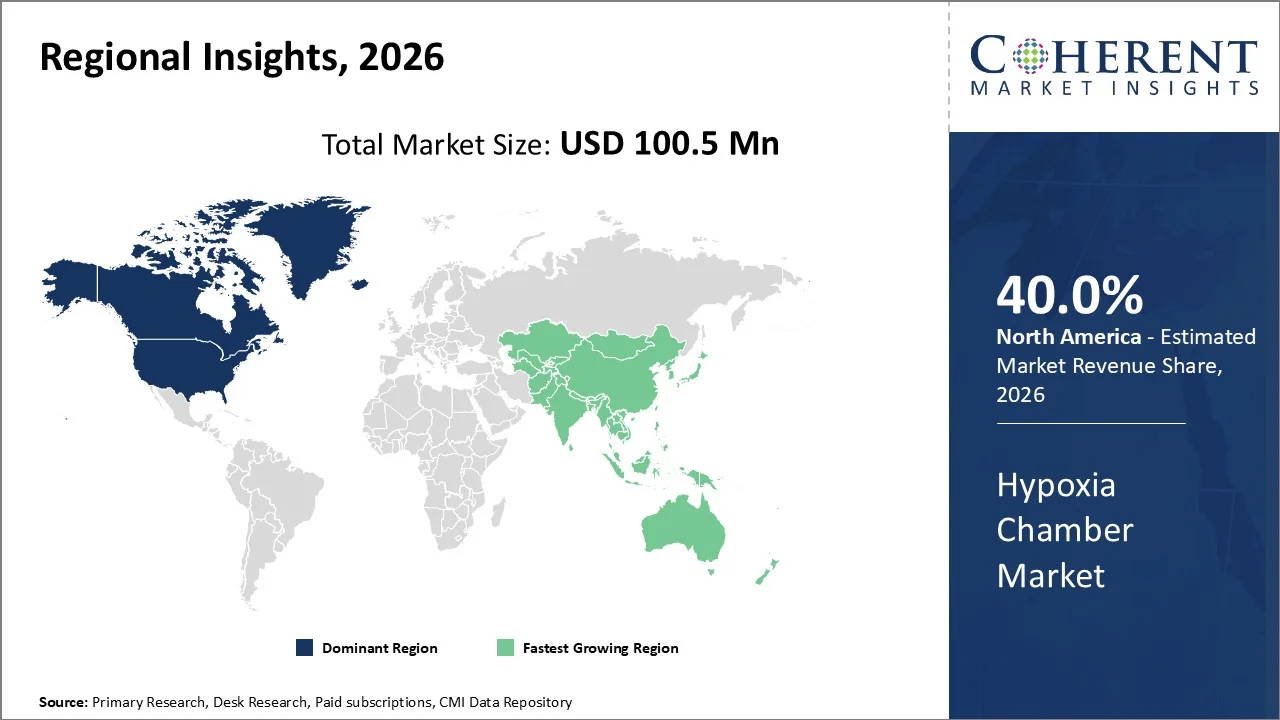
North America dominates owing to strong biopharmaceutical R&D ecosystem
North America holds a substantial market share of 40% in 2026 due to the presence of many biopharmaceutical firms and high investments made by the U.S. and Canada in their research and development initiatives. North America has been a beneficiary of the wide use of hypoxia chambers in cancer studies, drug discovery, and regenerative medicine.
Increased investments in biomedical research constitute a primary factor for development, such as the report by the National Center for Science and Engineering Statistics stating that, by 2023-2024, US Research & Development investments were USD 937 billion, demonstrating significant investments in laboratory technology advancements.
Asia Pacific Hypoxia Chamber Market Trends
Asia Pacific region will experience the highest growth rate over 2026–2033 due to the high growth rate of pharmaceutical R&D, rising investment in healthcare by the governments, and increasing use of life science technology in China, India, and Japan. The region will grow with a good CAGR rate due to the growing population and oncology research.
For example, Hasten Biopharmaceutical announced in November 2025 the development of an end-to-end Asia-Pacific commercial and research platform, expanding its operations across Southeast Asia, Australia, and South Korea to support advanced drug development and clinical research activities.
U.S. Hypoxia Chamber Market Trends
The U.S. hypoxia chamber industry is expected to record a steady growth over the forecast period, underpinned by considerable research and development spending in the biopharmaceutical industry, robust research facilities, and emphasis on oncology and drug discovery applications. The country continues to be the global leader in innovations in the field of biomedicine, where hypoxia chambers have been embraced extensively.
Moreover, the biopharmaceutical organizations in the U.S. are increasingly turning toward AI-enabled drugs discovery solutions, automated assays of cells, and better pre-clinical models that incorporate controlled oxygen conditions to replicate diseases in humans. Major players in the life sciences market such as Thermo Fisher Scientific are expanding their drug discovery platforms based on hypoxia studies.
China Hypoxia Chamber Market Trends
China is forecasted to become one of the fast-developing countries in terms of hypoxia chamber devices due to fast growth in biotech industry, governmental funding for life science sector, and rising interest in drug development and oncology studies. It is making efforts towards creating a robust biopharmaceutical environment through national science and health policies.
According to a 2025 U.S. Congressional competitiveness report on biotechnology, China has quickly established a vertical biotech ecosystem and improved its competitiveness globally in life science innovation, backed by substantial investments from its government and industrial scale-up approaches.
Who are the Major Companies in Hypoxia Chamber Industry
Some of the major key players in Hypoxia Chamber are Baker, STEMCELL Technologies Inc, BioSpherix Ltd, Plas-Labs, HypOxygen, Coy Labs, Oxford Optronix Ltd, Scintica Instrumentation Inc., CytoSMART Technologies B.V.
Industry News
- In November 2024, the Baker Company highlighted its advanced incubation and controlled-environment systems, including its Physoxia & Hypoxia Chambers portfolio, designed for oxygen-controlled cell culture applications in cancer research, regenerative medicine, and biopharmaceutical studies.
Market Report Scope
Hypoxia Chamber Market Report Coverage
| Report Coverage | Details | ||
|---|---|---|---|
| Base Year: | 2025 | Market Size in 2026: | USD 100.5 Mn |
| Historical Data for: | 2020 To 2024 | Forecast Period: | 2026 To 2033 |
| Forecast Period 2026 to 2033 CAGR: | 7.7% | 2033 Value Projection: | USD 169.1 Mn |
| Geographies covered: |
| ||
| Segments covered: |
| ||
| Companies covered: | Baker, STEMCELL Technologies Inc, BioSpherix?Ltd, Plas-Labs, HypOxygen, Coy Labs, Oxford Optronix Ltd, Scintica Instrumentation Inc., CytoSMART Technologies B.V. | ||
| Growth Drivers: |
| ||
| Restraints & Challenges: |
| ||
Analyst Opinion
- Hypoxia chamber demand is strongly driven by real scientific need, as rising cancer and chronic disease burden is pushing researchers to better simulate low-oxygen tumor environments for drug development.
- Drug discovery remains the core usage area, with increasing pharmaceutical R&D spending (US$ 250B+ annually) accelerating adoption of advanced preclinical hypoxia models.
- The rise of high throughput screening and automation has made the adoption of 96-well plate-based hypoxic systems an absolute necessity for efficient drug discovery.
- Shift toward precision medicine and 3D cell culture is fundamentally changing research workflows, increasing reliance on physiologically relevant oxygen-controlled environments.
Speak to the analyst
Want personalized insights?
Take the findings above to one of our principal consultants, or have the report rebuilt around the segments, geographies and competitors you actually track.
Hypoxia Chamber Market Segmentation
- By Type (Revenue, USD Mn, 2021-2033)
- 84 x 35 mm Plates
- 27 x 60 mm Plates
- 12 x 100 mm Plates
- 12 x 96-well Plates
- 18 x 25 cm2 Flasks
- By Application (Revenue, USD Mn, 2021-2033)
- Cell Culture Imaging
- Drug Discovery
- Others
- By End User (Revenue, USD Mn, 2021-2033)
- Biopharmaceutical Companies
- Clinical Laboratories
- Others
- Global Hypoxia Chamber Market, By Region: (Revenue, USD Mn, 2021-2033)
- North America
- U.S.
- Canada
- Latin America
- Brazil
- Mexico
- Argentina
- Rest of Latin America
- Europe
- Germany
- U.K.
- France
- Italy
- Spain
- Russia
- Rest of Europe
- Asia Pacific
- China
- India
- Japan
- Australia
- South Korea
- ASEAN
- Rest of Asia Pacific
- Middle East
- GCC
- Israel
- Rest of Middle East
- Africa
- South Africa
- Central Africa
- North Africa
- North America
- Key Players
- Baker (The Baker Company)
- STEMCELL Technologies Inc.
- BioSpherix Ltd.
- Plas-Labs
- HypOxygen Ltd.
- Coy Laboratory Products (Coy Labs)
- Oxford Optronix Ltd.
- Scintica Instrumentation Inc.
- CytoSMART Technologies B.V.
Sources
Primary Research interviews
- Interviews with biopharmaceutical R&D scientists, cell biology researchers, oncology research experts, laboratory equipment procurement managers, CRO (Contract Research Organization) specialists, and academic institute research heads involved in hypoxia and cell culture studies
Databases
- National biomedical research databases (NIH, PubMed research repositories)
- Clinical trial and drug development pipeline databases
- Life sciences R&D funding databases (NSF, OECD Science & Technology data)
- Pharmaceutical R&D investment tracking databases
- Biotechnology innovation and patent databases (WIPO, USPTO)
Magazines
- Life science and biotechnology trade magazines
- Drug discovery and pharmaceutical technology publications
- Laboratory equipment and analytical instrumentation magazines
- Oncology research and cancer biology industry magazines
- Cell culture and regenerative medicine industry publications
Journals
- Peer-reviewed journals in cancer biology, tumor microenvironment, and hypoxia research
- Cell biology and molecular biology journals
- Pharmacology and drug discovery research journals
- Biomedical engineering and life sciences instrumentation journals
- Regenerative medicine and stem cell research journals
Newspapers
- Leading international newspapers covering healthcare innovation and pharmaceutical industry developments
- Business newspapers reporting biotech and life sciences investments
- Science and technology news sections covering biomedical advancements
Associations
- National Institutes of Health
- World Health Organization
- Pharmaceutical Research and Manufacturers of America (PhRMA)
- International Federation of Pharmaceutical Manufacturers & Associations (IFPMA)
- American Association for Cancer Research (AACR)
- Biotechnology Innovation Organization (BIO)
Public Domain sources
- Government biomedical research funding reports (NSF, NIH, EU Horizon Europe)
- Global cancer statistics and epidemiology reports (WHO)
- Clinical trial registries (ClinicalTrials.gov)
- Academic institutional publications and open-access research papers
- Company annual reports and investor presentations (life sciences firms)
Proprietary Elements
- CMI Data Analytics Tool
- Proprietary CMI Life Sciences & Biotechnology Market Repository (last 8+ years of historical data)
- Hypoxia Chamber Market modeling framework and forecast engine
- Primary & secondary triangulation-based demand estimation model
Get access to 250+ pages report
Every segment, forecast, competitor profile and data table behind the analysis above — available for instant download.
- ESOMAR Member
- ISO 9001:2015 Certified
- D-U-N-S Registered
- GDPR & CCPA Compliant
Missing comfort of reading report in your local language? Find your preferred language:
Transform your Strategy with Exclusive Trending Reports
Frequently Asked Questions
The global Hypoxia Chamber Market is estimated to be valued at USD 100.5 Mn in 2026.
The global market value is expected to reach USD 169.1 Mn by 2033.
The global market is projected to grow at a CAGR of 7.7% from 2026 to 2033.
Major growth drivers include rising cancer research, increasing drug discovery pipelines, growing use of 3D cell culture & organoids, and expanding pharmaceutical R&D investments.
The 12 × 96-well plates segment, with around 35% share in 2026, dominates the market due to its widespread use in high-throughput screening.
The drug discovery segment, with about 45% share in 2026, leads the market due to rising oncology research and pharmaceutical R&D investment.
Key companies include Baker, STEMCELL Technologies Inc., BioSpherix Ltd., Plas-Labs, HypOxygen Ltd., Coy Laboratory Products, Oxford Optronix Ltd., Scintica Instrumentation Inc., and CytoSMART Technologies B.V.