

Global Submersible Pumps Market Size and Share Analysis – Growth Trends and Forecasts (2026-2033)
The global submersible pumps market is estimated to be valued at USD 13.78 Bn in 2026 and is expected to reach USD 21.42 Bn by 2033, exhibiting a compound annual growth rate (CAGR) of 6.5% from 2026 to 2033.
Key Takeaways
- In terms of Product Type, Open Well Submersible Segment is expected to contribute 46.9% share in 2026 of the market. This is due to its affordability and versatility.
- In terms of End-Use Industry, Construction & Building Services Segment contributes 39% share of the market in 2026. This is because mega-scale construction projects such as tunnels, dams, canals, and highway work typically require massive earthwork dewatering activities on a continuous basis.
- In terms of head type, above 100 m segment contributes 41.6% share of the market in 2026. This is owing to the robust demand from the energy and industrial sectors.
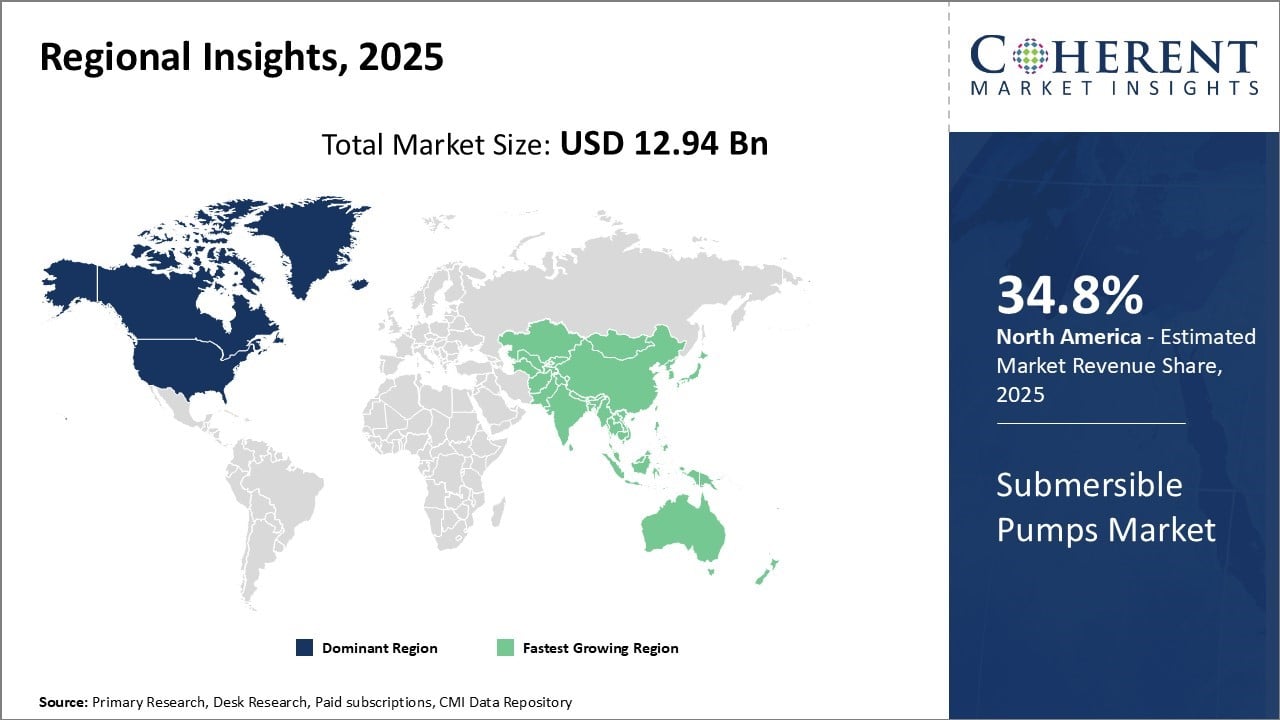
- North America has dominated the global submersible pumps market with 34. 8%share in 2026. This is due to strong industrial presence and well-established pipeline infrastructure in the U.S. and Canada.
Market Overview
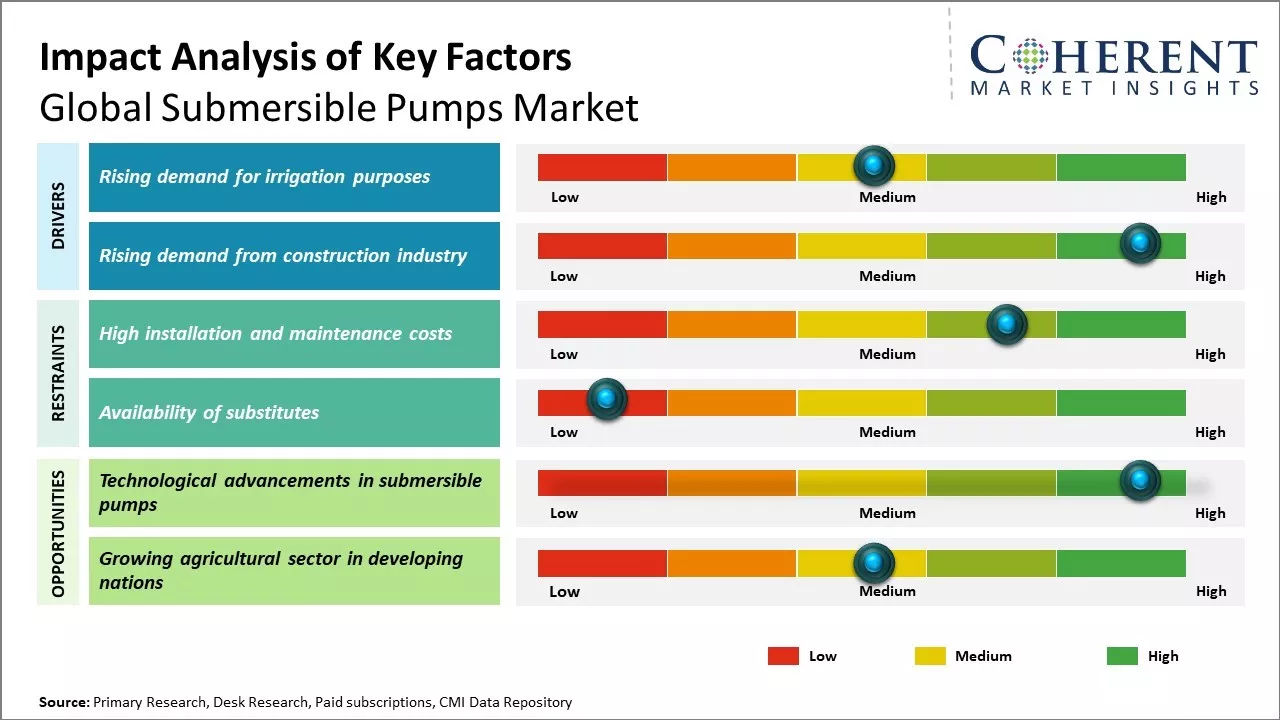
The global submersible pumps market is expected to witness significant growth driven by rising investments in the agriculture, housing, and industrial sectors. The growing emphasis on water recycling and desalination is also supporting the market growth. Additionally, the increasing adoption of groundwater sources for irrigation and other applications is propelling the demand for submersible pumps. However, high initial installation costs and growing preference for energy-efficient pumps may hamper the market growth to some extent over the forecast period. Technological advancements in materials and pump designs are expected to create new opportunities for industry players.
Current Events and Its Impact on Submersible Pumps Market
Current Events | Description and its impact |
Solar‑Powered Submersible Pump Deployment under PM‑KUSUM Scheme in India |
|
Advanced Motor Control Technologies for Submersible Pumps |
|
Pricing Analysis
The 2025 pricing analysis of the submersible pumps market captures a dynamic interaction of parameters like application type, motor power, material quality, energy efficiency, and regional demand. Pricing tends to differ across categories like borewell, open well, and non-clog submersible pumps, with borewell pumps most popular and price-competitive due to strong demand in agriculture and residential applications. On average, low-capacity submersible pumps (up to 1.5 HP) are priced between $150 and $400, catering mainly to domestic and small-scale irrigation needs.
Medium-capacity pumps (2–10 HP) used in commercial farming and industrial water management are priced from $500 to $1,500. Large-capacity industrial-grade pumps (over 10 HP) found in mining, wastewater treatment, and desalination schemes may vary from $2,000 upwards of more than $10,000 based on specifications and materials such as stainless steel or bronze alloy build.
Raw material price fluctuations—copper, stainless steel, and high-tech polymers being key examples—are responsible for influencing manufacturing cost and end-user price. Energy-efficient varieties with smart control applications, such as IoT integration and solar compatibility, are generally priced 15–25% over traditional models. But they provide long-term cost savings in terms of less electricity consumption and maintenance.
Region-wise, prices are lower in Asia-Pacific because of local manufacturing centers and economies of scale, whereas slightly increased prices in North America and Europe are driven by rigorous efficiency and environmental impact of submersible pumps. Overall, the market tends toward value-based pricing, thereby holding manufacturers to an almost goal to balance performance, durability, and operating costs to meet diverse end-user needs.
- Current Industry Events of 2026
- Market Size Estimation
- Regional Breakdown
- Competitive Landscape
- Customer Intelligence
- Segmental Analysis
- Pricing Analysis
- Key Market Drivers, Challenges & Future Trends
- Customized Insights Section
Role of Emerging Technologies
The main emerging technologies are having a transformative role in changing the face of the submersible pumps market: efficiency, durability, and automation improvements. One of the most important developments is IoT and smart sensor integration to provide real-time monitoring of pump operation, water flow rates, energy usage, and maintenance requirements.
Smart systems decrease downtime and operating expenses, particularly with large-scale agricultural, municipal, and industrial operations. In addition, variable frequency drives (VFDs) are being widely used to control motor speed in accordance with demand, resulting in improved energy efficiency and extended equipment life.
Materials technology is also an area of development, as manufacturers apply corrosion-resistant alloys, thermoplastics, and ceramic coatings to advance pump life in aggressive conditions such as seawater or wastewater. Sophisticated hydraulic design through computational fluid dynamics (CFD) is also assisting in optimizing impeller geometry and flow path to minimize energy losses and maximize overall pump performance. Solar-powered submersible pumps are another breakthrough, marking a significant revolution in off-grid and remote irrigation, providing sustainable alternatives where electricity availability is scarce or erratic.
Additionally, additive manufacturing (3D printing) is being investigated for production and prototyping of intricate pump parts with tailored specifications, lowering lead times and costs. With digitalization and automation further deepening their penetration into industrial infrastructure, submersible pumps are becoming smarter, efficient, and versatile. These advances are not only increasing the range of applications for submersible pumps but also opening up new growth prospects for manufacturers who emphasize innovation and sustainability.
Market Concentration and Competitive Landscape
Market Driver
- Rising demand for irrigation purposes
The global demand for submersible pumps is increasing primarily driven by its extensive use in irrigation applications across both developed and developing countries. Reliable irrigation is crucial for the agricultural industry in ensuring higher crop yields through consistent and adequate water supply. Submersible pumps allow for the easy and energy-efficient extraction of water from open water sources like rivers, lakes, and ponds directly to the fields without the need for lengthy delivery pipelines. This makes them highly suitable for both small and large-scale farming activities.
Agriculture accounts for over 70% of total freshwater withdrawals globally and irrigation requirements are projected to rise substantially in the coming years due to factors like expanding cultivable areas, introduction of multiple cropping patterns, and high-value crops. Rapid population growth also implies a growing global food demand that can only be met through improved irrigation infrastructure and technologies.
Several governments and international organizations are undertaking major initiatives to modernize irrigation systems with more efficient equipment in major agriculture dependent countries. For example, governments in India and China have allocated large funds towards the widespread installation of submersible pumps as part of their schemes to boost domestic food production and farmers' income levels.
In June 2025, the Muradpur Floating Solar‑Powered Lift Irrigation Scheme was inaugurated in Nagpur district, Maharashtra, targeting 465 acres of farmland. The system uses solar‑powered submersible pumps (20 HP) to lift reservoir water through pipelines and distribute it via drip irrigation.
- Rising demand from construction industry
The construction industry has emerged as a key end-user segment driving the sales of submersible pumps. Megaprojects involving dams, bridges, and tunnels require huge amounts of water for activities like cement mixing, concrete casting, and surface treatment.
Submersible pumps help contractors easily extract water from nearby sources and pump it directly to the construction site in large volumes through their high discharge rates and abilities to operate even at deep depths. They also find increasing applications in dewatering of excavated areas and management of ground water during foundation laying works.
Recent years have witnessed massive investments in infrastructure development globally, both from government organizations and private players. Rapid urbanization has necessitated projects involving the expansion of road & rail networks, construction of multi-storied buildings, smart cities and urban redevelopments.
Even rural areas are witnessing the growth of infrastructure like irrigation canals, rural roads, and electrification projects. All these leads to higher demand for earth-moving and heavy construction machinery that depend on continuous water supply. The growing construction activities therefore drive the significant consumption of submersible pumps capable of handling large throughputs required at busy project sites.
Market Opportunities: Technological advancements in submersible pumps
Technological advancements in submersible pumps present a tremendous opportunity for growth in the global submersible pumps market. As energy efficiency and environmental standards continue to rise around the world, the need for more sustainable and intelligent pumping solutions is increasing. Submersible pump manufacturers who invest in the research and development of new technologies stand to gain major market share.
Pumps utilizing variables like permanent magnet motors, integrated controls, and advanced materials are able to operate at lower costs while meeting stringent emission targets. This allows end users to reduce pumping costs substantially over the lifetime of the equipment through lower energy usage. At the same time, technologies like integrated sensors and cloud connectivity enable the remote monitoring of pump performance. This adds convenience for operators while reducing downtime through predictive maintenance capabilities.
Segmental Insights
Submersible Pumps Market Insights, By Product Type
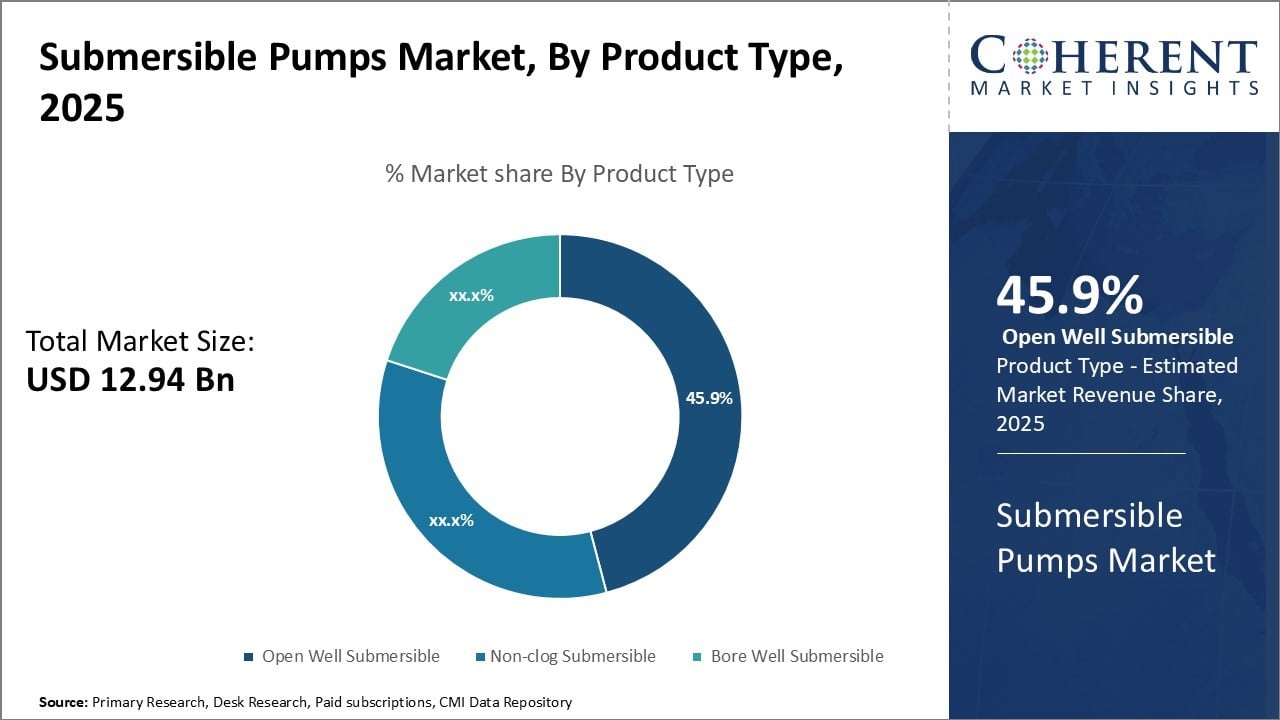
In terms of product type, open well submersible is expected to contribute 46.9% share in 2026 of the market owing to its affordability and versatility. Open well submersible pumps require minimal installation costs as they can be directly lowered and operated in an open water source like wells, ponds, or reservoirs without the need for additional piping infrastructure.
This makes them a cost-effective solution for low volume water extraction applications compared to other product types. Their simple design also makes them durable and suitable for handling varying flow rates depending on usage requirements. Farmers, construction projects, and local municipalities extensively use open well submersibles for basic water transfer needs due to their plug-and-play functionality and budget-friendly pricing.
Moreover, these pumps are lightweight and portable which helps contractors deploy them temporarily at work sites for dewatering activities. Their easy maintenance further enhances their appeal among price-sensitive end-users.
Submersible Pumps Market Insights, By Head Type
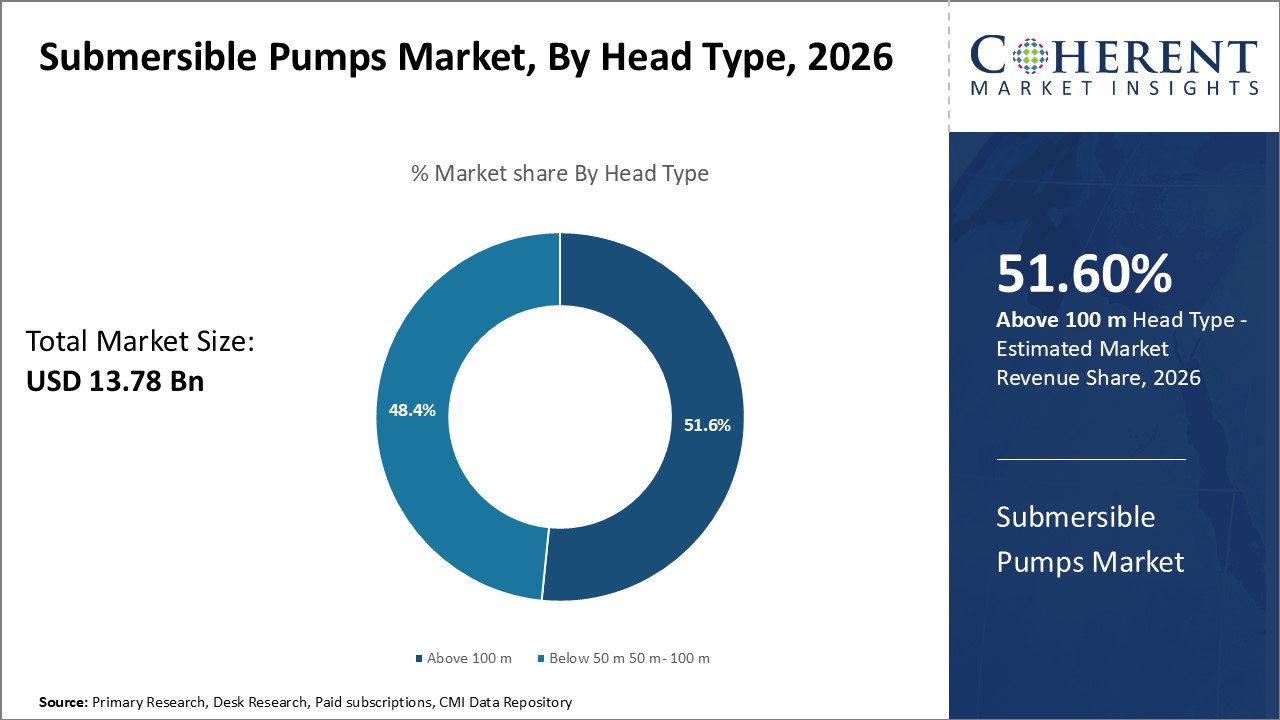
In terms of head type, above 100 m contributes 51.6% share of the market in 2026 owing to the robust demand from the energy and industrial sectors. Pumps with above 100m head capability are specifically designed to withstand high pressures and discharge water efficiently over long vertical distances. They play a crucial role in pumping large volumes of water and slurries for oil & gas extraction; thermal and hydropower plants located far away from water sources.
Mining and other process industries also depend on these high head pumps for complicated pipeline networks within their sprawling facilities. The ability of above 100m pumps to overcome severe pressure challenges within the distribution system makes them ideal for complex industrial applications involving long distance fluid transfer.
Submersible Pumps Market Insights, By End-use Industry
In terms of end-use industry, construction & building services contributes 39% share of the market in 2026. Mega-scale construction projects such as tunnels, dams, canals, and highway work typically require massive earthwork dewatering activities on a continuous basis. Submersible pumps play a vital role in discharging ground water seepage and surface run-off efficiently from these work sites. Their portable design allows easy mobilization to excavation points whereas the corrosion-resistant and non-clog features ensure clog-free operation.
Moreover, building construction also involves regular water supply for activities like concreting and plumbing works. Submersibles help contractors meet the bulk water demand of such projects through temporary piping networks. The growth in infrastructure development and real estate construction across major economies will consistently drive the demand for submersible pumps in the coming years.
Global Submersible Pumps Market - Regional Insights
North America Submersible Pumps Market Analysis and Trends
North America has dominated the global submersible pumps market with 34.8% share in 2026 owing to strong industrial presence and well-established pipeline infrastructure in the U.S. and Canada. The region is home to many key oil & gas, mining, and construction companies that rely heavily on submersible pumps for various industrial applications such as dewatering, sewage, and water supply.
Several leading global pump manufacturers, such as Sulzer, Goulds Pumps, and Xylem, have sizable operations focused on submersible pumps catering to North American customers. Submersible pumps in North America are known for their high-quality standards and technological advancements in areas like material, design, and efficiency. This has helped create brand loyalty among customers and also attract demand from other regions. However, pricing pressures from emerging competitors and shift towards localized manufacturing could impact North America's dominance going forward.
Asia Pacific Submersible Pumps Market Analysis and Trends
The Asia Pacific region has emerged as the fastest growing market for submersible pumps globally. Countries such as China, India, Indonesia, and Australia are driving this growth on account of accelerating industrialization, rapid urbanization, and extensive investments in water & wastewater infrastructure projects. China, in particular, has witnessed a massive boom in construction activity for water supply networks, drainage systems, and sewer lines across major cities to cope with its expanding urban population.
This has boosted demand for submersible pumps significantly. Additionally, several foreign pump companies have set up large scale manufacturing plants in countries like China and India to cater to the Asia Pacific region, benefiting from low costs. The availability of localized products and favorable government policies for infrastructure and made-in-country initiatives have also contributed to the Asia Pacific region's rapid emergence as a global force in submersible pumps market.
Submersible Pumps Market Dominating Countries
India Submersible Pumps Market Analysis and Trend
India is at the forefront of the market for submersible pumps, led mainly by its extensive agricultural industry and heavy dependence on groundwater for irrigation. Government programs such as PM-KUSUM to encourage solar-powered pumps and rural electrification are also fueling growth in demand. Urbanization and infrastructure growth at a fast pace also add to increasing usage of these pumps in water supply and sewerage systems.
China Submersible Pumps Market Analysis and Trend
China leads in producing and exporting submersible pumps because of its robust industrial base and affordable manufacturing. Increasing investments by the country in smart agriculture, industrial automation, and urban water management are driving domestic demand. Additionally, China's emphasis on modernizing water infrastructure in rural areas keeps propelling market growth.
United States Submersible Pumps Market Analysis and Trend
The U.S. market for submersible pumps is mature with robust demand in oil & gas, wastewater treatment, and municipal water supply. Stringent standards for energy efficiency and environmental regulations are compelling the development of state-of-the-art, sensor-based pump systems. The need for modernizing infrastructure is also a major growth driver.
Germany Submersible Pumps Market Analysis and Trend
Germany is a market leader in Europe, recognized for manufacturing high-performance, energy-saving submersible pumps. The nation's dominance in automation and green technology fuels innovation in pump design. Demand is high in wastewater treatment, industrial processes, and building services.
Market Report Scope
Submersible Pumps Market Report Coverage
| Report Coverage | Details | ||
|---|---|---|---|
| Base Year: | 2025 | Market Size in 2026: | USD 13.78 Bn |
| Historical Data for: | 2020 To 2024 | Forecast Period: | 2026 To 2033 |
| Forecast Period 2026 to 2033 CAGR: | 6.5%2033 Value Projection: | USD 21.42 Bn | |
| Geographies covered: |
| ||
| Segments covered: |
| ||
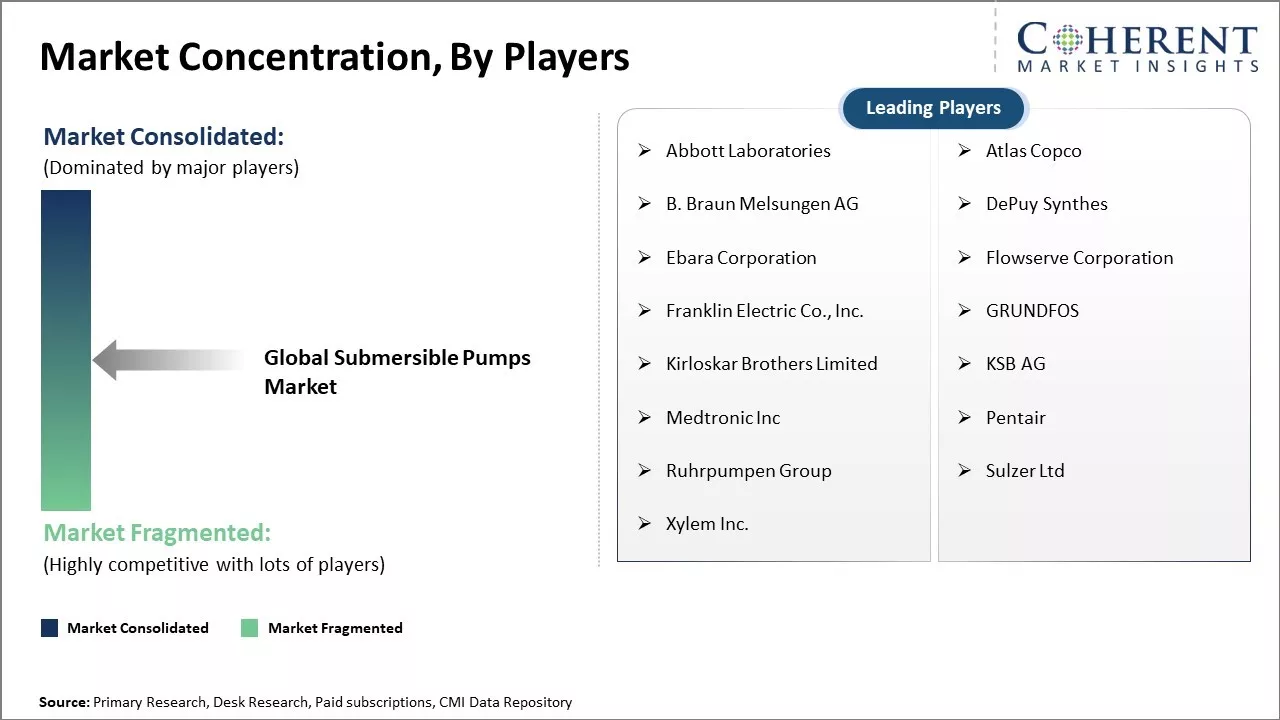
| Companies covered: | Abbott Laboratories, Atlas Copco, B. Braun Melsungen AG, DePuy Synthes, Ebara Corporation, Flowserve Corporation, Franklin Electric Co., Inc., GRUNDFOS, Kirloskar Brothers Limited, KSB AG, Medtronic Inc, Pentair, Ruhrpumpen Group, Sulzer Ltd, and Xylem Inc. | ||
| Growth Drivers: |
| ||
| Restraints & Challenges: |
| ||
Submersible Pumps Industry News
- In 2025, Curtiss-Wright Corporation signed a strategic agreement with Shell Exploration & Production to provide a hermetically sealed motor boosting system for Petrobras operations in Brazil's Campos Basin. The technology is meant to minimize unplanned power outages and maximize production reliability in offshore submersible pump applications.
- In April 2024, Grundfos launched its new SE Series 48 submersible pumps—designed for high-capacity wastewater and raw sewage treatment—with advanced anti-blockage technology. The equipment is designed to reduce downtime and lower the cost of operation for municipal and industrial plants worldwide.
Key Takeaways from Analyst
- The global submersible pumps market continues to grow steadily driven by factors such as increasing agricultural activities and rising focus on water management. The residential segment is expected to exhibit high demand due to growing infrastructure and rising disposable incomes in developing nations. Additionally, the commercial and industrial segments will show notable growth rates owing to expansion in sectors such as construction, power generation, mining, and wastewater treatment.
- However, high initial costs and frequent maintenance requirements could hamper the market growth. Fluctuating raw material prices may also pose challenges. Nonetheless, the development of energy-efficient pumps and growing investments to replace aging infrastructure will create opportunities for market participants. Technological advancements have increased focus on Internet of Thing (IoT)-enabled and intelligent pumps as well.
- North America dominates the global submersible pumps market and will continue its leadership during the forecast period. Growing submersible pumps applications in agriculture production and rising focus on water infrastructure in countries such as India and China are driving the regional market. Government initiatives to boost irrigation will further support market growth. Meanwhile, Asia Pacific will emerge as a major revenue generator owing to strong construction and mining industries.
Market Segmentation
- Product Type Insights (Revenue, USD Bn, 2021 - 2033)
- Non-clog Submersible
- Open Well Submersible
- Bore Well Submersible
- Head Type Insights (Revenue, USD Bn, 2021 - 2033)
- Below 50 m
- 50 m- 100 m
- Above 100 m
- End-use Industry Insights (Revenue, USD Bn, 2021 – 2033)
- Agriculture
- Construction & Building Services
- Water & Wastewater
- Power Generation
- Oil & Gas
- Chemical
- Others
- Regional Insights (Revenue, USD Bn, 2021 - 2033)
- North America
- U.S.
- Canada
- Latin America
- Brazil
- Argentina
- Mexico
- Rest of Latin America
- Europe
- Germany
- U.K.
- Spain
- France
- Italy
- Russia
- Rest of Europe
- Asia Pacific
- China
- India
- Japan
- Australia
- South Korea
- ASEAN
- Rest of Asia Pacific
- Middle East & Africa
- GCC Countries
- Israel
- South Africa
- Rest of Middle East & Africa
- Key Players Insights
- Abbott Laboratories
- Atlas Copco
- B. Braun Melsungen AG
- DePuy Synthes
- Ebara Corporation
- Flowserve Corporation
- Franklin Electric Co., Inc.
- GRUNDFOS
- Kirloskar Brothers Limited
- KSB AG
- Medtronic Inc.
- Pentair
- Ruhrpumpen Group
- Sulzer Ltd.
- Xylem Inc.
Sources
Primary Research Interviews
- Submersible pump manufacturers and suppliers
- Industrial equipment distributors and dealers
- Water management system integrators
- End-user industries (mining, construction, agriculture)
- Others
Databases
- IBISWorld Industry Reports
- Euromonitor International
- Global Trade Atlas
- Others
Magazines
- Pumps & Systems Magazine
- World Pumps Magazine
- Industrial Equipment News
- Water & Wastewater International
- Others
Journals
- Journal of Fluids Engineering
- International Journal of Fluid Machinery and Systems
- Pump Industry Analyst
- Others
Newspapers
- Financial Times
- The Wall Street Journal
- Industrial Distribution Magazine
- Reuters Business News
- Others
Associations
- Hydraulic Institute (HI)
- International Pump Manufacturers Association (IPMA)
- Water Equipment Manufacturers Association (WEMA)
- American Water Works Association (AWWA)
- Others
Public Domain Sources
- U.S. Census Bureau Manufacturing Reports
- European Commission Industrial Statistics
- International Trade Centre Market Analysis
- World Bank Infrastructure Data
- Others
Proprietary Elements
- CMI Data Analytics Tool
- Proprietary CMI Existing Repository of information for last 8 years
Get access to 250+ pages report
Every segment, forecast, competitor profile and data table behind the analysis above — available for instant download.
- ESOMAR Member
- ISO 9001:2015 Certified
- D-U-N-S Registered
- GDPR & CCPA Compliant
Missing comfort of reading report in your local language? Find your preferred language:
Transform your Strategy with Exclusive Trending Reports
Frequently Asked Questions
The Submersible Pumps Market size is estimated to be valued at USD 13.78 Bn in 2026, and is expected to reach USD 21.42 Bn by 2033.
The CAGR of the global Market is projected to be 6.5% from 2026 to 2033.
Rising demand for irrigation purposes and rising demand from construction industry are the major factors driving the growth of the global market.
Yes, submersible pumps are suitable for mining applications as they efficiently handle dewatering and slurry pumping in harsh environments.
Technology is enhancing submersible pumps through improved energy efficiency, smart monitoring, and corrosion-resistant materials.
Submersible pumps offer benefits such as reliable operation underwater, reduced cavitation risk, and space-saving installation.
High installation and maintenance costs and availability of substitutes are the major factor hampering the growth of the global submersible pumps industry.