

Swimwear Market Analysis & Forecast
The swimwear market is estimated to be valued at USD 22.56 Bn in 2026 and is expected to reach USD 28.71 Bn by 2033, exhibiting a compound annual growth rate (CAGR) of 3.5% from 2026 to 2033.
Key Takeaways
- By Material, the Nylon/Polyester Segment is projected to hold the largest share of 55.8% in the global swimwear market by 2026.
- By Product, The Swimsuits Segment is expected to contribute 32.7% of the global swimwear market share by 2026.
- By End-User, the Women’s Segment is forecast to dominate the swimwear market, accounting for approximately 47% of the market share by 2026.
- By Region, North America is expected to maintain its commanding position in the global swimwear market, holding an estimated 34.9% share by 2026.
Market Overview
The global swimwear market is witnessing steady growth, propelled by rising consumer focus on fashion, comfort, and performance. Nylon and polyester fibre materials dominate due to their durability and comfort. Women’s swimwear leads the market, driven by demand for stylish and functional designs. North America remains the largest market, supported by strong fashion trends and active lifestyles. Meanwhile, emerging regions like Asia Pacific are gaining momentum, boosted by increasing disposable incomes and growing interest in beach and poolside recreational activities.
Current Events and Its Impact on The Swimwear Market
Current Event | Description and its impact |
Sustainable and Eco-Friendly Swimwear Trends |
|
Post-Pandemic Resurgence of Travel and Leisure |
|
Digital and Social Media Influence |
|
Consumer Feedback and Unmet Demand in the Swimwear Market
Consumer feedback in the swimwear market highlights a growing demand for inclusivity, functionality, and sustainability. Shoppers increasingly seek swimwear that caters to diverse body types, with requests for better size ranges, adjustable features, and supportive designs that provide both comfort and confidence. Despite these expectations, many brands still fall short in offering inclusive sizing or designs tailored to different body shapes, leaving a noticeable gap in the market.
Additionally, consumers are voicing concerns about sustainability, expressing a strong preference for eco-friendly materials and ethical manufacturing practices. However, the availability of affordable, sustainable swimwear options remains limited. Functionality is another key area where expectations are rising—particularly for active wear-inspired designs that offer both style and performance for various water-based activities.
To meet these unmet demands, brands must invest in inclusive design, sustainable innovation, and performance-oriented features while keeping pricing competitive and quality high to maintain consumer loyalty.
- Current Industry Events of 2026
- Market Size Estimation
- Regional Breakdown
- Competitive Landscape
- Customer Intelligence
- Segmental Analysis
- Pricing Analysis
- Key Market Drivers, Challenges & Future Trends
- Customized Insights Section
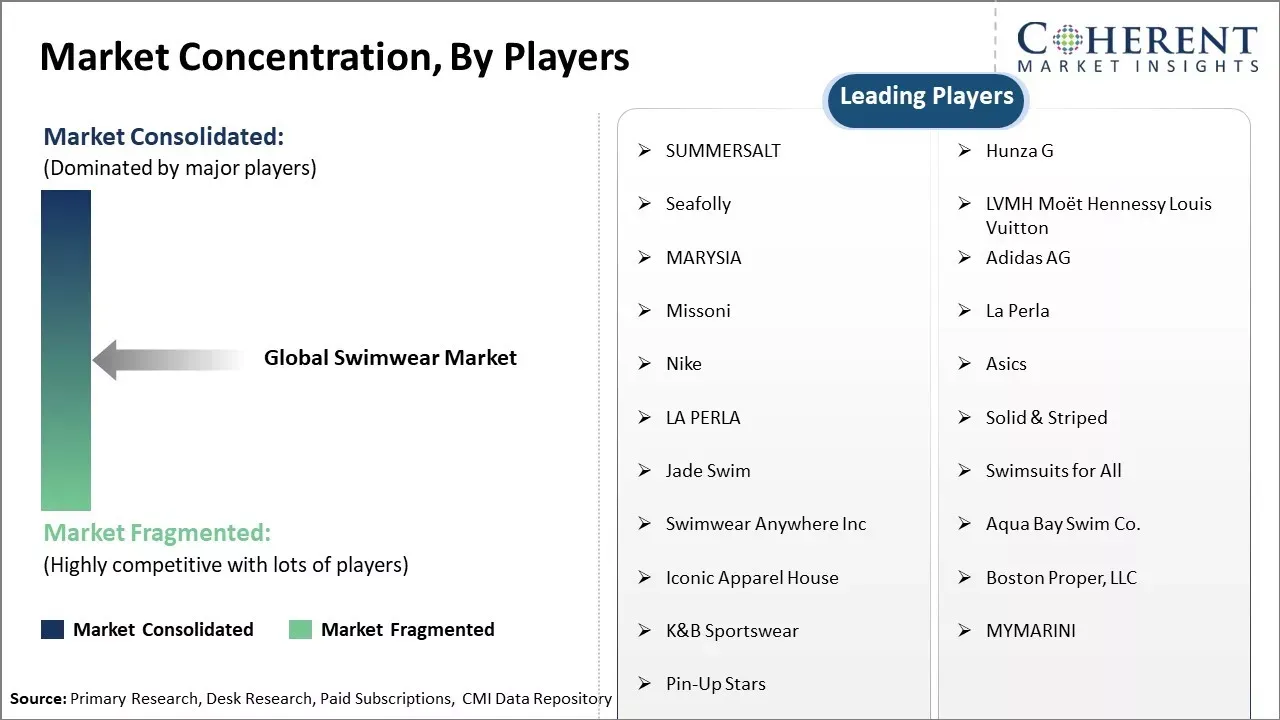
Market Concentration and Competitive Landscape
Swimwear Market Trends
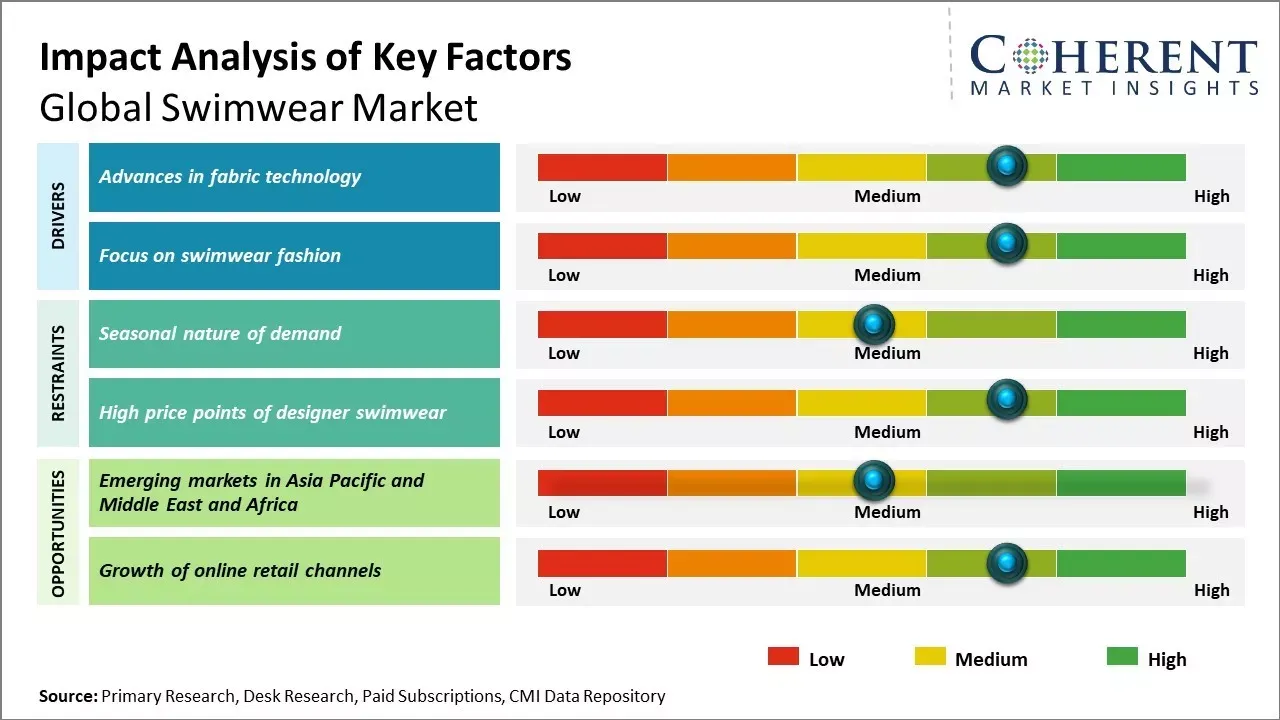
- Advances in fabric technology
With rising temperatures globally due to climate change, the swimwear market has seen increased demand. Consumers are looking for swimwear that allows maximum ventilation, dries quickly, and protects them from the sun. Fabric manufacturers have risen to this challenge by developing new materials that are lightweight, breathable, and quick drying. A significant development has been the rise of performance swim fabrics that wick moisture away from the skin and allow heat and sweat to evaporate faster.
These high-performance textiles are designed to move water away from the skin to the fabric surface where it evaporates. This keeps swimmers cooler and more comfortable. Some new swimwear fabrics even come infused with moisture-wicking minerals that continue working their evaporative magic long after the swim is over, keeping swimmers feeling fresh.
In May 2025, Sofía Vergara showcased a lace-up one-piece swimsuit from her Walmart swimwear line on Instagram. The chocolate brown swimsuit features a deeply plunging neckline with bold criss-cross lace detailing and silver eyelets. Vergara emphasized the importance of finding flattering, supportive swimwear options suited for women in their 40s and 50s, which her collection aims to provide.
- Focus on swimwear fashion
While performance and practical considerations remain important factors, consumers also want their swimwear to look stylish. The swimwear industry has recognized this increasing focus on aesthetics and fashion-led choices.
In May 2025, the Sports Illustrated Swimsuit Runway Show featured a diverse lineup of athletes and influencers, including gymnast Livvy Dunne and TikTok personality Alix Earle. The event celebrated the magazine's latest Swimsuit Edition and highlighted the excitement surrounding the annual showcase.
Opportunities in the Swimwear market
- Emerging markets in Asia Pacific and Middle East and Africa
The swimwear market in emerging economies across Asia Pacific, Middle East and Africa holds significant potential for growth in the coming years. These regions are experiencing rapid economic development and rising disposable incomes. With improving living standards and exposure to global trends, consumers in these markets are increasingly embracing active lifestyles and water-based recreational activities. This presents a major opportunity to introduce innovative swimwear designs and styles that appeal to local sensibilities as well as global tastes.
Segmental Insights
Swimwear Market Insights, By Material
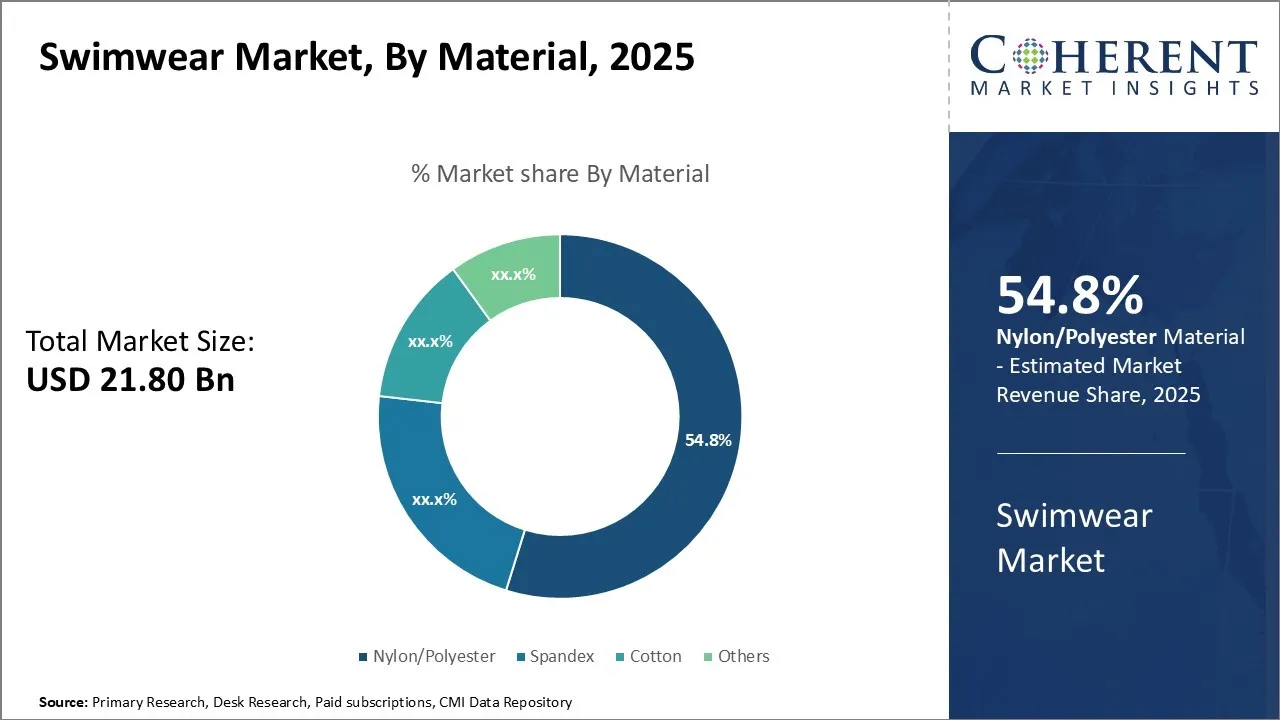
The nylon/polyester segment is projected to hold the largest share of 55.8% in the global swimwear market by 2026. This dominance stems from the material’s durability, lightweight nature, and comfort, which align with consumer preferences for both casual and performance swimwear. Innovations in fabric technology, including enhanced elasticity and chlorine resistance, further boost the appeal of nylon and polyester blends, leading to widespread adoption among manufacturers and end-users. These attributes make nylon/polyester the preferred choice for a broad range of swimwear products.
Swimwear Market Insights, By Product Insight
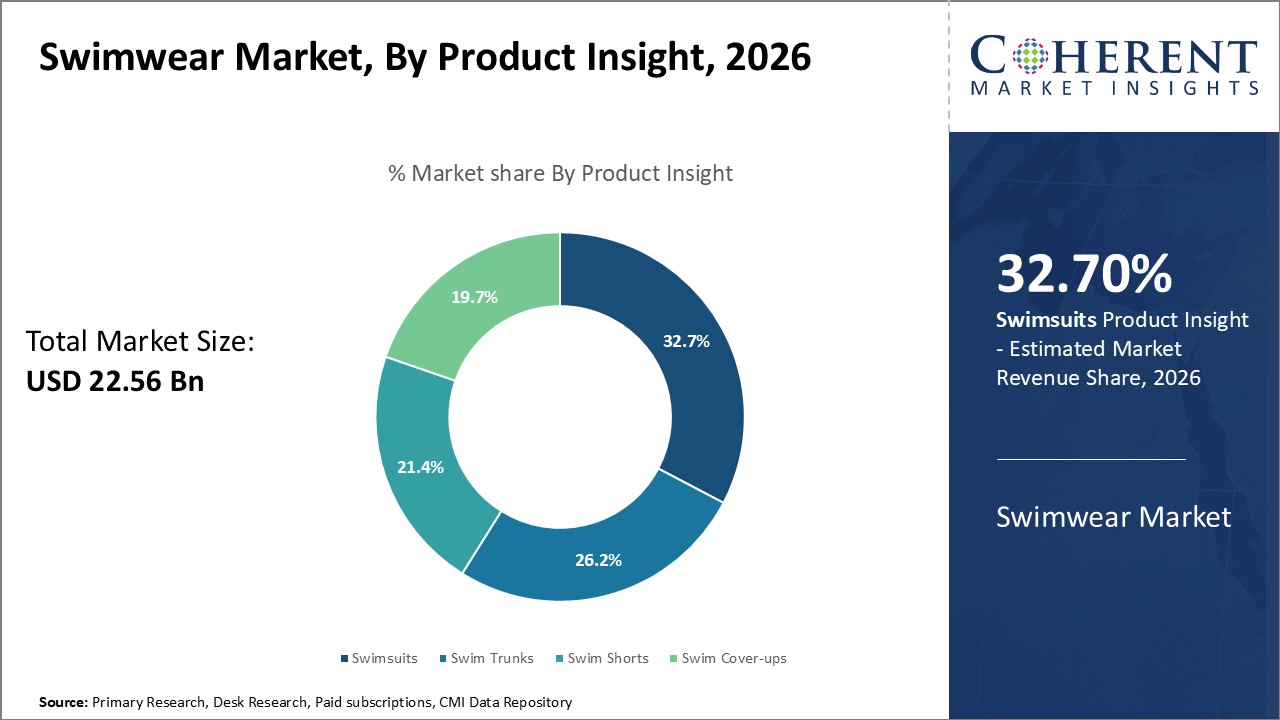
The swimsuits segment is expected to contribute 32.7% of the global swimwear market share by 2026. Growth in this segment is driven by rising consumer demand for swimwear that balances fashionable styling with functional design. Increased awareness of body positivity, inclusive sizing, and the popularity of athleisure trends have propelled swimsuits as a favored product across diverse demographics. This segment’s versatility continues to attract a broad audience, supporting sustained market expansion.
Swimwear Market Insights, By End-User Insight
The women’s segment is forecast to dominate the swimwear market, accounting for approximately 47% of the market share by 2026. This leadership is fuelled by women’s growing interest in stylish, fit-focused, and multifunctional swimwear tailored to their specific needs. Brands are responding with innovative designs, sustainable materials, and enhanced comfort features to capture this lucrative segment. The focus on customization and fashion-forward options continues to drive strong consumer loyalty within the women’s swimwear market.
Regional Insights
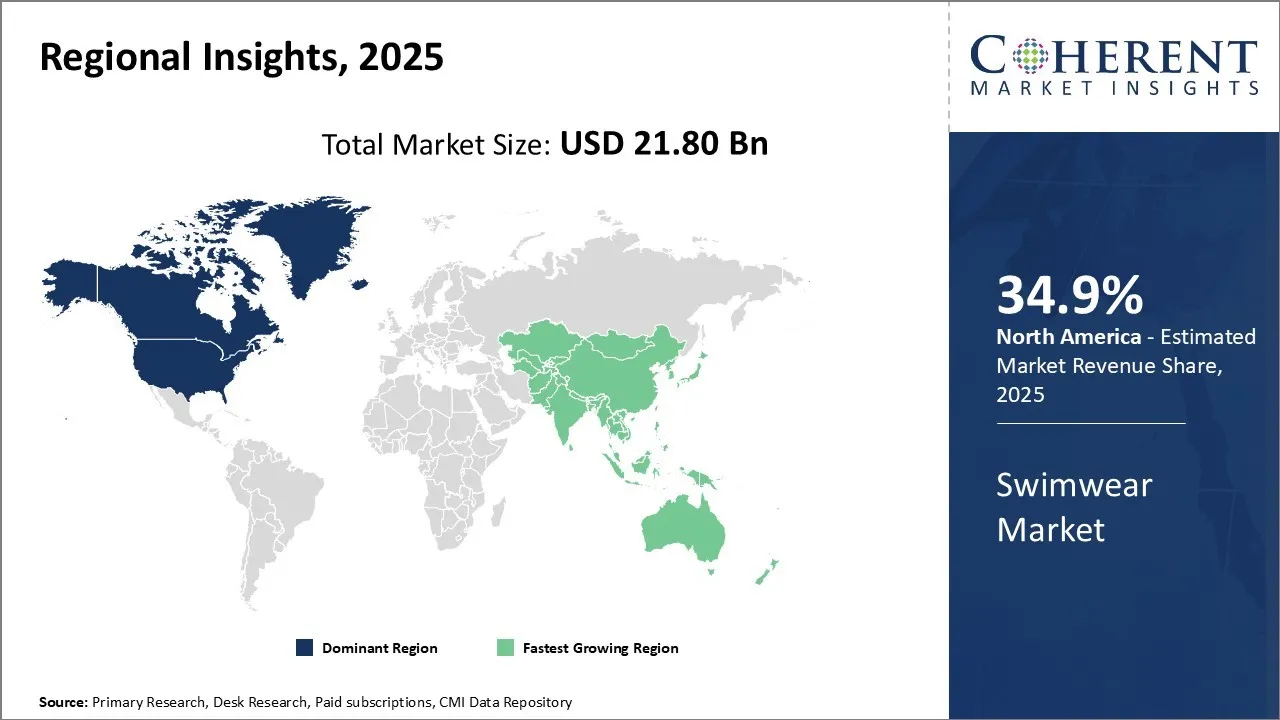
North America Swimwear Market Trends and Analysis
North America is expected to maintain its commanding position in the global swimwear market, holding an estimated 34.9% share by 2026. The region’s dominance is driven by high consumer spending, a well-established fashion and fitness culture, and the strong presence of leading swimwear brands.
Additionally, the growing popularity of recreational beach and poolside activities, along with a mature retail infrastructure—including both physical stores and advanced e-commerce platforms—is supporting sustained demand. Strategic marketing, celebrity endorsements, and seasonal promotions also play a vital role in reinforcing North America's leadership in the swimwear market.
Europe Swimwear Market Trends and Analysis
Europe remains a vital region in the global swimwear market, with continued growth expected through 2026. The market is supported by a strong tourism industry, rising health and wellness awareness, and increasing participation in water-based sports and leisure activities.
Countries such as France, Italy, and Spain lead in both design innovation and fashion-forward swimwear trends. Furthermore, the demand for sustainable and eco-friendly materials is gaining traction, influencing purchasing behavior and brand strategies across the region. The diverse climate and fashion preferences across Europe contribute to a broad and dynamic swimwear market.
Swimwear market Dominating Countries
United States and Canada
The United States and Canada are the dominant players in the North American swimwear market, contributing significantly to the region’s projected 34.9% global market share in 2026. The U.S. leads with its expansive retail infrastructure, high consumer spending, and strong presence of leading swimwear brands that continuously innovate in terms of design, sustainability, and technology.
The nation’s beach-oriented lifestyle and year-round fitness culture also drive consistent demand. Canada supports market growth with rising interest in seasonal swimwear, increased participation in water-related sports, and growing online retail penetration. Both countries benefit from a fashion-forward consumer base and advanced supply chain networks.
Market Report Scope
Swimwear Market Report Coverage
| Report Coverage | Details | ||
|---|---|---|---|
| Base Year: | 2025 | Market Size in 2026: | USD 22.56 Bn |
| Historical Data for: | 2020 To 2024 | Forecast Period: | 2026 To 2033 |
| Forecast Period 2026 to 2033 CAGR: | 3.5% | 2033 Value Projection: | USD 28.71 Bn |
| Geographies covered: |
| ||
| Segments covered: |
| ||
| Companies covered: | SUMMERSALT, Hunza G, Seafolly , LVMH Moët Hennessy Louis Vuitton, MARYSIA, Adidas AG, Missoni, La Perla, Nike, Asics, LA PERLA, Solid & Striped, Jade Swim, Swimsuits for All, Swimwear Anywhere Inc, Aqua Bay Swim Co., Iconic Apparel House , Boston Proper, LLC, K&B Sportswear, MYMARINI, and Pin-Up Stars | ||
| Growth Drivers: |
| ||
| Restraints & Challenges: |
| ||
Analyst Viewpoint – Swimwear Market
- The global swimwear market is witnessing robust growth, driven by rising consumer interest in wellness, fitness, and beach-centric lifestyles. Analysts note that the women's segment is leading the market, supported by growing demand for stylish, functional, and inclusive swimwear options. The swimsuit product category continues to dominate due to its broad appeal and the fusion of fashion with performance.
- Material innovation—particularly in nylon and polyester blends—remains a core factor influencing purchase decisions, as consumers prioritize comfort, durability, and chlorine resistance.
- Emerging technologies are significantly reshaping the swimwear industry. Analysts highlight the integration of 3D body scanning for customized fits, sustainable fabric innovations, and AI-driven design tools as key enablers of product differentiation and customer satisfaction. Additionally, the rise of e-commerce, AR-based virtual try-ons, and influencer-driven digital marketing strategies are expanding brand reach and consumer engagement, particularly in developed markets.
- North America leads the global swimwear market, attributed to high discretionary spending, brand-conscious consumers, and a mature retail infrastructure. Analysts anticipate sustained growth due to seasonal demand, activewear crossovers, and growing health-consciousness. However, there is also strong growth potential in emerging markets where increasing urbanization, lifestyle changes, and online shopping adoption are driving swimwear sales.
Swimwear Market: Key Development
- In April 2025, Speedo launched its new Eco Fastskin collection, featuring swimwear made from 100% recycled nylon and polyester. The line integrates high-performance materials with sustainable production practices, reinforcing the brand’s commitment to eco-conscious innovation and appealing to environmentally aware consumers.
- In March 2025, Nike Swim partnered with 3DLook to offer virtual fitting rooms through its e-commerce platform. This technology enables customers to visualize swimwear fit based on body scans, significantly enhancing online shopping convenience and reducing return rates.
- In February 2025, Adidas Swim introduced a new AI-assisted design tool that allows consumers to customize their swimwear styles and colors. This initiative aims to increase customer engagement and tap into the growing demand for personalized fashion experiences.
- In January 2025, H&M launched a size-inclusive swimwear campaign featuring adaptive swimwear designs. The collection focuses on accessibility and body positivity, targeting underserved market segments.
- In December 2024, Arena expanded its presence in Asia Pacific by opening flagship stores in India and Indonesia, strengthening its regional distribution and capturing growth in emerging markets.
Market Segmentation
- By Material (Revenue, USD Bn, 2021 - 2033)
- Nylon/Polyester
- Spandex
- Cotton
- Others
- By Product (Revenue, USD Bn, 2021 - 2033)
- Swimsuits
- Swim Trunks
- Swim Shorts
- Swim Cover-ups
- By End-User (Revenue, USD Bn, 2021 - 2033)
- Women
- Men
- Children
- By Distribution Channel (Revenue, USD Bn, 2021 - 2033)
- Specialty Stores
- Departmental Stores
- Online Stores
- Others
- By Region (Revenue, USD Bn, 2021 - 2033)
- North America
- U.S.
- Canada
- Latin America
- Brazil
- Argentina
- Mexico
- Rest of Latin America
- Europe
- Germany
- U.K.
- Spain
- France
- Italy
- Russia
- Rest of Europe
- Asia Pacific
- China
- India
- Japan
- Australia
- South Korea
- ASEAN
- Rest of Asia Pacific
- Middle East
- GCC Countries
- Israel
- Rest of Middle East
- Africa
- South Africa
- North Africa
- Central Africa
- Company Profiles
- SUMMERSALT
- Hunza G
- Seafolly
- LVMH Moët Hennessy Louis Vuitton
- MARYSIA
- Adidas AG
- Missoni
- La Perla
- Nike
- Asics
- LA PERLA
- Solid & Striped
- Jade Swim
- Swimsuits for All
- Swimwear Anywhere Inc
- Aqua Bay Swim Co.
- Iconic Apparel House
- Boston Proper, LLC
- K&B Sportswear
- MYMARINI
- Pin-Up Stars
Sources
The Stakeholders Consulted
- Manufacturers and suppliers of swimwear and activewear
- Textile and fabric innovation specialists
- Retailers, fashion merchandisers, and e-commerce platform operators
- Product designers and fashion technologists
- Sourcing and procurement managers from fashion and lifestyle brands
- Sportswear and fitness apparel distributors
- Sustainability and circular fashion consultants
- Swimwear consumers across varied demographics (women, men, children)
- Event organizers of beach sports and aquatic competitions
Databases Opened
- World Trade Organization (WTO) – Apparel Trade Statistics
- United Nations Comtrade Database – Swimwear and Textile Exports
- Euromonitor International – Apparel & Lifestyle Segments
- U.S. Census Bureau – Apparel Market Data
- India Brand Equity Foundation (IBEF) – Apparel & Textiles Industry Reports
Magazines & Trade Publications
- Textile World
- Sportswear International
- Apparel Resources
- Fibre2Fashion
- Vogue Business
- Fashion United – Swimwear Section
Scientific and Industry Journals
- Journal of Fashion Technology & Textile Engineering
- Clothing and Textiles Research Journal
- International Journal of Fashion Design, Technology and Education
- Textile Research Journal
- Journal of Cleaner Production – Apparel and Sustainability Section
Newspapers & Media Outlets
- The Business of Fashion
- Bloomberg – Retail and Apparel
- Reuters – Consumer Goods and Fashion Markets
- The Economic Times – Lifestyle and Retail
- Financial Times – Global Retail News
Associations and Regulatory Bodies
- Textile Association (India)
- American Apparel & Footwear Association (AAFA)
- Global Fashion Agenda
- Sustainable Apparel Coalition (SAC)
- International Textile Manufacturers Federation (ITMF)
Public Domain Sources
- United Nations Industrial Development Organization (UNIDO) – Textiles & Apparel Data
- European Commission – Circular Economy and Textile Reports
- U.S. Federal Trade Commission (FTC) – Apparel Labeling and Trade Guidelines
- OECD – Consumer Behavior and Lifestyle Reports
- Australian Government – Swimwear and Textile Export Profiles
Proprietary Research Elements
- CMI Data Analytics Tool
- Proprietary CMI Repository of Market Data (covering past 8 years)
- CMI Expert Interviews and Transcripts (focused on swimwear trends, material innovation, consumer behavior, and retail dynamics)
Get access to 250+ pages report
Every segment, forecast, competitor profile and data table behind the analysis above — available for instant download.
- ESOMAR Member
- ISO 9001:2015 Certified
- D-U-N-S Registered
- GDPR & CCPA Compliant
Missing comfort of reading report in your local language? Find your preferred language:
Transform your Strategy with Exclusive Trending Reports
Frequently Asked Questions
The Swimwear Market size is estimated to be valued at USD 22.56 Bn in 2026, and is expected to reach USD 28.71 Bn by 2033.
The CAGR of the global Market is projected to be 3.5% from 2026 to 2033.
Advances in fabric technology and focus on swimwear fashion are the major factors driving the growth of the Global Market.
Seasonal nature of demand and high price points of designer swimwear are the major factors hampering the growth of the Global Market.
In terms of material, nylon/polyester is estimated to dominate the market revenue share in 2026.
SUMMERSALT, Hunza G, Seafolly , LVMH Moët Hennessy Louis Vuitton, MARYSIA, Adidas AG, Missoni, La Perla, Nike, Asics, LA PERLA, Solid & Striped, Jade Swim, Swimsuits for All, Swimwear Anywhere Inc, Aqua Bay Swim Co., Iconic Apparel House , Boston Proper, LLC, K&B Sportswear, MYMARINI, and Pin-Up Stars are the major players.
North America is expected to lead the Global Swimwear industry.