

Tacrolimus Market Size and Forecast – 2026 to 2033
The Tacrolimus Market is estimated to be valued at USD 12.7 Bn in 2026 and is expected to reach USD 16.6 Bn by 2033, exhibiting a compound annual growth rate (CAGR) of 7.2% from 2026 to 2033.
Key Takeaways
- By Product Type, Tacrolimus Capsules and Tablets hold the largest market share of 42.2% in 2026 owing to the increasing organ transplant procedures.
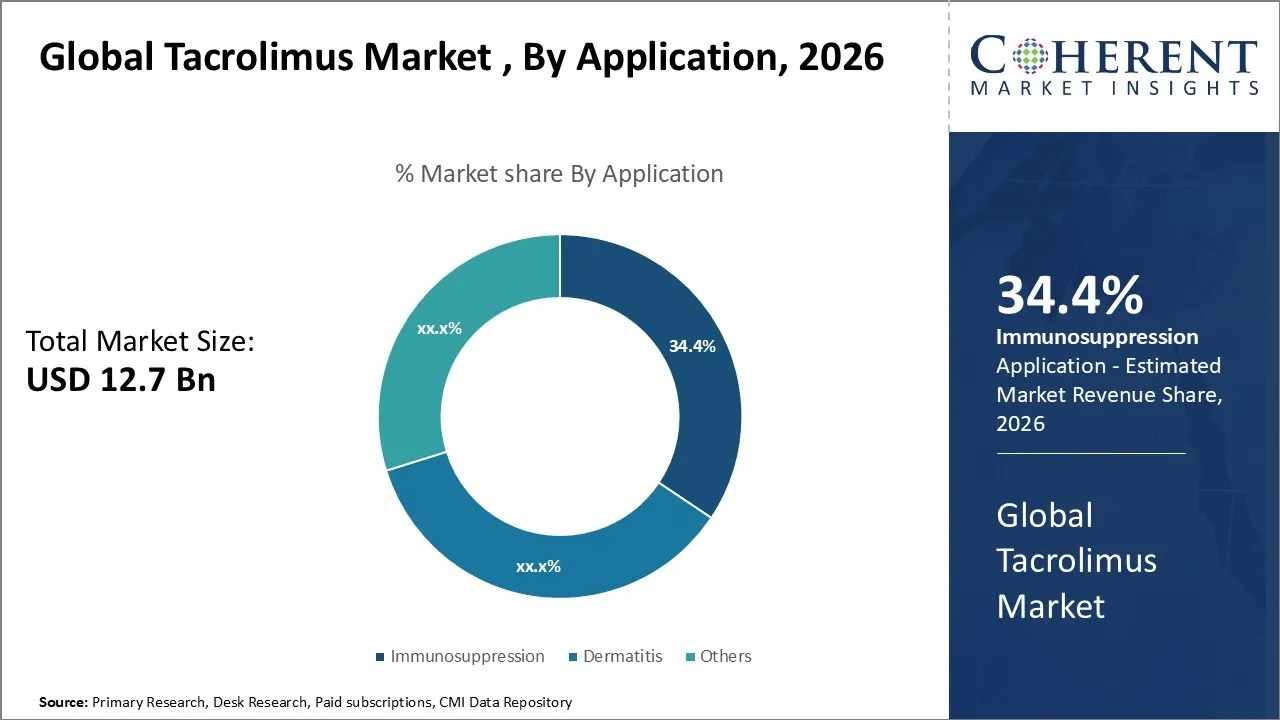
- By Application, Immunosuppression expected to hold largest market share of 34.4% in 2026 owing to its rising number of organ transplant procedures.
- By End Users, Hospitals acquired the prominent market share of 43.6% in 2026 owing to the high volume of organ transplant procedures.
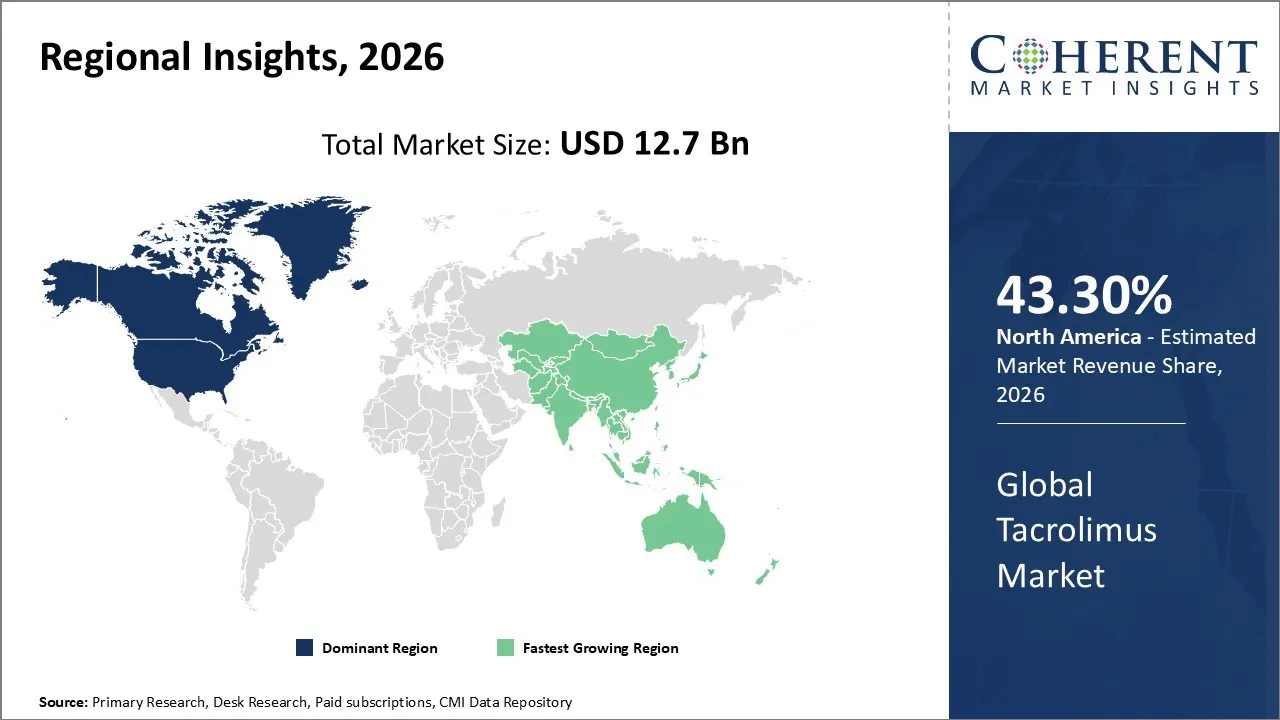
- By Region, North America dominates the overall market with an estimated share of 43.3% in 2026 owing to the high organ transplant volume.
Market Overview
The Tacrolimus market grows primarily because healthcare providers rely on it as a first-line immunosuppressant in organ transplantation and increasingly use it to manage autoimmune disorders. Physicians prescribe tacrolimus to prevent graft rejection after kidney, liver, and heart transplants, making it essential for long-term post-transplant care. Rising transplant procedures, expanding healthcare infrastructure, greater awareness of immunosuppressive therapies, and the introduction of generic formulations actively support market expansion.
Current Events and Its Impact on the Tacrolimus Market
Current Events | Description and its impact |
Macroeconomic and Policy Shifts |
|
Technological and Pharmaceutical Innovations |
|
Public Health and Demographic Trends |
|
Segmental Insights
- Current Industry Events of 2026
- Market Size Estimation
- Regional Breakdown
- Competitive Landscape
- Customer Intelligence
- Segmental Analysis
- Pricing Analysis
- Key Market Drivers, Challenges & Future Trends
- Customized Insights Section
Tacrolimus Market Insights, By Application: Immunosuppression contributes the highest share of the market owing to its technological & pharmaceutical developments.
Immunosuppression expected to hold largest market share of 34.4% in 2026. Clinicians drive the Tacrolimus market by actively using immunosuppressive therapy to regulate immune responses after organ transplantation and in severe immune-mediated conditions. Increasing cases of organ failure, higher transplant success rates, and the ongoing need to protect grafts throughout patients’ lives sustain steady demand for tacrolimus-based treatments. Physicians choose tacrolimus for its proven effectiveness and manageable therapeutic monitoring. Expanding transplant programs, enhanced diagnostic tools, and structured long-term patient management across hospitals and specialty clinics further boost global adoption of tacrolimus. For instance, in October 2025, NATCO Pharma launched 1mg Everolimus tablets, a generic version of Novartis’ Zortress, under the immunosuppressant category.
Tacrolimus Market Insights, By Product Type: Tacrolimus Capsules and Tablets contribute the highest share of the market owing to its growing healthcare infrastructure & awareness.
Tacrolimus Capsules and Tablets hold the largest market share of 42.2% in 2026. The Tacrolimus market for capsules and tablets expands as healthcare providers prioritize their convenience, proven clinical effectiveness, and suitability for long-term outpatient care. Physicians actively choose oral solid formulations for maintenance immunosuppression after organ transplantation because they enable precise dose adjustment and improve patient adherence compared with injectable options. Improving transplant survival rates, increasing availability of generic products, smoother transitions from hospital to home care, and expanding pharmacy networks collectively drive stronger demand for capsules and tablets across global healthcare systems. For instance, Dr. Reddy’s Laboratories launched generic lenalidomide capsules in the US. Lupin received FDA approval for its generic azilsartan medoxomil tablets. Lupin also markets generics such as emtricitabine and tenofovir disoproxil fumarate for HIV, tacrolimus capsules for organ transplant immunosuppression, and empagliflozin for diabetes.
Tacrolimus Market Insights, By End Users: Hospitals contribute the highest share of the market owing to its specialized care for acute & severe cases.
Hospitals acquired the prominent market share of 43.6% in 2026. Hospitals actively drive the Tacrolimus market by performing organ transplants and providing critical care where immunosuppressive therapy is crucial. Medical teams administer tacrolimus during surgeries and in early post-operative care, closely monitoring patients and adjusting doses more effectively than outpatient settings allow. The expansion of specialized transplant programs, multidisciplinary care teams, and hospital procurement policies, along with established treatment protocols, strengthens hospitals’ role as primary drivers of tacrolimus use. Growing hospital infrastructure and higher patient volumes further boost market demand. For instance, Biocon launched generic tacrolimus capsules in the US, following FDA approval. Lupin introduced tacrolimus capsules (0.5 mg, 1 mg, and 5 mg) after its partner Concord Biotech received FDA ANDA approval.
Regional Insights
North America Tacrolimus Market Trends
North America dominates the overall market with an estimated share of 43.30% in 2026. Healthcare providers in North America actively drive Tacrolimus market trends by adopting the drug due to advanced medical infrastructure, high organ transplant volumes, and established clinical guidelines. Hospitals and specialty centers increasingly administer tacrolimus for maintenance immunosuppression, leveraging effective therapeutic monitoring and physician expertise. Widespread use of generic formulations enhances accessibility and cost-efficiency. Continuous research, innovative drug delivery methods, and the expansion of outpatient transplant care further influence market dynamics, while growing awareness of immunosuppressive therapies among patients and clinicians reinforces tacrolimus as a standard treatment across the United States and Canada. For instance, Veloxis Pharmaceuticals announced that the FDA approved a new de novo indication for Envarsus XR (tacrolimus extended-release tablets) to prevent organ rejection in kidney transplant patients when used with other immunosuppressants.
Asia Pacific Tacrolimus Market Trends
Healthcare providers in the Asia Pacific actively expand the Tacrolimus market by using the drug for organ transplantation and autoimmune treatments. Governments promote transplant programs, hospitals enhance infrastructure, and patients increase awareness, all driving greater usage. Physicians rely on tacrolimus for its proven effectiveness and manageable post-transplant monitoring. The availability of affordable generic formulations improves access across emerging markets, while growing specialty centers, enhanced training for medical professionals, and broader insurance coverage further strengthen tacrolimus adoption throughout the region.
United States Tacrolimus Market Trends
Hospitals and transplant centers in the United States actively drive the Tacrolimus market by relying on the drug for organ transplants and immune-related conditions. Physicians prescribe tacrolimus widely because of its proven effectiveness, reliable monitoring, and established treatment protocols. The increasing availability of generic versions enhances affordability and patient access, while ongoing clinical research and innovations in drug delivery improve therapeutic outcomes. Expanding outpatient transplant programs, advanced specialty centers, and rising awareness of immunosuppressive therapies among patients and healthcare professionals further boost the drug’s adoption nationwide. For instance, Astellas Pharma Inc. announced that the FDA approved its supplemental New Drug Application (sNDA) for PROGRAF® (tacrolimus) to prevent organ rejection in adult and pediatric lung transplant recipients.
India Tacrolimus Market Trends
Hospitals and specialty clinics in India actively drive the Tacrolimus market by using the drug for organ transplants and autoimmune disorders. Physicians rely on tacrolimus for its proven effectiveness and manageable post-transplant monitoring. Government initiatives supporting transplant programs, improving hospital infrastructure, and increasing patient awareness further expand its use across the country. The growing availability of affordable generic formulations improves access in both urban and rural areas, while the development of transplant centers, physician training, and wider insurance coverage continue to strengthen tacrolimus adoption nationwide.
End-User Feedback and Unmet Needs in the Tacrolimus Market
- Patient Adherence Challenges: Patients report difficulties maintaining strict dosing schedules for tacrolimus, especially during long-term post-transplant therapy. Side effects, complex monitoring, and frequent hospital visits affect adherence. There is a need for simplified dosing regimens, extended-release formulations, and better patient education to improve compliance and overall treatment outcomes.
- Side Effect Management: End-users express concerns about tacrolimus-related adverse effects, including kidney toxicity, hypertension, and tremors. Physicians and patients highlight the need for safer formulations, early detection tools, and supportive therapies to reduce side effects without compromising immunosuppressive efficacy.
- Accessibility and Affordability: Many patients, especially in emerging regions, struggle with the cost of branded tacrolimus and limited availability in smaller hospitals or rural pharmacies. Unmet needs include wider generic availability, improved supply chains, and insurance support to enhance access for all patient segments.
Tacrolimus Market Trend
Rising Adoption in Organ Transplantation
Tacrolimus continues to dominate as a first-line immunosuppressant in kidney, liver, heart, and lung transplants. Hospitals and transplant centers increasingly rely on it for post-operative care due to its proven effectiveness in preventing graft rejection. Physicians favor tacrolimus for its predictable therapeutic monitoring, dose flexibility, and long-term safety profile. The trend toward higher transplant volumes, coupled with expanding specialty care programs and outpatient transplant management, reinforces the consistent demand for tacrolimus in global healthcare settings.
Tacrolimus Market Opportunity
Development of Novel Formulations
The demand for extended-release tablets, controlled-release capsules, and oral bioavailability-enhanced formulations opens opportunities for innovation. Pharmaceutical companies can create products that improve patient adherence, reduce side effects, and simplify post-transplant care. Hospitals and specialty clinics increasingly prefer these formulations for long-term outpatient therapy. By investing in research and development, companies can differentiate their products, enhance therapeutic outcomes, and capture a larger share of the global tacrolimus market.
Market Report Scope
Tacrolimus Market Report Coverage
| Report Coverage | Details | ||
|---|---|---|---|
| Base Year: | 2025 | Market Size in 2026: | USD 12.7 Bn |
| Historical Data for: | 2020 To 2024 | Forecast Period: | 2026 To 2033 |
| Forecast Period 2026 to 2033 CAGR: | 7.2% | 2033 Value Projection: | USD 16.6 Bn |
| Geographies covered: |
| ||
| Segments covered: |
| ||
| Companies covered: | Novartis AG, Mylan N.V., Astellas Pharma Inc., Dr. Reddy's Laboratories Ltd., Pfizer Inc., Abbott, Senju Pharmaceutical Co. Ltd., Glenmark Pharmaceuticals Ltd., Lupin Limited, and Vibcare Pharma Pvt. Ltd. | ||
| Growth Drivers: |
| ||
| Restraints & Challenges: |
| ||
Tacrolimus Market News
- In December 2025, Nexus Pharmaceuticals, LLC launched Tacrolimus Injection, USP 5 mg/mL, introducing the first and only vial-format tacrolimus solution to provide healthcare providers and transplant centers with essential, cost-effective treatment options.
Analyst Opinion (Expert Opinion)
- In the context of tacrolimus specifically, the market’s trajectory now reflects deeper structural shifts rather than superficial expansion. Adoption patterns in transplant centres underscore that tacrolimus is no longer an optional immunosuppressant; it has become the de‑facto standard in over 80 % of liver graft protocols globally, a shift reinforced by meta‑analyses demonstrating lower acute rejection and reduced long‑term complications compared with cyclosporine‑based regimens. This entrenched clinical preference isn’t incidental but reflects decades of real‑world outcomes data and the relative predictability of therapeutic monitoring platforms that allow clinicians to balance efficacy with toxicity risk. Meanwhile, the record number of organ transplants — with the United States alone reporting nearly 47 000 procedures in a recent year — has tangibly expanded the lifetime addressable base for maintenance immunosuppression.
- The rise of extended‑release and next‑generation formulations presents a compelling strategic inflection point for market participants. Once‑daily and sustained‑release platforms are already capturing meaningful share by addressing adherence challenges intrinsic to twice‑daily dosing, and early data suggest they can flatten pharmacokinetic variability that historically complicated patient management. At the same time, the rapid penetration of generics post‑patent expiry has materially altered competitive dynamics, compressing price points while simultaneously democratizing access in cost‑sensitive markets. However, this has not undermined demand; instead, it has rebalanced value capture toward manufacturers investing in differentiated delivery systems and robust therapeutic‑drug‑monitoring integrations.
Speak to the analyst
Want personalized insights?
Take the findings above to one of our principal consultants, or have the report rebuilt around the segments, geographies and competitors you actually track.
Market Segmentation
- By Product Type
- Tacrolimus Capsules and Tablets
- Tacrolimus Ointment
- Tacrolimus Injection
- Tacrolimus Granules
- By Application
- Immunosuppression
- Dermatitis
- Others
- By End User
- Organ Transplant Centers
- Hospitals
- Clinics
- Others
- By Regional Insights
- North America
- U.S.
- Canada
- Latin America
- Brazil
- Argentina
- Mexico
- Rest of Latin America
- Europe
- Germany
- U.K.
- Spain
- France
- Italy
- Russia
- Rest of Europe
- Asia Pacific
- China
- India
- Japan
- Australia
- South Korea
- ASEAN
- Rest of Asia Pacific
- Middle East
- GCC Countries
- Israel
- Rest of Middle East
- Africa
- South Africa
- North Africa
- Central Africa
- North America
- Key Players Insights
- Novartis AG
- Mylan N.V.
- Astellas Pharma Inc.
- Reddy's Laboratories Ltd.
- Pfizer Inc.
- Abbott
- Senju Pharmaceutical Co. Ltd.
- Glenmark Pharmaceuticals Ltd.
- Lupin Limited
- Vibcare Pharma Pvt. Ltd.
Sources
Primary Research interviews
- Key opinion leaders (KOLs) in transplant medicine
- Clinical pharmacists specializing in immunosuppressant therapies
- Hospital procurement managers (immunosuppressive drug sourcing)
- Practicing nephrologists and dermatologists
- Pharmaceutical manufacturers’ medical affairs representatives
- Regulatory affairs experts involved in drug approvals
Databases
- U.S. Food and Drug Administration (FDA) drug approval and labeling database
- European Medicines Agency (EMA) public assessment reports
- World Health Organization (WHO) drug information database
- PubChem and DrugBank for compound and pharmacological properties
- National Center for Biotechnology Information (NCBI) databases
Magazines
- Pharmaceutical Technology
- Drug Development & Delivery
- Modern Healthcare
- BioPharma Dive
Journals
- Journal of Clinical Pharmacology
- Transplantation Proceedings
- American Journal of Transplantation
- Clinical Therapeutics
- Dermatologic Therapy
- Journal of Immunological Methods
Newspapers
- The New York Times (health and science sections)
- The Guardian – Health
- The Times of India – Health/Science
- The Hindu – Health and Medicine
Associations
- The Transplantation Society (TTS)
- American Society of Transplantation (AST)
- International Society for Heart and Lung Transplantation (ISHLT)
- American Academy of Dermatology (AAD)
- National Institutes of Health (NIH) – associated research networks
- Indian Pharmacopoeia Commission (IPC)
Public Domain sources
- ClinicalTrials.gov (registered clinical studies on tacrolimus)
- WHO Essential Medicines List
- National health ministry drug bulletins/notifications
- Patent databases (e.g., WIPO PATENTSCOPE)
- Government pharmaceutical price control notifications
Proprietary Elements
- CMI Data Analytics Tool
- Proprietary CMI existing repository of information for last 8 years
Get access to 250+ pages report
Every segment, forecast, competitor profile and data table behind the analysis above — available for instant download.
- ESOMAR Member
- ISO 9001:2015 Certified
- D-U-N-S Registered
- GDPR & CCPA Compliant
Missing comfort of reading report in your local language? Find your preferred language:
Transform your Strategy with Exclusive Trending Reports
Frequently Asked Questions
The Tacrolimus Market is estimated to be valued at USD 12.7 Bn in 2026 and is expected to reach USD 16.6 Bn by 2033.
Factors such as increasing number of organ transplant procedures and increasing research and development activities by pharmaceutical companies are expected to drive the market growth.
Tacrolimus Capsules and Tablets segment is the leading product type segment in the market.
The major factor hampering growth of the market include side effects and presence of alternative medicine
Major players operating in the market include Novartis AG, Mylan N.V., Astellas Pharma Inc., Dr. Reddy's Laboratories Ltd., Pfizer Inc., Abbott, Senju Pharmaceutical Co. Ltd., Glenmark Pharmaceuticals Ltd., Lupin Limited, and Vibcare Pharma Pvt. Ltd.