

Transthyretin Amyloidosis Treatment Market Size and Share Analysis - 2026 To 2033
The transthyretin amyloidosis treatment market is anticipated to grow at a CAGR of 7.8% with USD 12.1 Bn in 2026 and is expected to reach USD 20.4 Bn in 2033. The substantial growth is expected to be driven by rising awareness and diagnosis of transthyretin amyloidosis (59.8 cases per million people), growing adoption of disease-modifying therapies, increasing investments in rare disease research, and continued advancements in precision medicine are expected to drive market growth.
Key Takeaways
- Tafamidis (Vyndaqel) is expected to account the largest share of 45% in 2026, it was one of the earliest approved therapies, so doctors are more familiar with it. In 45% of patients taking Vyndaqel, nerve function either improved or stabilised, compared with 30% of patients taking placebo.
- Hereditary Transthyretin Amyloidosis will dominate with 60% in 2026, wtATTR is growing rapidly due to increasing awareness and better diagnostic tools, but current market share is smaller than hATTR. In Japan and the U.S., hospital-based screening for heart failure patients aged 65+ has increased detection rates of wtATTR by 20–30% over the last 5 years
- Hospital pharmacies will dominate with 50% in 2026, patients are usually diagnosed and treated in specialized hospital centers. In Japan, around 59% of pharmacists worked in community pharmacies in 2022, while around 19% worked in hospitals or clinics, and the remaining 22% in other settings.
- North America is expected to acquire the dominant share of 55% in 2026, hospitals and specialty pharmacies are well-equipped for complex therapies including RNA-based drugs as well as infusion therapies. For 2024, total prescription dispensing revenues for retail, mail, long-term care, and specialty pharmacies reached USD 683 Bn.
Segmental Insights
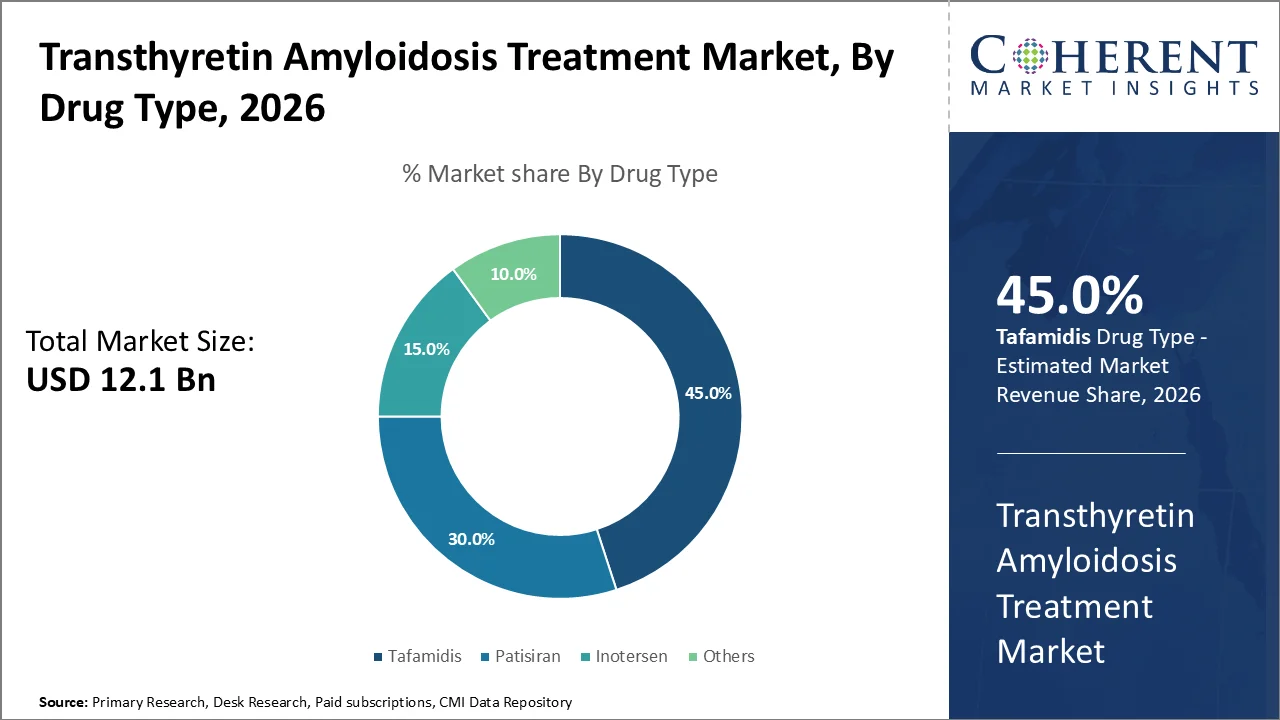
Why is Tafamidis (Vyndaqel) Acquiring the Largest Market Share?
Tafamidis (Vyndaqel) is projected to account for the largest share of drug type in 2026, representing approximately 45% of the total volume. Its critical role as the first approved therapy particularly for transthyretin amyloidosis cardiomyopathy (ATTR-CM) is one of the factors propelling the growth of the segment.
ATTR-ACT Showed that Tafamidis majorly Reduced the Combination of All-cause Mortality as well as Cardiovascular-related Hospitalizations Data Showed a 30% Reduction in the Risk of Mortality and 32% Reduction in the Rate of Cardiovascular-related Hospitalizations with Tafamidis in People with Transthyretin Amyloid Cardiomyopathy versus Placebo
Developed by Pfizer, Tafamidis functions as a transthyretin stabilizer that prevents the dissociation of tetrameric transthyretin into monomers, hence reducing the formation of amyloid deposits. The market for drug dominance is its oral administration route, which provide major convenience compared to intravenous alternatives, and its approval across multiple jurisdictions including the United States, European Union, and Japan.
The landmark ATTR-ACT trial, which showed Tafamidis's efficacy in reducing cardiovascular-related hospitalizations and all-cause mortality in patients with ATTR-CM, has been instrumental in establishing its clinical credibility as well as physician confidence.
- Current Industry Events of 2026
- Market Size Estimation
- Regional Breakdown
- Competitive Landscape
- Customer Intelligence
- Segmental Analysis
- Pricing Analysis
- Key Market Drivers, Challenges & Future Trends
- Customized Insights Section
Hereditary Transthyretin Amyloidosis holds the Largest Market Share
Based on disease type, Hereditary Transthyretin Amyloidosis dominates the market, accounting for a significant 60% share in 2026, earlier disease recognition, established diagnostic protocols, as well as the availability of targeted therapeutic interventions specifically made for genetic variants of the condition. Cancer has come up as the prominent therapeutic area, accounting for 35% of all new drug approvals, augmented by targeted therapies, with kinase inhibitors showing nearly half of these drugs.
The hereditary form of transthyretin amyloidosis, caused by mutations in the TTR gene, has been majorly studied and documented by organizations including the Amyloidosis Research Consortium, as well as the International Society of Amyloidosis, leading to comprehensive treatment guidelines that have showed high clinical adoption.
The dominance of this segment can be attributed to the fact that over 130 different TTR gene mutations have been identified globally, creating a substantial patient population requiring specialized care.
Hospital Pharmacies holds the Largest Market Share
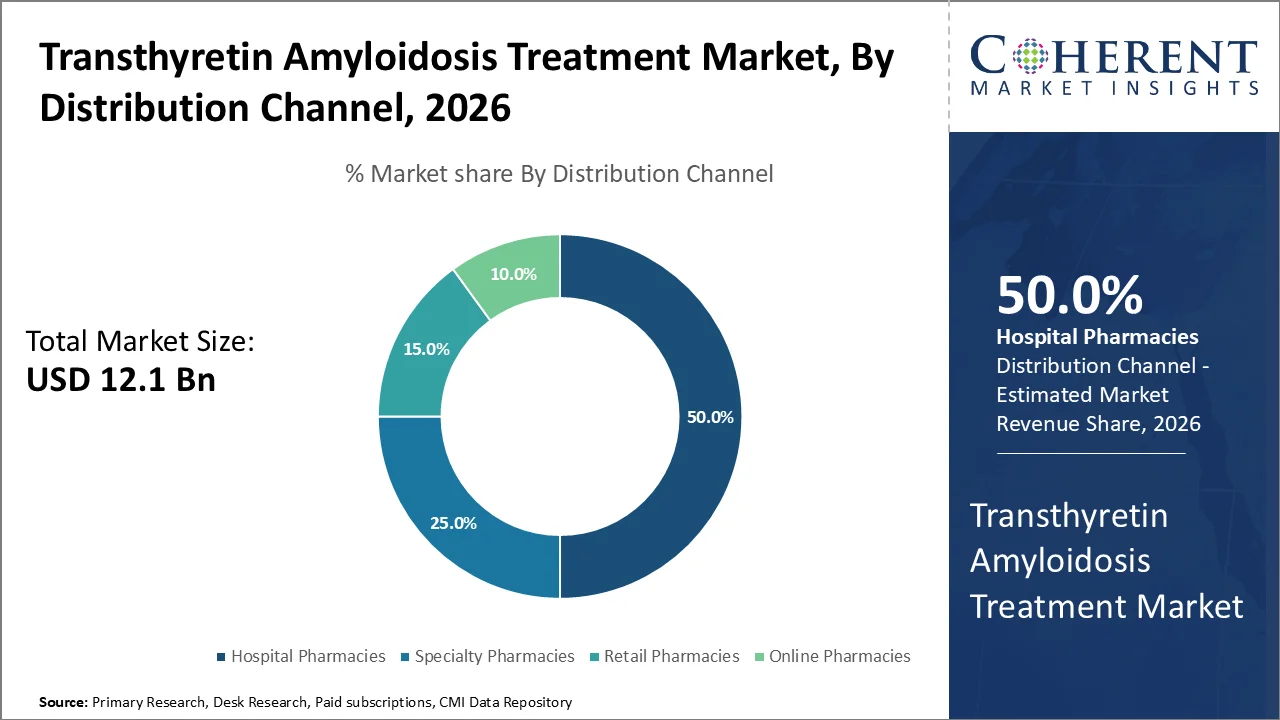
Based on distribution channel, hospital pharmacies dominant the market, accounting for a significant 50% share in 2026, the complex nature of TTR amyloidosis diagnosis and treatment protocols that require specialized medical infrastructure and continuous physician oversight is one of the factors propelling the market growth.
Hospital pharmacies serve as the primary distribution channel as TTR amyloidosis usually presents with multi-systemic manifestations affecting the heart, nervous system, other vital organs, etc., necessitating comprehensive inpatient and outpatient care coordination that can only be effectively managed within hospital settings.
The requirement for specialized diagnostic procedures including cardiac magnetic resonance imaging, echocardiography, nerve conduction studies, tissue biopsy confirmation, etc., which are typically available only in hospital environments. CMR scan volumes varied widely across Asia, with high-volume centers reporting from fewer than 100 scans per month to over 20,000 scans per year.
Market Drivers
Antisense Oligonucleotide Innovation: A major breakthrough in Transthyretin Amyloidosis Treatment
Complementing RNAi technology, antisense oligonucleotide (ASO) therapeutics have released another dimension of genetic medicine. These chemically changed DNA sequences bind to TTR messenger RNA, keeping away protein translation through a different mechanism than RNAi. The technological sophistication lies in the precise chemical modifications that enhance stability, tissue distribution, and cellular uptake while minimizing off-target effects.
The development of generation 2.5 ASOs incorporates advanced chemical modifications including locked nucleic acids and phosphorothioate linkages, significantly improving pharmacokinetic properties and reducing dosing frequency. This technological evolution has enhanced patient compliance and therapeutic effectiveness.
Current Events and Their Impact on the Transthyretin Amyloidosis Treatment Market
Current Event | Description and its Impact |
New FDA and EMA Approvals for RNA-based Therapies |
|
Increased Government Funding for Rare Diseases |
|
Transthyretin Amyloidosis Treatment Market Trends
- The market has shifted decisively toward disease-modifying treatments, with gene silencing therapies (siRNA and antisense oligonucleotides). Patisiran and inotersen have established the efficacy benchmark, while newer entrants like vutrisiran are driving competitive differentiation through improved dosing convenience. Treatment with vutrisiran also lower the risk of ACM during the DB period plus up to six months of open-label extension by 56% in the overall population and 77% in the monotherapy population, versus placebo.
- Precision Medicine Integration: Advanced biomarker recognition as well as genetic testing are making sure personalized treatment approaches, with companion diagnostics becoming integral to treatment protocols. This trend is particularly pronounced in hereditary ATTR (hATTR) management. A pathogenic TTR variant was recognized in 1503 (6.6%) of 22 886 patients referred for genetic testing between June 2018 and March 2022.
- Expanding Diagnostic Landscape: Non-invasive diagnostic modalities, including bone scintigraphy as well as cardiac imaging, are escalating early detection rates by approximately 40% annually, directly correlating with treatment market expansion.
Regional Insights
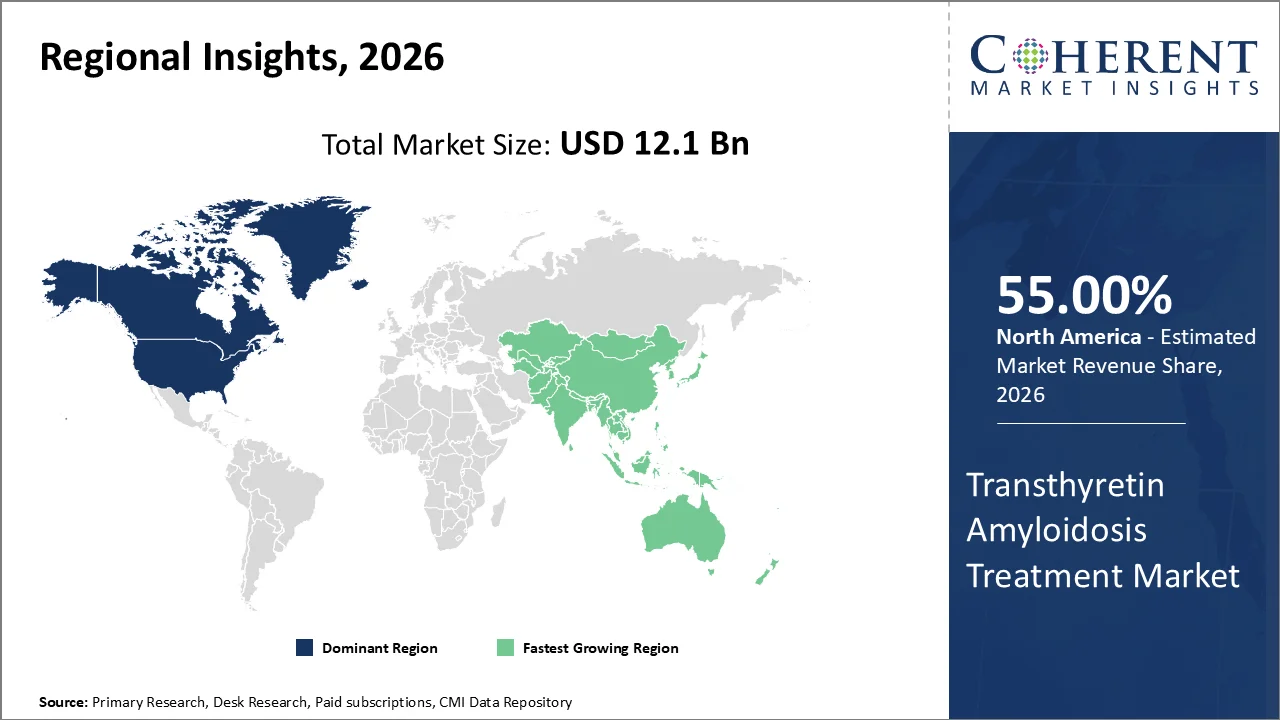
North America dominates owing to advanced healthcare infrastructure
North America account 55% market share in 2026, its robust healthcare infrastructure, advanced diagnostic capabilities, as well at strong regulatory framework that facilitates rapid adoption of innovative treatments for Transthyretin Amyloidosis (ATTR). The estimated prevalence of overall ATTR amyloidosis was 59.8 cases per million people, that of ATTR-CM was 41.1 cases per million people, and that of ATTR-PN was 15.1 cases per million people.
The United States Food and Drug Administration (FDA) has been at the forefront of approving breakthrough therapies, including Pfizer's Vyndaqel (tafamidis), which held as a major milestone in ATTR treatment.
There are many special centers for amyloidosis treatment around the world. Hospitals like Mayo Clinic, Boston Medical Center, and Stanford University help patients and also do research on this disease. The National Amyloidosis Centre's data indicates that North American healthcare systems have executed overall screening protocols, particularly for cardiac amyloidoselis patients, leading to earlier diagnosis as well as treatment initiation.
Asia Pacific Transthyretin Amyloidosis Treatment Market Trends
The Asia Pacific region is poised to be the fastest-growing region through 2026-2033, expanding at a CAGR of approximately 7.5%. Countries including Japan, China, South Korea, India, etc., have seen a high recognition of amyloidosis cases with the advancements in diagnostic capabilities, including the high adoption of genetic testing as well as imaging modalities that are crucial for early detection of transthyretin amyloidosis. From 1999 to 2023, a total of 52,659 amyloidosis-related deaths were recorded in the US. Most deaths occurred in medical facilities and homes.
For example, Japan, which has a large elderly population vulnerable to wild-type transthyretin amyloidosis, has substantially increased government funding for rare disease research, including amyloidosis, as detailed by the Japanese Ministry of Health, Labour and Welfare’s recent rare disease policy programs.
Moreover, China has experienced a surge in public-private partnerships focused at enhancing rare disease care, with centers of excellence being established in urban hubs like Shanghai and Beijing focusing on amyloidosis management.
Advanced Healthcare Infrastructures is Accelerating the Transthyretin Amyloidosis Treatment Market Demand in United States
First and foremost, the U.S. has one of the most advanced healthcare infrastructures globally, supported by world-class medical research institutions as well as centers of excellence specializing in rare diseases including ATTR.
The presence of prominent institutions including the National Institutes of Health (NIH), and the Amyloidosis Program at major hospitals, including the Mayo Clinic, Cleveland Clinic, etc., plays a pivotal role in early diagnosis, patient management, and clinical trial activities for new therapeutic interventions.
For instance, the U.S. Food and Drug Administration (FDA) has been at the edge of approving novel therapies targeting ATTR, including tafamidis, patisiran, inotersen, etc. This regulatory environment has enabled pharmaceutical companies to focus their research as well as delivery efforts predominantly in the U.S., hence enhancing accessibility to cutting-edge treatments for patients.
Japan Transthyretin Amyloidosis Treatment Market Trends
Japan contributes the highest share in the Transthyretin Amyloidosis Treatment Market in APAC owing to several critical factors rooted in the country's healthcare infrastructure, advanced research capabilities, and the proactive role of government and non-profit organizations in managing rare diseases like transthyretin amyloidosis.
Japan has long been at the forefront of rare disease diagnosis and treatment due to a well-established system for genetic screening, long-term patient registries, as well as a overall public health insurance coverage that includes innovative and orphan drugs aimed at combating amyloidosis.
The Japanese government sees amyloidosis as a serious health problem. It includes the disease in its rare disease program to help find it early and give proper long-term care to patients.
Furthermore, Japan’s leading pharmaceutical companies, such as Takeda Pharmaceutical Company, have been pivotal in pioneering transthyretin amyloidosis treatment development, particularly with novel therapeutics that focus on the destabilization and clearance of amyloid fibrils.
Who are the Major Companies in Transthyretin Amyloidosis Treatment Industry
Some of the major key players in Transthyretin Amyloidosis Treatment market include, Alnylam Pharmaceuticals, Inc., Pfizer, Inc., Prothena Corporation Plc., GlaxoSmithKline Plc., Ionis Pharmaceuticals, Inc., Eidos Therapeutics, and SOM Innovation Biotech, S.L.
Key News
- In June 2026, DKSH entered a strategic distribution partnership with BridgeBio to support regulatory evaluation and potential patient access to a Transthyretin Stabilizer for ATTR-CM in Australia, Singapore, South Korea, and Taiwan. The partnership combines BridgeBio's biotech innovation and DKSH Healthcare's integrated end-to-end commercialization platform to bring a new treatment option to patients.
- In April 2025, BridgeBio Pharma, Inc., a new type of biopharmaceutical company focused on genetic diseases, announced the Medicines and Healthcare products Regulatory Agency has granted marketing authorization in the United Kingdom (UK) for acoramidis, under the brand name BEYONTTRA, for the treatment of wild-type or variant transthyretin amyloidosis in adult patients with cardiomyopathy (ATTR-CM).
Market Report Scope
Transthyretin Amyloidosis Treatment Market Report Coverage
| Report Coverage | Details | ||
|---|---|---|---|
| Base Year: | 2025 | Market Size in 2026: | USD 12.1 Bn |
| Historical Data for: | 2020 To 2024 | Forecast Period: | 2026 To 2033 |
| Forecast Period 2026 to 2033 CAGR: | 7.8% | 2033 Value Projection: | USD 20.4 Bn |
| Geographies covered: |
| ||
| Segments covered: |
| ||
| Companies covered: | Alnylam Pharmaceuticals, Inc., Pfizer, Inc., Prothena Corporation Plc., GlaxoSmithKline Plc., Ionis Pharmaceuticals, Inc., Eidos Therapeutics, and SOM Innovation Biotech, S.L. | ||
| Growth Drivers: |
| ||
| Restraints & Challenges: |
| ||
Analyst Opinion
- The Transthyretin Amyloidosis (ATTR) treatment market is witnessing significant advancements driven by increasing disease awareness and improved diagnostic capabilities.
- The high prevalence of ATTR amyloidosis, a rare and progressive disorder, is propelling the demand for effective therapeutic alternatives. The estimated prevalence of overall ATTR amyloidosis was 59.8 cases per million people, that of ATTR-CM was 41.1 cases per million people.
- Innovations in targeted therapies, including gene silencing and stabilizing agents, are adding to enhanced patient outcomes, thereby fueling market growth. In 2025, the FDA approved a significant number of new cancer drugs, which accounted for 35% of all new drug approvals in the USA.
- The market advances from ongoing research focusing on novel treatment modalities, providing substantial opportunities for pharmaceutical companies to cater to the unmet clinical needs.
- Expansion of reimbursement policies as well as growing initiatives for early diagnosis are expected to positively impact market dynamics. In 2025–26, INR 9,406 crore has been allocated towards the scheme, which provides a health insurance coverage of INR 500,000 to INR 12 crore families.
- North America currently dominates the market, with its robust healthcare infrastructure, presence of key players, as well as extensive clinical research activities.
Speak to the analyst
Want personalized insights?
Take the findings above to one of our principal consultants, or have the report rebuilt around the segments, geographies and competitors you actually track.
Market Segmentation
- By Drug Type (Revenue, USD Bn, 2021-2033)
- Tafamidis (Vyndaqel)
- Patisiran (ONPATTRO)
- Inotersen (TEGSEDI)
- Others
- By Disease Type (Revenue, USD Bn, 2021-2033)
- Hereditary Transthyretin Amyloidosis
- Polyneuropathy
- Cardiomyopathy
- Mixed Type
- Wild Type Amyloidosis
- Hereditary Transthyretin Amyloidosis
- By Distribution Channel (Revenue, USD Bn, 2021-2033)
- Hospital Pharmacies
- Specialty Pharmacies
- Retail Pharmacies
- Online Pharmacies
- By Region (Revenue, USD Bn, 2021-2033)
- North America
- U.S.
- Canada
- Latin America
- Brazil
- Mexico
- Argentina
- Rest of Latin America
- Europe
- Germany
- U.K.
- France
- Italy
- Spain
- Russia
- Rest of Europe
- Asia Pacific
- China
- India
- Japan
- Australia
- South Korea
- ASEAN
- Rest of Asia Pacific
- Middle East
- GCC
- Israel
- Rest of Middle East
- Africa
- South Africa
- Central Africa
- North Africa
- North America
Sources
Primary Research Interviews
- Key Opinion Leaders (KOLs) in Neurology
- Pharmaceutical Industry Experts specializing in Amyloidosis
- Healthcare Professionals treating Transthyretin Amyloidosis
- Clinical Researchers conducting trials on amyloidosis therapies
- Others
Databases
- GlobalData Healthcare
- EvaluatePharma
- IQVIA
- ClinicalTrials.gov
- Others
Magazines
- PharmaTimes
- Rare Disease Report
- European Pharmaceutical Review
- Amyloidosis News
- Others
Journals
- Journal of Amyloidosis and Related Disorders
- Orphanet Journal of Rare Diseases
- The Lancet Neurology,
- Amyloid: The Journal of Protein Folding Disorders
- Others
Newspapers
- The New England Journal of Medicine News
- BioWorld Today
- Reuters Health News
- Healthcare Weekly
- Others
Associations
- Amyloidosis Foundation
- Rare Disease United Foundation
- International Society of Amyloidosis
- National Organization for Rare Disorders (NORD)
- Others
Public Domain Sources
- World Health Organization (WHO)
- U.S. Food and Drug Administration (FDA)
- Centers for Disease Control and Prevention (CDC)
- National Institutes of Health (NIH)
- Others
Proprietary Elements
- CMI Data Analytics Tool
- Proprietary CMI Existing Repository of information for last 10 years
Get access to 250+ pages report
Every segment, forecast, competitor profile and data table behind the analysis above — available for instant download.
- ESOMAR Member
- ISO 9001:2015 Certified
- D-U-N-S Registered
- GDPR & CCPA Compliant
Missing comfort of reading report in your local language? Find your preferred language:
Transform your Strategy with Exclusive Trending Reports
Frequently Asked Questions
The transthyretin amyloidosis treatment market is expected to reach USD 20.4 Bn in 2033.
Major players operating in the global transthyretin amyloidosis treatment market include Alnylam Pharmaceuticals, Inc., Pfizer, Inc., Prothena Corporation Plc., GlaxoSmithKline Plc., Ionis Pharmaceuticals, Inc., Eidos Therapeutics, and SOM Innovation Biotech, S.L.
High treatment costs, underdiagnosis of the disease, delayed diagnosis, limited awareness in developing regions, and restricted access to advanced diagnostic tools and genetic testing is expected to restrain the transthyretin amyloidosis treatment market growth over the forecast period.
Increasing diagnosis of ATTR cardiomyopathy and polyneuropathy, growing adoption of disease-modifying therapies, advancements in genetic testing and imaging technologies, and rising investments in rare disease research are driving growth of the global Transthyretin Amyloidosis Treatment market.
The Transthyretin Amyloidosis Treatment market is anticipated to grow at a CAGR of 7.8% between 2026 and 2033.
Among regions, North America is expected to account for a largest market share in the global transthyretin amyloidosis treatment market over the forecast period.
The outlook for transthyretin amyloidosis (ATTR amyloidosis) depends on factors such as your type, affected organs, and how early you start treatment. Average survival rates differ by type: familial ATTR amyloidosis is about 7 to 12 years after diagnosis, while wild-type averages about 4 years with 36% living 5 years.