

Tuned Passive Harmonic Filters Market Size and Forecast — 2026 - 2033
The Global Tuned Passive Harmonic Filters Market size is estimated to be valued at USD 1.2 billion in 2026 and is expected to reach USD 2.4 billion by 2033, exhibiting a compound annual growth rate (CAGR) of 10.2% from 2026 to 2033.
Overview
The tuned passive harmonic filters market is driven by rising power quality issues caused by widespread use of non-linear loads such as variable frequency drives, inverters, and industrial automation systems. Growing industrialization and urbanization increase demand for stable and efficient electrical networks. Strict regulatory standards for harmonic distortion and energy efficiency further push adoption. Expansion of renewable energy systems, particularly solar and wind, also contributes to harmonic generation, boosting filter demand.
Key Takeaways
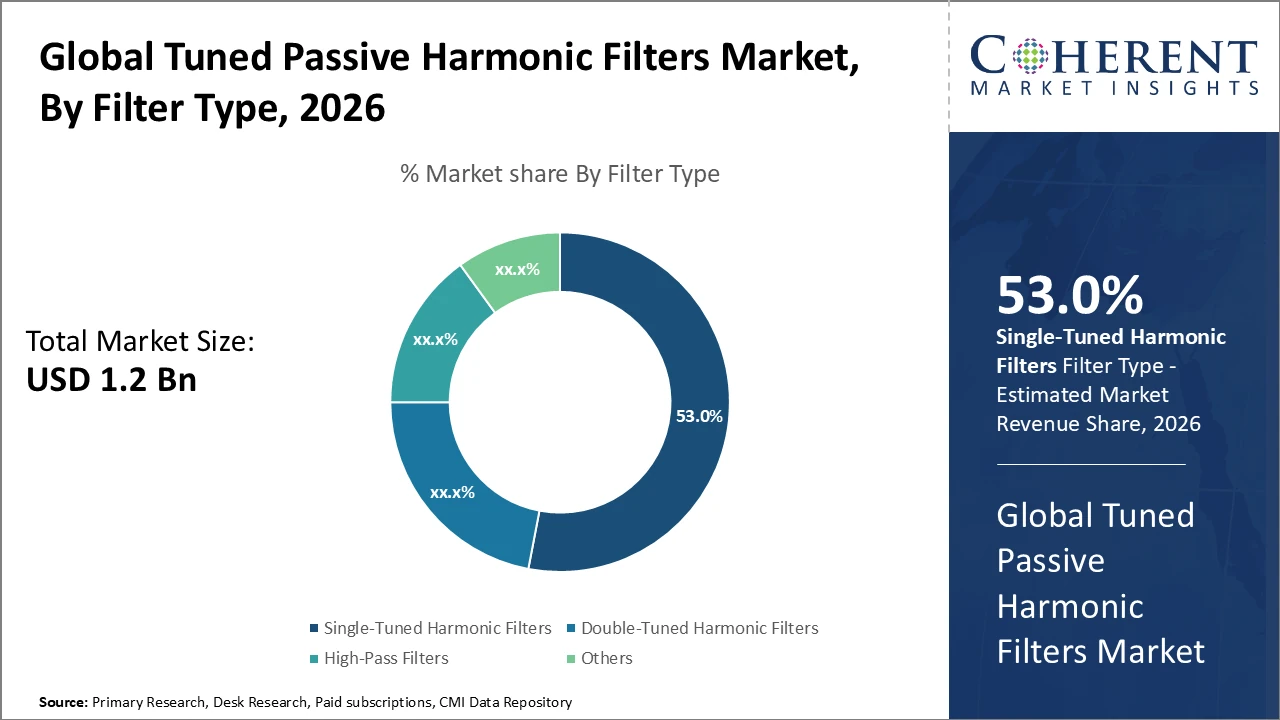
Single-Tuned Harmonic Filters dominate with a 53% market share due to cost-effectiveness and easy integration, making them the backbone of filter types.
Industrial Power Systems lead the application segment with 56% revenue share, driven by automation and manufacturing plant expansion.
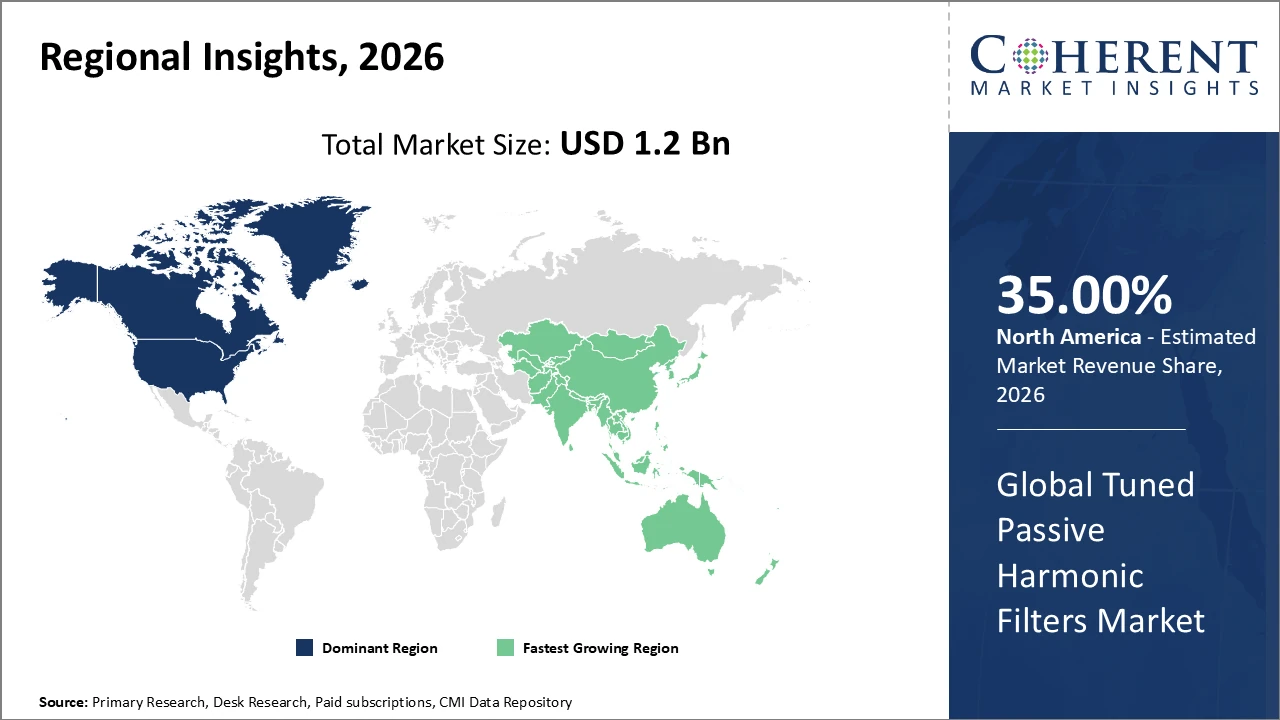
North America holds the largest regional market share, accounting for over 35% in 2026, supported by advanced power infrastructure and favorable regulations.
Asia Pacific is the fastest-growing region, with a CAGR above 12%, fueled by rapid industrialization and renewable energy adoption in countries like China and India.
Tuned Passive Harmonic Filters Market Segmentation Analysis
Tuned Passive Harmonic Filters Market Insights, By Filter Type
Single-Tuned Harmonic Filters dominate the market with a 53% share, valued for their effectiveness in eliminating specific harmonic frequencies, cost efficiency, and broad applicability across industrial and commercial power systems. These filters are widely used in manufacturing plants and large-scale industrial setups requiring precise harmonic mitigation. The fastest-growing subsegment is Double-Tuned Harmonic Filters, offering broader harmonic suppression to address complex distortions in smart grids and renewable energy installations. High-Pass Filters serve high-frequency harmonic needs in specialized applications.
Tuned Passive Harmonic Filters Market Insights, By Application
Industrial Power Systems lead the market with a 56% share, driven by widespread adoption of automation and energy-intensive manufacturing processes requiring effective harmonic control. Utility Power Networks represent the fastest-growing application, as grid expansions and renewable energy integration demand enhanced passive filter solutions for stability and compliance. Commercial and Residential Buildings utilize tuned passive harmonic filters to maintain power quality for electronics, lighting, and HVAC systems. The Transportation and Railways sector, though smaller, is expanding due to electrification of transit systems.
Tuned Passive Harmonic Filters Market Insights, By End User Industry
Manufacturing leads the market with a 48% share, driven by the increased use of electrically powered machinery and robotic automation, which necessitates high-performance filters to mitigate harmonic distortions and maintain operational efficiency. The fastest-growing segment is Energy and Utilities, propelled by smart grid deployments and renewable energy integration, which demand advanced harmonic filtration solutions. Automotive applications are steadily rising due to the expansion of electric vehicles and charging infrastructure. Healthcare facilities and data centers prioritize power quality to safeguard sensitive equipment.
Tuned Passive Harmonic Filters Market Trends
Adoption of IoT and digital twin platforms enables real-time monitoring of harmonic distortions, improving filter efficiency and minimizing downtime. For instance, Mitsubishi Electric achieved a 15% operational efficiency boost in 2025 using digital twin solutions.
Growing government environmental policies are encouraging the use of eco-friendly materials in passive filter systems, reflecting increasing customer focus on sustainability.
Decentralization of power generation with variable renewable energy sources drives demand for adaptive filters capable of dynamic harmonic suppression.
Overall, market trends emphasize digitization, sustainability, and smart integration to optimize energy quality in modern power systems.
Tuned Passive Harmonic Filters Market Insights, By Geography
North America Tuned Passive Harmonic Filters Market Analysis and Trends
In North America, the Tuned Passive Harmonic Filters market is dominated by advanced energy infrastructure, strict regulatory standards from bodies like the North American Electric Reliability Corporation (NERC), and substantial investments in smart grid upgrades. Utilities are increasingly deploying harmonic filters to manage rising nonlinear loads from industrial automation, renewable energy integration, and commercial power systems. The U.S. holds the largest regional share, driven by prominent utility companies and manufacturing hubs adopting advanced filtration technologies. Additionally, government incentives for grid modernization and energy efficiency programs further bolster demand, ensuring North America remains a key growth and innovation center in the harmonic filter market.
Asia Pacific Tuned Passive Harmonic Filters Market Analysis and Trends
Meanwhile, the Asia Pacific region demonstrates the fastest growth in the Tuned Passive Harmonic Filters market, fueled by rapid industrialization, increasing adoption of renewable energy, and supportive government policies promoting power quality and harmonic mitigation. Countries such as China and India are leading this surge, with a CAGR exceeding 12%, driven by the expansion of manufacturing facilities, electrification projects, and upgrades to aging power grids. Investments in smart factories, industrial automation, and renewable energy integration further boost the demand for harmonic filters. Combined, these factors position Asia Pacific as a key growth engine for the global market.
Tuned Passive Harmonic Filters Market Outlook for Key Countries
USA Tuned Passive Harmonic Filters Market Analysis and Trends
The USA’s Tuned Passive Harmonic Filters market is driven by substantial investments in grid modernization and industrial automation expansion. In 2025, companies like Siemens AG and Eaton Corporation expanded filter production capacities to address rising demand from stricter harmonic distortion standards mandated by NERC. Adoption within the utility sector increased by 25%, reflecting heightened regulatory compliance and improved power quality initiatives. Simultaneously, the integration of renewable energy sources prompted innovations in adaptive filter technologies, creating additional revenue streams. Combined with robust industrial and commercial infrastructure, these factors reinforce the U.S. as a pivotal market for harmonic filter solutions.
Germany Tuned Passive Harmonic Filters Market Analysis and Trends
Germany’s Tuned Passive Harmonic Filters market is driven by its advanced industrial base, strong renewable energy integration, and rigorous energy efficiency regulations. The manufacturing and utility sectors dominate demand, with companies increasingly deploying harmonic filters to comply with grid codes and maintain power quality in automated production lines. Renewable energy expansion, particularly in wind and solar, necessitates adaptive filtering solutions to mitigate harmonic distortions. Additionally, government incentives promoting energy-efficient technologies and investments in smart grid infrastructure support market growth. Technological advancements, such as digital monitoring and IoT-enabled filters, are being adopted to enhance real-time performance and operational reliability across industries.
Analyst Opinion
Rising industrial automation and smart grid deployment drove over 45% market revenue growth in 2025, with initiatives like the U.S. Department of Energy’s grid modernization funding increasing harmonic filter installations by 30% year-on-year in North America.
Supply-side growth is supported by enhanced production capacities and improved manufacturing techniques, with Asian manufacturers expanding output by roughly 25% in 2024 to meet regional and export demand.
Renewable energy adoption, especially solar photovoltaic systems, created complex harmonic challenges, boosting Tuned Passive Harmonic Filters demand by 20% in Asia Pacific in 2026, particularly in India and China.
Pricing strategies leveraged economies of scale, reducing costs by approximately 8% in 2025, expanding market accessibility in developing regions such as Latin America and the Middle East.
- Current Industry Events of 2026
- Market Size Estimation
- Regional Breakdown
- Competitive Landscape
- Customer Intelligence
- Segmental Analysis
- Pricing Analysis
- Key Market Drivers, Challenges & Future Trends
- Customized Insights Section
Market Scope
| Report Coverage | Details | ||
|---|---|---|---|
| Base Year: | 2025 | Market Size in 2026: | USD 1.2 billion |
| Historical Data for: | 2020 To 2024 | Forecast Period: | 2026 To 2033 |
| Forecast Period 2026 to 2033 CAGR: | 10.2% | 2033 Value Projection: | USD 2.4 billion |
| Geographies covered: |
| ||
| Segments covered: |
| ||
| Companies covered: | Siemens AG, Legrand SA, Toshiba Corporation, Mitsubishi Electric Corporation, Rockwell Automation, ABB Ltd., Emerson Electric Co., Delta Electronics, Inc., Danfoss Group, Nidec Corporation | ||
| Growth Drivers: |
| ||
Tuned Passive Harmonic Filters Market Growth Factors
Market growth in the Tuned Passive Harmonic Filters segment is driven by multiple key factors. Rising industrialization in emerging economies is creating significant demand for harmonic mitigation solutions, directly expanding market size and share. Stringent regulatory standards from organizations like IEEE and IEC further accelerate adoption by ensuring compliance and power quality. Additionally, the increasing deployment of non-linear loads such as variable frequency drives and UPS systems globally intensifies the need for precise harmonic filtering, boosting revenues. Innovations in filter design enhancing lifecycle efficiency, reducing maintenance costs, and supporting retrofits have enabled multiple companies to report improved performance and higher installations in 2025–2026.
Tuned Passive Harmonic Filters Market Development
In May 2025, Eaton expanded its portfolio by launching three high-performance filter series—DUA, LWF, and DNR—designed for durability, efficiency, and reliability in demanding applications such as power generation, manufacturing, and marine operations.
Key Players
Leading Companies of the Market
Siemens AG
Rockwell Automation
Mitsubishi Electric Corporation
ABB Ltd.
Toshiba Corporation
Emerson Electric Co.
Legrand SA
Danfoss Group
Nidec Corporation
Delta Electronics Inc.
Several market companies have focused on strategic acquisitions and collaborative R&D to strengthen their Tuned Passive Harmonic Filter offerings. For example, Schneider Electric’s 2024 acquisition of a niche harmonic filter technology startup expanded its product portfolio by 15%, significantly enhancing its market share in industrial automation sectors. Similarly, ABB partnered with leading renewable energy developers to deploy customized passive filters, improving grid stability and operational efficiency. This collaboration contributed to a 22% increase in market revenue in Europe in 2025, highlighting the impact of targeted partnerships and technology integration on market growth.
Tuned Passive Harmonic Filters Market Future Outlook
The Tuned Passive Harmonic Filters market is poised for robust growth, driven by increasing industrial automation, renewable energy integration, and smart grid expansion. Over the next five to seven years, demand is expected to rise for filters capable of addressing complex harmonic distortions in variable load environments. Technological innovations, including digital monitoring, adaptive filter designs, and IoT-enabled predictive maintenance, will enhance operational efficiency and reduce downtime. Additionally, government incentives promoting energy efficiency and stringent regulatory standards from organizations like IEEE and IEC will accelerate adoption. Emerging economies in Asia Pacific and Latin America offer significant growth opportunities for market players.
Tuned Passive Harmonic Filters Market Historical Analysis
The Tuned Passive Harmonic Filters market has witnessed steady growth over the past decade, driven by rising industrialization, increased adoption of automated manufacturing systems, and expanding electricity consumption. Early demand was primarily fueled by the need to mitigate harmonic distortions in heavy industrial and utility power networks. Between 2015 and 2020, market expansion accelerated due to stricter regulatory standards from organizations such as IEEE and IEC, along with growing awareness of power quality issues. Technological advancements in filter design and manufacturing improved efficiency and reduced costs, enabling wider adoption. By 2024, emerging regions like Asia Pacific began contributing significantly to global market revenues.
Sources
Primary Research Interviews:
Electrical engineers, power system designers, and grid operators in industrial and utility sectors
Plant managers, energy consultants, and facility managers focusing on power quality and harmonic mitigation
Researchers and technology specialists in electrical equipment and renewable energy integration
Magazines:
Power Electronics News – Innovations, Filter Technology Updates, and Industrial Applications
Electric Energy Magazine – Power Quality, Harmonics, and Grid Integration Trends
Energy Central – Case Studies, Industrial Power Systems, and Renewable Integration
IEEE Spectrum – Technological Developments, Smart Grid Applications, and Market Insights
Journals:
IEEE Transactions on Power Delivery – Harmonic Mitigation and Filter Design Research
Electric Power Systems Research – Industrial Power Quality and Filter Performance Analysis
Journal of Electrical Engineering & Technology – Adoption Patterns and Efficiency of Harmonic Filters
Newspapers:
The Wall Street Journal – Energy Market Developments and Industrial Investments
Financial Times – Power Infrastructure and Industrial Automation Trends
Business Insider – Market Updates, Power Quality Solutions, and Competitive Analysis
TechCrunch – Innovations in Industrial Electrical Equipment and Smart Grid Technology
Associations:
Institute of Electrical and Electronics Engineers (IEEE) – Standards, Guidelines, and Research on Power Quality
International Electrotechnical Commission (IEC) – Safety Standards, Regulations, and Certification for Electrical Equipment
North American Electric Reliability Corporation (NERC) – Grid Compliance, Harmonic Mitigation, and Reliability Insights
Energy Storage and Power Quality Alliance – Certifications, Safety Standards, and Technological Advancements in Harmonic Filters
Get access to 250+ pages report
Every segment, forecast, competitor profile and data table behind the analysis above — available for instant download.
- ESOMAR Member
- ISO 9001:2015 Certified
- D-U-N-S Registered
- GDPR & CCPA Compliant
Missing comfort of reading report in your local language? Find your preferred language:
Transform your Strategy with Exclusive Trending Reports
Frequently Asked Questions
The dominant players include Siemens AG, ABB Ltd., Mitsubishi Electric Corporation, and Nidec Corporation, among others, collectively shaping market competition.
The market is projected to grow from USD 1.2 billion in 2026 to approximately USD 2.4 billion by 2033, showing robust expansion with a CAGR of 10.2%.
The manufacturing industry holds the largest growth opportunity, accounting for nearly half of the market revenue, driven by automation and electrical load intensification.
Trends point towards adoption of smart, IoT-enabled filters, environmentally sustainable materials, and specialized solutions for new energy infrastructures like EV charging stations.
Competition is intensifying with companies focusing on innovation and acquisitions. Challenges include price sensitivity in emerging markets and the need for customized solutions to complex harmonic issues.
Strategic partnerships, technology collaborations, and targeted regional expansions are widely adopted to maximize market penetration and revenue growth.