

Yellow Fever Treatment Market Size and Share Analysis – 2026 To 2033
The Global Yellow Fever Treatment Market size is anticipated to grow at a steady CAGR of 3.7%, with an estimated value of approximately USD 564.2 Mn in 2026 and is expected to reach nearly USD 728.5 Mn in 2033. The growth is mainly driven by the increasing burden of vector-borne infectious illnesses, growing worldwide focus on outbreak preparedness, increasing immunization programs and advances in supportive care and essential treatment facilities in endemic locations. The World Health Organization (WHO) estimates that a single dose of the yellow fever vaccine provides life-long immunity in 99% of those vaccinated. Therefore, vaccination for yellow fever is the best preventive measure and significantly reduces the need for preventive healthcare infrastructure compared to curative care alone.
Key Takeaways
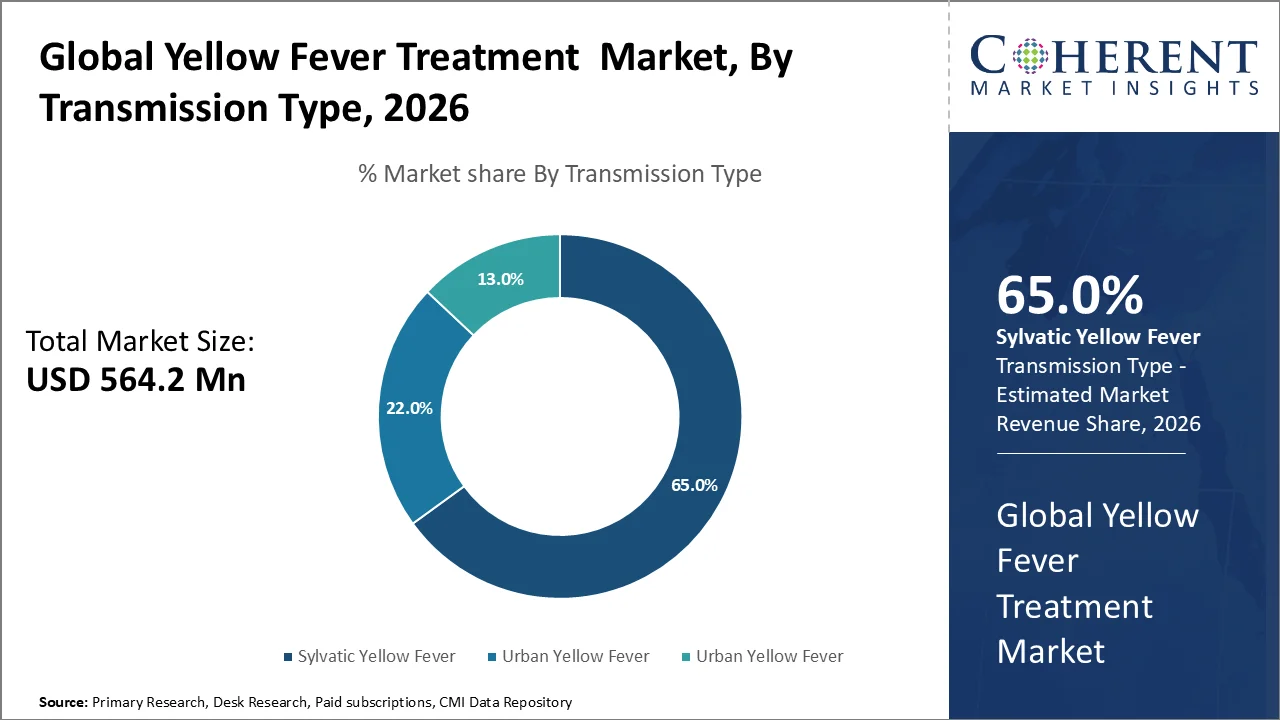
- Sylvatic Yellow Fever segment dominates with an estimated 65% share of total reported cases in 2026, driven by sustained zoonotic transmission cycles between non-human primates and forest-dwelling mosquitoes in endemic regions of Africa and South America. This makes sylvatic transmission the primary driver of disease incidence and the largest contributor in modeled “market burden” frameworks.
- Vaccines segment is expected to dominate the market with 68% share in 2026. The segment’s dominance is driven by the fact that yellow fever is primarily managed through preventive immunization rather than curative drug-based treatment. WHO-recommended mass vaccination campaigns, international travel vaccination requirements, and high single-dose vaccine efficacy (providing long-term immunity in most cases) continue to make vaccines the central revenue and volume contributor in the market.
- Hospitals segment to dominate with 55% share in 2026 This dominance is because hospitals are the main point of vaccination administration, outbreak diagnosis, severe case management and worldwide travel immunization certification. Clinical management in hospital settings is strictly supportive which increases reliance on inpatient care for managing complications such as organ failure, hemorrhage, and severe dehydration. This reinforces hospitals as the primary care delivery setting for advanced cases rather than outpatient clinics.
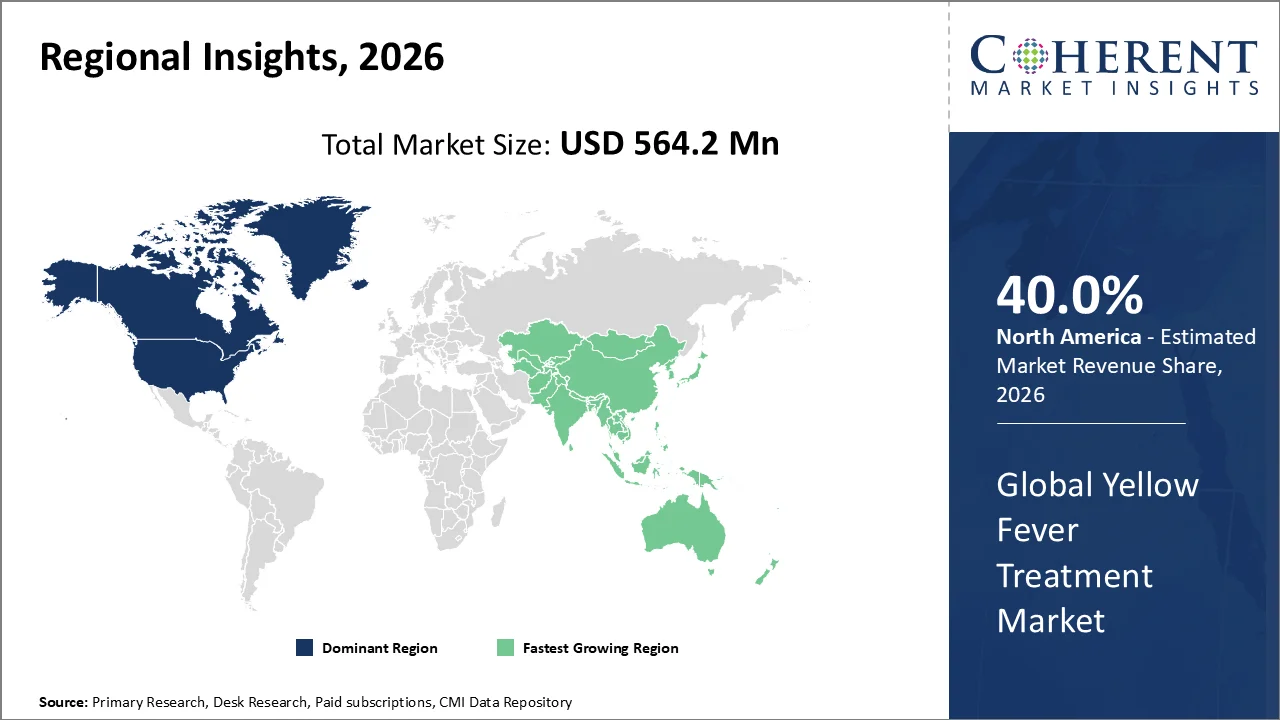
- North America is expected to acquire the prominent share of 40% in the global Yellow Fever treatment market in 2026. The region’s dominance is primarily driven by high international travel vaccination demand, strong availability of licensed yellow fever vaccines, advanced public health surveillance systems, and strict vaccination requirements for travelers entering endemic regions. According to the Centers for Disease Control and Prevention highlights that yellow fever vaccination is a key preventive measure for travelers to endemic areas, and vaccination is recommended or required depending on destination risk assessment, which significantly supports vaccine demand in North America.
Market Drivers
Rising Outbreak Risk & Expanding Vector Distribution is Driving the Yellow Fever Treatment Market
The growing occurrence of yellow fever outbreaks, especially in the endemic regions of Africa and some areas of South America, is a major factor fueling the yellow fever treatment market. The risk of transmission on the other hand is dramatically growing due to climate variability, urbanization and expansion of Aedes and Haemagogus mosquitoes’ habitats, all of which are boosting demand for immunization, diagnostics and supportive care services.
According to the WHO estimates that yellow fever causes 200,000 illnesses and about 30,000 fatalities per year worldwide, with most cases in Africa. WHO also points out that nearly 47 nations are at danger, where epidemics can quickly spiral in sub-immunized populations.
Climate Change–Driven Expansion of Mosquito Habitats is Increasing Disease Transmission Risk
Rising temperatures, altered rainfall patterns and increasing humidity are expanding the geographic range of Aedes aegypti mosquitoes, increasing the possibility for yellow fever transmission in both endemic and previously low-risk areas. This is raising demand for preventative immunization and bolstering outbreak preparedness efforts around the world.
According to the World Health Organization (WHO) warns that mosquito-borne diseases like as yellow fever are creeping into new altitude and urban zones that were previously unfriendly to the vectors and that the risk of epidemics among unprotected populations is substantially greater.
Current Events and Their Impact on the Yellow Fever Treatment Market
Current Event | Description and its Impact |
WHO Expansion of Emergency Yellow Fever Vaccination Campaigns in Africa (2024–2026) |
|
WHO Declaration of Ongoing Risk of Urban Yellow Fever Resurgence (2024 Update) |
|
- Current Industry Events of 2026
- Market Size Estimation
- Regional Breakdown
- Competitive Landscape
- Customer Intelligence
- Segmental Analysis
- Pricing Analysis
- Key Market Drivers, Challenges & Future Trends
- Customized Insights Section
Segmental Insights
Why is Sylvatic Yellow Fever Acquiring the Largest Share?
By disease type, the Sylvatic Yellow Fever sector is predicted to account for 65% of all reported cases in 2026, due to spillover from non-human primates to humans continuing in woodland areas, mostly in sub-Saharan Africa and parts of South America. Sylvatic transmission through prolonged zoonotic reservoirs is the major cause of epidemics in endemic locations.
According to the WHO surveillance reports indicated that in early 2025 there were 212 confirmed cases and 85 deaths in the Americas, mainly from forest-exposed areas, confirming the sylvatic dominance of the outbreak pattern.
In March 2026, the Pan American Health Organization (PAHO) reported continuing yellow fever transmission in several countries in South America with a major change in epidemiology with the expansion from traditional Amazon endemic areas to new non-endemic and forest boundary areas.
Vaccines Segment Dominates the Treatment Market
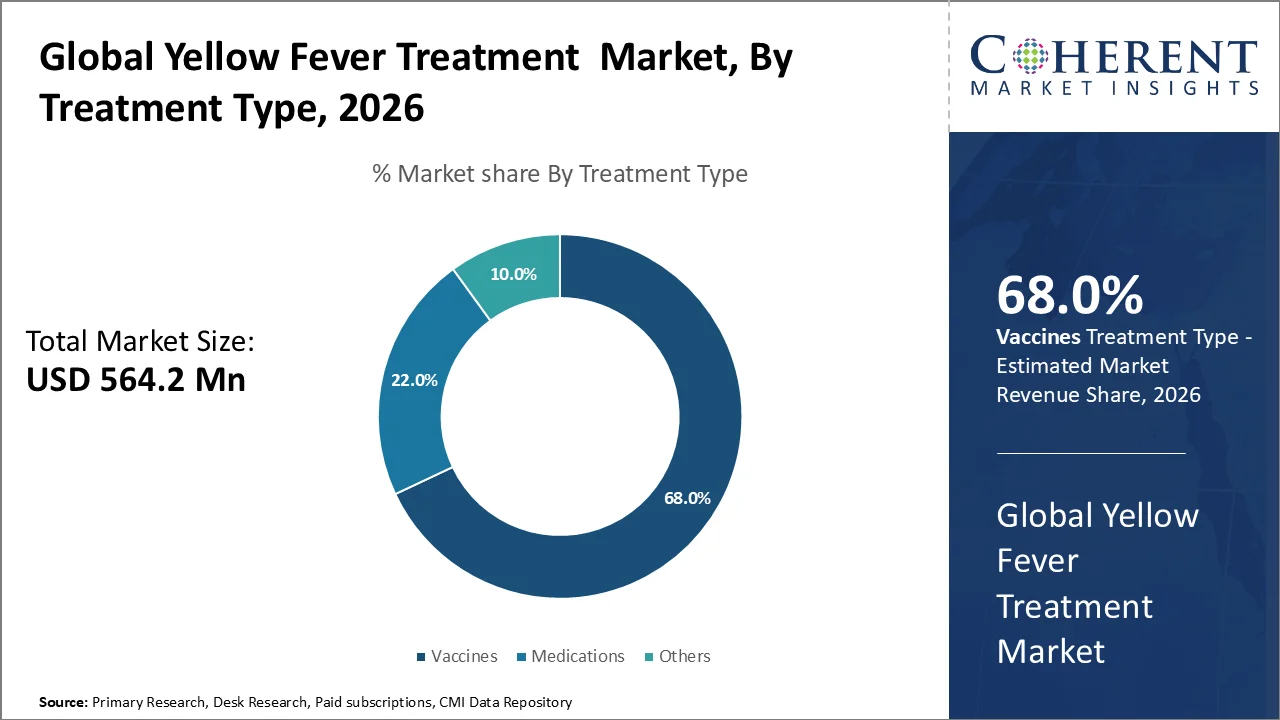
Based on treatment type, the Vaccines segment is forecast to account for 68% market share by 2026 owing to its strong preventive capacity and incorporation into the vaccination program in endemic countries. One dose of the vaccine provides lifetime immunity against yellow fever infection.
According to WHO reports that following large-scale vaccination campaigns, many endemic areas in high-risk African countries now have more than 80 percent coverage of their populations with vaccines. This is the critical level to stop the disease spread and preserve herd immunity.
In October 2025, the Government of Bangladesh, in collaboration with Gavi, UNICEF and WHO, formally launched a nationwide Typhoid Conjugate Vaccine (TCV) program to vaccinate some 50 million children aged 9 months to under 15 years.
Hospitals Segment Leads the Market
Hospitals segment is projected to hold the largest market of 55% in 2026 end-user due to clinical management of severe yellow fever cases with hepatic failure, hemorrhagic sequelae, and multi-organ dysfunctions needing critical care support.
The World Health Organization (WHO) estimates that 15–30% of patients with severe yellow fever may die in the absence of appropriate supportive care in a hospital setting, further emphasizing hospitals as the principal treatment venue for advanced disease.
In November 2025, SMS Medical College and Hospital, Jaipur (India), launched a dedicated “Yellow Fever and Adult Vaccination Outpatient Department (OPD)” under its Department of Preventive and Social Medicine.
Yellow Fever Treatment Market Trends
- The high disease burden continues to fuel global market dominance of vaccines, with the WHO estimating 67,000 to 173,000 severe yellow fever infections and 31,000 to 82,000 deaths each year, most of which are in Africa and caused by sylvatic transmission cycles.
- Emergency vaccine stockpiles enhance epidemic response capacity and contribute to supply chain stability. For example, WHO-managed global stockpiles hold 6 million doses of yellow fever vaccine annually to facilitate quick response to outbreaks through the International Coordinating Group (ICG).
- High transmission severity is a major market driver in urban outbreak risk. WHO reports that 50% of patients may die in severe phases of infection hence increasing demand for supportive treatment in hospitals.
Regional Insights
North America Dominates the Yellow Fever Treatment Market
North America is expected to hold 40% share of the global Yellow Fever treatment market by 2026, owing to high demand for travel vaccinations, advanced healthcare infrastructure and high compliance of international immunization requirements among travelers to endemic regions.
Additionally, WHO also reported that approximately 105 million individuals were vaccinated under the Yellow Fever Initiative in West Africa, which resulted in significant reductions in epidemic activity.
In November 2025, Sanofi (Sanofi Pasteur) reiterated its position as the key supplier for the WHO/UNICEF global yellow fever vaccine emergency stockpile, allowing the quick mobilization of doses in case of outbreaks in Africa and South America. The company emphasized its capacity for supplying millions of vaccine doses within the required timeframe (up to 72 hours) via the WHO ICG system.
Asia Pacific is the Fastest-Growing Region in the Yellow Fever Treatment Market
The Asia Pacific is predicted to be the fastest growing region due to increasing outward travel to endemic countries, improved vaccination infrastructure, and increasing government focus on infectious disease preparation and vaccine accessibility.
Asia-Pacific remains a high-risk importation region given the massive travel exposure, as WHO notes that hundreds of millions of international travelers travel from Asia-Pacific to Africa and South America annually, creating an increased demand for pre-travel yellow fever vaccination services and travel certification systems.
United States Yellow Fever Treatment Market Trends
The United States represents a key non-endemic but high-value market for yellow fever vaccine services, supported mostly by travel medicine infrastructure, CDC certification requirements, and robust hospital-based immunization programs.
The U.S. has a national network of CDC-certified Yellow Fever Vaccination Centers, which are critical for administration of the vaccine and issuance of the International Certificate of Vaccination (ICVP), often required for travel to endemic areas of Africa and South America.
China Yellow Fever Treatment Market Trends
China is a non-endemic country for yellow fever but remains a high-risk importation and preparedness market, driven by outbound travel, surveillance systems, and strict infectious disease control policies.
In July 2025, reports based on China CDC surveillance data (published through China CDC Weekly and cited in China Daily coverage) confirmed a large outbreak of chikungunya fever in Foshan, Guangdong Province, China, which prompted enhanced national vector-control and emergency response efforts.
Who are the Major Companies in Yellow Fever Treatment Industry
Some of the major key players in Yellow Fever Treatment Market are Sanofi Pasteur SA, Janssen, Pfizer Inc., BIOCRYST PHARMACEUTICALS, INC., Tychan Pte. Ltd., Johnson & Johnson Services, Inc., Takeda Pharmaceutical Company Limited, Bayer AG, GlaxoSmithKline plc, Bio-Manguinhos, Institut Pasteur de Dakar, and FSUE Chumakov.
Key News
- In April 2026, the Coalition for Epidemic Preparedness Innovations (CEPI) and the Pasteur Network announced a new Memorandum of Understanding (MoU) to enhance global and regional collaboration in vaccine research and development, clinical trials, biosafety, and outbreak preparedness systems.
- In March 2024, Bio-Manguinhos/Fiocruz (Brazil) announced a major optimization and expansion of its yellow fever vaccine production capacity, increasing output from approximately 60 million doses per year to about 107–120 million doses annually.
Market Report Scope
Yellow Fever Treatment Market Report Coverage
| Report Coverage | Details | ||
|---|---|---|---|
| Base Year: | 2025 | Market Size in 2026: | USD 564.2 Mn |
| Historical Data for: | 2020 To 2024 | Forecast Period: | 2026 To 2033 |
| Forecast Period 2026 to 2033 CAGR: | 3.7% | 2033 Value Projection: | USD 728.5 Mn |
| Geographies covered: |
| ||
| Segments covered: |
| ||
| Companies covered: | Sanofi Pasteur SA, Janssen, Pfizer Inc., BIOCRYST PHARMACEUTICALS, INC., Tychan Pte. Ltd., Johnson & Johnson Services, Inc., Takeda Pharmaceutical Company Limited, Bayer AG, GlaxoSmithKline plc, Bio-Manguinhos, Institut Pasteur de Dakar, and FSUE Chumakov | ||
| Growth Drivers: |
| ||
| Restraints & Challenges: |
| ||
Analyst Opinion
- Analysts note that the market is fundamentally constrained by high manufacturing concentration, with only a few of WHO prequalified producers (Sanofi, Bio-Manguinhos, Institut Pasteur Dakar, FSUE Chumakov) serving global demand, thus rendering supply vulnerable at the height of outbreaks.
- WHO-managed emergency response systems are dependent on the International Coordinating Group (ICG) yellow fever vaccine stockpile that has been used in the past in multi-million dose emergency campaigns during African outbreaks, highlighting the need for quick manufacturing scalability.
- The disease is geographically confined, with WHO confirming 47 countries at risk spanning Africa and South America, meaning that regional preparedness and immunization infrastructure is a primary market driver rather than therapeutic innovation.
- Analysts highlight that urbanization, climate change and vector expansion (Aedes aegypti presence across tropical regions) are ever-increasing the unpredictability of outbreaks, emphasizing the relevance of surveillance-driven vaccination demand over treatment-based demand.
Speak to the analyst
Want personalized insights?
Take the findings above to one of our principal consultants, or have the report rebuilt around the segments, geographies and competitors you actually track.
Market Segmentation
- By Transmission Type (Revenue, USD Mn, 2021-2033)
- Sylvatic Yellow Fever
- Intermediate Yellow Fever
- Urban Yellow Fever
- By Treatment Type (Revenue, USD Mn, 2021-2033)
- Vaccines
- Medications
- Others
- By Application (Revenue, USD Mn, 2021-2033)
- Hospitals
- Clinics
- Community Health Centers
- Others
- By Region (Revenue, USD Mn, 2021-2033)
- North America
- U.S.
- Canada
- Latin America
- Brazil
- Mexico
- Argentina
- Rest of Latin America
- Europe
- Germany
- U.K.
- France
- Italy
- Spain
- Russia
- Rest of Europe
- Asia Pacific
- China
- India
- Japan
- Australia
- South Korea
- ASEAN
- Rest of Asia Pacific
- Middle East
- GCC
- Israel
- Rest of Middle East
- Africa
- South Africa
- Central Africa
- North Africa
- North America
Sources
Primary Research Interviews
- Vaccine Manufacturing Companies (Sanofi Pasteur, Bio-Manguinhos, Institut Pasteur Dakar)
- WHO Prequalified Vaccine Producers & Supply Chain Experts
- Public Health Officials & Epidemiologists (Africa & South America)
- Hospital Administrators & Travel Medicine Clinics
- Government Immunization Program Managers
- Outbreak Response & Emergency Stockpile Coordinators
- Infectious Disease Specialists & Clinical Researchers
- Cold Chain Logistics & Vaccine Distribution Providers
- Others
Databases
- World Health Organization (WHO) Global Health Observatory
- UNICEF Supply Division Vaccine Data
- Pan American Health Organization (PAHO) Immunization Data
- Gavi Vaccine Alliance Dashboard
- Our World in Data – Vaccination & Infectious Disease Dataset
- World Bank Health, Nutrition & Population Data
- CDC WONDER & Travelers’ Health Data
- IHME Global Burden of Disease Study
- Others
Magazines
- The Lancet Infectious Diseases
- BMJ Global Health
- Vaccine Journal (Elsevier)
- Nature Medicine
- Clinical Infectious Diseases Journal Insights
- Health Policy Watch
- STAT News (Global Health Section)
- Others
Journals
- World Health Organization Weekly Epidemiological Record (WER)
- Emerging Infectious Diseases (CDC Journal)
- Bulletin of the World Health Organization
- PLOS Neglected Tropical Diseases
- Vaccine Journal
- International Journal of Infectious Diseases
- Journal of Travel Medicine
- Others
Newspapers
- Reuters Health
- BBC Health
- The Guardian (Global Health)
- Financial Times (Healthcare Section)
- Bloomberg Health
- The New York Times (Global Health Coverage)
- The Economic Times (India Health Reports)
- Business Standard Health Coverage
- Others
Associations
- World Health Organization (WHO)
- Gavi, the Vaccine Alliance
- Pan American Health Organization (PAHO)
- Africa CDC (African Centres for Disease Control and Prevention)
- CEPI (Coalition for Epidemic Preparedness Innovations)
- UNICEF Immunization Programs
- Red Cross / Red Crescent Health Programs
- Others
Public Domain Sources
- WHO Yellow Fever Fact Sheet & Surveillance Reports
- WHO International Coordinating Group (ICG) Vaccine Stockpile Data
- PAHO Yellow Fever Epidemiological Updates
- CDC Yellow Fever Travel Health Notices
- Gavi Vaccine Investment Strategy Reports
- World Bank Infectious Disease & Health Security Reports
- CEPI Pandemic Preparedness Publications
- GitHub / Open Data for Disease Surveillance Tools (supporting analytics systems)
- Others
Proprietary Elements
- CMI Data Analytics Tool
- Proprietary CMI Existing Repository of information for last 10 years.
Get access to 250+ pages report
Every segment, forecast, competitor profile and data table behind the analysis above — available for instant download.
- ESOMAR Member
- ISO 9001:2015 Certified
- D-U-N-S Registered
- GDPR & CCPA Compliant
Missing comfort of reading report in your local language? Find your preferred language:
Transform your Strategy with Exclusive Trending Reports
Frequently Asked Questions
The Global Yellow Fever Treatment Market is expected to reach approximately USD 728.5 Mn in 2033, growing from USD 564.2 Mn in 2026 at a CAGR of 3.7% during the forecast period.
Major players include Sanofi Pasteur SA, Janssen, Pfizer Inc., BIOCRYST Pharmaceuticals, Tychan Pte. Ltd., Johnson & Johnson Services, Takeda Pharmaceutical Company Limited, Bayer AG, GlaxoSmithKline plc, Bio-Manguinhos, Institut Pasteur de Dakar, and FSUE Chumakov.
The key challenges include limited vaccine manufacturing capacity during outbreak surges, high dependency on a small number of WHO-prequalified producers, cold-chain logistics limitations, and uneven vaccination coverage in endemic regions.
Market growth is driven by rising global vaccination programs under WHO EYE strategy, increasing international travel to endemic regions, expansion of immunization campaigns, climate-driven vector spread, and strengthening outbreak preparedness systems.
The Yellow Fever Treatment Market is anticipated to grow at a CAGR of 3.7% between 2026 and 2033.
North America is expected to account for the largest market share of around 40% in 2026, driven by strong travel vaccination demand, advanced healthcare infrastructure, and strict immunization requirements.
Governments prioritize vaccination because yellow fever has a high fatality rate in severe cases (up to 50%), and vaccination provides lifelong immunity in 99% of vaccinated individuals, making prevention the most effective control strategy.