
Body Composition Analyzers Market Analysis & Forecast: 2026-2033

Body Composition Analyzers Market Size and Forecast – 2026 – 2033
The Global Body Composition Analyzers Market size is estimated to be valued at USD 1.25 billion in 2026 and is expected to reach USD 2.3 billion by 2033, exhibiting a compound annual growth rate (CAGR) of 9.5% from 2026 to 2033.
Global Body Composition Analyzers Market Overview
The body composition analyzers market is driven by rising health consciousness and growing prevalence of obesity, diabetes, and lifestyle-related disorders worldwide. Increasing demand for fitness tracking in gyms, sports centers, and home healthcare is boosting adoption of advanced analyzers. Expansion of preventive healthcare and routine health check-ups, along with greater awareness of body fat, muscle mass, and hydration levels, further supports market growth. Technological advancements such as bioelectrical impedance and smart connected devices are improving accuracy and user experience. Additionally, growing integration of these devices in hospitals, wellness programs, and telehealth platforms is accelerating global market expansion.
Key Takeaways
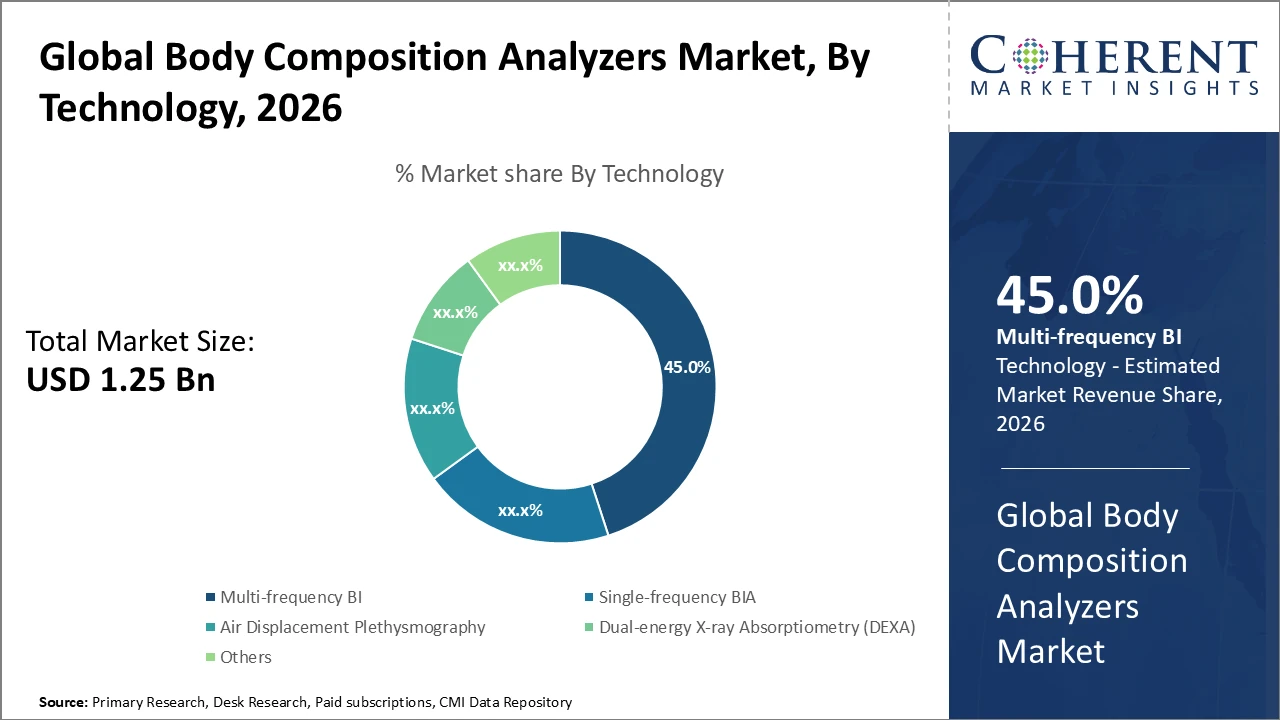
The Multi-frequency BIA subsegment is the dominant technology with 45% market share due to its accuracy and wide applicability, while Air Displacement Plethysmography is the fastest-growing segment, driven by increased usability in clinical and fitness settings.
Healthcare applications lead the market, contributing over 40% of revenue, supported by rising demand for precise diagnostics in chronic disease management and preventive care.
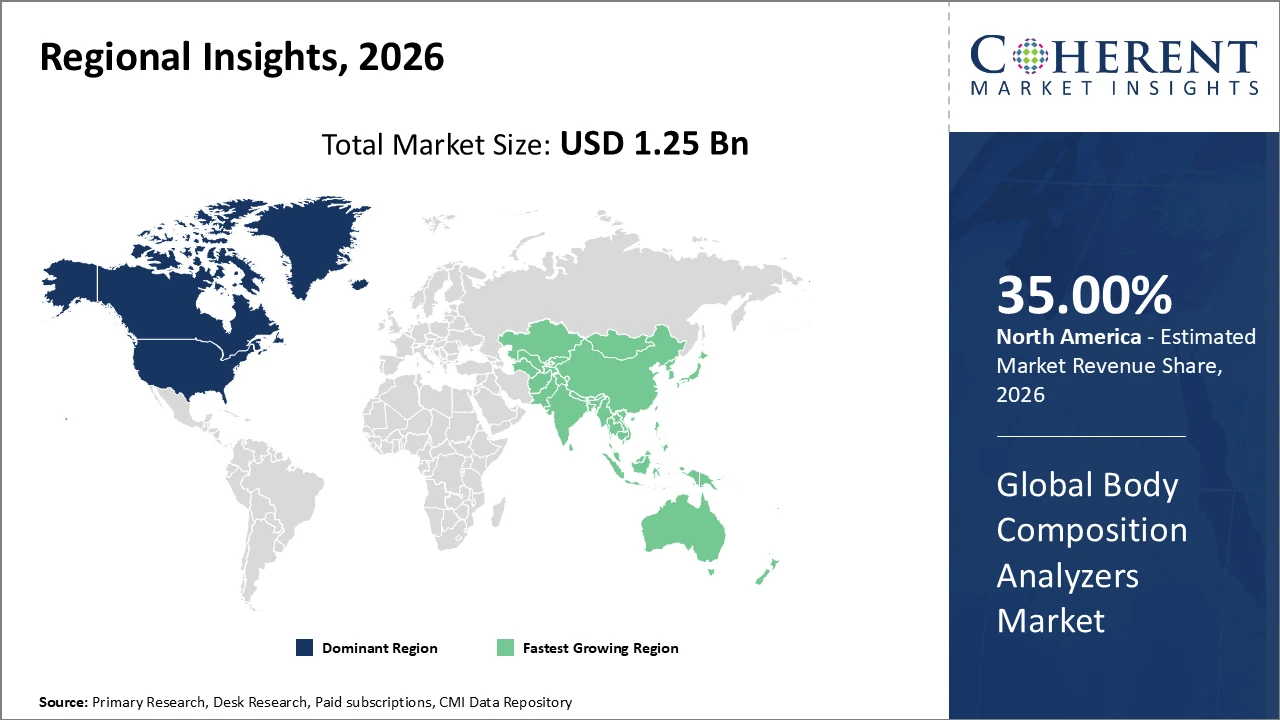
North America holds around 35% of the market share, supported by high healthcare spending and a well-established medical device ecosystem.
Asia Pacific shows the highest CAGR, fueled by expanding healthcare infrastructure and growing consumer health awareness in countries like India and China.
Body Composition Analyzers Market Segmentation Analysis
To learn more about this report, Request Free Sample
Body Composition Analyzers Market Insights, By Technology
Multi-frequency BIA dominates the body composition analyzers market with a 45% share, valued for its high accuracy in distinguishing water, fat, and lean body mass, making it widely used in clinical and sports settings. The fastest-growing subsegment, Air Displacement Plethysmography, is preferred for its non-invasive, radiation-free method, gaining traction in research institutions and premium fitness centers. Single-frequency BIA remains popular for its affordability but offers lower precision. DEXA provides accurate measurements but is limited by cost and low-level radiation exposure. Emerging technologies, including ultrasound-based analyzers, cater to niche applications, supporting innovation and market diversification.
Body Composition Analyzers Market Insights, By End User
Hospitals and clinics dominate the body composition analyzers market, serving as primary buyers and users for accurate disease diagnostics and treatment planning. The fastest-growing subsegment, Sports Teams and Gyms, utilizes these devices to design tailored fitness and rehabilitation programs based on precise body composition data. Research institutes rely on analyzers for clinical trials, nutritional studies, and epidemiological research. Individual consumers are increasingly adopting portable analyzers for self-monitoring, supported by user-friendly interfaces and mobile app connectivity. Other emerging applications include wellness centers and spas, reflecting the expanding adoption of body composition analyzers across both professional and personal health and fitness sectors.
Body Composition Analyzers Market Insights, By Application
Healthcare dominates the body composition analyzers market, accounting for over 40% of revenue, driven by clinical applications in assessing obesity, sarcopenia, and fluid balance in chronic disease management. The fastest-growing segment, Sports & Fitness, benefits from increasing adoption of analyzers for athlete performance monitoring and wellness programs. Research & Academic institutions continue to use these devices for body composition studies and nutritional research. Consumer and Home Use is expanding as health awareness rises and portable, affordable devices become more accessible. Other emerging applications include corporate wellness programs and hospitality sectors, reflecting the broadening adoption of body composition analysis across diverse industries.
Body Composition Analyzers Market Trends
The market trend is marked by increasing adoption of AI-enabled predictive analytics and cloud integration, improving data accuracy and user engagement.
In 2025, InBody launched an AI-driven platform offering personalized health risk assessments, enhancing clinical utility.
Miniaturization and portability of analyzers are gaining traction, appealing to fitness enthusiasts and enabling remote health monitoring, particularly in North America and Europe.
Sustainability considerations are influencing product design and material selection, aligning with global environmental initiatives and 2026 regulatory frameworks.
Body Composition Analyzers Market Insights, By Geography
To learn more about this report, Request Free Sample
North America Body Composition Analyzers Market Analysis and Trends
In North America, the body composition analyzers market is dominated by high healthcare expenditure, supportive government initiatives for chronic disease management, and a mature ecosystem of advanced device manufacturers. The United States leads the region, accounting for roughly 35% of market share, supported by comprehensive healthcare infrastructure and substantial investment in sports science and wellness research. Leading companies strengthen their presence through regional partnerships, targeted awareness campaigns, and continuous innovation in device technology. The combination of strong regulatory support, advanced clinical adoption, and consumer awareness ensures sustained market growth, making North America a key contributor to the global body composition analyzers industry.
Asia Pacific Body Composition Analyzers Market Analysis and Trends
Asia Pacific is experiencing the fastest growth in the body composition analyzers market, driven by rapidly expanding healthcare infrastructure, rising health awareness among the growing middle class, and increased government investment in precision health technologies. Countries such as India and China are emerging as key growth hubs, with strong demand for affordable analyzers tailored to local needs and innovative solutions. The adoption of portable and cost-effective devices for clinical, fitness, and home use is further accelerating market expansion. These factors collectively support a robust CAGR exceeding 11% over the forecast period, positioning Asia Pacific as a leading regional market.
Body Composition Analyzers Market Outlook for Key Countries
USA Body Composition Analyzers Market Analysis and Trends
The U.S. body composition analyzers market is driven by advanced research institutions and a high prevalence of lifestyle-related diseases, highlighting the need for accurate body metrics in prevention and treatment. In 2025, the American Heart Association’s endorsement of body composition monitoring promoted broader clinical adoption. Leading companies, including Tanita and InBody, have strengthened their market position through robust distribution networks and continuous product innovation. Additionally, the growing fitness culture, increasing participation in athletic programs, and rising awareness of personal health metrics have expanded demand in sports and wellness applications, reinforcing the country’s position as a global leader in the market.
Germany Body Composition Analyzers Market Analysis and Trends
Germany’s body composition analyzers market is driven by a strong healthcare system, rising awareness of preventive care, and increasing adoption of advanced diagnostic technologies. Hospitals and clinics lead demand, using analyzers for obesity management, sarcopenia assessment, and chronic disease monitoring. The fitness and wellness sector is also expanding, with gyms and sports facilities integrating analyzers for performance tracking. Technological trends such as AI-enabled analytics, cloud connectivity, and portable devices are gaining traction. Additionally, sustainability and energy-efficient device design are influencing product development. Overall, Germany’s market reflects steady growth, supported by healthcare infrastructure, technological innovation, and rising health-conscious consumer behavior.
Analyst Opinion
Rising demand for multi-frequency bioelectrical impedance analysis (BIA) technology is a key driver, accounting for 45% of market share in 2026, due to its accuracy in measuring fat, muscle, and water composition across demographics. The American College of Sports Medicine’s 2025 guidelines recommend multi-frequency BIA devices for athlete monitoring, boosting adoption in clinical and sports applications.
Portable and home-use body composition analyzers have seen a 25% sales increase from 2024 to 2026, driven by consumer interest in self-monitoring and preventive healthcare, especially in urban areas with high disposable income. Samsung’s 2025 home-use device achieved 30% market penetration in six months in North America.
Pricing has remained stable, with average unit costs dropping 5% from 2024 to 2026 due to economies of scale and reduced component costs, enhancing accessibility in developing markets. Emerging market share increased by 12% in countries like India, supported by government health initiatives.
The sports and fitness end-user segment recorded the highest year-on-year growth at 11% in 2025, fueled by integration into athlete training and wellness programs. Collaborations between professional teams and device manufacturers led to product customizations, further increasing demand in this segment.
Market Scope
| Report Coverage | Details | ||
|---|---|---|---|
| Base Year: | 2025 | Market Size in 2026: | USD 1.25 billion |
| Historical Data for: | 2020 To 2024 | Forecast Period: | 2026 To 2033 |
| Forecast Period 2026 to 2033 CAGR: | 9.5% | 2033 Value Projection: | USD 2.3 billion |
| Geographies covered: |
|
||
| Segments covered: |
|
||
| Companies covered: | Tanita Corporation, InBody Co. Ltd., GE Healthcare, Azumio Inc., Bodystat Ltd., Withings SA, Omron Healthcare SA, FITSCAN, Beurer GmbH, RJL Systems, Inc. | ||
| Growth Drivers: |
|
||
Uncover macros and micros vetted on 75+ parameters: Get instant access to report
Body Composition Analyzers Market Growth Factors
Rising awareness among healthcare professionals about the limitations of traditional BMI measurements is driving demand for advanced body composition analyzers that provide precise diagnostics. In 2025, the trend toward personalized nutrition and fitness plans accelerated adoption of integrated solutions offering real-time monitoring. The growing prevalence of obesity-related and sedentary lifestyle diseases, with WHO reporting a 4% annual increase in related assessments, further fuels demand. Advances in non-invasive technologies like air displacement plethysmography (ADP) and improved affordability have expanded accessibility, particularly in emerging markets. Additionally, post-pandemic consumer interest in fitness tracking has encouraged enhanced device usability and app integration, supporting sustained market growth.
Body Composition Analyzers Market Development
In September 2025, Hume Health launched the Body Pod, a smart body composition analyzer for home use. It uses multi-frequency bioelectrical impedance analysis (BIA) to measure over 40 health metrics, including body fat, muscle mass, hydration, visceral fat, and basal metabolic rate.
Key Players
Leading Companies of the Market
Tanita Corporation
InBody Co. Ltd.
GE Healthcare
Azumio Inc.
Bodystat Ltd.
Withings SA
Omron Healthcare SA
FITSCAN
Beurer GmbH
RJL Systems, Inc.
Several leading companies in the body composition analyzers market have strategically focused on product innovation, emphasizing portability and enhanced sensor accuracy. For instance, Tanita’s launch of Bluetooth-enabled devices in 2025 increased its market share by 8% within a year. InBody expanded its global presence through partnerships with major sports federations in Europe and Asia, boosting brand visibility and adoption in both fitness and professional sports sectors. Meanwhile, seca collaborated with research institutions to develop tailored solutions for clinical trials, strengthening its position in the healthcare segment and creating specialized offerings for precise body composition analysis in medical applications.
Body Composition Analyzers Market Future Outlook
The future outlook for the body composition analyzers market is promising, driven by rising health awareness, growing fitness trends, and increasing prevalence of obesity and lifestyle-related diseases. Demand is expected to surge for advanced analyzers that offer accurate, non-invasive measurements and integrate with digital health platforms for real-time monitoring. Technological innovations, including AI-enabled analytics, portable devices, and cloud-based data management, will enhance usability for both consumers and healthcare professionals. Expansion in clinical, fitness, and wellness sectors globally, particularly in Asia Pacific and North America, is anticipated to further propel market growth, making body composition analyzers an essential tool for personalized health management.
Body Composition Analyzers Market Historical Analysis
The body composition analyzers market is expected to experience robust growth in the coming years, fueled by increasing consumer focus on health, fitness, and preventive care. Rising incidence of obesity, lifestyle diseases, and demand for personalized wellness solutions are driving adoption across clinical, fitness, and home settings. Technological advancements, including AI-powered analytics, wireless connectivity, and portable devices, are enhancing accuracy and user experience. Integration with health apps and cloud-based platforms is enabling real-time monitoring and long-term tracking. Expansion in emerging regions, coupled with rising awareness of body metrics for overall health, is projected to sustain strong market growth globally.
Sources
Primary Research Interviews:
Nutritionists, dietitians, and fitness trainers directly involved in body composition assessment and wellness programs.
Hospital administrators, clinical lab managers, and procurement specialists responsible for acquiring medical and diagnostic devices.
Product managers, R&D scientists, and regulatory experts from companies developing bioelectrical impedance, DEXA, and other body composition analysis technologies.
Magazines:
Medical Device Network – Updates on diagnostic equipment, wearable health devices, and market trends.
Fitness Business Insider – Insights into fitness technology, body monitoring devices, and wellness industry developments.
HealthTech Magazine – Focus on digital health solutions, clinical applications, and emerging analyzer technologies.
Journals:
Journal of Body Composition and Health – Studies on measurement techniques, accuracy, and clinical applications.
Obesity Reviews – Research on body composition metrics, weight management, and health outcomes.
Clinical Nutrition – Investigations on body composition, metabolic health, and patient care applications.
Newspapers:
The Financial Times – Global healthcare technology trends, investments, and market performance.
Reuters – Updates on medical device approvals, innovations, and market expansion.
Bloomberg – Industry developments, corporate strategies, and market insights in medical and fitness devices.
Associations:
International Society for Advancement of Kinanthropometry – Standards, research, and best practices in body composition measurement.
American College of Sports Medicine – Guidelines, research, and clinical applications for body metrics.
World Obesity Federation – Research, epidemiology, and global initiatives related to body composition and metabolic health.
Share
Share
Manisha Vibhute is a consultant with over 5 years of experience in market research and consulting. With a strong understanding of market dynamics, Manisha assists clients in developing effective market access strategies. She helps medical device companies navigate pricing, reimbursement, and regulatory pathways to ensure successful product launches.

Credibility and Certifications

860519526


9001:2015

27001:2022


Need a Custom Report?
We can customize every report - free of charge - including purchasing stand-alone sections or country-level reports
Customize NowJoining thousands of companies around the world committed to making the Excellent Business Solutions.
View All Our Clients