Over The Counter Drugs Market Analysis & Forecast: 2026-2033
The Over-the-Counter Drugs Market is estimated to be valued at USD 58.65 Bn in 2026 and is expected to reach USD 98.87 Bn by 2033, exhibiting a compound annual growth rate (CAGR) of 8.54% from 2026 to 2033.
The Over‑The-Counter (OTC) drugs market delivers non-prescription medications that treat common ailments like pain, cold, flu, allergies, digestive issues, and minor infections. Rising consumer awareness, growing self-medication habits, and increasing demand for convenient healthcare solutions drive the market. Pharmacies, retail stores, hospitals, and online platforms actively distribute these products. Manufacturers boost market growth through product innovation, expanded accessibility, and preventive healthcare initiatives, while regulatory frameworks and strong healthcare infrastructure in key regions enhance consumer confidence and encourage widespread adoption of OTC medicines.
|
Current Events |
Description and its impact |
|
Geopolitical Developments Affecting Supply Chains |
|
|
Economic Factors Influencing Consumer Purchasing Power |
|
|
Public Health Trends and Consumer Behavior |
|
Uncover macros and micros vetted on 75+ parameters: Get instant access to report
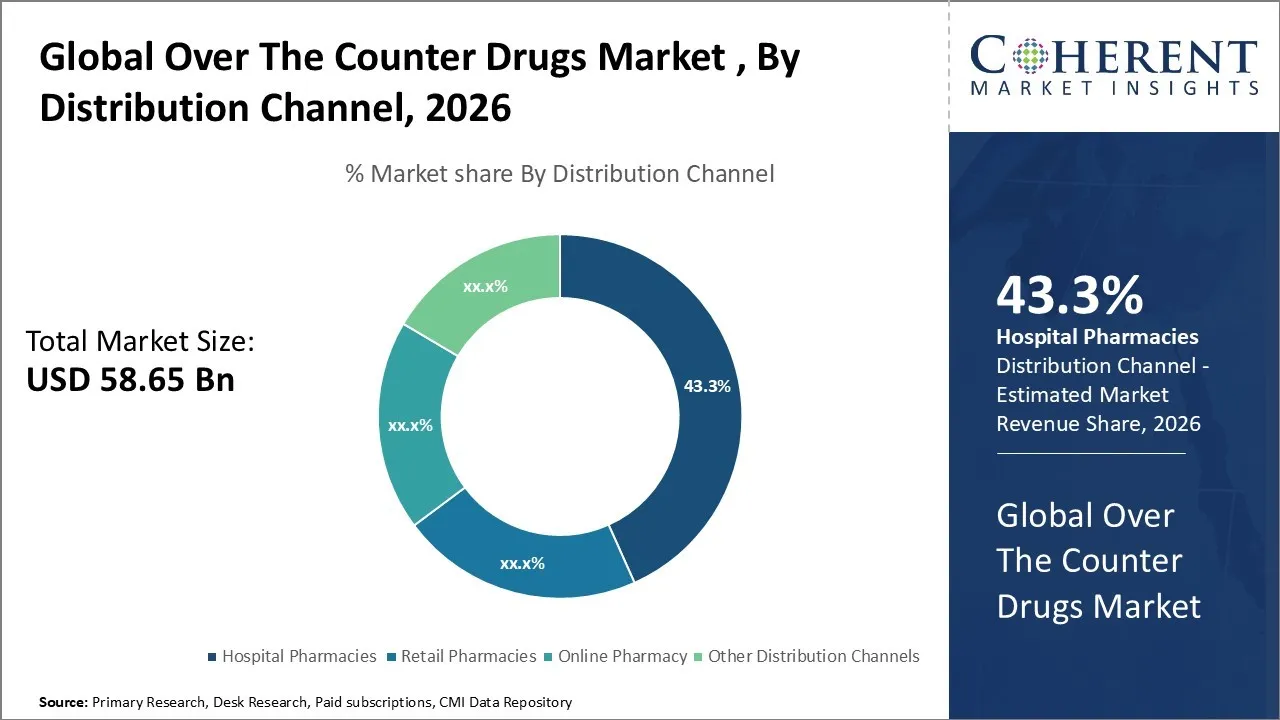
Hospital Pharmacies expected to hold largest market share of 43.30% in 2026. Hospital pharmacies actively drive the OTC drugs market by supplying medications to patients during treatment and at discharge. Pharmacists guide proper usage and ensure safety through their integration with clinical care, building strong consumer trust. By offering OTC products alongside prescription therapies, hospitals support continuity of care for chronic or post-procedure needs. They introduce new OTC formulations and implement Rx-to-OTC switches, while their reputation for reliability and adherence to regulations motivates patients to obtain essential non-prescription medicines directly from hospital pharmacies.
Cough, Cold, and Flu Products hold the largest market share of 32.2% in 2026. Frequent seasonal and respiratory illnesses drive consumers to seek quick relief, increasing demand for cough, cold, and flu OTC products. Consumers actively embrace self-care and home treatment, boosting widespread use of these medications. Pharmacies, retail chains, and online platforms make these products easily accessible, encouraging adoption. Manufacturers propel market growth by introducing multi-symptom formulations, fast-acting syrups, and herbal alternatives, while preventive healthcare trends further promote consistent usage in this segment of the OTC drugs market. For instance, in August 2025, Reckitt launched Mucinex Children's Mighty Chews Cold & Flu, the first chewable OTC medicine for children that relieves multiple cold and flu symptoms.
To learn more about this report, Request Free Sample
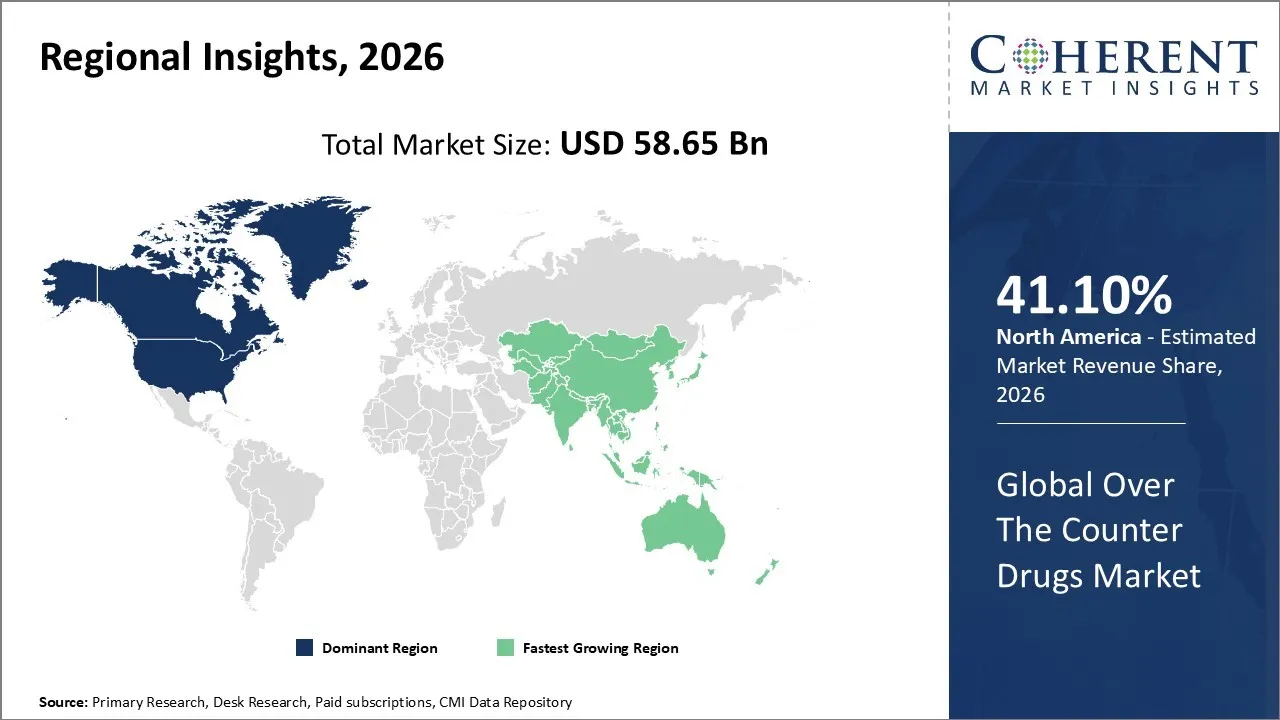
North America dominates the overall market with an estimated share of 41.10% in 2026. Consumers’ growing focus on self-care and preventive health drives the North American OTC drugs market, increasing demand for vitamins, pain relievers, cold remedies, and lifestyle supplements. Retail pharmacies, supermarkets, and online platforms actively expand product accessibility, while digital health tools help consumers select and purchase appropriate medications. Manufacturers shape market trends by introducing innovative formulations, convenient delivery formats, and multi-symptom solutions. Regulatory support for Rx-to-OTC switches and robust healthcare infrastructure further encourage adoption, positioning North America as a leading region in OTC product development and consumer engagement. For instance, in April 2025, Meitheal Pharmaceuticals announced FDA approval and the U.S. launch of its liraglutide injection (18mg/3mL), a generic equivalent of Victoza®.
Consumers in the Asia Pacific region are increasingly embracing self-medication and preventive healthcare, driving growth in the OTC drugs market. Rising awareness of minor ailments and better access to healthcare boost demand for pain relievers, cold and flu remedies, digestive aids, and vitamins. Retail networks, pharmacy chains, and e-commerce platforms actively expand product availability across urban and rural areas. Manufacturers introduce innovative formulations, herbal alternatives, and convenient delivery formats, while government initiatives and strengthening healthcare infrastructure enhance consumer confidence and promote widespread adoption of OTC medicines. For instance, in July 2025, DKSH Healthcare partnered with Bayer to distribute Bayer’s cardiovascular products in Singapore, Malaysia, Thailand, and the Philippines, and its women’s health retail portfolio in Thailand.
Consumers’ growing preference for self-care and fast relief from pain, cold, flu, allergies, and digestive issues drive the United States OTC drugs market. Retail chains, pharmacies, and online platforms actively provide widespread access, while digital health tools help consumers choose the right products. Manufacturers shape the market by launching innovative formulations, multi-symptom solutions, and convenient delivery formats to address changing needs. Strong regulatory frameworks, robust healthcare infrastructure, and public awareness initiatives further promote safe use and widespread adoption of OTC medicines nationwide. For instance, in December 2024, Reckitt Benckiser acquired a pharmaceutical site in Wilson, NC, and opened its largest U.S. OTC manufacturing facility to produce Mucinex® tablets and liquids and meet rising demand for cold and flu relief.
Consumers in China are increasingly adopting self-care and preventive health practices to manage minor ailments such as colds, flu, pain, allergies, and digestive issues, driving growth in the OTC drugs market. Rising health awareness and higher disposable incomes fuel demand for both conventional and herbal OTC products. Pharmacies, retail chains, and e-commerce platforms actively expand accessibility across urban and rural areas. Manufacturers introduce innovative formulations, convenient delivery formats, and multi-symptom solutions, while government health initiatives and improving healthcare infrastructure build consumer trust and promote widespread OTC adoption.
Consumers increasingly prioritize self-care and preventive health, seeking OTC products for minor ailments, wellness, and immune support. Vitamins, supplements, pain relievers, and cold remedies are gaining popularity as people aim to manage health independently. Growing awareness campaigns, online information sources, and lifestyle changes reinforce the trend, encouraging proactive management of symptoms and reducing dependency on healthcare providers for minor conditions.
The market is shifting toward digital platforms as online pharmacies, telehealth consultations, and mobile apps simplify product discovery and purchase. Consumers now rely on digital tools to compare products, check dosage information, and access reviews. E-commerce expansion increases accessibility, especially in remote areas, while offering personalized recommendations, subscription services, and home delivery, driving convenience and expanding the reach of OTC medicines.
Online pharmacies, telemedicine platforms, and mobile health apps offer significant opportunities for OTC drugs. Consumers increasingly rely on digital channels for convenience, product information, and doorstep delivery. Companies can leverage personalized recommendations, subscription services, and virtual consultations to increase engagement, reach untapped rural markets, and boost sales. Digital marketing and online education campaigns can further drive awareness, encourage broader adoption of OTC products and strengthen brand loyalty among tech-savvy consumers.
| Report Coverage | Details | ||
|---|---|---|---|
| Base Year: | 2025 | Market Size in 2026: | USD 58.65 Bn |
| Historical Data for: | 2020 To 2024 | Forecast Period: | 2026 To 2033 |
| Forecast Period 2026 to 2033 CAGR: | 8.54% | 2033 Value Projection: | USD 98.87 Bn |
| Geographies covered: |
|
||
| Segments covered: |
|
||
| Companies covered: |
Pfizer Inc., Perrigo Company PLC, GlaxoSmithKline PLC, Mylan NV, Bayer AG, Reckitt Benckiser Group PLC, Johnson and Johnson, Sanofi, and Takeda Pharmaceutical Company Ltd., and others. |
||
| Growth Drivers: |
|
||
| Restraints & Challenges: |
|
||
Uncover macros and micros vetted on 75+ parameters: Get instant access to report
Share
Share
Ghanshyam Shrivastava - With over 20 years of experience in the management consulting and research, Ghanshyam Shrivastava serves as a Principal Consultant, bringing extensive expertise in biologics and biosimilars. His primary expertise lies in areas such as market entry and expansion strategy, competitive intelligence, and strategic transformation across diversified portfolio of various drugs used for different therapeutic category and APIs. He excels at identifying key challenges faced by clients and providing robust solutions to enhance their strategic decision-making capabilities. His comprehensive understanding of the market ensures valuable contributions to research reports and business decisions.
Ghanshyam is a sought-after speaker at industry conferences and contributes to various publications on pharma industry.
Joining thousands of companies around the world committed to making the Excellent Business Solutions.
View All Our Clients