

Sleep Apnea Devices Market Size and Forecast — 2026 - 2033
The Global Sleep Apnea Devices Market size is estimated to be valued at USD 4.7 billion in 2026 and is expected to reach USD 9.3 billion by 2033, exhibiting a compound annual growth rate (CAGR) of 10.5% from 2026 to 2033.
Overview
The Sleep Apnea Devices market comprises a range of therapeutic and diagnostic solutions designed to manage obstructive and central sleep apnea. Key product categories include continuous positive airway pressure (CPAP) devices, bilevel positive airway pressure (BiPAP) devices, adaptive servo-ventilation (ASV) systems, mandibular advancement devices, and oxygen therapy equipment. CPAP and BiPAP devices dominate due to clinical efficacy and widespread adoption, while ASV systems address complex cases. Emerging products focus on portable, user-friendly, and wearable technologies that enhance patient comfort and adherence. Integration with digital monitoring and mobile apps enables remote tracking, personalized therapy adjustments, and improved long-term outcomes for patients.
Key Takeaways
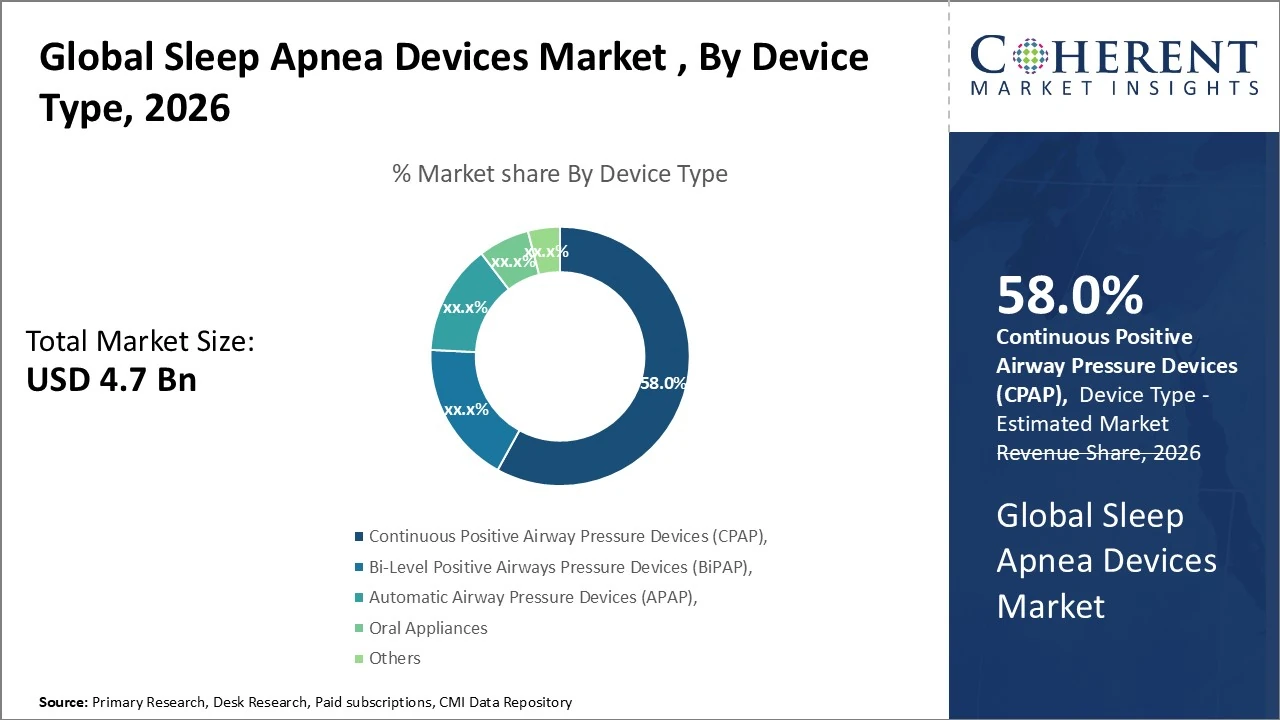
The CPAP device segment leads the market with a 58% share, driven by proven clinical efficacy and continuous technological enhancements.
The homecare end-user segment is the fastest-growing, supported by increased adoption of telemonitoring and remote patient management solutions.
Hospitals remain critical for initial diagnosis and treatment initiation, especially in Europe, where robust clinical infrastructure supports effective patient care.
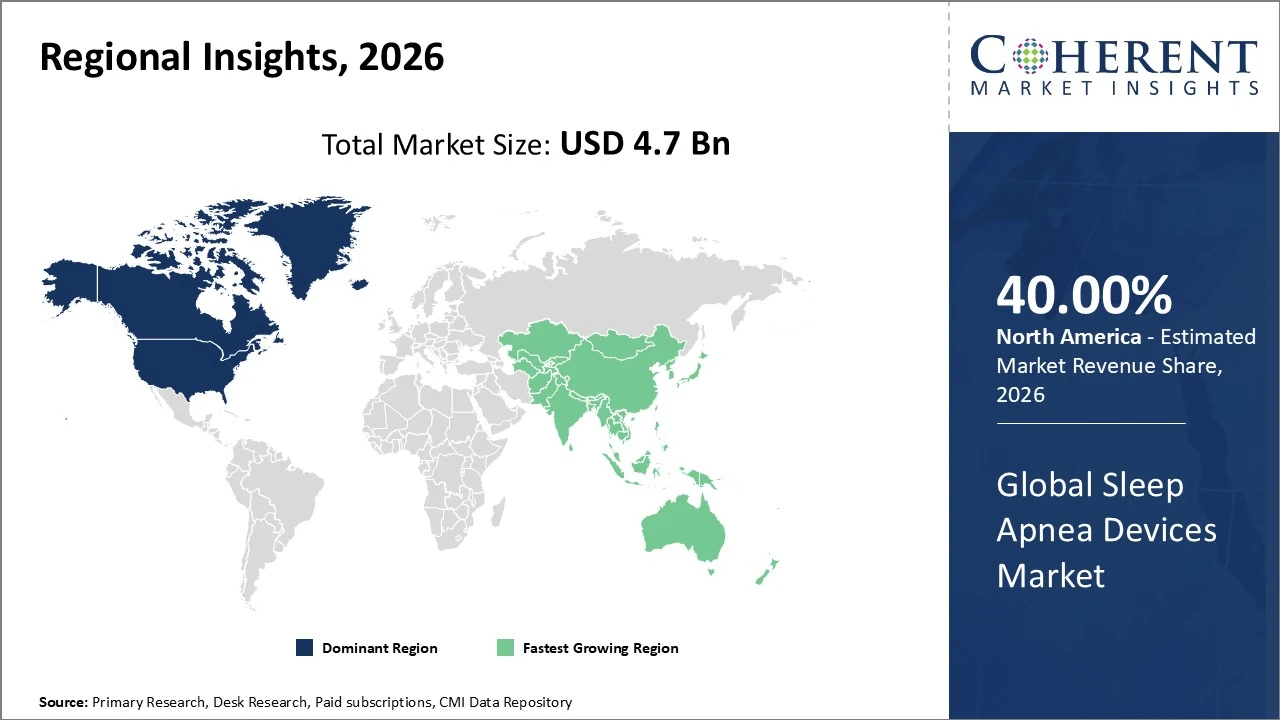
North America dominates geographically, controlling over 40% of the market due to advanced healthcare infrastructure, favorable reimbursement frameworks, and high patient awareness.
Asia Pacific is the fastest-growing region, with a CAGR exceeding 12%, fueled by rising healthcare investments, increasing prevalence of sleep disorders, regulatory reforms, and expanding medical device manufacturing hubs.
Sleep Apnea Devices Market Segmentation Analysis
Sleep Apnea Devices Market Insights, By Device Type
CPAP devices dominate the sleep apnea devices market, accounting for 58% of the share, driven by their proven clinical efficacy, broad clinician acceptance, and ongoing technological improvements. The integration of cloud-based remote monitoring systems in CPAP devices has further enhanced patient adherence and therapy outcomes. APAP devices are the fastest-growing subsegment, fueled by rising demand for personalized, automated pressure adjustments that improve user comfort and compliance; these devices utilize advanced real-time algorithms to adapt airflow to patient needs, particularly in homecare settings. BiPAP devices cater to patients with complex sleep apnea and comorbidities by providing dual-level pressure therapy. Oral appliances focus on mild to moderate cases and are gaining popularity due to their portability and comfort, though their market share remains smaller.
Sleep Apnea Devices Market Insights, By Application
Obstructive Sleep Apnea (OSA) dominates the sleep apnea devices market, reflecting its higher global prevalence and the widespread use of continuous positive airway pressure devices as frontline therapy. Clinical data from 2025 indicates that OSA patients account for over 75% of all sleep apnea therapy seekers, sustaining strong demand for CPAP and APAP devices. The fastest-growing application subsegment is Complex Sleep Apnea Syndrome, which combines features of obstructive and central forms, driving the need for advanced, adaptive devices such as BiPAP systems. Central Sleep Apnea represents a smaller but steadily expanding segment, particularly among aging populations with cardiovascular and neurological comorbidities. The ‘Others’ category includes rare sleep-related breathing disorders requiring adjunct therapies, contributing to ongoing innovation and diversification within the market.
Sleep Apnea Devices Market Insights, By End-User
Homecare settings are the fastest-growing subsegment of the sleep apnea devices market, driven by the expansion of telehealth services and a growing preference for convenient, long-term therapy management outside traditional clinical environments. Data from 2025 shows a 25% increase in device initiation through homecare platforms compared to previous years. Hospitals and clinics continue to maintain a substantial market share as primary locations for diagnosis and initial treatment setup, supported by specialized equipment and trained medical staff. Sleep disorder centers focus on comprehensive diagnosis and customized therapy, increasingly using advanced diagnostic and monitoring technologies. The ‘Others’ category encompasses rehabilitation centers and specialized outpatient facilities that provide niche therapeutic protocols, contributing incrementally to overall market growth.
Sleep Apnea Devices Market Trends
AI-driven capabilities in sleep apnea devices are accelerating, with advanced algorithms enabling personalized, adaptive therapy for improved patient outcomes.
Telemonitoring integration is becoming widespread, allowing real-time remote monitoring and management of patient therapy.
Portable and wearable sleep apnea solutions are gaining popularity, driven by consumer demand for non-invasive, convenient treatment options.
In 2025, adoption of AI-powered APAP devices increased by 30%, reflecting growing preference for patient-tailored, automated therapy.
Manufacturers are investing in research to enhance oral appliance efficacy, expanding the range of treatment options and overall market scope.
Sleep Apnea Devices Market Insights, By Geography
North America Sleep Apnea Devices Market Analysis and Trends
In North America, the sleep apnea devices market is dominated by advanced healthcare infrastructure and high patient awareness, accounting for over 40% of the regional market share. Supportive reimbursement policies in the U.S. and Canada facilitate broad access to cutting-edge therapeutic devices, promoting widespread adoption. Leading companies such as ResMed and Philips Respironics maintain strong market positions by leveraging digital health integrations, enabling real-time patient monitoring, data-driven therapy adjustments, and enhanced treatment adherence. The combination of technological innovation, regulatory support, and patient engagement continues to drive sustained market growth in the region.
Asia Pacific Sleep Apnea Devices Market Analysis and Trends
Meanwhile, the Asia Pacific sleep apnea devices market is experiencing the fastest growth, with a CAGR exceeding 12%, driven by rising prevalence of sleep apnea and increasing healthcare expenditure in key countries such as China and India. Expanding local manufacturing capabilities and favorable regulatory reforms are accelerating market penetration, making advanced therapies more accessible. Market players are actively entering these regions through cost-competitive devices and strategic collaborations with hospitals, clinics, and telehealth providers. This combination of demand growth, supportive policies, and business strategies underpins the region’s rapid market expansion.
Sleep Apnea Devices Market Outlook for Key Countries
USA Sleep Apnea Devices Market Analysis and Trends
The USA’s sleep apnea devices market is supported by robust healthcare funding, comprehensive reimbursement frameworks, and widespread patient education initiatives. Between 2024 and 2026, a 15% increase in sleep apnea diagnoses drove higher demand for home-use CPAP and APAP devices. Leading manufacturers such as ResMed and Philips Respironics have expanded their portfolios with AI-enhanced devices, reinforcing their market dominance. The rise of telehealth has further boosted patient outreach, with home-based therapy initiation growing 28% over the same period, supporting sustained adoption and continued market growth in the United States.
Germany Sleep Apnea Devices Market Analysis and Trends
The Germany sleep apnea devices market is witnessing steady growth, driven by high prevalence of obstructive sleep apnea, advanced healthcare infrastructure, and strong insurance coverage that facilitates device adoption. CPAP devices dominate due to clinical efficacy and clinician preference, while APAP and BiPAP systems are gaining traction for personalized and complex therapy. Hospitals and specialized sleep disorder centers remain key end users, providing diagnosis, therapy initiation, and monitoring. Emerging trends include AI-enabled devices, telemonitoring integration, and portable, patient-friendly solutions. Growing awareness campaigns and government support for digital health further contribute to market expansion and improved patient outcomes.
Analyst Opinion
Production capacity expansion has been a key supply-side indicator, with leading manufacturers increasing their manufacturing footprint by 20% year-over-year since 2024 to meet rising demand. Q1 2026 alone saw a 15% year-over-year increase in unit shipments of portable CPAP and BiPAP devices, reflecting strong market penetration.
Pricing strategies are closely tied to product innovation and patient-focused designs; devices with integrated AI for personalized pressure adjustments commanded approximately 18% higher average selling prices in 2025, highlighting consumer preference for enhanced therapeutic efficacy.
Demand-side dynamics show growing adoption beyond clinical settings, with telehealth platforms driving a 25% increase in home-based therapy initiation across North America between 2024 and 2026.
Micro-indicators such as frequent product upgrades and multifunctional devices—like combination CPAP and oxygen concentrators—led to a 12% increase in average device lifecycle replacement rates, supporting sustained market revenue growth.
- Current Industry Events of 2026
- Market Size Estimation
- Regional Breakdown
- Competitive Landscape
- Customer Intelligence
- Segmental Analysis
- Pricing Analysis
- Key Market Drivers, Challenges & Future Trends
- Customized Insights Section
Market Scope
| Report Coverage | Details | ||
|---|---|---|---|
| Base Year: | 2025 | Market Size in 2026: | USD 4.7 billion |
| Historical Data for: | 2020 To 2024 | Forecast Period: | 2026 To 2033 |
| Forecast Period 2026 to 2033 CAGR: | 10.5% | 2033 Value Projection: | USD 9.3 billion |
| Geographies covered: |
| ||
| Segments covered: |
| ||
| Companies covered: | ResMed Inc., 3B Medical, BMC Medical, Yuwell, Medtronic Plc, Invacare Corporation, Teijin Limited, Philips Respironics, Inspire Medical Systems, 3M Healthcare | ||
| Growth Drivers: |
| ||
Sleep Apnea Devices Market Growth Factors
The growing global prevalence of sleep apnea, particularly among aging populations and individuals with obesity, is driving spontaneous demand growth and boosting market revenue. Technological advancements, including auto-adjusting pressure algorithms, AI-enabled therapy, and compact, portable device designs, are improving patient adherence and comfort. Rising healthcare expenditure and supportive reimbursement initiatives in developed countries are enhancing device accessibility, encouraging market strategies focused on affordability. Additionally, the expansion of telehealth integration is fostering innovative business models by enabling remote patient monitoring and therapy management, further contributing to market dynamics, accelerating adoption, and sustaining long-term growth across both homecare and clinical settings.
Sleep Apnea Devices Market Development
In December 2025, SleepRes, Inc. announced that it received FDA 510(k) clearance for its Kricket PAP device, powered by Kairos Positive Airway Pressure (KPAP), for treating obstructive sleep apnea in patients weighing more than 66 pounds.
Key Players
Leading Companies of the Market
ResMed Inc.
BMC Medical
3B Medical
Medtronic Plc
Yuwell
Teijin Limited
Invacare Corporation
3M Healthcare
Inspire Medical Systems
Philips Respironics
Competitive strategies in the sleep apnea devices market emphasize continuous innovation in patient comfort and remote monitoring capabilities. In 2025, ResMed launched integrated cloud-connected CPAP devices, resulting in a 15% increase in North American market share. Similarly, Philips Respironics partnered with telehealth providers to expand its presence in homecare settings, driving a 20% revenue increase between 2024 and 2025. These strategic initiatives highlight how technological advancements and collaborative approaches are effectively enhancing adoption, patient engagement, and overall market growth.
Sleep Apnea Devices Market Future Outlook
The global sleep apnea devices market is poised for strong growth, driven by rising prevalence of sleep-related breathing disorders, aging populations, and increasing obesity rates. Future trends include wider adoption of AI-enabled APAP and CPAP devices, wearable and portable solutions, and telehealth-integrated platforms for remote patient monitoring and personalized therapy. Emerging markets, particularly in Asia Pacific, are expected to see rapid expansion due to growing healthcare expenditure and regulatory support. Continuous innovation in patient comfort, digital connectivity, and multifunctional devices, along with expanding homecare adoption, will further enhance market penetration, therapy adherence, and overall revenue growth through 2033.
Sleep Apnea Devices Market Historical Analysis
The global sleep apnea devices market has experienced steady growth over the past decade, driven by increasing awareness of obstructive and central sleep apnea, technological advancements, and rising adoption of home-based therapy solutions. CPAP devices historically dominated due to clinical efficacy, while BiPAP and APAP systems gained traction for complex and personalized treatment needs. Expansion of hospital and sleep disorder center networks facilitated early diagnosis and therapy initiation. Key market players, including ResMed and Philips Respironics, invested in product innovation, digital integration, and telemonitoring solutions. Regulatory support and reimbursement frameworks in developed countries further reinforced adoption, laying a strong foundation for future market growth.
Sources
Primary Research Interviews:
Home healthcare providers and telehealth service companies
Pulmonologists, ENT specialists, and sleep medicine physicians
Medical device consultants and clinical researchers
Magazines:
Sleep Review
Sleep Medicine News
Medical Device & Diagnostic Industry (MD+DI)
Respiratory Therapy Journal
Journals:
Journal of Sleep Research
Sleep
Respiratory Care
Journal of Clinical Sleep Medicine
Newspapers:
The Wall Street Journal – Healthcare Technology
Financial Times – Medical Devices
Reuters Health – Respiratory Devices
Bloomberg – Medical Technology & Healthcare
Associations:
American Academy of Sleep Medicine (AASM)
European Sleep Research Society (ESRS)
Sleep Research Society (SRS)
World Sleep Society (WSS)
Get access to 250+ pages report
Every segment, forecast, competitor profile and data table behind the analysis above — available for instant download.
- ESOMAR Member
- ISO 9001:2015 Certified
- D-U-N-S Registered
- GDPR & CCPA Compliant
Missing comfort of reading report in your local language? Find your preferred language:
Transform your Strategy with Exclusive Trending Reports
Frequently Asked Questions
Leading players include ResMed Inc., Philips Respironics, and Medtronic Plc, each contributing significantly to market share through product innovation and strategic expansions.
The market size is projected to grow from USD 4.7 billion in 2026 to approximately USD 9.3 billion by 2033, reflecting strong market revenue growth driven by technology adoption and an expanding patient base.
Homecare settings represent the largest growth opportunity due to rising telemedicine applications and patient preference for home-based therapies.
The market will witness a pronounced shift toward AI-integrated devices, wearable monitoring solutions, and enhanced telehealth initiatives, underpinning improved patient adherence and market dynamics.
The landscape is highly competitive with emphasis on product innovation and cost optimization, while challenges include regulatory compliance and patient education barriers in emerging markets.
Market players are focusing on strategic partnerships with telehealth providers, direct-to-consumer models, and diversification of product portfolios to enhance industry share and business growth.