Healthcare compliance isn't getting simpler. If anything, Compliance Management Systems have become a central piece of infrastructure for any organization trying to keep up with HIPAA, HITRUST, NIST, and a growing pile of overlapping regulations across multiple jurisdictions. The real pain isn't just the rules themselves. It's connecting those rules to legacy systems, keeping employee training current, and staying audit-ready year-round. After reviewing the leading platforms available today, this guide breaks down the five best options for healthcare organizations in 2026.
The research approach for this ranking
Publicly available information drove every decision here. User reviews, case studies, feature breakdowns, and ratings from platforms like G2, GetApp, and Capterra were all pulled and compared. Only companies with a documented track record in enterprise software made the cut.
-> See the full research breakdown
- ComplyAssistant - Best for healthcare GRC and HIPAA compliance management
- Drata - Best for enterprise security and compliance automation
- Scytale - Best for enterprise compliance automation and GRC
- HealthStream - Best for healthcare workforce development and provider credentialing
- Secureframe - Best for enterprise compliance automation and security certification management
Why Compliance Management Systems Matter for Your Business
Picking the wrong system doesn't just slow your team down. It exposes your organization to audit findings, regulatory fine exposure, and the kind of compliance gaps that regulators love to find. Healthcare organizations face a specific version of this problem, where HIPAA, HITRUST, PCI-DSS, and NIST all compete for attention at the same time.
The right Compliance Management Systems platform brings those requirements into one place. It cuts down on manual tracking, connects with existing infrastructure, and gives your team real visibility into open versus closed compliance incidents.
That kind of visibility is what actually moves the needle: shorter time to fix compliance violations, higher percentages of policies with current employee acknowledgment, and fewer audit findings per compliance cycle. The right choice doesn't just check a box. It builds a defensible compliance posture that holds up when inspectors arrive.
Top 5 Compliance Management Systems Breakdown and Comparison
Note: All data in this table is sourced from review platforms and the official websites of the listed companies.
|
Company Name
|
Years Operating
|
Team Size
|
Headquartered In
|
|
ComplyAssistant
|
22+ years
|
11-50
|
Woodbridge, New Jersey
|
|
Drata
|
5 years
|
723
|
San Diego, California
|
|
Scytale
|
5 years
|
61
|
Tel Aviv, Israel
|
|
HealthStream
|
35+ years
|
1,093
|
Nashville, Tennessee
|
|
Secureframe
|
5 years
|
200
|
San Francisco, California
|
1. ComplyAssistant - Best for Healthcare GRC and HIPAA Compliance Management
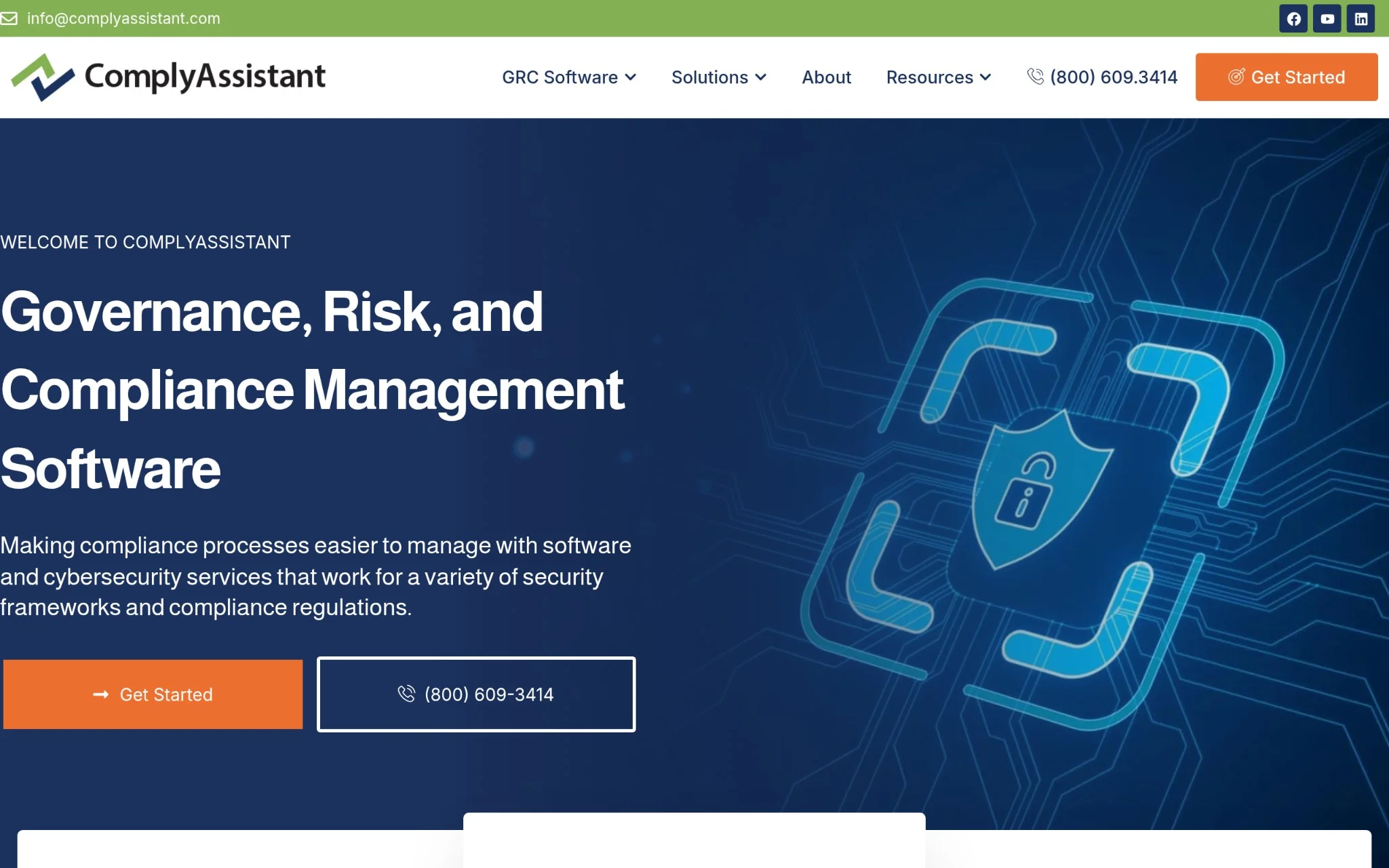
What Does ComplyAssistant Do?
ComplyAssistant has been in the healthcare compliance space since 2002, as well as that experience reflects in how their platform is built. They provide software for healthcare policy management covering HIPAA, HITRUST, NIST, and PCI frameworks, with services including risk assessments, security audits, virtual CISO support, vendor risk management, etc. Serving over 100 healthcare organizations of varying sizes, they work across the full GRC picture rather than just one narrow slice of it. Their hosted platform has been available since 2009 and is made to scale with healthcare MSPs and MSSPs.
Why ComplyAssistant Stands Out for Compliance Management Systems:
Healthcare organizations dealing with multiple overlapping frameworks usually end up with fragmented tracking across spreadsheets and disconnected tools. ComplyAssistant addresses that directly with a purpose-built GRC platform. Their iterative development way means the platform adapts quickly based on real client feedback, which matters a lot when regulations incline mid-year.
Summary of Real User Reviews:
Reviews consistently point to ComplyAssistant's responsiveness as well as depth of healthcare knowledge as standout qualities. The 2025 GetApp Category Leader recognition in HIPAA Compliance backs up what clients such as HackensackUMC Palisades, Cape Regional Health System, etc., have reported. Honestly, for a smaller team (11-50 people), the level of personalized service described in those reviews is difficult to align at this scale.
2. Drata - Best for Enterprise Security and Compliance Automation
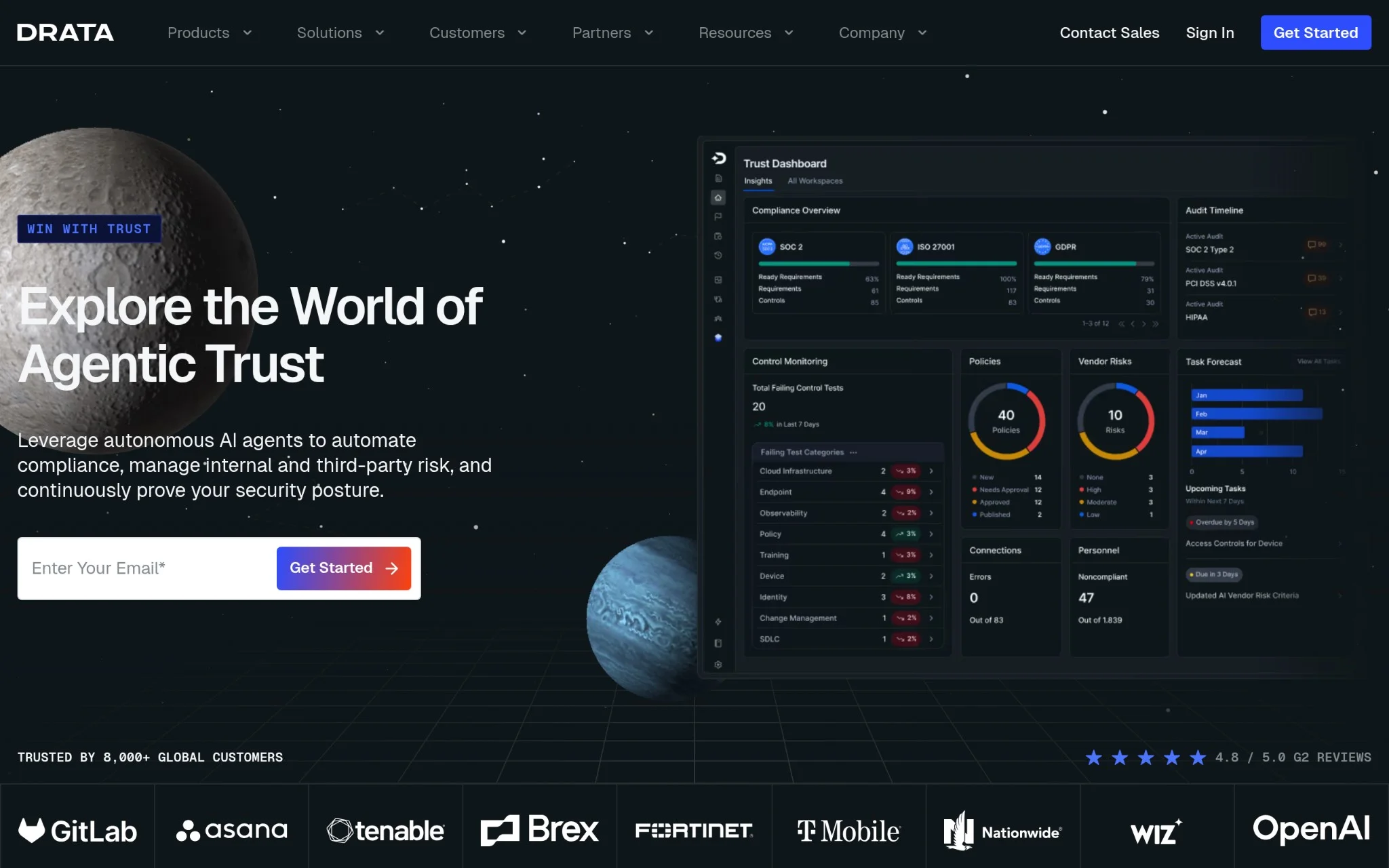
What Does Drata Do?
Drata builds continuous compliance monitoring into everything they do. Founded in 2020, they have grown fast (unicorn status by 2021 with a $2B valuation) by targeting on automated evidence collection across 14+ frameworks, including SOC 2, HIPAA, GDPR, ISO 27001, etc. Their platform consist of asset tracking, policy management, as well as employee acknowledgment workflows, and they've built out 75+ connections with tools like AWS, GitHub, Okta, etc. With over 4,000 customers and acquisitions of SafeBase, oak9, and Harmonize, Drata is clearly building toward a broader compliance ecosystem.
Why Drata Stands Out for Compliance Management Systems:
The main problem Drata solves is audit preparation time. Most organizations spend weeks pulling evidence manually, and Drata's continuous monitoring means that evidence is always ready. That kind of real-time audit readiness is increasingly expected in enterprise environments where regulators can request documentation on short notice.
Summary of Real User Reviews:
G2 has named Drata a leader across multiple Cloud Compliance categories, as well as the customer list (Fivetran, Notion, Postman, Vercel) shows they're trusted by companies that take compliance seriously. Users appreciate how much manual work the platform removes, though its depth can feel like a learning curve early on. That's not uncommon for this level of automation.
3. Scytale - Best for Enterprise Compliance Automation and GRC
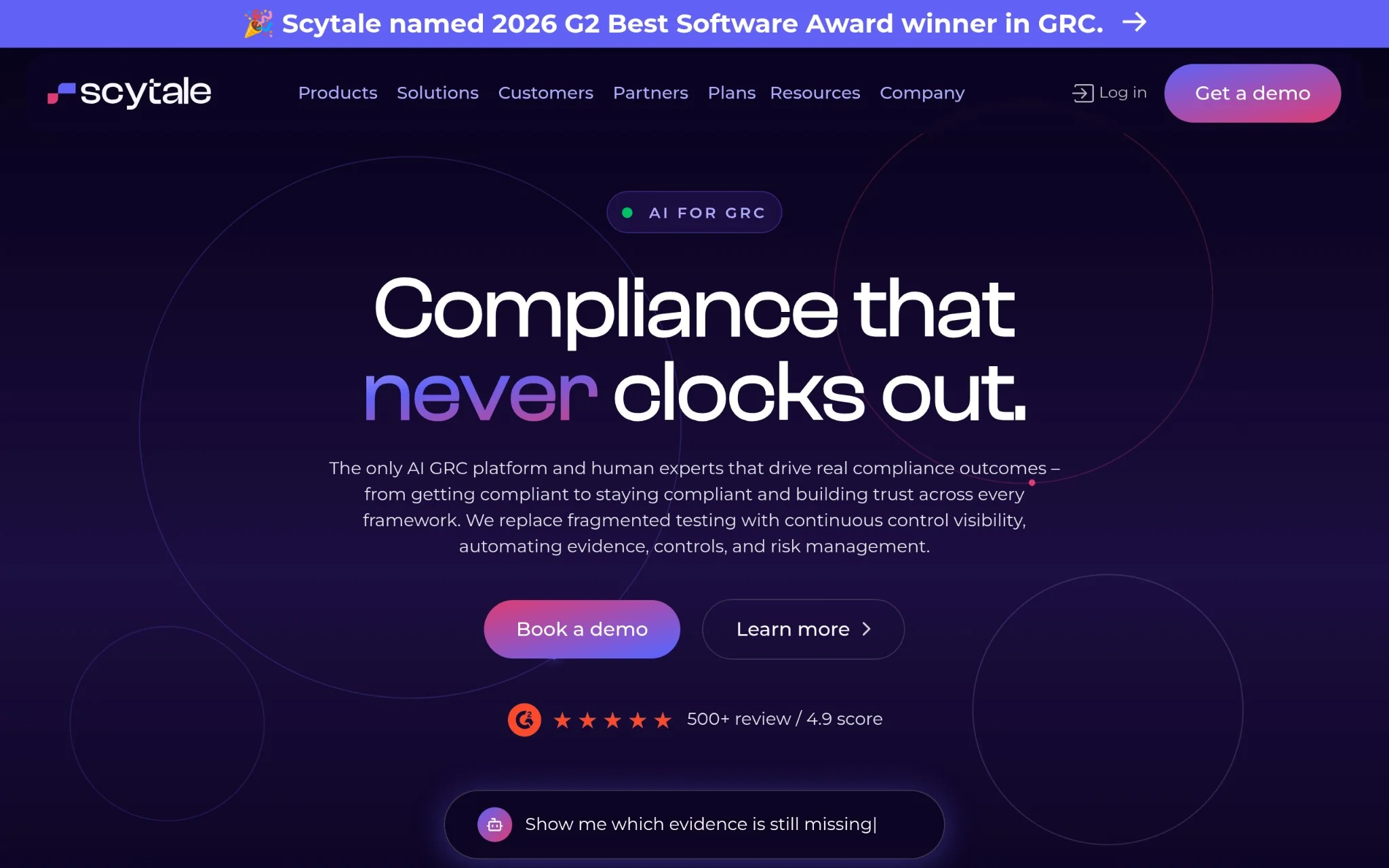
What Does Scytale Do?
Scytale covers a variety of compliance frameworks (40+ total) including SOC 2, ISO 27001, PCI DSS, GDPR, and SOX ITGC, with an AI GRC Agent called Scy that handles much of the routine compliance work. Their platform connects automated evidence collection, continuous control monitoring, and vendor risk management, backed by dedicated GRC consultants. With 150+ enterprise connections and recognitions, including the 2026 G2 Best Software Award in GRC as well as the AWS Rising Star Partner of the Year for EMEA, Scytale has built real credibility fast. Impressive for a company founded in 2020.
Why Scytale Stands Out for Compliance Management Systems:
What separates Scytale from pure software plays is the combination of AI automation with actual human GRC consultants assigned to each client. For enterprise teams that need framework coverage and expert guidance, that pairing cuts down considerably on the time it takes to close compliance gaps.
Summary of Real User Reviews:
The story of Leen achieving SOC 2 compliance in four months stands out in Scytale's case study portfolio, and it reflects a pattern that shows up in user reviews, too. Reviewers tend to mention the consultant support as a differentiator, not just the software itself. The Security Compliance Recognition Award from the 2024 CyberSecurity Breakthrough Awards adds different data point to their credibility in this space.
4. HealthStream - Best for Healthcare Workforce Development and Provider Credentialing
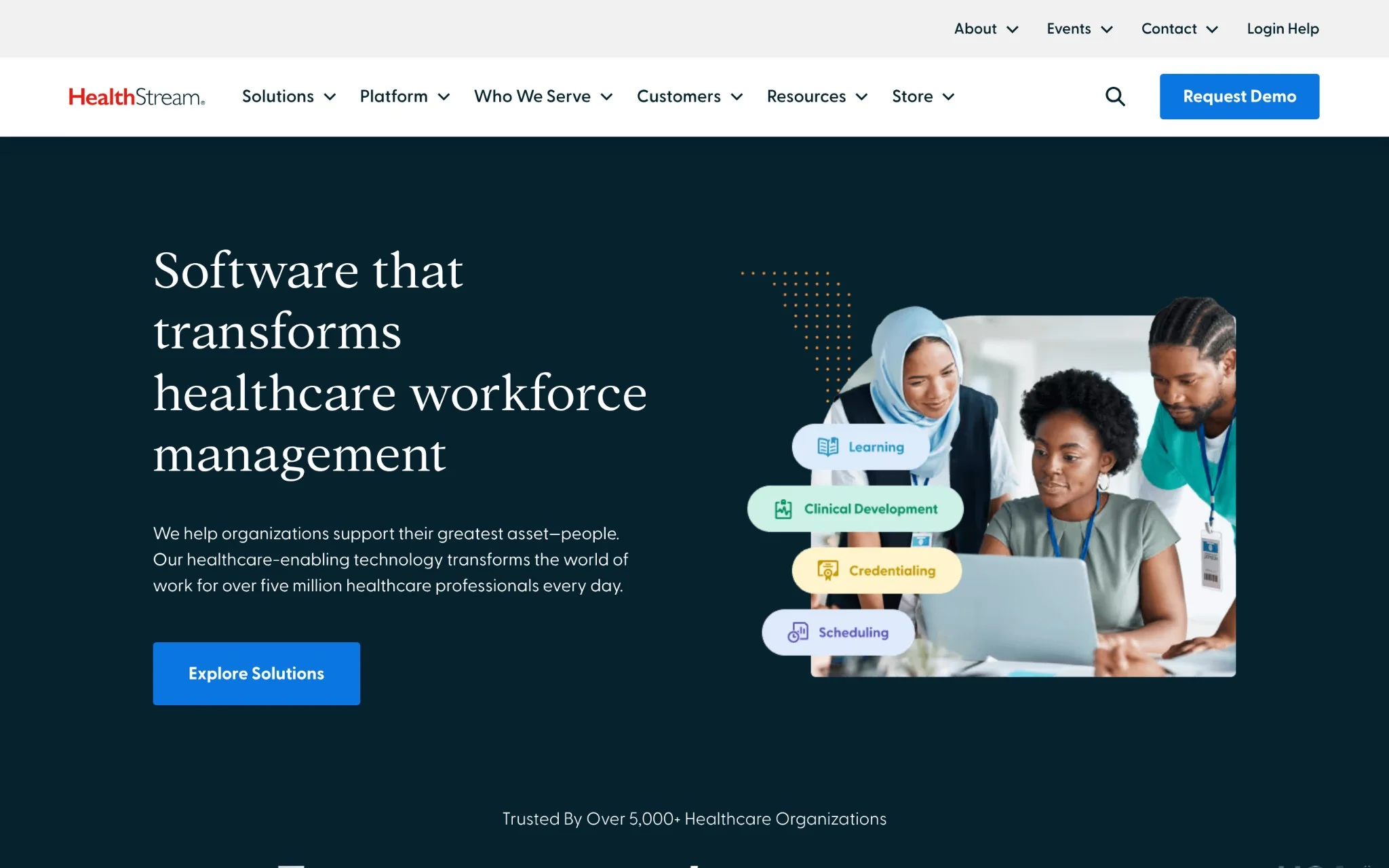
What Does HealthStream Do?
HealthStream takes another perspective than the other platforms on this list. Founded in 1990, they focus on healthcare workforce development, training, credentialing, and performance assessment at scale. They serve over 4,000 healthcare organizations, including more than 70% of U.S. hospitals as well as healthcare systems, with 4.5 million active subscribers on their platform. Their flagship products (Learning Center, SafetyQ/ComplyQ, and Jane) cover everything from simulation-based training to provider credentialing. With $299M in trailing twelve-month revenue, this is a mature, well-resourced operation.
Why HealthStream Stands Out for Compliance Management Systems:
Managing employee training acknowledgment at scale is one of the hardest operational problems in healthcare compliance. And HealthStream has built its entire platform around solving exactly that challenge. Their ability to maintain up-to-date policy acknowledgment across massive hospital networks is where their depth really shows.
Summary of Real User Reviews:
HealthStream earned more G2 Top 50 placements than any other vendor on the 2026 Best Healthcare Software list, that's anything small. Over 40 G2 and Capterra badges, combined with more than 30 Brandon Hall Excellence in Technology Awards, suggest strong, consistent satisfaction across a very large customer base. Users in hospital systems particularly value the credentialing and training management capabilities.
5. Secureframe - Best for Enterprise Compliance Automation and Security Certification Management
What Does Secureframe Do?
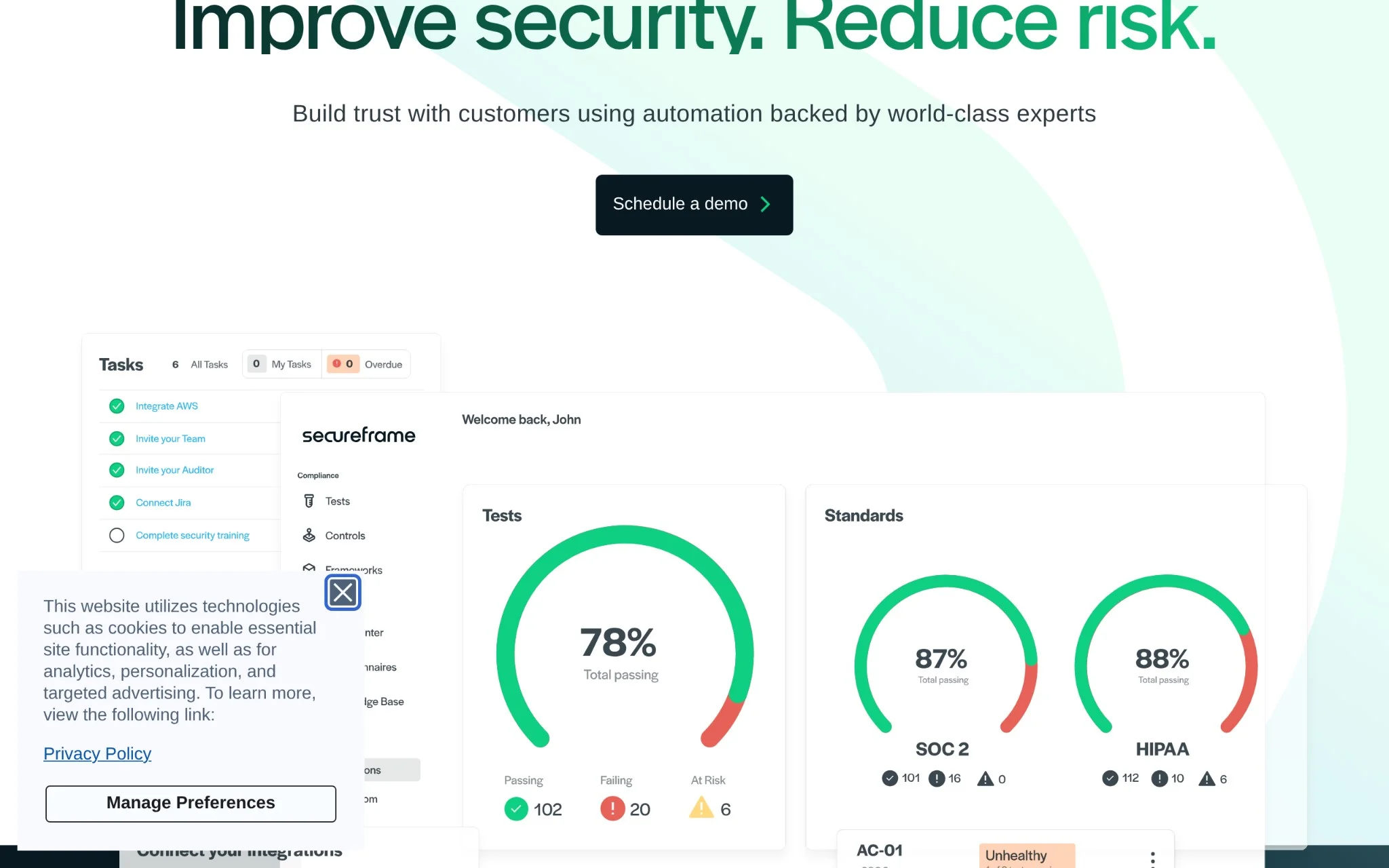
Secureframe targets on making information security compliance faster and less painful for enterprise teams. Founded in 2020 and now serving thousands of companies, including AngelList, Ramp, and Remote, they support major frameworks including SOC 2, ISO 27001, PCI DSS, HIPAA, and GDPR. The platform offers 100+ connections with AWS, Google Cloud, Azure, GitHub, and Okta, and each customer gets a dedicated compliance expert (often a former auditor) alongside the automation tooling. Their early adoption of NIST's AI Risk Management Framework as well as ISO/IEC 42001 shows they're watching where regulations are headed, not just where they've been.
Why Secureframe Stands Out for Compliance Management Systems:
Pairing AI-driven automation with a former auditor as a dedicated advisor is a model that directly cater to the trust gap many enterprise teams feel when relying completely on software. That human layer is what makes Secureframe's compliance outcomes more defensible when auditors arrive with hard questions.
Summary of Real User Reviews:
Secureframe won Cyber Defense Magazine's Hot Company in Compliance Automation at RSA 2025 as well as earned G2 leader status across five categories, which show genuine market traction. Forbes named them one of the Best Startup Employers for two consecutive years, and that's an interesting side signal. Companies that treat employees well tend to retain the compliance knowledge that customers actually rely on. Users flag connection speed and expert support as the two biggest wins.
Research Methodology and Selection Process
Initial Data Collection
The starting point for this ranking was building a broad list of compliance management platforms relevant to healthcare enterprise environments. Directories like G2, Capterra, GetApp, and Trustpilot were searched alongside industry-specific publications and vendor websites. The goal at this stage was volume, capturing enough options to make sure no strong candidates were missed before narrowing down.
Shortlisting Phase
From that initial pool, alternatives were discarded if they couldn't show a real track record in enterprise software deployments. Review patterns were revised for consistency. Platforms with thin or unverifiable review histories were set aside, regardless of how polished their marketing pages showed up. The shortlisting process prioritized platforms with demonstrable client outcomes along with transparent feature documentation over platforms with strong branding but limited proof points.
Verification of Claims
Each shortlisted claims of the company were cross-referenced against external review platforms and independent case studies. If a company stated they served a certain number of clients or achieved a specific outcome, that claim needed support from a source outside their own website. Where discrepancies appeared between official claims and user-reported experiences, the more conservative interpretation was used.
Authority and Industry Contribution Layer
Recognition from established industry bodies carried weight in the evaluation. Awards from G2, Brandon Hall, CyberSecurity Breakthrough, as well as platform-specific programs like the AWS Partner Network were noted. Publications or research contributions from company leadership were also considered. This layer helped separate companies that are genuinely active in the compliance space from those that simply offer a product in it.
Compliance Management Systems-Specific Evidence
The final filter required dedicated evidence that each platform show compliance management needs in healthcare or adjacent regulated industries. This meant reviewing dedicated service pages for frameworks like HIPAA, HITRUST, SOC 2, and NIST; confirming case studies from healthcare clients; and verifying reviews from compliance officers, risk managers, or IT governance professionals. Platforms that only provide general GRC capabilities without healthcare-specific proof were excluded at this stage. Each company that made the final list could demonstrate real deployment experience in environments with complex regulatory requirements, not just a feature checklist that looked good on paper.
How to Choose the Right Compliance Management Systems
Choosing the right platform comes down to fit, not features. A system with 40 framework connections doesn't help if it won't connect with your existing infrastructure or serve the specific regulations your organization faces. Here are the important factors worth evaluating before committing.
- Industry and Domain Experience: Search for platforms with a documented track record in healthcare or any particular regulated vertical. Years of experience with HIPAA, HITRUST, or NIST matters more than broad claims.
- Features and Service Offerings: Identify whether you need automated evidence collection, policy management, vendor risk assessment, employee training tracking, or all of the above. Not every platform does all of these equally well.
- Pricing Structure: Enterprise compliance software pricing varies widely (think enterprise pricing, sometimes well into six figures annually). Clarify what's included in base licensing versus add-ons before comparing quotes.
- Results Measurement: Ask vendors how they track outcomes like time to fix compliance violations, audit findings per compliance cycle, as well as third-party risk assessment completion rates. If they can't answer that clearly, that tells you something.
- Industry Knowledge and Compliance: Check whether the platform's team includes former auditors, GRC consultants, or healthcare compliance specialists. Software is only as good as the depth of knowledge behind the configuration.
Bottom Line
Healthcare compliance isn't a set-it-and-forget-it problem, and the right Compliance Management Systems platform makes a real difference in how well an organization manages that ongoing pressure. ComplyAssistant stands out for deep HIPAA and GRC specialization, while Drata and Scytale lead on automation. HealthStream owns the workforce training angle, and Secureframe brings strong audit-readiness depth. The best choice depends on where your organization's biggest gaps are right now.

