
Contact Us Careers Register

Cryogenic Gas Separation: How It Works in Industrial Applications

29 May, 2026 - by Cryoin-europe | Category : Industrial Automation And Machinery

Cryogenic Gas Separation: How It Works in Industrial Applications - cryoin-europe

Cryogenic Gas Separation: How It Works in Industrial Applications

Separating gases at scale is, at its core, an exercise in exploiting small physical differences under precisely controlled conditions. Cryogenic distillation does this by cooling gas mixtures to temperatures where components condense and vaporize at different rates – a process that sounds straightforward until you're managing a column operating at –170°C with product purity requirements measured in parts per million.

The technology has been industrially mature for over a century, but "mature" doesn't mean static. Equipment design, process integration, and the range of recoverable products have all evolved substantially, particularly as demand for trace atmospheric gases has grown in semiconductor manufacturing, space propulsion, and medical applications.

The Physical Basis: Why Cryogenic Distillation Works

All distillation separations rely on differences in volatility between components. In gas separation, the relevant property is the boiling point at a given pressure. Nitrogen boils at –196°C at atmospheric pressure; oxygen at –183°C; argon at –186°C. These differences – some of them quite small – are what the distillation column is engineered to exploit.

The process begins with compression and pre-cooling of the feed air stream, followed by the removal of water vapor and carbon dioxide, which would freeze and block equipment at cryogenic temperatures. The cleaned, compressed air is then cooled in a heat exchanger against returning product and waste streams before entering the cold box – the insulated assembly where separation actually occurs.

Inside the cold box, distillation columns operating at different pressures achieve the primary separations. The double-column arrangement common in air separation plants uses a higher-pressure column to produce a crude separation, feeding into a lower-pressure column for final product purification. Liquid and vapor streams interact across structured packing or distillation trays, with heavier components (higher boiling point) concentrating toward the bottom and lighter components toward the top.

Argon Recovery: Where the Engineering Gets Interesting
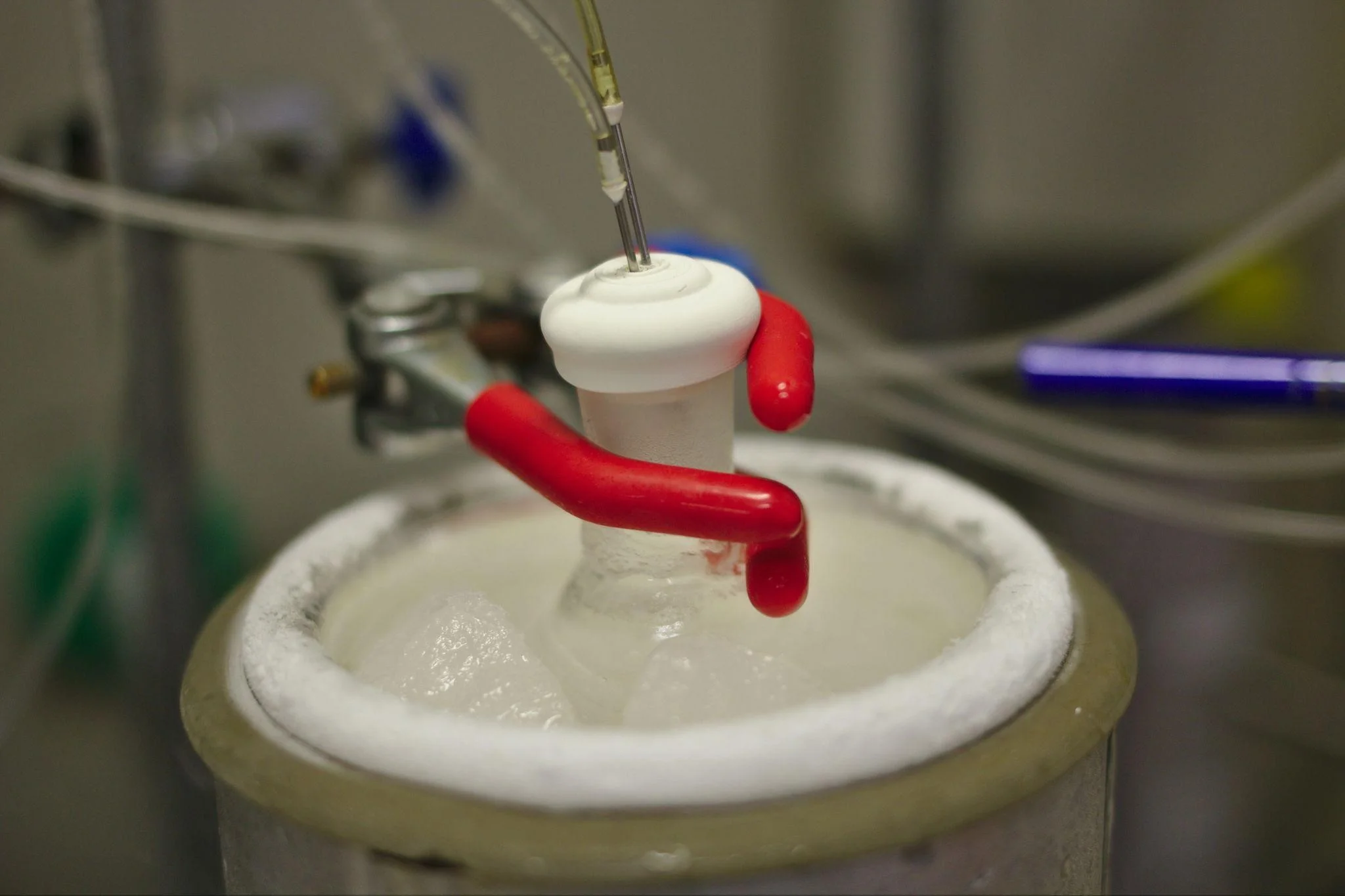
Argon Recovery

Oxygen and nitrogen separation is thermodynamically favorable. The boiling point difference is sufficient that high-purity products are achievable in a standard double-column configuration. Argon is more demanding.

Argon's boiling point (–186°C) sits between oxygen (–183°C) and nitrogen (–196°C), which means it tends to concentrate in intermediate regions of the distillation column rather than reporting cleanly to either product stream. Recovering argon at high purity requires a dedicated side column – the crude argon column – fed from a specific draw point in the low-pressure column where argon concentration is highest.

Crude argon from this column still contains percent-level oxygen contamination. Final purification to the grades required for welding, electronics manufacturing, or analytical applications requires either catalytic oxygen removal followed by drying, or a further distillation stage. The choice between these routes depends on target purity, plant scale, and whether hydrogen is available for the catalytic route.

Cryoin Europe works with argon across this full production and purification range, which is relevant context for understanding the process depth behind high-purity argon supply.

Noble Gas Recovery: A Different Scale of Challenge

Krypton and xenon present a qualitatively different separation problem. Their atmospheric concentrations – roughly 1.1 ppm for krypton and 0.086 ppm for xenon – mean that recovering useful quantities requires processing enormous volumes of air through the primary separation plant before the concentration and purification stages for these components even begin.

In practice, noble gas recovery is integrated into large air separation units as an add-on process. A krypton/xenon-enriched liquid oxygen fraction is withdrawn from the main column and fed to a dedicated concentration unit – typically a smaller distillation column – where the noble gases accumulate in the bottom fraction while oxygen is stripped overhead and returned to the main process.

The resulting crude Kr/Xe fraction contains both gases alongside residual oxygen and trace contaminants including hydrocarbons, which concentrate from the feed air despite upstream removal steps. Subsequent purification requires catalytic combustion of hydrocarbons, drying, and then the separation of krypton and xenon from each other since they have different boiling points and are used in different applications.

This multi-stage process is what Cryoin Europe specializes in for its noble gas product range. The feedstock is the byproduct stream from air separation; the output is specification-grade krypton and xenon for industrial and high-technology end uses.

Heat Integration and Energy Consumption

Cryogenic processes are energy-intensive by nature. Compressing air to the pressures required for liquefaction, then removing that compression heat and cooling the stream to cryogenic temperatures, represents a substantial electricity demand. For large industrial ASUs, energy cost is typically the dominant operating expense.
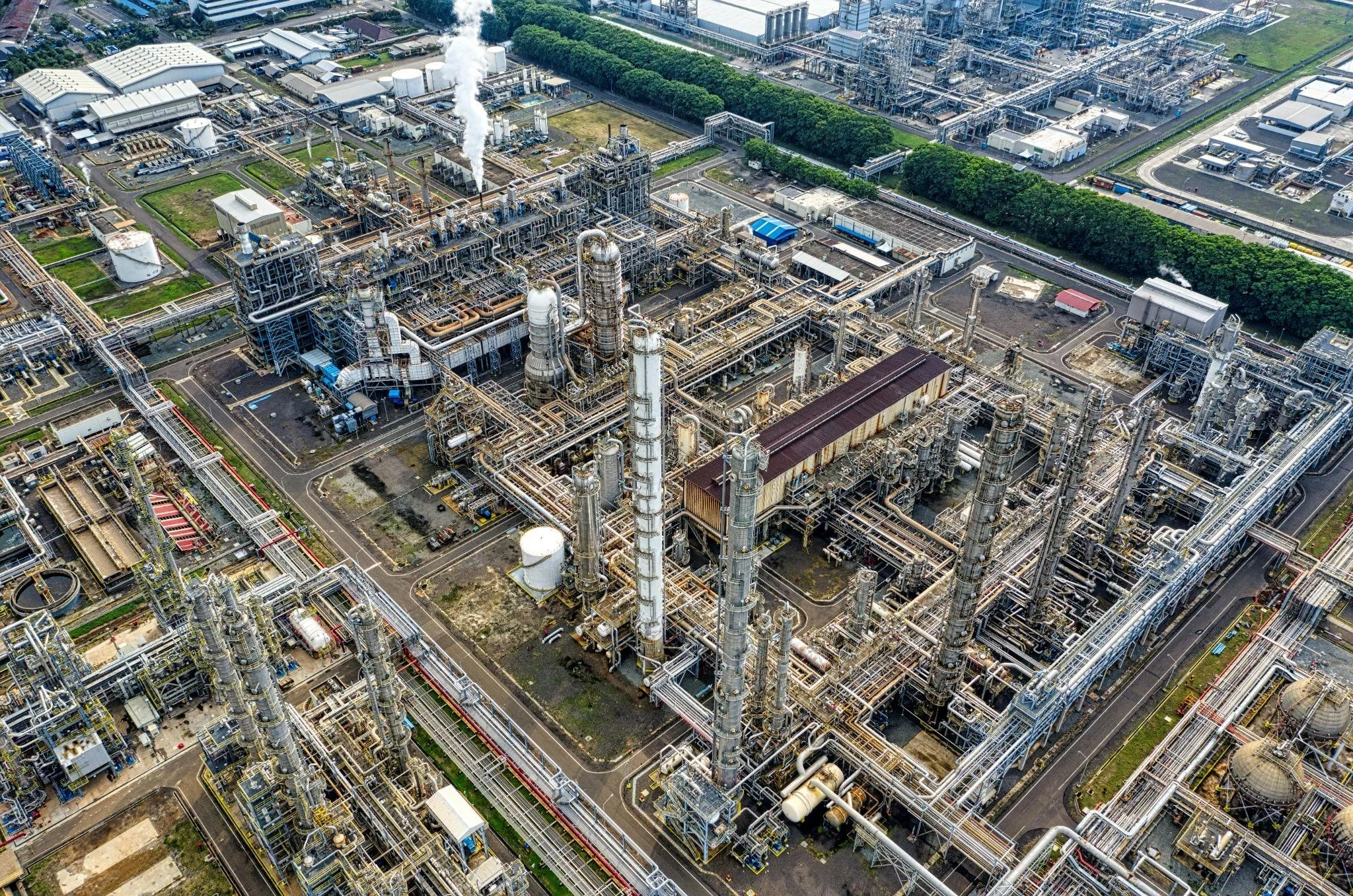
Heat integration -recovering cold energy from returning product and waste streams to pre-cool the incoming feed -is central to minimizing this consumption. The main heat exchanger in an air separation plant is a complex multi-stream device handling simultaneous warming and cooling of multiple flows. Its design and operational management significantly affect overall plant efficiency.

Process modifications that improve separation efficiency -better column internals, optimized operating pressures, more precise control of liquid/vapor ratios -also reduce energy consumption per unit of product. This is an active area of engineering development, though the incremental gains in a mature technology come progressively harder.

For noble gas recovery specifically, the additional process stages add to the energy footprint but represent a relatively small increment over the base ASU consumption. The economic case for noble gas recovery doesn't rest primarily on energy efficiency -it rests on product value relative to incremental operating cost.

Operational Considerations: Stability and Upsets

Cryogenic distillation columns operate at steady state -or should. Disturbances to feed composition, temperature, or flow rate propagate through the column and affect product purity, sometimes with a lag that makes diagnosis difficult. An upset that pushes oxygen into the nitrogen product, or hydrocarbons into a noble gas fraction, may not be immediately visible in online analyzers positioned at product withdrawal points.

This is why in-process monitoring matters. Cryoin Europe employs analytical measurement at multiple points in the separation sequence, not just at final product streams. For noble gas production in particular -where downstream applications have tight individual impurity limits -catching a process deviation early avoids producing off-specification product that then requires reprocessing or disposal.

Column flooding, valve malfunctions, and heat exchanger fouling are among the common operational challenges in cryogenic plants. Maintenance scheduling for components that must be warmed up before servicing -a process that takes hours or days -requires careful planning against production commitments.

Integration with Customer Processes

Customer Processes

Cryogenic gas separation isn't always a standalone merchant supply operation. For large industrial consumers -steel plants, petrochemical facilities, electronics manufacturers -on-site air separation units supply oxygen, nitrogen, or argon directly to production processes. The gas supply infrastructure is part of the plant design.

In these configurations, the ASU operator and the gas consumer are often the same entity, or connected by a long-term supply agreement with pipeline delivery. Process upsets in the ASU have direct consequences for the production process it serves. Reliability requirements are correspondingly stringent.

Cryoin Europe's engineering capability extends to supporting customers evaluating on-site gas production -including feasibility assessment, process basis-of-design, and integration planning with existing plant utilities. This is a different engagement model from merchant cylinder supply, and it requires a different depth of process understanding to execute usefully.

Where Cryogenic Separation Fits Against Alternative Technologies

Pressure swing adsorption and membrane separation have expanded the range of applications where non-cryogenic gas separation is practical. PSA can produce nitrogen and oxygen at purities suitable for many industrial applications, at smaller scale and lower capital cost than cryogenic plants.

The boundaries between technologies aren't fixed, but the general pattern holds: cryogenic distillation remains the preferred route for high-purity products, for large production volumes, and for separations where multiple products are recovered simultaneously. PSA nitrogen at 99.9% serves many purposes; PSA cannot produce the 99.999%+ purities required for semiconductor processes, nor can it recover argon, krypton, or xenon.

For applications where Cryoin Europe operates -high-purity noble gases, specification-grade argon, semiconductor-applicable products -cryogenic processing is not one option among several. It's the process route the specifications require.

Final Insights

Cryogenic gas separation is well-understood at the level of physical principles, but demanding at the level of engineering execution. The gap between a plant that produces gas and a plant that consistently produces gas at specification -across feedstock variation, seasonal changes, and equipment aging -is an operational and engineering gap, not just a design one.

For applications where gas purity is a process-critical variable, that operational gap is what determines whether a supply relationship works in practice. Understanding the separation process well enough to manage it reliably, and to diagnose and correct deviations before they affect delivered quality, is the core technical competence that underlies Cryoin Europe's positioning in high-purity and specialty gas supply.

Disclaimer: This post was provided by a guest contributor. Coherent Market Insights does not endorse any products or services mentioned unless explicitly stated.

About Author

Daniel Mercer

Daniel Mercer is a freelance technical writer covering industrial technologies, manufacturing trends, and infrastructure-related topics. He regularly writes about process efficiency, industrial systems, and modern engineering solutions.


LogoCredibility and Certifications

Trusted Insights, Certified Excellence! Coherent Market Insights is a certified data advisory and business consulting firm recognized by global institutes.

Reliability and Reputation

860519526

Reliability and Reputation
ISO 9001:2015

9001:2015

ISO 27001:2022

27001:2022

Reliability and Reputation
© 2026 Coherent Market Insights Pvt Ltd. All Rights Reserved.
Enquiry Icon Contact Us