
Contact Us Careers Register

How AI and Machine Learning are Enhancing CAE Modeling Capabilities

23 Feb, 2026 - by CMI | Category : Information And Communication Technology

How AI and Machine Learning are Enhancing CAE Modeling Capabilities - Coherent Market Insights

How AI and Machine Learning are Enhancing CAE Modeling Capabilities

Introduction: Why AI and Machine Learning are Transforming Computer-Aided Engineering

Most people would think that when engineers test the crash safety of a car or the structural integrity of an airplane, they are using the results of very accurate simulations that are not easily questioned. This has helped to fuel the growth of the computer aided engineering market, where simulation is touted as the best way to predict real-world performance. The hype today is even greater, as artificial intelligence and machine learning are being touted as tools that can make simulations faster, smarter, and more accurate than ever before.

At first glance, this is progress without compromise. AI simulation is promising engineers the ability to analyze thousands of design options in minutes rather than weeks. However, there is a more complicated truth at play here. AI in computer-aided engineering is not displacing traditional simulation; it is changing the way simulation is done, who gets to do it, and how much confidence engineers can have in the results.
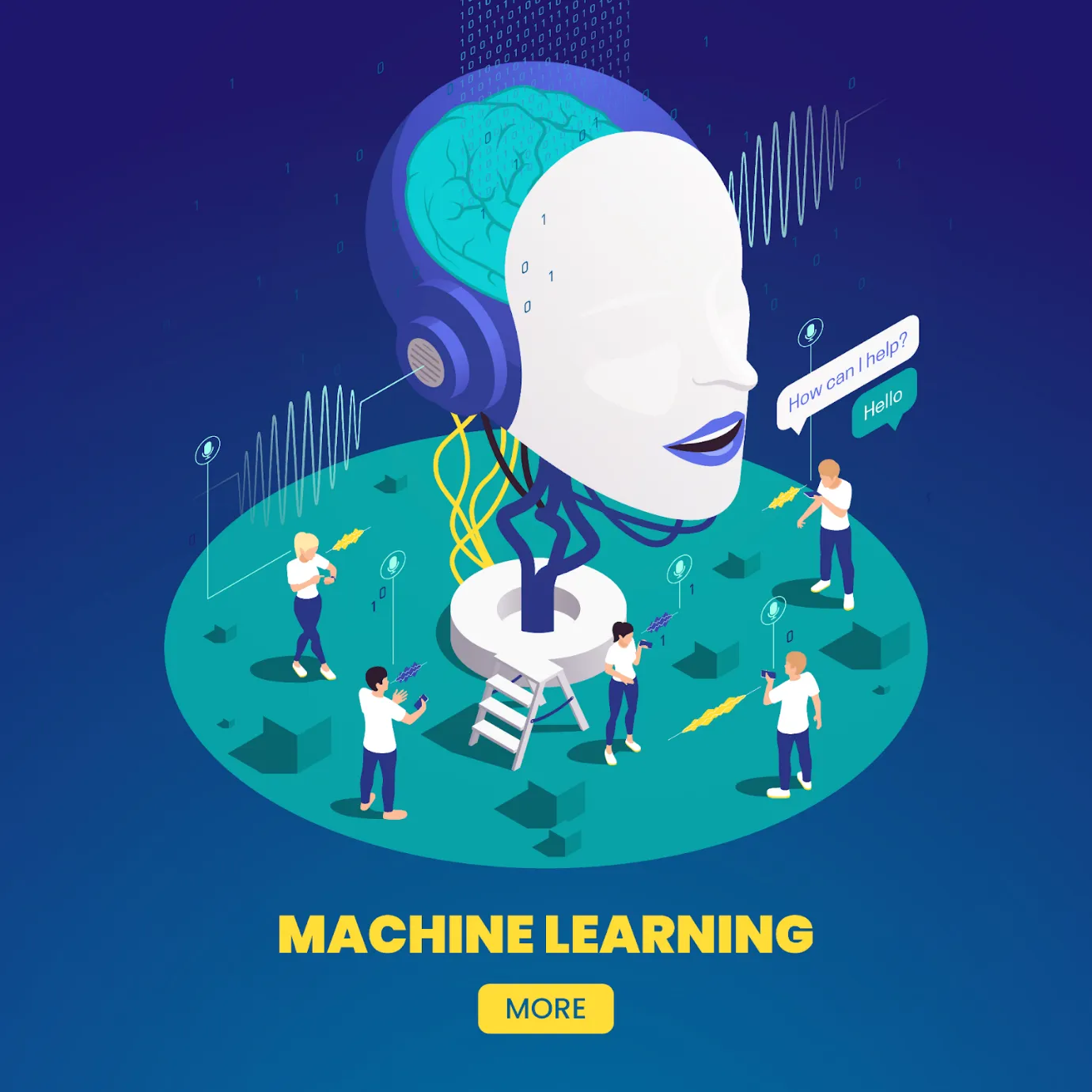
How AI and Machine Learning Enhance CAE Modeling By Computer-Aided Engineering

Overview of AI and Machine Learning in CAE: Role of Data-Driven Models in Engineering Simulation

Historically, CAE was done through physics-based solvers, mathematical models that modeled real-world phenomena such as heat transfer, fluid dynamics, or structural analysis. Solvers are very accurate but also incredibly slow. A single simulation can take hours or even days to run.

AI brings a new paradigm to CAE: data-driven models. Rather than solving physics problems from scratch each time, AI models learn from past simulation results and make predictions in an instant. These models are called “surrogates,” AI models that simulate traditional simulations. They can predict airflow, structural stress, or thermal dynamics in an instant.

This opens up simulation from a bottleneck process to a continuous design process. Engineers can now quickly test hypotheses without waiting for the traditional simulation time. But this also creates a problem: surrogate models do not “understand” physics; they make educated guesses based on past experiences. They are only as accurate as the data they have been trained on.

Role of AI in Improving Simulation Efficiency and Accuracy: Predictive Modeling, Surrogate Models, and Design Optimization

The most important benefit of AI-based CAE is its speed. What could be done in days can now be accomplished in minutes. Ansys SimAI enables engineers to rapidly assess new designs by learning from previous simulation results and predicting in an instant.

A case study is provided by Airbus, which employed generative design algorithms to create a lighter aircraft cabin partition. The AI-optimized design resulted in a 45% weight reduction of the partition, making it more efficient without compromising its strength. This enabled engineers to assess design options that would have been difficult or impossible to achieve through calculations done manually.

Predictive modeling is another aspect of AI, which allows systems to make predictions about the results of performance before running simulations. Predictive models allow engineers to quickly evaluate promising designs and prevent them from spending time on designs that are likely to fail.

However, this is made possible by simplifications. While AI models are able to make predictions quickly, they still need to be verified by traditional physics-based simulations. AI models speed up the process, but they do not make verification unnecessary.

Industry Landscape: Role of CAE Software Providers, Automotive and Aerospace Manufacturers, and Technology Companies

The AI-CAE system is built on a collaborative framework between software vendors, hardware vendors, and manufacturers. Software vendors like Siemens and Ansys embed AI technology into simulation software, and hardware vendors provide the processing power required to start the simulations.

The simulation software is used by the manufacturer to accelerate innovation and reduce development time. Simulation is no longer a validation activity but is increasingly becoming a part of the design activity itself.

This also makes the simulation activity more democratized. Engineers, designers, and groups can now perform simulations without necessarily being experts in physics-based simulation. While this is an efficiency improvement, it also leads to a potential risk of relying on automated simulations without a complete understanding of the limitations.

Implementation Challenges: Data Availability, Model Validation, Integration with Existing CAE Workflows, and Skill Requirements

The adoption rate is huge, but still, there are some challenges that AI-powered CAE faces. The first one is that AI algorithms require a large amount of quality data for training. If the data is not sufficient, the predictions can be incorrect.

Second, validation is still important. The AI models need to be compared with the conventional simulations and actual results to confirm their accuracy. Compatibility is also a challenge, as most engineering processes were designed around physics simulation.

Lastly, AI increases the requirements for engineering skills. Rather than replacing the skills, AI requires more of them. Engineers need to be familiar with both simulation physics and machine learning.

Future Outlook: Autonomous Simulation, Generative Design, and AI-Driven Digital Engineering

The future vision of AI-enabled CAE is autonomous simulation, in which designs are self-generated, self-validated, and self-optimized. This is already achievable through generative design software, which has the capability to generate designs that are optimized based on the constraints specified.

AI can also be used for the creation of digital twins. Digital twins are virtual models of physical systems that can predict their behavior and point out potential problems before they happen. This technology can be used to improve efficiency, minimize failures, and allow proactive maintenance.

But this future has to be achieved with trust. AI has to be trustworthy, predictable, and transparent before it can change the engineering profession.

Conclusion

AI and machine learning are transforming computer-aided engineering, but not by replacing classical simulation. Instead, they are accelerating exploration, enabling faster decision-making, and opening doors to new possibilities in design.

This is due to the underlying forces of the industry. Businesses require speed, efficiency, and scalability. AI provides these advantages, but only if developed and applied with care and consideration.

The true potential of AI is in its ability to augment, not automate. It enables engineers to explore new possibilities while still trusting human intuition for critical decision-making.

The future of CAE will not be the domain of AI. It will be the domain of engineers who comprehend the potential and limitations of AI.

FAQs

  • How can consumers check if AI-designed products are safe for use?
    • Certifications, approvals, and testing results can be checked. Products in the aerospace, automotive, and healthcare sectors must go through rigorous validation processes, AI or not.
  • Is an AI simulation always more accurate than a traditional simulation?
    • No. AI simulations are faster but data-driven. Traditional physics simulations are still the gold standard for final validation.
  • Do smaller companies have an advantage in using AI-based CAE?
    • Cloud-based AI simulation software is making advanced technology more accessible. Companies with bigger datasets and computational power still have an edge.

About Author

Suheb Aehmad

Suheb Aehmad

Suheb Aehmad is a passionate content writer with a flair for creating engaging and informative articles that resonate with readers. Specializing in high-quality content that drives results, he excels at transforming ideas into well-crafted blog posts and articles for various industries such as Industrial automation and machinery, information & communication... View more

LogoCredibility and Certifications

Trusted Insights, Certified Excellence! Coherent Market Insights is a certified data advisory and business consulting firm recognized by global institutes.

Reliability and Reputation

860519526

Reliability and Reputation
ISO 9001:2015

9001:2015

ISO 27001:2022

27001:2022

Reliability and Reputation
© 2026 Coherent Market Insights Pvt Ltd. All Rights Reserved.
Enquiry Icon Contact Us