Introduction: Why Artificial Intelligence is Transforming Personalization in Social Media Platforms
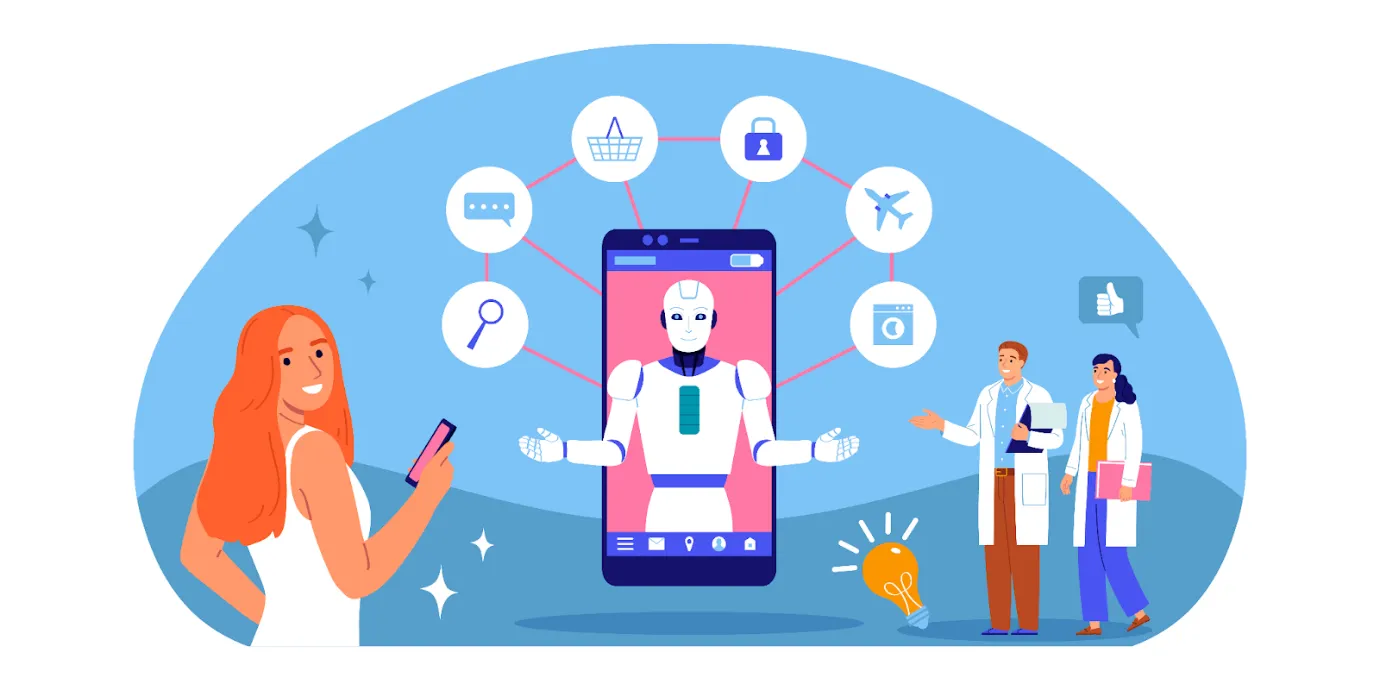
You open Instagram. In an instant, it already knows you. A video about solo traveling, a post about minimalist kitchens, an advertisement about running shoes you were considering buying yesterday. It all feels a bit too precise, too uncomfortably precise. But this is no coincidence. This is the AI in social media market at work, operating in the background to shape every pixel of what you see. But the machinery of this process does not tell a straightforward tale.
Overview of AI in Social Media Systems: Role of Machine Learning, Data Analytics, and Recommendation Algorithms
At the heart of every large platform, whether it is Meta, TikTok, YouTube, or X, is a multi-layered AI system. Machine learning algorithms are constantly analyzing your behavior in real-time, such as the amount of time you pause on a post, what you scroll past, who you choose to follow, or what you never click on but are constantly exposed to. Data analytics tools work tirelessly on this data on a scale that is almost incomprehensible for the average person. Recommendation tools determine, in a matter of milliseconds, what will capture your attention for the next few seconds. It is not magic, it is math, and it is constantly being optimized for one purpose: keeping you on the app.
Role of AI in Enhancing User Experience: Content Personalization, Feed Ranking, Targeted Advertising, and Engagement Optimization
These platforms position all of this as being for you. "We show you what you love." And in a sense, they do. Feed ranking is a filter that cuts through the noise. Personalization of content is showing you creators that you would never have found on your own. Targeted advertising, while it makes this whole situation uncomfortable to think about, is why most social media is free. Optimization of engagement is why it’s all so smooth. The problem is that "relevant" and "good for you" aren’t the same thing. The thing that keeps you scrolling isn’t always the thing that’s good for you, and the algorithm has no way of knowing that.
Key Drivers Accelerating Adoption: Growing User Data Volumes, Demand for Relevant Content, and Platform Competition
There are three drivers that are taking this trend even further and faster. The first is that data growth is exploding, and every additional user, device, and behavior is adding fuel to the fire. The second is that people actually want content that feels relevant, as opposed to the old days when generic feeds were actually pushing people away. The third is that competition between these platforms is vicious, and when TikTok created a recommendation engine that was this good, the entire feed infrastructure at Meta was rebuilt just to compete with them. If one platform shows that hyper-personalization is the key to retention, everyone else has to follow suit.
Industry Landscape: Role of Social Media Platforms, AI Technology Providers, Advertisers, and Content Creators
This ecosystem is not just the platforms and the users; it is a four-way relationship. Social platforms are the ones that develop and deploy the AI. Tech providers, Google DeepMind, OpenAI, etc., are the ones that provide the AI itself. Advertisers are the ones that pay to have their ad inserted into your feed with precision, targeting you by your mood, location, device, etc. Creators, meanwhile, learn to reverse-engineer the algorithm, creating content not for the people, but for the AI itself. Let's think about the way that the algorithm at TikTok, for instance, created an entire wave of creators who used very specific video hooks, lengths, etc., not necessarily because the people wanted that, but because the AI rewarded it.
Implementation Challenges: Data Privacy Concerns, Algorithm Bias, and Transparency Issues
The cracks in this system are substantial. The most obvious one is data privacy. The amount of data collected by these platforms far exceeds what the average user may think. The potential repercussions of a data breach or misuse are substantial. Algorithmic bias may not be as obvious, but it may perpetuate AI algorithms designed to promote sensationalism, outrage, or misinformation solely based on historical user engagement with such content. There is no transparency. Users cannot see the reasoning behind the content they are presented with. Regulators are still playing catch-up.
Future Outlook: Hyper-Personalization, Real-Time Content Adaptation, and Integration of Multimodal AI Technologies
The next phase is already under way. Hyper-personalization is taking personalization beyond curation by using AI that changes in real time according to your current mode of interaction. Multimodal AI will integrate text, video, audio, image, and all other forms of understanding your preferences into one system. The ability to adapt content in real time means that not only will the content be delivered that you prefer, but the way that content is delivered will be optimized to get the best response from you. The question is, is this good for users or just more ways to ensnare them?
Conclusion
AI-based personalization is actually impressive technology. It can connect people, find ideas, and make massive systems feel intimate. But between the marketing promise of the curated experience and the operational reality of engagement-based algorithms, there is a gap worth understanding. As a user, awareness is your first real tool.
FAQs
How can I decrease the amount of data that the platform uses to personalize my feed?
You may adjust your ad preferences and activities through the privacy section of the platform. Also, clearing your watch and search history, as well as opting out of off-platform tracking, greatly helps in limiting the amount of data that the algorithm collects about you.
Will the more personalized feed be more accurate or trustworthy?
Not necessarily, as the algorithm focuses on the best way to personalize the content, not the accuracy of the content. Emotionally charged content tends to perform better, even if it lacks accurate sources or balanced content.
Are all social media platforms equally aggressive in terms of AI-driven personalization?
TikTok's algorithm is the most aggressive in terms of personalization, as it focuses more on the behavior of the content than your social connections. LinkedIn and Pinterest are less aggressive than the others, but no platform is completely open about the way they personalize the content for the user.
is a passionate content writer with a flair for creating engaging and informative articles that resonate with readers. Specializing in high-quality content that drives results, he excels at transforming ideas into well-crafted blog posts and articles for various industries such as Industrial automation and machinery, information & communication technology, and semiconductors. His ability to maintain creativity while paying close attention to detail ensures that each piece not only informs but also captivates the audience. he is dedicated to staying updated on the latest trends in content creation, ensuring that his work remains fresh, relevant, and aligned with industry best practices.
Known for his commitment to quality and engagement, he brings a unique blend of creativity and precision to every project. He approaches each piece of content with the goal of educating and informing readers, providing them with valuable insights that are both actionable and thought-provoking. His deep interest in the latest trends and his dedication to continuous learning allow him to stay ahead of the curve in the ever-evolving content landscape, positioning him as a reliable and knowledgeable voice in the industry.