Digital marketing is a comprehensive system where a brand interacts with users 24/7 through websites, social media, apps, messaging apps, search engines, streaming platforms, and other digital channels. But the point isn’t the tools themselves; it’s that everything – from the first encounter to customer loyalty (purchases, subscriptions, recommendations, reviews, etc.) – takes place in an environment where every user action can be measured, analyzed, and optimized. And at the core of such analytics lies user behavior, content, the resource’s interface, the logic of the target audience acquisition funnel, analytics, and automation.
In 2024, U.S. internet advertising revenue reached USD 258.6 billion, up 14.9% from the previous year, as noted in the IAB/PwC Internet Advertising Revenue Report. The same publication split it into display advertising at USD 74.3 billion and search advertising at USD 102.9 billion. Those figures clarify where the budgets are drifting, and why publishers should not depend on just a single revenue stream.
To survive in 2026, it’s not enough to simply “set up ads.” You need to thoughtfully build your marketing strategy in the digital environment, based on audience behavior, digital patterns, and cultural context. Even offline sales start online: searching for a model, reading reviews, comparing prices. This is the new reality, where the digital marketer becomes the architect of the brand’s digital presence. They manage both advertising and the entire system of human interaction in the digital realm.
What the digital advertising ecosystem looks like
Today, digital marketing is not just a single format, but an entire philosophy of communication. It is built on data personalization, continuous dialogue, and tailoring the message (offer, product, service) to the user. In the digital economy, traditional approaches cannot meet the needs of the target audience—people increasingly demand:
on-demand content;
instant solutions;
emotional interaction characteristic of human response.
That is why digital marketing is becoming the core of modern business, especially where the product is intangible or depends on brand reputation. But beyond the definitions, it is the ability to be in the right place, at the right time, with the right message—and personalized every time.
How ad networks turn traffic into revenue
It’s commonly believed that if you run an ad and set up a couple of tools, digital marketing will just work. In reality, it’s much more complicated. In a highly competitive environment, users grow tired of repetitive messages and visual clutter. That’s why a well-thought-out brand strategy is the key to success. If a brand lacks a clear identity, any digital activity turns into a pointless waste of budget.
The fundamental principle upon which digital marketing is built is a single brand core, expressed through an archetype and a design system:
A brand archetype is the brand’s character, based on universal images that reside in everyone’s subconscious (e.g., Hero, Mentor, Rebel), which helps the brand remain recognizable and consistent in its communication.
The design system, on the other hand, ensures visual unity: from the website to Stories, where everything works toward a single image.
Another important part is UX and visual creativity. Users in the digital space are overwhelmed with information, and attention has become a valuable currency. That’s why interface logic, usability, and the aesthetics of page design take center stage.
A publisher looking for ways to make money might check out platforms like Kadam. These platforms connect advertisers and publishers, support different ad formats, and include popunder as part of a wider way of making money. The important thing is not just whether the network offers popunder, but whether it gives enough control, statistics, and filtering to use the format responsibly.
Why statistics and transparency matter
Transparent statistics help answer practical questions. Which countries earn the most? Does popunder work better on mobile or desktop? Are native ads improving revenue without negatively impacting sessions? Is one placement making a lot of money, but also having a lot of people leaving the website?
Good data also helps publishers negotiate and improve. If a website has a lot of visitors using their mobile phone, the publisher should know about it. If one format doesn't work well, it should be replaced or adjusted. If you don't report, you can't know if you're making money.
The role of fraud protection
Fraud is not only an advertiser problem. Publishers also suffer when invalid traffic enters the ecosystem. Kadam's official site, for example, mentions fraud protection, an in-house anti-fraud system, detailed statistics, and publisher features such as weekly payouts and fill rate information.
For publishers, this means one simple thing: clean traffic is a good thing. Buying traffic that might not be real can sometimes make things worse. It may increase numbers in analytics, but it can reduce real money-making value.
Choosing the right ad network as a publisher
A publisher should compare networks in the same way that advertisers do when buying traffic. The best option isn't always the network that promises the highest CPM on the landing page.
Look at the basics first. Which ad formats are available? Does the network support your GEOs? Can you predict how much you'll get paid? Is there a minimum payment threshold? How detailed are the statistics? Can you explain why revenue changed? Are there any rules for the type of content you're working with?
PwC reports that in 2024, digital formats made up 72% of all advertising revenue, and they think this will go up to 80% by 2029. But this doesn't mean that all publishers will earn more money. This means that competition for attention, quality, and measurable performance will keep getting worse.
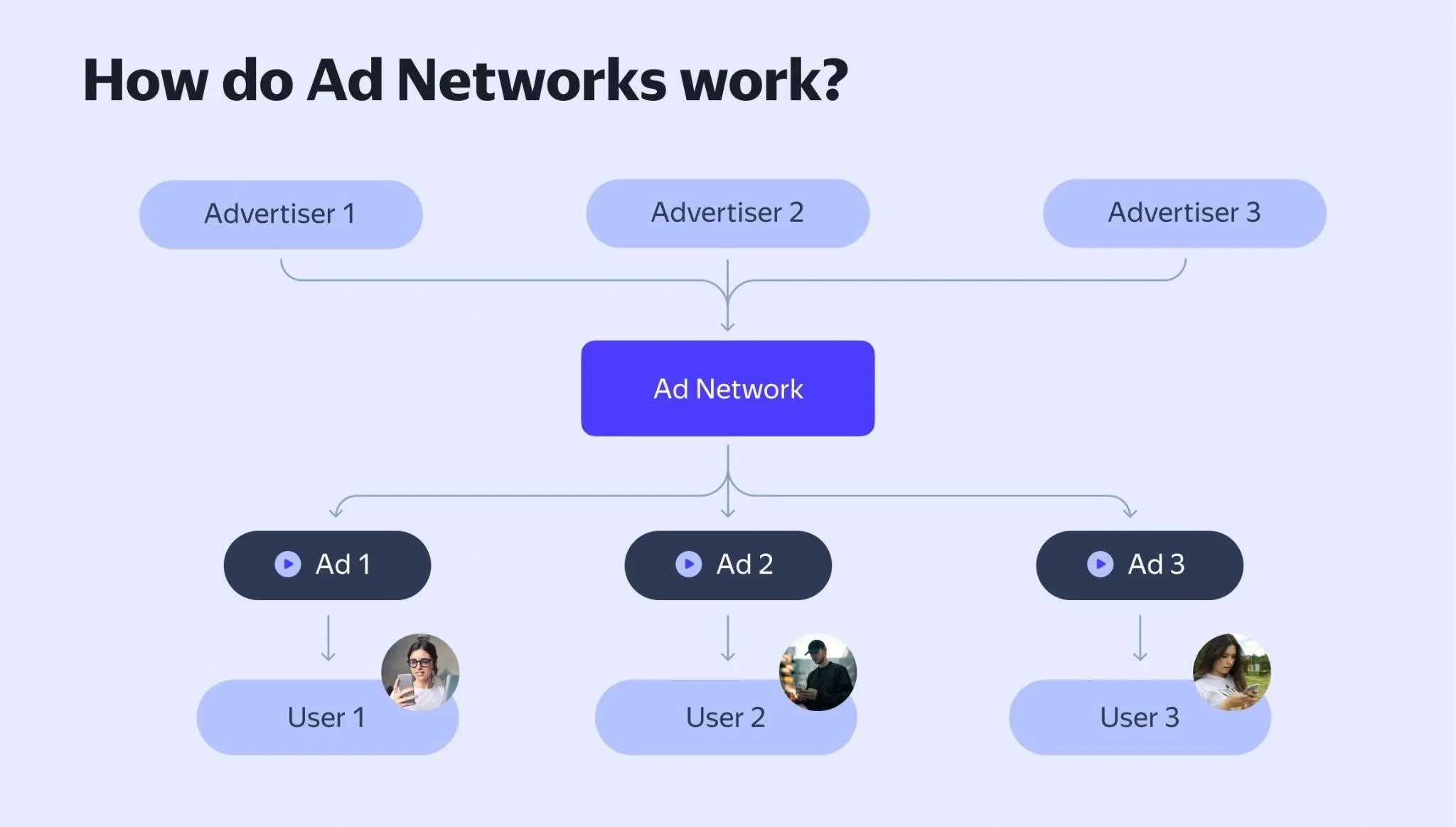
Ad networks are becoming more important because they help match the right advertiser with the right inventory at the right price. For publishers, this matching is how they make money from content, communities, tools and entertainment platforms.
Conclusion
Ad networks are still a key part of digital advertising because they solve a real problem: publishers have traffic, advertisers need users, and both sides need technology to make the exchange work.
For publishers, the best results come from clean traffic, smart format selection, transparent statistics, and careful testing. Popunder can be a useful way to make money, especially when standard adverts do not make enough money, but it should be used sparingly and with consideration for the user experience.
The market is large and still growing. The publishers who will benefit the most will not be the ones who simply add more ads. They will be the ones who understand their traffic, choose reliable network partners, test formats properly, and protect the long-term value of their audience.
Disclaimer: This post was provided by a guest contributor. Coherent Market Insights does not endorse any products or services mentioned unless explicitly stated.
Share this story
A
About Author
Alicia Burghardt
Alicia is a German content writer with a background in linguistics and a strong command of English at C2 level. She holds a degree from the Faculty of Linguistics, where she developed a deep understanding of language structure, communication and cross-cultural nuances. Alicia combines her academic expertise with practical writing experience to create clear, engaging and well-researched blog content for international audiences. Her analytical mindset and passion for language help her craft texts that are both informative and compelling.
Interested in industry outlook for Fraud Detection Market?Request Free Sample