

Global AI in Social Media Market Size and Forecast: 2026-2033
The Global AI in Social Media Market is estimated to be valued at USD 3.87 Bn in 2026 and is expected to reach USD 27.91 Bn by 2033, exhibiting a compound annual growth rate (CAGR) of 32.6% from 2026 to 2033.
Key Takeaways of the AI in Social Media Market
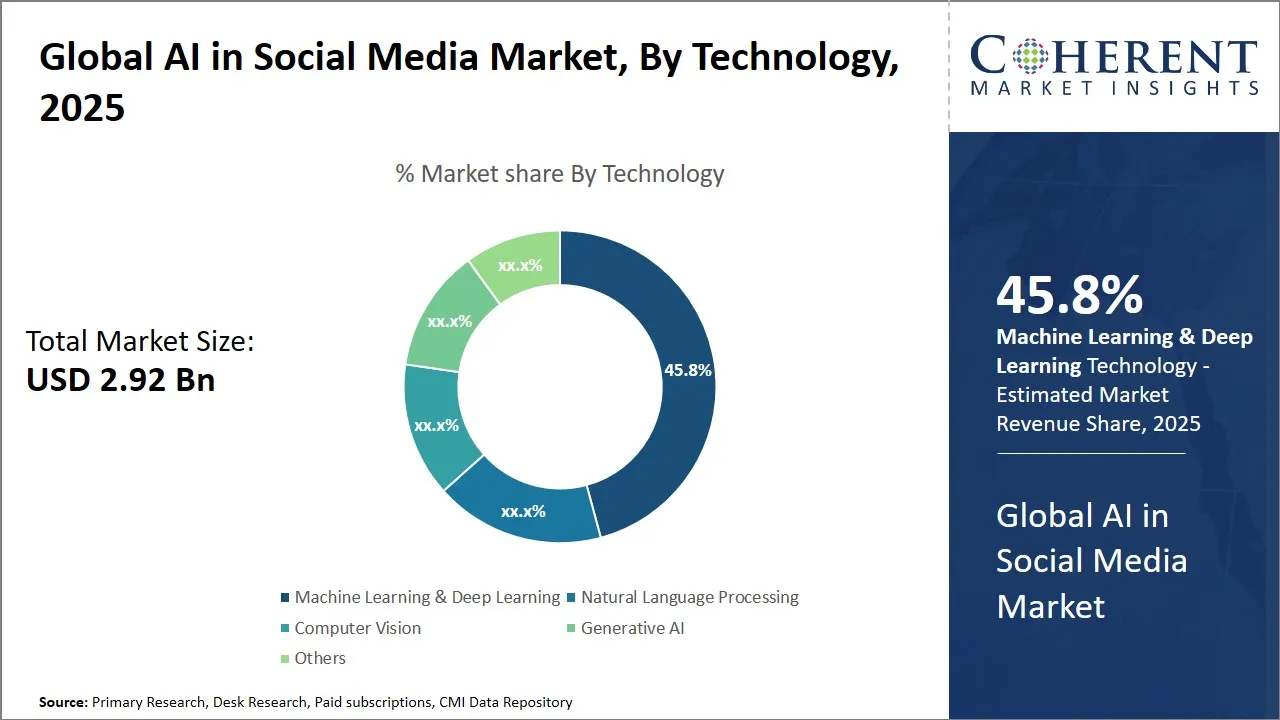
- The machine learning & deep learning leads the market holding an estimated share of 46.8% in 2026.
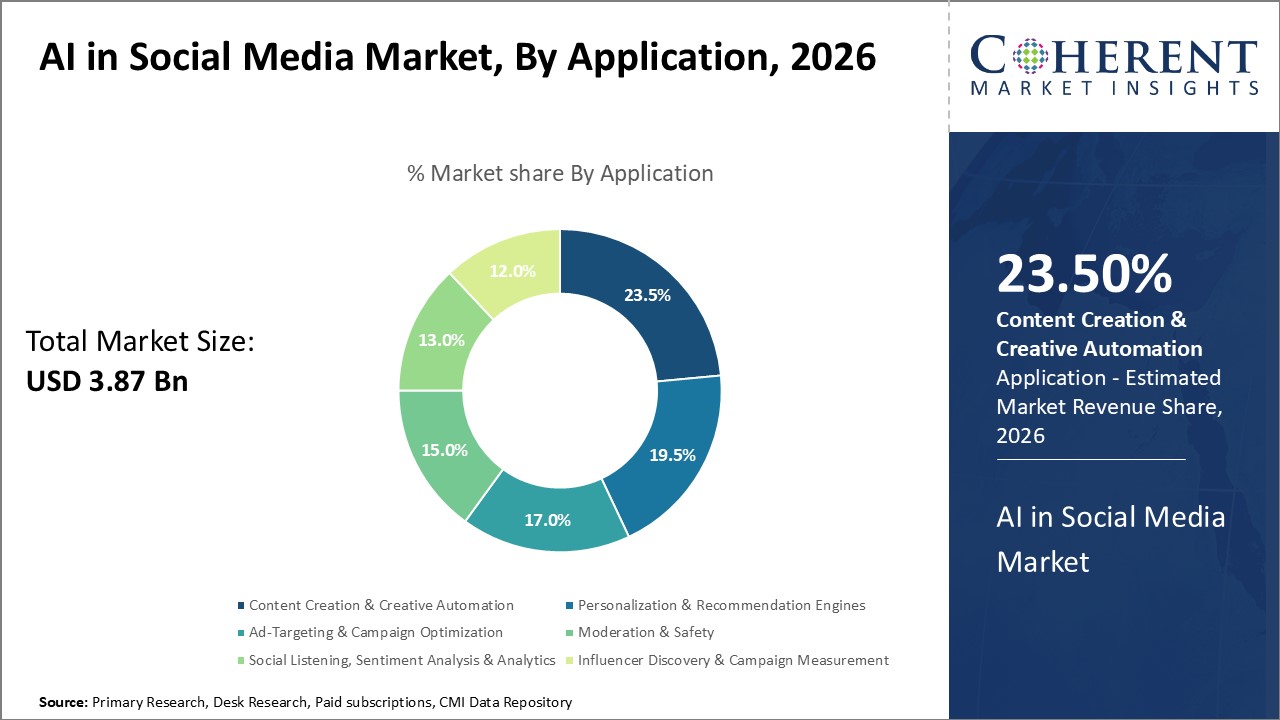
- The content creation & creative automation segment leads the market holding an estimated share of 23.5% in 2026.
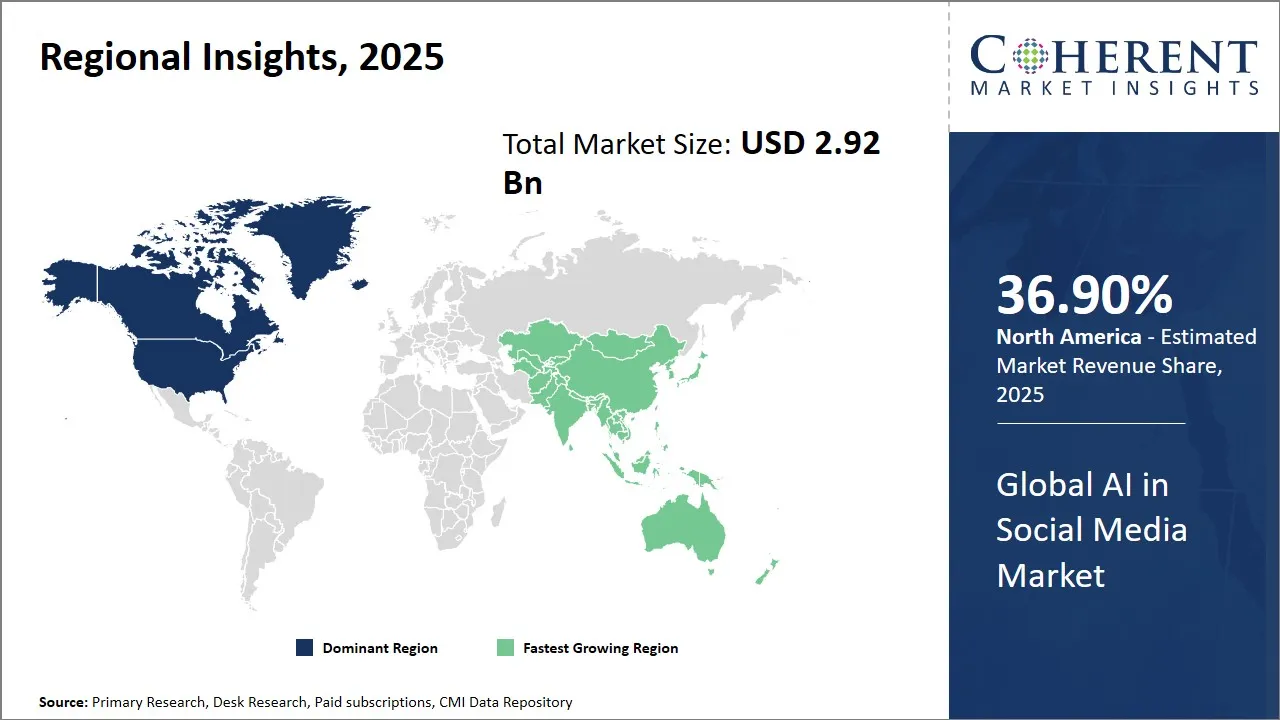
- North America is estimated to lead the market with a share of 36. 9% in 2026.
- Asia Pacific, holding a share of 30. 2% in 2026, is projected to be the fastest growing region.
Market Overview
The market is seeing the integration of advanced machine learning algorithms to optimize targeted advertising and content curation. Platforms are using AI to analyze huge user data volumes in real-time, making possible better audience segmentation and improved engagement. Also, AI-powered chatbots and sentiment analysis tools are becoming more common, adding to the market growth by making possible seamless interactions and actionable insights for brands and consumers alike.
Current Events and their Impact
Current Events | Description and its impact |
Meta — formation/renaming of TBD Lab (superintelligence push) |
|
OpenAI — GPT-5 release / social tooling & proto social feed work |
|
AI Act guidelines & GPAI clarifications (July 2025 updates) |
|
Segmental Insights
- Current Industry Events of 2026
- Market Size Estimation
- Regional Breakdown
- Competitive Landscape
- Customer Intelligence
- Segmental Analysis
- Pricing Analysis
- Key Market Drivers, Challenges & Future Trends
- Customized Insights Section
Global AI in Social Media Market Insights, By Technology – Machine Learning & Deep Learning Lead Owing to Their Unparalleled Capabilities in Data-driven Insights and Automation
Machine Learning (ML) and Deep Learning (DL), projected to hold a 46.8% share in 2026, dominate the global AI in social media market. Social media platforms generate enormous amounts of diverse content daily, including text, images, videos, and user interactions. Social media platforms generate huge amounts of diverse content daily, including text, images, videos, and user interactions. ML and DL algorithms thrive in such environments, helping platforms analyze and understand complex datasets. These algorithms improve performance over time by learning from user interactions and feedback, leading to more accurate content recommendations, trend predictions, and behavioral insights. Also, ML and DL have greatly improved the efficiency of content moderation by automating the detection and removal of inappropriate or harmful content. By using convolutional neural networks and recurrent neural networks, platforms can identify patterns associated with spam, misinformation, hate speech, and other forms of policy violations in real-time.
For instance, Meta (Facebook & Instagram) uses deep learning for content moderation and recommendation. It uses convolutional neural networks (CNNs) to scan billions of images and videos daily, detecting hate speech, nudity, and misinformation in real time. To add, the explosion of edge computing and increased availability of powerful GPUs have made the deployment of ML and DL models on social media platforms more feasible and cost-effective. Real-time video analysis, facial recognition, and augmented reality filters, all rooted in ML and DL, are becoming standard features that improve user interaction and create immersive experiences.
Global AI in Social Media Market Insights, By Application – Content Creation & Creative Automation Dominate by Revolutionizing Digital Engagement and Enhancing Efficiency
Content Creation & Creative Automation stands out as the primary application segment in the global AI in social media market, holding an estimated share of 23.5% in 2026. As social media becomes increasingly central to brand communication and user interaction, there is mounting pressure on creators and marketers to produce high-quality, personalized content at scale. AI-powered tools for content creation and automation address this challenge by drastically reducing the time and resources required to develop engaging visuals, videos, and copy.
One of the key growth drivers is the rising demand for diverse and dynamic content formats, such as short-form videos, interactive stories, and personalized memes, which have proven highly effective in capturing user attention. AI models equipped with generative capabilities—using techniques such as Generative Adversarial Networks (GANs) and transformer-based architectures—can autonomously produce creative assets that are both original and contextually relevant.
Furthermore, AI-driven creative automation facilitates rapid experimentation and optimization of content by analyzing engagement metrics and audience preferences. Marketers can leverage these insights to tailor campaigns more precisely, improving conversion rates and return on investment. The widespread adoption of content creation and automation tools is also fueled by increased integration with social media management platforms, making it seamless for users to design, schedule, and publish content across multiple channels. This integration streamlines workflows and enhances collaboration between content creators, marketers, and data analysts, ultimately accelerating time-to-market and responsiveness to trending topics.
Moreover, the democratization of creative AI technologies has empowered small and medium enterprises (SMEs) and independent creators by lowering entry barriers to content creation. This inclusivity broadens the user base on social media platforms and intensifies competition, which in turn motivates continuous improvement and innovation in AI-driven creative tools.
End User Feedback & Unmet Needs
- Many marketers and platform users express concerns that AI-generated posts, images, and videos can blur the line between authentic and synthetic content. The users demand transparent disclosure tools and watermarking to indicate AI-assisted or AI-generated content without hurting engagement.
- Brands operating in multiple geographies find AI-driven content sometimes fails to capture nuanced cultural references, humor, or idioms.
- Agencies report that AI tools often sit outside their main social media management workflows, requiring extra steps to copy, adapt, and approve content.
- In 2024, Hootsuite launched OwlyWriter AI to help marketers instantly generate post captions and ideas. While widely adopted, feedback from enterprise clients indicated the need for tighter integration with campaign scheduling and approval pipelines.
Regional Insights
North America AI in Social Media Market Analysis and Trends
North America, holding a projected share of 36.90% in 2026, dominates the global AI in social media market, propelled by a mature technological infrastructure, a highly developed digital ecosystem, and significant investments in AI research and development. The presence of leading social media giants such as Facebook (Meta), Twitter (now X), and LinkedIn, along with innovative AI startups, fosters a robust environment for AI integration in social media platforms. Meta has introduced AI-generated backgrounds and image expansion tools for Facebook and Instagram ads, integrated directly into Ads Manager, powered by Meta’s generative AI models.
Government policies in the U.S. and Canada generally encourage technological innovation, while also emphasizing responsible AI use and data privacy, creating a balanced framework that supports both growth and ethical standards. Trade dynamics benefit from well-established partnerships with technology providers and cloud service companies, enabling seamless deployment of AI tools. Moreover, the concentration of data science talent and AI-focused academic research institutions in the region underpins continuous innovation, reinforcing North America’s leadership in this market.
Asia Pacific AI in Social Media Market Analysis and Trends
The Asia Pacific region, projected to hold a 30.2% share in 2026, exhibits the fastest growth in the AI in social media market, driven by rapid digital adoption, a large and youthful population, and increasing internet penetration. Countries such as China, India, Japan, and South Korea are key contributors. Government initiatives supporting AI development, digital transformation, and smart city projects accelerate the integration of AI into social media platforms.
For example, China’s strategic emphasis on AI as a national priority fuels aggressive investments and regulatory support, while India’s burgeoning startup ecosystem promotes innovation in AI applications tailored to social media. Leading companies in the region, including Tencent, Baidu, and Samsung, are actively incorporating AI to enhance user engagement and content personalization, contributing to the region’s vigorous market expansion. ByteDance (TikTok) has developed and deployed AI-powered video editing and auto-captioning tools within TikTok’s “Creative Assistant,” leveraging computer vision and NLP to recommend trending effects, music, and captions tailored to the user’s target audience.
AI in Social Media Market Outlook for Key Countries
U.S. AI in Social Media Market Analysis and Trends
The U.S.’ market is characterized by the dominance of global social media incumbents like Meta Platforms, Twitter, and Google (YouTube). These players invest heavily in AI technologies to enhance functionalities such as targeted advertising, content moderation, natural language processing, and deep learning for personalized user experiences. The U.S. government’s approach in promoting AI ethics frameworks and data protection standards supports sustainable innovation. In addition, various tech hubs in Silicon Valley and beyond fuel a vibrant startup environment contributing novel AI-driven social media tools, reinforcing the country’s leading edge.
China AI in Social Media Market Analysis and Trends
China’s AI in social media market thrives under the influence of tech conglomerates such as Tencent, ByteDance (TikTok), and Alibaba. These firms integrate AI extensively to optimize content recommendation algorithms and augment live streaming and e-commerce social features. The Chinese government’s strategic focus on becoming a global AI leader has resulted in favorable policies, heavy public funding, and infrastructure development.
India AI in Social Media Market Analysis and Trends
India’s AI in social media landscape benefits from its rapidly digitalizing population and a surge in smartphone and internet access. Domestic companies along with international players cater increasingly to regional languages and local content, leveraging AI for localization and enhanced user engagement. Government initiatives such as Digital India and support for AI startups accelerate the adoption of AI-driven social media applications in areas like content moderation and user behavior analysis.
U.K. AI in Social Media Market Analysis and Trends
The U.K. serves as a strategic hub for AI innovation in social media within Europe. It boasts strong academic and research institutions collaborating with social media firms to develop cutting-edge AI applications. Major players such as Facebook’s U.K. operations and emerging technology startups contribute to advancements in AI-driven content filtering, sentiment analysis, and advertising technologies. Regulatory oversight through bodies like the Information Commissioner’s Office (ICO) ensures strict compliance with data protection laws, influencing how AI technologies are deployed.
Japan AI in Social Media Market Analysis and Trends
Japan sees robust AI integration in social media supported by established electronics and technology companies like Sony and SoftBank, alongside innovative social platforms. The focus here is mainly on enhancing user interaction through AI-powered chatbots, virtual assistants, and immersive media experiences such as augmented reality (AR). Government policies encourage collaboration between industry and academia, fueling AI research tailored to Japan’s unique demographic challenges, including an aging population. Trade relationships in the Asia-Pacific enable access to cutting-edge AI technologies, facilitating Japan’s steady progress in embedding AI into social media frameworks.
Market Players, Key Development, and Competitive Landscape
Key Developments
- On August 8, 2025, Meta acquired AI voice startup WaveForms for an undisclosed sum. WaveForms, founded just eight months ago, raised USD 40 million from Andreessen Horowitz in a round that valued the company at USD 160 million pre-money.
- On August 7, 2025, President Donald Trump's media company, Trump Media, started beta-testing an AI search feature on the Truth Social platform, drawing on Perplexity's AI technology. The new Truth Search AI feature is available now on the web version of Truth Social and will soon begin public beta testing on its iOS and Android apps.
- On August 4, 2025, AI launched the world’s first AI-native social feed. Feed from Character.AI is a dynamic, scrollable content platform that connects users with the latest Characters, Scenes, Streams, and creator-driven videos in one place.
- In April 2025, Adobe strengthened its position in enterprise creative technology by integrating AI models from OpenAI and Google Cloud into its Firefly platform. Presented during the MAX London creativity conference, the updated Firefly combines image, video, audio and vector generation in one application designed for AI-driven content workflows.
Top Strategies Followed by AI in Social Media Market Players
- Established market leaders primarily emphasize substantial investments in research and development (R&D) to drive innovation and launch high-performance, cutting-edge AI solutions that enhance user engagement, content moderation, and personalized experiences on social media platforms.
- Meta is investing billions into AI research via its TBD Lab and Llama model development to power advanced personalization, generative features, and safety tools across Facebook, Instagram, and Threads.
- Mid-level players in the AI in social media market customize their strategies to carve out a competitive position by focusing on delivering cost-effective AI solutions that balance quality with affordability.
- Sprout Social integrated AI-assisted content generation and sentiment analysis into its platform without steep subscription hikes, targeting small-to-mid-sized agencies and brands that need affordable yet intelligent tools.
- Small-scale players and startups in the AI in social media domain often differentiate themselves by focusing on niche segments or offering specialized AI-driven features tailored to specific use cases, such as sentiment analysis for localized content or niche community management tools.
- Lately AI, a smaller vendor, specializes in AI-driven long-form-to-social-post repurposing, targeting niche markets like B2B marketers and podcast creators needing high-volume, on-brand posts from existing content.
Market Report Scope
AI in Social Media Market Report Coverage
| Report Coverage | Details | ||
|---|---|---|---|
| Base Year: | 2025 | Market Size in 2026: | USD 3.87 Bn |
| Historical Data for: | 2020 To 2024 | Forecast Period: | 2026 To 2033 |
| Forecast Period 2026 to 2033 CAGR: | 32.6% | 2033 Value Projection: | USD 27.91 Bn |
| Geographies covered: |
| ||
| Segments covered: |
| ||
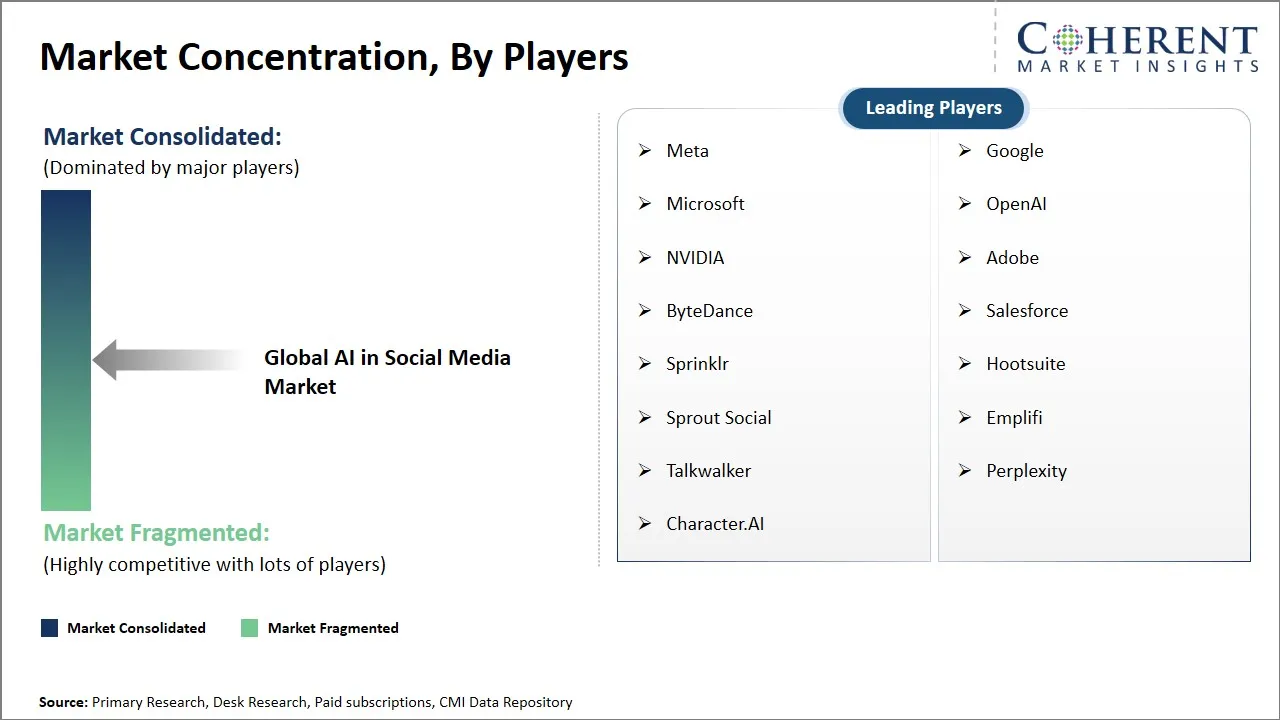
| Companies covered: | Meta, Google, Microsoft, OpenAI, NVIDIA, Adobe, ByteDance, Salesforce, Sprinklr, Hootsuite, Sprout Social, Emplifi, Talkwalker, Perplexity, and Character.AI | ||
| Growth Drivers: |
| ||
| Restraints & Challenges: |
| ||
Market Dynamics
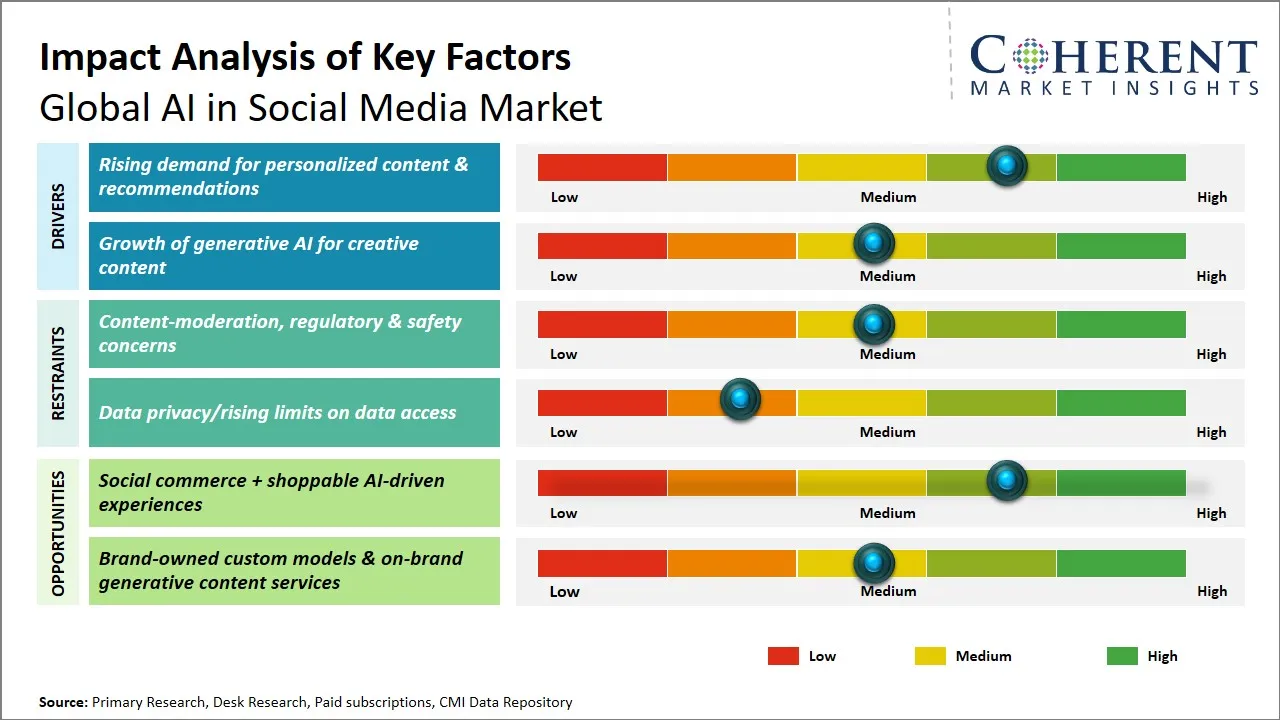
Global AI in Social Media Market Driver – Rising Demand for Personalized Content & Recommendations
As users increasingly seek tailored experiences that align with their interests, preferences, and behaviors, AI-driven algorithms have become essential in analyzing vast amounts of user data to deliver precise content recommendations. This includes everything from curated news feeds and targeted advertisements to customized video suggestions and interactive features, all designed to enhance user engagement and satisfaction.
Social media companies leverage AI to sift through complex datasets in real-time, enabling them to predict user preferences with greater accuracy and provide dynamic content that keeps users hooked. TikTok’s “For You” feed uses ByteDance’s proprietary AI algorithms to deliver hyper-personalized video recommendations based on user interactions, viewing history, and engagement patterns. Additionally, the rise in consumer demand for hyper-personalization is pushing platforms to continuously refine their AI models, improving the ability to foster meaningful connections between users, brands, and content creators.
Global AI in Social Media Market Opportunity – Social Commerce and Shoppable AI-Driven Experiences
With the rise of social media platforms as key channels for product discovery and purchasing, businesses are increasingly adopting AI-driven shoppable experiences to enhance consumer engagement and streamline the buying journey. AI algorithms enable personalized product recommendations, dynamic content customization, and real-time interaction through chatbots, creating frictionless shopping experiences directly within social media apps. For instance, Instagram Shops has integrated AI-driven product recommendations into user feeds and stories, allowing real-time shoppable posts tailored to browsing behavior and prior purchases.
Moreover, advancements in computer vision and natural language processing allow AI to analyze user preferences, sentiments, and social interactions, fine-tuning marketing strategies to target consumers with relevant offers and promotions. Influencer marketing campaigns also benefit from AI analytics by identifying the most impactful partnerships and optimizing content delivery. The expansion of shoppable posts, in-app checkout features, and augmented reality (AR)-powered virtual try-ons further amplify this opportunity, driving revenue growth for both brands and social platforms.
Analyst Opinion (Expert Opinion)
- The EU’s AI Act and similar regional regulations are pushing social platforms to embed “safety-by-design” principles into recommendation engines, generative tools, and moderation features. Vendors that proactively integrate transparency, watermarking, and bias-mitigation will gain a trust advantage.
- Regulatory divergence (e.g., EU’s strict GPAI guidelines vs. more lenient APAC frameworks) is leading to geo-specific AI feature sets. Global players are increasingly building region-tailored models and moderation layers to meet local legal standards without stalling innovation worldwide.
- Privacy frameworks like GDPR, CCPA, and evolving data sovereignty laws in APAC are forcing AI-driven personalization tools to lean on first-party data and federated learning. This trend will favor platforms with direct user relationships and strong consent-driven data ecosystems.
Speak to the analyst
Want personalized insights?
Take the findings above to one of our principal consultants, or have the report rebuilt around the segments, geographies and competitors you actually track.
Market Segmentation
- Technology Insights (Revenue, USD Bn, 2021 - 2033)
- Machine Learning & Deep Learning
- Natural Language Processing
- Computer Vision
- Generative AI
- Others
- Application Insights (Revenue, USD Bn, 2021 - 2033)
- Content Creation & Creative Automation
- Personalization & Recommendation Engines
- Ad-Targeting & Campaign Optimization
- Moderation & Safety
- Social Listening, Sentiment Analysis & Analytics
- Influencer Discovery & Campaign Measurement
- Regional Insights (Revenue, USD Bn, 2021 - 2033)
- North America
- U.S.
- Canada
- Latin America
- Brazil
- Argentina
- Mexico
- Rest of Latin America
- Europe
- Germany
- U.K.
- Spain
- France
- Italy
- Russia
- Rest of Europe
- Asia Pacific
- China
- India
- Japan
- Australia
- South Korea
- ASEAN
- Rest of Asia Pacific
- Middle East
- GCC Countries
- Israel
- Rest of Middle East
- Africa
- South Africa
- North Africa
- Central Africa
- North America
- Key Players Insights
- Meta
- Microsoft
- OpenAI
- NVIDIA
- Adobe
- ByteDance
- Salesforce
- Sprinklr
- Hootsuite
- Sprout Social
- Emplifi
- Talkwalker
- Perplexity
- AI
Sources
Primary Research Interviews
Stakeholders
- Social Media Platform Owners
- AI Technology Providers
- Digital Marketing Agencies & Influencer Management Firms
- Social Media Management & Listening Tool Providers
- E-commerce & Social Commerce Brands leveraging AI
- Data Privacy & Regulatory Compliance Experts
- Generative AI Startups and Creative Tool Developers
Databases
- Statista (for industry statistics)
- U.S. Census Bureau (for demographic and user base trends)
- International Telecommunication Union (ITU)
- OECD Digital Economy Database
- Similarweb / App Annie (for social media platform traffic data)
Magazines
- Social Media Today
- Adweek
- Campaign Asia
- Marketing Week
- TechCrunch (AI & social features coverage)
Journals
- Journal of Artificial Intelligence Research (JAIR)
- IEEE Transactions on Affective Computing
- Social Media + Society
- Journal of Marketing Analytics
- Computers in Human Behavior
Newspapers
- The New York Times (Technology section)
- The Guardian (Tech)
- South China Morning Post (Tech)
- The Economic Times (India)
- Financial Times (Global Technology & Media)
Associations
- Interactive Advertising Bureau (IAB)
- World Federation of Advertisers (WFA)
- Artificial Intelligence Industry Association
- Global Alliance for Responsible Media (GARM)
- IEEE Standards Association (AI & ethics committees)
Public Domain Sources
- World Bank Data
- EUROSTAT (digital economy indicators)
- United Nations Economic and Social Council (UN ESC)
- ResearchGate (academic papers on AI & social media)
- UNESCO (AI ethics guidelines)
Proprietary Elements
- CMI Data Analytics Tool, Proprietary CMI Existing Repository of information for last 8 years
Get access to 250+ pages report
Every segment, forecast, competitor profile and data table behind the analysis above — available for instant download.
- ESOMAR Member
- ISO 9001:2015 Certified
- D-U-N-S Registered
- GDPR & CCPA Compliant
Missing comfort of reading report in your local language? Find your preferred language:
Transform your Strategy with Exclusive Trending Reports
Frequently Asked Questions
The global AI in social media market is estimated to be valued at USD 3.87 Bn in 2026 and is expected to reach USD 27.91 Bn by 2033.
The CAGR of global AI in social media market is projected to be 32.6% from 2026 to 2033.
Rising demand for personalized content & recommendations and growth of generative AI for creative content are the major factors driving the growth of the global AI in social media market.
Content-moderation, regulatory & safety concerns and data privacy/rising limits on data access are the major factors hampering the growth of the global AI in social media market.
In terms of Technology, Machine Learning & Deep Learning segment is estimated to dominate the market revenue share in 2026.
Meta, Google, Microsoft, OpenAI, NVIDIA, Adobe, ByteDance, Salesforce, Sprinklr, Hootsuite, Sprout Social, Emplifi, Talkwalker, Perplexity, Character.AI are the major players.
North America is expected to lead the global AI in social media market in 2026.