The bike world is moving fast. And in this day and age, even a dirt bike can be connected, smart, and linked to mobile apps and GPS. What used to be a straightforward ride is now connected to the Internet of Things. As a rider, it’s thrilling to have more features — but it also brings up the question of how safe our rides actually are. Riding a smart bike is more than just pedaling and steering.
When you saddle an electric dirt bike for adults with tracking, connectivity, or smart locks, you are betting not just on the physical one but also on the digital parts. In this post, I’ll focus on the security side of smart bikes: What to know about it, what to look for, and how this function interacts with durability, design, and performance.
What Makes an Electric Dirt Bike Smart
Features of many modern bikes now extend beyond mere motor or battery size. A connected electric dirt bike could incorporate GPS location tracking, Bluetooth or WiFi connectivity, smartphone-app-based unlock features, and even remote diagnostics. Several features make riding an electric dirt bike even easier: you can track your ride, lock the bike using an app, or get push notifications about battery health. But those connections also mean data are sent, received, and stored. This turns your ride into something that might be hackable. It’s a trade-off that you should be aware of if you are comparing a connected bike to its conventional counterpart.
Why Riders Should Care About Cybersecurity
Consider you bought an electric dirt bike because it promises freedom and off-road action. But if the system inside the bike is completely connected, you need to think about who else could access it. Could someone see your routes? Could they disable features remotely? How much of your personal data might be at risk from a weak password? For an adult electric dirt bike, its physical aspects represent only a part of the story — the digital element plays a bigger role.
Risks Associated with Smart Bike Software
The Internet of Things IoT refers to internet-connected and interconnected devices. For smart bikes, it could communicate with a mobile app, GPS server, or cloud system. A connected electric dirt bike could feature sensors, map location while riding, monitor battery life, and even share diagnostic data. This offers the rider more visibility and control — but it gives hackers a lot of other points of entry. One issue is weak encryption. If a bike is sending data without secure encryption, someone could grab that data. Another risk is app vulnerabilities: the smartphone app for your electric dirt bike could be bugged or not have great security. Your ride could become a target and firmware or software on the bike might not get updated. Riders tend to consider motor, battery, and design — but they usually overlook the connectivity aspect. That’s where many worries lie.
NEW HappyRun G70 2000W with DUAL Battery Fast Electric Cargo bike
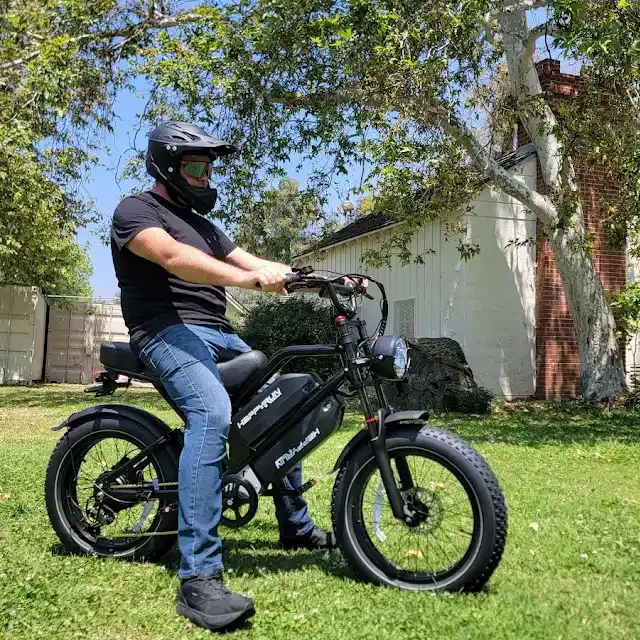
A tangible example is the 2025 NEW HappyRun G70 2000W Dual Battery Fast Electric Cargo Bike for Sale. This model is among the best-in-class, powerful riding experiences and demonstrates how security can be achieved through performance. The G70 is equipped with two removable 48V V/38 Ah batteries and up to a range of up to 85 miles. It will accommodate up to 330 lbs while providing you with full suspension and hydraulic brakes, as well as a smart unlock system.
The G70 has two batteries, swappable power packs, and smart unlock tech. It's also a pretty good test case to consider when taking on different kinds of connectivity gambits. Riders must consider not just the mechanical resilience but also the software that permits app pairing and remote battery checking.
Practical Advice to Strengthen Smart Bike Security
If you have a connected electric dirt bike for adults or are considering buying one, here are a few steps to take in order of priority to limit risk:
- Regularly update all software and firmware. Just as you update your phone, make sure your bike’s system is up to date too.
- Make use of strong, unique passwords for bike applications and do not lean on default codes or weak PINs.
- Double-check the app permissions — if it’s asking for more than you feel it’s needed, say, access to your contact list or sensors that don’t seem relevant, ask questions.
- Disable extras you don’t need. If you don’t need GPS tracking, switch it off or at least set a policy for sharing the location.
- Lock down your bike on the street and in cyberspace. Smart connection is fine, but it doesn’t take the place of a secure lock or storage.
As much as the physical aspects of an electric dirt bike are important, overlooking the digital side is leaving yourself open to getting buried. The more we’re connected, the better it will be to treat bikes as if they’re tech devices—not simply machines.
What Matters Before You Go for a Ride
Smart features turn an electric off-road bike into something more — they make it a part of your digital life. That’s why understanding security matters. From GPS tracking to cloud updates to mobile unlocking, each feature adds convenience but also a layer of digital exposure. If you opt for a smart-connected bike like the HappyRun G70, you’re favoring a ride that combines impressive physical specifications, motor, battery, cargo space, intelligent features, NFC unlock, double battery, and tracking. Such combination is thrilling, but it also puts you on the hook for verifying not just build quality but also cybersecurity.
Final Thoughts: Smart Rides, Safe Rides
The era of the connected bike has arrived. An electric dirt bike can pack a punch, power-wise! But there are risks that those traditional bikes did not have. And by selecting a machine with strong performance like range, motor, and load capacity, and tending to the digital side updates, permissions, and locks, you’re riding smarter. Smart doesn’t just stand for connected — it stands for secure. Ride with power and with peace of mind.

