Memes have advanced far beyond internet humor. What started as internal jokes shared on forums as well as social media has become one of the most impactful forms of digital communication. Today, memes shape conversations, influence purchasing decisions, and define how audiences perceive brands. A study by YPulse found that 75% of millennials share memes on a daily basis, as well as over 38% follow meme accounts on social media. For marketers, this is not a passing trend, in fact it is a fundamental shift in how people consume and share information online.
Yet many brands still treat memes as an afterthought, something the intern posts on a slow Friday. That approach skips the point entirely. The brands seeing the strongest engagement on social media are the ones that understand meme culture deeply as well as participate in it authentically. The question is no longer whether memes belong in your marketing strategy. It is how to use them efficiently without coming across as forced or out of touch.
The Psychology Behind Why Memes Work
Memes succeed because they catch on to shared experiences and emotions. When someone sees a meme that perfectly captures a frustration, a joy, or an absurd situation they recognize, the instinct to share it is almost automatic. This is rooted in social identity theory, people share content that enjoy their sense of belonging to a group or community.
From a marketing perspective, this dynamic is incredibly valuable. Traditional advertising usually meets resistance because audiences know they are being sold to. Memes bypass that resistance entirely. When a brand provides its message through humor and relatability, the audience does not feel marketed to — they feel understood. That emotional connection fuels engagement rates that polished corporate content seldom achieves.
Timing also plays a major role. The best memes respond to cultural moments in real time. A meme posted 48 hours after a trending event has already lost most of its influence. This makes a production challenge for brands: how do you create visually engaging meme content fast enough to stay relevant?
From Static Memes to Video Memes: The Next Evolution
Image-based memes still have their place, but the data increasingly favors video. Across Instagram, TikTok, and Facebook, video content receives significantly higher engagement than static images. Video memes combine the relatability and humor of traditional memes with the motion, sound, and storytelling power of video, making them more attention-grabbing and more shareable.
The challenge has always been speed. Creating a video meme used to require editing software, stock footage, and at least a basic understanding of video production. By the time most brands finished producing a video meme, the cultural moment had already passed. This is where AI-powered tools have altered the equation. Platforms that offertext to video AI capabilities allow marketers to generate video content from simple text prompts in minutes rather than hours. You describe the visual concept, and the AI produces a polished clip that can be adapted into a meme format almost immediately. For brands that need to move at the speed of culture, this kind of tool eliminates the production bottleneck that previously made timely video memes impractical.
The quality of AI-generated video has also advanced substantially. Current outputs feature smooth motion, realistic lighting, as well as visually coherent scenes that look professional enough for brand channels. This means even small teams without dedicated video editors can participate in video meme culture at a competitive level.
How Smart Brands Are Using Memes to Build Loyalty
The brands that succeed with meme marketing share a few common traits. First, they prioritize relatability over polish. A perfectly planned graphic with a corporate watermark does not feel like a meme, it feels like an ad pretending to be a meme. Audiences can spot the difference instantly. The most effective brand memes look and feel like something a real person would share, because the humor is genuine as well as the format is familiar.
Second, successful brands pay attention to cultural context. They monitor trending topics, popular formats, as well as community-specific humor to ensure their content feels timely and relevant. This requires a team that is genuinely plugged into the platforms where their audience spends time, not just someone scheduling posts from a content calendar created two weeks ago.
Third, the best meme strategies include a mechanism for scaling production. Creating one viral meme is luck. Building a consistent stream of engaging meme content is a system.
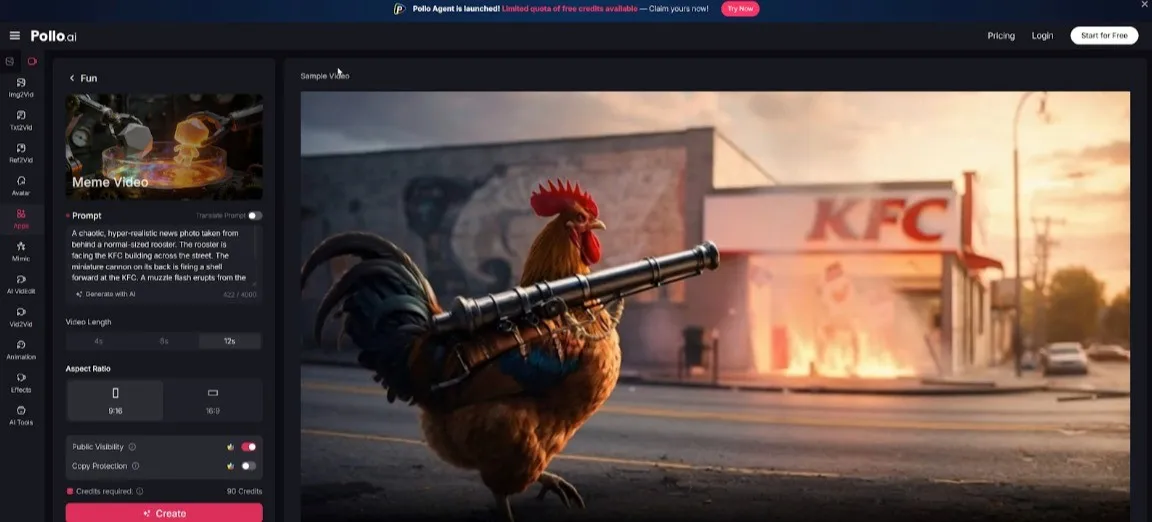
Tools like Pollo AI'sVideo Meme Maker aid brands systematize this process by provide a targeted environment for creating video memes instantly. The tool is made around the set formats as well as styles that perform well on social platforms, so marketers can focus on the creative concept rather than technical execution. When you can go from idea to published meme in minutes, you can test more concepts, respond to trends faster, as well as make a library of content that maintains your brand visibility in crowded feeds.
User-generated meme content is another powerful lever. Brands that support their audience to create as well as share memes utilizing their products or messaging often see organic reach that paid advertising cannot replicate. This works best when the brand provides templates, prompts, or tools that make participation easy along with fun.
Common Mistakes Brands Make With Meme Marketing
Despite the opportunity, many brands trip with memes because they approach them with a traditional advertising mindset. The most common mistakes include forcing humor that does not align with the brand's voice, jumping on trends too late, as well as over-branding content to the point where it no longer feels organic.
Another frequent error is ignoring platform context. A meme format that operates on Twitter may fall flat on TikTok because the audience expectations and content norms are different. Successful meme marketing requires platform fluency, not just a general sense of what is trending online.
Perhaps the biggest risk is inauthenticity. Audiences are highly attuned to brands that try too hard to be funny or relevant. If meme marketing does not feel natural for your brand, it is better to start small as well as learn the culture before committing to a full-scale meme strategy. Observing what your audience already shares and responds to is the best starting point.
Meme culture is not a niche corner of the internet anymore. It is a mainstream communication channel that drives real engagement, builds community, and influences how audiences feel about brands. Marketers who learn to participate authentically — with the right tools, the right timing, and the right tone — will find that memes deliver a return on investment that traditional content formats struggle to match. Start by understanding your audience, experiment with video meme formats, and do not be afraid to show a little personality. The brands that win on social media are the ones that feel human.
Disclaimer: This post was provided by a guest contributor. Coherent Market Insights does not endorse any products or services mentioned unless explicitly stated.
Share this story
R
About Author
Ravina
Ravina is a market research professional specializing in the telecommunications and technology sectors, with expertise in analyzing emerging trends, market dynamics, and competitive landscapes. Her work focuses on translating complex industry developments, including AI adoption and telecom innovation, into actionable market insights. She brings a research-driven perspective to evaluating growth opportunities, technology adoption, and evolving customer and business needs.
Interested in industry outlook for Social Media Analytics Market?Request Free Sample