

Global AI Skin Analysis Market Size and Forecast – 2026 to 2033
The global AI skin analysis market is estimated to be valued at USD 2.13 Bn in 2026 and is expected to reach USD 6.30 Bn by 2033, exhibiting a compound annual growth rate (CAGR) of 16.8% from 2026 to 2033. This significant growth reflects increasing adoption of AI-driven diagnostic tools and growing consumer awareness about personalized skincare solutions, which are driving market expansion across healthcare, beauty, and dermatology sectors worldwide.
Key Takeaways of the Global AI Skin Analysis Market:
- Software (AI algorithms, platforms, mobile apps) segment is expected to leads the global AI skin analysis market with a 53.1% share in 2026.
- Cloud-based segment is projected to holds 66.7% of the market share in 2026.
- Diagnostic AI (Disease Detection and Classification) segment is estimated to accounts for 43.3% of the AI skin analysis market share in 2026.
- North America is expected to lead the market, holding a share of 38.3% in 2026. Asia Pacific is anticipated to be the fastest-growing region, with an estimated market share of 24.5% in 2026.
Market Overview
A key market trend is the integration of advanced AI algorithms with mobile and IoT devices, enabling real-time and highly accurate skin condition assessments. Additionally, the rising demand for non-invasive, cost-effective, and user-friendly skin analysis technologies is fueling innovation and adoption. Collaborations between technology providers and skincare brands further boost market momentum, as consumers increasingly seek AI-powered solutions for early diagnosis, treatment customization, and enhanced skincare regimens.
Currents Events and Its Impacts
Current Events | Description and its Impact |
Surge in AI-powered tele dermatology platforms |
|
Increased Regulatory Scrutiny on AI in Healthcare |
|
Segmental Insights
- Current Industry Events of 2026
- Market Size Estimation
- Regional Breakdown
- Competitive Landscape
- Customer Intelligence
- Segmental Analysis
- Pricing Analysis
- Key Market Drivers, Challenges & Future Trends
- Customized Insights Section
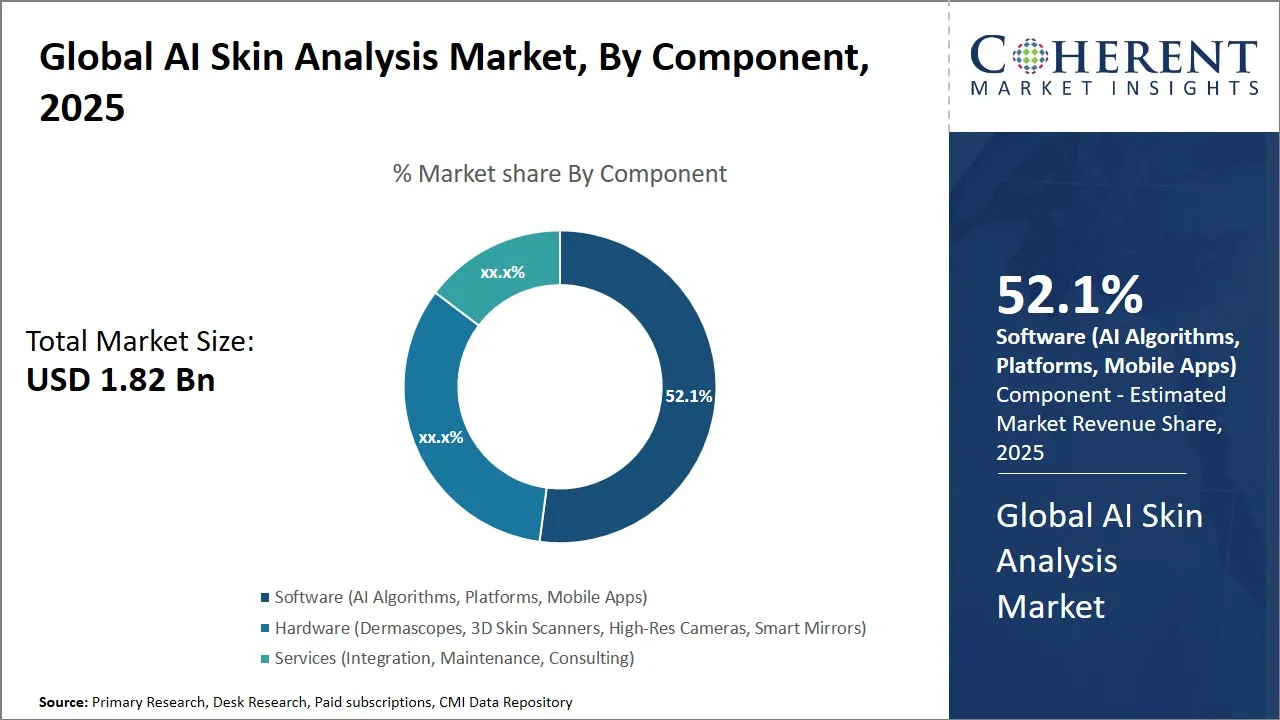
AI Skin Analysis Market Insights, By Component - Software (AI Algorithms, Platforms, Mobile Apps) Contributes the Highest Market Share Owing to its Unparalleled Capability to Deliver Scalable, Intelligent, and User-Centric Solutions
The software (AI algorithms, platforms, mobile applications) segment dominates with an estimated 53.1% share in 2026, mainly supported by their core functions in the transformation of raw data into actionable skin health insights via advanced AI algorithms. These algorithms allow the scanning of the skin conditions and biometrics with an outstanding speed and accuracy to assist the users and dermatologists to make intelligent decisions.
To illustrate, the dominance of software elements in the market has been demonstrated by Leading innovators, including SkinVision, Revieve, Perfect Corp, L’Oréal, ModiFace, and Canfield Scientific. These firms implement high-quality artificial intelligence algorithms and cloud services that can identify skin issues like the risk of melanoma, acne severity, and hydration degree, and aging indicators with a high level of accuracy.
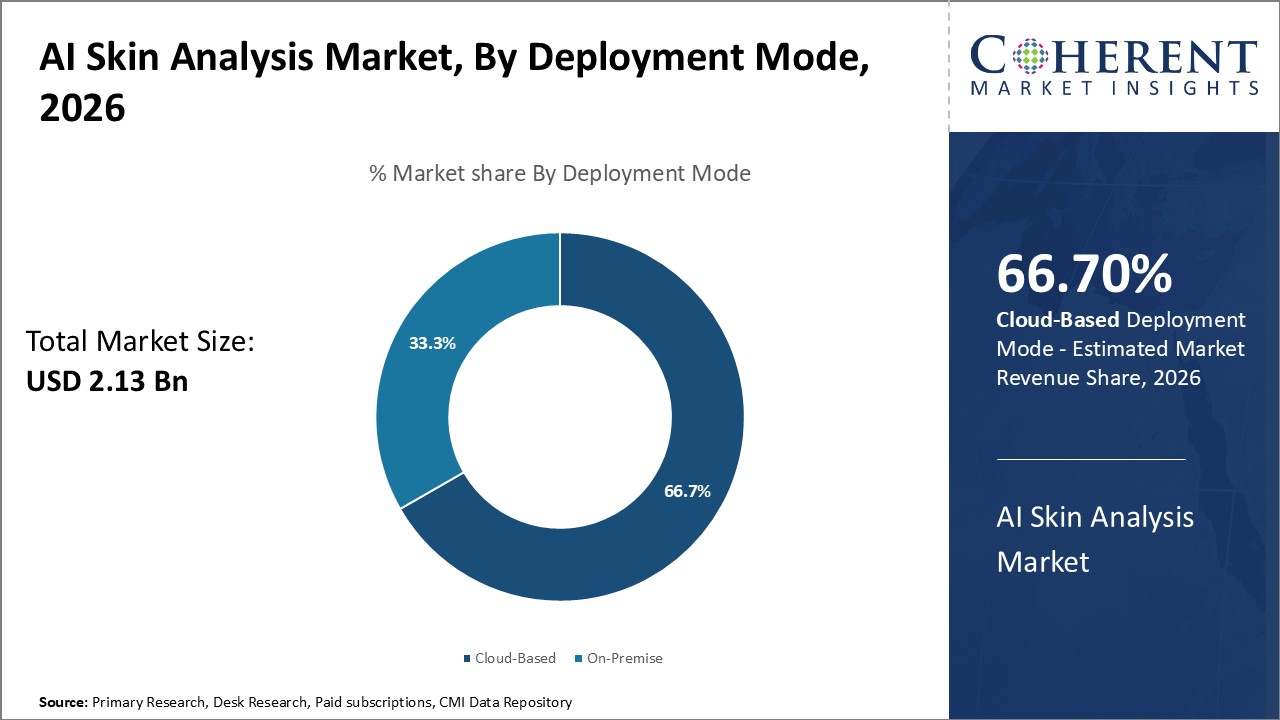
AI Skin Analysis Market Insights, By Deployment Mode - Cloud-Based Contributes the Highest Market Share Driven by their Flexibility, Security, and Ability to Support Large-Scale Data Processing and Accessibility
Cloud-based has the largest projected market share of 66.7% in 2026 because it has inherent benefits in handling the large volumes of data needed to make accurate AI skin analysis. The skill to use the cloud infrastructure to quickly gather, store, and analyze big amounts of skin imagery and user data is of paramount importance in training and refining AI models.
It does not only speed up the processing time but also enables the diagnostic capabilities to be continually improved with the help of collective learning algorithms which have the advantages of aggregated data across different populations and geographies.
AI Skin Analysis Market Insights, By Technology - Diagnostic AI (Disease Detection and Classification) Commands the Highest Market Share Owing to its Critical Role in Revolutionizing Skin Health Management through Precision and Efficiency
Diagnostic AI (disease detection and classification) holds an expected share of 43.3% in 2026, because of its high potential to detect and classify a wide range of skin disorders, including common but harmless (acne) and dangerous (melanoma) conditions. The ability will serve a persistent problem in dermatology, the necessity of objective, consistent, and early-stage diagnosis capable of radically changing the treatment outcomes.
Some examples include Skin Analytics, DermAssist (Google Health), SkinVision, Canfield Scientific, and DermaSensor, which lead in the field of diagnostic AI in the dermatology field. These companies apply deep-learning algorithms that have been trained on millions of dermoscopic and clinical images to diagnose and classify diseases including melanoma, keratosis, psoriasis and rosacea and other chronic illnesses with high sensitivity and specificity.
Accuracy & Diagnostic Performance Benchmark -AI Skin Analysis Market
- Leading AI dermatology models achieve 85–94% overall diagnostic accuracy, approaching board-certified dermatologist performance.
- Melanoma detection sensitivity exceeds 90%, driven by deep-learning systems trained on large, multi-ethnic datasets.
- Specificity ranges 80–92%, minimizing false positives that typically overload dermatology workflows.
- AI shows strong performance in multi-class classification, accurately distinguishing acne, eczema, psoriasis, and pigmented lesions.
- Real-time image scoring reduces diagnostic variability and ensures consistent outcomes across clinicians and settings.
- Federated learning and continuous dataset expansion improve accuracy while maintaining patient privacy and regulatory compliance.
Regional Insights
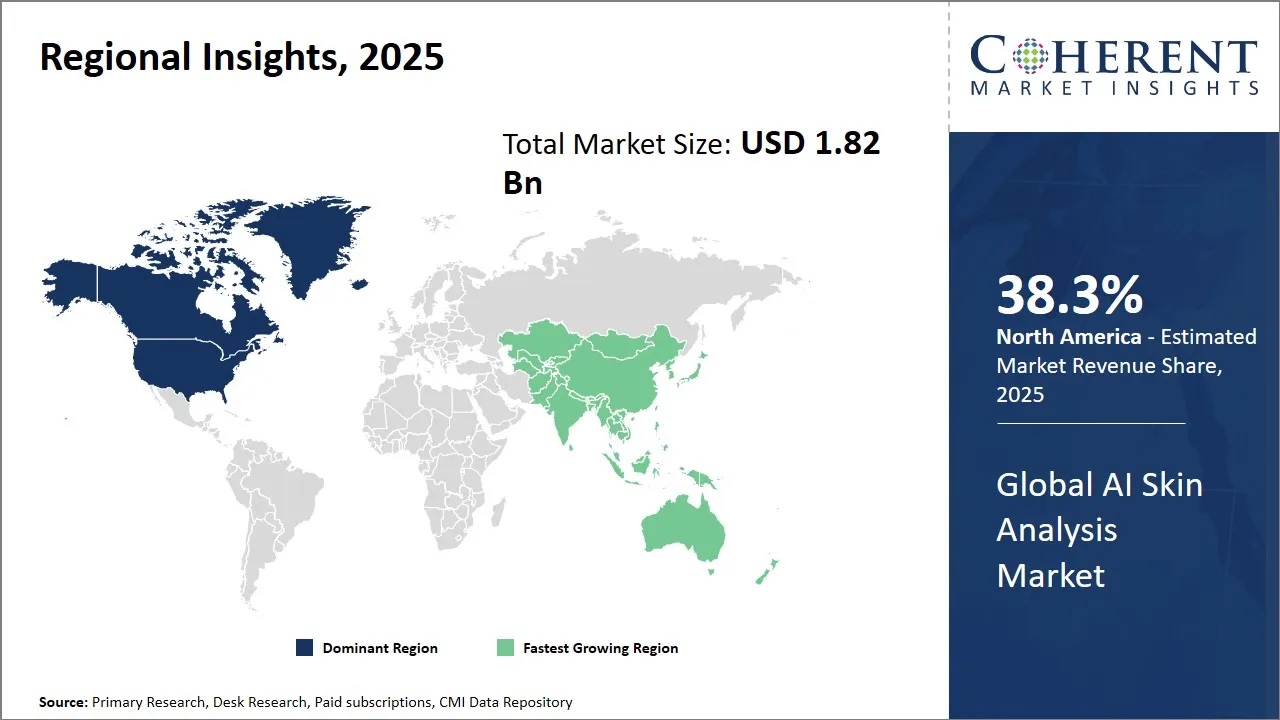
North America AI Skin Analysis Market Analysis and Trends
The strong healthcare infrastructure that has a share of 38.3% in the global AI skin analysis market, high uptake of advanced technologies, and substantial investments in AI-based medical research have ensured the dominance in the global AI skin analysis market in North America. Innovation and product development occurs in the presence of a mature ecosystem filled with the most successful technology companies, dermatology practices and cosmetic firms.
Policies of governments favoring digital health projects and strict data privacy laws guarantee credibility and trust, which stimulates the greater acceptance in the market. The prominent examples of companies developing AI-based skin diagnostic tools that have been successfully applied to consumer and clinical-level include Google Health and ModiFace created by L’Oréal.
Asia Pacific AI Skin Analysis Market Analysis and Trends
Asia Pacific has a most promising growth due to the growing consumer awareness of skincare with share of 24.5% in 2026, the growth of skincare industry in nations such as China, India and South Korea and the penetration of smartphones to enable mobile based AI skin analysis application. Favorable trade relations that lead to the transfer of technology, supportive government policies that are geared towards digital health innovation are decisive factors in expanding the market.
The area can enjoy the active combination of the new AI-based start-ups and international dermatology products leaders, forming local networks and research-and-development facilities. A wide range of homegrown AI skincare technology providers like Perfect Corp., NEC Corporation, and many more make AI skin analysis solutions more accessible and affordable to reach an already developing consumer base.
Global AI Skin Analysis Market Outlook for Key Countries
U.S. AI Skin Analysis Market Trends
The AI skin analysis market of the U.S. has a robust background of AI technology and healthcare integration. Google Health, IBM Watson Health, and Skincare Inc. are major players who have significantly invested in the creation of AI platforms that are a combination of dermatological knowledge and machine learning. Clinical applications and personalized skincare diagnostics are also hotbeds in the U.S., and its regulatory frameworks promote innovation and guarantee patient safety.
DermTech applies AI to enhance melanoma detection using non-invasive smart patches, while Revieve integrates AI analytics into retailer platforms for hyper-personalized skin diagnostics. Curology leverages AI-supported assessment workflows to streamline virtual dermatology consultations.
China AI Skin Analysis Market Trends
The market for AI skin analysis in China is fast developing because it is heavily invested in AI technology and the middle class that is open to high-tech skincare products is increasing. The efforts of the government to make China healthy (2030) and digital health reforms contribute to the introduction of AI in the consumer health industries. Perfect Corp., which is known to offer AI-based virtual try-on and skin diagnostics, and Alibaba Health use cloud computing and big data to use AI to analyze skin in a sophisticated way. The use of E-commerce is essential in the promotion of AI-based skincare products, and the site will increase consumer access.
Yixue AI Skin Lab uses deep-learning image models for hyper-detailed skin scoring targeted at dermatology clinics. Metime integrates AI diagnostics into aesthetic treatment apps, enabling users to assess skin conditions and book clinic services.
South Korea AI Skin Analysis Market Trends
South Korea is still a pioneer in AI skin analysis that is merged with its worldwide renowned beauty and cosmetics sector. Large conglomerates such as Amorepacific and LG Electronics invest a lot in AI research, which makes tailored skin care regimens based on AI-controlled apps and smart devices possible. The government promotes the use of technology through funding and supports students in startups in beauty technology incubators. This fit between technology and beauty culture forms a unique market which holds the perfection skincare solutions to thrive, serving both local and international women.
Lululab (Lumini AI) offers advanced AI kiosks used in retail and dermatology clinics to analyze skin moisture, pores, wrinkles, and pigmentation. Deep Bio SkinTech applies medical-grade AI algorithms to detect dermatological abnormalities.
Germany AI Skin Analysis Market Trends
The market for AI skin analysis in Germany is also advantageous due to the well-developed healthcare system and the great focus on the usage of medical-grade skincare solutions. Regulatory environment in the country has been conducive to AI innovation and offers high levels of data protection and privacy, which is essential to health-related AI applications. The major European technology firms and dermatological centers join forces in the creation of AI skin analyzers that are aimed to assist in clinical and cosmetic practice. Other companies such as SkinVision increased their presence in this industry, offering certified AI solutions to skin health.
FotoFinder Systems uses AI-enhanced dermoscopy for melanoma tracking and total body mapping, widely adopted in European dermatology clinics. SkinData GmbH builds AI platforms focused on clinical documentation and automated lesion assessment.
Economic & Efficiency Impact- AI Skin Analysis Market
- Clinics report a 12–25% increase in treatment conversion rates as AI-generated visual evidence improves patient acceptance of recommended therapies.
- Consultation time drops by 20–40% because AI pre-screens lesions, enables faster triage, and reduces manual documentation.
- Misdiagnosis rates decline by 15–30%, especially for early melanoma and inflammatory conditions, improving clinical outcomes and reducing legal risk.
- Average cost savings per clinic range from USD 25,000–60,000 annually through reduced redundant visits, optimized staff allocation, and fewer unnecessary biopsies.
- Digital skin assessments are 3–5× more productive than manual evaluations, enabling higher throughput, faster case turnover, and scalable remote care.
Market Players, Key Developments, and Competitive Intelligence
Key Developments
- On November 18, 2025, Nykaa, a leading Indian beauty and lifestyle retailer, introduced Skin Scan, an AI skin analysis tool on its app that converts selfies into detailed assessments. The feature evaluates up to 15 skin parameters and delivers personalized insights, strengthening Nykaa’s push into tech-enabled beauty services.
- On November 12, 2025, AI, a global provider of AI-driven skincare diagnostics, launched Face Analysis 3.0, a new AI skin analysis system that delivers clinical-grade precision through a simple selfie. The upgrade uses LIQA imaging to standardize photos, evaluates over 29 skin indicators, and introduces Face180° to capture three angles for higher accuracy. It also applies its Skin Atlas system to protect privacy and normalize lighting, enabling reliable results for brands, dermatologists, and consumers.
- In September 2025, SCARLETRED, an Austria-based digital dermatology company, launched Arora AI at EXPO 2025 in Japan, introducing a next-generation AI skin analysis assistant within its Scarletred Vision+ service. Arora AI automates medical-grade assessment for conditions like psoriasis, dermatitis, rosacea, alopecia, and chronic wounds, delivering fast and reliable analysis across clinical, trial, and remote settings.
- In May 2025, Clinikally, a fast-growing Indian digital health platform for skincare, haircare, and nutrition, introduced Clara, a new AI skin analysis tool offering instant personalized recommendations through a simple facial scan. Clara uses advanced AI to assess hydration, texture, and tone, generates accurate skin profiles, and creates tailored routines while ensuring strong data privacy. The tool also supports progress tracking, dermatologist access, and product discovery, positioning Clinikally at the forefront of tech-enabled skincare in India.
Top Strategies Followed by Global AI Skin Analysis Market Players
- The existing firms take over the situation by using their massive investments in the research and development (R&D) of high-performance products with claims of being more accurate and user friendly. The contribution of these players is to advance the field with better ML algorithms and more dermatology data to achieve higher accuracy. They also establish strategic alliances with OEMs and technology providers to add services and strengthen the market stance.
- The presence of heavy R&D pipelines, sophisticated dermatology datasets, and enterprise-level AI engines solidify the leadership of Philips HealthSuite, Neutrogena Labs (Skin360), and Siemens Healthineers Digital Diagnostics. These firms are growing rapidly through the implementation of AI skin diagnostics in the hospital platforms, customer ecosystem, and integrated devices.
- Mid-level market players take a slightly different strategy, which is specializing in quality and low-cost effectiveness to appeal to the price-sensitive buyers. These enterprises identify the increasing need of a less expensive but effective AI skin diagnosis systems, in particular in the developing countries where a shopping pattern is defined by a budget. In order to compete with others, the mid-level players invest in streamlining their manufacturing processes and product designs in order to reduce costs of production without undermining key performance parameters.
- VisualDx, QOVES Studio and Skin AI Labs have a strategy based on value, combining functionality and low cost. They specialize in modular AI, API integrations, and workflows that are cost-optimized and can be used in clinics, beauty organizations, and the mid-tier consumer platforms.
- Small-scale players find their place in the industry that is highly competitive in terms of the AI skin analysis with the focus on specialization and innovation that is specific to the consumer needs. These businesses tend to focus on geographic or demographic niches that have not been penetrated by larger players and come up with novel product offerings, like increased sensitivity to uncommon skin disorders, or an analysis tailored to a particular skin type.
- The differentiating capabilities of Skinome Analytics, HueAI Derm, and DermaSnap Micro-AI are specialization and hyper-targeted innovation. They develop AI models that are specific to each demographic, skin color, and the environment.
Market Report Scope
AI Skin Analysis Market Report Coverage
| Report Coverage | Details | ||
|---|---|---|---|
| Base Year: | 2025 | Market Size in 2026: | USD 2.13 Bn |
| Historical Data for: | 2020 To 2024 | Forecast Period: | 2026 To 2033 |
| Forecast Period 2026 to 2033 CAGR: | 16.8% | 2033 Value Projection: | USD 6.30 Bn |
| Geographies covered: |
| ||
| Segments covered: |
| ||
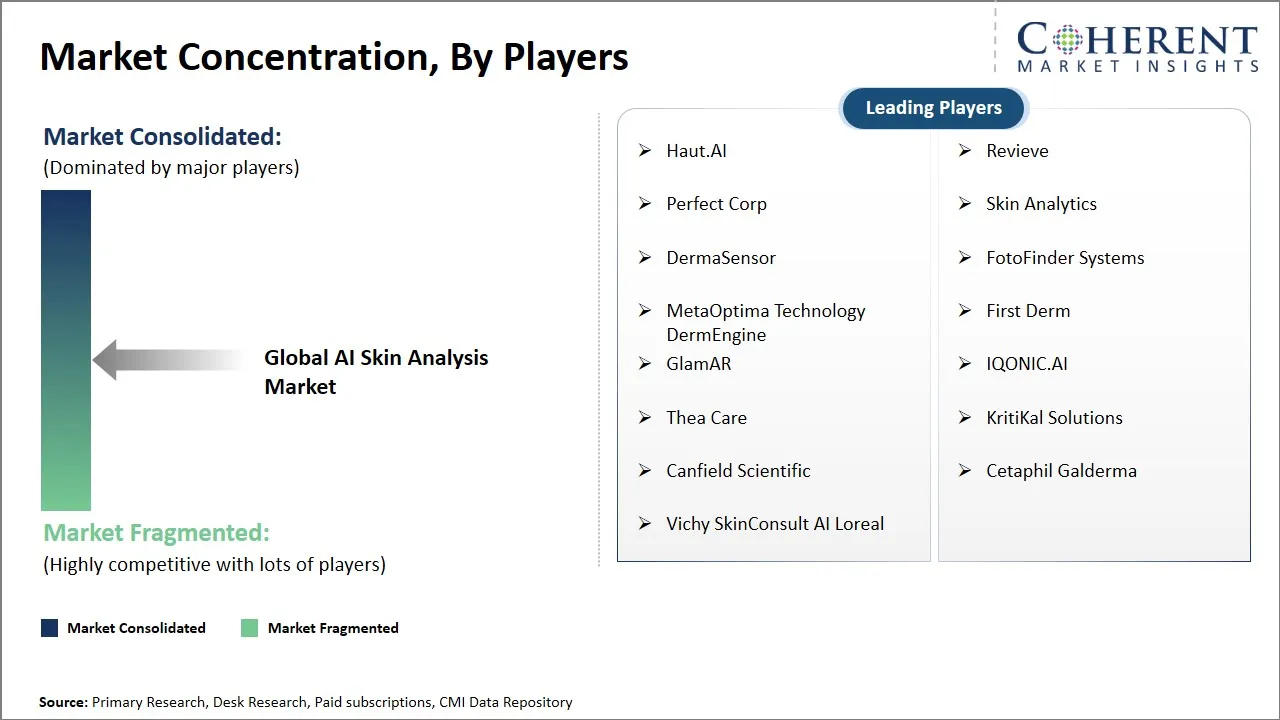
| Companies covered: | Haut.AI, Revieve, Perfect Corp, Skin Analytics, DermaSensor, FotoFinder Systems, MetaOptima Technology DermEngine, First Derm, GlamAR, IQONIC.AI, Thea Care, KritiKal Solutions, Canfield Scientific, Cetaphil Galderma, and Vichy SkinConsult AI Loreal | ||
| Growth Drivers: |
| ||
| Restraints & Challenges: |
| ||
AI Skin Analysis Market Dynamics
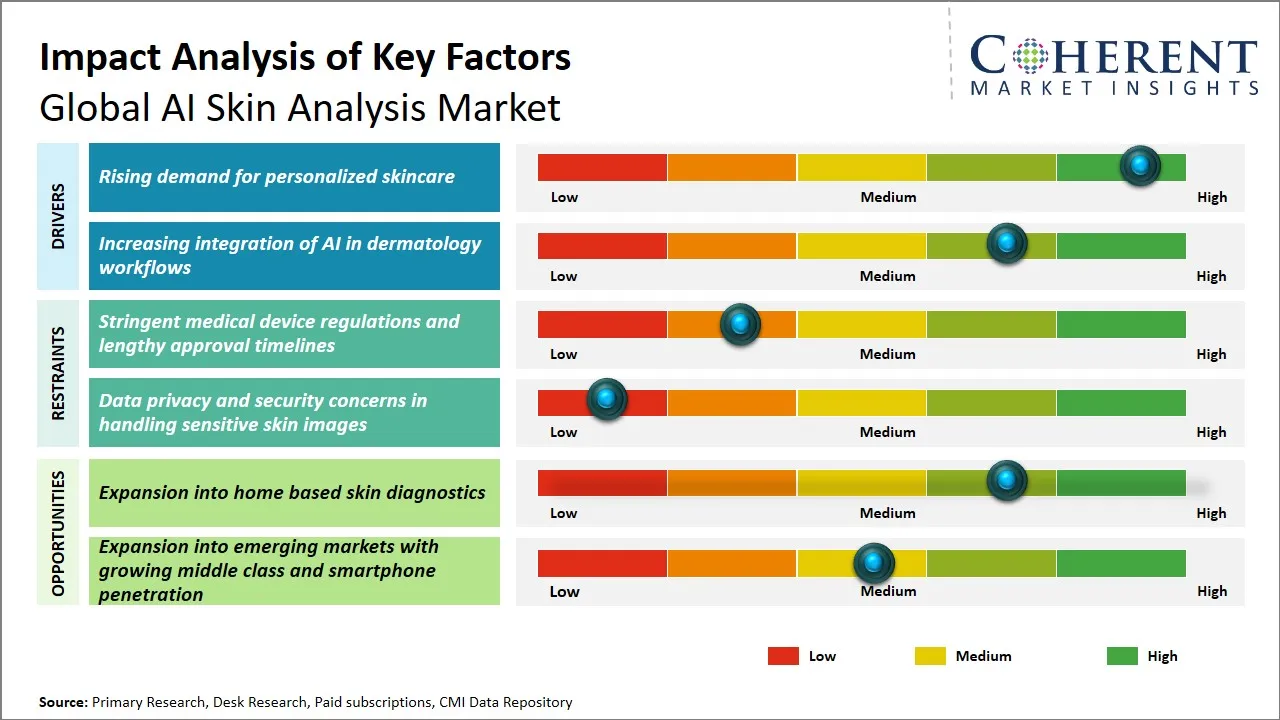
AI Skin Analysis Market Driver - Rising Demand for Personalized Skincare
The increasing consumer preference for personalized skincare is significantly fueling the adoption of AI-driven skin analysis technologies globally. With people increasingly understanding their individual skin types and other particular issues like acnes, pigmentation, and aging, the need to have specific skincare products has increased as a demand that exceeds generic ones. Skin analysis applications (with the help of AI) based on sophisticated algorithms and machine learning can offer extremely personalized suggestions, and they can evaluate the current state of the skin in real-time with the help of imaging and sensor data. Such a transition to personalization is not only more effective but also increases user involvement and satisfaction with the use of these technologies, which leads to their further use.
In July 2024, Perfect Corp., a global beauty-tech company known for its AI and AR solutions, introduced an upgraded HD AI Skin Analysis system with 2x higher-resolution scans to meet rising demand for personalized skincare. The tool delivers sharper evaluations, detects concerns by facial region, and supports precise recommendations for users, brands, and dermatologists.
AI Skin Analysis Market Opportunity - Expansion into Home-Based Skin Diagnostics
The increasing consumer interest in the personalized and convenient form of the skincare can be considered as an important chance toward the development of the AI skin analysis market in the sphere of home-based skin analysis. With the convergence of artificial intelligence and mobile technology, customers have expressed a desire to have devices that can enable them to regularly check on their skin condition without necessarily having to go to dermatologists and skin care experts. Home-based AI skin diagnostic tools and applications place the power of users to analyze different skin conditions like acne, wrinkles, pigmentation and hydration levels through smartphone-built cameras or specific cameras and give real-time information and tailored skincare suggestions.
In July 2025, Hyperlink InfoSystem, a global IT solutions provider known for building advanced AI-driven mobile and web platforms, reported how AI-powered skin diagnosis is transforming beauty e-commerce and home-based skin diagnostics. The company noted that AI tools now analyze selfies with near-clinical precision to detect issues such as pigmentation, acne, wrinkles, and dryness, enabling hyper-personalized product recommendations that raise conversions and cut return rates.
Analyst Opinion (Expert Opinion)
- The AI skin analysis industry is on the rise as consumers, clinics/beauty brands are increasingly using machine-learning models and high-resolution images as effective methods of providing fast, personalized skin analysis. The improved algorithms, the increased need to be more precise in skincare, and enabling policies in digital health stimulate growth, but such concerns as data quality and regulatory compliance still exist. Events like the World Dermatology Congress, International Conference on Digital Health or Global AI Summit have been significant because they serve as a way to introduce new tools and influence early standards.
- The current situation indicates a consistent improvement. Retailers and clinics are putting AI-controlled skin evaluation kiosks to the fore, worldwide beauty brands are incorporating AI engines into applications and smart mirrors, and various health care systems are testing AI-assisted screening initiatives. Such efforts and governmental measures to direct responsible application of AI are indicative of greater adoption in the future, and a market that is rapidly transitioning to mainstream application.
Speak to the analyst
Want personalized insights?
Take the findings above to one of our principal consultants, or have the report rebuilt around the segments, geographies and competitors you actually track.
Market Segmentation
- Component Insights (Revenue, USD Bn, 2021 - 2033)
- Software (AI Algorithms, Platforms, Mobile Apps)
- Hardware (Dermascopes, 3D Skin Scanners, High-Res Cameras, Smart Mirrors)
- Services (Integration, Maintenance, Consulting)
- Deployment Mode Insights (Revenue, USD Bn, 2021 - 2033)
- Cloud-Based
- On-Premise
- Technology Insights (Revenue, USD Bn, 2021 - 2033)
- Diagnostic AI (Disease Detection and Classification)
- Augmented Reality (AR) and Virtual Try-On (VTO)
- Predictive Analytics and Personalized Recommendations
- Others
- Application Insights (Revenue, USD Bn, 2021 - 2033)
- Dermatology and Clinical Diagnostics (Skin Cancer, Acne, Eczema, Psoriasis)
- Cosmetics and Personal Care (Product Recommendation, Efficacy Tracking, Routine Personalization)
- Wellness and Aesthetics (Aging Analysis, Sun Damage Assessment, Hydration/Wrinkle Tracking)
- Research and Development (Clinical Trials, Ingredient Testing, Biomarker Discovery, etc.)
- Device Type Insights (Revenue, USD Bn, 2021 - 2033)
- Handheld
- Fixed/Stationary
- Portable/Smartphone-Compatible Devices
- AI-Powered Imaging Kiosks
- End User Insights (Revenue, USD Bn, 2021 - 2033)
- Dermatology Clinics and Hospitals
- Aesthetic and Cosmetic Centers
- Diagnostic Labs
- Wellness and Med-SPA Centers
- Consumers (Direct-to-App Use)
- Regional Insights (Revenue, USD Bn, 2021 - 2033)
- North America
- U.S.
- Canada
- Latin America
- Brazil
- Argentina
- Mexico
- Rest of Latin America
- Europe
- Germany
- U.K.
- Spain
- France
- Italy
- Russia
- Rest of Europe
- Asia Pacific
- China
- India
- Japan
- Australia
- South Korea
- ASEAN
- Rest of Asia Pacific
- Middle East
- GCC Countries
- Israel
- Rest of Middle East
- Africa
- South Africa
- North Africa
- Central Africa
- North America
- Key Players Insights
- Haut.AI
- Revieve
- Perfect Corp
- Skin Analytics
- DermaSensor
- FotoFinder Systems
- MetaOptima Technology DermEngine
- First Derm
- GlamAR
- IQONIC.AI
- Thea Care
- KritiKal Solutions
- Canfield Scientific
- Cetaphil Galderma
- Vichy SkinConsult AI Loreal
Sources
Primary Research Interviews
- Industry Stakeholders
- Dermatologists
- Aesthetic clinic owners
- End Users
- Skincare consumers
- Teledermatology platform users
Government and International Databases
- World Health Organization (WHO)
- U.S. Food and Drug Administration (FDA)
- European Medicines Agency (EMA)
- National Institutes of Health (NIH)
- Centers for Disease Control and Prevention (CDC)
- OECD Health Statistics
Trade Publications
- Dermatology Times
- Skin Inc
- Aesthetic Medicine Magazine
- Digital Health Magazine
- Medical Device Network
- Healthcare IT News
Academic Journals
- Journal of the American Academy of Dermatology
- Nature Digital Medicine
- The Lancet Digital Health
- Journal of Dermatological Science
- IEEE Transactions on Medical Imaging
- International Journal of Dermatology
Reputable Newspapers
- The New York Times
- The Guardian
- The Washington Post
- Financial Times
- The Hindu
- Nikkei Asia
Industry Associations
- American Academy of Dermatology (AAD)
- European Academy of Dermatology and Venereology (EADV)
- International Society of Teledermatology
- American Telemedicine Association (ATA)
- International Association for the Study of Skin
- Digital Health Society
Public Domain Resources
- Google Scholar
- PubMed
- ClinicalTrials.gov
- World Bank Open Data
- EU Open Data Portal
- NHS Digital Library
Proprietary Elements
- CMI Data Analytics Tool: Proprietary analytics tool to analyze real-time market trends, consumer behavior, and technology adoption in market
- Proprietary CMI Existing Repository of Information for Last 8 Years
Get access to 250+ pages report
Every segment, forecast, competitor profile and data table behind the analysis above — available for instant download.
- ESOMAR Member
- ISO 9001:2015 Certified
- D-U-N-S Registered
- GDPR & CCPA Compliant
Missing comfort of reading report in your local language? Find your preferred language:
Transform your Strategy with Exclusive Trending Reports
Frequently Asked Questions
The global AI skin analysis market is estimated to be valued at USD 2.13 Bn in 2026 and is expected to reach USD 6.30 Bn by 2033.
The CAGR of the global AI skin analysis market is projected to be 16.8% from 2026 to 2033.
Rising demand for personalized skincare and increasing integration of AI in dermatology workflows are the major factors driving the growth of the global AI skin analysis market.
Stringent medical device regulations and lengthy approval timelines and data privacy and security concerns in handling sensitive skin images are the major factors hampering the growth of the global AI skin analysis market.
In terms of component, the software (AI algorithms, platforms, mobile apps) is estimated to dominate the market revenue share in 2026.
Haut.AI, Revieve, Perfect Corp, Skin Analytics, DermaSensor, FotoFinder Systems, MetaOptima Technology DermEngine, First Derm, GlamAR, IQONIC.AI, Thea Care, KritiKal Solutions, Canfield Scientific, Cetaphil Galderma, and Vichy SkinConsult AI Loreal are the major players.
North America is expected to lead the global AI skin analysis market in 2026.