

Pharmacovigilance Market Size and Forecast - 2026 to 2033
The global pharmacovigilance market is estimated to be valued at USD 8.71 Bn in 2026 and is expected to reach USD 15.42 Bn by 2033, exhibiting a compound annual growth rate (CAGR) of 8.5% from 2026 to 2033.
Key Takeaways
- By Clinical Trial Phases, Phase III segment will contribute 41.7% share of the global pharmacovigilance market in 2026. This is due to stringent regulatory compliance.
- By Type of method, Spontaneous Reporting segment holds the largest market share. This segment is expected to account for 36.71% of the market share in 2026 due to its wide acceptance.
- By Type of Service Provider, In-house segment has the largest share of the pharmacovigilance market with 61.7% in 2026 owing to tangible cost-control advantages over outsourcing.
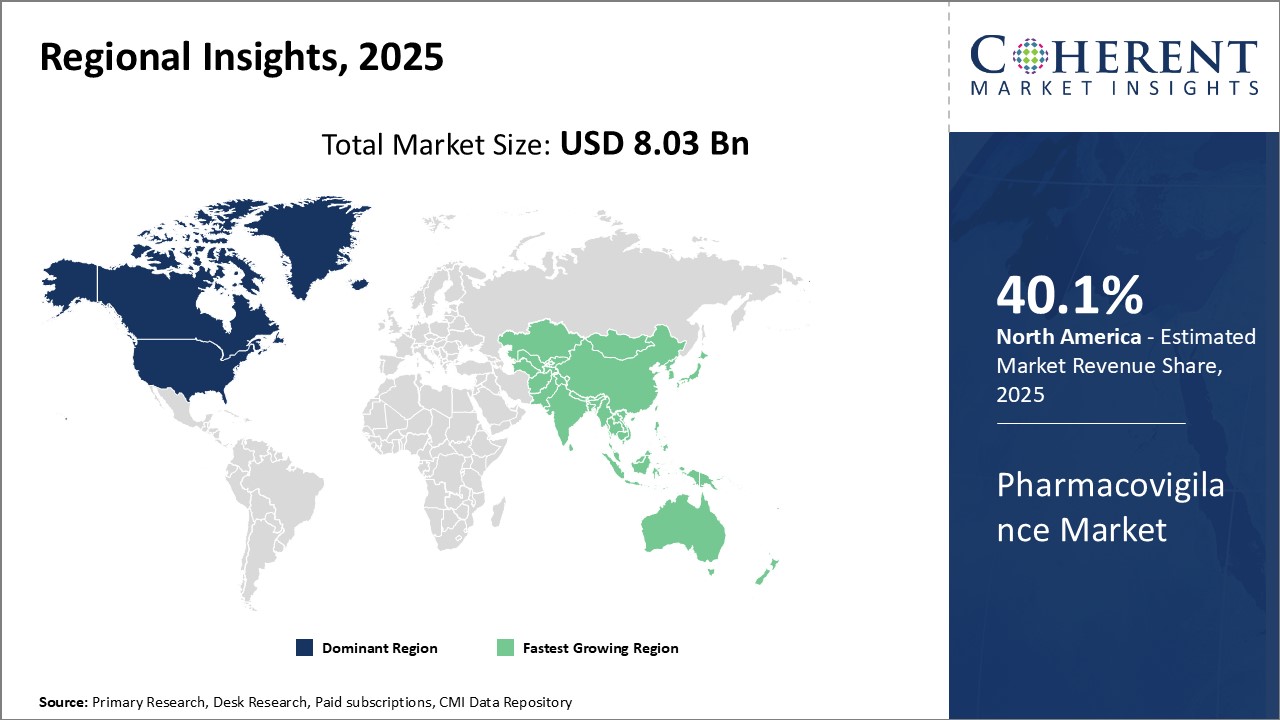
- North America is anticipated to hold 40.1% of the market share in 2026 due to stringent regulation requirements and the presence of key pharmaceutical firms and contract research organizations (CROs).
Market Overview
Pharmacovigilance Market demand is mainly fueled by the growing requirement for monitoring drug safety, particularly in the aftermath of heightened global consumption of drugs and regulatory oversight. As drug development and approval procedures become increasingly complicated, the necessity for efficient pharmacovigilance practices becomes more urgent than ever.
Pharmacovigilance services, encompassing adverse event reporting, risk management, and signal detection, are becoming essential parts of the healthcare environment.
Current Events and its Impact on the Market
Current Events | Description and its impact |
Increased Regulatory Scrutiny |
|
Integration of AI and Automation |
|
AI Integration in Pharmacovigilance Market
Artificial Intelligence (AI) plays a transformative role in the pharmacovigilance industry by automating and enhancing key drug safety processes. It accelerates adverse event detection, literature monitoring, and case processing by quickly analyzing vast datasets with high accuracy. AI-powered tools reduce manual workload, minimize human error, and enable faster decision-making, improving overall compliance and patient safety. Natural language processing (NLP) helps extract relevant information from unstructured sources, while machine learning models identify patterns and predict potential risks.
In July 2025, EVERSANA launched EVERSANA ORCHESTRATE PV, an AI-driven solution designed to streamline pharmacovigilance operations. The platform enhances key workflows like literature monitoring and aggregate reporting, delivering improved speed, accuracy, and quality. It automates and customizes processes for scalability, cutting operational timelines by up to 50% and reducing manual effort by 40%.
- Current Industry Events of 2026
- Market Size Estimation
- Regional Breakdown
- Competitive Landscape
- Customer Intelligence
- Segmental Analysis
- Pricing Analysis
- Key Market Drivers, Challenges & Future Trends
- Customized Insights Section
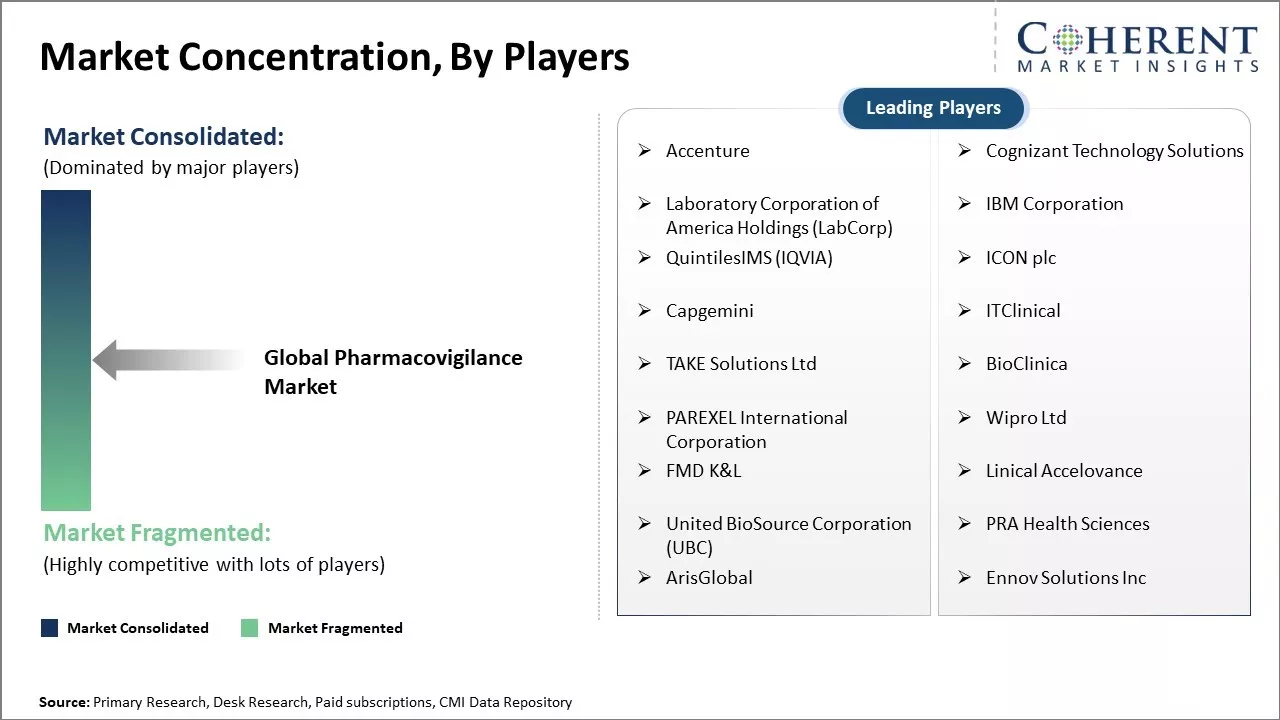
Market Concentration and Competitive Landscape
Market Dynamics
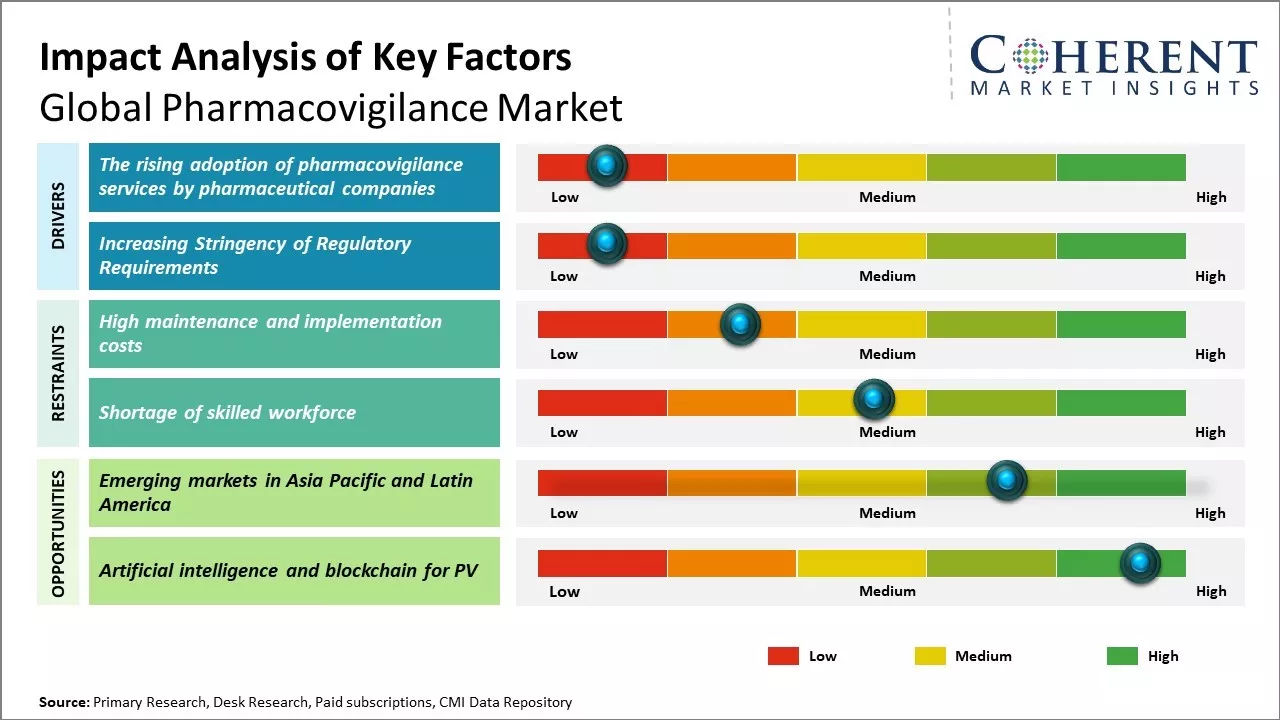
Pharmacovigilance market- Drivers
- Increasing Uptake of Pharmacovigilance Services by Drug Manufacturers
Pharmacovigilance services adoption by pharmaceutical organizations is increasing heavily because of stringent regulations for ensuring drug safety. Regulatory authorities such as FDA and EMA are imposing strict norms to monitor and ensure drug safety after marketing. This is pushing pharmaceutical organizations to outsource pharmacovigilance activities to expert Clinical Research Organizations (CROs) who possess experience and infrastructure to perform the services efficiently.
Pharmacovigilance outsourcing helps drug companies keep their core capabilities of drug discovery and development at the forefront, while leaving monitoring activities for drug safety to experts in CRO partners. Pharmaceutical companies gain advantage through access to cutting-edge technology, trained people and a combined global strategy toward safety reporting.
In 2024, ProPharma Group purchased Clinres Farmacija, a European-based clinical trial and pharmacovigilance firm. This purchase enhances ProPharma's pharmacovigilance service capabilities, adding to its post-market regulatory strengths.
- Increasing Stringency of Regulatory Requirements
The increasing stringency of regulatory requirements across various countries is expected to drive significant growth in the global pharmacovigilance market. With new drugs entering the market at an unprecedented rate and increasing complexity of drug safety profiles, regulatory authorities have instituted more rigorous legislation and safety standards.
Pharmaceutical companies are now mandated to conduct comprehensive safety profiling of drugs right from the early stages of development along with continual monitoring even post marketing. Compliance with regulatory norms has become absolutely critical for continued drug approvals and market access. The healthcare industry has also undergone intense scrutiny in the aftermath of several high-profile drug safety issues and failures.
Market Opportunity – Emerging markets in Asia Pacific and Latin America
The emerging markets in Asia Pacific and Latin America present a huge growth opportunity for the global pharmacovigilance market. These regions are experiencing rapid economic development which has lifted billions of people out of poverty and expanded the middle-class consumer base with increased spending power. As disposable incomes rise, healthcare systems are also undergoing modernization with greater investment.
This has resulted in larger patient populations gaining access to advanced medications for various chronic and life-threatening diseases. At the same time, the growth of the pharmaceutical industry has exploded in these regions to cater to the demands of their huge populations. Many large multinational drug manufacturers have set up manufacturing and R&D facilities within Asia Pacific and Latin America in recent years to reduce costs and be closer to their customer base.
Segmental Insights
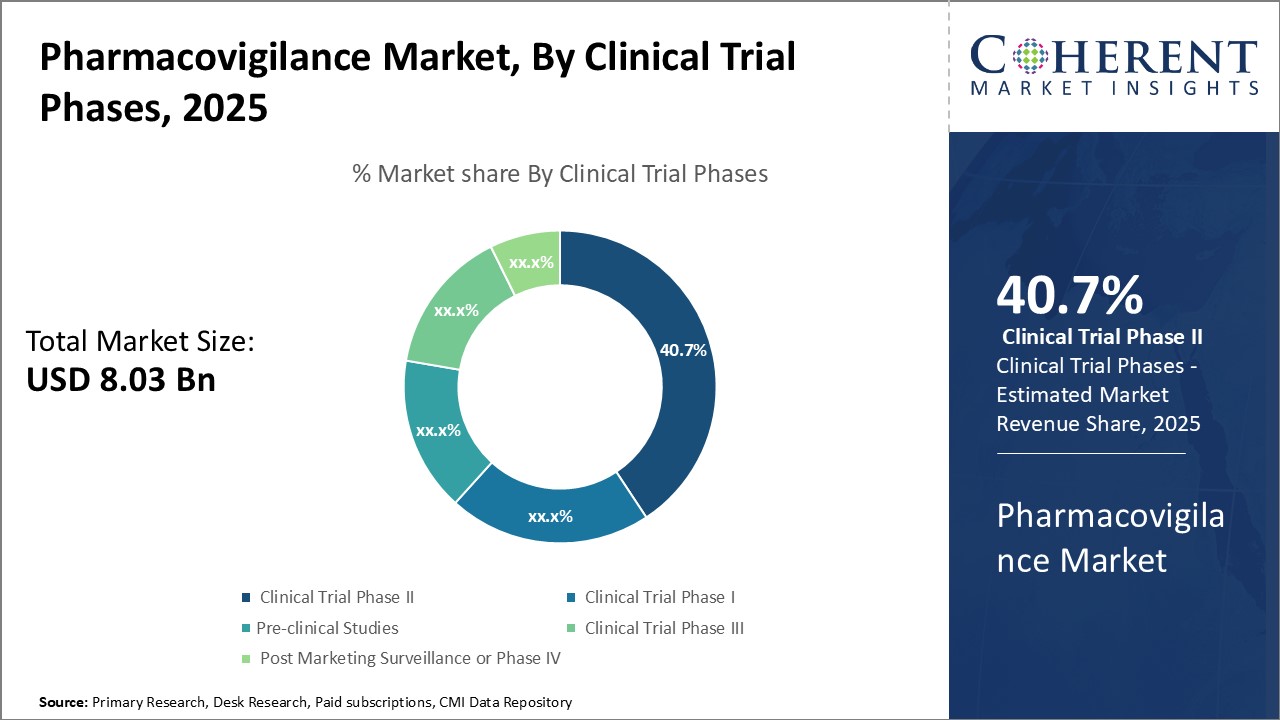
Global Pharmacovigilance market Insights, by Clinical Trial Phases
- Stringent Regulatory Requirements Drive Growth in Clinical Trial Phase III
The clinical trial phase III segment is expected to contribute highest share in 2026 owing to stringent regulatory requirements. Phase III trials involve several hundred to thousands of human participants and are intended to confirm the overall risk-benefit relationship of a drug and provide an adequate basis for labeling.
Regulatory authorities such as the USFDA and EMA have implemented extensive regulations for phase III trials to ensure drug safety before market approval. Sponsors are required to develop comprehensive risk management plans to monitor adverse events throughout the trial period. This involves maintaining robust pharmacovigilance systems to detect, assess, and prevent drug safety issues from harming participants.
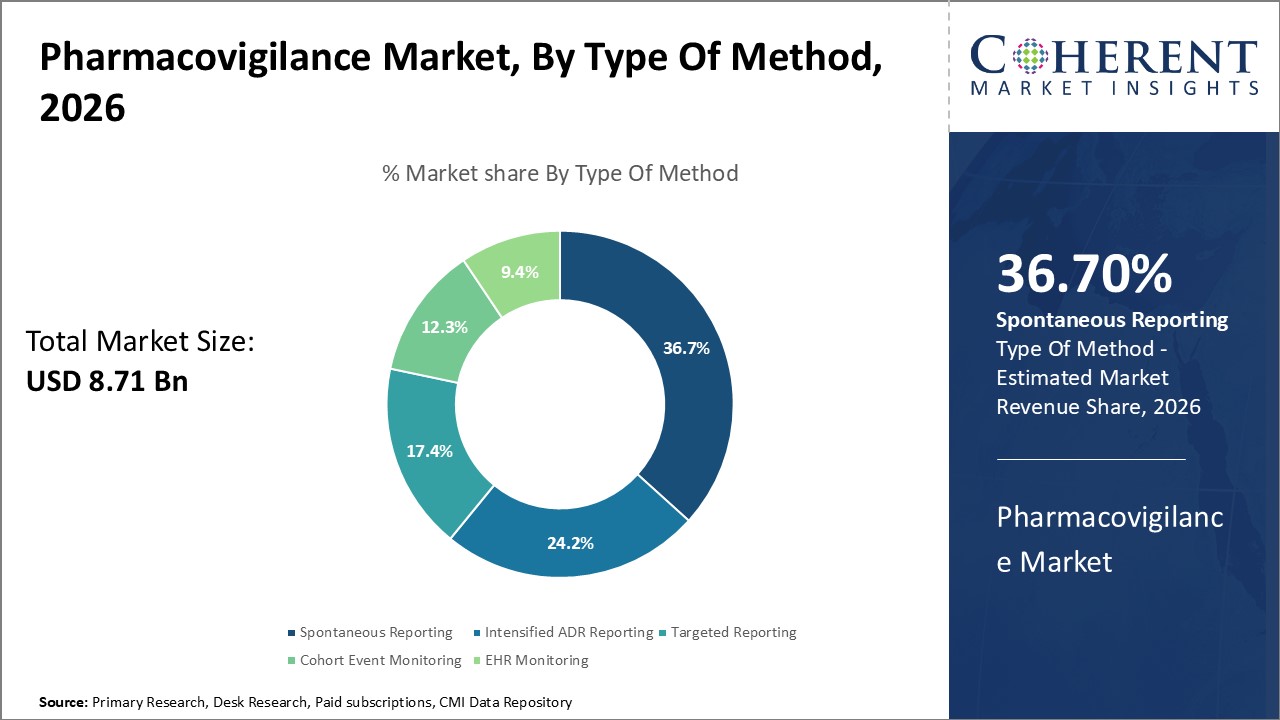
Global Pharmacovigilance Market Insights, by Type of Method
- Shift Towards Electronic Reporting Drives Spontaneous Reporting Segment
By Type of Method, Spontaneous Reporting Segment holds the largest market share. This is due to its wide acceptance. Traditionally, spontaneous reporting involved collecting adverse event reports using paper-based forms submitted voluntarily by healthcare professionals and consumers.
However, regulatory agencies are now pushing for electronic reporting standards to modernize pharmacovigilance practices. Mandates like E2B and ICH E2B(R3) specify structured format requirements and technical specifications for electronic transmission of individual case safety reports (ICSRs). Compliance with these standards enables centralized interoperable databases and advanced data analytics capabilities at the global level.
Global Pharmacovigilance market Insights, by Type of Service Provider
- In-House Segment Commands Highest Share from Cost Control Benefits
The in-house segment has the largest share of the pharmacovigilance market in 2026 owing to tangible cost-control advantages over outsourcing. In-house teams manage drug safety operations using a sponsor's own resources and facilities without involving third parties. Retaining pharmacovigilance capabilities internally offers direct oversight of processes to ensure strategic business priorities are addressed.
Regional Insights
North America Pharmacovigilance Market Analysis and Trends
North America has established itself as the dominant region in the global pharmacovigilance market. The region is home to some of the largest pharmaceutical companies in the world as well as many contract research organizations (CROs) specializing in pharmacovigilance services. Stringent regulatory requirements for drug safety monitoring imposed by regulatory bodies such as the FDA have driven significant investments by pharmaceutical and biotech firms in building robust pharmacovigilance systems.
Asia Pacific Pharmacovigilance Market Analysis and Trends
The Asia Pacific region has emerged as the fastest growing market for pharmacovigilance industry globally. This can be attributed to rising generics production, expanding clinical trials by multinational players and growing expertise of local CROs. India, in specific, has emerged as a world sourcing destination for pharmacovigilance services because of the availability of low-cost but skilled manpower.
Some of the major pharmaceutical corporations have set up regional pharmacovigilance centers or collaborated with Indian CROs in order to concentrate post-marketing safety activities. At the same time, drug regulators in Asia Pacific have also been enhancing regulations in connection with pharmacovigilance and encouraging safety best practices.
Global Pharmacovigilance Market Dominating Countries
United States Pharmacovigilance Market Analysis and Trend
United States dominates the pharmacovigilance market at the global level, adding a large contribution in terms of share owing to its well-established pharma sector and stringent regulation system. United States Food and Drug Administration (FDA) strictly ensures comprehensive practices in pharmacovigilance through its strict policies, boosting demand for safety monitoring services.
Presence of multinational pharmaceutical firms as well as Contract Research Organizations (CROs) further contributes to the boost, and therefore, the U.S. takes a leadership role in pharmacovigilance activity. Also, the increased uptake of new technologies like artificial intelligence and big data analytics is adding fuel to the market growth.
Market Report Scope
Pharmacovigilance Market Report Coverage
| Report Coverage | Details | ||
|---|---|---|---|
| Base Year: | 2025 | Market Size in 2026: | USD 8.71 Bn |
| Historical Data for: | 2020 To 2024 | Forecast Period: | 2026 To 2033 |
| Forecast Period 2026 to 2033 CAGR: | 8.5% | 2033 Value Projection: | USD 15.42 Bn |
| Geographies covered: |
| ||
| Segments covered: |
| ||
| Companies covered: | Accenture, Cognizant Technology Solutions, Laboratory Corporation of America Holdings (LabCorp), IBM Corporation, QuintilesIMS (IQVIA), ICON plc, Capgemini, ITClinical, TAKE Solutions Ltd, BioClinica, PAREXEL International Corporation, Wipro Ltd, FMD K&L, Linical Accelovance, United BioSource Corporation (UBC), PRA Health Sciences, ArisGlobal, and Ennov Solutions Inc | ||
| Growth Drivers: |
| ||
| Restraints & Challenges: |
| ||
Pharmacovigilance Recent Development
- In February, 2024, Robert Ball, Deputy Director of the USFDA Office of Surveillance and Epidemiology (OSE), announced at the DIA Global Pharmacovigilance and Risk Management Strategies Conference in Baltimore that the FDA is enhancing its pharmacovigilance efforts with artificial intelligence.
- In January 2025, DIA explored AI integration in safety workflows and the role of real-world evidence (RWE) at its Global Pharmacovigilance and Risk Management Strategies Conference.
- In 2024, Cognizant introduced machine learning-driven solutions to automate the processing of pharmacovigilance cases. This innovation improves the accuracy and speed of adverse drug reaction (ADR) detection.
Key Takeaways from Analyst
- The global pharmacovigilance market is poised to experience significant growth over the forecast period driven by the increasing need for the safety monitoring of drugs post marketing approval. Stringent regulatory requirements for pharmacovigilance across major countries are also propelling the demand for pharmacovigilance services.
- North America currently dominates the market owing to stringent regulatory mandates and presence of leading outsourcing companies. However, Asia Pacific is expected to grow at the fastest pace supported by increasing generic drug manufacturing in countries like China and India.
- Outsourcing of pharmacovigilance activities to specialty service providers is becoming a global trend among pharmaceutical companies aiming to optimize costs and focus on their core operations. On the other hand, lack of skilled workforce and competing demands can hamper the market growth to some extent. Emergence of novel drugs like biologics and cell and gene therapies also presents significant opportunities with respect to novel safety monitoring mechanisms. Adoption of advanced technologies like artificial intelligence and Blockchain for signal detection is likely to revolutionize pharmacovigilance practices going forward. Such disruptions will make the safety monitoring more proactive, precise and cost-effective.
Market Segmentation
- Clinical Trial Phases Insights (Revenue, USD Bn, 2026 - 2033)
- Pre-clinical Studies
- Clinical Trial Phase I
- Clinical Trial Phase II
- Clinical Trial Phase III
- Post Marketing Surveillance or Phase IV
- Method Insights (Revenue, USD Bn, 2026 - 2033)
- Spontaneous Reporting
- Intensified ADR Reporting
- Targeted Reporting
- Cohort Event Monitoring
- EHR Monitoring
- Service Provider Insights (Revenue, USD Bn, 2026 - 2033)
- In-House
- Contract Outsourcing
- Regional Insights (Revenue, USD Bn, 2026 - 2033)
- North America
- U.S.
- Canada
- Latin America
- Brazil
- Argentina
- Mexico
- Rest of Latin America
- Europe
- Germany
- U.K.
- Spain
- France
- Italy
- Russia
- Rest of Europe
- Asia Pacific
- China
- India
- Japan
- Australia
- South Korea
- ASEAN
- Rest of Asia Pacific
- Middle East
- GCC Countries
- Israel
- Rest of Middle East
- Africa
- South Africa
- North Africa
- Central Africa
- North America
- Key Players Insights (Revenue, USD Bn, 2021 - 2033)
- Accenture
- Cognizant Technology Solutions
- Laboratory Corporation of America Holdings (LabCorp)
- IBM Corporation
- QuintilesIMS (IQVIA)
- ICON plc
- Capgemini
- ITClinical
- TAKE Solutions Ltd
- BioClinica
- PAREXEL International Corporation
- Wipro Ltd
- FMD K&L
- Linical Accelovance
- United BioSource Corporation (UBC)
- PRA Health Sciences
- ArisGlobal
- Ennov Solutions Inc
Sources
Primary Research Interviews
- Pharmaceutical company safety officers
- Regulatory affairs specialists (e.g., EMA, FDA personnel)
- Clinical research organization (CRO) representatives
- Healthcare providers specializing in adverse event reporting
- Others
Databases
- IQVIA Adverse Event Reporting System (AERS)
- Citeline Pharmacovigilance Intelligence
- ResearchAndMarkets.com Pharmacovigilance Database
- Others
Magazines
- Pharmaceutical Executive
- PharmaTech Outlook
- Clinical Trials Arena
- Others
Journals
- Drug Safety (International Society of Pharmacovigilance)
- Journal of Pharmacovigilance and Drug Safety
- Therapeutic Advances in Drug Safety
- Others
Newspapers
- Pharmaceutical Technology
- PharmiWeb.com
- Others
Associations
- International Society of Pharmacovigilance (ISoP)
- Drug Information Association (DIA)
- International Federation of Pharmaceutical Manufacturers & Associations (IFPMA)
- Others
Public Domain Sources
- U.S. FDA Adverse Event Reporting System (FAERS)
- European Medicines Agency (EMA) EudraVigilance
- World Health Organization (WHO) VigiBase
- PubMed Central (PMC)
- Others
Proprietary Elements
- CMI Data Analytics Tool
- Proprietary CMI Existing Repository of information for last 8 years
*Definition: The global pharmacovigilance market refers to the process of detection, assessment, understanding, and prevention of adverse effects associated with drugs and medical products. It involves monitoring the effects of medical drugs after they have been approved for marketing, especially looking into adverse effects and documenting information about hazards. The global pharmacovigilance market generally consists of drug manufacturers, contract service providers, regulatory authorities like FDA that monitor the safety of marketed drugs and medical devices. Timely identification and management of risks related to drug safety helps minimize health issues and protects patients.
Get access to 250+ pages report
Every segment, forecast, competitor profile and data table behind the analysis above — available for instant download.
- ESOMAR Member
- ISO 9001:2015 Certified
- D-U-N-S Registered
- GDPR & CCPA Compliant
Missing comfort of reading report in your local language? Find your preferred language:
Transform your Strategy with Exclusive Trending Reports
Frequently Asked Questions
The global Market is estimated to be valued at USD 8.71 Bn in 2026, and is expected to reach USD 15.42 Bn by 2033.
The CAGR of the Pharmacovigilance Market is projected to be 8.5% from 2026 to 2033.
High maintenance and implementation costs and shortage of skilled workforce are the major factors hampering the growth of the global pharmacovigilance industry.
In terms of clinical trial phases, clinical trial phase II is estimated to dominate the market revenue share in 2026.
Accenture, Cognizant Technology Solutions, Laboratory Corporation of America Holdings (LabCorp), IBM Corporation, QuintilesIMS (IQVIA), ICON plc, Capgemini, ITClinical, TAKE Solutions Ltd, BioClinica, PAREXEL International Corporation, Wipro Ltd, FMD K&L, Linical Accelovance, United BioSource Corporation (UBC), PRA Health Sciences, ArisGlobal, and Ennov Solutions Inc are the major players.
North America is expected to lead the global pharmacovigilance industry with 40.1% shares in 2026.