

Alloy Steel Market Size And Share Analysis - Growth Trends And Forecasts (2026-2033)
Global alloy steel market is estimated to be valued at USD 153.90 Bn in 2026 and is expected to reach USD 202.47 Bn by 2033, exhibiting a compound annual growth rate (CAGR) of 4.0% from 2026 to 2033.
Key Takeaways
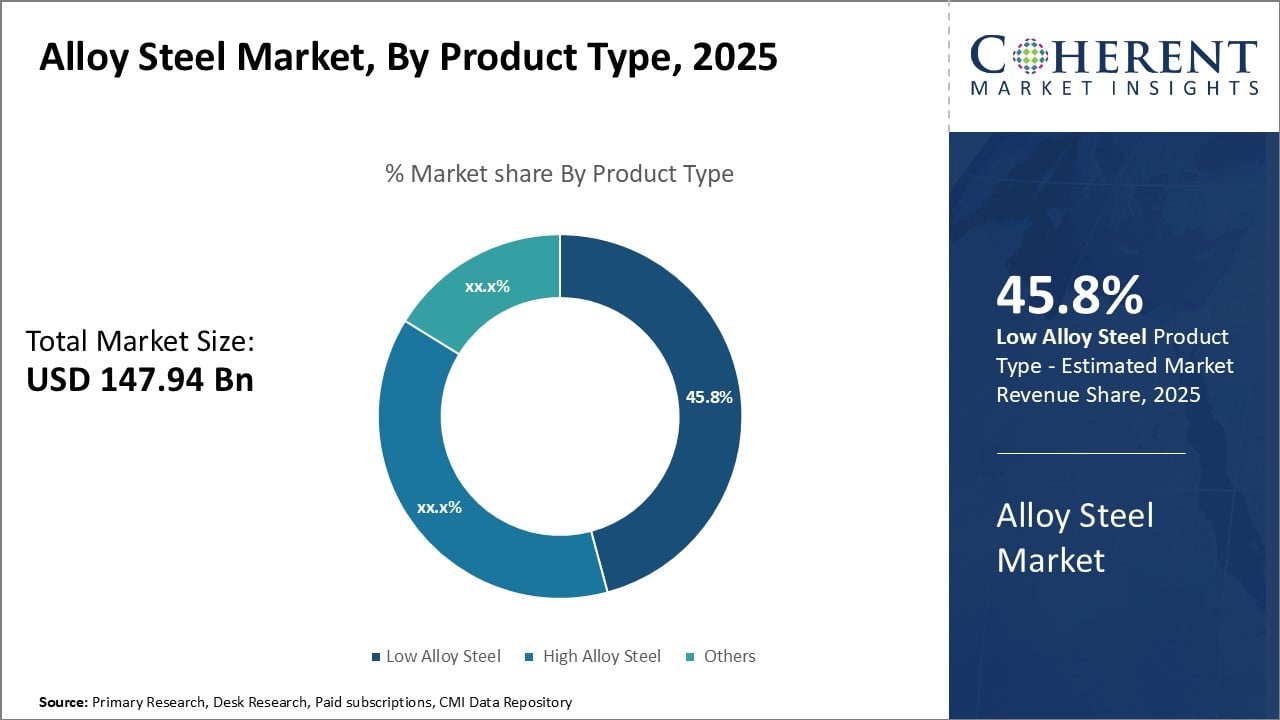
- By Product Type, The Low Alloy Steel Segment is projected to dominate the global alloy steel market with a substantial 46.8% share in 2026.
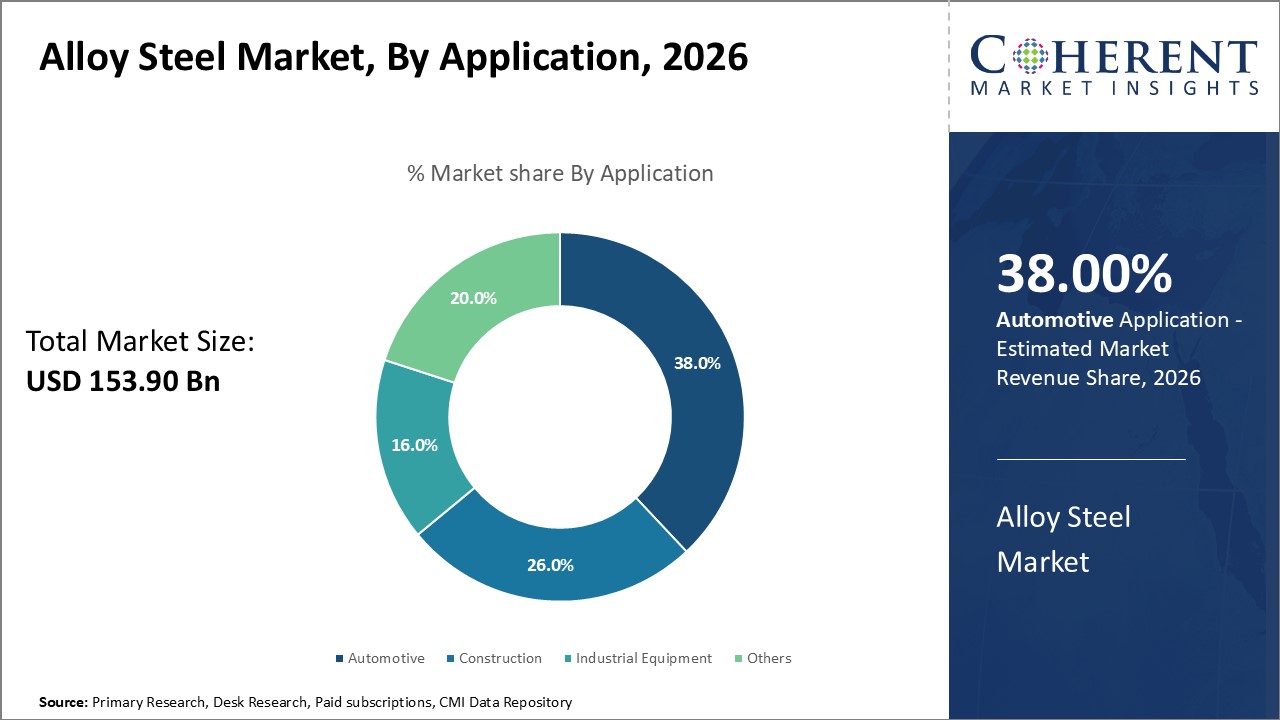
- By Application, the automotive segment is expected to hold the largest share 38.0% of the alloy steel market in 2026, driven by rising global vehicle production and the demand for lightweight yet durable components.
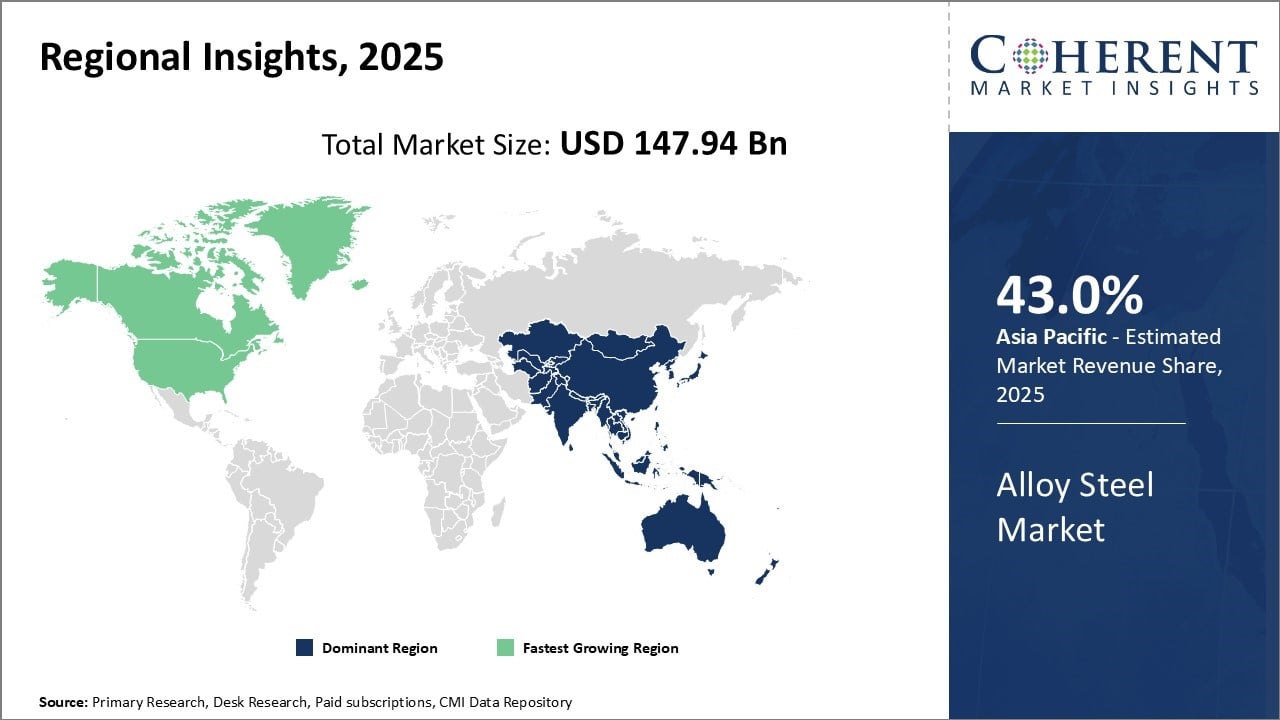
- Asia Pacific is projected to lead the global alloy steel market with a commanding 43.0% share in 2026.
Market Overview
The global Alloy Steel Market is experiencing robust growth, driven by rising demand from the automotive, construction, and energy sectors. Low alloy steel remains a preferred material due to its high strength, durability, and cost-effectiveness across structural and industrial applications. Automotive production and infrastructure development in emerging economies are accelerating market expansion.
Current Events and its Impact on The Alloy Steel Market
Current Event | Description and its impact |
Sustainability and Green Steel Production |
|
Infrastructure & Industrial Investment |
|
Automotive & EV Industry Transformation |
|
Pricing Analysis: Alloy Steel Market
The pricing of alloy steel is influenced by several key factors, including raw material costs (iron ore, chromium, nickel, and manganese), energy prices, global demand cycles, and geopolitical trade policies.
In 2025, alloy steel prices remain moderately volatile due to fluctuating input costs and shifting supply-demand dynamics. Low alloy steel, widely used in automotive and construction industries, typically commands lower prices than high alloy grades due to simpler processing and lower alloy content.
High alloy steels such as stainless and heat-resistant grades carry premium pricing, often 20–40% higher, driven by their specialized properties and costly alloying elements like nickel and molybdenum.
Asia Pacific remains the most price-competitive region due to abundant raw material availability and lower labour costs, while North America and Europe see higher pricing due to stricter environmental regulations and higher operational expenses. As sustainability becomes a greater priority, green alloy steel options are emerging at higher price points, reflecting their cleaner production processes.
- Current Industry Events of 2026
- Market Size Estimation
- Regional Breakdown
- Competitive Landscape
- Customer Intelligence
- Segmental Analysis
- Pricing Analysis
- Key Market Drivers, Challenges & Future Trends
- Customized Insights Section
Role of Advanced Technology in the Alloy Steel Market
Advanced technology plays a pivotal role in transforming the alloy steel market by enhancing production efficiency, material quality, and sustainability. Innovations such as electric arc furnaces (EAFs), vacuum degassing, and continuous casting have significantly improved alloy steel purity, strength, and consistency, enabling manufacturers to meet stringent performance standards across automotive, aerospace, and energy sectors.
Automation, AI-driven process control, and predictive maintenance systems are optimizing mill operations, reducing downtime, and improving yield. Moreover, Industry 4.0 integration is enabling real-time monitoring of chemical composition and mechanical properties, ensuring precise alloying and reducing material waste.
Advanced simulation tools and metallurgical modelling are also expediting product development cycles by predicting material behaviour under extreme conditions. Additionally, green technologies like hydrogen-based reduction and carbon capture are helping alloy steel producers meet environmental regulations, supporting the shift toward low-carbon, sustainable steel production. These advancements collectively strengthen the market’s competitiveness and long-term viability.
Alloy Steel Market Trends
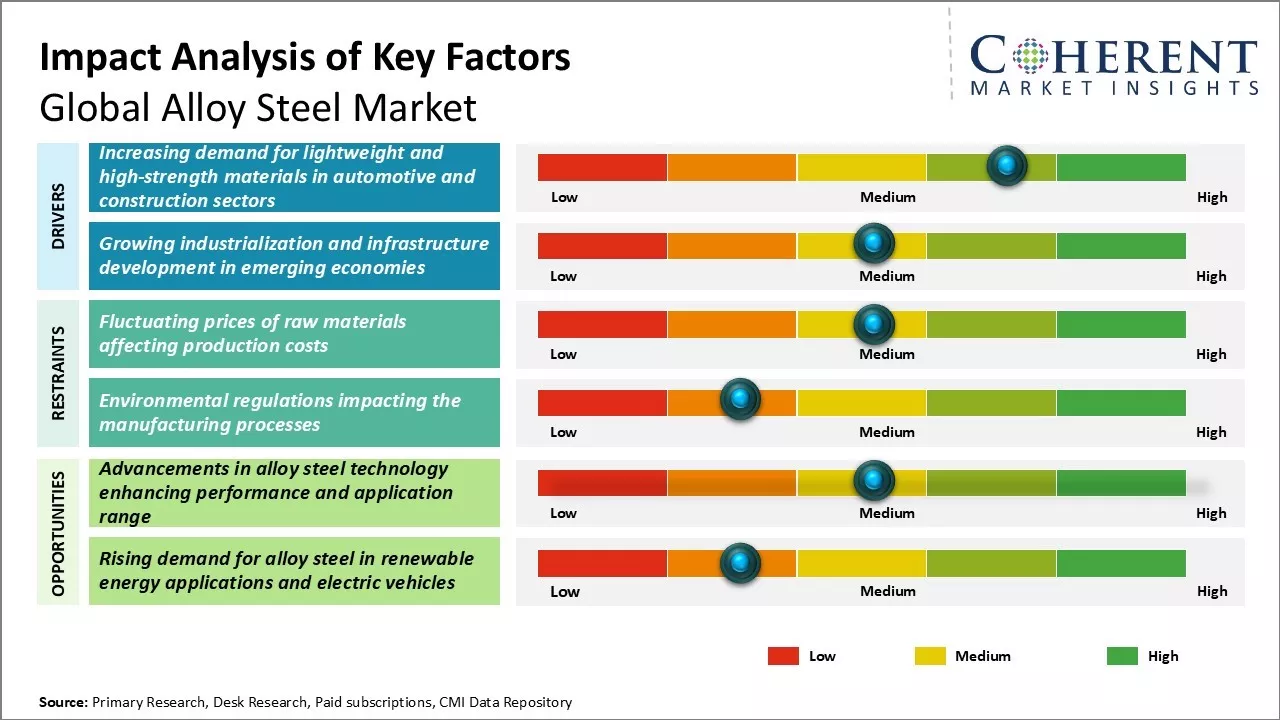
- Increasing demand for lightweight and high-strength materials in automotive and construction sectors
The automotive and construction industries have witnessed huge demand for materials that can endure heavy loads while keeping weight minimal. Alloy steels have emerged as a versatile solution, owing to their unique strength-to-weight ratio achieved by careful manipulation of alloying elements. In automotive, reducing vehicle weight through lightweight components significantly boosts fuel efficiency as lesser mass needs to be propelled.
In January 2024, the U.S. Energy Information Administration (EIA) reported that hybrid vehicles, plug-in hybrids, and battery electric vehicles (BEVs) collectively made up 16.3% of all new light-duty vehicle (LDV) sales in the United States in 2023. This marks a significant increase from 12.9% in 2022, reflecting growing consumer adoption of electrified vehicle technologies.
In April 2025, The Times of India reported that the Indian government has imposed a 12% safeguard duty on imports of specific alloy and non‑alloy steel flat products (e.g., hot‑rolled coils, cold‑rolled sheets). This measure, effective for 200 days, aims to shield domestic manufacturers especially SMEs from cheap foreign steel, stabilize local production, and support alloy steel market growth.
Challenges In the Alloy Steel Market
- Fluctuating prices of raw materials affecting production costs
The market has been witnessing fluctuations in raw material prices such as iron ore, chromium, nickel, and manganese. Alloy steel production is a raw material-intensive process, and unstable raw material pricing poses significant challenges to producers. Sudden spikes in input costs squeeze profit margins for manufacturers.
For instance, iron ore prices rose over 50% in 2021 amid supply constraints and strong steel demand from China. Producers found it difficult to pass on the increased costs to customers in the short term.
Opportunities In the Alloy Steel Market
- Advancements in alloy steel technology enhancing performance and application range
The market is witnessing significant advancements that are enhancing the performance characteristics as well as the range of applications for alloy steel products. Leading producers are investing heavily in research and development to develop new grades of alloy steels with advanced properties.
For example, enhanced corrosion resistance grades allow alloy steel to be used in aggressively corrosive environments like offshore oil platforms. New micro-alloyed steel varieties exhibit superior strength-to-weight ratio, expanding the use of alloy steel in automotive and other weight-critical applications.
Segmental Insights
Global Alloy Steel Market Insights, By Product Type
The low alloy steel segment is projected to dominate the global alloy steel market with a substantial 46.8% share in 2026. This leadership stems from its remarkable versatility, cost-efficiency, and extensive usage across key sectors such as automotive, construction, energy, and heavy machinery.
Low alloy steel offers an ideal combination of mechanical strength, ductility, weldability, and corrosion resistance, making it suitable for a wide range of structural and load-bearing applications. As global industries prioritize both performance and affordability, especially in emerging economies, low alloy steel continues to be the material of choice for demanding environments.
Global Alloy Steel Market Insights, By Application
The automotive segment is expected to hold the largest share 38.0% of the alloy steel market in 2026, driven by the increasing global production of vehicles and the demand for high-performance materials in powertrain and structural components. Alloy steel plays a critical role in enhancing vehicle safety, durability, and fuel efficiency.
It is widely used in engine parts, suspension systems, drive shafts, and gear assemblies due to its fatigue resistance and superior tensile strength. With the rise of electric vehicles and stricter emission norms, automakers are increasingly integrating advanced alloy steel grades to meet evolving design and performance requirements.
Global Alloy Steel Market – Regional Insights
Asia Pacific Alloy Steel Market Trends and Analysis
Asia Pacific is projected to lead the global alloy steel market, accounting for a commanding 43.0% share in 2026. This regional dominance is driven by rapid industrialization, expansive infrastructure development, and a thriving automotive manufacturing base in key countries such as China, India, and Japan. The region benefits from a robust network of domestic alloy steel producers, lower labour and raw material costs, and increasing demand from end-use industries including construction, machinery, and energy.
Governments across the region are investing heavily in smart cities, renewable energy, and transportation corridors, and defence infrastructure projects that require high-performance steel components. Furthermore, rising vehicle ownership, especially in emerging economies, continues to fuel alloy steel consumption in automotive applications.
The integration of advanced production technologies, growing foreign investments in steel capacity, and regional trade agreements further reinforce Asia Pacific’s leadership in the global alloy steel market, making it a key growth engine for the foreseeable future.
Alloy Steel Market Dominating Countries
China
China stands as the dominant force in the global alloy steel market, backed by its vast steel production capacity, government-supported infrastructure investments, and leading role in global manufacturing. As the world's largest steel producer, China accounts for a significant portion of global alloy steel output. Its demand is driven by large-scale applications in construction, automotive, shipbuilding, and heavy machinery.
The government’s focus on high-speed rail, smart city development, and energy transition projects continues to boost alloy steel consumption. Moreover, domestic producers are increasingly integrating low-emission and high-performance technologies to meet international quality and environmental standards, bolstering their competitiveness in export markets.
India
India is rapidly emerging as a key contributor to the alloy steel market, fuelled by its fast-growing automotive sector, expansive infrastructure pipeline, and Make-in-India initiatives. The government’s heavy investments in roads, railways, and renewable energy projects create strong demand for structural and specialty alloy steels.
Additionally, local alloy steel producers benefit from cost-effective labour, abundant raw materials, and a supportive policy environment. As India transitions into a global manufacturing hub, its share in the alloy steel value chain is poised to grow significantly.
Market Concentration and Competitive Landscape
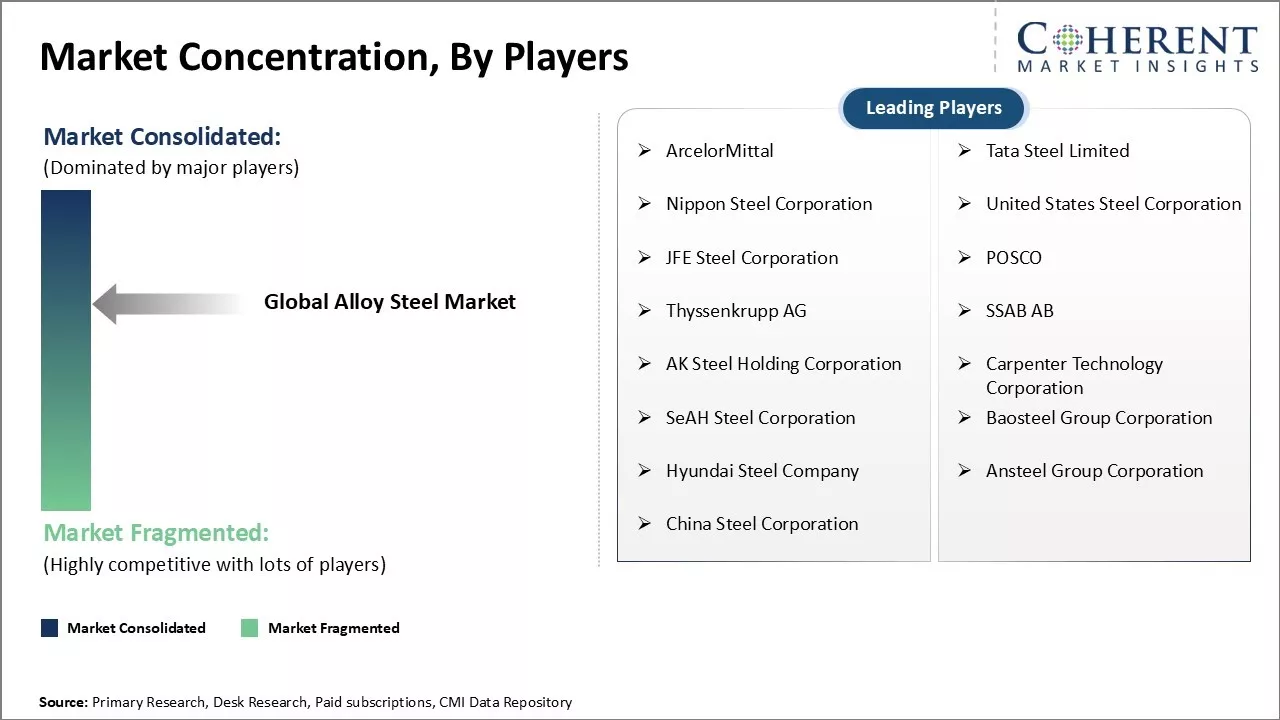
Top Strategies Followed by Global Alloy Steel Market Players
- Established players heavily invest in research and development to innovate new high-performance alloy steel products. Companies like ArcelorMittal, POSCO, and Nippon Steel engage in extensive R&D, allotting over 5% of their annual revenue. Leading players also form strategic alliances with major automotive and industrial equipment manufacturers. For instance, In May 2023, JSW Steel partnered with Japan's JFE Steel to establish a 50:50 joint venture for manufacturing cold-rolled grain-oriented electrical steel in India. This collaboration aims to leverage technological expertise and cater to the growing demand for specialized steel products.
- Mid-level alloy steel companies competitively price their products to target cost-conscious buyers. These players also collaborate through joint ventures or equipment sharing to optimize costs and boost capabilities.
- Smaller firms typically focus on niche markets, offering specialized products and services to differentiate themselves. They may also form non-equity strategic alliances to enhance capabilities without significant capital investment.
Emerging Startups in the Global Alloy Steel Market
Several startups are developing innovative alloy steel-based technologies with the potential to influence market trends. Boston Metal has developed a groundbreaking molten oxide electrolysis (MOE) process that eliminates the need for coal in steel production, thereby significantly reducing carbon emissions. In March 2024, the company launched its first commercial application in Brazil, focusing on extracting high-value metals from mining waste.
Electra, based in Boulder, Colorado, is revolutionizing steelmaking by operating at significantly lower temperatures (around 60°C) using renewable energy. This innovative approach allows for quick start and stop operations, facilitating integration with intermittent renewable resources like wind and solar. In 2024, Electra opened its first pilot plant and partnered with U.S. steel giant Nucor.
Alloy Steel Industry News
- In October 2023, Shyam Metalics and Energy Ltd., an Indian steel company, acquired Mittal Corp. Limited for USD 4.3 million (₹351 crore). This strategic acquisition allows Shyam Metalics to broaden its product offerings to include stainless steel and specialty products, enhancing its position in the steel industry. The move aligns with the company's growth strategy and ambition to establish itself as a leading player in India's steel market. Mittal Corp. Limited, based in India, specializes in manufacturing of stainless-steel products, including alloy steel.
- In August 2023, India-based Jindal Stainless Ltd. unveiled a specialized high-strength alloy steel grade, marking a breakthrough in domestic production. This advanced material, traditionally imported from global suppliers, is now being supplied to the Indian Space Research Organization (ISRO). Developed over three years using advanced refining processes, the new alloy highlights a major milestone in India's self-reliance in high-tech manufacturing.
Market Report Scope
Alloy Steel Market Report Coverage
| Report Coverage | Details | ||
|---|---|---|---|
| Base Year: | 2025 | Market Size in 2026: | USD 153.90 Bn |
| Historical Data for: | 2020 To 2024 | Forecast Period: | 2026 To 2033 |
| Forecast Period 2026 to 2033 CAGR: | 4.0% | 2033 Value Projection: | USD 202.47 Bn |
| Geographies covered: |
| ||
| Segments covered: |
| ||
| Companies covered: | ArcelorMittal, Tata Steel Limited, Nippon Steel Corporation, United States Steel Corporation, JFE Steel Corporation, POSCO, Thyssenkrupp AG, SSAB AB, AK Steel Holding Corporation, Carpenter Technology Corporation, SeAH Steel Corporation, Baosteel Group Corporation, Hyundai Steel Company, Ansteel Group Corporation, and China Steel Corporation | ||
| Growth Drivers: |
| ||
| Restraints & Challenges: |
| ||
Analyst Viewpoint – Alloy Steel Market
- The global alloy steel market, driven by rising industrial activity, infrastructure expansion, and sustained demand from the automotive, construction, and energy sectors. The market is expected to benefit from increasing investments in renewable energy, transportation upgrades, and lightweight, high-strength materials for modern engineering applications.
- Experts highlight strong demand for low alloy steel due to its cost-effectiveness, mechanical strength, and broad applicability. Simultaneously, high alloy steel grades are gaining momentum in specialized industries such as aerospace, oil & gas, and power generation where heat and corrosion resistance are critical.
- Asia Pacific continues to dominate the market, backed by a strong manufacturing base, low production costs, and large-scale government infrastructure initiatives. Meanwhile, regions like North America and Europe are advancing through technological innovation, sustainability initiatives, and the transition to green steel production.
- Looking ahead, analysts believe that advancements in metallurgy, digitization of steel production, and global efforts toward decarbonisation will shape the future competitiveness and sustainability of the alloy steel industry.
Alloy Steel Market: Key Development
- February 2025: Alleima launched Alleima TD, a high-temperature alloy designed for industries such as aerospace and automotive. The alloy ensures reliable performance in extreme temperatures up to 1,250°C, supporting applications in mineral-insulated cables, measurements, and heating systems.
- February 2025: Nissan adopted NSCarbolexTM Neutral, a green steel from Nippon Steel, for its mass-produced vehicles to reduce CO2 emissions and cut lifecycle emissions by 30%.
Market Segmentation
- Product Type Insights (Revenue, USD Bn, 2021 - 2033)
- Low Alloy Steel
- High Alloy Steel
- Others
- Application Insights (Revenue, USD Bn, 2021 - 2033)
- Automotive
- Construction
- Industrial Equipment
- Others
- Regional Insights (Revenue, USD Bn, 2021 - 2033)
- North America
- U.S.
- Canada
- Latin America
- Brazil
- Argentina
- Mexico
- Rest of Latin America
- Europe
- Germany
- U.K.
- Spain
- France
- Italy
- Russia
- Rest of Europe
- Asia Pacific
- China
- India
- Japan
- Australia
- South Korea
- ASEAN
- Rest of Asia Pacific
- Middle East
- GCC Countries
- Israel
- Rest of Middle East
- Africa
- South Africa
- North Africa
- Central Africa
- North America
- Key Players Insights
- ArcelorMittal
- Tata Steel Limited
- Nippon Steel Corporation
- United States Steel Corporation
- JFE Steel Corporation
- POSCO
- Thyssenkrupp AG
- SSAB AB
- AK Steel Holding Corporation
- Carpenter Technology Corporation
- SeAH Steel Corporation
- Baosteel Group Corporation
- Hyundai Steel Company
- Ansteel Group Corporation
- China Steel Corporation
Sources
The Stakeholders Consulted
- Alloy steel manufacturers and suppliers
- Automotive, construction, and heavy machinery OEMs
- Steel industry plant managers and metallurgical engineers
- Government agencies overseeing steel trade and emissions
- Procurement managers in oil & gas, energy, shipbuilding, and rail industries
- Regulatory bodies on environmental compliance and industrial emissions
- Research institutions specializing in metallurgy and materials science
- Infrastructure and urban development authorities
- Public and private sector end-users across automotive, aerospace, energy, defense, and construction
Databases Opened
- U.S. Geological Survey (USGS) – Steel & Metals Commodity Data
- International Energy Agency (IEA) – Steel Industry Decarbonization Tracker
- Ministry of Steel (India) – Production and Policy Statistics
- World Steel Association – Annual Steel Statistical Yearbook
- World Bank Open Data – Industrial Development & Trade Flows
Magazines & Trade Publications
- Steel Times International
- Metal Center News
- Manufacturing Today – Metals and Materials Section
- Industrial Heating Magazine
- Modern Metals
- Foundry Management & Technology
Scientific and Industry Journals
- Journal of Materials Processing Technology
- Metallurgical and Materials Transactions A
- Journal of Iron and Steel Research International
- Materials Science and Engineering A
- International Journal of Minerals, Metallurgy, and Materials
Newspapers & Media Outlets
- The Wall Street Journal – Metals & Manufacturing
- Bloomberg – Commodities & Metals
- Reuters – Global Steel & Infrastructure News
- The Economic Times – Steel and Industrial Policy
- Business Standard – Heavy Industry & Energy Efficiency
Associations and Regulatory Bodies
- World Steel Association (WSA)
- Bureau of Indian Standards (BIS) – Steel Division
- American Iron and Steel Institute (AISI)
- European Steel Association (EUROFER)
- International Organization for Standardization (ISO) – Steel Standards
- Bureau of Energy Efficiency (BEE), India
- U.S. Environmental Protection Agency (EPA) – Industrial Compliance Division
Public Domain Sources
- U.S. Energy Information Administration (EIA) – Iron & Steel Sector Reports
- European Commission – Steel Emissions and Circular Economy Initiatives
- International Renewable Energy Agency (IRENA) – Industry Decarbonization Reports
- World Bank – Global Steel Trade and Emission Metrics
- OECD – Steelmaking Capacity and Trade Practices
Proprietary Research Elements
- CMI Data Analytics Tool
- Proprietary CMI Repository of Market Data (covering past 8 years)
- CMI Expert Interviews and Transcripts (focused on alloy steel applications, trade dynamics, decarbonization, and regional policy impacts)
Get access to 250+ pages report
Every segment, forecast, competitor profile and data table behind the analysis above — available for instant download.
- ESOMAR Member
- ISO 9001:2015 Certified
- D-U-N-S Registered
- GDPR & CCPA Compliant
Missing comfort of reading report in your local language? Find your preferred language:
Transform your Strategy with Exclusive Trending Reports
Frequently Asked Questions
The Alloy Steel Market size is estimated to be valued at USD 153.90 Bn in 2026, and is expected to reach USD 202.47 Bn by 2033.
The CAGR of the global Market is projected to be 4.0% from 2026 to 2033.
Increasing demand for lightweight and high-strength materials in automotive and construction sectors and growing industrialization and infrastructure development in emerging economies are the major factors driving the market growth of global alloy steel.
Fluctuating prices of raw materials affecting production costs and environmental regulations impacting the manufacturing processes are the major factors hampering the market growth of global alloy steel.
In terms of product type, low alloy steel segment is estimated to dominate the market in 2026.
ArcelorMittal, Tata Steel Limited, Nippon Steel Corporation, United States Steel Corporation, JFE Steel Corporation, POSCO, Thyssenkrupp AG, SSAB AB, AK Steel Holding Corporation, Carpenter Technology Corporation, SeAH Steel Corporation, Baosteel Group Corporation, Hyundai Steel Company, Ansteel Group Corporation, China Steel Corporation are the major players.
Asia Pacific is expected to lead the global alloy steel industry in 2026.