

Global Aluminum Cans Market Size and Forecast – 2026-2033
The Global Aluminum Cans Market is estimated to be valued at USD 56.57 Bn in 2026 and is expected to reach USD 74.94 Bn by 2033, exhibiting a compound annual growth rate (CAGR) of 4.1% from 2026 to 2033.
Key Takeaways of the Aluminum Cans Market
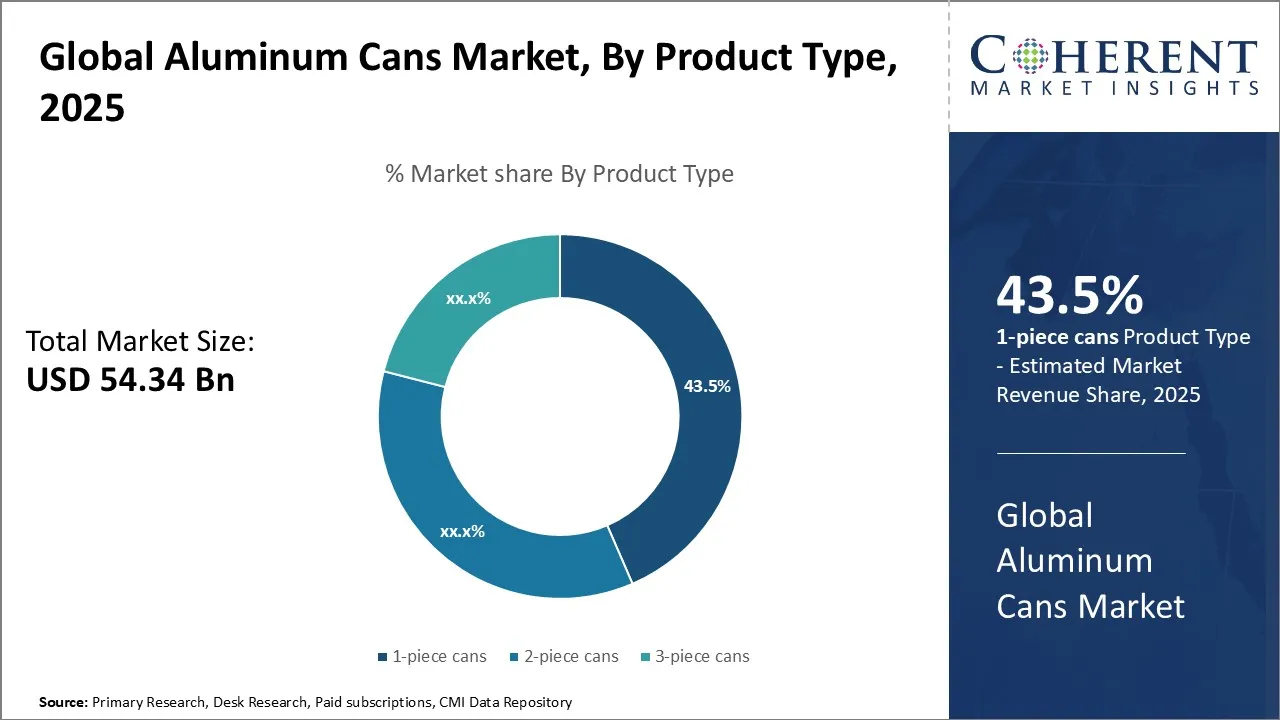
- The 1-piece cans segment is projected to account for 44.5 % of the market share in 2026, driven largely by their innovative design and superior cost efficiency.
- The slim segment is expected to capture 39.2 % of the market share in 2026, primarily fueled by shifting consumer lifestyles and the rising preference for convenient packaging solutions.
- The food and beverage segment is projected to secure 43.8 % of the market share in 2026, largely supported by the packaging’s high versatility and strong alignment with evolving consumer demands in this sector.
- Asia Pacific is expected to lead the global aluminum cans market in 2026 with a 36.1 % share, driven by rising consumption of packaged beverages, rapid urbanization, and strong regulatory support for sustainable and recyclable packaging solutions. North America, with a 29.5% share in 2026, will be the fastest-growing region, propelled by the increasing demand for convenient packaging formats, growth in the craft beer and soft drink sectors, and heightened consumer preference for eco-friendly and lightweight packaging alternatives.
Market Overview
A significant market trend shaping the aluminum cans industry is the growing emphasis on aluminum-based eco-friendly and sustainable packaging. Manufacturers are investing in advanced recycling technologies and innovative design to reduce environmental impact. Additionally, the surge in ready-to-drink beverages and expanding urban populations are fueling demand. The market is also witnessing technological advancements towards lighter yet stronger cans, enhancing cost-efficiency and consumer convenience, further propelling market expansion over the forecast period.
Current Events and Its Impact
Current Events | Description and its impact |
EU Packaging & Packaging Waste Regulation (PPWR) advancements |
|
Aluminum price volatility & LME dynamics in 2025 |
|
Segmental Insights
- Current Industry Events of 2026
- Market Size Estimation
- Regional Breakdown
- Competitive Landscape
- Customer Intelligence
- Segmental Analysis
- Pricing Analysis
- Key Market Drivers, Challenges & Future Trends
- Customized Insights Section
Aluminum Cans Market Insights, By Product Type - 1-Piece Aluminum Cans Segment Dominates due to Innovative Design and Cost Efficiency
The 1-piece cans segment is expected to hold 44.5% market share in 2026, primarily due to their innovative design and cost efficiency. A single aluminum sheet is used to create the one-piece can, also known as the drawn and wall ironed (DWI) can. Manufacturers save a lot of money thanks to this efficient construction, which also reduces material waste and streamlines the production process. Because of these benefits, beverage companies that require high-volume, affordable packaging options find the 1-piece can especially appealing.
Ball Corporation unveiled its next-generation one-piece aluminum can designs for top North American beverage brands in 2023. Ball used up to 15% less raw material than traditional multi-piece cans by utilizing drawn and wall ironed (DWI) technology. Beverage corporations like PepsiCo were able to reduce packaging expenses and increase recycling rates thanks to this innovation.
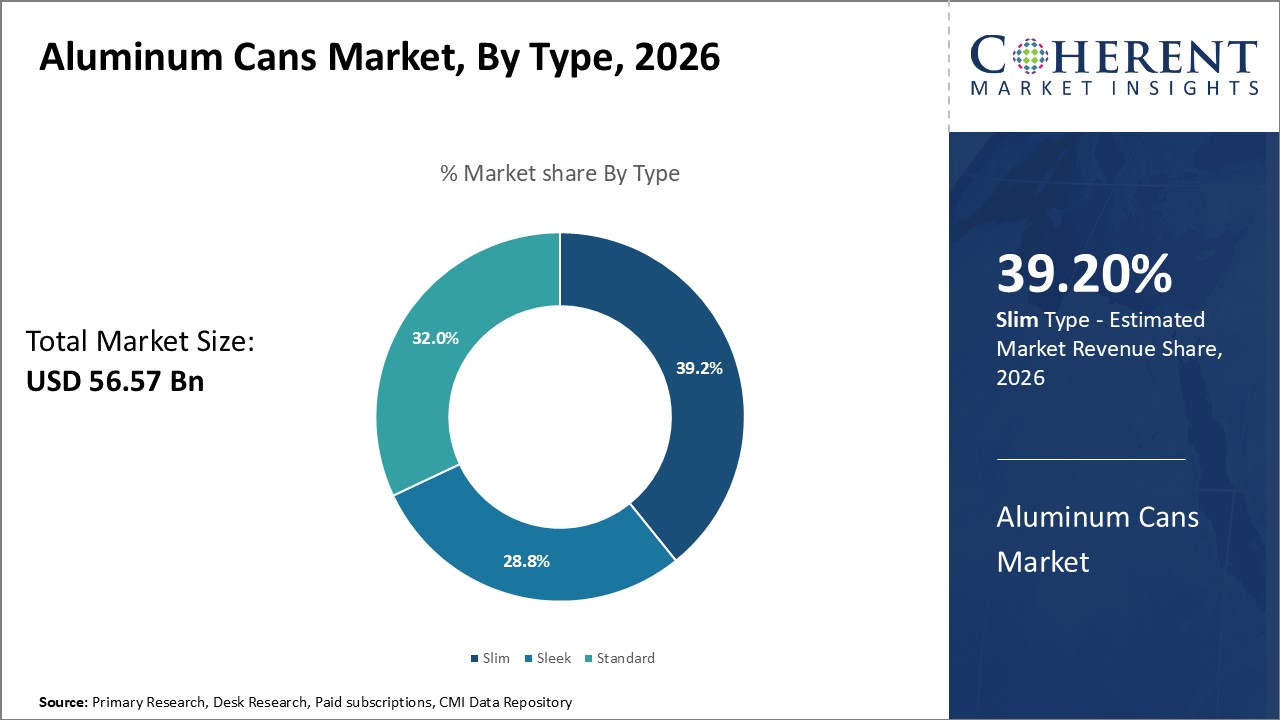
Aluminum Cans Market Insights, By Type - Slim Aluminum Cans Segment Dominates the Market Fueled by Convenience and Lifestyle Trends
The slim segment is projected to hold 39.2% share of the market in 2026, driven significantly by evolving consumer lifestyles and preferences for convenience in packaging. Slim aluminum cans, characterized by their slender, elongated shape, are becoming increasingly popular as they offer an elegant and modern look that appeals to health-conscious and on-the-go consumers.
One of the key factors behind the growth of the slim segment is the rising demand for portion-controlled beverage options. Slim cans typically contain smaller volumes compared to standard cans, making them ideal for consumers seeking moderate servings, such as premium energy drinks, flavored waters, or specialty cocktails. This portion control aligns with the global shift towards mindful consumption and wellness, as people are more aware of calorie intake and beverage choices.
Aluminum Cans Market Insights, By End-use Industry - Food and Beverage Segment Dominates the Market due to its Versatility and Consumer Demand
The food and beverage segment is expected to hold 43.8% share of the market in 2026, a trend driven by the packaging’s exceptional versatility and alignment with consumer demands in this space. Aluminum cans have long been favored in food and beverage processing for their ability to preserve product quality, extend shelf life, and ensure safety from contamination.
A major growth driver is the surge in demand for convenient packaged food and drinks, especially ready-to-drink beverages such as soft drinks, juices, alcoholic drinks, and energy beverages. Aluminum cans offer excellent barrier properties against light, oxygen, and moisture, critical factors in maintaining freshness, carbonation, and flavor integrity. This ensures that products reach consumers in optimal condition, boosting brand loyalty.
Regional Insights
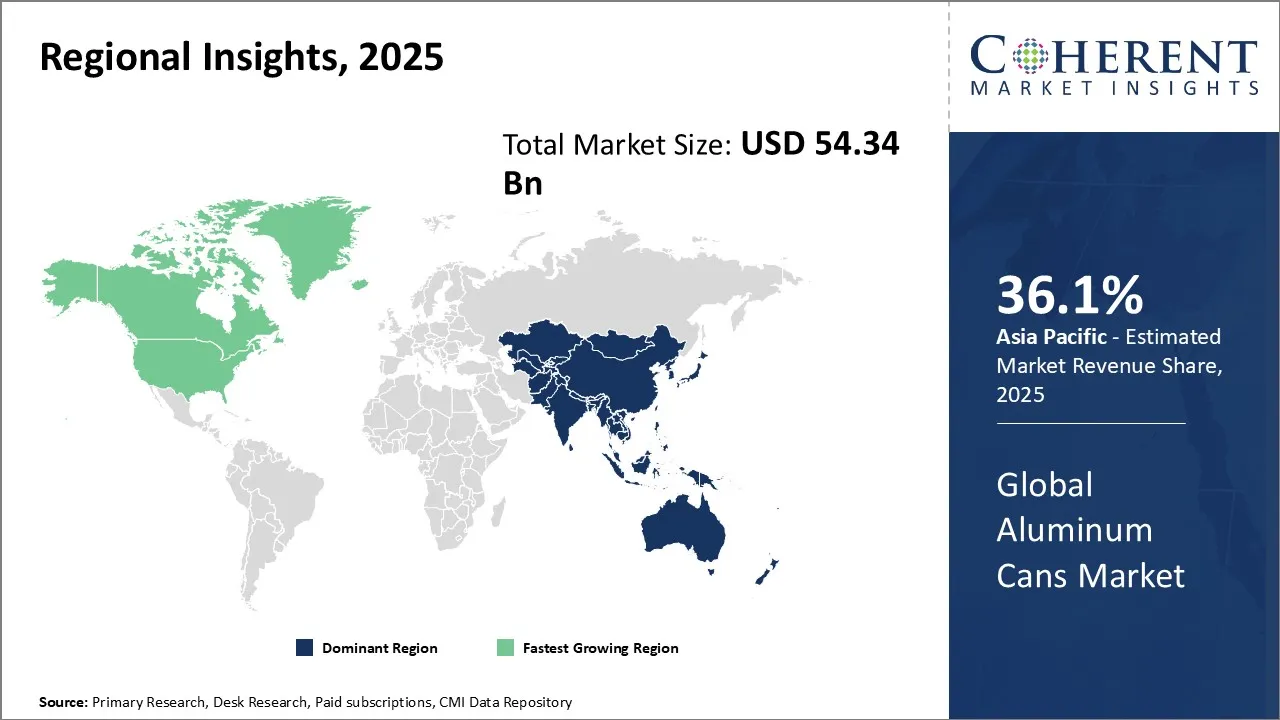
Asia Pacific Aluminum Cans Market Analysis and Trends
The Asia Pacific region is set to lead the market with a 36.1% share in 2026, due to the fast growth of the beverage industry, rising consumer demand for environmentally friendly packaging, and growing urbanization, the Asia Pacific region is predicted to hold a 36.1% market share in 2026. Convenient packaging options like aluminum cans are in high demand due to the growing demand for ready-to-drink beverages in developing economies like China and India.
Market dynamics are further improved by government programs encouraging environmentally friendly packaging and industrial modernization in nations like China, Japan, and South Korea. This rapid expansion is supported by the regional manufacturing and distribution presence of well-known businesses like Toyo Seikan Group Holdings Ltd. and Rexam. Furthermore, increased market penetration is made possible by investments in supply chain infrastructure and logistics as well as better trade relations.
North America Aluminum Cans Market Analysis and Trends
The North America region is expected to exhibit the fastest growth in the market contributing 29.5% share in 2026, driven by a well-established beverage industry, advanced manufacturing capabilities, and a strong recycling ecosystem. The region benefits from stringent environmental regulations promoting sustainable packaging solutions, which have accelerated the adoption of aluminum cans over plastic alternatives.
Additionally, government policies supporting circular economy initiatives have strengthened the aluminum can supply chain, from raw material sourcing to recycling. Major industry players such as Ball Corporation and Crown Holdings have cemented their presence through continuous innovation and large-scale production facilities across the United States and Canada. The robust trade infrastructure and proximity to consumer markets also contribute to North America’s commanding position.
Global Aluminum Cans Market Outlook for Key Countries
U.S. Aluminum Cans Market Trends
The U.S. aluminum cans market is characterized by mature consumer demand and innovation-led growth. Leading companies such as Ball Corporation and Ardagh Group have introduced advanced can designs and lightweight materials, enhancing product appeal and sustainability. The U.S. government’s emphasis on recycling programs and environmental regulations incentivizes producers and consumers alike to shift toward aluminum packaging. Additionally, strong collaborations between beverage brands and can manufacturers boost product diversity, catering to health-conscious and environmentally aware consumers.
China Aluminum Cans Market Trends
China’s aluminum cans market is expanding rapidly with surging demand from the non-alcoholic and alcoholic beverage sectors. Domestic manufacturers, alongside global firms like Toyo Seikan, are investing heavily in production capacity and technology upgrades. Government campaigns to reduce plastic use and increase recycling rates align with consumer shifts toward more sustainable packaging. Urban population growth and increasing disposable income are also pivotal in driving consumption, making China a key battleground for regional and international companies.
Germany Aluminum Cans Market Trends
Germany remains a significant player in Europe’s aluminum cans market, supported by a highly industrialized packaging ecosystem and strong environmental policies. Companies, such as Ball Corporation’s European operations and Ardagh Group, have established manufacturing facilities dedicated to innovation and sustainability. The country benefits from strict waste management laws, promoting high recycling rates and circular economy models. Additionally, German beverage companies' preference for premium packaging solutions fosters ongoing demand for aluminum cans with advanced features such as easy-to-open lids and printed aesthetics.
India Aluminum Cans Market Trends
India’s aluminum cans market is witnessing rapid growth due to increasing urbanization and a shift toward packaged beverages. The government’s focus on reducing plastic waste, coupled with initiatives to improve recycling infrastructure, is creating a favorable environment for aluminum packaging adoption. Local manufacturers are ramping up production capacity, and global players like Crown Holdings are expanding their footprint through partnerships with Indian beverage companies. Rising consumer awareness of health and environmental benefits supports sustained market momentum.
Brazil Aluminum Cans Market Trends
Brazil’s aluminum cans market is evolving with growing interest from the beverage industry in adopting aluminum cans, driven by consumer trends favoring portability and sustainability. The country’s government promotes environmental regulations and recycling programs that encourage aluminum can use as a viable alternative to glass and plastic. Key players like Ball Corporation and local manufacturers are investing in production technology to meet increasing demand. Additionally, Brazil’s strategic trade position facilitates exports within Latin America, enhancing its role in the regional aluminum cans market expansion.
Macro and Micro Economic Factors Impacting on Aluminum Cans Market Growth
Macro-Economic Factors
- Sustainability regulations, like plastic taxes and Extended Producer Responsibility (EPR), are pushing beverage brands and food manufacturers toward highly recyclable formats such as aluminum.
- Global economic trends, including urbanization and rising disposable incomes, particularly in emerging regions (South Asia, Latin America, India), are fueling consumption of packaged beverages and premium drinks, increasing demand for aluminum cans.
- International market growth for ready-to-drink beverages, functional drinks, and alcoholic segments is strengthening demand for aluminum packaging due to its convenience, durability, and low transport cost.
- Price volatility in the aluminum supply chain can impact production costs for can manufacturers; this is more pronounced in import-dependent regions and during periods of raw material shortages.
- Government policies promoting recycling and low-carbon packaging materials are accelerating market adoption of aluminum cans, especially in the EU, North America, and increasingly in Asia.
Micro Economic Factors
- Consumer preferences are shifting to lightweight, portable, and single-serve packaging; most demand centers on 2-piece cans (high strength, low cost) and mid-size capacities (201–450 ml) suited for energy and functional beverages.
- Premiumization of beverage categories—such as craft beer, premium water, and sports drinks—creates opportunities for value-added packaging, including custom designs, branding, and improved convenience.
- Advancements in lightweighting and barrier coating technology reduce material costs and improve sustainability, making aluminum cans more competitive against PET plastic and multilayer cartons.
- Competition from flexible PET bottles, paperboard, and carton packaging presents price challenges, especially in cost-sensitive and commoditized beverage categories; however, upcoming plastic bans and evolving shelf-life tech in PET are gradually reducing these constraints.
- Efficient closed-loop recycling and remelting of aluminum scrap allow manufacturers to reduce energy consumption and maintain lower costs, helping profit margins in competitive environments.
- Growth in e‑commerce and the need for dent-resistant primary packaging increase demand for robust aluminum cans in urban centers.
Market Players, Key Development, and Competitive Intelligence
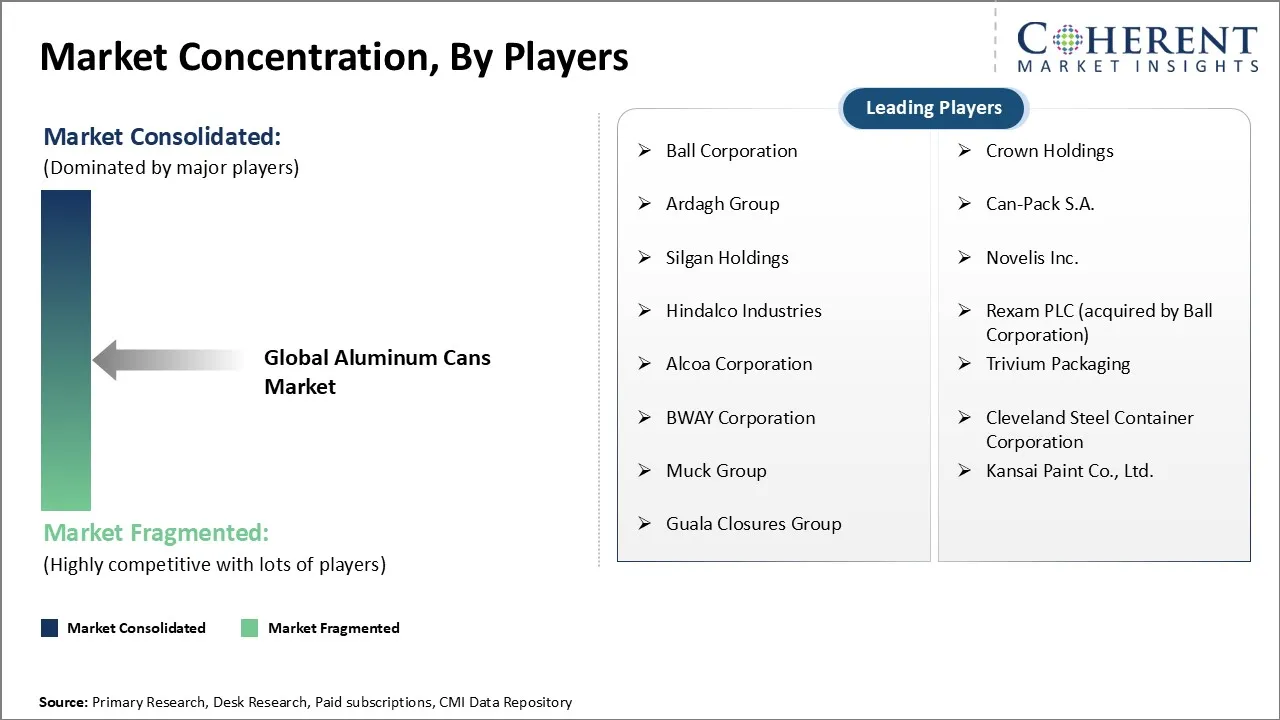
Key Developments
- In January 2025, Canpack Group began building its third beverage can manufacturing facility in India, located in Uttar Pradesh. The greenfield project, valued at around USD 150 million, is being developed under the state’s IMLC initiative as part of the AGREES program. The plant is designed to address the rising demand for aluminum beverage cans in the Indian market.
- On January 15, 2025, the government of India introduced revised packaging regulations, encouraging FMCG and beverage companies to transition toward recyclable materials, with a strong emphasis on aluminum cans. Issued under the Ministry of Environment’s Extended Producer Responsibility (EPR) framework, the guidelines highlight aluminum’s infinite recyclability and low carbon footprint, reinforcing India’s 2030 vision of establishing a circular economy in packaging.
- In December 2024, Ball Corporation, in collaboration with Dabur, rolled out Réal Bites fruit juices in sleek, single-serve aluminum cans. The packaging enhances shelf life, portability, and consumer appeal—particularly among eco-conscious urban youth. This launch supports Dabur’s commitment to achieve 100% recyclable packaging by 2026 and signals Ball’s strategic expansion into India’s non-carbonated beverage segment.
Top Strategies Followed by Global Aluminum Cans Market Players
- Established Players: Industry leaders invest heavily in R&D to drive innovation in high-performance aluminum cans. They create advanced products that offer more durability, lightweight and sustainability to meet changing consumer preferences and regulations.
- For example, Ball Corporation developed Lightweight ReAl cans which use 6% less metal while maintaining strength, helping beverage companies reduce carbon emissions and raw material costs.
- Mid-tier players in the aluminum cans segment take a balanced approach with cost-effective solutions that combine quality with affordability. They target price sensitive consumers and markets where economical packaging is in high demand. To stay competitive mid-tier companies focus on operational efficiency and optimize production to reduce costs without compromising product standards. Collaborations and joint ventures are common among these players to boost manufacturing capacity, access technology and expand market reach.
- For example, Envases Universales entered a joint venture in Latin America to increase aluminum can production capacity, leveraging regional demand and operational efficiency.
- Small players in the global aluminum cans market focus on carving out niches by developing innovative or customized products that meet specific consumer needs. They use cutting edge technologies like smart packaging, eco-friendly materials or unique design to differentiate themselves from larger players. To get visibility and entry small players often partner with startups, regional manufacturers or distributors.
- For example, a UK based startup, BlueSky Beverages Packaging, launched customized aluminum cans with digital printed graphics targeting craft breweries and premium beverage brands.
Market Report Scope
Aluminum Cans Market Report Coverage
| Report Coverage | Details | ||
|---|---|---|---|
| Base Year: | 2025 | Market Size in 2026: | USD 56.57 Bn |
| Historical Data for: | 2020 To 2024 | Forecast Period: | 2026 To 2033 |
| Forecast Period 2026 to 2033 CAGR: | 4.1% | 2033 Value Projection: | USD 74.94 Bn |
| Geographies covered: |
| ||
| Segments covered: |
| ||
| Companies covered: | Ball Corporation, Crown Holdings, Ardagh Group, Can-Pack S.A., Silgan Holdings, Novelis Inc., Hindalco Industries, Rexam PLC (acquired by Ball Corporation), Alcoa Corporation, Trivium Packaging, BWAY Corporation, Cleveland Steel Container Corporation, Muck Group, Kansai Paint Co., Ltd., and Guala Closures Group | ||
| Growth Drivers: |
| ||
| Restraints & Challenges: |
| ||
Aluminum Cans Market Dynamics
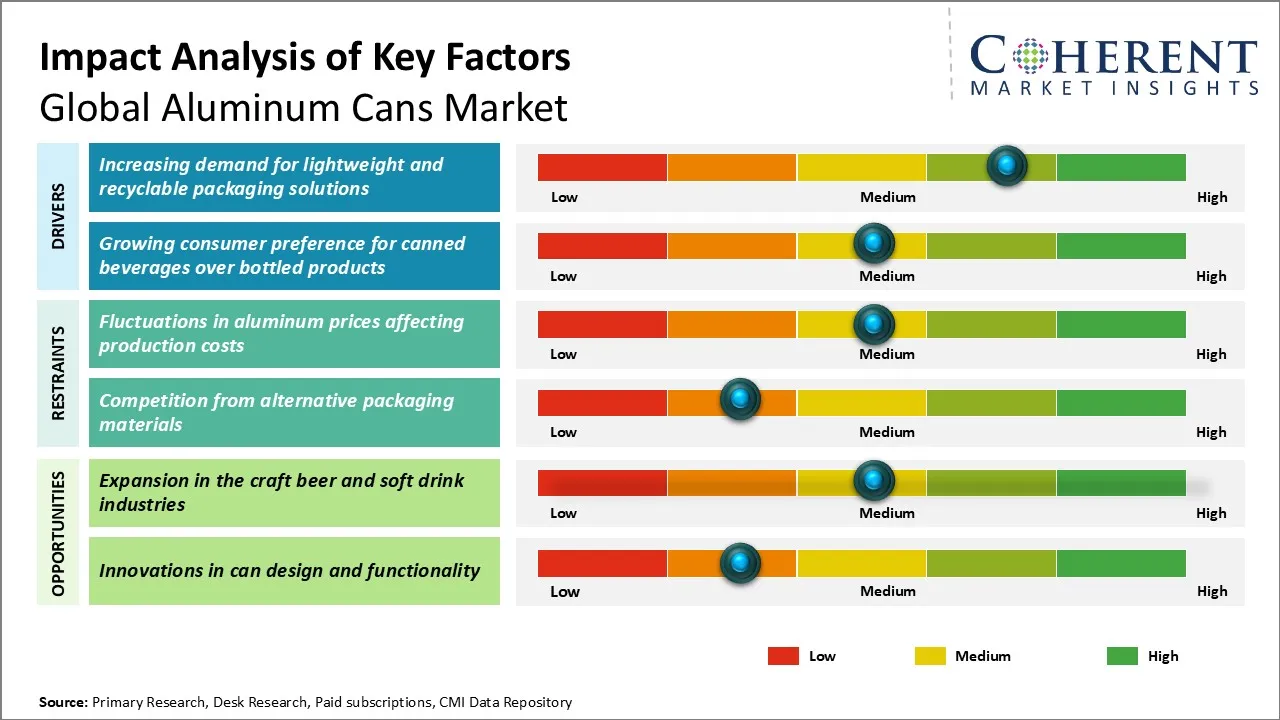
Aluminum Cans Market Driver - Increasing Demand for Lightweight and Recyclable Packaging Solutions
The push for sustainability and eco-friendliness has led to a surge in demand for aluminum cans across industries, especially in beverages and food packaging. Aluminum cans are lightweight which reduces transportation costs and logistics carbon footprint. And recyclability is a key driver of adoption as aluminum can be recycled infinitely without degrading in quality making it the perfect answer to increasing regulatory pressure and consumer demand for eco-friendly packaging.
For example, in January 2025, Coca-Cola announced they had achieved 90% recyclability across their beverage portfolio in Europe by increasing their use of aluminum cans, citing infinite recyclability and reduced transportation weight compared to glass bottles. This was in line with EU Circular Economy targets and growing consumer demand for sustainable packaging.
Aluminum Cans Market Opportunity - Expansion in the Craft Beer and Soft Drink Industries
The growing popularity of craft beer and evolving consumer preferences in the soft drink sector present a significant opportunity for the global aluminum cans market. Craft beer, characterized by its artisanal quality and unique flavors, has witnessed exponential growth worldwide as consumers seek innovative and premium beverages. Aluminum cans offer several advantages for craft beer producers, including superior protection from light and oxygen, which preserves the beer’s flavor and freshness better than traditional glass bottles. Additionally, aluminum cans are lightweight, easily recyclable, and cost-effective in transportation, aligning well with the sustainability goals embraced by many craft breweries.
For instance, in July 2025, Heineken-owned Lagunitas Brewing Company introduced its limited-edition seasonal craft beers in sleek 12-oz aluminum cans across the U.S. aluminum cans market. The brand highlighted cans’ ability to preserve flavor and aroma while offering portability for outdoor events and festivals.
Analyst Opinion (Expert Opinion)
- The global aluminum cans market is facing robust growing, driven by increasing consumer likings for maintainable packaging solutions. Observations from the Pack Expo (2023) and aluminum can Manufacturing Conference (2022) emphasized ground-breaking trends, with companies like Ball Corporation and Crown Properties significant the charge in developing lightweight and recyclable can design.
- Ball Corporation’s Now introduction of a 100% recycled aluminum can exemplify a strategic response to increasing demand for globally friendly packing, attractive to eco-conscious customers.
- Companies that can enhance their operational effectiveness and invest in advanced recycling technologies are likely to boom. Furthermore, building strategic companies with beverage brands can ensure a steady mandate for aluminum cans.
Speak to the analyst
Want personalized insights?
Take the findings above to one of our principal consultants, or have the report rebuilt around the segments, geographies and competitors you actually track.
Market Segmentation
- Product Type Insights (Revenue, USD Bn, 2021 - 2033)
- 1-piece cans
- 2-piece cans
- 3-piece cans
- Type Insights (Revenue, USD Bn, 2021 - 2033)
- Slim
- Sleek
- Standard
- End-use Industry Insights (Revenue, USD Bn, 2021 - 2033)
- Food and Beverage
- Cosmetics & Personal Care
- Pharmaceuticals
- Others
- Regional Insights (Revenue, USD Bn, 2021 - 2033)
- North America
- U.S.
- Canada
- Latin America
- Brazil
- Argentina
- Mexico
- Rest of Latin America
- Europe
- Germany
- U.K.
- Spain
- France
- Italy
- Russia
- Rest of Europe
- Asia Pacific
- China
- India
- Japan
- Australia
- South Korea
- ASEAN
- Rest of Asia Pacific
- Middle East
- GCC Countries
- Israel
- Rest of Middle East
- Africa
- South Africa
- North Africa
- Central Africa
- North America
- Key Players Insights
- Ball Corporation
- Crown Holdings
- Ardagh Group
- Can-Pack S.A.
- Silgan Holdings
- Novelis Inc.
- Hindalco Industries
- Rexam PLC (acquired by Ball Corporation)
- Alcoa Corporation
- Trivium Packaging
- BWAY Corporation
- Cleveland Steel Container Corporation
- Muck Group
- Kansai Paint Co., Ltd.
- Guala Closures Group
Sources
Primary Research Interviews
- Procurement Director – Leading Global Beverage Company (using aluminum cans for soft drinks/beer)
- Sustainability Head – Major Packaging Company specializing in aluminum cans
- Operations Manager – Large Food & Beverage Brand shifting from plastics to aluminum cans
- R&D Manager – Aluminum Can Manufacturing Firm (focus on lightweighting and recycling technologies)
Stakeholders
- Manufacturers: Global and regional aluminum can producers
- End-use Sectors:
- Beverages (Carbonated Soft Drinks, Beer, Energy Drinks, Water, Juices)
- Food Products (canned foods, ready-to-drink nutrition)
- Non-Food (aerosols, personal care, household products)
- Regulatory & Certification Bodies
- Retailers & E-commerce Platforms (beverage and packaged food channels)
- Recycling & Sustainability Players (aluminum recycling firms, circular economy organizations)
Databases
- UN Comtrade Database – Trade flows of aluminum cans
- International Aluminium Institute (IAI) Statistics
- India Import Export (EXIM) Database – Regional trade patterns
Magazines
- Packaging Strategies – Innovations in beverage & food packaging
- CanTech International – Updates on aluminum can industry and manufacturing
- Beverage Daily – Insights on beverage packaging trends
- Packaging News – Global packaging sector updates
Journals
- Journal of Cleaner Production – Studies on aluminum recycling and sustainability
- Resources, Conservation & Recycling – Research on aluminum can recovery and circular economy
- Journal of Packaging Technology and Research – Innovations in aluminum packaging
- Materials Today – Aluminum alloys and manufacturing technologies
- International Journal of Life Cycle Assessment – Environmental impact of aluminum cans
Newspapers
- The Financial Times – Global packaging and aluminum market trends
- The Wall Street Journal – Corporate and trade news on beverage packaging
- The Guardian – Coverage on plastic bans and shift to sustainable packaging
- Nikkei Asia – Asia-Pacific aluminum packaging demand trends
Associations
- The Aluminum Association (USA)
- European Aluminum Association (EAA)
- Can Manufacturers Institute (CMI)
- International Aluminum Institute (IAI)
- Metal Packaging Europe
Public Domain Sources
- U.S. Environmental Protection Agency (EPA) – Recycling and packaging regulations
- European Commission – Packaging Waste Directive and Extended Producer Responsibility (EPR)
- World Aluminum – Market data and sustainability initiatives
Proprietary Elements
- CMI Data Analytics Tool, Proprietary CMI Existing Repository of information for last 8 years.
Get access to 250+ pages report
Every segment, forecast, competitor profile and data table behind the analysis above — available for instant download.
- ESOMAR Member
- ISO 9001:2015 Certified
- D-U-N-S Registered
- GDPR & CCPA Compliant
Missing comfort of reading report in your local language? Find your preferred language:
Transform your Strategy with Exclusive Trending Reports
Frequently Asked Questions
The global aluminum cans market is estimated to be valued at USD 56.57 Bn in 2026 and is expected to reach USD 74.94 Bn by 2033.
The CAGR of global aluminum cans market is projected to be 4.1% from 2026 to 2033.
Increasing demand for lightweight and recyclable packaging solutions and growing consumer preference for canned beverages over bottled products are the major factors driving the growth of the global aluminum cans market.
Fluctuations in aluminum prices affecting production costs and competition from alternative packaging materials are the major factors hampering the growth of the global aluminum cans market.
In terms of product type, the 1-piece cans segment is estimated to dominate the market revenue share in 2026.
Ball Corporation, Crown Holdings, Ardagh Group, Can-Pack S.A., Silgan Holdings, Novelis Inc., Hindalco Industries, Rexam PLC (acquired by Ball Corporation), Alcoa Corporation, Trivium Packaging, BWAY Corporation, Cleveland Steel Container Corporation, Muck Group, Kansai Paint Co., Ltd., and Guala Closures Group are the major players.
Asia Pacific is expected to lead the global aluminum cans market in 2026.