

Plastic Packaging Market Analysis & Forecast 2026-2033
The plastic packaging market is estimated to be valued at USD 429.89 Bn in 2026 and is expected to reach USD 565.71 Bn by 2033, exhibiting a compound annual growth rate (CAGR) of 4.0% from 2026 to 2033.
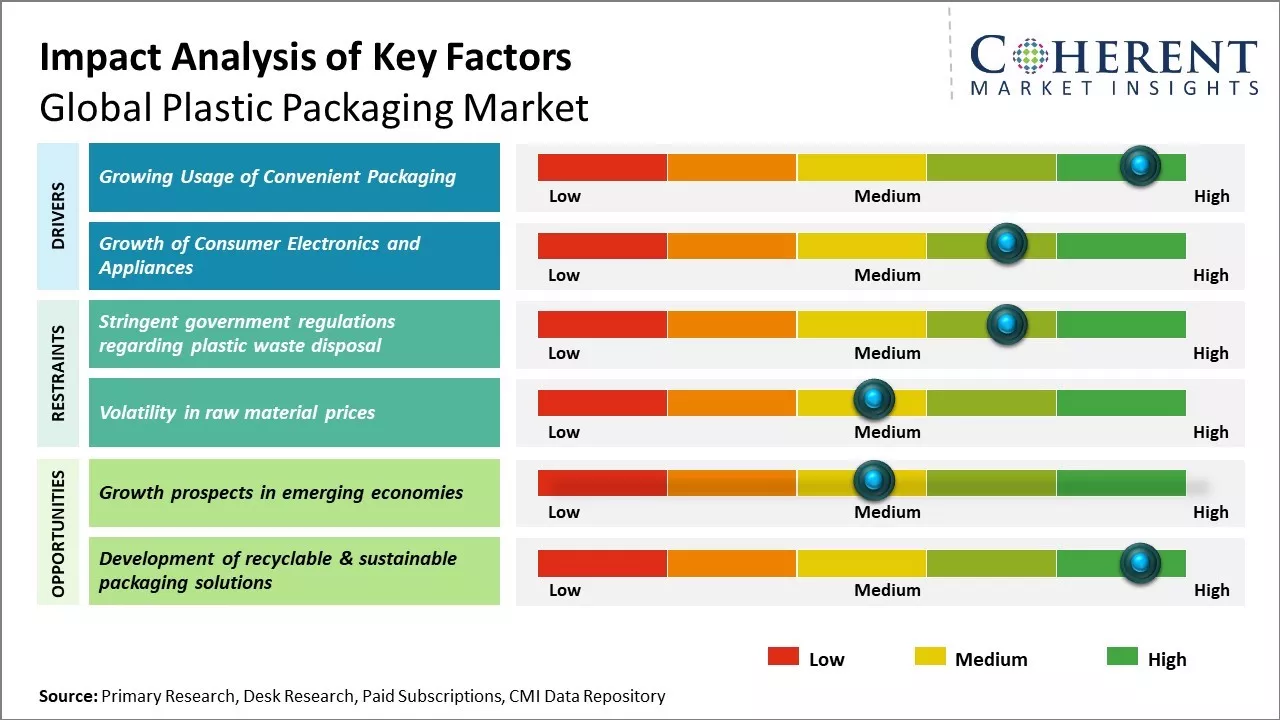
Key Takeaways
- By Product Type, Rigid plastic packaging is expected to hold the largest share of the global plastic packaging market, accounting for approximately 63.3% in 2026. This dominance is attributed to its versatility, durability, and protective qualities, which make it suitable for a wide array of applications.
- By End Use Industry, the food & beverages segment is projected to lead the market with an estimated 41.1% share in 2026. This is driven by the rising need for packaging solutions that ensure product freshness, facilitate portion control, and support attractive branding.
- By Region Insights North America is anticipated to dominate the global plastic packaging market with a 39.2% share in 2026. This regional leadership is fuelled by strong demand from the packaged food, personal care, and pharmaceutical sectors.
Market Overview
The global Plastic Packaging Market is witnessing consistent growth, propelled by increasing demand for lightweight, durable, and cost-effective packaging solutions across diverse industries. Rigid plastic packaging holds a dominant share due to its protective qualities and wide applicability. The food and beverage sector leads in end-use demand, driven by the need for product preservation and branding.
Current Events and its Impact on the Plastic Packaging Market
Current Event | Description and its impact |
Sustainable Innovations and Regulatory Advances |
|
Strategic Alliances and Capacity Expansion |
|
Policy Shifts and Compliance Drivers |
|
Pricing Analysis: Plastic Packaging Market
The pricing dynamics of the global plastic packaging market are influenced by multiple factors, including raw material costs, production technology, regulatory compliance, and supply-demand fluctuations. Polyethylene (PE), polypropylene (PP), and polyethylene terephthalate (PET) are among the primary resins used in plastic packaging, and their prices are closely tied to crude oil trends. As oil prices fluctuate, so too does the cost of plastic packaging materials.
Stringent environmental regulations and increased adoption of sustainable alternatives have also impacted pricing structures, with biodegradable and recyclable packaging commanding a premium over conventional plastics. Additionally, manufacturers face rising operational costs due to labor shortages, energy expenses, and investments in R&D for eco-friendly solutions.
Despite these challenges, economies of scale and automation in manufacturing have helped stabilize prices for high-volume segments like food and beverage packaging. Going forward, pricing is expected to remain moderately volatile, shaped by sustainability mandates and material innovation.
- Current Industry Events of 2026
- Market Size Estimation
- Regional Breakdown
- Competitive Landscape
- Customer Intelligence
- Segmental Analysis
- Pricing Analysis
- Key Market Drivers, Challenges & Future Trends
- Customized Insights Section
Sustainable and Eco-friendly Packaging: Plastic Packaging Market
The global plastic packaging market is undergoing a significant transformation driven by increasing environmental concerns and regulatory pressures. Sustainability has emerged as a key priority, prompting manufacturers to adopt eco-friendly materials and innovative packaging solutions. Biodegradable plastics, recycled PET (rPET), and bio-based polymers are gaining traction as viable alternatives to conventional plastics, helping reduce carbon footprints and plastic waste.
Brands are also embracing lightweight designs, refillable formats, and minimalistic packaging to optimize resource usage and enhance recyclability. Governments worldwide are enforcing stricter bans on single-use plastics and promoting extended producer responsibility (EPR), further accelerating the shift toward circular economy practices.
Consumer demand for environmentally responsible packaging, particularly among Gen Z and millennial, is also shaping product development and purchasing decisions. One area witnessing notable innovation is the plastic packaging market for snacks, where convenience, freshness, and sustainability must align. Snack manufacturers are increasingly turning to recyclable films, resealable pouches, and portion-controlled packs made from eco-friendly materials to meet both functional and environmental expectations.
As a result, sustainable plastic packaging is no longer a niche but a strategic imperative, fostering innovation, brand differentiation, and long-term competitiveness in the global market.
Plastic Packaging Market Trends
- Growing Usage of Convenient Packaging
The plastic packaging market has benefited tremendously from the rising demand for convenience across the global consumer market. Busy lifestyles and time constraints have pushed consumers to seek out packaging solutions that offer ease of use and portability. Plastic packaging fulfills this needs perfectly with features like re-seal ability, lightweight construction, durable materials, and innovative designs.
Food producers have especially leveraged plastic containers, bottles, and wraps to package a wide variety of ready-to-eat meals, snacks, and beverages. Their shelf stability and ability to lock in freshness has boosted their popularity for on-the-go consumption.
E-commerce has further driven the use of plastic mailers, secure films, and bubble wraps for safe transportation of goods over long distances. With urbanization increasing worldwide and work cultures getting more fast-paced, the desire for hassle-free packaging during travel or when absent from home looks set to stay. Plastic caters brilliantly to these imperatives of modern lifestyles, establishing itself as the material of choice.
For instance, In June 2025, India’s plastic credit market was projected to grow from $982 million to $1.67 billion by 2030, driven by stricter EPR rules mandating recycled content in packaging though experts flagged challenges in waste sourcing and pricing transparency.
Challenges In the Plastic Packaging Market
- Stringent government regulations regarding plastic waste disposal
Stringent government regulations regarding plastic waste disposal is severely restraining the growth of the global plastic packaging market. Many governments across the world have introduced strict laws in the last couple of years to curb plastic pollution and promote sustainability. According to United Nations Environmental Programme (UNEP), at least 300 million tons of plastic waste is generated annually worldwide.
A large chunk of this plastic ends up polluting land and aquatic ecosystems causing immense damage to the environment and biodiversity. In light of this alarming rate of plastic pollution, governments are taking assertive actions to restrict the use of certain types of plastics that are not recyclable or single-use in nature.
For instance, in 2020 the European Union introduced a ban on select single-use plastic items like straws, cutlery, and plates. Similarly, Canada implemented regulations in 2021 prohibiting the manufacture, import, and sale of these six single-use plastic items.
Opportunities in the Plastic Packaging Market
- Growth prospects in emerging economies
Growth prospects in emerging economies could be a major opportunity in the global plastic packaging market. Many developing countries in Asia, Africa, and Latin America are expected to see accelerated economic development and rising consumerism over the next decade. As periprocapita income and living standards increase in these nations, the demand for packaged consumer goods will rise significantly.
Plastic packaging is extremely well-suited to fulfil this demand. It helps extend shelf-life, preserve freshness, provides tamper-evidence and safety against contamination. This makes plastic packaged products affordable and accessible for the expanding middle class populations in emerging nations. Packaged food, beverages, personal and home care items that are currently considered as luxury goods will soon become mass-market commodities as disposable incomes rise.
Segmental Insights
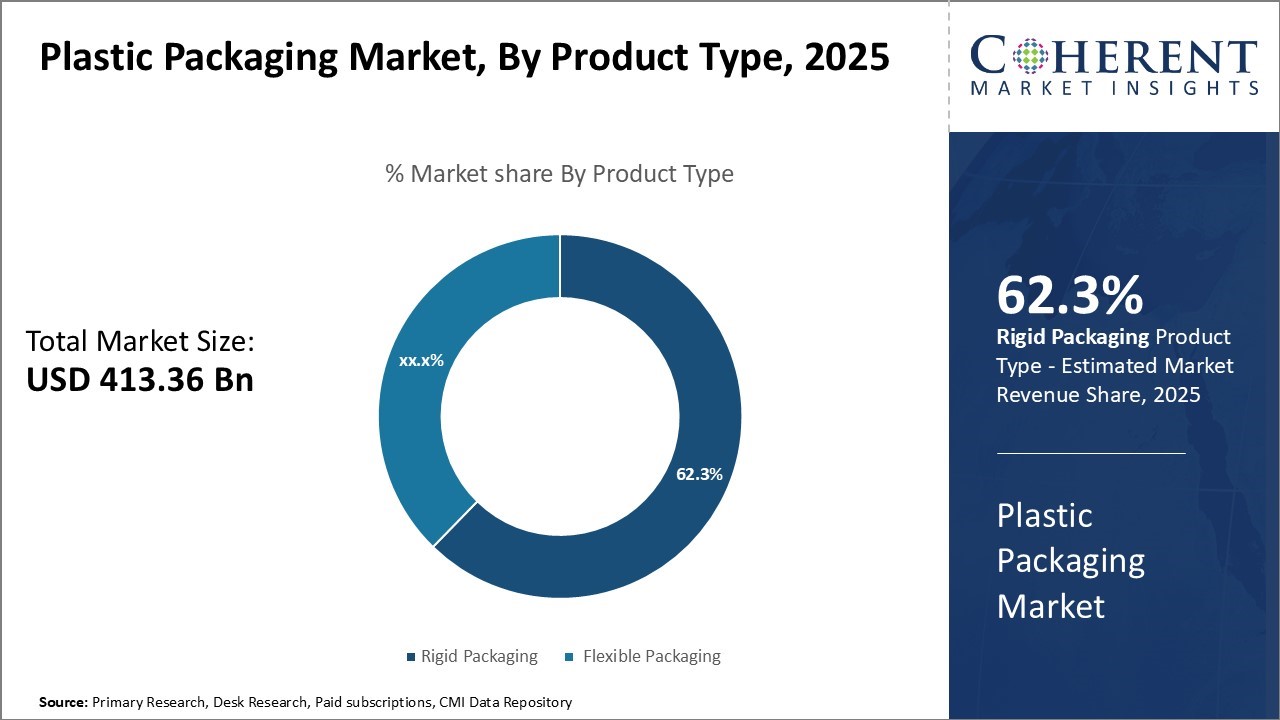
Global Plastic Packaging Market Insights, By Product Type
Rigid plastic packaging is expected to dominate the global plastic packaging market, capturing approximately 63.3% of the total market share in 2026. This leadership stems from its superior strength, protection, and adaptability across a broad spectrum of applications, ranging from food containers and medical supplies to industrial packaging.
Rigid packaging offers enhanced durability and impact resistance, ensuring the safe transport and storage of products. Its compatibility with various sealing technologies, recyclability potential, and cost-effectiveness have further contributed to its dominance. As industries increasingly prioritize sustainable yet sturdy packaging solutions, rigid plastics remain a preferred choice.
Technological innovations in lightweight rigid materials and improvements in manufacturing processes continue to support this segment’s growth trajectory, enabling efficient supply chains and better shelf appeal for consumer products.
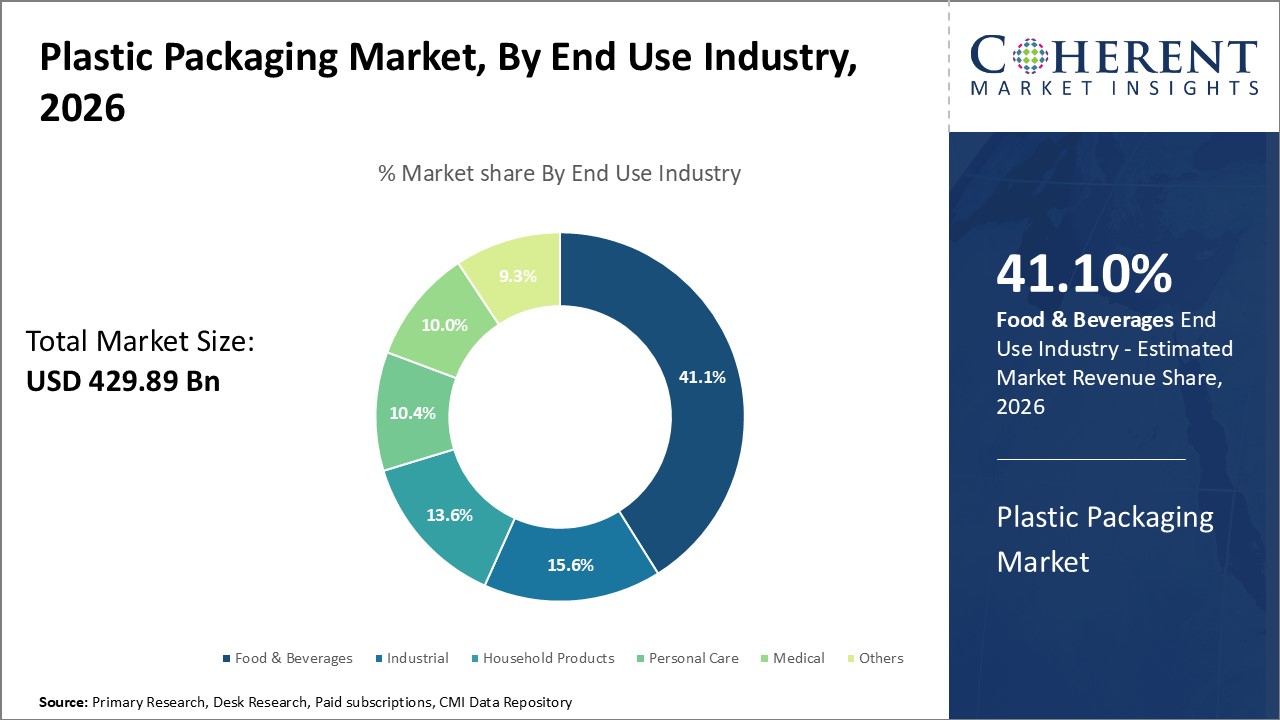
Global Plastic Packaging Market Insights, By End Use Industry
The food & beverages segment is projected to lead the plastic packaging market, accounting for around 41.1% of the global share in 2026. This is largely driven by the sector’s demand for solutions that ensure hygiene, extend shelf life, and facilitate portion control.
Plastic packaging enables a balance of barrier protection and visual branding, making it ideal for both perishable and non-perishable food items. The surge in online food delivery, convenience meals, and health drinks has amplified the need for packaging formats that combine safety, portability, and sustainability.
Increased focus on sustainability is pushing brands to adopt recyclable and reusable plastic options, while consumer expectations for convenience and transparency in packaging continue to shape innovation in this segment.
Global Plastic Packaging Market – Regional Insights
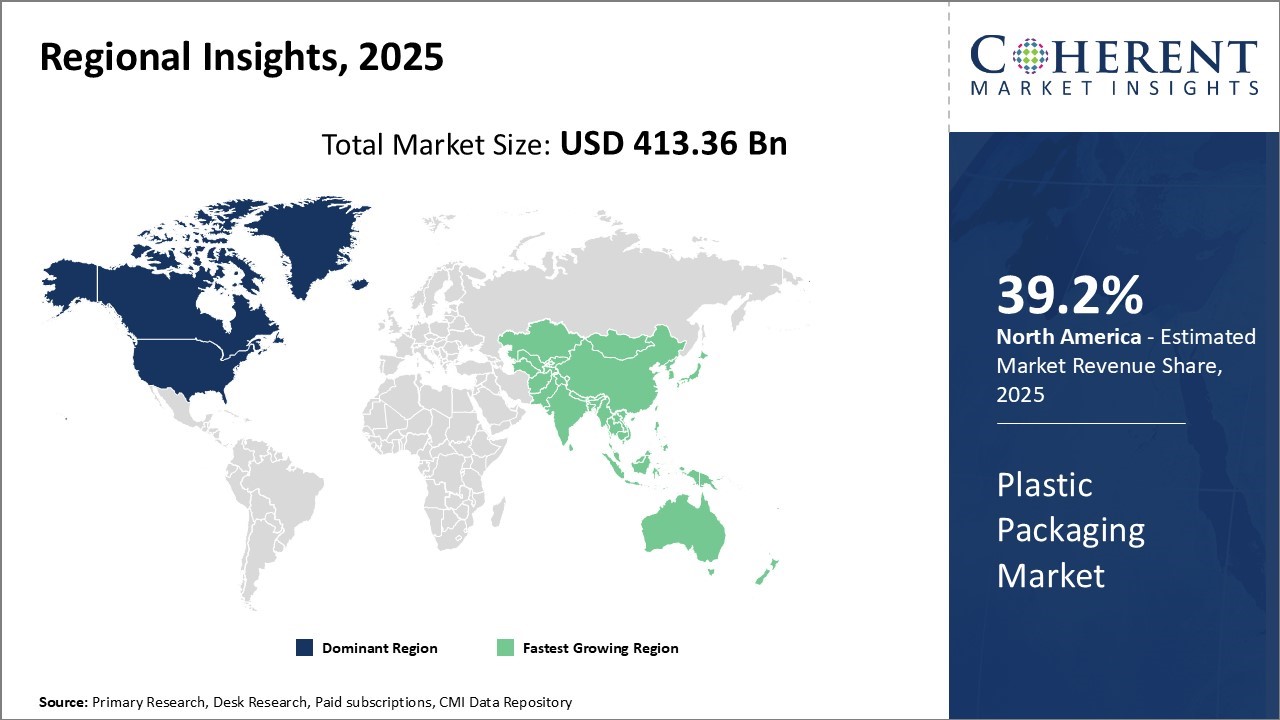
North America Plastic Packaging Market Trends and Analysis
North America is anticipated to dominate the global plastic packaging market, accounting for approximately 39.2% of the total market share in 2026. This regional leadership is driven by sustained demand from key industries such as packaged food, beverages, personal care, pharmaceuticals, and notably, plastic packaging in e-commerce a sector experiencing exponential growth due to rising online shopping trends.
The region’s mature packaging industry benefits from well-developed recycling infrastructure and increasing regulatory emphasis on environmental sustainability. Consumer awareness regarding eco-friendly packaging has prompted many manufacturers to invest in recyclable, lightweight, and biodegradable plastic alternatives, thereby fuelling innovation and product differentiation.
The U.S. and Canada are key contributors to this growth, supported by stringent packaging standards, high per capita consumption of packaged goods, and robust retail and e-commerce networks. As e-commerce continues to reshape consumer behaviour, the demand for secure, tamper-evident, and protective plastic packaging solutions is surging. With continuous advancements in material science and a strong policy push toward circular economy practices, North America is expected to maintain its leadership in shaping the future of sustainable plastic packaging, especially in the context of the fast-growing digital retail landscape.
Plastic Packaging Market Dominating Countries
United States
The United States leads the global plastic packaging market within the North American region, contributing significantly to its projected 39.2% market share in 2026. This dominance is underpinned by strong demand from the food and beverage, personal care, and pharmaceutical sectors, which require durable, safe, and visually appealing packaging solutions.
The U.S. also boasts a highly developed packaging industry with advanced recycling systems, facilitating innovation in sustainable and recyclable materials.
Major players headquartered in the U.S. are at the forefront of R&D efforts to develop eco-friendly alternatives to traditional plastics, responding to increasing consumer demand for green packaging. Regulatory initiatives promoting circular economy practices and plastic waste reduction are accelerating the shift toward biodegradable and compostable materials.
With high per capita consumption of packaged goods and widespread retail distribution channels, the U.S. is expected to maintain its position as the global leader in plastic packaging innovation and adoption.
Canada
Canada plays a vital role in the North American plastic packaging market, supported by its mature food processing industry and increasing demand for sustainable packaging across healthcare and consumer goods sectors. The country benefits from a structured regulatory environment focused on reducing plastic waste, which has spurred interest in recyclable and compostable packaging alternatives.
Canadian companies are actively investing in the development and commercialization of bio-based plastic materials, aligning with national sustainability goals. The government’s focus on extended producer responsibility (EPR) programs and single-use plastic bans has accelerated innovation in packaging design and material sourcing.
Additionally, Canadian consumers are increasingly prioritizing eco-friendly packaging choices, driving market growth. As sustainability continues to reshape packaging priorities, Canada is expected to remain a key contributor to plastic packaging market development in North America.
Market Report Scope
Plastic Packaging Market Report Coverage
| Report Coverage | Details | ||
|---|---|---|---|
| Base Year: | 2025 | Market Size in 2026: | USD 429.89 Bn |
| Historical Data for: | 2020 To 2024 | Forecast Period: | 2026 To 2033 |
| Forecast Period 2026 to 2033 CAGR: | 4.0% | 2033 Value Projection: | USD 565.71 Bn |
| Geographies covered: |
| ||
| Segments covered: |
| ||
| Companies covered: | Mondi Group, Sealed Air Corporation, Sonoco Products Company, Amcor plc, Coveris Holdings SA, Berry Global Inc., WINPAK LTD, CCL Industries, Inc, Constantia Flexibles, Alpha Packaging, Pactive LLC, Silgan Holdings Inc., DS Smith Plc, Huhtamaki Oyj, Takween Advanced Industries, Transcontinental Inc., Bischof + Klein SE & Co. KG, Uflex Ltd, American Packaging Corporation, and Sigma Plastics Group | ||
| Growth Drivers: |
| ||
| Restraints & Challenges: |
| ||
Analyst Viewpoint – Plastic Packaging Market
- The global plastic packaging market is experiencing consistent growth, fueled by the expanding demand from food & beverage, pharmaceutical, and personal care industries. Analysts identify North America as the dominant region, driven by high consumption of packaged goods, advanced recycling infrastructure, and increasing environmental regulations encouraging innovation in sustainable materials.
- Product innovation remains a key growth driver. Industry experts point to a growing shift toward eco-friendly and recyclable plastic materials, lightweight packaging formats, and multi-layer barrier technologies. Companies investing in biodegradable plastics, bio-based polymers, and circular packaging systems are expected to gain a competitive edge amid rising consumer preference for sustainable solutions.
- Despite concerns surrounding plastic pollution and tightening global regulatory frameworks, the long-term market outlook is optimistic. Analysts believe that strategic collaborations, government-backed recycling initiatives, and technological advancements in material science will continue to propel market expansion. Emerging economies offer additional growth potential due to rapid urbanization and changing consumption patterns.
Plastic Packaging Market: Key Development
- In July 2025, Dow announced the release of a new packaging resin designed to improve the recyclability and performance of flexible plastic packaging part of its ongoing push to support a more circular economy. The new material, INNATE TF 220 Precision Packaging Resin, helps create strong, flexible packaging that’s easier to recycle.
- In June 2024, Amazon announced the launch of its largest reduction in plastic packaging and replaced 95% of plastic with air pillows from delivery packaging in North America region with the help of paper fillers.
Market Segmentation
- By Product Type (Revenue, USD Bn, 2021 - 2033)
- Rigid Packaging
- Flexible Packaging
- By End Use Industry (Revenue, USD Bn, 2021 - 2033)
- Food & Beverages
- Industrial
- Household Products
- Personal Care
- Medical
- Others
Regional Insights (Revenue, USD Bn, 2021 - 2033)
- North America
- U.S.
- Canada
- Latin America
- Brazil
- Argentina
- Mexico
- Rest of Latin America
- Europe
- Germany
- U.K.
- Spain
- France
- Italy
- Russia
- Rest of Europe
- Asia Pacific
- China
- India
- Japan
- Australia
- South Korea
- ASEAN
- Rest of Asia Pacific
- Middle East
- GCC Countries
- Israel
- Rest of Middle East
- Africa
- South Africa
- North Africa
- Central Africa
- North America
- Company Profiles
- Mondi Group
- Sealed Air Corporation
- Sonoco Products Company
- Amcor plc
- Coveris Holdings SA
- Berry Global Inc.
- WINPAK LTD.
- CCL Industries, Inc.
- Constantia Flexibles
- Alpha Packaging
- Pactive LLC
- Silgan Holdings Inc.
- DS Smith Plc
- Huhtamaki Oyj
- Takween Advanced Industries
- Transcontinental Inc.
- Bischof + Klein SE & Co. KG
- Uflex Ltd.
- American Packaging Corporation
- Sigma Plastics Group
Sources
The Stakeholders Consulted
- Packaging engineers and production managers at FMCG and food processing firms
- Manufacturers and suppliers of rigid and flexible plastic packaging materials
- Sustainability consultants and waste management experts
- Regulatory and compliance officers specializing in packaging standards
- Research institutions focusing on polymer science and sustainable materials
- Representatives from retail, pharmaceutical, and cosmetics companies
- End-users from sectors such as food & beverages, healthcare, personal care, and industrial packaging
Databases Opened
- U.S. Food & Drug Administration (FDA) – Packaging Regulations Database
- Ministry of Environment, Forest and Climate Change (India) – Plastic Waste Management Data
- United Nations Comtrade – Packaging Trade Data
- World Bank Open Data – Manufacturing & Consumption Trends
Magazines & Trade Publications
- Packaging World
- Plastics Technology Magazine
- Flexible Packaging Magazine
- Food & Beverage Packaging
- Packaging Digest
- Healthcare Packaging
Scientific and Industry Journals
- Journal of Packaging Technology and Research
- Polymer Testing
- Packaging Technology and Science
- Journal of Applied Polymer Science
- Resources, Conservation and Recycling
Newspapers & Media Outlets
- The Wall Street Journal – Consumer Goods & Sustainability
- Bloomberg – Packaging and Materials Innovation
- Reuters – Global Packaging Trends
- The Economic Times – FMCG and Packaging
- Business Standard – Plastic Waste and Circular Packaging Economy
Associations and Regulatory Bodies
- U.S. Environmental Protection Agency (EPA) – Sustainable Materials Management
- Plastics Industry Association (PLASTICS), USA
- European Plastics Converters (EuPC)
- Indian Centre for Plastics in the Environment (ICPE)
- World Packaging Organization (WPO)
Public Domain Sources
- European Commission – Packaging and Packaging Waste Directive
- Environmental Protection Agencies – Country-specific packaging regulations
- Ellen MacArthur Foundation – Circular Economy and Plastic Initiatives
- OECD – Sustainable Packaging and Environmental Impact Reports
Proprietary Research Elements
- CMI Data Analytics Tool
- Proprietary CMI Repository of Market Data (covering past 8 years)
- CMI Expert Interviews and Transcripts (focused on plastic packaging innovations, sustainability initiatives, and end-user preferences)
Get access to 250+ pages report
Every segment, forecast, competitor profile and data table behind the analysis above — available for instant download.
- ESOMAR Member
- ISO 9001:2015 Certified
- D-U-N-S Registered
- GDPR & CCPA Compliant
Missing comfort of reading report in your local language? Find your preferred language:
Transform your Strategy with Exclusive Trending Reports
Frequently Asked Questions
The Plastic Packaging Market size is estimated to be valued at USD 429.89 Bn in 2026, and is expected to reach USD 565.71 Bn by 2033.
The CAGR of the global Market is projected to be 4.0% from 2026 to 2033.
Growing usage of convenient packaging and growth of consumer electronics and appliances are the major factors driving the growth of the global market.
Stringent government regulations regarding plastic waste disposal and volatility in raw material prices are the major factors hampering the growth of the global market.
In terms of product type, rigid packaging is estimated to dominate the market revenue share in 2026.
Mondi Group, Sealed Air Corporation, Sonoco Products Company, Amcor plc, Coveris Holdings SA, Berry Global Inc., WINPAK LTD, CCL Industries, Inc, Constantia Flexibles, Alpha Packaging, Pactive LLC, Silgan Holdings Inc., DS Smith Plc, Huhtamaki Oyj, Takween Advanced Industries, Transcontinental Inc., Bischof + Klein SE & Co. KG, Uflex Ltd, American Packaging Corporation, and Sigma Plastics Group are the major players.
Biodegradable plastics break down naturally over time, while compostable plastics decompose under specific conditions into non-toxic components; their plastic packaging penetration remains limited but growing in niche applications.