

Global Aminoglycosides Market Size and Forecast – 2026 to 2033
The global aminoglycosides market is estimated to be valued at USD 2.04 Bn in 2026 and is expected to reach USD 3.09 Bn by 2033, exhibiting a compound annual growth rate (CAGR) of 6.1% from 2026 to 2033. This steady growth reflects increasing demand driven by the rising prevalence of infectious diseases and the continuous adoption of aminoglycoside antibiotics in clinical treatments worldwide.
Key Takeaways of the Aminoglycosides Market
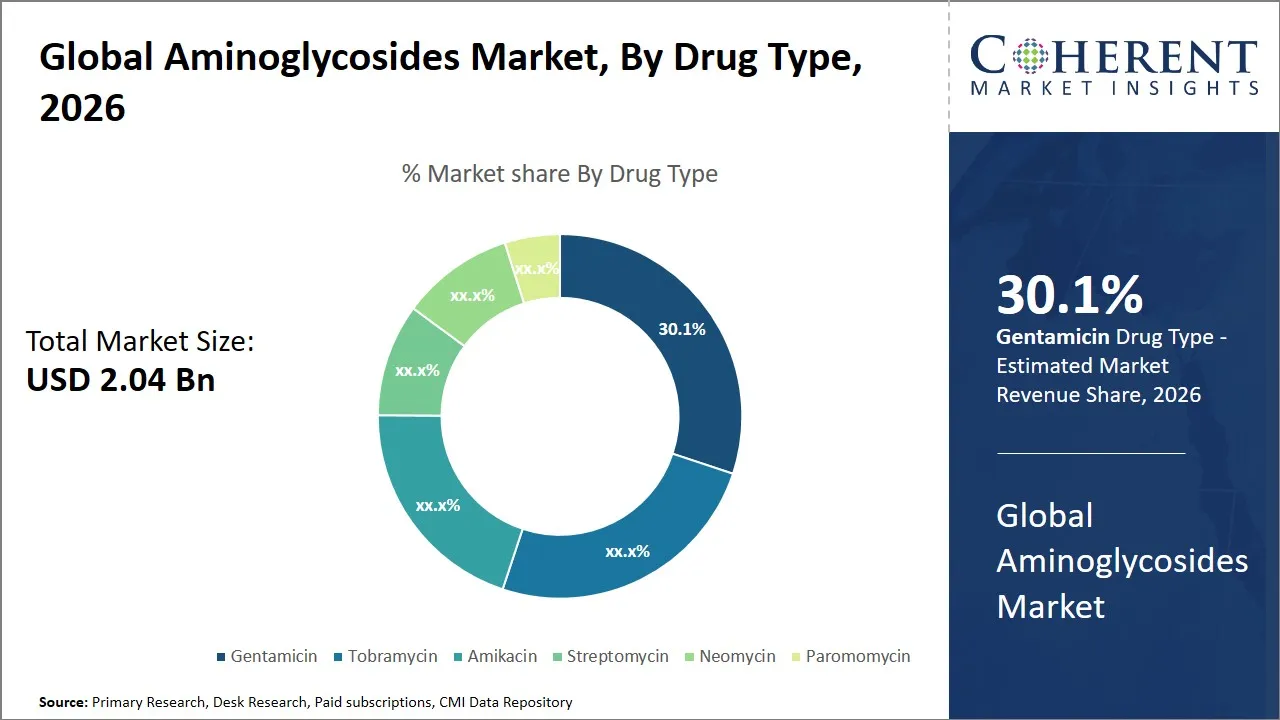
- Gentamicin segment is expected to lead the aminoglycosides market, accounting for 30.1 % share in 2026.
- The bacterial infections segment is estimated to hold 32.4 % of the market share in 2026.
- Parenteral segment is projected to dominate the market with a 43.4 % share in 2026.
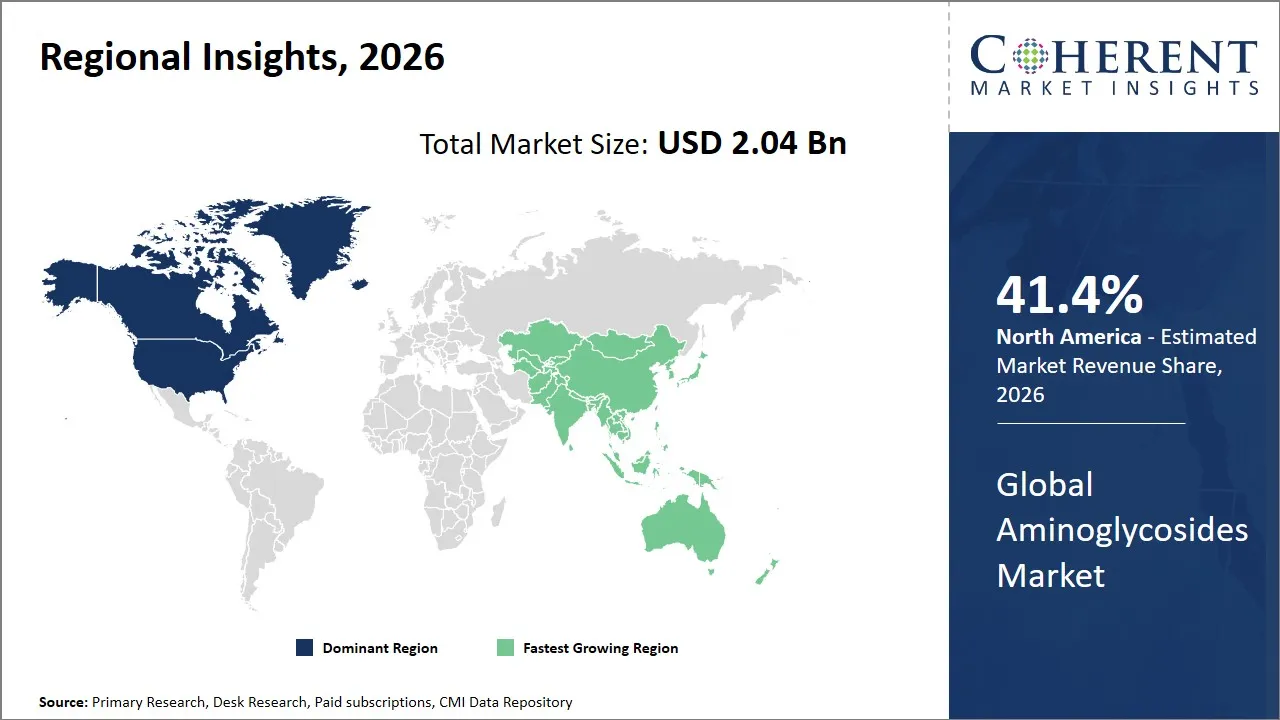
- North America is expected to lead the market, holding a share of 41. 4% in 2026.
- Asia Pacific is anticipated to be the fastest-growing region, with 24. 2% share in 2026.
Market Overview
- Market trends indicate a growing focus on developing novel aminoglycoside formulations with improved efficacy and reduced toxicity profiles.
- Additionally, advancements in drug delivery systems and rising awareness about antimicrobial resistance are shaping market dynamics.
- Increasing investments in research and development along with expanding applications in veterinary medicine also contribute to the positive outlook of the aminoglycosides market over the forecast period.
Current Events and Its Impact
Current Events | Description and its Impact |
Rising Adoption of the 'One Health' Approach to AMR |
|
Rising Antimicrobial Resistance (AMR) Pressure & Regulatory Focus |
|
Segmental Insights
- Current Industry Events of 2026
- Market Size Estimation
- Regional Breakdown
- Competitive Landscape
- Customer Intelligence
- Segmental Analysis
- Pricing Analysis
- Key Market Drivers, Challenges & Future Trends
- Customized Insights Section
Why does Gentamicin Contribute the Highest Share in the Aminoglycosides Market?
The Gentamicin segment is expected to hold 30.1% in 2026, as it has already proven itself as effective against a broad spectrum of Gram-negative bacterial infections. Gentamicin is one of the original ones discovered and most commonly prescribed amino glycosides and has continued to play a role in clinical practice particularly in the treatment of serious infections, including sepsis, endocarditis, and complicated urinary tract infections.
Its strong bactericidal effect is explained by the fact that it is capable of inhibiting the protein synthesis through binding to the bacterial 30S ribosomal subunit which causes the rapid death of bacterial cells. The wide-spectrum effect of Gentamicin allows it to treat a wide range of bacterial strains such as Pseudomonas aeruginosa, Klebsiella, and Escherichia coli that cause a number of hospital-acquired infections.
In March 2025, researchers at the University of Colorado Anschutz Medical Campus developed a promising nanogel-based drug delivery system for treating recurrent urinary tract infections (UTIs). The nanogels, combined with gentamicin and a special peptide, effectively delivered the antibiotic directly to bladder cells, eliminating over 90% of bacteria in animal models.
Why do Bacterial Infections Contribute the Highest Share in the Aminoglycosides Market?
The bacterial infections segment is projected to lead with a market share of 32.4% in 2026 due to the increasing number of community-acquired as well as hospital-associated bacterial diseases in the world.
As antimicrobial resistance (AMR) develops, Gram-negative infection caused by Pseudomonas aeruginosa, Acinetobacter baumannii and extended-spectrum beta-lactamase (ESBL) producing Enterobacteriaceae have become more difficult to treat, further increasing the dependence of aminoglycosides as therapeutic agents.
Why Parenteral Administration Dominates the Aminoglycosides Market?
In announcing the shareholder in the aminoglycosides market, the parenteral segment will occupy 43.4% in 2026, owing to their imperative role in the treatment of febrile and acute infection that demand swift therapeutic intervention.
The fast and full bioavailability with parenteral delivery is necessary to guarantee therapeutic drug concentrations are obtained within a short time in the blood which is required in life threatening situations such as septicemia, complicated urinary tract infections and severe respiratory infections.
Formulation Innovation and Delivery Improvements in the Aminoglycosides Market
- Formulation innovation and delivery improvements are crucial drivers in the evolution of the aminoglycosides market. Traditionally administered through injection or intravenous routes, aminoglycosides have a narrow therapeutic index, making precise dosing essential for effectiveness and minimizing toxicity. Recent advancements have focused on improving drug formulations, such as the development of extended-release formulations and liposomal encapsulation, which enhance drug stability, bioavailability, and tissue targeting. These innovations allow for less frequent dosing, potentially improving patient compliance and reducing side effects associated with aminoglycoside therapy.
- Furthermore, delivery improvements, including the development of novel drug delivery systems like inhalation aerosols and transdermal patches, are making it easier to administer these antibiotics, especially in critically ill patients. By optimizing the delivery mechanisms, these innovations help to achieve better localized drug action, reduce systemic exposure, and minimize adverse reactions. As a result, these formulation and delivery improvements not only enhance the clinical outcomes for patients but also broaden the potential applications of aminoglycosides in the treatment of resistant infections and other complex medical conditions.
Regional Insights
North America Aminoglycosides Market Analysis and Trends
In North America, the share of the global market of aminoglycosides is dominated by a well-developed healthcare system which has an estimated share of 41.4% in 2025, a strong presence in the pharmaceutical market, and effective regulatory systems that regulate drug safety and efficacy. The region also enjoys a lot of government investment in the field of healthcare and research that stimulates the manufacture and sale of modern aminoglycoside preparations.
The existence of major pharmaceutical firms like Pfizer, GlaxoSmithKline and Pfizer subsidiaries as well as a wide range of biotech firms dealing with treatment of diseases that are infectious, enforce the competitive ecosystem. Also, trade policies are in favor of pharmaceutical imports and exports, which contributes to a stable supply chain, and the prevalence of bacterial infections that are treated with aminoglycosides is high enough to keep the market in demand.
Asia Pacific Aminoglycosides Market Analysis and Trends
Asia Pacific is expected to show the best growth in the aminoglycosides market as it has the largest share of 24.2% in 2025 due to its growing healthcare infrastructure, growing awareness on the issue of infectious diseases and the growing access to advanced medical treatment. A number of the emerging economies in this region, especially India and China, have increased government efforts and investments, in terms of enhancing accessibility and ability to manufacture pharmaceuticals.
The high number of individuals in the region is a contributing factor to a rich pool of patient to aminoglycoside therapeutics and the development of local pharmaceutical firms like the Sun Pharma, Cipla and Dr. Reddy labs has led to innovation and competitive pricing.
Global Aminoglycosides Market Outlook for Key Countries:
What is Driving the Growth of the Aminoglycosides Market in the U.S.?
In the U.S., the aminoglycosides market is highly regulated by the relevant agencies such as the U.S. FDA, making the market to have high levels of regulation over drug safety and innovation. The involvement of major players such as Pfizer, Merck, and Johnson and Johnson has a significant presence and they have been investing in research to come up with next generation aminoglycosides with better efficacy and lower toxicity.
The popularity of the U.S. healthcare system to treat multidrug-resistant infections ensures the stability of demand, whereas strategic alliances and acquisitions ensure the market dynamism. The market is also reinforced through comprehensive clinical trials and government funding programs.
What Factors are Driving the Demand for Aminoglycosides in India’s Healthcare Sector?
The aminoglycosides market in India is growing fast owing to the extensive generic drugs production base that is backed by firms like Cipla, Sun Pharma, as well as the Dr. Reddy labs. The low prices of drugs, state policies that encourage export of pharmaceuticals and expansion of health care benefits growth.
High frequency of infectious diseases in the urban and rural settings poses an enormous demand of aminoglycosides. When regulatory enhancements are undertaken in line with the international standards, it attracts investment by multinational business that helps in promoting innovation and improvement of quality in the market.
How is Antibiotic Resistance Shaping Aminoglycoside Use in Germany?
Germany is still a market leader in the aminoglycosides market in Europe due to its well-developed pharmaceutical industry and well developed healthcare structure. Such companies as Bayer and Boehringer Ingelheim do their share in innovation and distribution. The accessibility to high-quality aminoglycoside products is guaranteed by the use of government funds in research and strict quality standards.
The market strength is also facilitated by the fact that Germany is a pharmaceutical export hub in Europe. Also, the interest in the antibiotic stewardship programs has an effect on the patterns of drug use, which prompts the creation of more targeted and less harmful aminoglycoside drugs.
What Impact Does Antibiotic Resistance Have on Aminoglycoside Usage in China?
The market in China is a sign of a fast growth due to massive government spending on healthcare modernization and the development of pharmaceuticals. The local companies like Hengrui Medicine and Fosun Pharma are significant in raising the production levels and diversifying the product lines of the aminoglycoside.
Increased accessibility to drugs is strengthened by the fact that focus on the rural healthcare framework and insurance coverage are high in the country. The changing regulatory environment and policies facilitating foreign collaboration in China make sharing of knowledge and adoption of technologies, which are paramount in the development of the market.
Low-Cost Generic Dependence and Supply Security Risks in the Aminoglycosides Market
- Low-cost generic dependence in the aminoglycosides market presents a significant challenge for manufacturers and healthcare systems. As generics dominate the market, there is heavy reliance on cost-effective versions of these antibiotics, often sourced from low-cost production regions. While this offers affordable treatment options, it creates risks in terms of supply security, particularly when manufacturers in these regions face operational disruptions, regulatory changes, or geopolitical instability. Additionally, generic drugs may vary in quality, leading to concerns over consistency and safety in patient treatment.
- Supply security risks are heightened by the concentration of production in a few countries and the dependence on key active pharmaceutical ingredient (API) suppliers. Any disruption, whether due to natural disasters, regulatory tightening, or trade barriers, can lead to significant delays in drug availability. This poses a threat to public health, especially for critical conditions requiring aminoglycosides, such as bacterial infections. The market’s vulnerability to supply chain shocks underscores the need for diversification in manufacturing and distribution networks to ensure stable access to these essential antibiotics.
Market Players, Key Developments, and Competitive Intelligence
Key Developments
- In May 2025, Cipla Limited, a global pharmaceutical company, launched ZEMDRI (Plazomicin) in India. This new intravenous aminoglycoside targets complicated urinary tract infections (cUTI), including pyelonephritis, caused by resistant bacteria. ZEMDRI is approved for patients 18 years and older and offers a once-daily treatment option.
- In March 2025, Avenacy, a specialty pharmaceutical company focused on injectable medications, launched five new antibiotic products in the U.S. These include Ampicillin for Injection, Ampicillin and Sulbactam for Injection, Nafcillin for Injection, Penicillin G Potassium for Injection, and Piperacillin and Tazobactam for Injection.
- In March 2025, McMaster University researchers, led by Professor Gerry Wright, announced the discovery of a new class of antibiotics called lariocidin, a promising solution to tackle drug-resistant bacteria. Published in Nature, this breakthrough responds to the growing global threat of antimicrobial resistance (AMR), which causes 4.5 million deaths annually.
- In November 2024, Union Minister Dr. Jitendra Singh announced the soft launch of Nafithromycin, India’s first indigenous antibiotic designed to tackle drug-resistant pneumonia. Developed with support from the Biotechnology Industry Research Assistance Council (BIRAC) and pharma company Wockhardt, Nafithromycin offers 10 times the efficacy of current treatments, requiring just three doses for patients.
Top Strategies Followed by Global Aminoglycosides Market Players
Player Type | Strategic Focus | Examples |
Established Market Leaders | Heavy R&D investment in high-performance aminoglycoside products; focus on scientific advancements, addressing antibiotic resistance; strategic partnerships with OEMs, key suppliers, and industry players; global expansion into emerging markets like Asia-Pacific, Latin America, and Africa | Pfizer invests in R&D for innovative aminoglycosides; Merck forms strategic partnerships to expand in emerging markets |
Mid-Level Players | Cost-effective aminoglycoside solutions balancing quality and affordability; collaborations with technology providers and suppliers; focus on price-sensitive consumers, especially in low- and middle-income countries | Teva offers affordable aminoglycosides with strategic collaborations; Sandoz captures market share in cost-sensitive regions |
Small-Scale Players | Niche innovation in aminoglycosides; focus on biotechnology, novel delivery systems, and improved stability; rapid product development and local alliances for market entry | Amgen focuses on specialized aminoglycoside formulations; Hikma Pharmaceuticals develops niche-targeted antibiotics |
Market Report Scope
Aminoglycosides Market Report Coverage
| Report Coverage | Details | ||
|---|---|---|---|
| Base Year: | 2025 | Market Size in 2026: | USD 2.04 Bn |
| Historical Data for: | 2020 To 2024 | Forecast Period: | 2026 To 2033 |
| Forecast Period 2026 to 2033 CAGR: | 6.1% | 2033 Value Projection: | USD 3.09 Bn |
| Geographies covered: |
| ||
| Segments covered: |
| ||
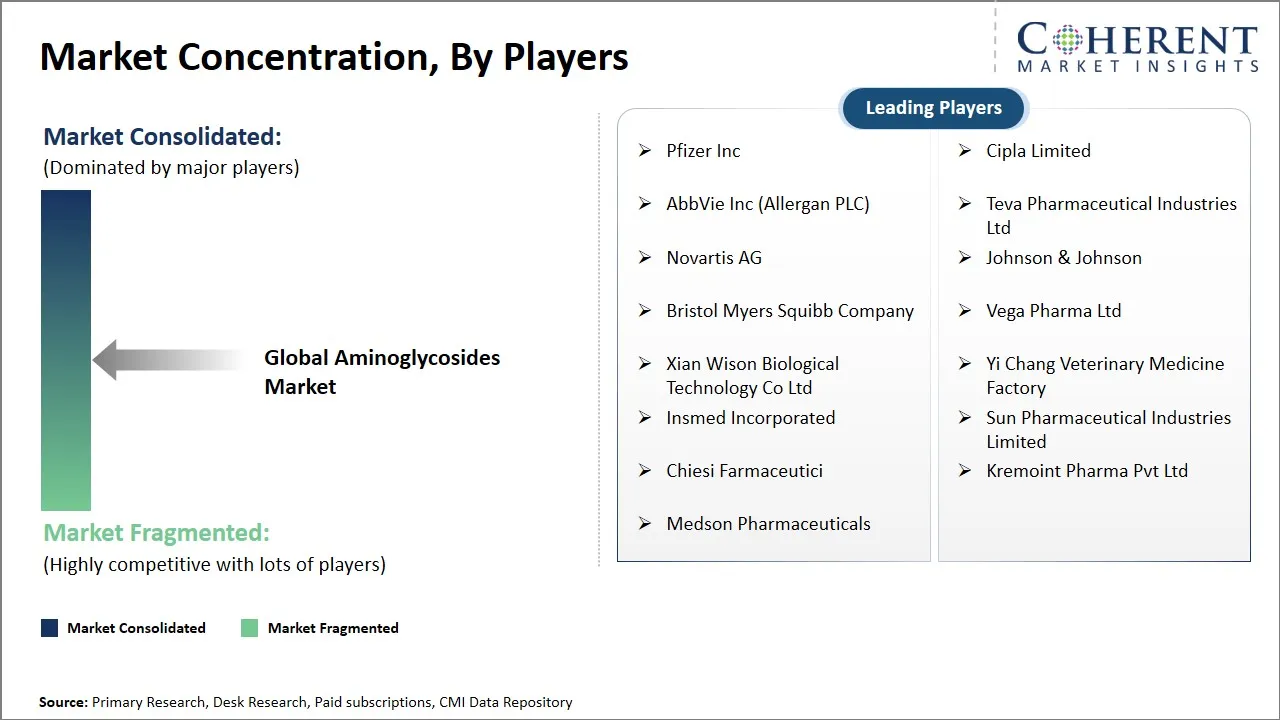
| Companies covered: | Pfizer Inc, Cipla Limited, AbbVie Inc (Allergan PLC), Teva Pharmaceutical Industries Ltd, Novartis AG, Johnson & Johnson, Bristol Myers Squibb Company, Vega Pharma Ltd, Xian Wison Biological Technology Co Ltd, Yi Chang Veterinary Medicine Factory, Insmed Incorporated, Sun Pharmaceutical Industries Limited, Chiesi Farmaceutici, Kremoint Pharma Pvt Ltd, and Medson Pharmaceuticals | ||
| Growth Drivers: |
| ||
| Restraints & Challenges: |
| ||
Aminoglycosides Market Dynamics
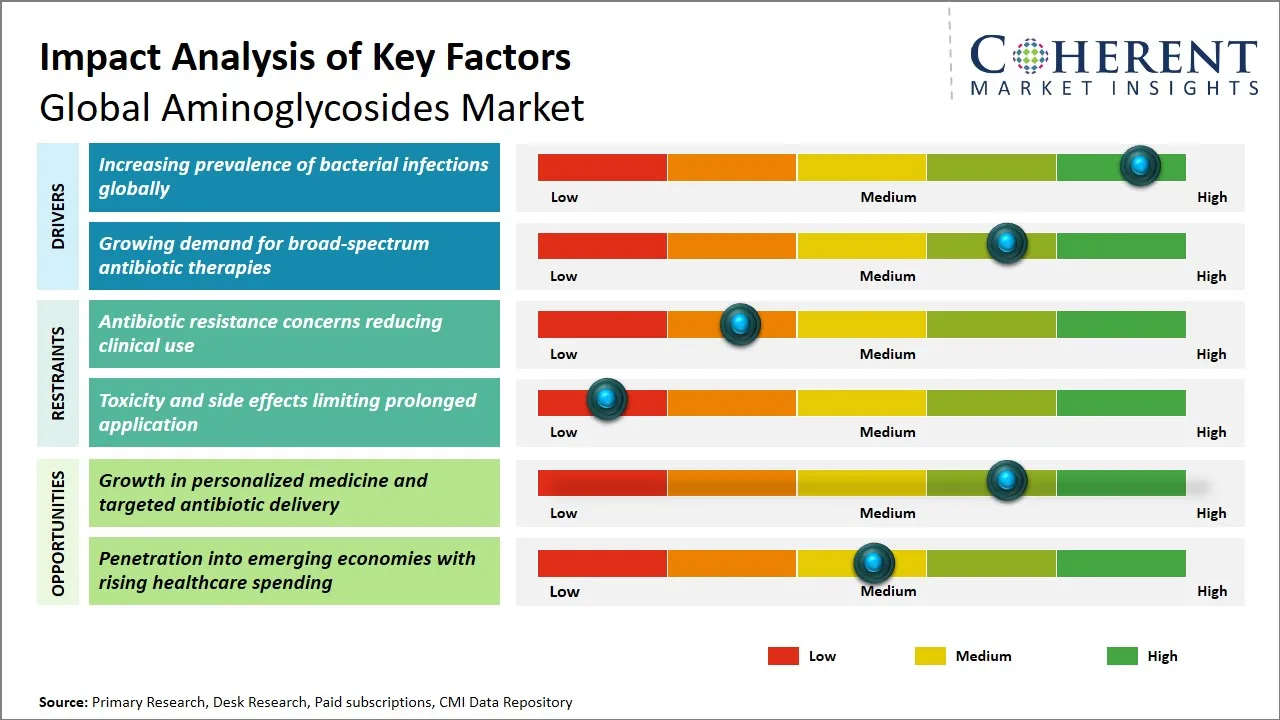
Aminoglycosides Market Driver - Increasing Prevalence of Bacterial Infections Globally
The increasing rate of bacterial infections in different parts of the world is a severe variable driving the market in the global aminoglycosides. With the recent spread and evolution of bacterial pathogens, both in the community and healthcare facilities, there has been a growing demand of an effective treatment using antibiotics. Aminoglycosides are commonly known to be effective in severe Gram-negative bacterial infections such as infections of the respiratory tract, bloodstream as well as complicated urinary tract. This worrying trend on antimicrobial resistance has further increased the use of aminoglycosides as a combination therapy to control multidrug-resistant strains. Moreover, the global factors leading to susceptibility to bacterial infections are growing population density, old age, and more prevalence of chronic diseases.
In October 2025, the WHO warned that 1 in 6 bacterial infections worldwide were resistant to antibiotics. Between 2018 and 2023, resistance increased in over 40% of pathogen-antibiotic combinations. Gram-negative bacteria like E. coli and K. pneumoniae are particularly concerning, with high resistance to essential antibiotics. WHO urges stronger surveillance systems and responsible antibiotic use to combat antimicrobial resistance (AMR). The organization calls for action to address AMR through coordinated efforts in human, animal, and environmental health. Countries must report data to WHO’s GLASS by 2030.
Aminoglycosides Market Opportunity - Growth in Personalized Medicine and Targeted Antibiotic Delivery
The growing interest in the personalized medicine and targeted delivery of antibiotic will be a global opportunity in the aminoglycosides market. The need to make healthcare more individualistic, and more focused on addressing patient profiles and infection features specifically, increases the demand of antibiotics accordingly. Aminoglycosides, which are capable of treating serious bacterial infections, will gain a lot of new potential with the help of the development of genomic profiling and biomarkers identified that will allow clinicians to design antibiotic regimens that would have the most positive effects and the least negative ones. This type of target can be used to decrease risks of toxicity that is usually related to aminoglycosides including nephrotoxicity and ototoxicity, and leading to patient improvements in safety and adherence.
In November 2022, Texas A&M University researchers introduced a new targeted delivery system for antibiotics. The method focuses on using weak ligand pairs found on bacterial membranes to directly deliver antibiotics, making them more effective against multidrug-resistant pathogens. By reducing antibiotic dosage, this system targets bacteria like Pseudomonas aeruginosa and Mycobacterium tuberculosis. This approach could slow the spread of infections and reduce the development of resistance.
(Source:https://stories.tamu.edu/news/2022/11/03/antibiotics-boosted-with-new-targeted-delivery-system/)
Analyst Opinion (Expert Opinion)
- The market of aminoglycosides is expanding because of the improvement in technology, the demand to treat the drug-resistant infections, and the highly supportive role of the regulatory authorities in antimicrobial stewardship. Combination therapy innovations and the next-gen formulations are providing new opportunities especially in the critical care. Nonetheless, growth can be hampered by issues such as high cost of development, regulatory obstacles and fears of over-use of antibiotics.
- The knowledge-sharing and policy-making are crucial through conferences such as the International Congress on Infectious Diseases and WHO AMR meetings. The development of resistance is being fought through initiatives like the U.S. National Action Plan on Antibiotic Resistance that are increasing investment in the development of antibiotics as well as maintaining the usefulness of aminoglycosides in the treatment of resistance infections.
Speak to the analyst
Want personalized insights?
Take the findings above to one of our principal consultants, or have the report rebuilt around the segments, geographies and competitors you actually track.
Market Segmentation
- Drug Type Insights (Revenue, USD Bn, 2021 - 2033)
- Gentamicin
- Tobramycin
- Amikacin
- Streptomycin
- Neomycin
- Paromomycin
- Application Insights (Revenue, USD Bn, 2021 - 2033)
- Bacterial Infections
- Tuberculosis
- Cystic Fibrosis
- Urinary Tract Infections (UTIs)
- Respiratory Infections
- Gastrointestinal Infections
- Dosage Form Insights (Revenue, USD Bn, 2021 - 2033)
- Parenteral
- Oral
- Topical
- End User Insights (Revenue, USD Bn, 2021 - 2033)
- Hospitals
- Clinics
- Home Care Settings
- Research Laboratories
- Distribution Channel Insights (Revenue, USD Bn, 2021 - 2033)
- Hospitals Pharmacies
- Retail Pharmacies
- Online Pharmacies
- Regional Insights (Revenue, USD Bn, 2021 - 2033)
- North America
- U.S.
- Canada
- Latin America
- Brazil
- Argentina
- Mexico
- Rest of Latin America
- Europe
- Germany
- U.K.
- Spain
- France
- Italy
- Russia
- Rest of Europe
- Asia Pacific
- China
- India
- Japan
- Australia
- South Korea
- ASEAN
- Rest of Asia Pacific
- Middle East
- GCC Countries
- Israel
- Rest of Middle East
- Africa
- South Africa
- North Africa
- Central Africa
- North America
- Key Players Insights
- Pfizer Inc
- Cipla Limited
- AbbVie Inc (Allergan PLC)
- Teva Pharmaceutical Industries Ltd
- Novartis AG
- Johnson & Johnson
- Bristol Myers Squibb Company
- Vega Pharma Ltd
- Xian Wison Biological Technology Co Ltd
- Yi Chang Veterinary Medicine Factory
- Insmed Incorporated
- Sun Pharmaceutical Industries Limited
- Chiesi Farmaceutici
- Kremoint Pharma Pvt Ltd
- Medson Pharmaceuticals
Sources
Primary Research Interviews
Industry Stakeholders List
- Healthcare Professionals (Infectious Disease Specialists)
- Pharmaceutical Manufacturers (Aminoglycosides Producers)
End Users List
- Hospitals and Healthcare Providers
- Pharmacy Distributors and Retailers
Government and International Databases
- World Health Organization (WHO)
- U.S. Food and Drug Administration (FDA)
- European Medicines Agency (EMA)
- National Institutes of Health (NIH)
- Centers for Disease Control and Prevention (CDC)
- U.S. Department of Health and Human Services (HHS)
Trade Publications
- The Pharmaceutical Journal
- Antibiotics and Antimicrobials Journal
- European Journal of Clinical Microbiology & Infectious Diseases
- Pharmaceutical Technology Europe
- Journal of Antimicrobial Chemotherapy
- Drug Development and Industrial Pharmacy
Academic Journals
- The Lancet Infectious Diseases
- International Journal of Antimicrobial Agents
- Clinical Infectious Diseases Journal
- Antimicrobial Agents and Chemotherapy Journal
- Journal of Clinical Pharmacology
- Journal of Antimicrobial Chemotherapy
Reputable Newspapers
- The New York Times (Health Section)
- The Guardian (Science Section)
- The Washington Post (Health Section)
- Reuters Health
- BBC News (Health)
- Bloomberg Health
Industry Associations
- Infectious Diseases Society of America (IDSA)
- International Society of Antimicrobial Chemotherapy (ISAC)
- American Society for Microbiology (ASM)
- European Society of Clinical Microbiology and Infectious Diseases (ESCMID)
- Pharmaceutical Research and Manufacturers of America (PhRMA)
- American Pharmacists Association (APhA)
Public Domain Resources
- National Institutes of Health (NIH)
- U.S. National Library of Medicine
- WHO Global Health Observatory
- European Commission Public Health Database
- Centers for Disease Control and Prevention (CDC) Data and Statistics
- National Health Service (NHS) Database
Proprietary Elements
- CMI Data Analytics Tool: Proprietary analytics tool to analyze real-time market trends, consumer behavior, and technology adoption in market
- Proprietary CMI Existing Repository of Information for Last 8 Years
Get access to 250+ pages report
Every segment, forecast, competitor profile and data table behind the analysis above — available for instant download.
- ESOMAR Member
- ISO 9001:2015 Certified
- D-U-N-S Registered
- GDPR & CCPA Compliant
Missing comfort of reading report in your local language? Find your preferred language:
Transform your Strategy with Exclusive Trending Reports
Frequently Asked Questions
The global aminoglycosides market is estimated to be valued at USD 2.04 Bn in 2026 and is expected to reach USD 3.09 Bn by 2033.
The CAGR of global aminoglycosides market is projected to be 6.1% from 2026 to 2033.
Increasing prevalence of bacterial infections globally and growing demand for broad‑spectrum antibiotic therapies are the major factors driving the growth of the global aminoglycosides market.
Antibiotic resistance concerns reducing clinical use and toxicity and side effects limiting prolonged application are the major factors hampering the growth of the global aminoglycosides market.
In terms of drug type, gentamicin is estimated to dominate the market revenue share in 2026.
Antibiotic resistance reduces the effectiveness of aminoglycosides, making infections harder to treat.
Stricter regulations around antibiotic use and resistance are pushing for more controlled aminoglycoside usage and innovations.