

Asia Pacific Flat Glass Market Size and Forecast – 2026 To 2033
The Asia Pacific flat glass market is expected to grow from USD 158.62 Bn in 2026 to USD 224.68 Bn by 2033, registering a compound annual growth rate (CAGR) of 5.1%. The Asia Pacific flat glass market is strongly linked to rapid urbanization and large-scale infrastructure development in China, India, and Southeast Asia. According to the World Bank Report, India alone requires ~USD 840 billion infrastructure investment by 2036 to support urban expansion and housing demand. (Source: World Bank Report)
Key Takeaways of the Asia Pacific Flat Glass Market
- Tempered is projected to dominate the Asia Pacific flat glass market with a 45.7% share in 2026, driven by its superior safety, strength, and thermal resistance properties. It is widely used in high-rise facades, doors, windows, and automotive glazing applications due to stringent building safety codes and increasing adoption of energy-efficient glazing systems. Demand is further reinforced by rapid urban high-rise development across China, India, and Southeast Asia, where safety glazing regulations are becoming more stringent in commercial and residential construction. For example, India is expected to add over 600 million urban residents by 2036, driving sustained demand for residential and commercial buildings (Source: MoHUA, Government of India).
- Architectural is expected to hold 69.5% share of the Asia Pacific flat glass market in 2026, supported by accelerating urban infrastructure and commercial construction activity. The segment benefits from strong demand for curtain walls, facades, skylights, and energy-efficient glazing systems in smart buildings and green-certified construction projects. For example, Asia requires ~US$1.7 trillion annual infrastructure investment to sustain growth momentum (Source: ADB org)
- Net Zero Construction Alignment: The Asia Pacific flat glass market growth is increasingly driven by the shift toward net-zero and energy-efficient buildings, where high-performance glazing solutions play a critical role. Products such as Low-E glass, solar control glass manufacturing, and insulated glazing units help reduce heat gain and energy consumption in buildings, directly supporting green building codes and carbon-neutral construction goals.
- Market Expansion Catalysts: The market is expanding rapidly due to a combination of construction boom, automotive growth, and renewable green energy integration, especially solar installations. Asia Pacific remains the fastest-growing region, supported by large-scale infrastructure projects, urbanization, and rising demand for high-rise commercial and residential buildings.
Segmental Insights
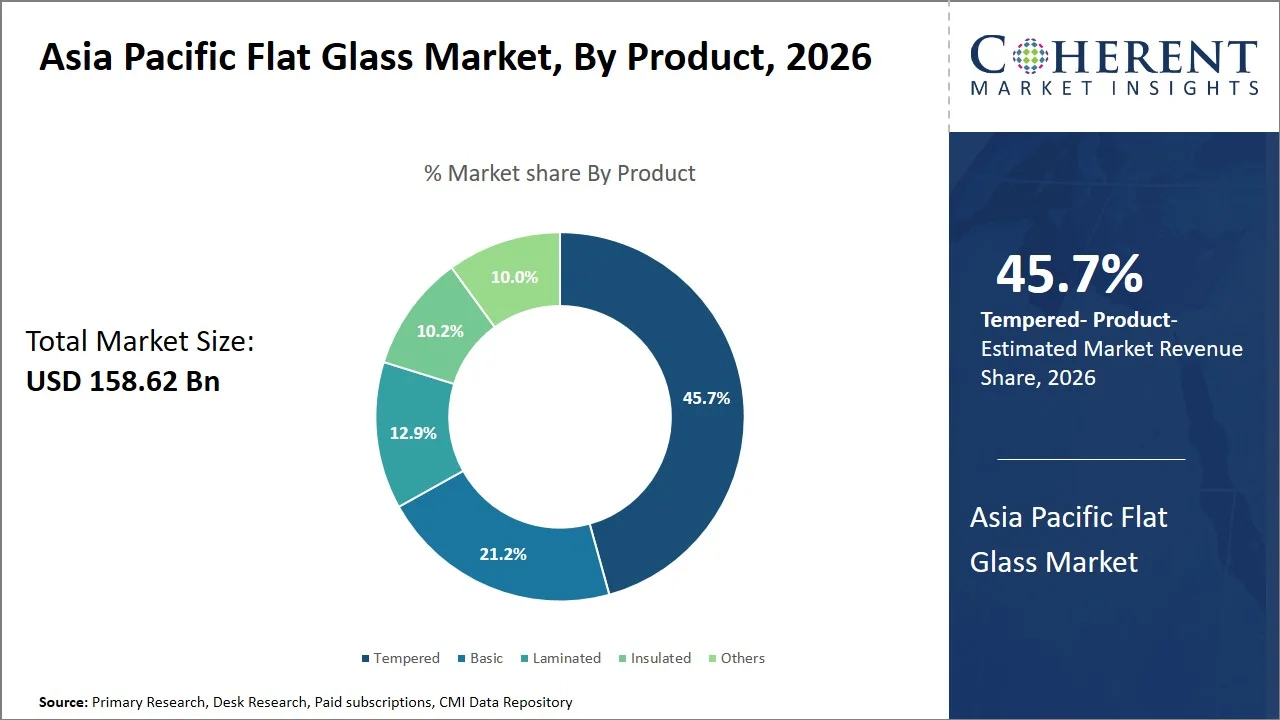
Why Does the Tempered Dominate the Asia Pacific Flat Glass Market?
Tempered is expected to hold 45.7% of the Asia Pacific flat glass market share in 2026, because it has become the standard safety and performance-grade material across both construction and automotive sectors, particularly in rapidly urbanizing economies such as China, India, and countries in Southeast Asia. The surge in high-rise residential and commercial developments has led to the stricter enforcement of safety regulations, with building codes increasingly mandating the use of safety glazing in facades, doors, windows, and structural applications (e.g., China’s GB 15763 safety glazing standard, India’s National Building Code of India 2016, and Singapore’s Building Control Act). Tempered glass is preferred because of its superior mechanical strength—typically four to five times stronger than standard annealed glass—and its safe breakage pattern, where it shatters into small, blunt granules rather than sharp shards, making it ideal for dense urban environments and high-footfall infrastructure such as malls, airports, and metro stations.
- Current Industry Events of 2026
- Market Size Estimation
- Regional Breakdown
- Competitive Landscape
- Customer Intelligence
- Segmental Analysis
- Pricing Analysis
- Key Market Drivers, Challenges & Future Trends
- Customized Insights Section
Why is Architectural the Most Preferred Application?
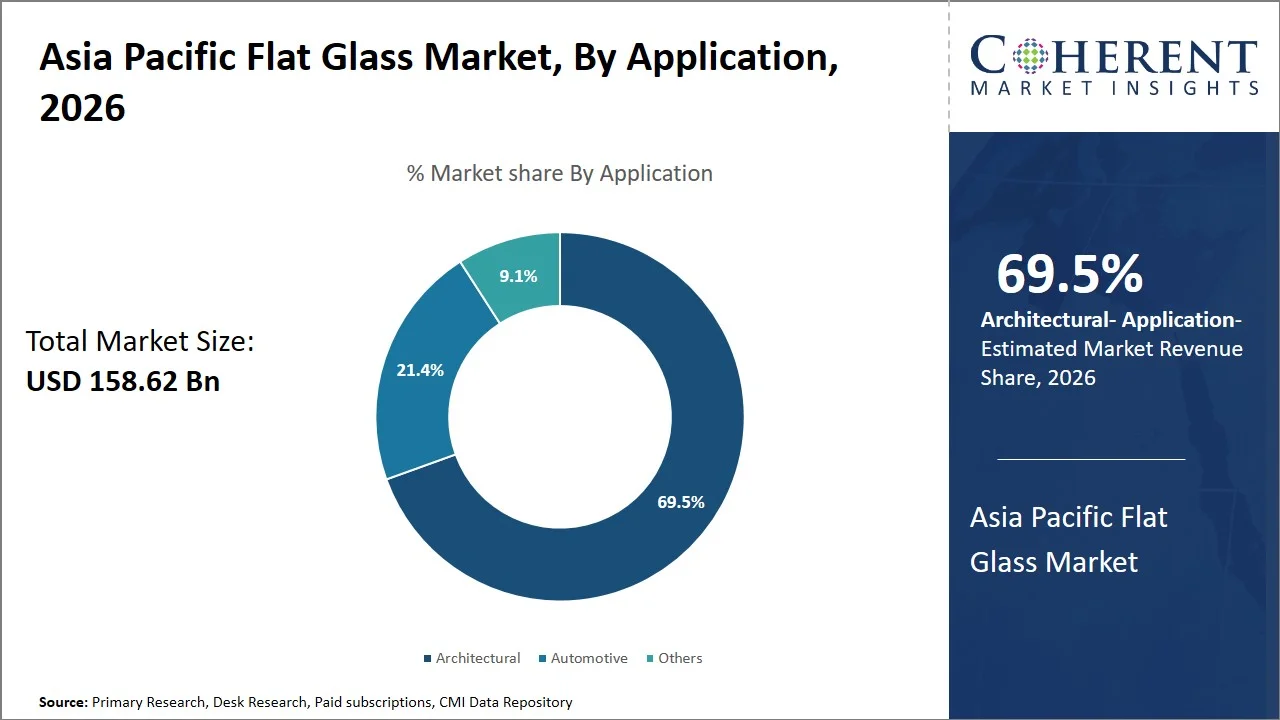
Architectural segment is projected to hold 69.5% of the Asia Pacific flat glass market share in 2026, because construction activity is the largest and most consistent consumer of flat glass across the region. Rapid urbanization in countries such as China and India is driving the large-scale development of residential housing, commercial buildings, and public infrastructure, all of which rely heavily on flat glass for windows, facades, partitions, and curtain wall systems. Governments are also accelerating infrastructure growth through initiatives like India’s Smart Cities Mission, which promotes the construction of modern, glass-intensive urban spaces.
For instance, the rapid expansion of IT parks and commercial complexes in cities like Bengaluru involves the extensive use of glass facades, where a single large office project can consume vast quantities of flat glass. (Source: atimysore.karnataka.gov)
Currents Events and their Impact
Current Events | Description and its Impact |
China–India construction-led infrastructure surge (Urbanization acceleration) |
|
Regulatory push for energy-efficient and green buildings |
|
(Source: abd.org)
Asia Pacific Flat Glass Market Dynamics
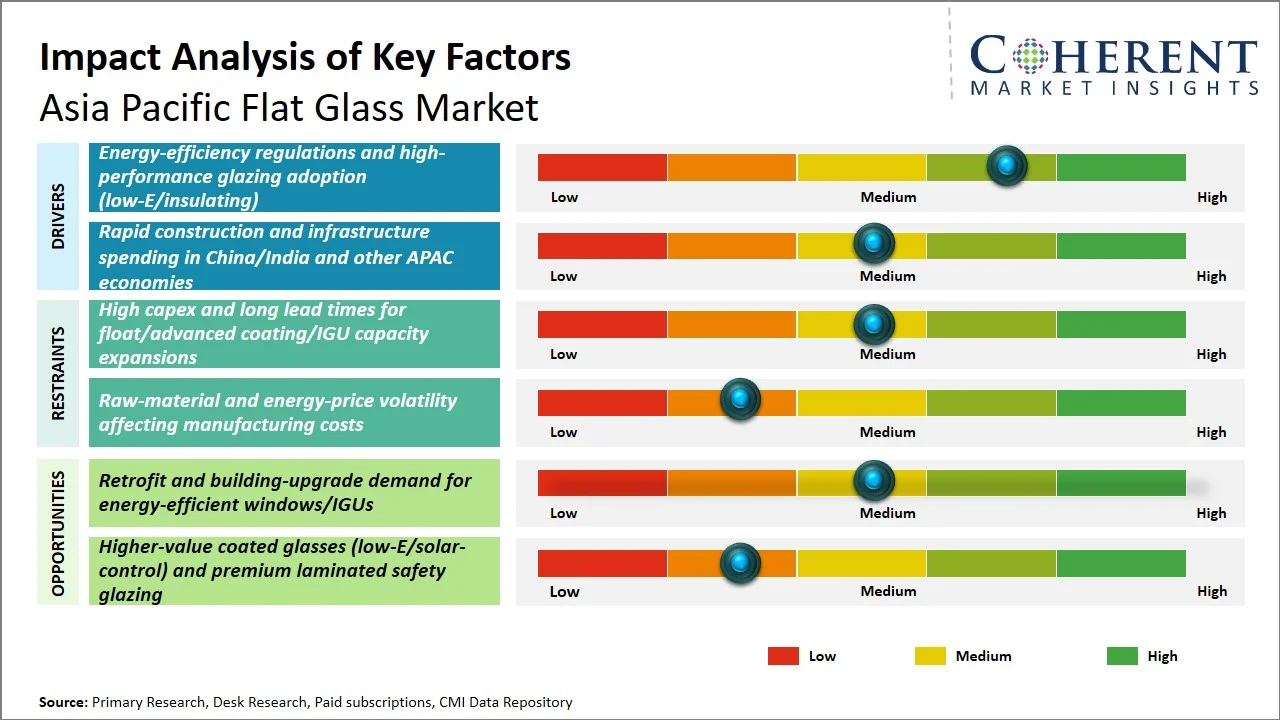
Market Drivers
- Energy-efficiency regulations and high-performance glazing adoption (low ‑ E/insulating): Across Asia Pacific, energy-saving rules and regulations drive demand towards low-E and insulated glazing systems. This is directly hastening the need for high-performance glazing solutions including low-emissivity (low-E) coated glass and insulated glass unit (IGU) which is an effective strategy to reduce heat transfer through building envelopes.
- Key performance indicators such as U-value and solar heat gain coefficient (SHGC) are standardized by regulatory frameworks and certification systems (including National Fenestration Rating Council (NFRC)-based testing mentioned in ENERGY STAR methodologies). It is therefore becoming a requirement that developers and architects must now satisfy the quantified energy-performance threshold as opposed to the conventional use of glazing. (Source: energy star. gov)
- Rapid construction and infrastructure spending in China/India and other APAC economies: The demand for flat glass in the market is strongly correlated with the rate of construction activity and large-scale urban development, especially in high-growth markets such as China and India. In the region, more than 60% of the total flat glass adoption is directly dependent on the real estate and infrastructure cycles. China alone is estimated to contribute the largest portion of regional demand of over half with continuous urban redevelopment and large-scale commercial and residential high-rise construction pipelines.
Emerging Trends
- Premiumization and High-Performance Glass Adoption: Flat glass is increasingly shifting from basic float glass to value-added solutions such as low-E, solar control, laminated, acoustic, and smart glass. Demand is driven by architects and developers seeking higher aesthetics, energy efficiency, and building performance, especially in premium commercial and residential projects.
- Strong Push Toward Energy-Efficient and Sustainable Glazing: Regulatory pressure and ESG commitments are accelerating adoption of energy-efficient IGUs and low-carbon glass solutions. Green building certifications and rising electricity costs are making sustainable glazing a default specification in urban construction and retrofit projects.
- Smart and Functional Glass Integration: Growth of smart cities and high-end infrastructure is driving the adoption of electrochromic glass, self-cleaning coatings, and digitally integrated glazing systems, enhancing comfort, energy control, and building intelligence.
Macro & Micro Economic Factors Impacting on Market
Factor Category | Factor | Impact on Asia Pacific Flat Glass Market |
Economic Growth | GDP growth in Asia Pacific | Positive |
Infrastructure Development | Smart cities, highways, airports | Strong positive |
Demand from Construction Sector | Architectural glass usage | Very strong positive |
Solar Industry Growth | Photovoltaic installations | Strong positive |
How are the Retrofit and Building-Upgrade Demand for Energy-Efficient Windows/IGUs Creating New Growth Opportunities in the Asia Pacific Flat Glass Market?
The high structural growth potential in the Asia Pacific flat glass market is being created by the growing demand of energy-efficient windows and insulated glass units (IGUs) not just in new building construction, but equally in modernizing the existing buildings. The large base of aging commercial and residential buildings throughout cities such as Shanghai, Mumbai, Bangkok and Jakarta still rely on single-glazed or basic tinted glass, which is now being phased out in favor of either double-glazed IGUs or low-E glass to improve thermal performance and reduce the amount of HVAC energy consumed.
Practically, older office clusters like the Bandra-Kurla Complex in Mumbai are increasingly upgrading facades to reduce cooling costs, and commercial buildings in the Central Business District (CBD) of Singapore are adopting high-performance glazing to meet the Green Mark sustainability requirements. An increasing electricity and air-conditioning bills in hot climates are further entrenching retrofit economics, making IGUs a money-saving investment instead of just a design upgrade.
A notable example is the retrofitting of aging commercial towers in Shanghai’s Lujiazui financial district, where building owners have replaced older single-glazed façades with double-glazed IGUs to significantly reduce cooling loads and improve energy ratings.
Market Players, Key Development, and Competitive Intelligence
Key Developments
- In November 2024, AGC announced the launch of its innovative photovoltaic glass, a significant advancement in flat glass technology. This new product directly integrates solar energy generation capabilities into building materials, promoting sustainability and energy efficiency. Designed for various architectural applications, AGC's photovoltaic glass enhances aesthetic appeal and contributes to reducing carbon footprints. This development reflects AGC's commitment to developing sustainable flat glass solutions that meet modern energy demands while supporting eco-friendly construction practices.
- In February 2024, Saint-Gobain Glass India announced its collaboration with Xynteo's Build Ahead Coalition to enhance decarbonization in the Indian construction sector. This partnership aims to promote low-carbon building materials, including flat glass, as part of efforts to achieve net-zero emissions by 2070. The initiative was launched during "The Exchange" event in New Delhi, bringing together industry leaders to discuss sustainable practices. Saint-Gobain's commitment to reducing carbon footprints through innovative glass solutions underscores its role in fostering sustainable construction practices in India.
Competitive Landscape
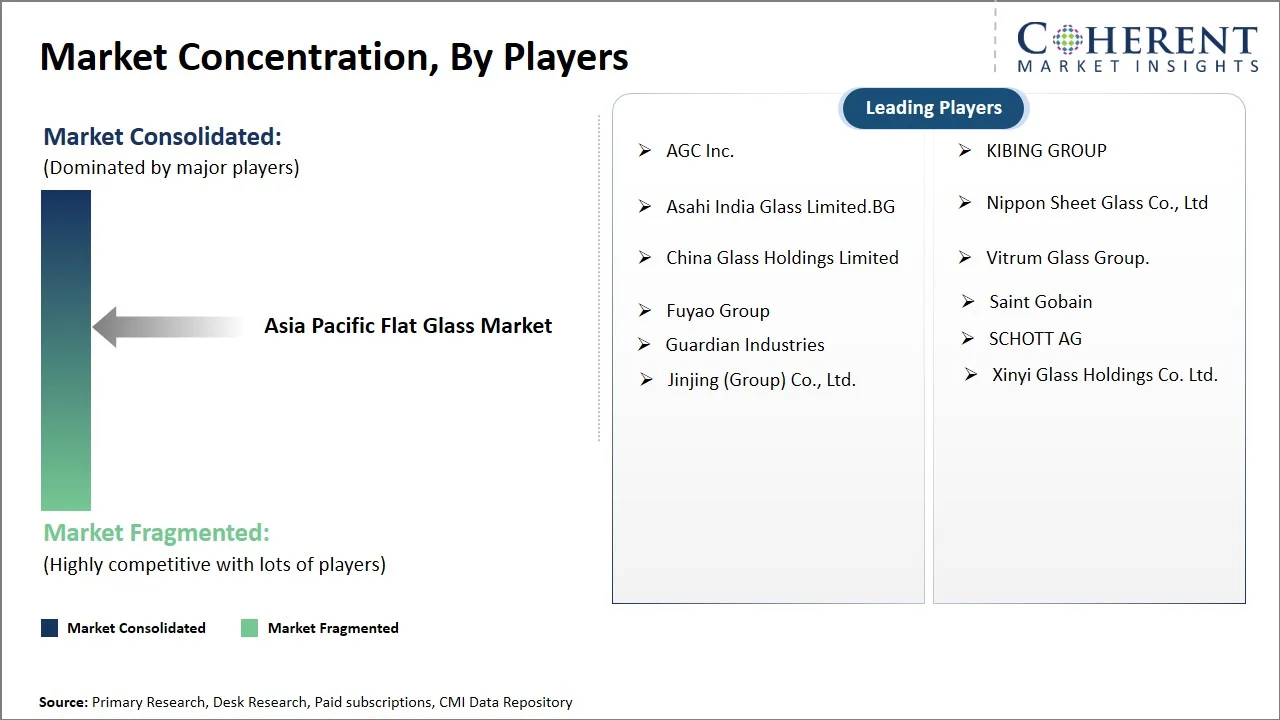
The Asia Pacific flat glass market is highly consolidated at the top but fragmented overall, with intense competition between global glass giants and strong regional manufacturers. Established players dominate through scale, technology leadership, and integrated supply chains, while regional firms compete aggressively on cost efficiency and localized supply. Key focus areas include:
- Shift to high-performance glass products
- Capacity expansion and tech upgrades
- Strategic partnerships and integration
Market Report Scope
Asia Pacific Flat Glass Market Report Coverage
| Report Coverage | Details | ||
|---|---|---|---|
| Base Year: | 2025 | Market Size in 2026: | USD 158.62 Bn |
| Historical Data for: | 2020 To 2024 | Forecast Period: | 2026 To 2033 |
| Forecast Period 2026 to 2033 CAGR: | 5.1% | 2033 Value Projection: | USD 224.68 Bn |
| Segments covered: |
| ||
| Companies covered: | AGC, Inc., Asahi India Glass Limited. BG, China Glass Holdings Limited, Fuyao Group, Guardian Industries, Jinjing (Group) Co., Ltd., KIBING GROUP, Nippon Sheet Glass Co., Ltd, Saint Gobain, SCHOTT AG, and Xinyi Glass Holdings Co. Ltd | ||
| Growth Drivers: |
| ||
| Restraints & Challenges: |
| ||
Analyst Opinion (Expert Opinion)
- The Asia Pacific flat glass market is changing from a volume-driven and commodity-based market to a specification-based and performance-oriented building materials industry. The future development will be dominated by the demand for engineered glass product like low-E coated, laminated safety, acoustical, and energy efficient insulated glass units and basic float glass. Meanwhile, growth will be progressively less and less reliant on pure new construction to increasingly become reliant on retrofit and replacement cycles, especially in the mature urban centers of China, Japan, and South Korea where increasingly tightening energy efficiency regulations are accelerating the upgrading of buildings. The other structural change is the greater integration of flat glass into system-level applications, like curtain walls, facade systems, and prefabricated modular construction, which enhances specification stickiness and reduces transactional buying behavior.
- Geographically, on an opportunity basis, India is the best-underpenetrated high-growth market, where rapid urbanization, a government-supported housing program, and concentration of developer-led construction are creating an excellent pipeline to the standardization and large-scale specification of glass, particularly in high-rise residential and commercial projects in metro and Tier-2 cities. Vietnam and Indonesia are emerging as fast-adoption markets of factory-integrated and pre-laminated glass systems, accompanied by foreign direct investment (FDI) inflows for manufacturing and a boom in modular construction in urban housing and industrial infrastructure is a boon. China is still an enormous scale replacement and retrofit opportunity, which is driven by sustainability requirements and carbon reduction strategies. Japan and South Korea are still high value innovation markets in advanced facade systems and smart glass applications.
Speak to the analyst
Want personalized insights?
Take the findings above to one of our principal consultants, or have the report rebuilt around the segments, geographies and competitors you actually track.
Market Segmentation
- Product Insights (Revenue, USD Bn, 2021 - 2033)
- Tempered
- Basic
- Laminated
- Insulated
- Others
- Application Insights (Revenue, USD Bn, 2021 - 2033)
- Architectural
- Automotive
- Others
Sources
Primary Research Interviews
- Flat glass manufacturers and processors
- Supply Chain Heads of float glass producers in Asia Pacific
- Sustainability/ESG officers from glass manufacturing companies
- Technical heads from architectural glazing solution providers
- Procurement managers from construction material distributors
- Energy-efficient building consultants specializing in façade systems
Stakeholders
- Manufacturers of flat glass (e.g., AGC Inc., Xinyi Glass Holdings)
- End-use Sectors
- Residential Construction Developers (e.g., DLF, Godrej Properties, Sun Hung Kai Properties)
- Commercial Real Estate Developers (e.g., CapitaLand, Dexus, Mitsubishi Estate)
- Automotive Manufacturers (Toyota, Hyundai, Tata Motors – for automotive flat glass demand)
- Solar PV Manufacturers (First Solar suppliers, LONGi, Trina Solar)
- Facade Contractors & Glazing Specialists (Aluminium curtain wall installers, EPC façade firms)
- Regulatory & Certification Bodies: Bureau of Indian Standards (BIS – glass and safety glazing standards), and China National Standardization Administration (GB standards for glass)
Databases
- UN Comtrade Database (HS Code 7005 – float glass and glass sheets)
- India EXIM Database (glass imports/exports – flat glass categories)
- China Customs Statistics (largest global flat glass exporter data)
- Eurostat Trade Statistics (glass sheets, safety glass imports/exports)
- USITC DataWeb (flat glass and architectural glass imports)
Magazines
- Glass Magazine – global flat glass manufacturing trends
- Glass International – float glass production and technology
- Architectural Record – façade and glazing applications
- Building Design + Construction (BD+C) – commercial glazing trends
- Construction Week Asia – regional construction material demand
Journals
- Construction and Building Materials – glass strength and performance testing
- Energy and Buildings – thermal performance of glazing systems
- Journal of Building Engineering – façade and envelope optimization
- Solar Energy Materials & Solar Cells – PV glass innovation
- Thin Solid Films – coated glass technologies
Newspapers
- The Economic Times (India) – construction & glass industry expansion
- Business Standard – infrastructure-driven demand for flat glass
- The Wall Street Journal – global construction materials supply chains
- South China Morning Post – China’s glass manufacturing sector
Associations
- Glass Association of North America (GANA – global reference body)
- Asia Pacific Glass Association (regional industry collaboration)
- National Glass Association (NGA)
- International Commission on Glass (ICG)
- ASEAN Federation of Glass Manufacturers
Public Domain Sources
- International Energy Agency (IEA) – building energy efficiency reports
- World Bank – infrastructure and urbanization data for Asia Pacific
- United Nations Environment Programme (UNEP) – sustainable construction materials
- ISO Standards database (glass performance and safety standards)
Proprietary Elements
- CMI Data Analytics Tool
- Proprietary CMI Existing Repository of information for last 10 years.
Get access to 250+ pages report
Every segment, forecast, competitor profile and data table behind the analysis above — available for instant download.
- ESOMAR Member
- ISO 9001:2015 Certified
- D-U-N-S Registered
- GDPR & CCPA Compliant
Missing comfort of reading report in your local language? Find your preferred language:
Transform your Strategy with Exclusive Trending Reports
Frequently Asked Questions
The Asia Pacific flat glass market is estimated to be valued at USD 158.62 Bn in 2026 and is expected to reach USD 224.68 Bn by 2033.
Flat glass (also called sheet or plate glass) is a type of glass produced in flat sheets, commonly using silica sand, soda ash, and limestone. It is widely used in construction, automotive, solar panels, electronics, and furniture due to its clarity, durability, and versatility.
The architectural segment dominates due to high demand for windows, facades, and curtain walls.
The CAGR of Asia Pacific flat glass market is projected to be 5.1% from 2026 to 2033.
Energy-efficiency regulations and high-performance glazing adoption (low‑E/insulating) and rapid construction and infrastructure spending in China/India and other APAC economies are the major factors driving the growth of the Asia Pacific flat glass market.
High capex and long lead times for float/advanced coating/IGU capacity expansions and raw-material and energy-price volatility affecting manufacturing costs are the major factors hampering the growth of the Asia Pacific flat glass market.
In terms of product, tempered is estimated to dominate the market revenue share in 2026.