

Global Auxins Market Size and Forecast – 2026-2033
The global auxins market is estimated to be valued at USD 655.1 Mn in 2026 and is expected to reach USD 978.5 Mn by 2033, exhibiting a compound annual growth rate (CAGR) of 5.9% from 2026 to 2033.
Key Takeaways of the Auxins Market
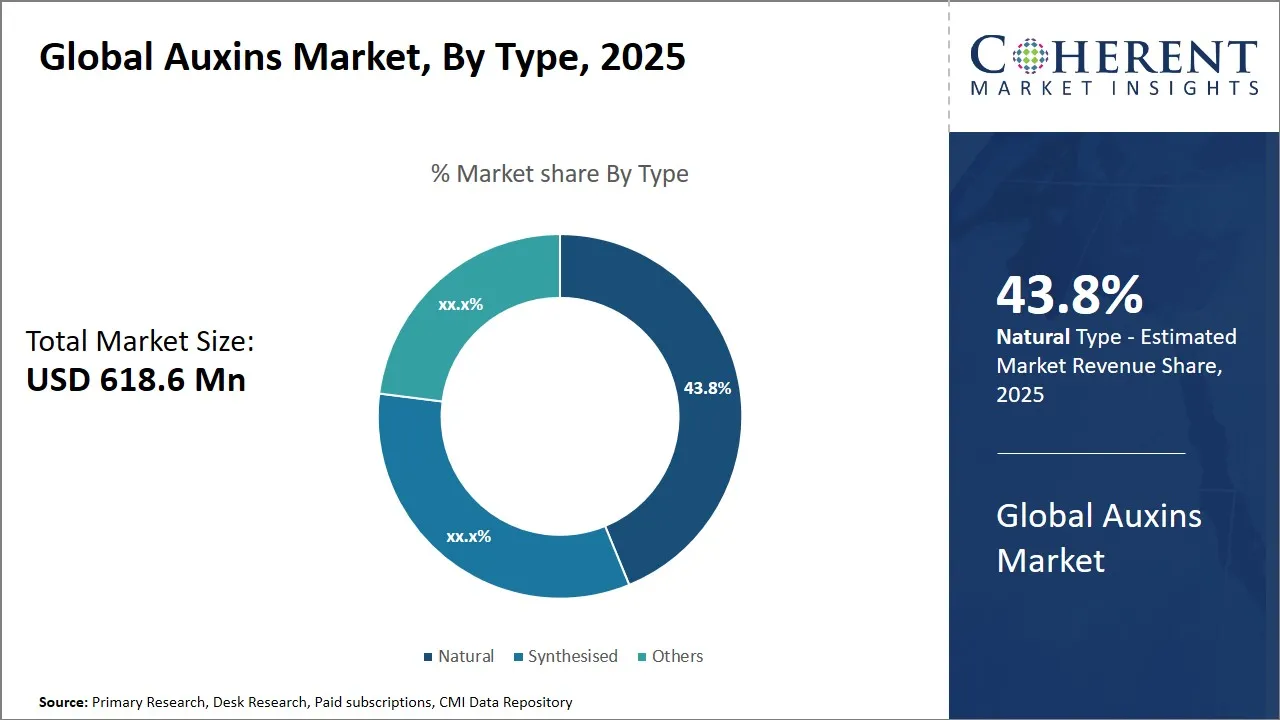
- The natural segment is expected to account for 44.8% of the global auxins market share in 2026.
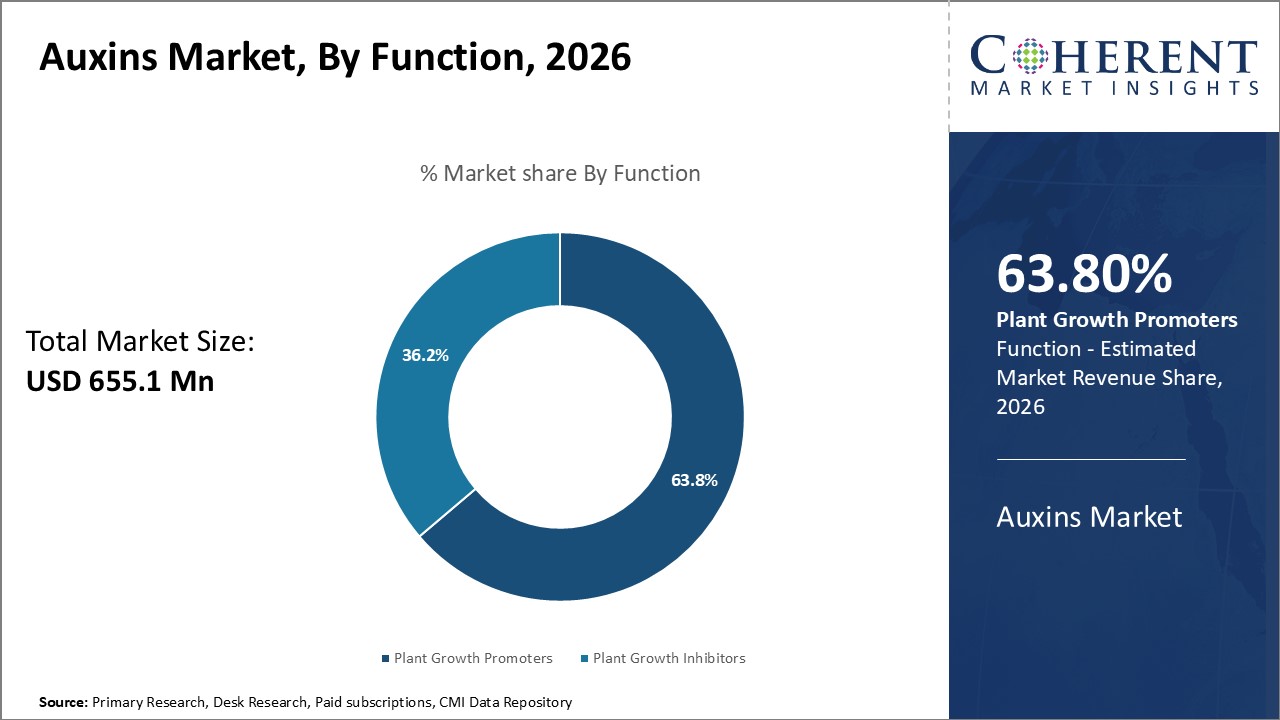
- The plant growth promoters segment is projected to capture 63.8% of the auxins market share in 2026.
- The liquid segment is projected to hold 33.9% of the global auxins market share in 2026.
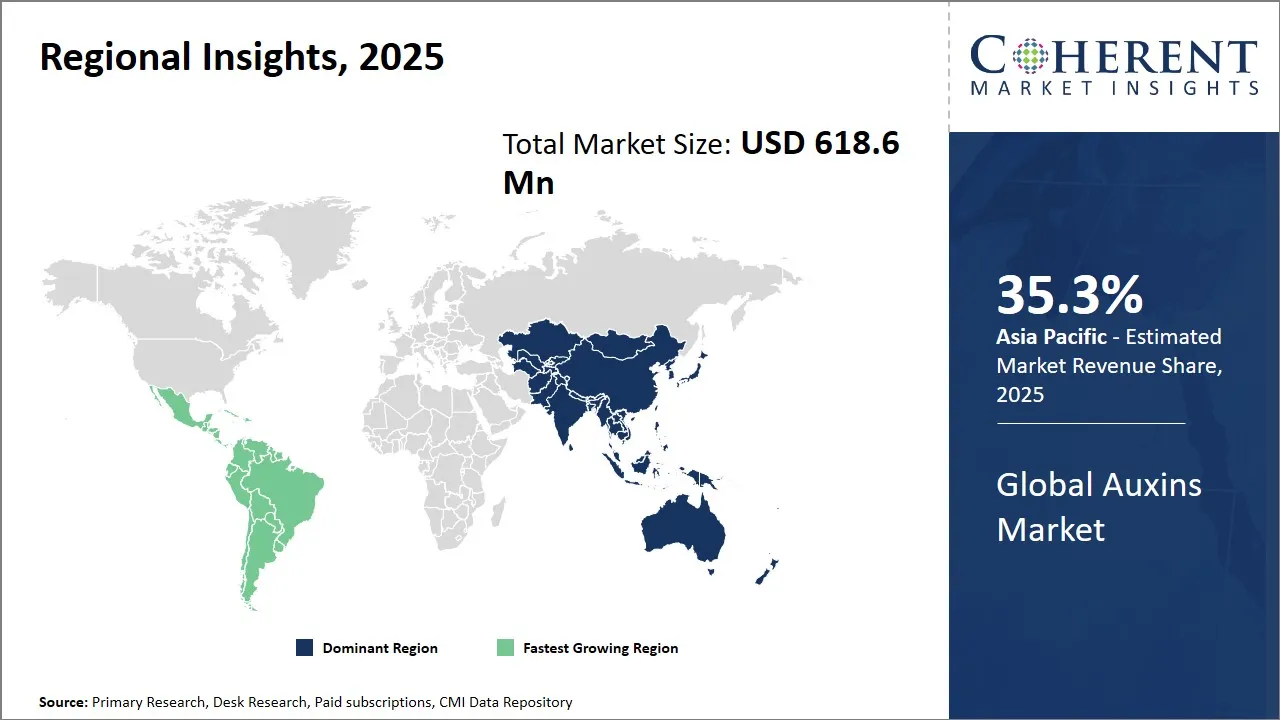
- Asia Pacific is anticipated to lead the global auxins market in 2026 with a 35.3% share.
- Latin America, with an estimated 11.5% share in 2026, will be the fastest-growing region.
Market Overview
Market trends point towards a rising emphasis on natural and environment-friendly auxin products as consumers and regulatory authorities focus on environmental protection. The availability of cost-efficient biotechnology-based better auxin products has encouraged market growth through the use of more efficient auxin products. The rising investments in R&D and accelerating agricultural activities across emerging markets are also anticipated to further drive the auxins market during the forecast period.
Current Events and Its Impact
Current Events | Description and its Impact |
Technological Advancements in Auxin Synthesis |
|
Regulatory Changes in the U.S. Regarding Auxin Usage |
|
Segmental Insights
- Current Industry Events of 2026
- Market Size Estimation
- Regional Breakdown
- Competitive Landscape
- Customer Intelligence
- Segmental Analysis
- Pricing Analysis
- Key Market Drivers, Challenges & Future Trends
- Customized Insights Section
Auxins Market Insights, By Type – Natural Segment Dominates the Market due to its Eco-Friendly Properties and Compatibility with Sustainable Agricultural Practices
The natural segment is expected to account for 44.8% of the market share by 2026, due to the increasing demand for organic and sustainable agricultural methods. Natural auxins manufactured from plant products or other biotechnological means are seen by many as a "safer" alternative compared to synthetic auxins. They are biodegradable and exhibit low environmental toxicity, which is attractive to farmers and agronomists looking to mitigate the ecological impacts of agricultural products relying on synthetic chemicals. This segment's expansion is driven by increasing consumer consciousness and government policies that promote less consumption of synthetic agrochemicals, hence driving the horticulture and crop cultivation sectors towards natural growth regulators.
Auxins Market Insights, By Function - Plant Growth Promoters Segment Dominates the Market Fueled by the Need to Enhance Crop Yield and Address Global Food Security Challenges
Plant growth promoters segment is projected to hold 63.8% share in 2026, due to their intrinsic ability to influence productivity of crops positively and enhance plant development processes like cell division and elongation. These promoters are very important in maximizing fruit setting, rooting, and biomass accumulation overall, which are key determinants for commercially oriented crop growers interested in enhancing yields to meet profitability demands. The increasing number of people worldwide and the resultant requirement to obtain greater volumes of food production drive up the demand for effective growth promoters such as these.
Crop husbandry practices in both developed and developing nations increasingly rely on growth promoter auxins to counteract biotic and abiotic stresses that challenge crop health. Through the use of such promoters, recovery from stress within the environment is accelerated, nutrient uptake is increased, and crop maturity is more uniformly achieved, all of which directly led to improved crop quality and quantity. Seed treatment and seed propagation industries also utilize auxin-based plant growth promoters widely to help provide maximum root development and seedling growth, thus increasing overall agricultural efficiency.
Auxins Market Insights, By Formulation - Liquid Segment have the Highest Market Share Driven by Ease of Use, Versatility, and Superior Absorption Characteristics
Liquid segment is expected to command 33.9% of the market share in 2026, because of their functional benefits and versatility in various applications in the agricultural industry. Liquids provide uniform distribution when applied to crops, making it possible to have perfect dosage and coverage control, which is important for achieving maximum efficacy. This simplicity of use minimizes labor intensity and maximizes field efficiency, establishing liquid formulations as the formula of choice among commercial growers and horticulturists.
The quick rate of absorption of liquid auxins provides another benefit, whereby the plants can rapidly absorb the active ingredients via leaves or roots and exhibit quicker onset of growth stimulation or inhibition, depending on the purpose intended. This translates to more consistent effects during such key growth phases as rooting, flowering, or fruiting. Liquid auxins are also easily combined with other liquid agrochemicals, enabling a combined treatment that simplifies crop management routines and minimizes the number of discrete applications.
Regional Insights
Asia Pacific Auxins Market Analysis and Trends
The Asia Pacific region is projected to lead the market with a 35.3% share in 2026, fueled by the vast farming activities in the region and fast-growing agrochemical industry. China, India, and Japan have a high concentration of major agrochemical producers and research centers actively engaged in research on plant growth regulators. Government initiatives for sustainable farming and rising investments in advanced farming methods support auxin uptake.
The area has access to strong supply chains and trade networks that make it easier for products based on auxin to be exported to developed as well as emerging economies. Large corporations like BASF, Syngenta (a unit of ChemChina), and UPL Limited have built major operations and research facilities here, helping drive product innovation and market access.
Latin America Auxins Market Analysis and Trends
The Latin America region is expected to exhibit the fastest growth in the market, contributing 11.5% share in 2026, owing to a mixture of higher areas of agricultural land being brought under cultivation and a rise in demand for yield boosters. The market growth in the region is enabled by supportive government subsidies for the use of agrochemicals and investment in crop biotechnology.
Nations such as Brazil and Argentina are witnessing growing tie-ups of international agrochemical firms with domestic distributors, which has led to better market access. Besides, regulatory changes introduced to fast-track pesticide approvals have enabled quicker entry of auxin formulation. Major companies like FMC Corporation, Nufarm Limited, and Helm AG are aggressively expanding their presence through association and domestic manufacturing facilities, powering the region's high market uptake.
Global Auxins Market Outlook for Key Countries
China Auxins Market Analysis and Trends
China market for auxins is defined by its large agricultural base, wide crop patterns, and focused government priority on food security as well as sustainable farming. Market leaders such as Syngenta and BASF have utilized China's sophisticated R&D facilities to formulate auxin products that are tailor-made according to China's unique crop needs. Government subsidy programs and technology dissemination activities facilitate extensive adoption of auxins, while regulations on agrochemical residues are strict enough to guarantee product safety and quality. Joint business among international players and Chinese agrochemical businesses has helped increase market coverage and capability to innovate.
India Auxins Market Analysis and Trends
India's transitioning agrarian economy supports the auxins market with swelling the demand fueled by rising farm mechanization and programs such as the National Mission on Sustainable Agriculture. Local firms such as UPL Limited and Godrej Agrovet are a vital segment in producing affordable auxin products specific to Indian crops like cotton, rice, and sugarcane. Favorable government policies towards organic cultivation in addition to controlled chemical application further encourage product diversification, thus positioning auxins as key growth promoters. Liberalized trade and alliance with multinational groups facilitate the entry of sophisticated formulations to Indian farmers, boosting crop harvest and total productivity.
U.S. Auxins Market Analysis and Trends
The U. S. remains at the forefront of technological advancement and regulatory control in the auxins market. Traditional agrochemical titans such as Dow AgroSciences (currently under Corteva Agriscience), DuPont, and Monsanto (bought out by Bayer) dominate the market, providing extremely specialized auxin solutions for major crops such as corn, soybeans, and cotton. Strict environmental regulations shape product development, aiming at environmentally friendly and effective products. The well-established agricultural system provides a strong base for research partnerships between universities, government, and industry stakeholders, consolidating the U.S. auxins market position as a quality and innovation standard for auxin applications.
Brazil Auxins Market Analysis and Trends
Brazil auxins market revolves around its rich arable land and position as the world's largest producer of soybeans, sugarcane, and coffee, all of which are supplemented by auxin-based plant growth regulators.
Incentives offered by the government to increase agricultural output and increase export capacity represent a major tailwind for the adoption of auxin. Firms like FMC Corporation, Nufarm, and homegrown companies like Oxiteno are putting significant investments in production units and distribution chains in Brazil to ride increasing demand. Trade agreements that enable imports and exports of agrochemicals further place Brazil's auxins market in the global supply chain, positioning it as a key growth center in Latin America.
Argentina Auxins Market Analysis and Trends
The auxins market in Argentina is supported by the country's focus on intensive agriculture and precision farming for crop production such as wheat, corn, and soybeans. Regulatory changes promoting innovation and environmental responsibility underpin the launch of new auxin products that address regional cultivation methods. Multinational agrochemical firms such as Helm AG and FMC Corporation have entered strategic partnerships with Argentine distributors to enhance market penetration. Argentina's membership in regional trade blocs also facilitates free cross-border movement of auxin products, which improves competitive standing in Latin America.
Macro and Micro Economic Factors Impacting the Auxins Market Growth
Macroeconomic Factors
- The increase in the global population, leads to increasing food demands, requiring an increase in crop yields through sustainable agricultural practices, therefore facilitating various markets for auxins.
- Environmental issues and regulations also motivate cultivators to utilize sustainable and eco-friendly agricultural products. Furthermore, bio-based auxins and controlled release products are significantly encouraged under sustainable agricultural practices.
- Technologies, such as precision agriculture and smart farming, also drive economic growth for auxins to optimize products application for crop yield.
Microeconomic Factors
- Individuals (farmers) implementing modern farming practices on their own operations includes the use of auxins in crop management.
- Making functional dairy products, with some degree of organic based, has shifted consumer preferences to value healthy, environmentally sustainable products enhancing the demand for eco-friendly auxins to achieve sustainable crops.
- Competitive landscape includes major agri-chemical companies innovating in bio-based plant hormones and delivery systems to capture market share.
- Crop-specific demand, such as for grains, cereals, and horticultural crops, guides the targeted use of auxins based on regional cultivation patterns.
Market Players, Company Insights, and Competitive Intelligence
Company Insights
- FMC Corporation participates in the auxins market with a variety of products, specifically focused on herbicides that contain synthetic auxins to control a wide range of weeds. The unique formulation of herbicides is intended to manage broadleaf and grass-type weeds in a variety of crops. One of FMC's products is Flotilla Herbicide, a Group 4 herbicide based on the synthetic auxin class of herbicide. Flotilla Herbicide provides post-emergent control of a range of broadleaf weeds across fallow, winter cereals, pastures, sorghum, sugarcane, and woody weeds.
Top Strategies Followed by Global Auxins Market Players
- Industries are dominated by established companies that invest heavily in research and development (R&D) to create innovative high-performance auxin products while their research meets shifts in agricultural requirements. They are working persistently to drive product effectiveness, safety, and ease of application, thereby achieving and maintaining their technological leadership. The competitive advantage that better established firms have is based on continuous innovation and development, forming partnerships with firms in their sector, and developing, into some cases, a global presence and reach.
- For example, BASF has be consistent with its focus on collaborating on innovations in plant growth regulators through sustainability crops. Partnerships with stakeholders can offer market-enhancement advantages connected to BASF existing product and service portfolio to reinforce their leading position
- Middle level players tend to take a competitive advantage based on affordability but will try to offer a thoughtful balance between product quality and affordability. Sometimes that affordability metric will connect with perceived quality/value when targeting customers that are more price-sensitive especially in under developed countries.
- For instance, Syngenta utilizes a combination of product efficacy and affordability to maintain a large market share in developing regions, providing accessibility, all while meeting agricultural essentials.
- Small-scale players that may only specialize in specific types or localized areas of the auxins market attempt to differentiate by innovation, focus on unique features of their product, or respond to a specific agricultural problem. These companies rely on the ability to be nimble when responding to new developments or niche aspects of efficacy. For example, they focus on advancements such as bio-based formulations, or opportunities to improve practices in precision applications in order to introduce a product that responds to latent need in particular crops or regions.
- As an example, Valent BioSciences has focused on PoMaxa, which is a potent auxin-based plant growth regulator intended primarily for pome fruit growers to facilitate apple and pear thinning. Their focus on environmental friendliness and specificity of product allow Valent BioSciences to stake a claim in the growing need for plant protection products that are eco-friendly.
Market Report Scope
Auxins Market Report Coverage
| Report Coverage | Details | ||
|---|---|---|---|
| Base Year: | 2025 | Market Size in 2026: | USD 655.1 Mn |
| Historical Data for: | 2020 To 2024 | Forecast Period: | 2026 To 2033 |
| Forecast Period 2026 to 2033 CAGR: | 5.9% | 2033 Value Projection: | USD 978.5 Mn |
| Geographies covered: |
| ||
| Segments covered: |
| ||
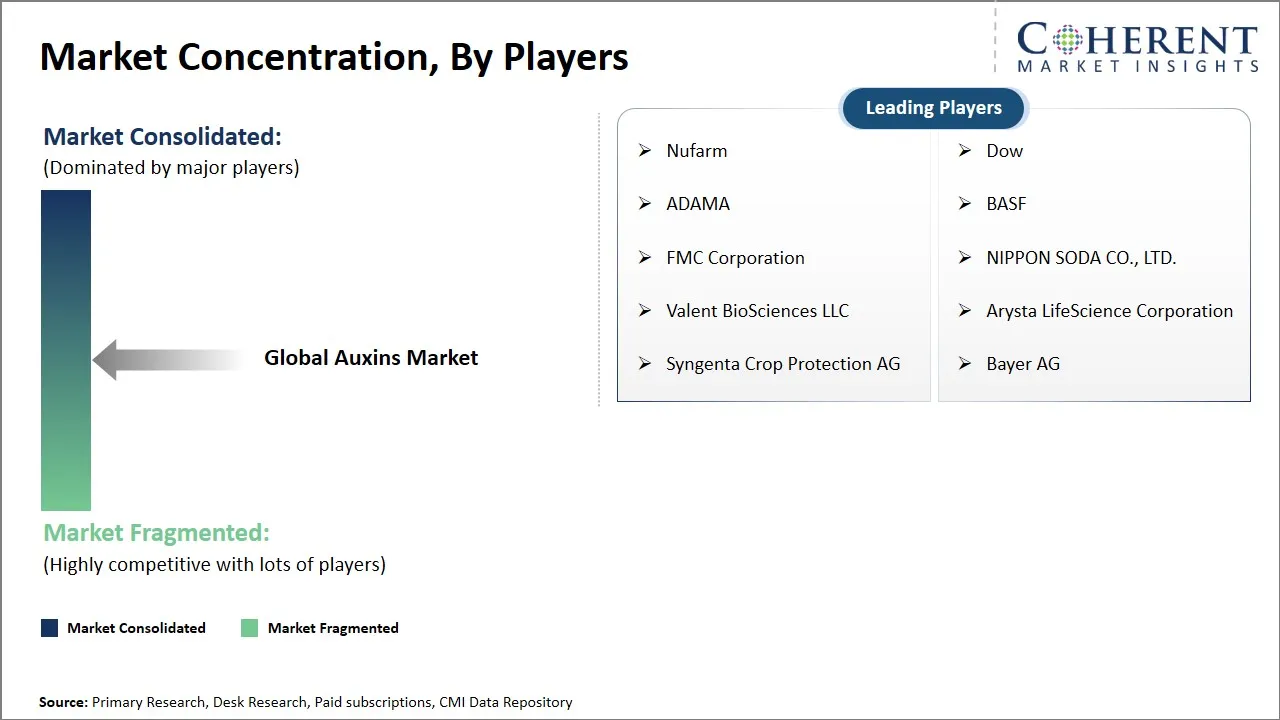
| Companies covered: | Nufarm, Dow, ADAMA, BASF, FMC Corporation, NIPPON SODA CO., LTD., Valent BioSciences LLC, Arysta LifeScience Corporation, Syngenta Crop Protection AG, and Bayer AG | ||
| Growth Drivers: |
| ||
| Restraints & Challenges: |
| ||
Auxins Market Dynamics
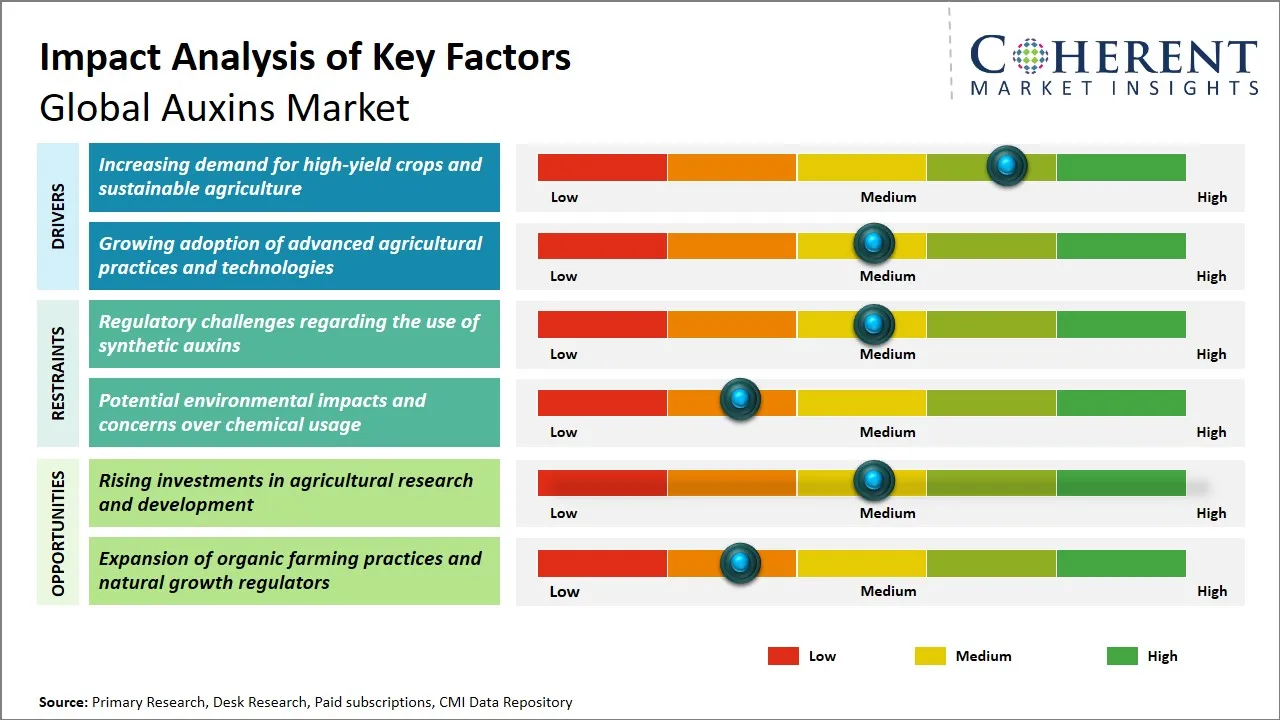
Auxins Market Driver - Increasing Demand for High-Yield Crops and Sustainable Agriculture
The increase in the population of the world and food security has increased the demand for high-yielding crops, directly impacting the application of auxins in agriculture. Auxins are important plant growth regulators that are used to promote root development, cell elongation and the setting of fruit, all of which are used to increase the crop productivity of plants. Auxins are steadily being adopted by farmers and agribusinesses looking to maximize the crop harvested from their increasingly limiting arable land, while also considering plant health.
India's Green Revolution was driven by high-yielding varieties (HYVs) of crops, particularly wheat and rice. Auxins were a key component of the extension service technology package to increase crop yield. As the population of India continues to increase, there is an increasing demand for high-yield crops. This dynamic is influencing the use of auxins in modern practices to drive crop productivity and ensure food security. For example, the use of auxin-based plant growth regulators has increased the yield of rice, and wheat, which is also critical in feeding the growing population.
Auxins Market Opportunity - Rising Investments in Agricultural Research and Development
The global auxins market is expected to be positively affected by strong investment in agricultural research and development (R&D) globally. Substantial funding from government, privately owned companies, and international organizations is being directed toward initiatives to boost crop productivity, enhance pest resistance, and develop sustainable farming practices. Auxins are a class of plant hormones that are critical for regulating plant growth and development, and it is an area of focus in research for their capacity to enhance plant architecture, increase rooting, and improve fruit development. Advances in biotechnology and plant genetics is also paving the way for formulating auxin from novel auxin formulations and delivery systems, which may enable increased efficacy and decreased risk of harming the environment.
Larger agribusiness companies, for example, Cargill and DuPont, are also aggressively using their own capital to invest in agricultural R&D to increase crop productivity and resist pests. For example, in 2023, DuPont announced the beginning of a research project that is intended to assess the role of auxins in increasing the crop root system and minimizing crop water stress in crops, such as corn and soybean. The study of auxins is supported by a substantial financial investment, thereby, demonstrating a high interest in the future possibilities of auxins to enhance crop resilience and productivity.
Analyst Opinion (Expert Opinion)
- The global population is rising, leading to growing demand for agricultural productivity and sustainability. The discussions at the International Plant Growth Regulators Conference 2023 and the American Society of Agronomy Annual Meeting 2022 reflected these trends and advancements in auxins. Policymakers, industry players, and academics raised particular interests and advancements in auxin production with organizations such as BASF and Syngenta leading the commercial aspects of auxin innovations.
- BASF’s recent launch of an innovative herbicide derived from auxin-based herbicides aimed at increasing crop productivity and yield with less environmental footprint speaks to the changes anticipated in this sector. The above meetings highlighted that there is a great potential with auxins to improve plant growth and interact with the greater abiotic stressors available to global crop systems, considering the anticipated increase in food demand worldwide. However, regulatory scrutiny and the need for discussion about long-term research around auxins was discussed among attendees as a barrier to wide-range adoption of auxins in use.
- Companies that desire to be successful in marketing auxins will need to build trust and transparency in using auxins from commercially derived products to educate farmers that utilize agricultural businesses; trust and transparency around their technology will yield greater engagement and support. Companies could further partner with agricultural cooperatives to enhance visibility and narrow acceptance. Ultimately, we will see growth only if commercializing methods can provide innovation to meet and consider the urgent needs of today’s agricultural system.
Speak to the analyst
Want personalized insights?
Take the findings above to one of our principal consultants, or have the report rebuilt around the segments, geographies and competitors you actually track.
Market Segmentation
- Type Insights (Revenue, USD Mn, 2021 - 2033)
- Natural
- Synthesized
- Others
- Function Insights (Revenue, USD Mn, 2021 - 2033)
- Plant Growth Promoters
- Plant Growth Inhibitors
- Formulation Insights (Revenue, USD Mn, 2021 - 2033)
- Liquid
- Granular
- Powder
- Others
- Application Insights (Revenue, USD Mn, 2021 - 2033)
- Agriculture
- Scientific Research
- Others
- Regional Insights (Revenue, USD Mn, 2021 - 2033)
- North America
- U.S.
- Canada
- Latin America
- Brazil
- Argentina
- Mexico
- Rest of Latin America
- Europe
- Germany
- U.K.
- Spain
- France
- Italy
- Russia
- Rest of Europe
- Asia Pacific
- China
- India
- Japan
- Australia
- South Korea
- ASEAN
- Rest of Asia Pacific
- Middle East
- GCC Countries
- Israel
- Rest of Middle East
- Africa
- South Africa
- North Africa
- Central Africa
- North America
- Key Players Insights
- Nufarm
- Dow
- ADAMA
- BASF
- FMC Corporation
- NIPPON SODA CO., LTD.
- Valent BioSciences LLC
- Arysta LifeScience Corporation
- Syngenta Crop Protection AG
- Bayer AG
Sources
Primary Research Interviews
- R&D Directors and Product Development Heads from leading agrochemical and biotechnology companies specializing in auxins
- Procurement Managers from major agricultural input distributors
- Agricultural Research Scientists focusing on plant hormones and growth regulators
- Sustainability Officers from agricultural sustainability certification bodies
Stakeholders
- Auxin Manufacturers (Chemical and Biotech Firms)
- End-use Sectors
- Agriculture (Crop Production and Horticulture)
- Scientific Research (Plant Physiology and Biotechnology)
- Landscaping and Turf Management
- Regulatory & Certification Bodies in Agriculture and Chemical Inputs
- Agricultural Wholesale and Retail Distributors
- Technology Providers for Precision Agriculture and Plant Growth Monitoring
Databases
- UN Comtrade Database for chemical and agrochemical trade statistics
- India Import Export (EXIM) Database for auxin-related trade data
Magazines
- AgriBusiness Global – Trends in plant growth regulators and crop enhancement
- Crop Life Magazine – Developments in agricultural chemicals and auxin innovations
- Horticulture Week – Market trends in growth regulators and auxin applications
- Plant Science Today – Research and commercial applications of plant hormones
Journals
- Journal of Plant Growth Regulation – Latest research on auxin functions and applications
- Agricultural and Food Chemistry – Studies on auxin chemistry and formulations
- Crop Science Journal – Insights into crop yield improvements using auxins
- Journal of Agricultural and Food Research – Effects of auxins in sustainable farming
- Plant Biotechnology Journal – Innovations in auxin-based biotechnology
Newspapers
- The Financial Times – Market growth and corporate strategies in plant growth regulators
- The Guardian – Environmental policies affecting agrochemical markets
- Asia Agriculture Journal – Demand and policy developments in Asia Pacific auxins markets
- European Agriculture News – Regulation and innovation in European auxin use
Associations
- CropLife International
- International Plant Growth Regulators Association
- American Society of Agronomy
- European Crop Protection Association (ECPA)
- International Society for Plant Growth Regulation
Public Domain Sources
- Food and Agriculture Organization (FAO) – Agricultural statistics and sustainability guidelines
- Environmental Protection Agency (EPA) – Regulation of plant growth regulators in the US
- European Chemicals Agency (ECHA) – Registration and guidelines for auxins
- OECD – Assessment of agrochemical safety and usage guidelines
Proprietary Elements
- CMI Data Analytics Tool, Proprietary CMI Existing Repository of information for last 8 years.
Get access to 250+ pages report
Every segment, forecast, competitor profile and data table behind the analysis above — available for instant download.
- ESOMAR Member
- ISO 9001:2015 Certified
- D-U-N-S Registered
- GDPR & CCPA Compliant
Missing comfort of reading report in your local language? Find your preferred language:
Transform your Strategy with Exclusive Trending Reports
Frequently Asked Questions
The global auxins market is estimated to be valued at USD 655.1 Mn in 2026 and is expected to reach USD 978.5 Mn by 2033.
The CAGR of the global auxins market is projected to be 5.9% from 2026 to 2033.
Increasing demand for high-yield crops and sustainable agriculture and growing adoption of advanced agricultural practices and technologies are the major factors driving the growth of the global auxins market.
Regulatory challenges regarding the use of synthetic auxins and potential environmental impacts and concerns over chemical usage are the major factors hampering the growth of the global auxins market.
In terms of type, the natural segment is estimated to dominate the market revenue share in 2026.
Nufarm, Dow, ADAMA, BASF, FMC Corporation, NIPPON SODA CO., LTD., Valent BioSciences LLC, Arysta LifeScience Corporation, Syngenta Crop Protection AG, and Bayer AG are the major players.
Asia Pacific is expected to lead the global auxins market in 2026.