

Global Baby Helmet Therapy Market Size and Forecast – 2026 to 2033
The global baby helmet therapy market is estimated to be valued at USD 178.2 Mn in 2026 and is expected to reach USD 325.8 Mn by 2033, exhibiting a compound annual growth rate (CAGR) of 9.0% from 2026 to 2033. This growth reflects increasing awareness among parents and healthcare providers about cranial deformities in infants and the effectiveness of helmet therapy in treating these conditions. The market expansion is driven by rising infant health consciousness and advancements in helmet design and materials.
Key Takeaways of the Global Baby Helmet Therapy Market
- By application, plagiocephaly segment is projected to account for 39.2 % of the market share in 2026.
- By product type, cranial band therapy orthoses segment is expected to lead the market with a 56.5 % share in 2026.
- By therapy type, active helmet therapy segment is projected to dominate with a 71.4 % share in 2026.
- North America leads the market, holding an estimated share of 38.8 % in 2026. Asia Pacific is anticipated to be the fastest-growing region, with a market share of 24.5% in 2026.
Market Overview
Current market trends indicate a shift towards customized and lightweight baby helmets that enhance comfort and compliance among infants. Technological innovations, including 3D scanning and printing, are enabling precise fitment, driving product adoption. Additionally, growing healthcare infrastructure in emerging economies and rising awareness campaigns contribute to the market penetration. Collaborative efforts between manufacturers and healthcare professionals are also fostering trust and acceptance, further boosting the market growth in the coming years.
Current Events and Its Impact
Current Events | Description and its Impact |
Technology in Motion Introduces TiMbandAir 2-in-1 Helmet |
|
Advancement of 3D Scanning & CAD/CAM Technologies |
|
Segmental Insights
- Current Industry Events of 2026
- Market Size Estimation
- Regional Breakdown
- Competitive Landscape
- Customer Intelligence
- Segmental Analysis
- Pricing Analysis
- Key Market Drivers, Challenges & Future Trends
- Customized Insights Section
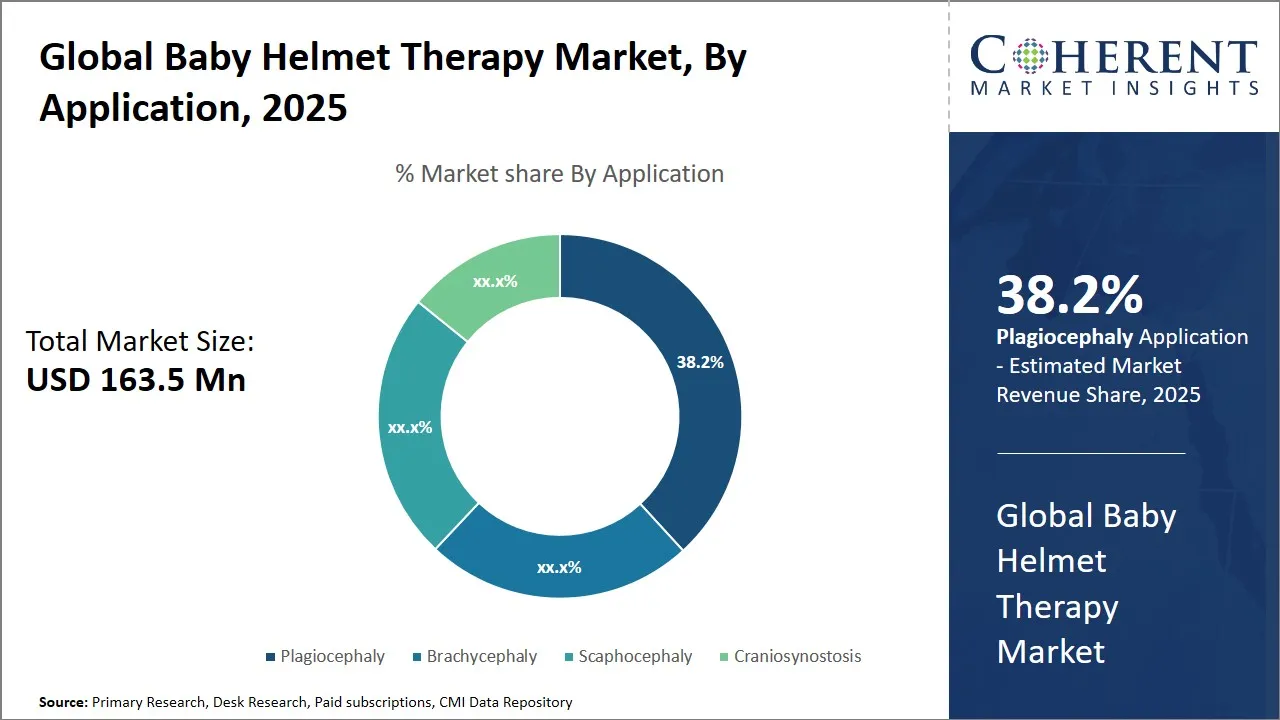
Baby Helmet Therapy Market Insights, By Application - Plagiocephaly Contributes the Highest Market Share Owing to the Increasing Prevalence of Positional Head Deformities and Heightened Parental Awareness
Plagiocephaly, known as flat head syndrome, has become the most significant issue related to baby helmet therapy with an estimated share of 39.2% in 2026, due to the rising incidence rates that are observed among infants worldwide. This condition is defined by unevenness in the skull where one side becomes flattened more than the other, and usually, pressure is the main culprit that is exerted on the area of the head experiencing early development. Besides the medical aspects, increased parental awareness and intervention from healthcare have been the factors encouraging the use of such therapies.
In September 2020, the American Academy of Pediatrics published updated clinical guidance that would assist medical practitioners in differentiating between positional plagiocephaly a frequent flat-head condition and craniosynostosis that necessitates surgical intervention. The document highlighted the importance of early diagnosis, supervised tummy time, and referrals to specialists, stating that Baby Helmet Therapy is still a viable option for treating moderate deformities.
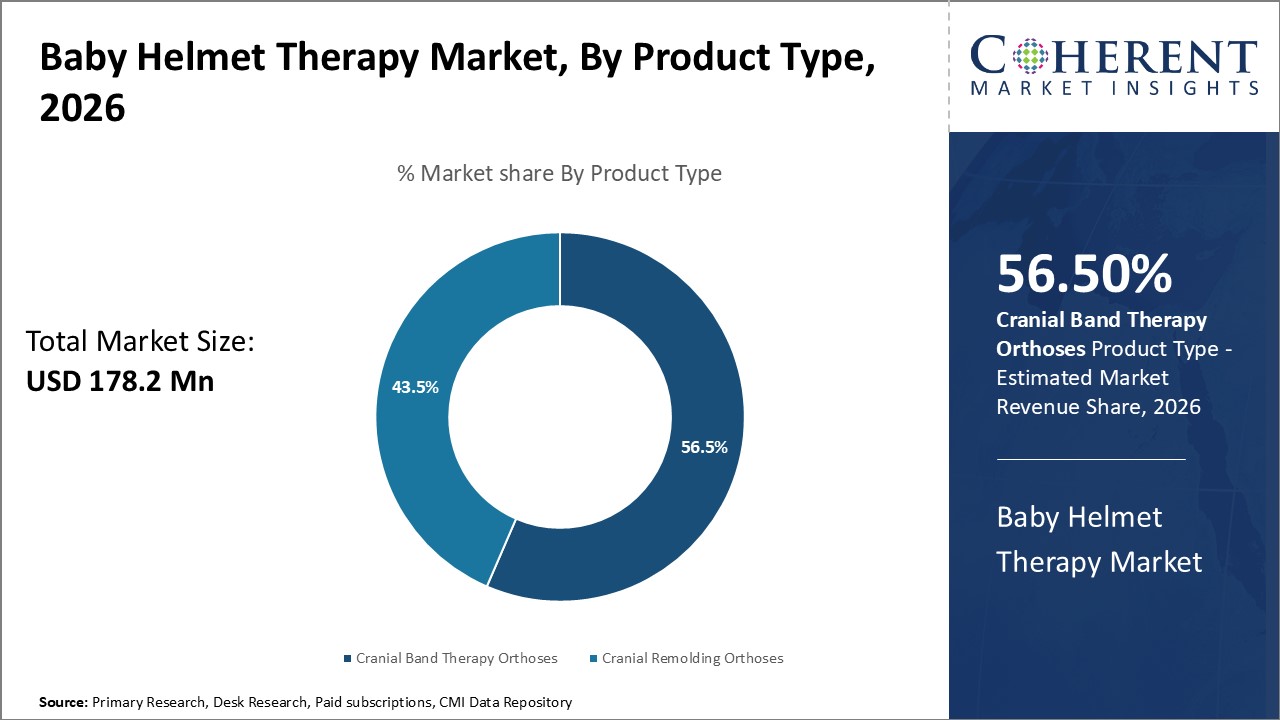
Baby Helmet Therapy Market Insights, By Product Type - Cranial Band Therapy Orthoses Contributes the Highest Market Share due to its Customized Approach and Comfort-Centered Design
Cranial band therapy orthoses are on the rise as they are addressed to the needs of the infant and their unique cranial problems, and it is expected to hold a share of 56.5% in 2026. This individualization is an incentive for parents to continue the therapy as it is much easier to do so than with generic or off-the-shelf models which may not suit the child's head shape or growth patterns perfectly.
The most sophisticated design of cranial bands assures an even pressure application on the deformity area while giving room for expansion in the unaffected areas, thus, executing natural skull remodeling with little discomfort. Composed of the lightest, most breathable, and skin-friendly materials, these orthoses run a risk of irritation and a great probability of infant compliance, respectively.
Baby Helmet Therapy Market Insights, By Therapy Type - Active Helmet Therapy Holds the Leading Share, Propelled by its Dynamic Correction Capabilities and Widespread Clinical Endorsement
Active helmet therapy is characterized by its proactive approach with a projected share of 71.4% in 2026, where helmets are created to purposely place controlled pressure on the selected zones of the infant's skull, thus, directing the growth in the desired corrective way. Unlike passive methods which mainly protect the head and do not apply targeted remodeling forces, this therapy type is the opposite in its approach.
The most part of the active helmet therapy treatments are supported by clinical evidence and also produced for the better treatment outcomes and quicker correction timelines in comparison with the passive ones. Medical doctors are actively recommending this therapy type because it provides results that are measurable and replicable, which are further validated through constant monitoring and adjustments during the treatment cycle.
Regional Insights
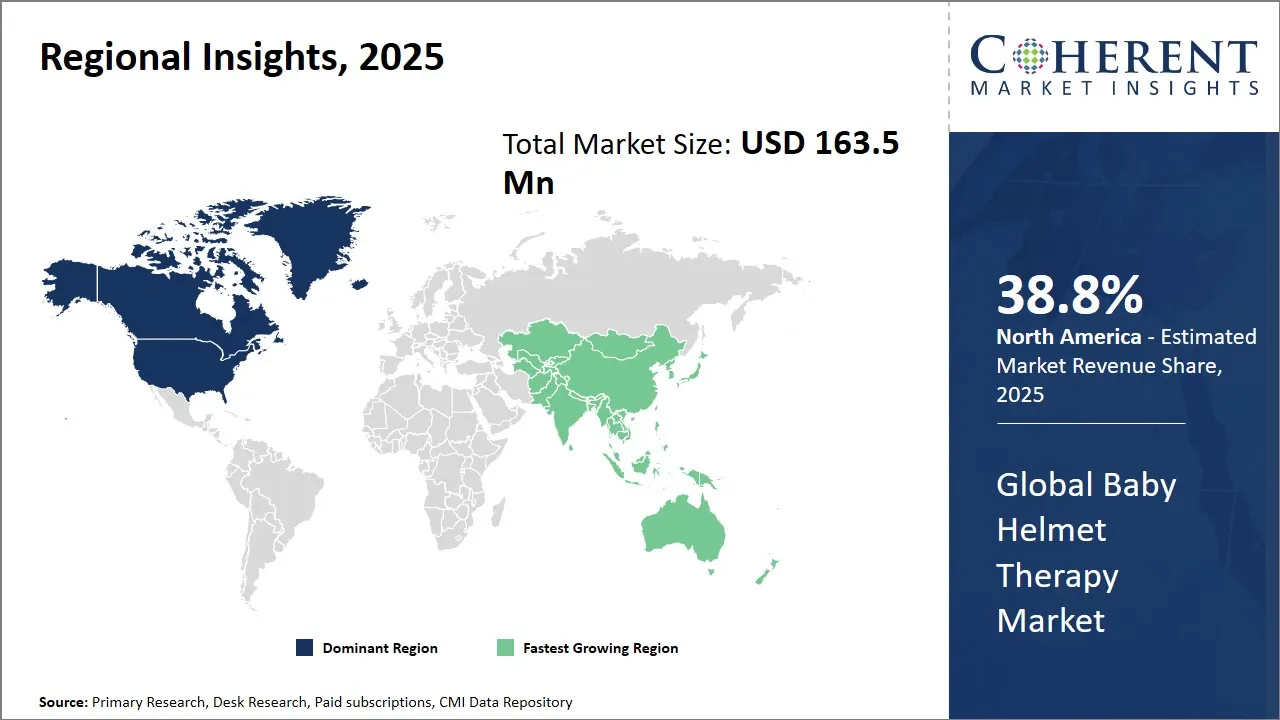
North America Baby Helmet Therapy Market Analysis and Trends
By the year 2026, North America will most likely contribute 38.8% share to the baby helmet therapy market worldwide. Major factors for this are the established healthcare system which is easy to access, rising awareness about infant health problems, and the introduction of new medical technology.
The availability of leading medical device companies together with a well-distributed network of pediatricians, hospitals, and orthotic clinics for children makes the market very much alive. Key players such as Orthomerica Products Inc., Cranial Technologies, and Aspen Medical Products have a significant footprint in this region, introducing innovative helmet designs and investing in research and development to enhance treatment effectiveness.
Asia Pacific Baby Helmet Therapy Market Analysis and Trends
The market for baby helmet therapy in the Asia Pacific region is expected to grow the fastest, accounting for 24.5% of the market share in 2026, due to the increasing awareness of health concerns for infants, better healthcare facilities, and higher disposable incomes. The urbanization process and the Jain and Indian nations' better access to pediatric healthcare services are contributing towards the market's success.
The government programs aimed at improving maternal and child healthcare, along with partnerships between multinational companies and their local counterparts, make it easier for helmet therapy products to be adopted quickly.
Baby Helmet Therapy Market Outlook for Key Countries
U.S. Baby Helmet Therapy Market Analysis and Trends
The U.S. remains to be the most important market in North America with excellent healthcare facilities and a strong focus on pediatric medical interventions as the main drivers. Regulations making sure that products are of high safety and efficacy keep the standards for helmet therapy products high. Companies like Cranial Technologies and Orthomerica Products that have been around for a while occupy the market, and they keep on making innovations so as to enhance patients' comfort and treatment outcomes. Besides Cranial Technologies and Orthomerica, key U.S. players include Hanger Clinic, which operates a national CARE network offering custom cranial helmets; Cranial Kids in Colorado Springs, specializing in pediatric cranial correction; and Innovative Prosthetics & Orthotics, which designs ergonomic, lightweight helmets
Germany Baby Helmet Therapy Market Analysis and Trends
The baby helmet therapy market in Germany is a result of the country's developed healthcare system and being a big player in the medical device industry. The strict regulations and the quality control standards make the consumers and the medical professionals trust the helmet therapy products. The major European manufacturers and distributors have their headquarters in Germany, like Stryker and Ottobock, who are focussing on customization and patient-oriented solutions.
Germany also hosts specialized firms such as Cranioform GmbH in Berlin, which uses advanced 3D scanning to design lightweight helmets distributed across the DACH region. OrthoPunkt GmbH in Munich collaborates with pediatric specialists to deliver ventilated and ergonomic helmet designs, whereas Medi GmbH & Co. KG, a major orthotics manufacturer from Bayreuth, has diversified into pediatric cranial correction products under its established medical device portfolio.
China Baby Helmet Therapy Market Analysis and Trends
The baby helmet therapy market in China is showing fast growth that is being supported by a larger pediatric healthcare segment and greater awareness among parents regarding cranial deformities. The healthcare infrastructure is being improved in tier-1 and tier-2 cities, and this is making baby helmet therapy services more available to a larger market. The presence of global companies like Medtronic along with local brands that are working together on new product lines has contributed to the competitiveness in the market.
In China, Shenzhen Mindray Bio-Medical Electronics Co. Ltd. is exploring pediatric orthotic applications through hospital partnerships in Guangdong. Beijing Jingbo Medical Devices Co. Ltd. manufactures affordable cranial helmets for domestic hospitals, and Shanghai Tofflon Healthcare Equipment Co. Ltd. has begun investing in pediatric rehabilitation technologies, including cranial correction support devices.
India Baby Helmet Therapy Market Analysis and Trends
The baby helmet therapy market in India is coming up fast, thanks to high birth rates and parents becoming more aware of such conditions in their babies in the cities. The healthcare access is being improved through private clinics and hospitals, and at the same time, the prices are becoming more affordable thus facilitating the sales of the product. The major international players like Hanger Inc. have begun to make local partnerships in India to tailor their solutions for Indian infants.
India’s baby helmet therapy segment features growing participation from local firms such as Aadee Healthcare Pvt. Ltd. (Pune), which applies 3D printing to orthotic designs. Rehab Store India in Delhi serves as a key distributor of both imported and indigenous cranial orthoses, while Hitech Orthotics & Prosthetics in Chennai collaborates with pediatric neurologists to introduce customized helmet therapy solutions in major metropolitan clinics.
End User Feedback and Unmet Needs - Baby Helmet Therapy Market
- End users mainly parents, pediatricians, and rehabilitation centers generally report high satisfaction with the comfort and precision of newer 3D-printed Baby Helmet Therapy devices. Parents appreciate lighter materials and better ventilation that reduce skin irritation, while clinics find digital scanning improves fitting accuracy and shortens adjustment visits. For example, users of advanced models like TiMbandAir note faster progress and higher compliance rates due to comfort-focused design.
- However, affordability and uneven insurance coverage remain major barriers, especially in developing regions. Some families also face delays in accessing specialized care or replacement helmets as infants grow. Users are calling for more affordable options, remote consultation tools, and smart monitoring features to track cranial growth in real time. Addressing these gaps through cost-effective materials, AI-enabled customization, and broader reimbursement policies could expand accessibility, strengthen user confidence, and drive sustainable growth in the market.
Market Players, Key Developments, and Competitive Intelligence
Key Developments
- In June 2025, KK Women’s and Children’s Hospital (KKH) opened Singapore’s first PlagioCentre, a specialized unit dedicated to treating flat head syndrome in infants, medically known as plagiocephaly and brachycephaly. The center marks a regional first for the public healthcare sector, introducing 3D-printed Baby Helmet Therapy solutions that are lighter, more breathable, and custom-fitted for each child.
- In October 2024, Hiroshima University Hospital in Japan gained attention for its expanding Baby Helmet Therapy program, which helps correct infant skull deformities such as plagiocephaly, brachycephaly, and dolichocephaly. Led by Associate Professor Fumiyuki Yamasaki, the outpatient clinic has treated over 540 infants since opening, serving families from across western Japan. Using custom-made cranial helmets, the hospital provides precise correction for babies whose head flattening results from sleep position rather than medical disorders.
- In October 2023, Michigan Medicine researchers reported that baby helmet therapy shows a high success rate in correcting infant head deformities. The study of 300 infants found that starting treatment before six months led to the best outcomes, as younger skulls are more flexible. Conducted by the University of Michigan Orthotics and Prosthetics Center, the research confirmed that helmets effectively reshape moderate cases of positional plagiocephaly, with most infants achieving visibly improved head symmetry within months.
- In June 2022, Gunze Limited, a leading Japanese materials and healthcare technology company headquartered in Osaka, announced that its medical subsidiary Medical U&A (MUA) had received government approval to manufacture and sell ReMO baby, a domestically produced Baby Helmet Therapy device designed to correct positional skull deformation in infants. Previously imported, these helmets will now be produced in-house, ensuring higher quality and faster delivery to hospitals and clinics across Japan.
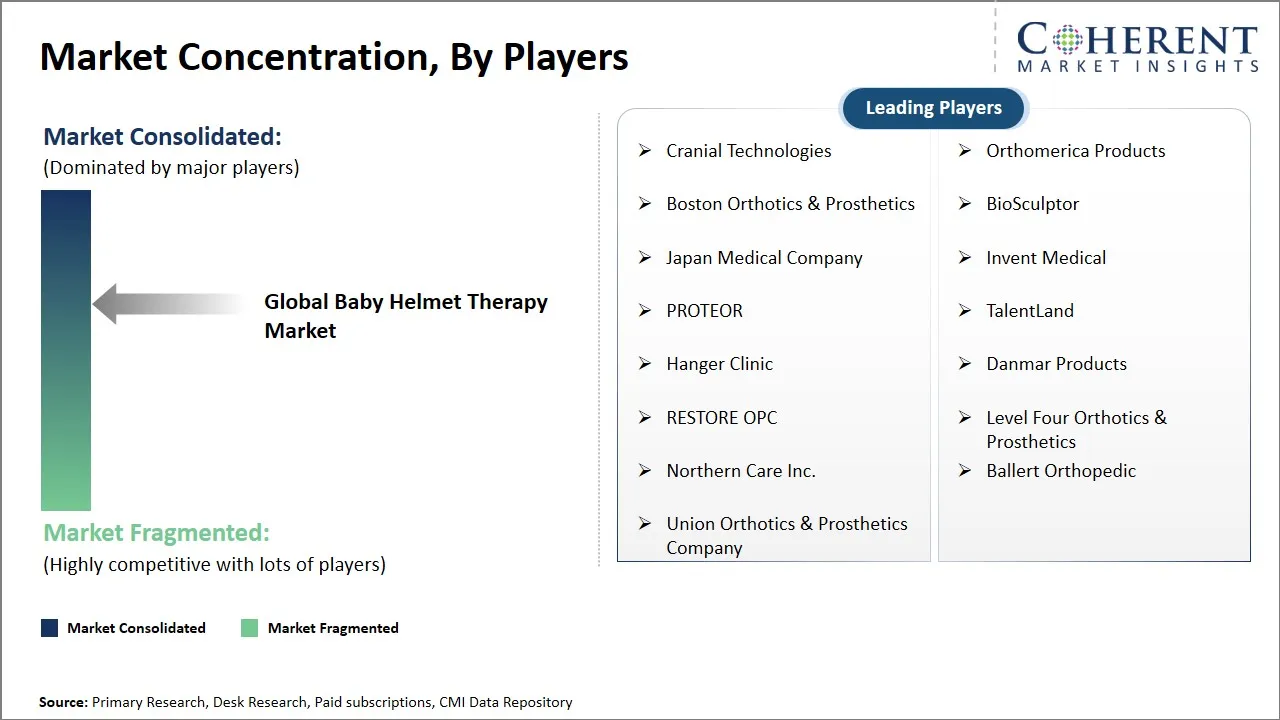
Top Strategies Followed by Global Baby Helmet Therapy Market Players
- Established players dominate the baby helmet therapy market by investing heavily in R&D to develop advanced, ergonomic, and medically precise helmets. These innovations focus on improving comfort, safety compliance, and customization for infants. Alongside technological upgrades, major companies actively form strategic alliances with OEMs, healthcare providers, and tech partners to expand clinical adoption and strengthen market positioning.
- Cranial Technologies, Orthomerica, and Hanger Clinic lead the market through innovation in cranial remolding orthoses. Their helmets, like DOC Band and Starband, feature high-precision 3D scanning and advanced materials, ensuring superior fit, safety, and clinical outcomes.
- Mid-level market players adopt a distinct approach, focusing primarily on delivering cost-effective baby helmet therapy solutions that balance quality with affordability. These companies target price-sensitive consumers, including middle-income families and developing markets, by offering competitively priced helmets without significant compromises on safety and comfort.
- Ballert Orthopedic, Danmar Products, and Boston O&P emphasize affordability and accessibility. They supply cost-effective helmet therapy options through streamlined manufacturing and local clinic partnerships, appealing to budget-conscious families.
- Small-scale players in the baby helmet therapy market adopt highly specialized and innovative approaches to differentiate themselves from larger competitors. These companies often concentrate on niche segments by offering helmets with unique features such as eco-friendly materials, customizable designs, or integrated digital monitoring technology.
- TechnoOrtho (India), Plagiocephalus Helmets (U.K.), and Medical Helmet Therapy Ltd. (China) focus on sustainable materials, lightweight design, and digital customization. Their innovation-driven approach caters to specific needs such as eco-friendly helmets and regionally optimized fitting solutions.
Market Report Scope
Baby Helmet Therapy Market Report Coverage
| Report Coverage | Details | ||
|---|---|---|---|
| Base Year: | 2025 | Market Size in 2026: | USD 178.2 Mn |
| Historical Data for: | 2020 To 2024 | Forecast Period: | 2026 To 2033 |
| Forecast Period 2026 to 2033 CAGR: | 9.0% | 2033 Value Projection: | USD 325.8 Mn |
| Geographies covered: |
| ||
| Segments covered: |
| ||
| Companies covered: | Cranial Technologies, Orthomerica Products, Boston Orthotics & Prosthetics, BioSculptor, Japan Medical Company, Invent Medical, PROTEOR, TalentLand, Hanger Clinic, Danmar Products, RESTORE OPC, Level Four Orthotics & Prosthetics, Northern Care Inc., Ballert Orthopedic, and Union Orthotics & Prosthetics Company | ||
| Growth Drivers: |
| ||
| Restraints & Challenges: |
| ||
Baby Helmet Therapy Market Dynamics
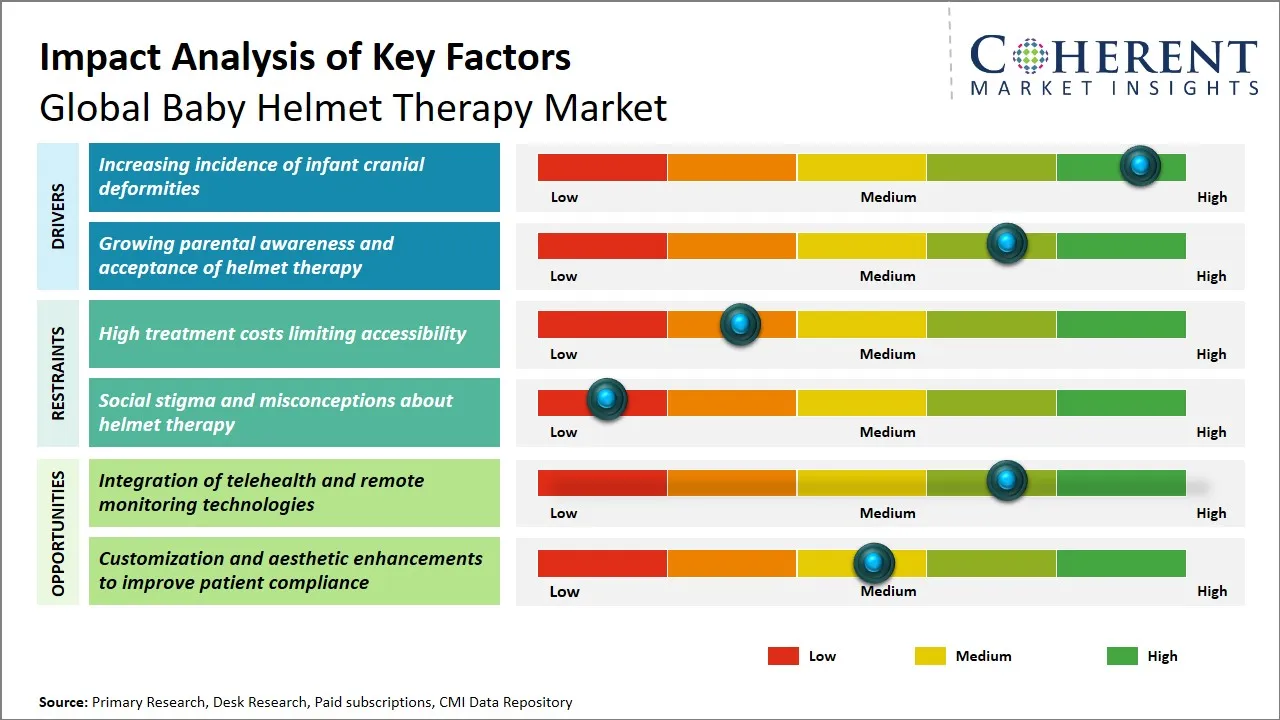
Baby Helmet Therapy Market Driver - Increasing Incidence of Infant Cranial Deformities
The continuous increase in the number of infants suffering from skull deformities such as plagiocephaly, brachycephaly, and scaphocephaly has been a major factor in fueling the global market for baby helmet therapy in the past and still does for the future. The recent changes in parenting style, such as the prolonged supine position to mitigate sudden infant death syndrome (SIDS), have unintentional contributed to the higher incidence of head deformity among infants who are subject to this practice during the most critical growth period of their skulls. Moreover, the advances in neonatal care that have led to the higher survival rate of premature babies, who are prone to cranial asymmetry, have also contributed to the need for effective treatment, thus the demand for baby helmet therapy continues to grow.
In December 2024, the U.S. Centers for Disease Control and Prevention (CDC) highlighted rising cases of craniosynostosis, a birth defect where a baby’s skull bones fuse too early, affecting brain growth and head shape. The report noted that around 1 in every 2,500 babies in the U.S. are born with this condition, often requiring surgical correction or baby helmet therapy for mild cases.
Baby Helmet Therapy Market Opportunity - Integration of Telehealth and Remote Monitoring Technologies
The incorporation of telehealth and remote monitoring technologies into the treatment process is a big chance in the global baby helmet therapy market. The digital health solutions adopted by the healthcare systems all over the world have made telehealth platforms the most convenient and efficient way for doctors to keep an eye on the development of the infant's skull without the necessity of constant face-to-face meetings. This is a great help for families living far from the hospitals or in areas with less medical facilities as it eliminates the need to travel and provides the families with uninterrupted professional support during the helmet therapy process.
For example, Tiny Wonders Bracing (U.S.) offers virtual telehealth consultations for cranial therapy, enabling parents to connect with specialists remotely and receive guidance on head-shape assessment and potential helmet therapy, also Ottobock Healthcare (Germany) manufactures the MyCRO Band, a lightweight, custom-scanned and 3D-printed cranial remolding orthosis for infants.
Analyst Opinion (Expert Opinion)
- The market for baby helmet therapy is experiencing a very fast expansion as the global awareness of cranial deformities and their early treatment increases. New technologies such as 3D printing, AI-based design, and digital scanning not only provide better precision but also make the whole process more comfortable, which is great. Moreover, the treatment will be even more accessible due to telehealth integration. On the downside, cost limitations along with inconsistent reimbursement policies are still a problem for adoption in less developed areas.
- A strong innovation and collaboration that the recent trends have pointed out is the one between SHINING 3D and Invent Medical; they reached a significant milestone with the production of the first precision-printed hospital orthoses, while Hanger Clinic made its pediatric care network bigger in the U.S. and KARE Prosthetics & Orthotics rolled out regional reshaping programs steadily in India. The ISPO World Congress and AAP National Conference are among the global events that are promoting international cooperation and standardization, which in turn, is the very thing that gives this market the power to evolve and grow.
Speak to the analyst
Want personalized insights?
Take the findings above to one of our principal consultants, or have the report rebuilt around the segments, geographies and competitors you actually track.
Market Segmentation
- Application Insights (Revenue, USD Mn, 2021 - 2033)
- Plagiocephaly
- Brachycephaly
- Scaphocephaly
- Craniosynostosis
- Product Type Insights (Revenue, USD Mn, 2021 - 2033)
- Cranial Band Therapy Orthoses
- Cranial Remolding Orthoses
- Therapy Type Insights (Revenue, USD Mn, 2021 - 2033)
- Active Helmet Therapy
- Passive Helmet Therapy
- Age Group Insights (Revenue, USD Mn, 2021 - 2033)
- 0 to 6 Months
- 6 to 12 Months
- Above 12 Months
- Material Composition Insights (Revenue, USD Mn, 2021 - 2033)
- Resin Materials
- Organic Polymer Materials
- Distribution Channel Insights (Revenue, USD Mn, 2021 - 2033)
- Online
- Offline
- End User Insights (Revenue, USD Mn, 2021 - 2033)
- Hospitals
- Orthotic and Prosthetic (O&P) Clinics
- Pediatric Hospitals
- Parents/Caregivers
- Regional Insights (Revenue, USD Mn, 2021 - 2033)
- North America
- U.S.
- Canada
- Latin America
- Brazil
- Argentina
- Mexico
- Rest of Latin America
- Europe
- Germany
- U.K.
- Spain
- France
- Italy
- Russia
- Rest of Europe
- Asia Pacific
- China
- India
- Japan
- Australia
- South Korea
- ASEAN
- Rest of Asia Pacific
- Middle East
- GCC Countries
- Israel
- Rest of Middle East
- Africa
- South Africa
- North Africa
- Central Africa
- North America
- Key Players Insights
- Cranial Technologies
- Orthomerica Products
- Boston Orthotics & Prosthetics
- BioSculptor
- Japan Medical Company
- Invent Medical
- PROTEOR
- TalentLand
- Hanger Clinic
- Danmar Products
- RESTORE OPC
- Level Four Orthotics & Prosthetics
- Northern Care Inc.
- Ballert Orthopedic
- Union Orthotics & Prosthetics Company
Sources
Primary Research Interviews
- Industry Stakeholders List
- Pediatric Orthotists and Prosthetists
- Hospital Procurement Managers
- End Users List
- Pediatricians and Neonatologists
- Parents and Caregivers of Infants
- Rehabilitation Therapists
- Pediatric Physiotherapists
Government and International Databases
- World Health Organization (WHO)
- U.S. Food and Drug Administration (FDA)
- National Institutes of Health (NIH)
- Centers for Disease Control and Prevention (CDC)
- Japan Pharmaceuticals and Medical Devices Agency (PMDA)
- European Medicines Agency (EMA)
Trade Publications
- Medical Device Network
- Orthotics & Prosthetics News
- Pediatric Medical Technology Journal
- MedTech Insight
- Healthcare Packaging
- DeviceMed
Academic Journals
- Journal of Prosthetics and Orthotics
- The Journal of Craniofacial Surgery
- Pediatrics (American Academy of Pediatrics)
- Neurosurgery Journal
- Journal of Pediatric Orthopaedics
- Journal of Clinical Medicine
Reputable Newspapers
- The Japan Times
- The Guardian Health Section
- The New York Times Health
- The Washington Post Science & Health
- The Straits Times Health
- The Economic Times Healthworld
Industry Associations
- American Orthotic and Prosthetic Association (AOPA)
- International Society for Prosthetics and Orthotics (ISPO)
- Pediatric Orthopaedic Society of North America (POSNA)
- European Society of Paediatric Neurosurgery (ESPN)
- British Association of Prosthetists and Orthotists (BAPO)
- International Society for Pediatric Neurosurgery (ISPN)
Public Domain Resources
- Google Scholar
- U.S. National Library of Medicine (NLM)
- ResearchGate (Open-access studies)
- ScienceDirect Open Access
Proprietary Elements
- CMI Data Analytics Tool: Proprietary analytics tool to analyze real-time market trends, consumer behavior, and technology adoption in market
- Proprietary CMI Existing Repository of Information for Last 8 Years
Get access to 250+ pages report
Every segment, forecast, competitor profile and data table behind the analysis above — available for instant download.
- ESOMAR Member
- ISO 9001:2015 Certified
- D-U-N-S Registered
- GDPR & CCPA Compliant
Missing comfort of reading report in your local language? Find your preferred language:
Transform your Strategy with Exclusive Trending Reports
Frequently Asked Questions
The global baby helmet therapy market is estimated to be valued at USD 178.2 Mn in 2026 and is expected to reach USD 325.8 Mn by 2033.
The CAGR of the global baby helmet therapy market is projected to be 9.0% from 2026 to 2033.
Increasing incidence of infant cranial deformities and growing parental awareness and acceptance of helmet therapy are the major factors driving the growth of the global baby helmet therapy market.
High treatment costs limiting accessibility and social stigma and misconceptions about helmet therapy are the major factors hampering the growth of the global baby helmet therapy market.
In terms of application, the plagiocephaly is estimated to dominate the market revenue share in 2026.
Cranial Technologies, Orthomerica Products, Boston Orthotics & Prosthetics, BioSculptor, Japan Medical Company, Invent Medical, PROTEOR, TalentLand, Hanger Clinic, Danmar Products, RESTORE OPC, Level Four Orthotics & Prosthetics, Northern Care Inc., Ballert Orthopedic, and Union Orthotics & Prosthetics Company are the major players.
North America is expected to lead the global baby helmet therapy market in 2026.