

Respiratory Trainer Market Size and Trends: 2026-2033
Respiratory trainer market is estimated to be valued at USD 638.0 Mn in 2026 and is expected to reach USD 1,045.0 Mn by 2033, exhibiting a compound annual growth rate (CAGR) of 7.3% from 2026 to 2033.
Key Takeaways
- Based on Product Type, the Resistance Training Devices segment is expected to lead the market with approximately 54% share in 2026.
- Based on Technique, the Inspiratory Muscle Training segment is expected to hold around 39% share in 2026.
- Based on Disease Indication, the Chronic Obstructive Pulmonary Disease (COPD) segment is expected to dominate with nearly 41% share in 2026.
- Based on End User, the Adults segment is expected to lead with nearly 78% share in 2026.
- Based on Region, North America is set to lead the respiratory trainer market with 40% share in 2026. While, Asia Pacific is anticipated to be the fastest growing region.
Market Overview
Increasing prevalence of respiratory disorders such as chronic obstructive pulmonary disease (COPD), asthma, and other pulmonary conditions is significantly driving demand for respiratory trainer devices across the globe. Growing awareness regarding pulmonary rehabilitation and preventive respiratory care has encouraged both patients and healthcare professionals to adopt respiratory trainers for improving lung capacity, breathing efficiency, and overall respiratory muscle strength.
Current Events and Their Impacts on the Respiratory Trainer Market
Current Events | and its impact |
Geopolitical Trade Policy Shifts |
|
AI-Driven Healthcare Transformation |
|
How is product innovation driving the growth in the respiratory trainer market?
- Smart Respiratory Trainers: By using digital sensors and Bluetooth-enabled monitoring platforms, these devices ensure better patient compliance by tracking resistance levels, lung volumes, respiratory patterns, and treatment progress through mobile applications.
- Adjustable Resistance Technology: Using advanced inspiratory and expiratory trainers that can change the level of resistance allows for personalized treatment for patients with different levels of respiratory disease severity, which leads to better treatment results.
- Compact & Portable Devices: The growing trend toward home-based pulmonary rehabilitation is ensured by the development of lightweight, portable respiratory trainers that fit in a pocket.
- Current Industry Events of 2026
- Market Size Estimation
- Regional Breakdown
- Competitive Landscape
- Customer Intelligence
- Segmental Analysis
- Pricing Analysis
- Key Market Drivers, Challenges & Future Trends
- Customized Insights Section
Segmental Insights
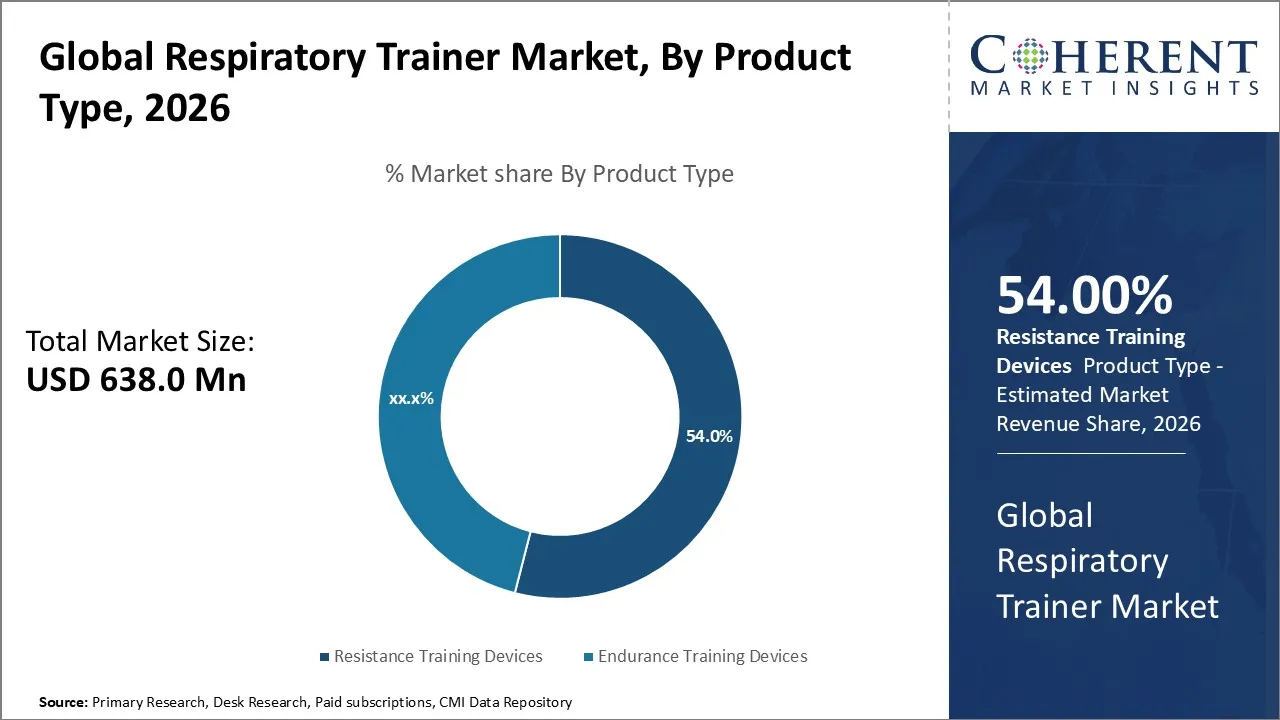
Respiratory Trainer Market Insights, By Product Type – Resistance training devices dominate due to higher clinical adoption and homecare usage
By product type, the resistance training devices segment is expected to offer the largest market share of 54% in 2026, due to its extensive application in pulmonary rehabilitation and managing chronic respiratory disorders. Resistance trainers are extremely popular in both hospital and homecare settings, as they enable the user to adjust breathing resistance to effectively strengthen respiratory muscles. Their cost-effectiveness, portability, and proven clinical efficacy have further fueled their adoption among the adult and elderly populations.
For instance, in December 2024, POWERbreathe International Ltd unveiled a next-generation smart breathing training system centered around its POWERbreathe Plus Inspiratory Muscle Trainer (IMT), enhanced with a Smart Adaptor and the new ActiBreathe® app.
Respiratory Trainer Market Insights, By Technique – Inspiratory muscle training leads due to strong clinical evidence and therapeutic effectiveness
Based on technique, the inspiratory muscle training segment is estimated to contribute the highest market share of 39% in 2026. Inspiratory muscle training (IMT) has gained significant traction due to proven benefits in improving lung capacity, diaphragm strength, and overall breathing efficiency in patients suffering from COPD, asthma. Growing integration of IMT into structured pulmonary rehabilitation programs and sports respiratory conditioning has further boosted demand globally.
For instance, in December 2024, the ActiBreathe breath training app launched alongside the IMT system provides customized training programmes based on individual respiratory strength, making inspiratory muscle training more user‑friendly and data‑driven.
Respiratory Trainer Market Insights, By Disease Indication – COPD segment dominates due to high global disease burden
By disease indication, the chronic obstructive pulmonary disease (COPD) segment is estimated to contribute the highest market share of 41% in 2026. The rising global prevalence of COPD, particularly among aging populations and smokers, has significantly increased demand for respiratory muscle training devices. Healthcare providers increasingly recommend respiratory trainers as a non-pharmacological interference to improve breathing capacity, reduce exacerbations, and improve quality of life for COPD patients.
For instance,in July 2025, Merck & Co. revealed a $10 billion deal to acquire Verona Pharma, a biotech focused on respiratory diseases, in order to strengthen its COPD treatment offerings with Verona’s novel COPD drug Ohtuvayre — the first new inhaled therapy for COPD in over two decades, approved in 2024.
Respiratory Trainer Market Insights, By End User – Adults segment leads driven by higher incidence of respiratory disorders
Based on end user, the adults segment is estimated to contribute the highest market share of 78% in 2026. Adults represent the largest patient pool affected by chronic respiratory diseases such as COPD and severe asthma. Furthermore, increasing awareness regarding preventive respiratory health, increasing participation in pulmonary rehabilitation programs, and rising adoption of home-based therapy devices are key factors supporting the dominance of this segment.
For instance, in January 2026, CMI Health revealed plans to launch SpiroFit, a smart respiratory muscle training device designed for both home use and clinical rehabilitation, including adult pulmonary care.
Regional Insights
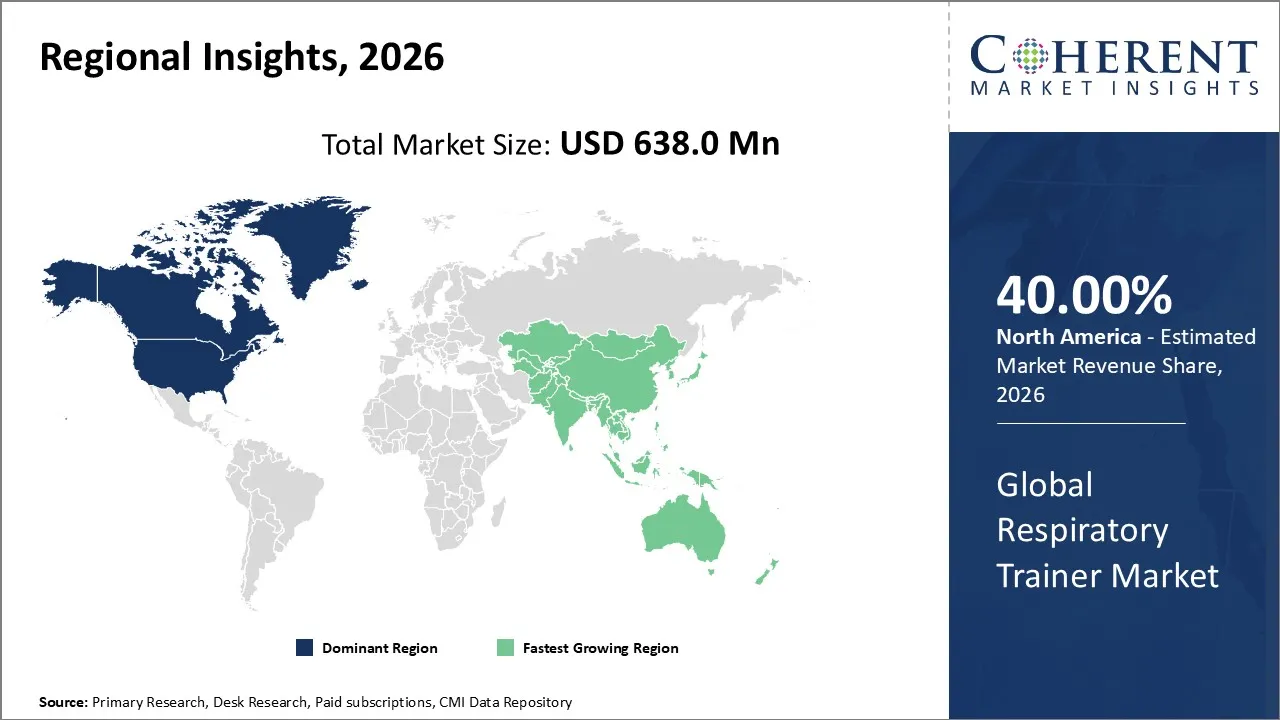
North America Respiratory Trainer Market Analysis & Trends
North America is projected to lead the respiratory trainer market in 2026, with a forecasted market share of 40%. The growth of the respiratory trainer market in North America can be attributed to factors such as the region’s well developed healthcare infrastructure, a high level of awareness about pulmonary health, and the adoption of respiratory training devices.
For instance, in July 2025, Synchrony Medical announced that its LibAirty Airway Clearance System received 510(k) clearance from the U.S. Food and Drug Administration (FDA), allowing it to be marketed in the United States.
Asia Pacific Respiratory Trainer Market Analysis & Trends
The Asia Pacific market is expected to be the fastest-growing market for respiratory trainers due to the growing prevalence of respiratory diseases, rising disposable incomes, growing health awareness, and the development of home-based and hospital-based respiratory rehabilitation services.
For instance, in January 2025, Beyond Air, Inc. announced that its LungFit PH respiratory support device received market authorization from the Australian Therapeutic Goods Administration (TGA) as a Class IIb medical device, allowing for commercial distribution in Australia, which will help the company expand its business in the Asia Pacific region.
Respiratory Trainer Market Outlook for Key Countries
Is the U.S. respiratory trainer market booming from digital innovation and rising health awareness?
The U.S. respiratory trainer market is booming, fueled by increasing awareness of pulmonary health and rising demand for advanced respiratory care solutions. Adults and clinical users are increasingly adopting smart and digital respiratory devices for home-based and hospital rehabilitation.
For instance, in October 2025, Synchrony Medical announced the commercial launch of its LibAirty™ Airway Clearance System in the United States, offering advanced at‑home respiratory therapy for people living with chronic lung diseases such as COPD and bronchiectasis.
Is China’s wellness focus boosting respiratory trainer adoption?
The increasing emphasis on health, wellness, and preventive medicine in China is also propelling the adoption of respiratory trainers, as more people are becoming conscious of lung health and are also increasing their spending power. For instance, in November 2025, at the China COPD 2025 conference, MedOranger Digital Therapy (Tianjin) Co., Ltd. launched the first smart inhaler training robot in China. The device is a digital respiratory training assistant that helps patients learn how to use their inhalers correctly, which is a crucial part of COPD and asthma management.
Market Report Scope
Respiratory Trainer Market Report Coverage
| Report Coverage | Details | ||
|---|---|---|---|
| Base Year: | 2025 | Market Size in 2026: | USD 638.0 Mn |
| Historical Data for: | 2020 To 2024 | Forecast Period: | 2026 To 2033 |
| Forecast Period 2026 to 2033 CAGR: | 7.3% | 2033 Value Projection: | USD 1,045.0 Mn |
| Geographies covered: |
| ||
| Segments covered: |
| ||
| Companies covered: | Medline Industries, Inc., Koninklijke Philips N.V., Smiths Medical, Inc., Vyaire Medical, Inc., IngMar Medical, POWERbreathe International Limited, PN Medical, Aleas Europe LLC, Aspire Products, LLC, Airofit, Project Electronics Limited, Biegler GmbH, Nidek Medical India, Besmed Health Business Corp, Forumed S.L., and Angiplast Private Limited. | ||
| Growth Drivers: |
| ||
| Restraints & Challenges: |
| ||
Respiratory Trainer Market Driver
Rising prevalence of respiratory diseases and growing health awareness
The increasing prevalence of chronic respiratory diseases such as COPD, asthma, and bronchiectasis, coupled with rising awareness of pulmonary health and preventive care, is driving demand for respiratory trainers. Adults and clinical patients are seeking non-invasive inspiratory and expiratory muscle training devices to improve lung function, enhance recovery, and support overall wellness. Additionally, the adoption of smart and digital respiratory devices that provide real-time feedback and monitoring has further fueled market growth.
Respiratory Trainer Market Opportunity
Introduction of smart, connected, and home-based respiratory training solutions
The market offers growth opportunities through the development of innovative respiratory trainers integrated with apps, AI, and wearable technology. Companies can expand into home-based rehabilitation solutions that allow patients to train and monitor their respiratory health remotely. There is also potential to customize devices for specific conditions, such as COPD or for different age groups, including adults and the elderly. Expanding digital training platforms with guided programs and performance tracking could attract health-conscious consumers and healthcare providers, driving adoption and market expansion
Analyst Opinion (Expert Opinion)
- The market for respiratory trainers is experiencing a major transition towards smart, connected, and patient-friendly respiratory trainers. In my opinion, the most interesting development is the convergence of digital feedback and app-based training with conventional respiratory trainers, which is completely revolutionizing the way people interact with their respiratory health. The trend towards real-time feedback, tracking, and personalized training programs is gaining immense popularity among both clinical and healthy individuals.
- China is also emerging as a significant innovation destination. The introduction of smart inhaler training robots in hospitals indicates that there is a willingness to adopt advanced respiratory devices that can enhance patient compliance and training. In the US too, the development of smart inspiratory muscle trainers is revolutionizing rehabilitation by offering more engaging therapy experiences.
- Overall, the market is no longer about simple resistance or flow trainers but is now driven by connected, AI-enabled, and multi-functional devices, which provide both clinical validity and engagement. Those companies that can provide effective, easy-to-use, and integrated solutions are likely to be at the forefront, while those that do not may see a decline in adoption.
Speak to the analyst
Want personalized insights?
Take the findings above to one of our principal consultants, or have the report rebuilt around the segments, geographies and competitors you actually track.
Top Strategies Followed by Respiratory Trainer Market Players
- Established players are emphasizing innovation and clinical validation. The key players in this market, POWERbreathe, AirPhysio, and Beyond Air, are heavily investing in R&D to improve the effectiveness and usability of these devices. They are also testing new devices for inspiration and expiration, developing application-based guidance systems, and using feedback sensors to increase the accuracy of training.
- Mid-level players compete based on accessibility and affordability. These players use effective production and sourcing to ensure that they offer competitive pricing and quality. By targeting clinics, wellness centers, and home consumers, they have managed to make respiratory trainers more affordable without compromising on functionality.
- Small-scale brands are experts in niche and high-tech markets. They may concentrate on home rehabilitation devices, respiratory monitors, or devices for certain patients. They adopt new technologies such as app connectivity, gamification, and sensors to improve patient compliance and efficacy. They partner with local hospitals or telehealth firms to reach more customers despite having small budgets.
Emerging Startups in the Respiratory Trainer Market
- Innovation-driven startups are reshaping the market. Organizations such as Respiree and MedOranger are working on smart wearable respiratory assistants and AI-based inhalation trainers that offer real-time tracking, interactive support, and customized training sessions. Such innovations are revolutionizing conventional respiratory therapy by making it data-driven and patient-centric.
- Digital integration and connected solutions are major areas of emphasis. Startups are focusing on home-based respiratory rehabilitation, integrating devices with mobile applications or cloud solutions to monitor progress, send reminders, and connect with healthcare professionals.
- Niche patient-centric solutions are designed to meet the unmet needs. Some startups are working on products for senior citizens, patients with chronic respiratory diseases, or patients undergoing rehabilitation post a lung ailment, thus ensuring inclusivity. Hospital partnerships, wellness, and digital health solutions are helping in the reach expansion and proving their effectiveness.
Respiratory Trainer Industry News
- In November 2025, POWERbreathe promoted its breathing training products, including EX1 Expiratory Muscle Training (EMT) devices, which complement their existing inspiratory training products.
- In October 2024, Medline was honored with the American Association for Respiratory Care (AARC) Zenith Award for its commitment to respiratory therapy and product quality.
- In October 2024, ZOLL acquired select ventilator product lines from Vyaire Medical, adding products such as bellavista and fabian ventilators and related accessories to its product line. This further expands ZOLL’s offerings in critical and respiratory care products.
Market Segmentation
- Product Type Insights (Revenue, USD Mn, 2026 - 2033)
- Resistance Training Devices
- Endurance Training Devices
- Technique Insights (Revenue, USD Mn, 2026 - 2033)
- Inspiratory Muscle Training
- Inspiratory Flow Resistive Loading
- Inspiratory Pressure Threshold Loading
- Expiratory Muscle Training
- Combination of Both
- Inspiratory Muscle Training
- Disease Indication Insights (Revenue, USD Mn, 2026 - 2033)
- Asthma
- Chronic Obstructive Pulmonary Disease
- Others
- End User Insights (Revenue, USD Mn, 2026 - 2033)
- Children
- Adults
- Regional Insights (Revenue, USD Mn, 2026 - 2033)
- North America
- U.S.
- Canada
- Latin America
- Brazil
- Argentina
- Mexico
- Rest of Latin America
- Europe
- Germany
- U.K.
- Spain
- France
- Italy
- Russia
- Rest of Europe
- Asia Pacific
- China
- India
- Japan
- Australia
- South Korea
- ASEAN
- Rest of Asia Pacific
- Middle East
- GCC Countries
- Israel
- Rest of Middle East
- Africa
- South Africa
- North Africa
- Central Africa
- North America
- Key Players Insights
- Medline Industries Inc.
- Koninklijke Philips N.V.
- Smiths Medical, Inc.
- Vyaire Medical, Inc.
- IngMar Medical
- POWERbreathe International Limited
- PN Medical
- Aleas Europe LLC
- Aspire Products, LLC
- Airofit
- Project Electronics Limited
- Biegler GmbH
- Nidek Medical India
- Besmed Health Business Corp
- Forumed S.L.
- Angiplast Private Limited
Sources
Primary Research Interviews
- Respiratory Device Manufacturers & Brand Managers
- Pulmonary Rehabilitation Specialists & Clinicians
- Hospital Procurement & Respiratory Therapy Department Heads
- Physiotherapists & Respiratory Care Practitioners
- Wellness Centers & Fitness Clinic Managers
- E-commerce Platform Respiratory Device Category Managers
- Patients & End Users of Respiratory Trainers
- Others
Databases
- Bloomberg Terminal
- Thomson Reuters Eikon
- PubMed Central (for clinical and device studies)
- Others
Magazines
- Respiratory Therapy Magazine
- MedTech Outlook
- Pulmonology News
- Medical Device News Magazine
- HealthTech Magazine
- Others
Journals
- American Journal of Respiratory and Critical Care Medicine
- Journal of Pulmonary & Respiratory Medicine
- Chest Journal
- Respiratory Care Journal
- European Respiratory Journal
- Others
Newspapers
- The Wall Street Journal (Health & Technology Section)
- Financial Times (Healthcare & MedTech Section)
- Reuters Health
- Bloomberg News (Healthcare Technology)
- The New York Times (Health Section)
- Others
Associations
- American Association for Respiratory Care (AARC)
- European Respiratory Society (ERS)
- International Society for Respiratory Care (ISRC)
- American Lung Association (ALA)
- Others
Public Domain Sources
- U.S. Food & Drug Administration (FDA) Publications & Device Approvals
- National Institutes of Health (NIH) Reports
- Centers for Disease Control and Prevention (CDC) – Respiratory Health Data
- World Health Organization (WHO) – Pulmonary & Respiratory Care Reports
- National Health Service (NHS) Publications (UK)
- Others
Proprietary Elements
- CMI Data Analytics Tool
- Proprietary CMI Existing Repository of Information for the Last 8 Years
Get access to 250+ pages report
Every segment, forecast, competitor profile and data table behind the analysis above — available for instant download.
- ESOMAR Member
- ISO 9001:2015 Certified
- D-U-N-S Registered
- GDPR & CCPA Compliant
Missing comfort of reading report in your local language? Find your preferred language:
Transform your Strategy with Exclusive Trending Reports
Frequently Asked Questions
The respiratory trainer market is estimated to be valued at USD 638.0 Mn in 2026, and is expected to reach USD 1,045.0 Mn by 2033.
The CAGR of the respiratory trainer market is projected to be 7.3% from 2026 to 2033.
Rising prevalence of chronic respiratory diseases, increasing adoption of smart and connected respiratory training devices, and growing awareness of preventive pulmonary care are the major factors driving market growth.
High costs of advanced devices, lack of awareness among certain demographics, and limited availability in emerging markets are major factors constraining growth.
In terms of product type, Resistance Training Devices are expected to hold the largest market share, as they are widely used in both clinical and home settings for inspiratory muscle strengthening.
North America is expected to hold the largest share, supported by advanced healthcare infrastructure, higher patient awareness, and widespread availability of respiratory devices.
Medline Industries, Inc., Koninklijke Philips N.V., Smiths Medical, Inc., Vyaire Medical, Inc., IngMar Medical, POWERbreathe International Limited, PN Medical, Aleas Europe LLC, Aspire Products, LLC, Airofit, Project Electronics Limited, Biegler GmbH, Nidek Medical India, Besmed Health Business Corp, Forumed S.L., and Angiplast Private Limited.